In modern B2B logistics and distribution, the choice of storage
infrastructure directly determines operational throughput, safety records, and
capital efficiency. system
racking refers to engineered, adjustable steel structures designed
to support palletized or unit loads. Unlike generic shelving, professional
system racking integrates upright frames, beam levels, seismic bracing, and
safety accessories to meet dynamic warehouse demands. With over 18 years in the
storage equipment sector, Guangshun provides FEM/RMI-compliant solutions that
address load deflection, impact resistance, and reconfiguration flexibility.
This article delivers a technical breakdown of system racking—covering
structural parameters, application-driven layouts, industry pain points, and
ROI-driven maintenance—targeting operations managers, facility engineers, and
supply chain directors.
Key Structural Components and Engineering Parameters of System Racking
Every robust system racking installation relies on four primary
elements: upright frames, beam steps or box beams, diagonal bracing, and
connection locks. Understanding their engineering metrics enables precise load
distribution and longevity.
Upright Frames – Column Profiles and Buckling Resistance
Column sections: Common profiles include 80×60 mm, 90×70
mm, and 100×95 mm roll-formed steel with punched teardrop or keyhole patterns.
Thickness ranges 2.0–3.0 mm for standard-duty, up to 3.5 mm for heavy-duty
seismic zones.
Yield strength: Grade S280 or S320GD (minimum 280–320 MPa
yield). For cold-formed racks, EN 15512 requires a safety factor of 1.5 against
yielding under static load.
Base plates & anchors: 8–12 mm thick plates with
chemical or mechanical anchors (M16/M20). Pull-out tests should exceed 45 kN per
anchor in C25/30 concrete.
One frequent engineering oversight is neglecting buckling under eccentric
loads. Modern system racking uses closed tubular sections or back-to-back
columns for high-bay applications (>12 m height). Guangshun offers
buckling calculation reports per EN 1993-1-1, integrating second-order analysis
for sway frames.
Beam Levels, Step Increments, and Load Decks
Box beams vs. step beams: Step beams (C-profile) are
economical for light loads (<1,500 kg/level). Box beams (closed section)
provide superior torsion resistance for heavy loads up to 5,000 kg per
level.
Height adjustment pitch: Standard 50 mm or 75 mm
increments. Fine-pitch (25 mm) available for mixed SKU heights, reducing
vertical waste.
Safety pins & beam locks: Mandatory to prevent
accidental dislodging. Dynamic impact tests show pinned connections reduce beam
fall risk by 93% compared to friction-fit only.
Load tables must specify uniformly distributed load (UDL) versus point loads.
For example, a 2,700 mm span beam with 120×70×2.5 mm box profile supports 2,200
kg UDL at L/200 deflection limit. Exceeding deflection limits leads to pallet
instability and forklift retrieval issues.
Seismic Design and Structural Redundancy
Facilities in seismic zones (PGA > 0.2g) require special racking
configurations. Key provisions include:
Cross-aisle horizontal diagonal bracing every third bay.
Base isolation pads or slotted anchor holes for energy dissipation.
Pallet stopper beams to prevent load shifting.
Testing per RMI 2020: A properly braced system
racking can sustain 0.5g seismic drift without collapse, protecting
inventory and personnel. Guangshun provides site-specific seismic calculations
using finite element models (FEM) validated by third-party labs.
Application-Driven Configurations – Matching System Racking to Storage
Profiles
No single rack configuration fits all. Below is a technical comparison of
four dominant system racking layouts based on inventory turnover, SKU diversity,
and load dimensions.
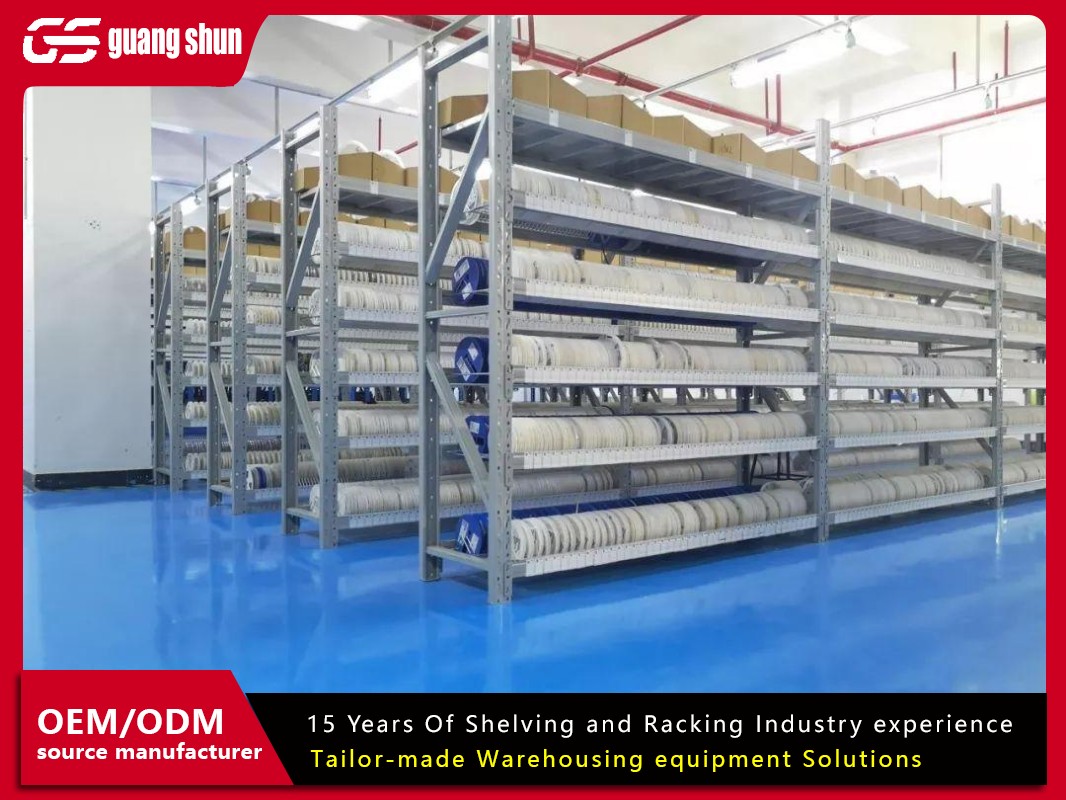
Selective Racking – First-In-First-Out (FIFO) and Direct Accessibility
Selective racking offers 100% pallet accessibility, ideal for high-turnover
SKUs. Beam depths range from 800 mm to 1,500 mm. Aisle width typically 3.2–3.8 m
(counterbalance forklift). Storage density: 30–40% of floor space used. Best for
operations with >2,000 pallet movements daily.
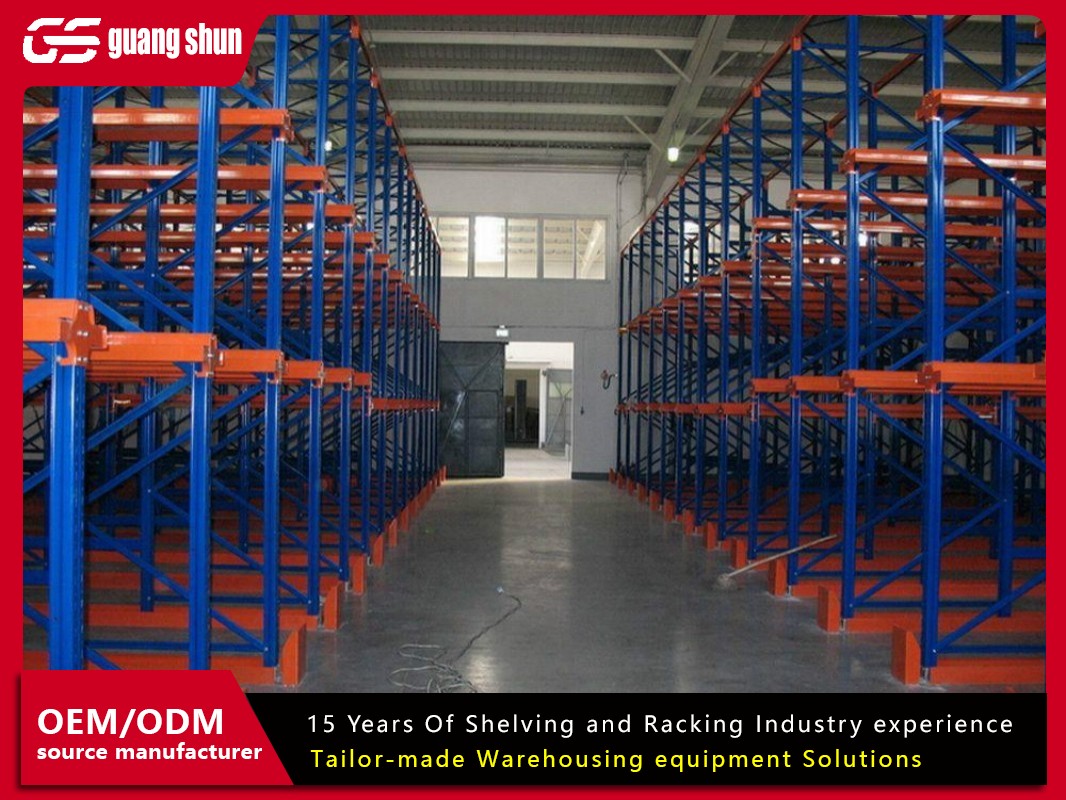
Drive-in / Drive-through Racking – High Density LIFO
Drive-in structures allow forklifts to enter lanes 5–12 pallets deep. Common
in cold storage and homogeneous goods (e.g., beverages, chemicals). Load rails
guide pallets; no beams between uprights. Vertical clearance: 6–10 pallet
positions high. Critical engineering factor: lateral stability
requires thicker column profiles (3.0 mm min) and top stabilization panels. Lane
depth vs. retrieval time – each additional position increases extraction time by
~18%.
Push-back and Pallet Flow Racking – Gravity-Based Solutions
Push-back: Carts on inclined rails; each lane handles 2–6
pallets. Load capacity per cart: 1,200–1,800 kg. Best for LIFO with medium
turnover.
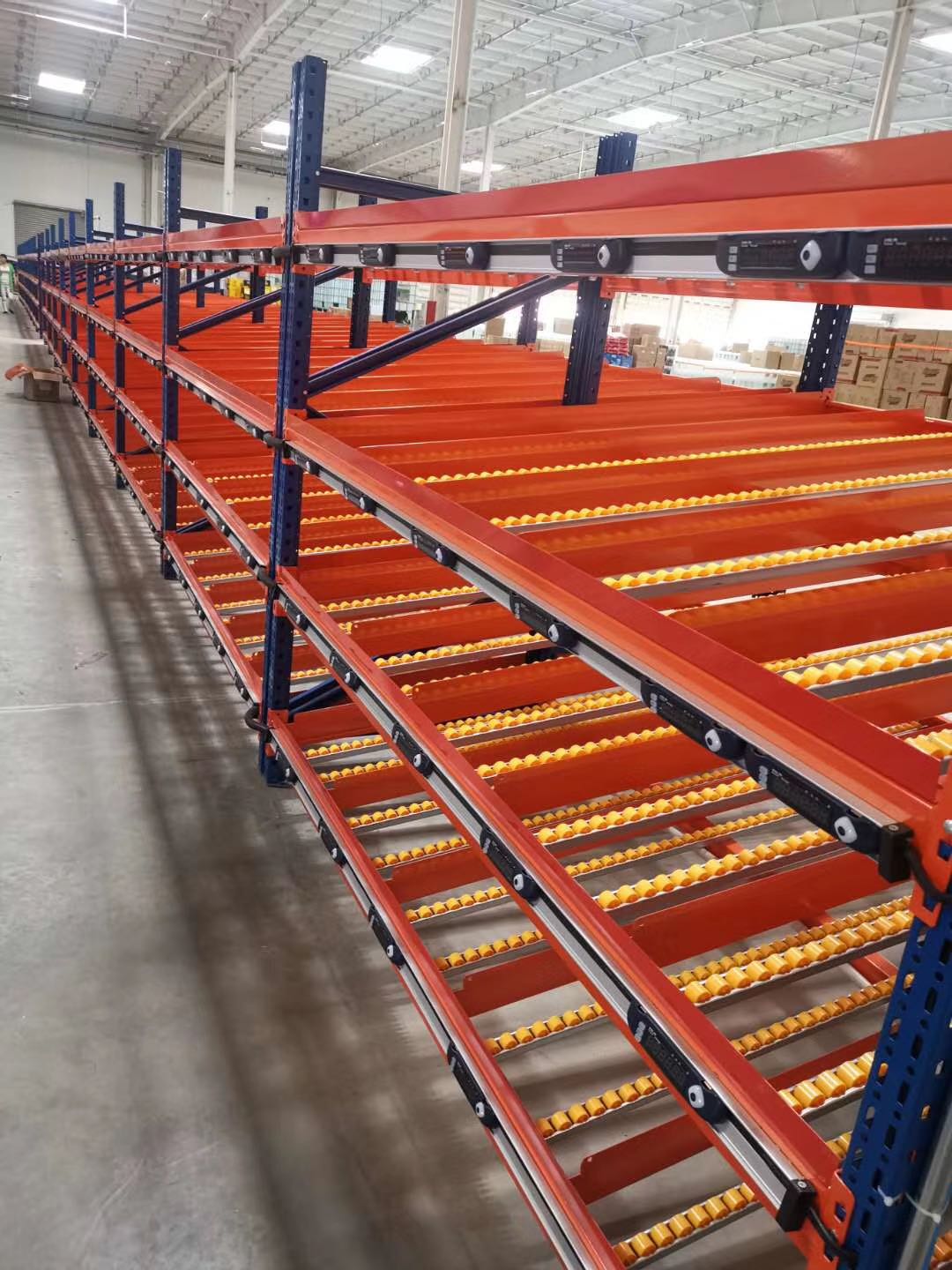
Pallet flow: Roller tracks with brake separators – FIFO,
high-density. Requires precise slope (2–3%). Flow rails must have dynamic load
rating matching pallet weight and speed control.
Selecting between these systems depends on throughput data. Warehouses
handling more than 200 SKUs per aisle often benefit from cart-based push-back
rather than drive-in due to reduced damage risk.
Addressing Critical Industry Pain Points with System Racking
Based on site audits across 140+ warehouses, three recurring problems degrade
system racking performance: unplanned beam deflection, safety compliance
gaps, and reconfiguration inflexibility. Below are data-backed
solutions.
Pain Point 1 – Progressive Upright Damage from Forklift Impacts
Industry studies (MHIA 2022) show 67% of rack collapses originate from
cumulative column damage. Solutions:
Install column protectors (bolted or sleeved) made of 8 mm
steel or high-density polyethylene. Impact tests show protectors reduce dent
depth by 75%.
Use end-of-aisle guardrails with energy absorbers –
mandatory for aisles with heavy forklift traffic.
Implement periodic laser alignment – measure plumb
deviation every 6 months; tolerance ≤1/500 of rack height.
Pain Point 2 – Capacity Mismatch and Load Overestimation
Operation manuals often ignore load eccentricity and
dynamic braking forces. A 1,500 kg pallet placed off-center
(150 mm) increases bending moment on the beam by 35%. Mitigation:
Require beam-level load placards with maximum UDL and point load.
Specify wire mesh decks or plywood to distribute point
loads.
Use capacity reduction factors (0.85) for high-dynamic environments (e.g.,
reach trucks with rapid acceleration).
Pain Point 3 – Inflexible Beam Levels after Installation
Changing SKU heights often requires relocating beams. Conventional bolt-on
racks need full unload and wrench adjustment. Tool-less systems with spring-loaded beam connectors reduce reconfiguration time by 70%.
system racking from Guangshun features
a patented teardrop punch design allowing beam repositioning with no tools,
lowering downtime during seasonal SKU changes.
Technical Performance Metrics – Data-Driven Selection of System Racking
To objectively compare proposals, warehouse managers must evaluate five
performance indices. Each index should be requested from suppliers in written
format.
Static Load Capacity per Bay
This includes upright capacity (buckling load) plus beam level summation.
Example: Upright capacity of 85 kN per leg, 4 levels each 2,000 kg → total bay
load 8,000 kg. Ensure safety factor 1.4 per RMI.
Deflection Limit Under Full Load
EN 15512 mandates vertical deflection ≤1/200 of beam span. For 2,700 mm span,
max deflection 13.5 mm. Excessive deflection causes pallet walk-off and reduces
beam hook engagement.
Seismic Performance Category (SPC)
RMI defines SPC1 (non-seismic) to SPC3 (high seismic). SPC2 requires
horizontal bracing every 4 bays and base shear capacity of 0.3g. Request
third-party shake-table test summaries.
Corrosion Protection Durability
For cold storage or chemical environments, coating thickness (≥85 µm
epoxy-polyester powder) plus salt spray resistance >800 hours (ISO 9227).
Repairability and Part Standardization
Proprietary profiles can lead to long lead times. Open-profile systems allow
replacement beams within 3–5 days. Guangshun standardizes
column hole patterns across 90% of its range, ensuring backward
compatibility.
Maximizing ROI: Long-Term Maintenance and Upgrade Strategies
Total cost of ownership (TCO) for a system racking installation extends over
15–20 years. Without structured maintenance, repair costs increase 300% after
year 10. Below is a maintenance protocol used by tier-1 logistics providers.
Quarterly visual inspection: Check for bent uprights
(>15 mm out-of-plumb), damaged beam locks, loose floor anchors. Use Go/No-Go
gauges for safety pin engagement.
Annual load test: Apply 110% of rated load to 10% of beam
levels, measure residual deflection. Residual deformation >3 mm indicates
structural fatigue – replace beams.
5-year re-coating or touch-up: For racks in humid or saline
environments, apply zinc-rich primer to scratches to prevent red rust
propagation.
Reconfiguration audit: When SKU mix changes >30%,
recalculate load distribution using updated pallet weights. Adjust beam
positions or add upright stiffeners if required.
Proactive operators achieve 98% rack availability and reduce unplanned
downtime by 64% (source: WERC 2023 benchmarking). system
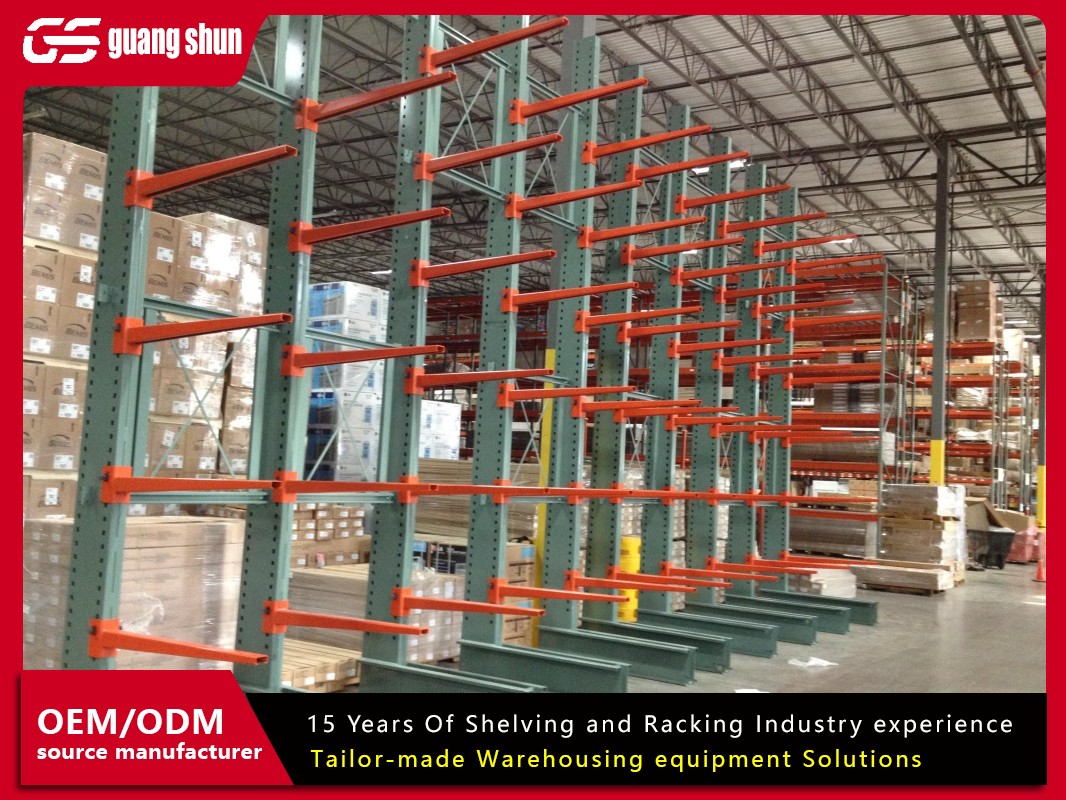
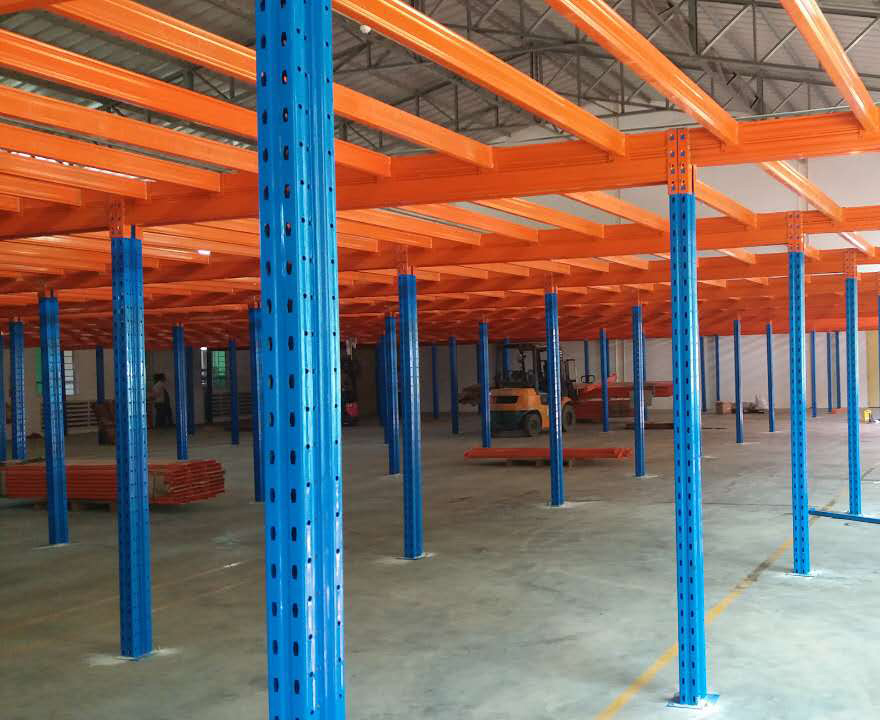
racking systems designed for modular upgrades—adding cantilever
wings or integrating mezzanine floors—can adapt to automation (e.g., AGV
interfaces) without replacing the entire structure.
Why Partner with Guangshun for Industrial System Racking Projects
Guangshun combines ISO 9001 certified manufacturing
with in-house structural engineering. Every system
racking project includes:
Finite Element Analysis (FEA) report per AS4084 or EN 15512.
Site-specific seismic evaluation – using local PGA values and soil
class.
Lifetime structural warranty against manufacturing defects, with 48-hour
emergency part dispatch.
Recent project: For a 35,000 m² beverage DC in Texas, Guangshun engineered a
hybrid selective + push-back rack system that increased pallet positions by 42%
compared to drive-in alone, while maintaining FIFO compliance for 480 SKUs. The
client achieved payback period of 14 months based on reduced forklift travel
distance.
Frequently Asked Questions (FAQ)
Q1: What is the difference between selective racking
and drive-in system racking in terms of load-bearing capacity per
upright? A1: Selective racking typically uses lighter uprights (2.5
mm thickness) because loads are distributed across fewer levels and beams
transfer forces directly. Drive-in system racking requires thicker columns (min
3.0 mm) because no beams connect front-to-back; uprights must resist lateral
forces from pallet loads resting on rails. For a 12 m high drive-in structure,
column capacity must be 30–40% higher than selective equivalent for the same bay
load.
Q2: How do I determine the correct beam step
increment for mixed pallet heights? A2: Measure the tallest and shortest pallet + pallet height
(including clearance). Use the formula: available height per level = maximum
pallet height + 100 mm (forklift clearance) + beam flange thickness. For 50 mm
pitch increments, select the closest increment above that value. For high-mix
facilities (variation > 300 mm), consider double-deep selective racking or
invest in adjustable cantilever arms within the same frame.
Q3: Can system racking be integrated with automated
storage and retrieval systems (AS/RS)? A3: Yes, but conventional roll-formed racks require
modifications: tighter tolerances on column alignment (±3 mm over 10 m height),
stiffer beams (≤ L/300 deflection), and additional horizontal tie bars for SRM
guidance. Guangshun offers AS/RS-ready racking with laser-welded uprights and
pre-drilled guide rail brackets. The key difference: dynamic loads from shuttles
demand fatigue-rated connections (10⁶ cycles minimum).
Q4: What are the seismic anchorage requirements for
system racking in Zone 3 regions (PGA 0.3g)? A4: Per RMI 2020 Seismic Addendum, each upright base plate
requires two anchors sized for combined tension and shear. For typical column
load 45 kN, use M20 epoxy anchors with embedment depth of 200 mm in concrete
f'c=30 MPa. Additionally, horizontal restraint cables must be installed at every
fourth upright row, and base isolation pads (neoprene 12 mm) are mandatory to
reduce transmitted seismic acceleration by 40%.
Q5: How often should load capacity labels be
verified or replaced on system racking? A5: Load capacity labels (placards) must be reviewed after
any reconfiguration, change in storage medium (e.g., from wooden to plastic
pallets), or damage event. Industry best practice: full label audit every 12
months using a handheld barcode system to verify beam position corresponds to
design drawing. Labels on damaged beams should be replaced immediately with red
"out of service" tags. Guangshun provides UV-resistant polycarbonate labels with
QR code linking to original load tables.
Implementing a correctly engineered system
racking solution yields measurable outcomes: 25–35% improved
storage density, 50% reduction in product damage, and compliance with OSHA
warehouse safety standards. Whether your application demands selective,
drive-in, or flow racking, start with a structural audit and load profile
analysis. For turnkey engineering support, consult Guangshun – where
industrial racking meets precision German engineering principles and local
certification expertise.