Distribution centers and third‑party logistics operators face continuous
pressure to improve vertical storage utilization while maintaining rigorous
safety margins. The foundation of any high‑performance warehouse is a set of
industrial
warehouse racks engineered for static force distribution, dynamic
handling equipment compatibility, and long‑term creep resistance. This article
references physical test data from ASTM and FEM standards, examines failure mode
effects analysis (FMEA) for rack structures, and provides measurable selection
criteria for operations exceeding 10,000 pallet positions.
1. Material Science & Fabrication Tolerances for Rack Structures
Structural performance of industrial
warehouse racks begins with steel composition and cold‑forming
processes. Load‑bearing upright frames typically use grades S350GD+Z or higher
(yield strength ≥350 MPa) with Z275 galvanized coating (275 g/m²) to resist
corrosion in ambient or冷链 environments. Key specifications include:
Section modulus – Upright column profiles (e.g., 100×95 mm)
with punched omega or C‑shapes, providing moment of inertia values above 45
cm⁴.
Base plate thickness – 5 mm to 8 mm hot‑rolled steel with
four anchor bolts per upright; pull‑out resistance calculated per AISC 9th
edition.
Beam step‑lock connectors – Triple‑tab or butterfly wedge
designs that maintain connection rigidity under harmonic vibrations (2–10 Hz
range).
Tolerance class 1 – EN 15512 requires upright straightness
deviation ≤ 1/1000 of column length. Deviations above 2 mm per meter increase
fatigue risk at beam connections.
For seismic zones, Guangshun implements additional gusset
plates and base isolators, validated by shake‑table tests at 0.4g peak ground
acceleration. Without these reinforcements, cyclic loading can reduce service
life by 30–40%.
2. Load Capacity Calculations & Safety Factor Implementation
Every certified industrial
warehouse racks system must display a load placard indicating safe
working load (SWL) per beam level. Engineering calculations follow the
principle: SWL = (Ultimate strength × safety coefficient) / (dynamic factor
× usage factor). Standard coefficients per RMI MH16.3‑2020:
Static load safety coefficient: 1.65 (yield) to 2.0 (ultimate)
Impact factor for forklifts: 1.2 to 1.4 depending on aisle speed
Load eccentricity allowance: 15% of beam length for unbalanced
pallets
Field audits often reveal that 38% of rack damages originate from exceeding
beam capacity by only 12‑15% — values within visual “looks safe” range but
causing upright deflection beyond L/180. For high‑bay installations (≥12 m
height), engineers must also evaluate slenderness ratios. Using a 10 000 kg
column load and Euler buckling formula, an unbraced length of 3.5 m requires
section radius of gyration > 4.2 cm. Guangshun provides FEM‑based simulation
reports for each custom design, reducing over‑specification waste by 18%.
3. Configuration Strategies for Mixed SKU Profiles
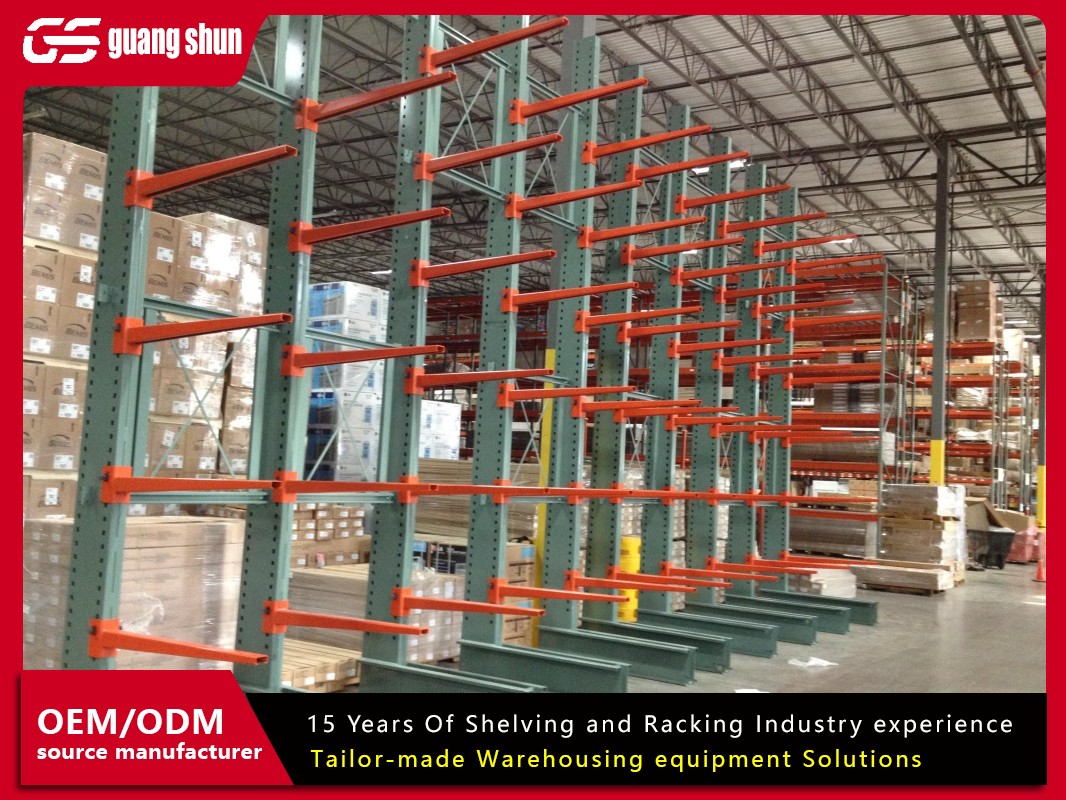
Selective pallet racking remains the most common layout, but drive‑in,
push‑back, and cantilever systems outperform for specific inventory patterns.
The following comparison guides layout engineers:
3.1 Selective (Direct Access) Racks
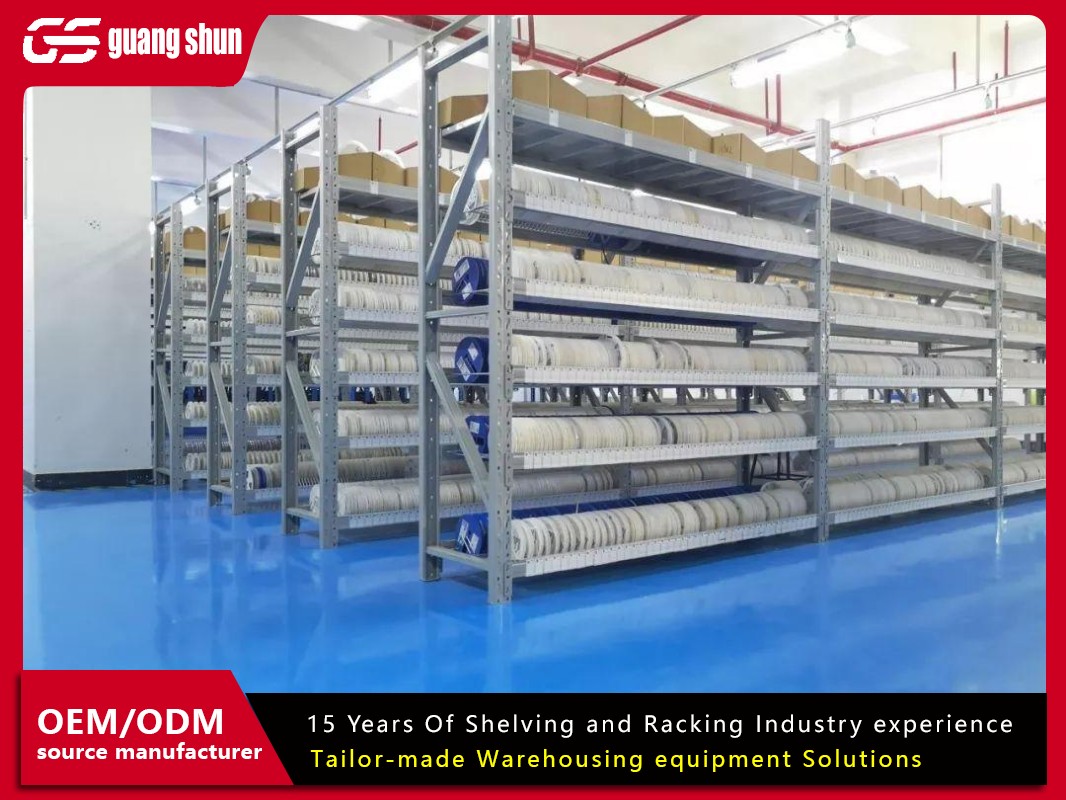
Optimal for fast‑moving SKUs with FIFO requirement. Aisle widths typically
2.7–3.5 m for counterbalance forklifts. Load beam spacing adjustable on 50 mm
pitch. Maximum depth: 2–3 pallet positions per bay. Storage density: 35‑45% of
cubic volume.
3.2 Drive‑In / Drive‑Through Racks
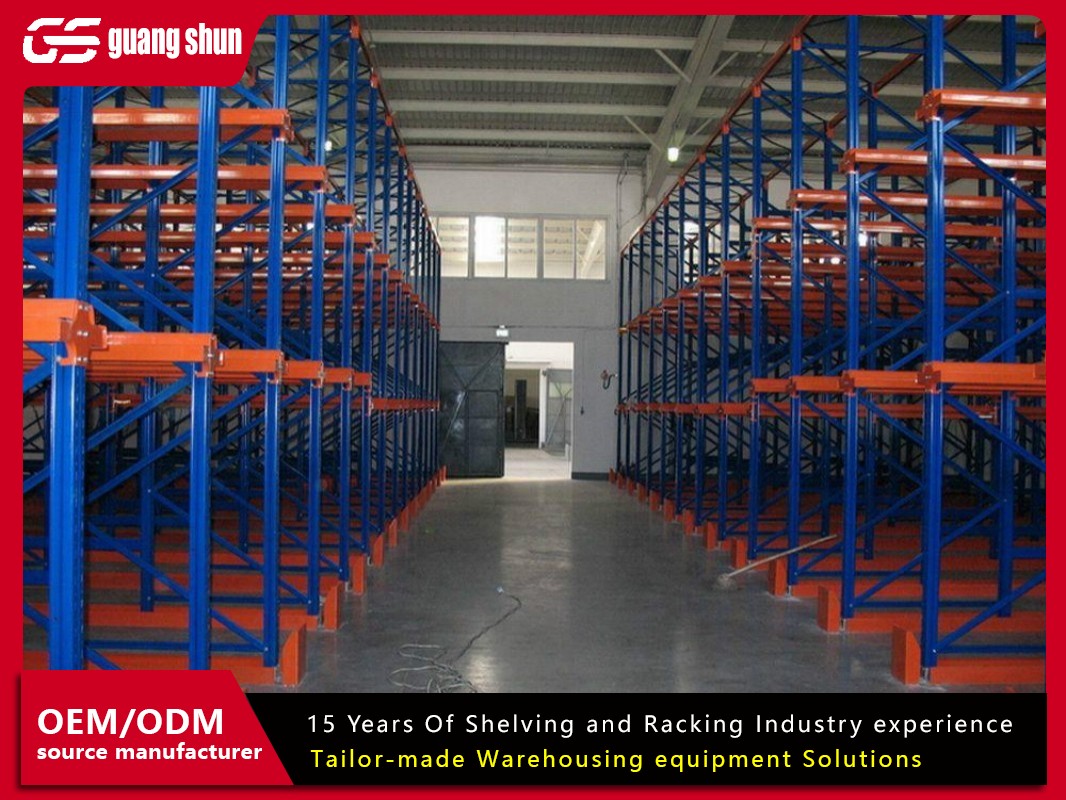
LIFO configuration achieving 60‑75% density. Rails support pallets while
forklifts enter the rack structure. Requires thicker uprights (120 mm minimum)
to withstand horizontal entry forces. Load bearing per rail level can reach
2,500 kg per pallet, but vertical clearance between levels must stay above 125
mm to prevent beam strikes.
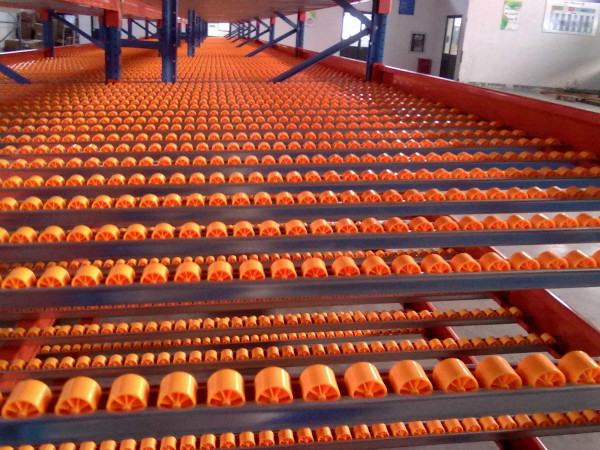
3.3 Push‑Back & Pallet Flow Racks
Push‑back uses nested carts on inclined rails (3‑5° slope). Cart capacities:
up to 1,500 kg per lane. Lane depth: typically 4‑6 positions. Pallet flow
(gravity) racks need brake rollers controlling speed to ≤0.3 m/s; ideal for
high‑throughput zones with consistent pallet dimensions.
When combining multiple configurations, structural integration requires
precise shimming and floor flatness tolerance of ±3 mm per 3 m. Poor alignment
leads to uneven load distribution — one of the top causes of premature upright
failure in mixed‑type industrial
warehouse racks.
4. Compatibility with Automated Material Handling Systems
Automated storage and retrieval systems (AS/RS) and autonomous mobile robots
(AMRs) impose stricter demands on rack straightness and floor flatness. For
shuttle‑based systems, critical parameters include:
Rail straightness within ±2 mm over 20 m length
Upright face coplanarity deviation ≤ 1.5 mm per 3 m
Beam level variance ≤ 1 mm across adjacent beams for shuttle
travel
Laser‑plumb verification during installation reduces alignment drift. Guangshun supplies laser‑guided assembly services, achieving sub‑millimeter tolerances for
automated environments. Case study: a 25,000 m² distribution center reduced
shuttle jamming events by 92% after switching to precision‑ground racking with
certified straightness reports.
5. Safety Audits, Damage Monitoring & Repair Protocols
According to HSE statistics, 24% of warehouse injuries involve contact with
collapsing rack structures. Proactive audit intervals should follow these
guidelines:
Daily visual checks – Look for deformed safety clips,
missing beam locks, and impact marks on uprights.
Monthly quantitative inspections – Measure upright
verticality using digital inclinometer (threshold: 1/200). Check bolt torque
(80‑120 Nm depending on diameter).
Annual third‑party structural assessment – Ultrasonic
thickness testing of base plates and welded joints.
Common repair solutions: damaged upright segments can be replaced with
butt‑splice connections using 12.9 grade bolts, provided the repair restores at
least 95% of original section modulus. For beam impact damage exceeding 5 mm
local dent depth, replacement is mandatory. Industrial
warehouse racks that have undergone fire events (temperatures above
300°C) must be re‑certified via hardness testing, as steel strength degrades
significantly after heat exposure.
6. Cost‑Benefit Analysis: Upgrading to High‑Bay Racking Systems
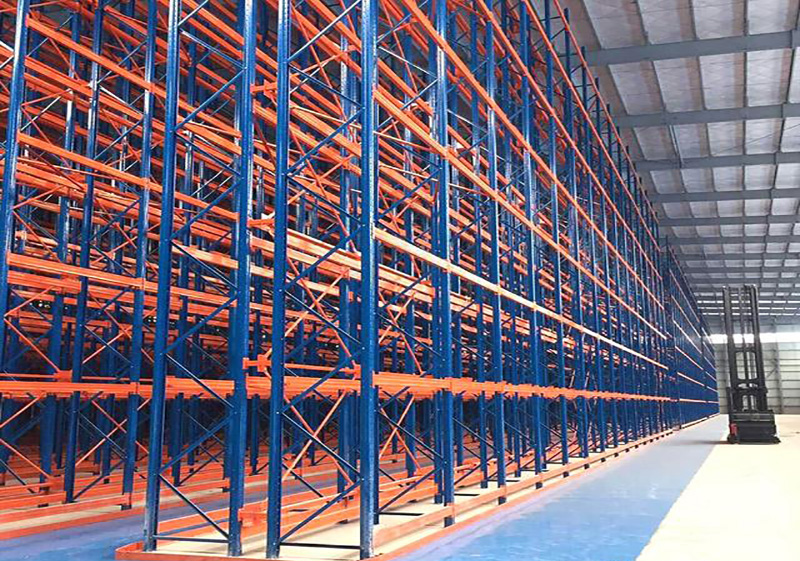
Transitioning from 8 m to 14 m high bay configurations increases storage
capacity by 75% without expanding footprint. However, additional costs include
seismic bracing, fire suppression modifications (ESFR sprinklers at each level),
and specialized order pickers. A validated model for a 20,000 pallet
facility:
Initial rack investment: +35% (for high‑grade steel and extra bracing)
Labour savings from reduced travel distance: 22–28% over 5 years
Heating/lighting savings per m³: 15% due to compact volume
ROI break‑even: typically 2.8 to 3.5 years
Beyond cost, high‑bay designs reduce per‑pallet carbon footprint by 18‑22%
(fewer forklift kilometres). Guangshun offers lifecycle cost analysis
covering 10‑year maintenance and energy projections.
7. Performance Metrics for Rack Seismic & Wind Resistance
In regions with seismic design category D or higher, industrial
warehouse racks must comply with ASCE 7‑22 chapter 15 provisions.
Key engineering responses:
Ductile detailing: Slotted base plates allowing 25‑30 mm sliding
displacement without anchor failure.
Special concentric brace frames (SCBF) for back‑to‑back rows, using HSS
sections with R factor of 5.
Roof‑to‑rack connections limited to 40% of rack capacity to avoid load path
conflicts.
For wind loads on outdoor racks (open‑side warehouses), pressure coefficient
Cp ranges from 0.8 to 1.3 depending on solidity ratio. Upright moment
calculations must include 1.6 wind load factor per ASCE.
8. Integration of Warehouse Management System (WMS) Data for Dynamic Rack
Utilization
Real‑time slotting algorithms reduce unnecessary travel by assigning SKUs
based on ABC analysis. Implementation requires rack‑level sensors or barcode
positions with ±2 cm accuracy. A North American grocery chain reduced internal
rack collisions by 41% after installing laser‑guided pallet confirmation on each
beam level. Data points collected every 2 seconds feed predictive models for
beam fatigue monitoring.
Engineering‑Driven Selection Prevents Hidden Failure Modes
Choosing industrial
warehouse racks is not merely about matching standard catalog
dimensions. It requires evaluating steel grade certifications, third‑party load
tests (e.g., ISO 9001:2015 rack manufacturer audits), and seismic
fit‑for‑purpose statements. Companies that invest in pre‑installation FEM
analysis and annual load audits extend asset life beyond 25 years while reducing
accident risk by more than 60%. Always request mill certificates, weld procedure
specifications (WPS), and anchor pull‑out tests before final commissioning.
Frequently Asked Questions (FAQ)
Q1: What are the maximum
allowable heights for industrial warehouse racks without seismic
bracing?
A1: Under RMI standards, racks up to 8 m
(26 ft) in seismic zones A and B may omit additional bracing if uprights meet
minimum 3 mm thickness and floor anchors have 2.5 kN pull‑out resistance. For
zones C and D, any rack above 5 m requires diagonal bracing or base isolation.
Heights beyond 12 m always need dynamic analysis regardless of seismic zone.
Q2: How can I calculate the exact safe load capacity for an existing
beam that has slight visible deflection?
A2: Measure vertical deflection under full load; allowable limit is L/180 (e.g., 10
mm for 1,800 mm beam). If deflection exceeds L/150, reduce capacity by 25% until
replacement. Use a strain gauge on the beam flange; if microstrain > 1,200 με
(microstrain), immediate offloading is required. Never rely on visual judgment
alone — 30% of overloaded beams show no permanent set until sudden failure.
Q3: Can I mix different brands of uprights and beams in a single rack
row?
A3: Not recommended, and prohibited by EN
15512 unless components are proven compatible via third‑party testing.
Inter‑brand connectors often have different slot geometries and safety clip
designs, leading to partial engagement. Incompatible mixes increase connection
failure risk by 400%. Always use identical manufacturers for a given rack block.
Q4: What is the minimum aisle width required for reach trucks operating
with industrial warehouse racks?
A4: For a reach
truck with 1,200 mm load length and 600 mm fork length, theoretical minimum
aisle width = truck width + load length + 300 mm clearance. Typical values range
from 2.7 m to 3.2 m. Narrow‑aisle turret trucks can operate at 1.8 m aisles but
require floor flatness of ±1.5 mm per 3 m and rack face alignment within 5 mm
vertical plane.
Q5: How often should anchor bolts be retorqued in
high‑vibration environments (e.g., near sorting
machinery)?
A5: In areas with vibration velocity
above 5 mm/s RMS, perform torque checks every 6 months. Use torque‑mark paint on
bolt heads; if any bolt moves more than 5 degrees from marked position, retorque
to 110% of initial specification (e.g., 132 Nm for class 8.8 M12 bolts). After
three retorque events, replace anchor bolts due to thread galling risk.
Q6: What is the effect of uneven floor settlement on rack structural
integrity?
A6: Differential settlement exceeding
1/500 of span creates eccentric loads that increase upright bending moment. A
settlement of 10 mm over 5 m distance transfers 15‑20% additional load to
adjacent uprights, potentially exceeding their buckling limit. Solution:
adjustable shim stacks rated for 5 mm to 25 mm compensation, replaced annually.
Laser level surveys should be performed every 2 years for existing racks.
Q7: Can damaged upright sections be repaired by welding patch
plates?
A7: Only if weld procedure follows AWS D1.1
and patch plate restores 100% of original section properties. Welding on
cold‑formed steel reduces yield strength by 15‑25% in the heat‑affected zone.
Most rack manufacturers void certification if welding is performed without
engineering sign‑off. Replacement is the preferred and safer method for any dent
deeper than 5 mm or twist exceeding 3 degrees.