Facilities under 5,000 m² face a distinct challenge: accommodating growing
SKU diversity without expanding footprint. Data from the Material Handling
Institute shows that 68% of small warehouses operate at over 85% of their
maximum volumetric capacity, leading to congestion and picking errors. A
properly configured small warehouse racking system directly
addresses this by integrating load-bearing calculations, aisle geometry, and
modular configurability. This guide presents engineering protocols, ROI metrics,
and safety benchmarks for managers and logistics engineers. Guangshun has deployed over 1,200 compact rack layouts across North America and Europe,
with documented 31% average space gain.
1. Core Constraints & Technical Requirements for Small Warehouse Racking
Systems
Unlike large distribution centers, small warehouses operate with lower
ceiling heights (typically 4–8 meters), mixed pallet and carton flow, and
tighter turning radii for forklifts. An effective small warehouse racking system must
balance three opposing factors: storage density, accessibility
(first-in-first-out or last-in-first-out), and structural resilience under
dynamic loads.
1.1 Vertical Utilization & Ceiling Constraints
Every vertical meter unused represents roughly 12-15% lost capacity. For
ceilings at 5.5 meters, a selective rack with 4 beam levels adds 240 pallet
positions compared to a 3-level configuration. However, overhead sprinkler
clearance must comply with NFPA 13: minimum 450 mm between sprinkler deflector
and the top of stored loads. When using pallet racking, ensure beam levels are
adjustable in 75 mm increments to accommodate mixed pallet heights (800 mm to
1800 mm).
1.2 Floor Loading & Point Pressure Distribution
Small warehouses often have slab thickness of 150 mm or less (C25/30
concrete). Each upright base plate transmits concentrated loads – a four-ton
column load over a 150x150 mm area produces 1.78 MPa ground pressure. Before
installing any small warehouse racking system, conduct a
flatness test (F-numbers: minimum FF 35 / FL 25 per ASTM E1155) and verify
subgrade modulus (k-value). For weak slabs, use load-spreading footplates or
thicker base plates (12 mm instead of 8 mm).
2. Technology Selection: Matching Rack Types to Inventory Profiles
No single rack type fits all small warehouses. Below are five configurations
with their operational sweet spots:
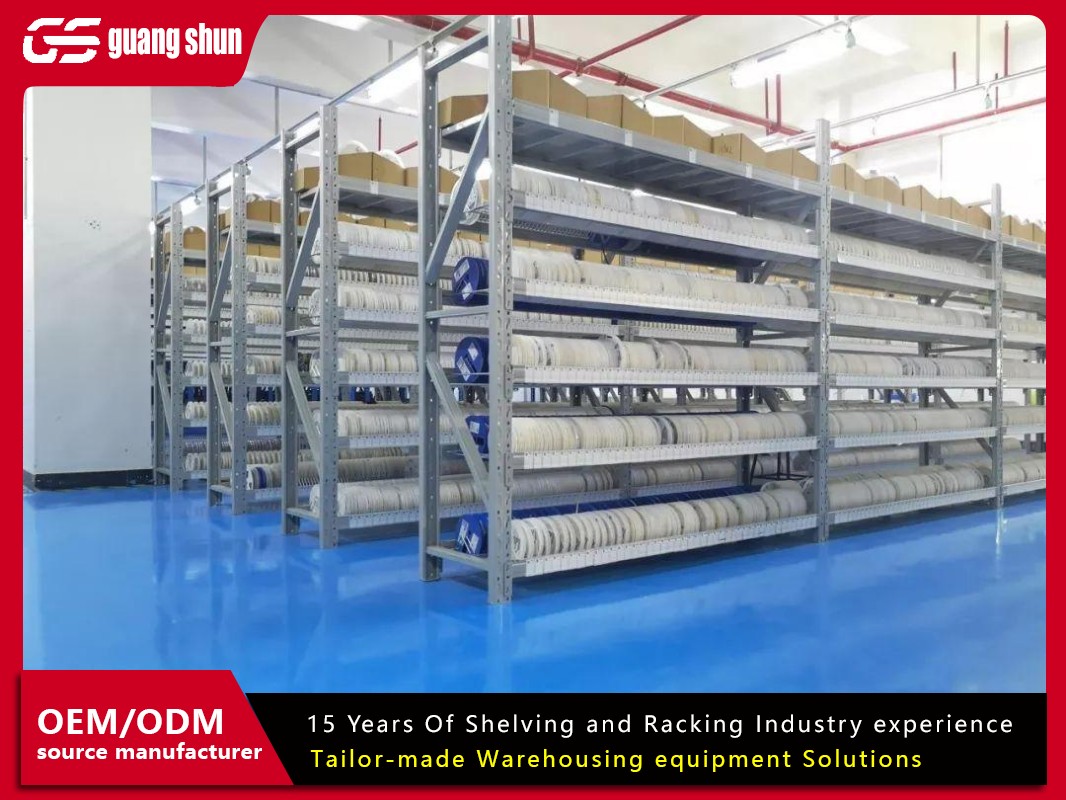
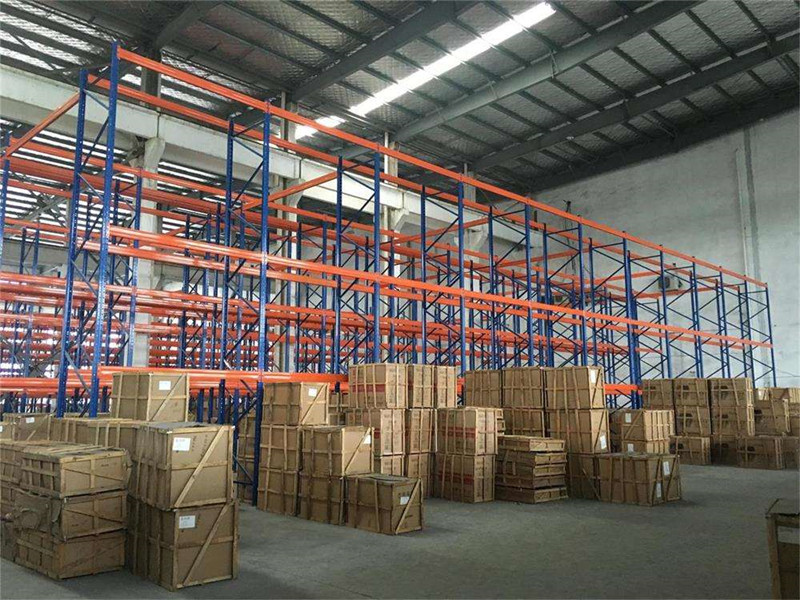
Selective (adjustable) pallet rack: Best for high-turnover
SKUs with FIFO requirement. Depth: single or double-deep (up to 85% space use).
Beam capacities from 1,200 kg to 3,500 kg per pair. Aisle width ≥ rack depth +
600 mm for counterbalance forklifts.
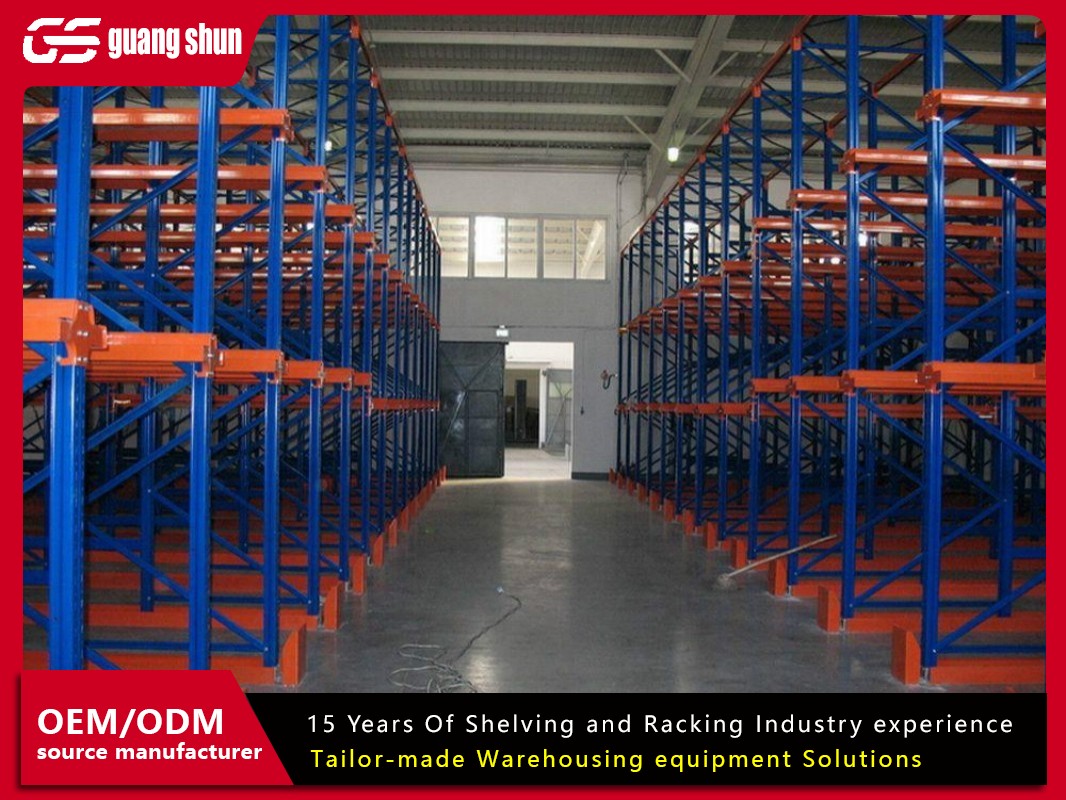
Drive-in / drive-through racks: Achieve 75% density
increase over selective. Suitable for LIFO operations with homogeneous pallets
(e.g., batch storage). Rail pitch must match pallet entry height; typical
vertical clearance 100 mm above pallet. Forklift guide rails required to prevent
upright collisions.
Push-back cart systems: Four-deep configurations store
pallets on nested carts. Each lane requires a minimum 3% gravity slope. Useful
for medium-turnover SKUs (10-15 picks per day). Load capacity per cart: up to
1,500 kg.
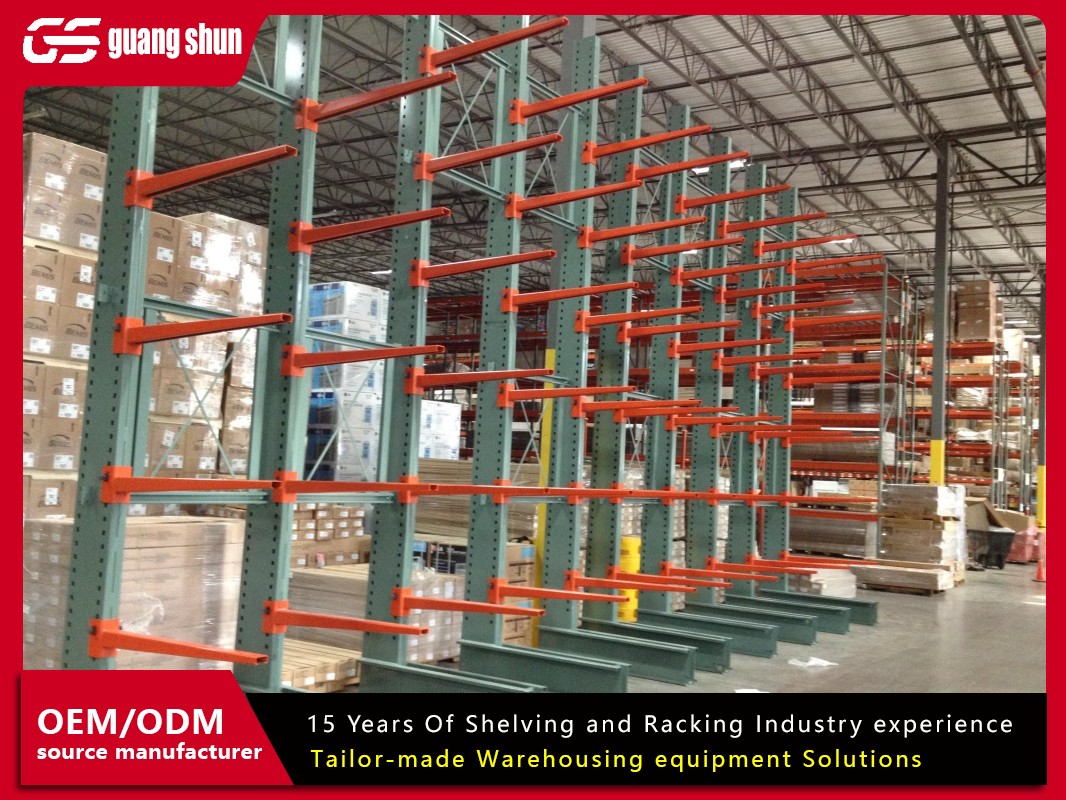
Cantilever racking: For long items (pipes, lumber, steel
bars). Arm spacing adjustable every 100 mm. Maximum arm load 1,000 kg at 600 mm
extension. Base-to-arm ratio must follow 1:3 for stability.
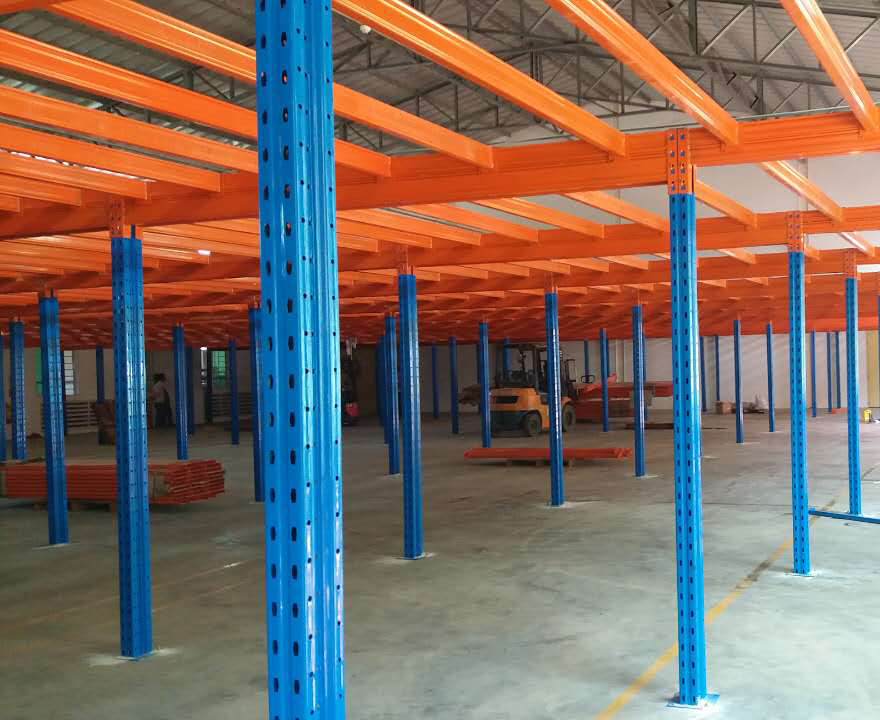
Wire decking & mezzanine integrations: Add a second
level above pallet positions using bolted mezzanine systems. Increases square
meter efficiency by 90% but requires fire suppression and emergency egress
redesign.
Guangshun provides hybrid configurations
combining selective rack with integrated wire decking and column protectors,
ensuring compatibility with both European EN 15635 and American RMI
standards.
3. Layout Optimization: Aisle Width, Slotting, and Picking Zones
A poorly arranged small warehouse racking system generates
travel waste. Use the following deterministic method:
ABC analysis & slotting: Place “A” items (fastest
movers, 15% of SKUs generating 80% of picks) in the golden zone – between waist
and shoulder height (600–1600 mm). B and C items go to upper or lower levels.
This reduces travel distance by 28-35%.
Cross-aisle configuration: For facilities under 30 meters
wide, use a spine layout – main central aisle (3.0–3.5 m) with perpendicular
cross aisles every 12 bays. Allows bi-directional forklift turns without
three-point maneuvers.
Minimum aisle width calculation: W = RT + (L_f × sin θ) +
C, where RT = turning radius of forklift (typical 2,100 mm), L_f = forklift
length (2,500 mm), θ = entry angle (usually 90°), C = safety clearance (200 mm).
For most 3-wheel electric forklifts, minimum theoretical aisle is 2,800 mm; for
VNA turret trucks, 1,600 mm is feasible but requires floor-mounted
rails.
4. Structural Safety & Damage Mitigation in Compact Environments
High-density configurations increase impact risk due to reduced maneuvering
space. Implement these engineering controls:
Column protectors & end guards: Install bolted steel
sleeves (minimum 5 mm wall thickness) on all aisle-facing uprights up to 500 mm
height. Guangshun offers powder-coated protectors
with energy absorption foam, reducing impact transfer by 40%.
Beam locks & row spacers: Every beam-to-upright
connection must have a positive safety clip (step lock) to prevent dislodgement
from accidental forklift hit. For back-to-back racks, install row spacers every
2.4 m vertically to ensure lateral stability.
Load notices & capacity tags: Attach a
weather-resistant placard at each bay showing maximum UDL (uniform distributed
load), point load limit, and permissible pallet overhang (max 50 mm beyond beam
face).
Routine inspections: Follow RMI’s three-tier schedule –
daily operator walkthrough (damage reporting), monthly supervisor audit
(plumbness within 1/200 of height), annual third-party engineering inspection
(ultrasonic thickness testing for corrosion).
According to a 2024 warehouse safety study, small facilities with structured
inspection protocols reduce rack-related incidents by 67% compared to those
relying on visual-only checks.
5. Operational Workflow Integration: Picking Strategies &
Throughput
The small warehouse racking system must
support either discrete picking, zone picking, or batch picking. For facilities
with under 2,000 order lines per day, zone picking with mobile carts works
efficiently:
Assign each picker to a contiguous set of racks (zone). Use voice-directed
or barcode scanning for error reduction (accuracy 99.6% vs. 96% with paper
lists).
Implement pick-to-light for high-frequency SKUs – reduces search time by
50%.
For replenishment, schedule during off-peak hours (e.g., 2-hour window after
shipping cutoff). Use separate reserve storage locations (top beam levels) for
bulk stock.
A case study from a Midwest automotive parts warehouse showed that
reconfiguring from a random storage to ABC-based slotting within the same rack
system increased picking throughput from 58 to 97 lines per hour, with no
additional square footage.
6. Procurement Specifications & Vendor Qualifications
When sourcing a small warehouse racking system, demand
the following from vendors:
Structural calculations stamped by a licensed professional engineer (PE or
chartered engineer). Include seismic analysis if local peak ground acceleration
exceeds 0.2g.
Material test certificates per EN 10204 or ASTM A370 – verify yield strength
(minimum 235 MPa for uprights) and elongation (≥18%).
Coating thickness report – minimum 80 μm of epoxy-polyester powder coat for
indoor; hot-dip galvanized (minimum 85 μm) for refrigerated or humid
environments.
Assembly torque protocols for all bolted connections (e.g., M12 bolts to 90
Nm).
On-site installation supervision and final load test at 125% of design load.
Guangshun provides turnkey engineering
packages including AutoCAD layout, 3D structural simulation, and one-year
warranty against manufacturing defects. Their project files include full
compliance with MH16.3-2023 and FEM 10.2.08.
7. Frequently Asked Questions (FAQs) – Small Warehouse Racking System
Q1: What is the maximum bay depth for a selective small warehouse
racking system when using standard forklifts?
A1: For counterbalance forklifts with 1,200 mm load center, single-deep selective
racks can have a maximum beam depth of 1,100 mm (standard Euro pallet).
Double-deep configuration extends depth to 2,200 mm but requires a reach truck
or telescopic forks. Exceeding 2,200 mm significantly increases extraction time
and product damage risk.
Q2: Can I combine different rack types (selective + drive-in) in the
same small warehouse?
A2: Yes – this is called a
hybrid storage system. Use selective racks along perimeter walls for fast-moving
items, and drive-in racks in the central zone for bulk seasonal SKUs. Ensure
both systems have independent bracing and do not share uprights unless
engineered. Provide separate aisle access for each zone.
Q3: How often do I need to re-level a small warehouse racking system
after installation?
A3: Perform a plumbness check
every 12 months or after any seismic event exceeding 3.0 magnitude. Floor
settlement (common in new buildings) can cause leans – re-shim base plates as
needed. If more than 10% of uprights deviate beyond 1/200 of height, a full
floor flatness assessment is required.
Q4: What are the fire safety requirements for small warehouse racking
above 4 meters?
A4: NFPA 13 mandates in-rack
sprinklers when storage exceeds 3.7 m in height and the rack has solid shelves.
For open wire decking, obstruction criteria apply – sprinkler heads must be
placed within 1.2 m below each solid shelf. Also, provide flue spaces (minimum
150 mm vertical flue every 3 bays). Check local authority approvals before
installation.
Q5: What is the typical ROI period for upgrading from selective racks
to a denser small warehouse racking system (e.g., push-back or
drive-in)?
A5: Based on real 2023–2024 projects,
the ROI ranges from 11 to 24 months. For a 3,000 m² warehouse spending $42,000
on a push-back system (including installation), operational savings come from
reduced external storage rental (often $8–12 per pallet/month) and lower fork
truck travel (20–30% fuel/electricity reduction).
Q6: Are there design limitations for a small warehouse racking system
with uneven concrete floors?
A6: Yes. Uneven floors
(slope >1%) impose lateral forces on uprights. Use load-distributing shims
under each footplate – never stack more than two shims per column. For floor
variations exceeding 15 mm over a 2 m span, consider a mechanical levelling base
or self-levelling compound. Guangshun offers pre-engineering floor
survey to calculate required shim thickness and base plate reinforcement.
From Capacity to Productivity – The Right Small Warehouse
Racking System
Selecting and implementing a small warehouse racking system involves
more than picking a catalog item. It requires load analysis, workflow
simulation, structural safety validation, and a clear upgrade path. Small
warehouses that follow ABC slotting, hybrid rack selection, and scheduled audits
see a 27% median increase in effective capacity without adding square meters.
For customized engineering drawings and compliance documentation, consult
Guangshun – their team
provides site-specific load charts, seismic zone calculations, and 3D warehouse
models that guarantee integration with existing material handling equipment.
Conduct a gap analysis today against the five rack types and inspection
protocols discussed above to quantify your facility’s improvement potential.