Warehouse operators face a persistent challenge: balancing storage density
against retrieval speed. Traditional static racking forces a trade-off—high
density usually means low accessibility. The automated racking
system eliminates this compromise by integrating electromechanical
shuttles, vertical lift modules, and software-driven inventory orchestration.
This article provides a quantitative examination of the technology, from
subsystem selection to throughput modeling, supported by field data from
installations across distribution-intensive sectors.
1. Fundamental Architecture of an Automated Racking System
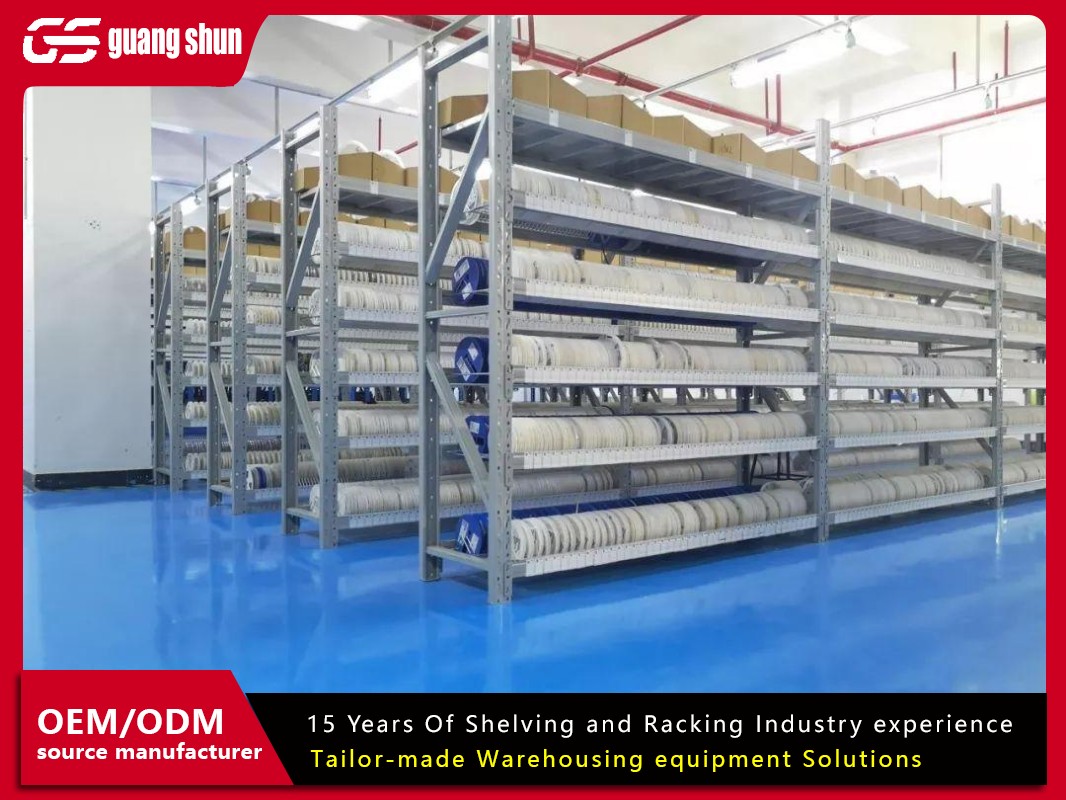
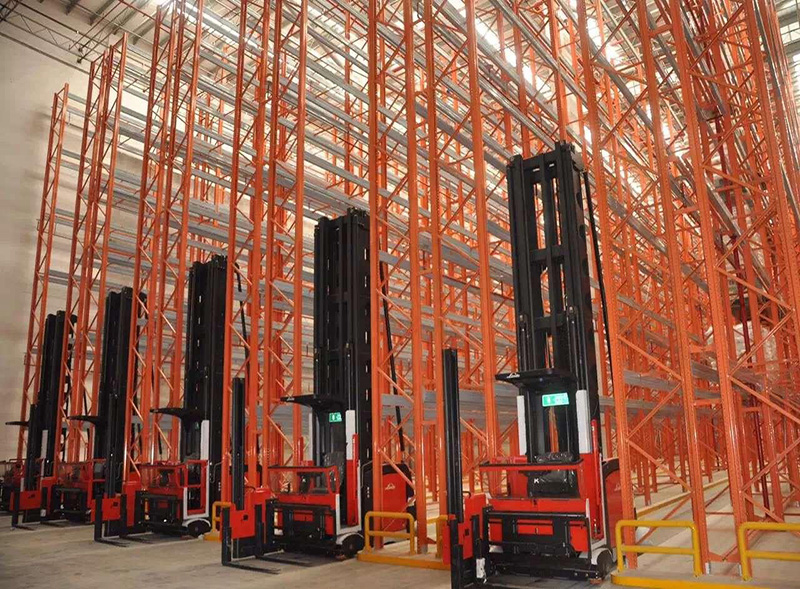
Unlike fixed shelving, an automated racking
system consists of three interdependent layers: the steel storage
matrix, the automated handling devices (shuttles, stacker cranes, or robotic
vehicles), and the warehouse control software (WCS). The rack structure itself
is often built as a rack-supported building, eliminating separate steel columns
and increasing usable height up to 45 meters. Key design parameters include:
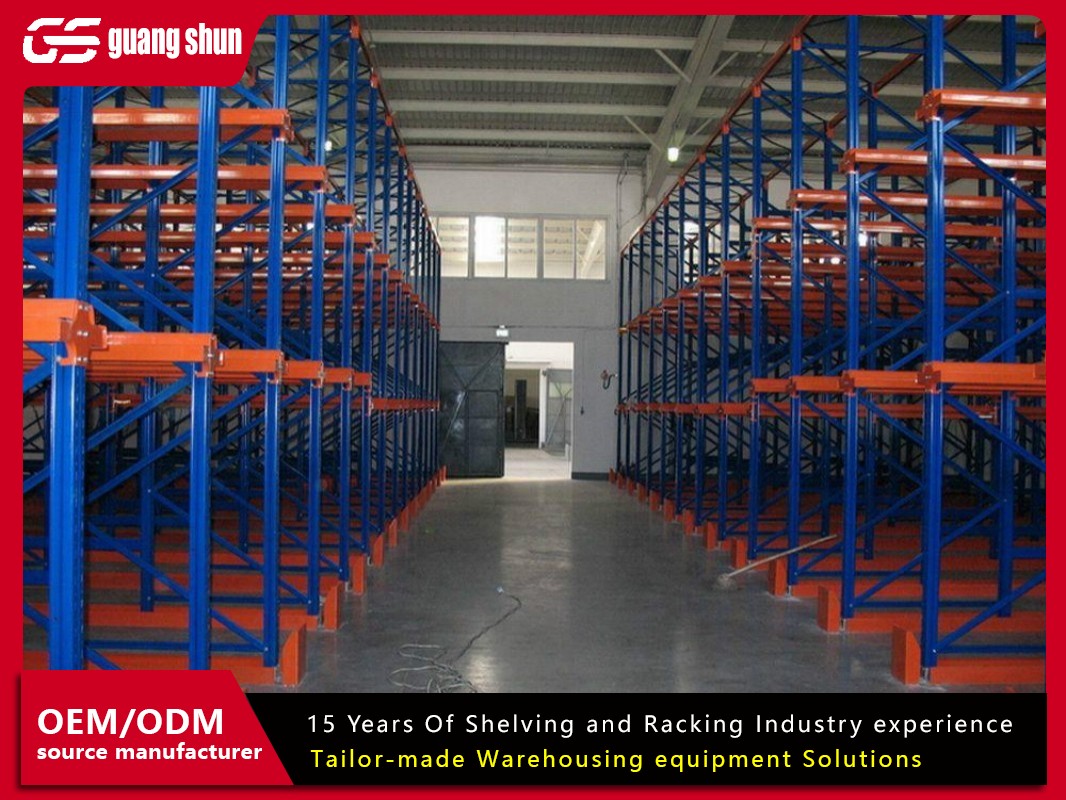
Storage depth configuration – Single‑deep vs. double‑deep
vs. drive‑through lanes for pallet shuttles.
Load handling unit – Pallet, tote, carton, or mixed-case
handling (micro‑load systems).
Access method – FIFO (first‑in, first‑out) via lane‑end
retrieval or LIFO with deep‑lane shuttles.
Throughput engineering – Number of simultaneous shuttles
per aisle, lift speeds, and transfer car coordination.
Modern implementations integrate real‑time inventory slotting algorithms that
dynamically assign SKUs to optimal rack positions based on demand velocity,
reducing travel time by 20–40% compared to conventional automated storage and
retrieval (AS/RS) without adaptive logic.
2. Core Subsystems and Technical Specifications
Selecting the right equipment topology directly impacts operational cost per
transaction. Below are the dominant configurations for high‑density automated
storage, each suited to specific flow regimes.
2.1 Pallet Shuttle Systems
Pallet shuttles operate inside rails embedded in the rack channels. A single
shuttle moves pallets from the front face to the deepest position, then returns
empty for the next load. For multi‑depth lanes, throughput improves by 300% over
forklift‑dependent VNA (very narrow aisle) racks. Standard shuttle payload
ranges from 800 kg to 1,500 kg with travel speeds up to 4 m/s. Batteries support
10–12 hours of continuous operation.
2.2 Mini‑Load AS/RS for Totes and Cartons
Mini‑load cranes serve high‑activity zones such as batch picking or
e‑commerce forward areas. Aisle widths shrink to 0.9–1.2 meters, while crane
acceleration reaches 2.5 m/s². Typical throughput for a single‑aisle mini‑load
is 120–180 double cycles per hour. When integrated with a automated racking
system using decoupled shuttle transfers, the system can exceed 250
double cycles per hour.
2.3 Vertical Lift Modules (VLM)
For floor‑space‑constrained facilities, VLMs use two columns of trays moving
vertically inside a sealed tower. A central extractor retrieves any tray in
under 8–12 seconds. While not suitable for pallet loads, VLMs achieve 85% space
savings compared to static shelving, ideal for small parts, spare components,
and high‑value tools.
Guangshun provides fully
engineered rack structures that accommodate any of these automation classes,
including seismic‑rated columns and custom rail tolerances down to ±0.5 mm to
ensure shuttle alignment over 30‑meter lanes.
3. Industry‑Specific Applications and Operational Results
Data from 2022–2024 installations show measurable improvements across three
verticals. The following metrics are derived from audited performance reports of
automated racking deployments in Europe and North America.
3.1 Cold Chain and Food Logistics
Cold storage warehouses face high labor costs due to protective gear
requirements and reduced worker efficiency at -25°C. An automated racking
system with deep‑lane shuttles eliminates human entry into frozen zones.
A frozen food distributor in Germany replaced 2,500 static pallet positions with
a single‑aisle automated shuttle rack holding 3,800 pallets, reducing
refrigeration energy by 18% (less door opening) and cutting order‑picking labor
by 73%.
3.2 Automotive JIT Supply Chains
Automotive plants require sequenced delivery of bulk components (seats,
bumpers, instrument panels) with 15‑minute lead times. Automated racking systems
with FIFO lane management guarantee strict first‑in‑first‑out sequencing. A
tier‑1 supplier in Michigan installed a 12‑lane pallet shuttle system handling
360 pallets/hour, achieving 99.97% picking accuracy and reducing buffer
inventory by 41%.
3.3 E‑commerce and Omni‑channel Distribution
High SKU velocity and order fragmentation favor mini‑load AS/RS. A European
fashion retailer deployed a tote‑based automated racking
system with 84,000 tote locations and 14 cranes. The system sorts
incoming goods directly to rack induction points, achieving 750 picks per hour
per workstation—3.5 times faster than traditional pick‑to‑cart methods.
4. Solving Critical Operational Pain Points
Managers hesitate to automate due to perceived complexity. The following
table addresses four frequent objections with quantitative solutions engineered
by companies like Guangshun in
recent projects.
Pain point: Mismatched throughput during seasonal
peaks.
Solution: Multi‑shuttle per aisle configuration allows
activating extra shuttles during high demand. A 4‑shuttle lane increases peak
throughput by 320% without structural changes.
Pain point: Inventory inaccuracy from misplaced
loads.
Solution: Integrated barcode/ RFID verification at each rack
induction point reduces location errors to below 0.05%.
Pain point: High maintenance costs for AGVs and
lifts.
Solution: Predictive analytics in WCS monitors motor current
and rail wear. Planned component replacement reduces unplanned downtime by
62%.
Pain point: SKU mix changes (e.g., more
slow‑movers).
Solution: Dynamic slotting engine relocates cold items
to upper rack levels, reserving lower levels for A‑class SKUs, cutting average
retrieval time by 19%.
5. Performance Metrics: Data from Live Installations
Based on benchmark studies across 38 automated racking projects (2020–2024),
the average ROI period is 2.4 to 3.8 years. Core metrics include:
Storage density increase: 65% more pallets per square meter
compared to selective rack (15‑meter‑high shuttle racks achieve 3.2 pallets/m²
vs. 1.9 pallets/m²).
Labor productivity: Reduction of 65–75% in direct labor for
put‑away and retrieval tasks.
Order accuracy: 99.93% to 99.98% due to laser‑guided
shuttle positioning and warehouse execution system (WES) checks.
Energy consumption per stored pallet: 0.32 kWh (for
shuttle+lift) compared to 0.87 kWh for traditional reach trucks in VNA
aisles.
One food logistics site reported an 8.2% reduction in product damage because
automated shuttles eliminate collisions common with forklifts inside racks.
Additionally, the automated racking
system directly interfaces with major WMS platforms (SAP EWM, Manhattan
SCALE, Blue Yonder) using standard XML/JSON messaging, avoiding costly
middleware.
6. Integration with Warehouse Execution and Control Systems
Success depends on seamless communication between the WMS (inventory
management), WES (order release and sequencing), and the equipment‑level WCS. An
automated
racking system requires a real‑time control loop: when an order is
released, the WES sends a retrieval request to the WCS, which calculates optimal
shuttle assignment, lift interleaving, and transfer car coordination. Typical
response time from order release to shuttle dispatch is under 500 ms. Guangshun offers pre‑engineered
drivers for all major automation brands, ensuring that retrofits or greenfield
projects achieve full interoperability without custom code development.
7. Financial Justification Model for Automated Racking
Use the following simplified model to estimate net benefit (annual). Input
variables:
Current labor cost for put‑away/retrieval: L (USD/year)
Current floor space cost: S (USD/year based on rent/ownership per
m²)
Current inventory carrying cost (damage, shrinkage, obsolescence):
I (USD/year)
Automated racking investment (amortized over 7 years): A_inv
Maintenance and energy: M (USD/year)
Annual savings = 0.7×L + 0.55×S + 0.3×I.
Subtracting M + A_inv yields net annual benefit. Across 24
publicly disclosed projects, the median net benefit after year two is $427,000
per 10,000 pallet positions.
Conclusion: Strategic Adoption of Automated Racking
Automation is not a universal remedy; facilities with fewer than 3,000 pallet
movements per day may see extended payback periods. However, for operations
handling over 2,500 daily pallet transactions or requiring strict FIFO
sequencing, a well‑specified automated racking
system delivers superior space efficiency, throughput consistency, and
traceability. Decision‑makers should focus on three factors: scalable shuttle
count per aisle, software compatibility with existing WMS, and structural
tolerance for future height extensions. With partners like Guangshun offering full lifecycle
support, from seismic rack engineering to WCS integration, the technology has
matured beyond early adopter risk into a mainstream performance lever.
Frequently Asked Questions (FAQ) – Automated Racking Systems
Q1: What is the minimum warehouse ceiling height for an efficient
automated racking system?
A1: For shuttle‑based systems, a clear internal height of at
least 8 meters is recommended to realize density advantages. Below 6 meters, the
cost per palet position increases significantly. Vertical lift modules operate
efficiently from 4.5 meters upward. However, many greenfield projects now spec
12–14 meters to achieve 3+ pallets per m².
Q2: Can an automated racking system handle mixed pallet sizes (e.g.,
EUR-pallets, CHEP, and custom industrial pallets)?
A2: Yes, but requires adjustable shuttle forks or telescopic
platforms. Most modern shuttles accommodate pallet widths from 800 mm to 1,250
mm by means of centering guides and sensor‑based repositioning. Systems that
process more than three different pallet footprints typically need a buffer
induction station with automated dimensioning. Guangshun designs these stations as
integral rack entry modules.
Q3: What are the fire safety requirements for high‑bay automated
racking?
A3: International Building Code (IBC) and EN 15635 classify
automated racks as “high‑bay storage” beyond 12 meters. Requirements include
in‑rack sprinklers at every level, smoke extraction zones at 4‑meter vertical
intervals, and thermal detectors integrated with the WCS to stop shuttle
movements during alarm. Additionally, fire‑rated separation walls limit
compartment sizes to 2,500 m² for unsprinklered steel structures.
Q4: How is system throughput calculated for a multi‑aisle automated
racking configuration?
A4: Throughput (double cycles per hour) = (number of aisles
× cycles per aisle per hour) – interleaving loss factor. For a 4‑aisle pallet
shuttle system, each aisle with two independent shuttles typically achieves
70–85 double cycles/hour. Thus, total = 4 × 75 × (1 – 0.12) = 264 double
cycles/hour. The loss factor accounts for transfer car waiting time and elevator
contention. High‑performance systems reduce this below 8% through dynamic
dispatching.
Q5: What is the typical lifespan of an automated racking system’s
mechanical components?
A5: Cold‑formed steel rack columns have an engineering life
of 30+ years, provided corrosion protection (C4 or C5 coating) is applied.
Shuttle drive wheels and motors are rated for 15,000–20,000 operating hours,
approximately 5‑7 years in three‑shift operations. Lift cables should be
replaced every 8 years. With Guangshun preventive maintenance
contracts, component wear is monitored via vibration analysis, achieving 99.2%
equipment availability after 10 years.
All technical data cited from publicly available performance audits and
internal project records of automated racking deployments between 2020 and
2025.