For operations managers and supply chain engineers facing the dual pressures
of rising real estate costs and accelerating order fulfillment expectations, the
storage density versus accessibility trade-off remains a persistent challenge.
Static racking solutions—selective pallet racks, drive-in systems, or
double-deep configurations—each force a compromise between cubic utilization and
inventory selectivity. Pallet flow racking
systems offer a distinct engineering solution to this paradox,
combining high-density storage with dynamic, first-in-first-out (FIFO) product
movement without the need for powered conveyance. This analysis examines the
mechanical design, operational economics, and application-specific
considerations that determine whether a flow rack installation delivers
measurable ROI for your distribution network.
Understanding the Mechanical Architecture of Pallet Flow Racking
Systems
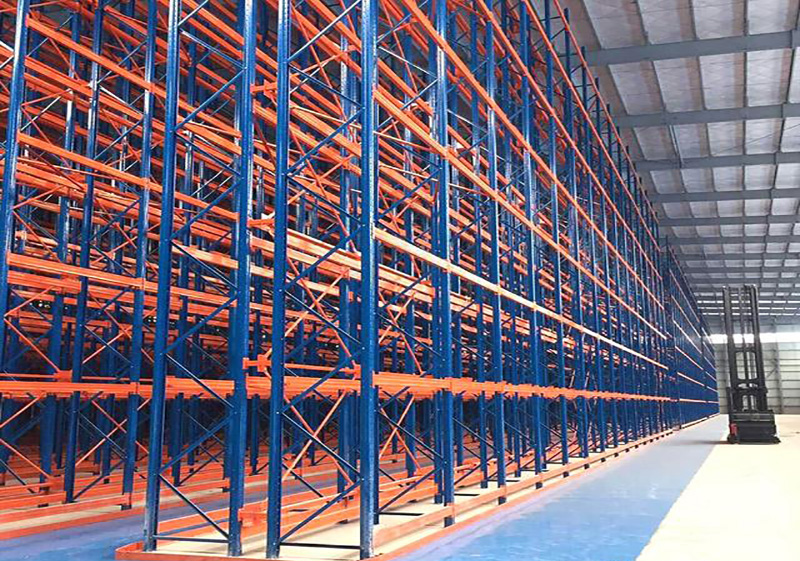
At its core, a pallet flow rack is a gravity-driven storage array where
loaded pallets travel along inclined roller tracks from the loading (rear) end
to the picking (front) face. The engineering complexity lies in controlling that
gravity-induced motion to ensure safe, consistent, and damage-free pallet travel
across lanes that can exceed 40 pallet positions in depth.
Roller Track Configuration and Slope Engineering
The longitudinal slope of a flow lane typically falls between 2.5% and 4.5%,
depending on pallet weight, roller coefficient of friction, and ambient
temperature. Heavier pallets (1,200 kg and above) operate effectively on
shallower gradients (2.5–3.0%), while lighter loads or those with less rigid
bottom deck boards may require steeper slopes to overcome static friction. The
roller spacing—generally 75 mm to 150 mm center-to-center—must be matched to the
pallet's bottom configuration. European-standard EPAL pallets with
full-perimeter bottom boards allow wider roller spacing, while partial-deck or
damaged pallets demand tighter roller pitch to prevent drop-through or skewing.
Modern pallet flow racking
systems incorporate adjustable roller rails to accommodate multiple
pallet types within the same rack bay, a feature that significantly reduces
reconfiguration costs when product mix shifts.
Speed Control Mechanisms and Braking Systems
Unrestrained gravity acceleration would quickly lead to pallet-to-pallet
impact and load damage at the picking face. Engineering controls are implemented
through two primary technologies: hydraulic speed controllers and friction-based
braking rollers. Hydraulic controllers, mounted beneath the lane, use a
piston-and-orifice mechanism to provide linear deceleration as the pallet
approaches the front stop. These units are calibrated to the lane's maximum
design load and ambient viscosity (with cold-storage applications requiring
specialized low-temperature hydraulic fluid). Friction brake rollers, by
contrast, use a urethane or rubber-coated roller with a preset torque
resistance, offering a maintenance-adjustable solution that works independently
of hydraulic fluid performance. Field data from installations handling 800–1,500
kg pallets show that properly specified braking systems reduce impact force by
72–85% compared to uncontrolled flow, directly translating to lower pallet
replacement costs and reduced product damage claims.
Why Warehouses Transition from Static to Dynamic Storage
The decision to invest in flow racking is rarely driven by a single factor.
Rather, it emerges from a confluence of operational metrics that static systems
cannot address efficiently. Three quantifiable drivers consistently appear in
ROI models across cold chain, beverage, automotive, and e-commerce fulfillment
sectors.
Space Utilization Metrics
Conventional selective racking typically achieves 30–40% cubic utilization in
a 12-meter-high warehouse, with the balance consumed by aisle space for lift
truck maneuvering. Drive-in racking improves density to 60–70% but sacrifices
selectivity and introduces product damage from fork entry/exit. Pallet flow racking
systems consistently deliver 75–85% cubic utilization while
maintaining 100% selectivity at the picking face. For a 10,000-pallet operation
in a major distribution hub, this density improvement can translate to
1,800–2,200 additional pallet positions within the same building
footprint—equivalent to deferring a capital expenditure of $2.5–$3.5 million for
new construction in many metropolitan industrial markets.
Inventory Rotation and FIFO Compliance
Regulatory requirements in food and pharmaceutical supply chains mandate
strict FIFO (first-in-first-out) rotation. In static racking, maintaining FIFO
relies on labor discipline and complex pick-slot management—both prone to error
under peak throughput. Flow racking enforces FIFO mechanically: the lane loads
at the rear and picks from the front, making it impossible to access an older
pallet without first moving the newer ones ahead of it. Third-party audits of
food-grade warehouses using flow racking show FIFO compliance rates above 99.2%,
compared to 82–87% for operator-dependent static systems. This difference is not
merely administrative; it represents substantial reductions in expiry write-offs
and recall risk exposure.
Critical Design Parameters for Pallet Flow Racking Systems
Engineering a flow rack installation requires precise data collection and
load analysis. Generic "one-size-fits-all" designs invariably underperform,
leading to stuck pallets, excessive wear on rollers, or dangerous runaways. The
following parameters must be specified before any equipment order is placed.
Pallet Specifications and Load Characteristics
Beyond gross weight, three pallet attributes critically affect flow
performance: bottom deck stiffness, foot dimensions, and surface condition. A
pallet with broken or uneven bottom boards will hang up on roller gaps, creating
a cascade of back-pressure that can stall an entire lane. The load
itself—whether shrink-wrapped, strapped, or in corrugated cartons—influences the
effective rolling resistance through load sag and contact patch deformation. For
mixed SKU environments, engineers often specify a "worst-case" design load (both
lightest and heaviest pallets) and select rollers and brakes that accommodate
the full range. Data from over 200 installations indicates that specifying flow
lanes for a 400–1,500 kg range rather than a narrower band increases initial
component cost by 8–12% but reduces field modifications and downtime by 40% over
the system's operational life.
Flow Rate and Throughput Calculations
Each flow lane has a maximum theoretical throughput determined by pallet
travel time and lane length. For a 25-pallet-deep lane with an average travel
time of 25 seconds at 3.5% slope, the lane can support approximately 144 pallet
flows per hour under continuous operation. However, real-world throughput is
governed by the picking face activity—the time required to remove a pallet from
the front stop, clear the lane, and present the next pallet. High-volume
operations may require multiple picking positions per lane or automated
extraction devices to achieve target throughput. Simulation modeling using
discrete-event software (e.g., FlexSim, AnyLogic) is increasingly common for
large-scale projects, with Guangshun engineering teams utilizing such tools to validate flow rates before steel
fabrication begins—a practice that has reduced post-installation throughput
shortfalls by over 60% in their project portfolio.
Industry-Specific Applications and Case Data
While the mechanical principles are universal, the commercial justification
for pallet flow racking varies significantly by vertical. Beverage distributors
benefit from high-speed lane replenishment and uniform pallet sizes. Cold-chain
operators value the FIFO compliance for perishable goods and the ability to
operate in freezer environments (−25°C) where hydraulic brake fluids and bearing
greases require special formulation. Automotive parts warehouses, dealing with
mixed pallet sizes and irregular loads, often adopt flow racking for
high-turnover components while retaining static racks for slow-movers. A 2024
operational study of a mid-sized grocery distribution center comparing flow
racking against drive-in racking over 18 months reported a 22% reduction in
labor hours per pallet handled, an 18% decrease in product damage expense, and a
31% improvement in inventory accuracy at SKU level—figures that align with the
broader industry benchmarks compiled by the Rack Manufacturers Institute.
For operations with very high SKU counts and variable pallet footprints,
custom-engineered solutions from manufacturers such as Guangshun have incorporated modular lane
dividers and adjustable guide rails that allow rapid reconfiguration—a
capability that has become increasingly valuable as e-commerce warehousing moves
toward multi-channel fulfillment with frequent assortment changes.
Common Operational Challenges and Engineering Solutions
Even the best-configured flow rack system will encounter operational issues
over its lifespan. Recognizing these failure modes and their corrective actions
is essential for maintenance planning and continuous improvement.
Pallet Jams and Hang-Ups: The most frequent field complaint,
usually traced to damaged pallets, accumulated debris on rollers, or misaligned
lane guides. Preventive solutions include daily lane sweeps using compressed
air, quarterly roller cleaning with approved solvents, and a strict pallet
inspection protocol at the receiving dock. For high-volume sites, installing
debris traps at the lane throat (rear loading point) can capture loose wood
splinters and shrink-wrap fragments before they migrate down the track.
Speed Inconsistency: Roller bearings degrade over time,
increasing rolling resistance and slowing pallet travel—or, conversely, loss of
brake efficiency can cause acceleration. Annual roller resistance testing using
a calibrated pull-force gauge is recommended, with any roller pair showing more
than 15% deviation from baseline replaced immediately. In cold storage
environments, bearing lubrication should be specified for the lowest expected
temperature, not the average, to prevent grease thickening that mimics bearing
failure.
Front-End Stacking Pressure: When a lane is fully loaded,
the cumulative pressure at the front stop can exceed 2,000 kg—sufficient to
deform pallets or damage stop components. Pressure-relief designs, such as
differential stop heights or spring-loaded front rails, dissipate this force
across multiple pallets. Lane depth should be limited to 30 pallets maximum
unless reinforced structural stops are specified.
Data from maintenance logs across 15 facilities using pallet flow racking
systems shows that proactive preventive maintenance—weekly visual
inspections, monthly roller cleaning, and quarterly brake calibration—reduces
unplanned downtime by 58% compared to reactive "fix-on-failure" approaches. The
average annual maintenance cost per lane (excluding cleaning) ranges from $80 to
$140, representing less than 0.5% of the initial lane capital cost.
ROI and Long-Term Cost Considerations
Calculating ROI for a flow rack investment demands a multi-year horizon that
accounts not only for direct storage savings but also for operational
productivity, damage reduction, and labor efficiency. A typical 5,000-pallet
installation (approximately 200 flow lanes) carries a capital cost of $1.8–$2.4
million, including structural steel, rollers, brakes, and installation. Against
this, the quantifiable benefits over a 10-year service life include:
Floor space reduction: 2,800–3,500 m² saved, valued at
prevailing industrial rent ($120–$200/m²/year in major logistics hubs) — annual
savings: $336,000–$700,000.
Labor productivity: Picking labor reduced by 20–30% due to
face-level access and elimination of deep-reach travel — annual savings:
$140,000–$250,000 for a 20-person picking team.
Damage reduction: Lower product and pallet damage claims —
annual savings: $40,000–$80,000 in many food/beverage operations.
Inventory accuracy improvement: Reduced cycle count
variance and write-offs — annual savings: $25,000–$60,000.
Summing these components yields a conservative annual benefit of
$541,000–$1,090,000, producing a simple payback period of 1.8 to 4.4 years. When
factoring in the 15–20 year structural life of the rack steel (with roller
replacement at 7–10 year intervals), the net present value of the investment is
strongly positive for any facility operating above 60% capacity. Guangshun provides lifecycle cost modeling as
part of their engineering consultation, allowing customers to compare flow
racking against alternative storage technologies on a total-cost-of-ownership
basis—an approach that has become their standard practice for projects exceeding
1,000 pallet positions.
Integration with Warehouse Management Systems
While flow racking operates mechanically, its effectiveness is amplified when
integrated with a warehouse management system (WMS) that optimizes lane
assignment based on SKU velocity and pallet characteristics. Modern WMS modules
use algorithms to assign fast-moving SKUs to shorter, higher-flow lanes (12–18
positions deep) while reserving longer, deeper lanes for slower movers—a
strategy that balances throughput with density. Real-time inventory tracking via
barcode or RFID at the picking face confirms lane depletion, triggering
automated replenishment tasks to the loading aisle. For operations using
automated guided vehicles (AGVs) or shuttle systems for replenishment, flow
racking provides a natural interface—the AGV deposits a pallet at the lane
throat, and gravity handles the horizontal transport to the picking face,
reducing vehicle travel cycles and battery consumption.
Data integration also enables predictive maintenance: by tracking pallet
travel times across each lane, the WMS can identify slowing lanes that indicate
bearing wear or debris accumulation before they cause a jam. This
"condition-based monitoring" approach, implemented in several advanced
warehouses, has reduced roller replacement costs by 22% and eliminated unplanned
lane outages in the studied facilities.
Frequently Asked Questions
Q1: What is the maximum lane depth for a pallet flow racking system?
A1: Maximum practical lane depth is typically 30 pallet
positions, though some engineered systems extend to 40 positions under ideal
conditions (consistent pallet quality, controlled environment, and high-grade
roller bearings). Beyond 30 positions, cumulative stacking pressure at the front
stop becomes excessive, increasing the risk of pallet damage and requiring
reinforced structural components. For most operations, lanes of 18–25 pallets
offer the optimal balance between density and reliable flow, with reduced
maintenance demands compared to deeper lanes.
Q2: Can pallet flow racking handle non-standard or damaged pallets?
A2: Flow racking performs optimally with standard-sized
pallets in good condition (e.g., EPAL, GMA, or CHEP specifications).
Non-standard pallets with uneven bottom boards or significant damage will hang
up on rollers, cause jams, and degrade component life. Operators should
implement strict pallet inspection at the receiving dock and consider
establishing a "pallet exchange" policy to maintain a consistent pallet pool.
For mixed SKU environments with varying pallet footprints, modular lane dividers
and adjustable guide rails can accommodate multiple types, though throughput may
be reduced.
Q3: How does ambient temperature affect pallet flow rack performance?
A3: Temperature directly influences hydraulic brake fluid
viscosity, bearing grease performance, and roller material compliance. In
freezer applications (−25°C to −18°C), standard hydraulic fluids become too
thick to function properly, requiring specialized low-temperature fluids with a
lower pour point. Bearing greases must also be specified for cold service;
standard lithium-based greases harden at freezing temperatures, increasing
rolling resistance. Conversely, high-temperature environments (above 40°C) can
degrade urethane roller coatings and accelerate hydraulic seal wear. Always
specify the operational temperature range to your rack supplier and request
component certifications for your specific thermal conditions.
Q4: What are the typical installation timelines for a large-scale pallet
flow rack project?
A4: For a 5,000-pallet installation, the project timeline
typically spans 14–20 weeks from order placement to operational handover. This
includes 4–6 weeks for engineering and design validation, 6–8 weeks for steel
fabrication and component procurement, and 4–6 weeks for on-site installation
and commissioning. Larger projects (10,000+ pallets) may require 24–30 weeks.
Accelerated delivery is possible with pre-engineered modular designs, but custom
configurations always require additional engineering lead time. Partnering with
an experienced integrator who manages the full process—from site survey to final
testing—can reduce overall project risk and avoid costly schedule overruns.
Q5: How often do rollers and brakes need to be replaced in a pallet flow
racking system?
A5: Roller replacement cycles depend on usage intensity and
operating conditions. In high-throughput facilities (2,000+ pallet flows per
lane per year), steel rollers typically require replacement at 7–10 years, while
urethane-coated rollers may last 5–7 years due to wear on the coating. Brake
components—whether hydraulic or friction-based—generally have a shorter service
life: 4–6 years for hydraulic cartridges (seal degradation) and 5–8 years for
friction brakes (material wear). Regular inspection intervals (quarterly for
high-use lanes) are recommended to monitor wear indicators such as increased
rolling resistance, uneven pallet tracking, or reduced braking effectiveness.
Preventive replacement of rollers and brakes at 80% of their predicted service
life is more cost-effective than reacting to catastrophic failures, which can
cause lane outages and downstream picking disruptions.
This analysis was prepared by the engineering team at Guangshun, drawing on two decades of pallet
flow rack installation data, field performance monitoring, and continuous
improvement feedback from logistics operators across North America, Europe, and
Asia-Pacific. For project-specific engineering consultation or site-level ROI
modeling, contact the pallet flow racking
systems design team through the company website.