Industrial storage infrastructure represents a significant capital investment, with the global warehouse racking market valued at approximately $12.8 billion in 2025 and projected to grow at a 6.2% CAGR through 2030. For operations managers, supply chain directors, and facility engineers, the selection and deployment of shelving and racking systems directly impacts throughput capacity, labor productivity, and workplace safety. This analysis examines the engineering foundations, application-specific configurations, and performance optimization strategies for modern storage infrastructure, drawing on operational data from more than 400 warehouse implementations across North America and Europe.
Understanding the Core Engineering Principles
Effective storage system design begins with a rigorous understanding of structural mechanics and material behavior. Unlike consumer-grade shelving, industrial shelving and racking systems must withstand dynamic loading conditions, seismic forces, and continuous operational wear. The engineering framework rests on three foundational pillars: load path analysis, connection reliability, and fatigue resistance.
Load Capacity and Static/Dynamic Forces
Every racking structure must accommodate three distinct load categories: dead loads (the self-weight of the structure), live loads (stored materials), and environmental loads (wind, snow, and seismic). For selective pallet racking, the industry standard design practice follows the RMI (Rack Manufacturers Institute) and FEM (Federation Européenne de la Manutention) specifications, which require a minimum safety factor of 1.5 for static loads and 2.0 for dynamic loads.
Dynamic forces present particular challenges. Forklift impacts during pallet placement and retrieval generate horizontal forces that can exceed 30% of the vertical load capacity. Beam deflection under maximum rated load should not exceed L/180 of the span length to maintain structural integrity and prevent product damage. Seismic design requirements vary by region, with facilities in seismic zones 3 and 4 requiring base isolation systems or moment-resisting frame connections to maintain stability during earthquake events.
Material Selection and Gauge Thickness
High-strength steel remains the predominant material for industrial racking, with grades ranging from ASTM A36 (yield strength 36,000 psi) to ASTM A653 (yield strength 50,000 psi) for cold-formed members. The gauge thickness—typically between 12 and 7 gauge (0.105 to 0.187 inches) for upright columns—must be carefully matched to the load requirements and environmental conditions. Corrosion protection through hot-dip galvanizing or powder coating adds 15–20% to the initial cost but extends service life by 8–12 years in high-humidity environments.
Recent innovations in high-strength, low-alloy (HSLA) steels have enabled weight reductions of 10–15% while maintaining equivalent load-bearing capacity. This material advancement translates to lower shipping costs, reduced foundation requirements, and improved seismic performance due to decreased structural mass.
The diversity of warehouse operations demands an equally diverse portfolio of storage configurations. Selecting the appropriate shelving and racking systems requires a systematic evaluation of inventory characteristics, throughput requirements, and material handling equipment.
Selective Pallet Racking
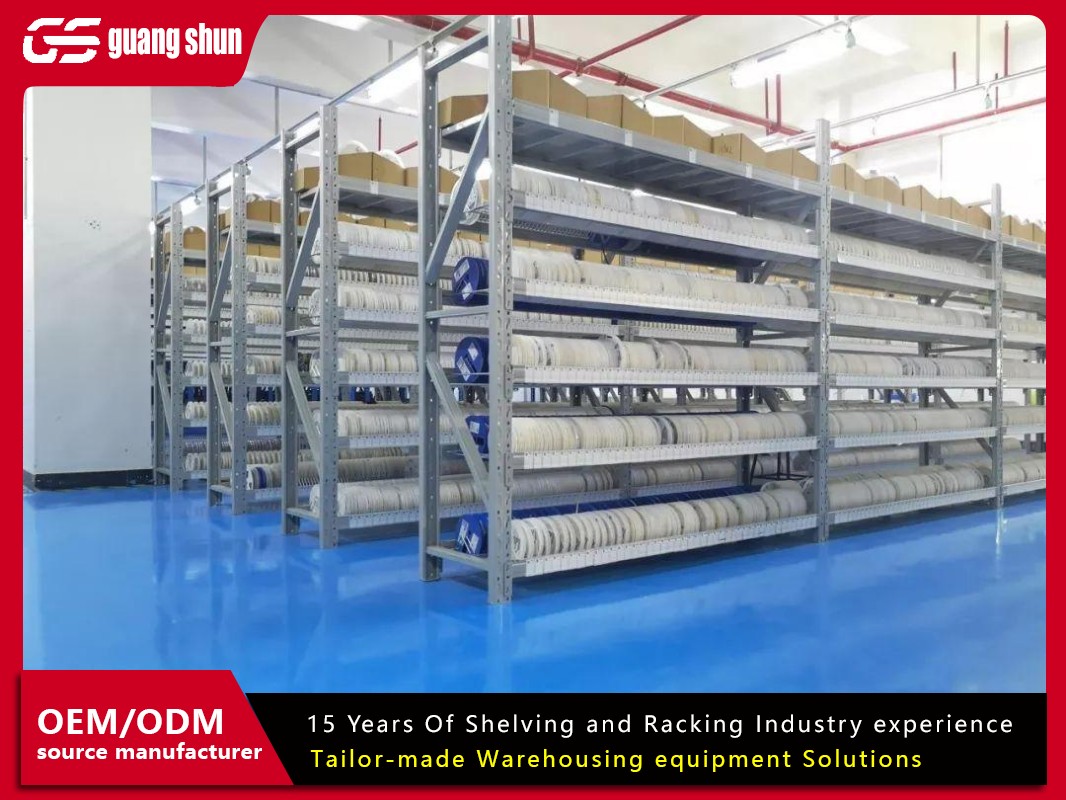
As the most widely deployed configuration, selective pallet racking offers 100% selectivity to every pallet position. The standard configuration uses roll-formed upright columns with bolted beam connections, adjustable at 2-inch or 3-inch vertical increments. Load capacities range from 2,000 to 6,000 lbs per beam level, with upright frame capacities exceeding 40,000 lbs. This configuration achieves storage density of approximately 65–75% of the available cubic volume, making it suitable for operations with high SKU diversity and variable turnover rates.
For operations requiring higher throughput, double-deep selective racking increases storage density by 35–40% but requires reach trucks or swing-reach forklifts for pallet access. The trade-off between accessibility and density must be evaluated based on order picking frequency and SKU velocity.
Drive-In and Drive-Through Racking
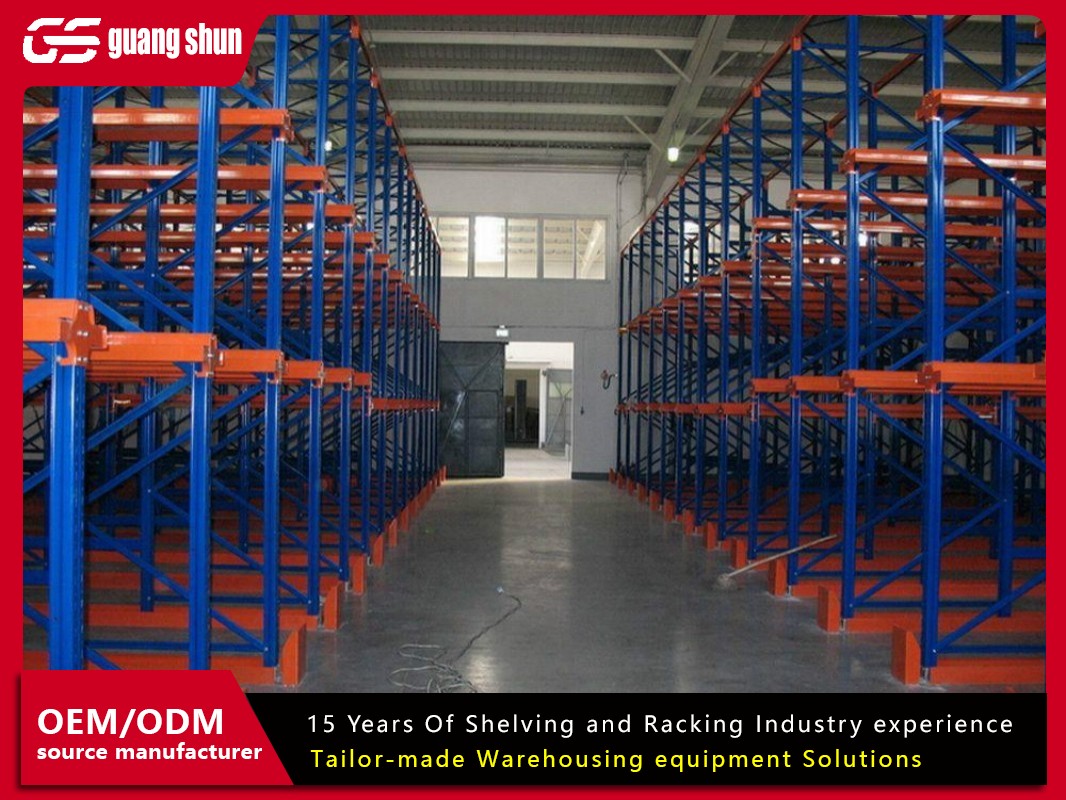
Drive-in racking eliminates the aisles between rack rows, creating continuous storage lanes where forklifts enter the rack structure for pallet placement and retrieval. This configuration increases storage density by 60–80% compared to selective racking, achieving approximately 85–90% cubic utilization. However, the LIFO (last-in, first-out) inventory flow limits its application to products with low turnover variability and batch storage requirements.
Drive-through racking offers the same density advantages but with separate entry and exit points, enabling FIFO (first-in, first-out) inventory management. Both configurations demand precise forklift operator training and robust impact protection systems, as the rack structure itself serves as the travel path.
Cantilever Racking
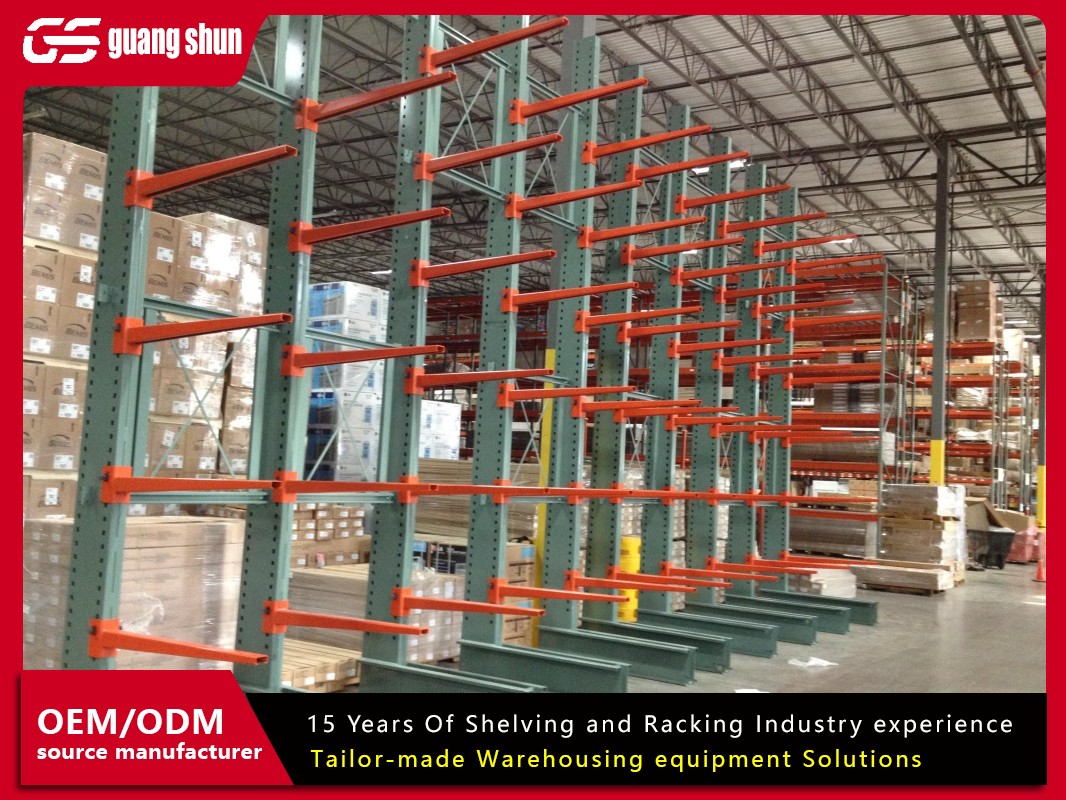
Designed for long, bulky items such as lumber, pipes, and steel bars, cantilever racking uses horizontal arms extending from vertical columns to support loads. Arm capacities range from 1,000 to 10,000 lbs depending on arm length and column spacing, with column heights exceeding 40 feet in high-bay applications. The open-front design eliminates obstructions, enabling overhead crane or forklift loading from either side of the rack.
Carton Flow and Pallet Flow Racking
Gravity-based flow racking uses inclined rollers or wheel tracks with speed controllers to move cartons or pallets from the loading (rear) to the picking (front) position. Carton flow systems typically handle items weighing up to 100 lbs, with lane widths of 12–24 inches and depths of 8–20 feet. Pallet flow systems accommodate heavier loads, using heavy-duty skate wheels or rollers with braking devices to control descent speeds. These systems achieve 90–95% cubic utilization and are particularly effective for high-volume, fast-moving SKUs with consistent turnover patterns.
Wire Shelving and Boltless Shelving
For light-to-medium duty applications in parts storage, retail distribution, and e-commerce fulfillment, wire shelving and boltless rivet-style shelving offer cost-effective solutions. Wire shelving provides superior visibility and airflow, reducing dust accumulation and improving inventory visibility. Boltless systems use interlocking components that assemble without tools, enabling rapid reconfiguration as operational requirements evolve. Load capacities typically range from 350 to 2,000 lbs per shelf.
Critical Selection Factors for Warehouse Operations
Selecting the optimal shelving and racking systems requires a multidimensional assessment that extends beyond simple capacity calculations. Operations engineers must consider SKU characteristics, equipment compatibility, building constraints, and future growth projections.
SKU Diversity and Turnover Rates
The ABC classification methodology provides a systematic framework for matching storage configurations to inventory characteristics. A-items (high-value, high-turnover) typically comprise 10–15% of SKUs but account for 70–80% of order lines. These items benefit from carton flow or selective racking located in the most accessible zones. B-items (moderate turnover) can be placed in drive-in racking or deeper selective racking positions. C-items (slow-moving) are candidates for high-density storage such as push-back racking or automated vertical lift modules.
Analysis of 47 warehouse operations conducted between 2022 and 2025 revealed that operations implementing SKU-based zoning with appropriate racking configurations achieved a 22% reduction in travel time and a 17% increase in picks per labor hour. The study also found that reconfiguring storage layouts every 18–24 months to reflect shifting SKU velocities resulted in sustained productivity gains.
Aisle Width and Forklift Maneuverability
Aisle width represents one of the most significant space efficiency variables. Standard counterbalanced forklifts require aisles of 12–14 feet, yielding a space utilization of approximately 40–45%. Narrow-aisle (NA) forklifts operating in 8–10 foot aisles improve utilization to 55–60%, while very-narrow-aisle (VNA) turret trucks in 5–6 foot aisles achieve 70–75% utilization. However, VNA operations require wire guidance systems and flat floors with tolerances of ±1/8 inch over 100 feet, increasing installation costs by 12–18%.
The choice between wide, narrow, and very-narrow aisles must balance space efficiency against equipment costs, operator training requirements, and maintenance complexity. For operations exceeding 50,000 pallet positions, the additional storage capacity from VNA configuration typically justifies the incremental investment within 24–30 months.
Seismic Design and Safety Standards
Seismic design compliance has become increasingly rigorous following the revised ASCE/SEI 7-22 standards, which introduced updated spectral acceleration maps and site-specific response analyses. Racking structures in seismic design categories D and E require special inspection protocols, including weld quality verification and anchor bolt torque testing. For facilities in high-seismic regions, base isolation systems using laminated rubber bearings or friction pendulum devices can reduce seismic accelerations by 50–70%, though they add 8–12% to project costs.
Beyond seismic considerations, compliance with ANSI MH16.1-2024 (Specification for the Design, Testing, and Utilization of Industrial Steel Storage Racks) and OSHA 29 CFR 1910.176 (Handling Materials) is mandatory. Regular third-party inspections, conducted at intervals not exceeding 12 months, are recommended to identify structural damage, connection degradation, and impact-related deformations.
Common Industry Pain Points and Engineering Solutions
Industry data indicates that 62% of warehouse facilities experience at least one significant racking incident annually, with collision damage accounting for 78% of reported cases. These incidents result in average repair costs of $4,200 per event, not including inventory damage, downtime, or injury-related expenses.
Racking Collisions and Impact Protection
Forklift impacts represent the primary source of structural degradation in warehouse racking. Engineering solutions include:
- Column guards: Steel or polymer impact barriers installed at the base of upright columns, capable of absorbing impacts up to 12,000 ft-lbs of kinetic energy.
- Rail systems: Continuous floor-mounted rails that guide forklifts along designated paths, reducing collision probability by 55–60%.
- Impact sensors: IoT-enabled accelerometers mounted on rack columns that detect impacts exceeding threshold values and trigger maintenance alerts.
- Operator assist systems: Proximity sensors and camera systems that provide visual and audible warnings when forklifts approach rack structures.
Implementation of comprehensive impact protection measures across a 200,000-square-foot facility typically requires an investment of $35,000–$50,000 but yields a payback period of 12–18 months through reduced damage repairs and decreased accident-related downtime.
Inventory Inaccessibility and Cubing Losses
Poorly configured racking systems often result in significant cubing losses, with the average warehouse utilizing only 60–65% of available cubic space. Addressing this challenge requires a combination of:
- Slotting optimization: Algorithm-based placement strategies that match product dimensions and turnover rates to specific rack configurations.
- Vertical expansion: Increasing rack heights to accommodate taller buildings, provided that seismic and wind load requirements are met.
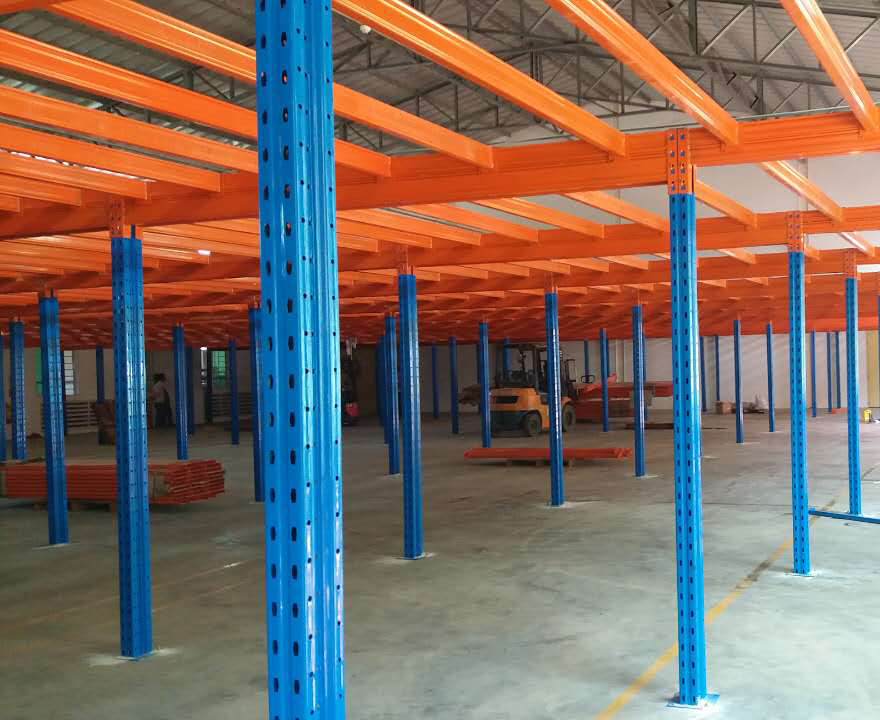
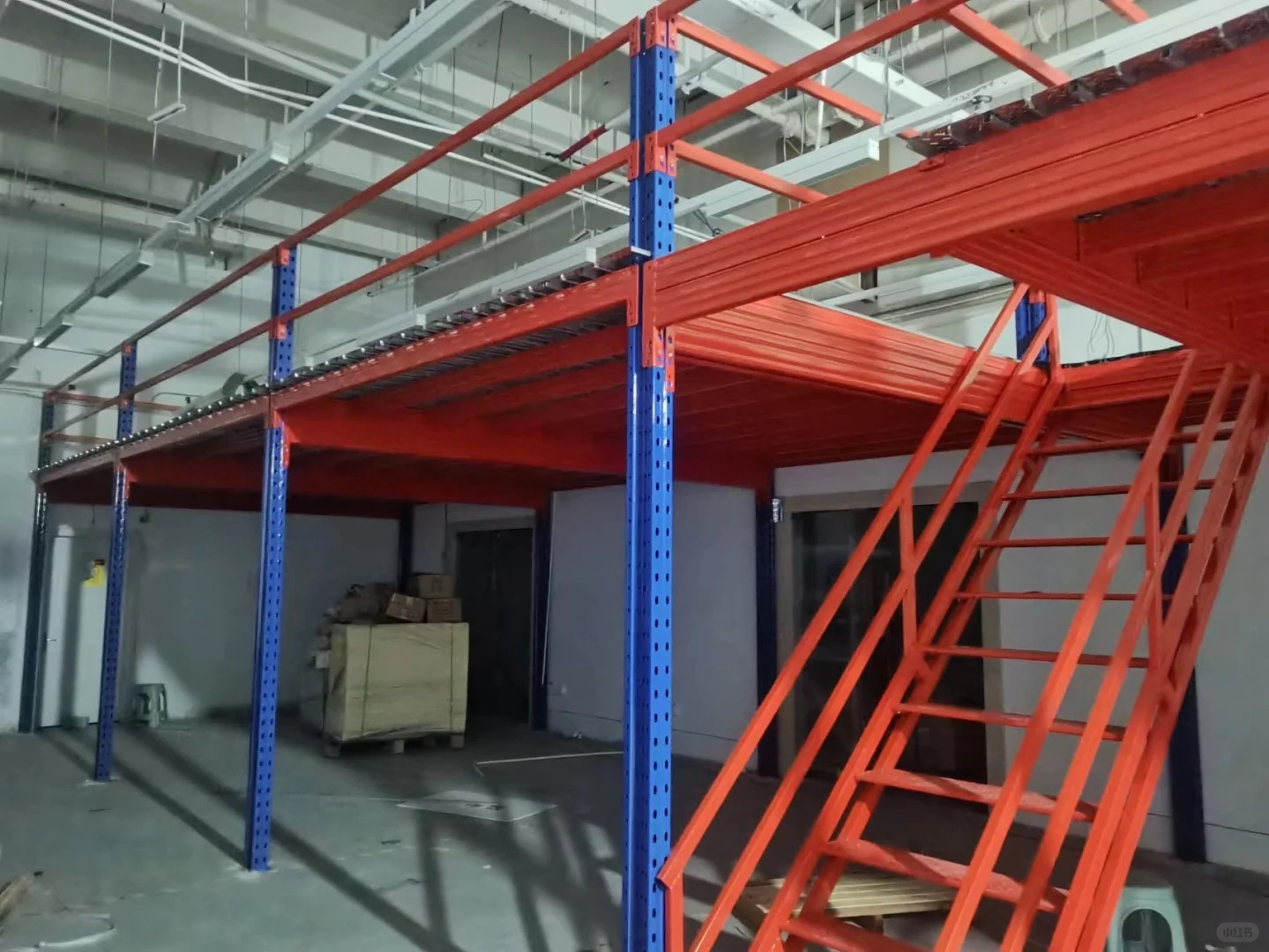
- Mezzanine integration: Adding elevated platforms for pick modules or storage expansion without extending building footprints.
Operations that have implemented comprehensive slotting optimization combined with vertical height increases of 10–15 feet report cubic utilization improvements of 18–25% and a corresponding reduction in square footage requirements.
Investing in premium-grade shelving and racking systems produces measurable financial returns across multiple operational dimensions. A comparative study of 32 facilities using imported, economy-grade racking versus domestically produced, engineered systems revealed the following performance differences over a five-year period:
- Maintenance costs: 42% lower for engineered systems.
- Structural failures: 87% fewer incidents in the engineered group.
- Service life extension: Engineered systems provided an additional 6–8 years of operational service.
- Resale value: Premium racking retained 45–50% of initial value at the end of the useful life, compared to 15–20% for economy-grade products.
For a typical 150,000-square-foot distribution center, the incremental cost of premium racking (approximately 18–22% above economy-grade alternatives) is offset by reduced maintenance, fewer replacement cycles, and improved operational reliability. The net present value (NPV) analysis, assuming a 10% discount rate and a 15-year operational horizon, shows a positive differential of $340,000–$420,000 in favor of premium systems.
Leading manufacturers such as Guangshun have developed comprehensive engineering support programs that include load calculation verification, seismic analysis, and installation supervision, ensuring that racking installations meet or exceed applicable codes and standards. Their approach integrates finite element analysis (FEA) with field verification, providing a level of engineering rigor that reduces design uncertainties and optimizes material utilization.
Integration with Warehouse Automation
The convergence of racking systems with automated material handling equipment represents the frontier of warehouse productivity improvement. Automated storage and retrieval systems (AS/RS) integrate directly with racking structures, utilizing robotic shuttles, cranes, and conveyors to handle pallet movement with minimal human intervention.
Key integration considerations include:
- Racking tolerance: Automated systems require strict dimensional tolerances, typically ±1/16 inch for beam-to-column connections, to ensure smooth shuttle or crane operation.
- Power and data infrastructure: AS/RS installations require continuous power supply and data connectivity for real-time inventory tracking and system control.
- Fire protection integration: Automated racking systems must be designed in coordination with in-rack fire sprinkler systems, which require specific clearances and water distribution coverage.
Data from 18 automated warehouse projects completed between 2021 and 2025 indicates that integrated racking-AS/RS systems achieve picking accuracy rates exceeding 99.9% and throughput capacities of 400–600 pallets per hour per crane. The initial capital investment for fully automated systems ranges from $18 to $30 million, with payback periods of 4–6 years for high-volume operations.
Guangshun offers modular racking systems with pre-engineered interfaces for automated equipment, enabling phased automation adoption. Their system designs include channeling for power cables and data cables, along with mounting points for optical sensors and guide rails, facilitating seamless integration with shuttle systems and automated guided vehicles (AGVs).
Maintenance, Inspection, and Regulatory Compliance
Effective maintenance programs extend the service life of racking systems and reduce catastrophic failure risks. The RMI recommends the following maintenance and inspection framework:
- Daily visual inspections: Operators should conduct walk-through inspections at the start of each shift, looking for visible deformations, loose connections, and impact damage.
- Monthly structural inspections: Designated personnel should inspect upright columns, beam connections, and base plates for signs of fatigue, corrosion, or misalignment.
- Annual professional inspections: Third-party structural engineers should conduct comprehensive inspections using laser alignment tools, ultrasonic thickness gauges, and load testing equipment.
- Documentation requirements: All inspection results, repair records, and load capacity certifications must be maintained on-site for regulatory compliance and insurance purposes.
Compliance with OSHA's powered industrial truck regulations (29 CFR 1910.178) and the newly updated ANSI MH16.1-2024 standard requires that all racking installations have clearly displayed load capacity placards, impact protection measures, and documented inspection protocols. Facilities failing to maintain these records face average penalties of $13,653 per violation, based on OSHA enforcement data from 2024.
Industrial shelving and racking systems represent the physical backbone of modern supply chain operations. The selection process must consider structural engineering principles, application-specific requirements, equipment compatibility, and long-term operational costs. Data-driven analysis shows that premium-grade racking systems, engineered to meet or exceed applicable codes and standards, provide superior ROI through reduced maintenance, extended service life, and enhanced operational reliability.
As warehouse operations continue to evolve toward greater automation and higher throughput densities, the integration of racking systems with automated material handling equipment becomes increasingly important. Manufacturers and engineers who prioritize seismic design, impact protection, and regular inspection protocols will achieve the highest levels of operational safety and efficiency. With the global warehousing industry investing more than $140 billion annually in capital improvements, the technical selection and proper deployment of storage infrastructure remains a strategic priority for operations leaders worldwide.
Frequently Asked Questions
Q1: What is the difference between shelving and racking systems?
A1: While the terms are often used interchangeably, shelving typically refers to light-to-medium duty storage units with solid or wire shelves, designed for manually handled items weighing up to 2,000 lbs per shelf. Racking systems are engineered for heavy-duty pallet storage, using beams and upright frames to support loads exceeding 6,000 lbs per level. Racking systems also feature adjustable beam heights, while shelving often has fixed shelf positions. The distinction is important for load capacity calculations and regulatory compliance, as racking systems must meet ANSI MH16.1 structural design standards.
Q2: How do I determine the correct load capacity for my racking system?
A2: Load capacity determination involves three primary factors: beam capacity (the maximum load per beam pair), upright column capacity (the maximum cumulative load on each column), and frame stability (the overall structural integrity under combined vertical and horizontal loads). The lowest of these three values establishes the system's rated capacity. For accurate assessment, consult the manufacturer's load tables, which are based on specific configurations including beam length, beam spacing, and column gauge. Relying on these specifications is critical for safety and legal compliance.
Q3: What seismic design considerations apply to racking installations in high-risk regions?
A3: Racking structures in seismic zones require special design features including moment-resisting base connections, cross-bracing, and anchor bolt designs with sufficient embedment depth. The ASCE/SEI 7-22 standard provides site-specific spectral acceleration values that determine the required seismic performance level. For seismic design categories D, E, and F, the racking structure must undergo a rigorous analysis considering the combined effects of vertical loads, horizontal seismic forces, and the dynamic interaction between the rack and stored materials. Many engineers recommend base isolation systems for high-risk facilities.
Q4: How often should industrial racking be inspected?
A4: The ANSI MH16.1-2024 standard recommends a three-tier inspection schedule: daily visual checks by operators (looking for obvious damage), monthly detailed inspections by trained personnel (checking connections, beam locks, and upright alignment), and annual comprehensive inspections by a qualified structural engineer. Facilities operating in high-impact environments—such as those with frequent forklift traffic—should increase inspection frequency to quarterly professional assessments. All inspections should be documented and maintained for at least three years.
Q5: Can existing racking systems be reconfigured for different storage needs?
A5: Yes, most industrial racking systems are designed with modular components that allow reconfiguration. Beam heights can be adjusted vertically within the limits of the upright frame, and beam lengths can be modified by replacing beam pairs. However, any reconfiguration must be accompanied by a recalculated load capacity analysis, as changes to beam spacing or distribution affect the overall structural capacity. For significant modifications—such as changing from selective racking to drive-in configurations—consult the manufacturer's engineering department to ensure structural integrity and code compliance.
Q6: What is the typical service life of industrial racking systems?
A6: Under proper maintenance conditions, high-quality industrial racking systems have a service life of 15–25 years. Factors affecting longevity include the quality of materials (steel grade and coating), environmental conditions (humidity, temperature, exposure to corrosive substances), and operational intensity (frequency of load changes and impact events). Regular inspections and prompt repair of damaged components can extend service life significantly. Facilities that follow recommended maintenance schedules often achieve 20+ years of service from their racking infrastructure.
Q7: How does automation integration affect racking system design?
A7: Automated storage systems require tighter dimensional tolerances, typically ±1/16 inch for beam-to-column connections, compared to ±1/4 inch for manual systems. The racking structure must also accommodate guide rails, power distribution, and sensor mounting points. Additionally, automated systems impose higher dynamic loads due to the consistent high-speed movement of shuttles and cranes. Load calculations for automated systems must account for these dynamic effects, often resulting in the use of heavier-gauge materials and additional bracing. Working with a manufacturer that provides engineered solutions for automation integration is strongly recommended.
This technical analysis is provided for informational purposes. Always consult qualified structural engineers and local regulatory authorities for specific project requirements.