The modern warehouse is a complex interplay of vertical storage, material
flow, and data synchronization. At the core of this ecosystem lies the choice of
storage methodology. Selecting the appropriate racking
systems in warehouse environments is not merely a purchasing
decision; it is a strategic engineering choice that dictates throughput
capacity, labor efficiency, and long-term structural safety. This guide provides
a technical deep-dive into the various classes of racking, their load path
mechanics, and the critical factors that influence return on investment,
incorporating best practices from industry leaders like Guangshun.
1. Taxonomy of Storage: Matching Rack Type to Inventory Dynamics
Every SKU has a velocity—the rate at which it moves in and out of the
facility. The primary function of any rack structure is to optimize the
space/access trade-off based on this velocity. Racking
systems in warehouse design starts with classifying inventory into
slow, medium, and fast movers.
1.1 Selective Pallet Racking: The Baseline for Accessibility
Application: Best for fast-moving SKUs with a high variety
of products, where immediate access to every pallet is required.
Structural Engineering: This system consists of horizontal
beams and vertical frames. Loads are transferred from the beam, through the
beam-to-column connection (typically a welded hook or bolted plate), down the
columns, and into the floor via baseplates. The key engineering variable here is
the frame capacity, which is determined by the column profile and the lateral
bracing pattern. For facilities requiring high selectivity, this is the most
common choice, but it sacrifices floor space efficiency, typically using up to
60% of space for aisles.
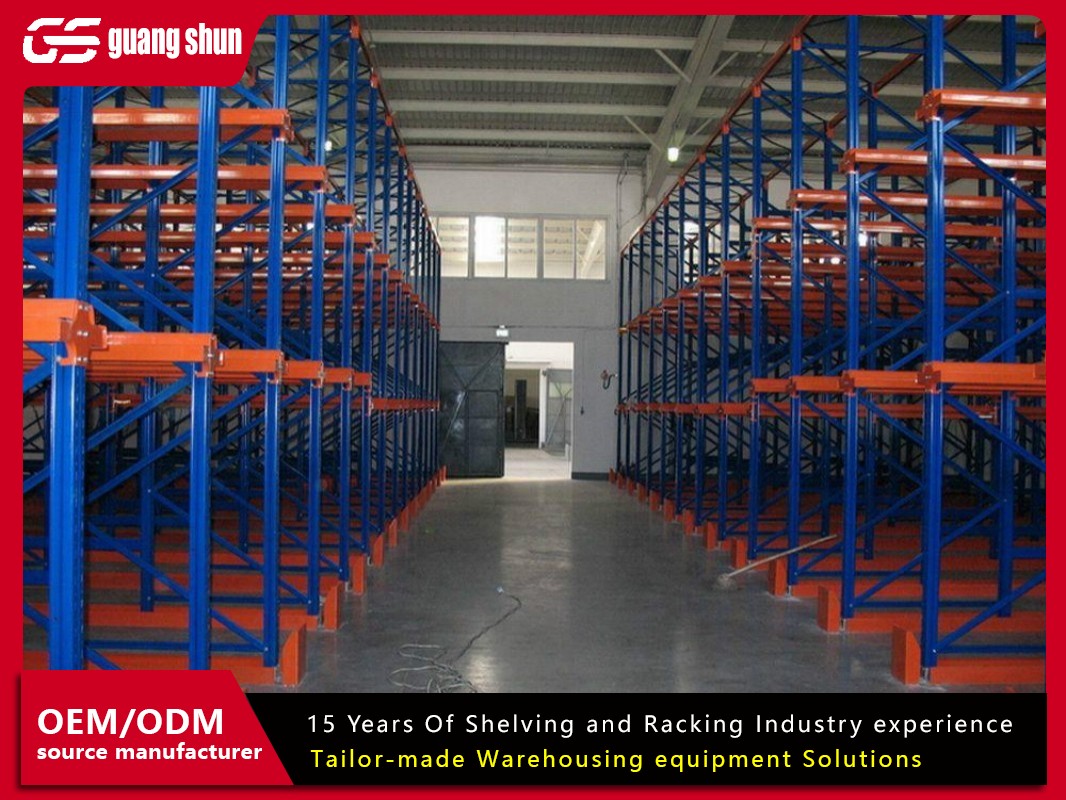
1.2 Drive-In and Drive-Through Racking: Density through Depth
Application: Designed for high-volume, homogeneous SKUs
(e.g., bulk raw materials, seasonal goods) where stock rotation is either LIFO
(Drive-In) or FIFO (Drive-Through).
Structural Engineering: These are continuous structures where forklifts enter the rack bay. The
stability relies on the entire block of racks acting as a single unit.
Horizontal and vertical bracing is critical to resist the forces from a moving
3-ton truck inside the structure. Rail-supported arms guide the pallets. The
trade-off is accessibility; accessing a pallet deep in a lane requires moving
others, which impacts throughput. This is a true high density
pallet storage solution, often achieving a 40-60% reduction in
floor space compared to selective rack.
1.3 Push-Back Racking: Density with Moderate Selectivity
Application: Ideal for medium-velocity SKUs with 2-4 pallets
per SKU, operating on a LIFO basis.
Structural Engineering: Nested carts on inclined rails are mounted within the rack. A pallet placed at
the front pushes the pallets behind it back. This design eliminates the need for
a forklift to enter the structure, reducing the risk of impact damage. The
engineering focus is on rail alignment and cart mobility. Slight floor or
installation imperfections can cause carts to stop, leading to operational
bottlenecks.
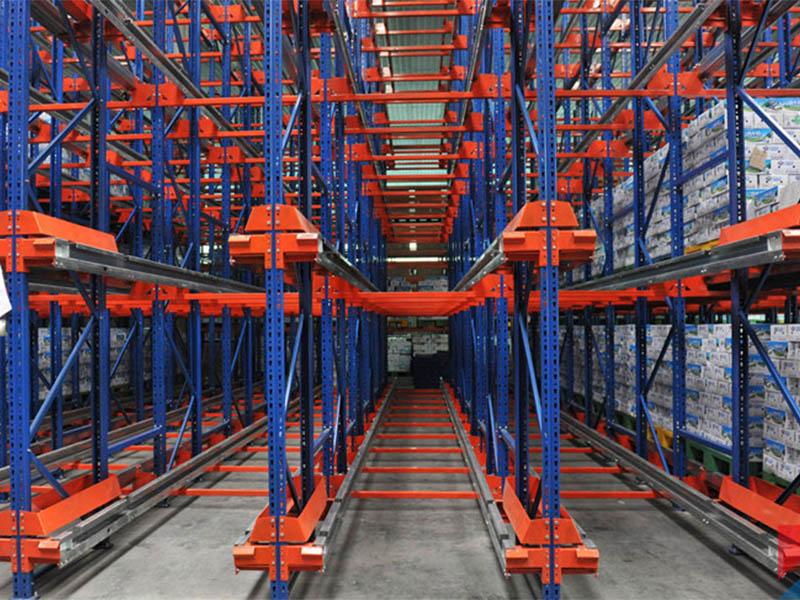
1.4 Pallet Flow Racking: The Gravity-Powered FIFO Engine
Application: Essential for perishable goods,
pharmaceuticals, or any inventory with expiration dates requiring strict
First-In, First-Out (FIFO) rotation.
Structural
Engineering: This system uses slightly inclined lanes with rollers or
wheels and integrated speed controllers (brakes). The engineering challenge is
calibrating the brakes to handle a mixed range of pallet weights and conditions.
Lanes must be precisely leveled, and the dynamic loading of rolling pallets
requires robust side-channel construction to prevent pallet drift and
jamming.
2. The Physics of Storage: Load Paths and Structural Forces
Every racking
system in a warehouse must be analyzed as a structure subject to
static and dynamic forces. A failure in engineering can lead to catastrophic
collapse.
2.1 Vertical Load Transfer
Understanding the load path is fundamental: the weight on the beams creates a
moment at the connection point. This force travels down the column. Columns are
not simple compression members; they are subject to buckling. The slenderness
ratio (height vs. cross-section) determines their capacity. Frame bracing
(horizontal and diagonal members between columns) provides lateral stability,
preventing the frame from swaying under vertical load.
2.2 Seismic and Horizontal Forces
In seismic zones, the analysis becomes more complex. The rack must be
designed to withstand base shear—the horizontal force generated by an
earthquake. This involves calculating the seismic weight of the rack and its
contents, then designing connections and anchors to resist the resulting
overturning moment. Guangshun engineers utilize Finite Element
Analysis (FEA) to model these forces, ensuring that the system complies with
local building codes such as IBC or ASCE 7. Factors like the ductility of
connections and the natural frequency of the structure are critical
parameters.
2.3 Impact Forces
Racks are frequently hit by forklifts. While not part of standard design
loads, good engineering anticipates this. Specifying heavier column sections,
adding column guards (bollards), and designing replaceable beam end connectors
are practical mitigations. The cost of these protective features is often less
than the cost of repairing a damaged frame.
3. Safety Systems and Compliance
Safety in racking
systems in warehouse environments is governed by stringent
standards, primarily from the Rack Manufacturers Institute (RMI) in North
America and the FEM standards in Europe.
3.1 Protective Components
Row End Protectors: Heavy-duty steel guards bolted to the
floor at the ends of every rack row to absorb impact.
Mesh Decking: Provides a solid surface to prevent small
items or pallet debris from falling through the beams, protecting personnel
below.
Back-to-Back Aisle Spacers: Maintain correct flue space
between rows, which is critical for fire sprinkler effectiveness.
Load Capacity Labels: Every beam and frame must have a
clearly visible label indicating its maximum safe working load. This is a legal
requirement in many jurisdictions.
3.2 Regular Inspections
A critical, often overlooked aspect is the ongoing structural audit. Racks
are not static; they degrade over time through impact and wear. A formal
inspection program should include checks for:
Sway in frames or beams.
Bent or cracked columns, especially at the base.
Damaged or disengaged beam locks.
Missing or loose anchor bolts.
Signs of overloading (e.g., deflected beams).
Industry best practice recommends a professional inspection annually, with
more frequent internal checks by trained personnel.
4. Integration with Facility Systems
A rack structure does not exist in isolation. Its design must be coordinated
with the building's other systems.
4.1 Fire Protection
The presence of racking dramatically alters the fire dynamics of a space. It
creates horizontal barriers (shelves) that can prevent ceiling-level sprinkler
spray from reaching a fire at floor level. This necessitates in-rack sprinklers.
The design of the rack must accommodate these sprinkler lines, maintaining
required flue spaces (vertical and horizontal gaps) for water penetration. The
placement of sprinklers influences beam spacing and depth.
4.2 Lighting
High-bay racking
systems in warehouse environments create shadows on lower aisles.
Modern designs often integrate lighting into the rack structure itself or use
specialized high-bay fixtures with optics designed to penetrate deep aisles.
4.3 Automated Interfaces
For facilities using Automated Guided Vehicles (AGVs) or AS/RS, the racking
tolerances become extremely tight. The positioning of rack components must be
precise to within millimeters to allow for automated pallet pickup. This
requires laser surveying during installation and specialized floor flatness
specifications (typically FM2 or better).
5. Lifecycle Cost Analysis and Future-Proofing
The initial cost of the steel is only one component of the total cost of
ownership. A smarter analysis includes:
Floor Space Utilization: The value of the square footage
saved by choosing a denser system.
Labor Efficiency: Travel time saved by optimized layout vs.
time lost in re-handling (e.g., honeycombing in drive-in).
Product Damage: Reduction in damage from better support and
access.
Maintenance: Cost of replacing damaged components over 20
years.
Scalability: Is the system designed so that additional bays
or levels can be added easily? A modular design from a provider like Guangshun can extend the useful life of
the asset significantly.
Selecting racking
systems in warehouse operations is a high-stakes engineering
decision that impacts safety, efficiency, and profitability for decades. It
requires moving beyond simple product specifications to a holistic understanding
of load physics, material flow, and building code compliance. Whether you need
the high accessibility of selective rack or the density of a flow system, the
engineering must be verified. By partnering with a structural expert like
Guangshun, you ensure your storage
infrastructure is built on a foundation of rigorous analysis and industry best
practice.
Frequently Asked Questions (FAQ)
Q1: How do I determine the correct beam capacity for my pallet rack?
A1: Beam capacity is determined by the uniform load
distribution. You must calculate the total weight of the pallets stored on a
pair of beams. Consider not only the maximum load but also the beam's deflection
under that load (typically limited to L/180, where L is the beam length). The
beam's capacity is stamped on it by the manufacturer, and this must never be
exceeded.
Q2: What is "honeycombing" in drive-in racking and why is it a problem?
A2: Honeycombing refers to the unusable empty slots created
in a deep-lane storage system when not all pallets in a lane are removed. For
example, if you remove 3 pallets from a 5-deep lane, the 2 pallets at the back
are inaccessible until the front positions are refilled and emptied again. This
reduces effective capacity and must be managed by a smart WMS.
Q3: Are seismic requirements the same for every warehouse?
A3: No. Seismic design is based on the geographic location's
seismic design category (A through F in the IBC), the soil conditions, and the
importance factor of the building. A structural engineer must perform a
site-specific analysis to determine the forces the rack must withstand.
Q4: Can I mix different brands of rack components?
A4: Mixing components from different manufacturers is
strongly discouraged and may void warranties and safety certifications. Beam end
connectors are not standardized; a beam from one manufacturer may not fit
securely into the column slot of another, leading to potential connection
failure. Always use components from a single, reputable source like Guangshun.
Q5: How often should racking systems be inspected?
A5: Industry best practice (per RMI/ANSI standards)
recommends a formal, professional inspection at least annually. However, many
companies conduct internal visual inspections monthly or even weekly, focusing
on visible damage from forklift impacts. Any rack that has been hit by equipment
should be inspected immediately by a qualified person.