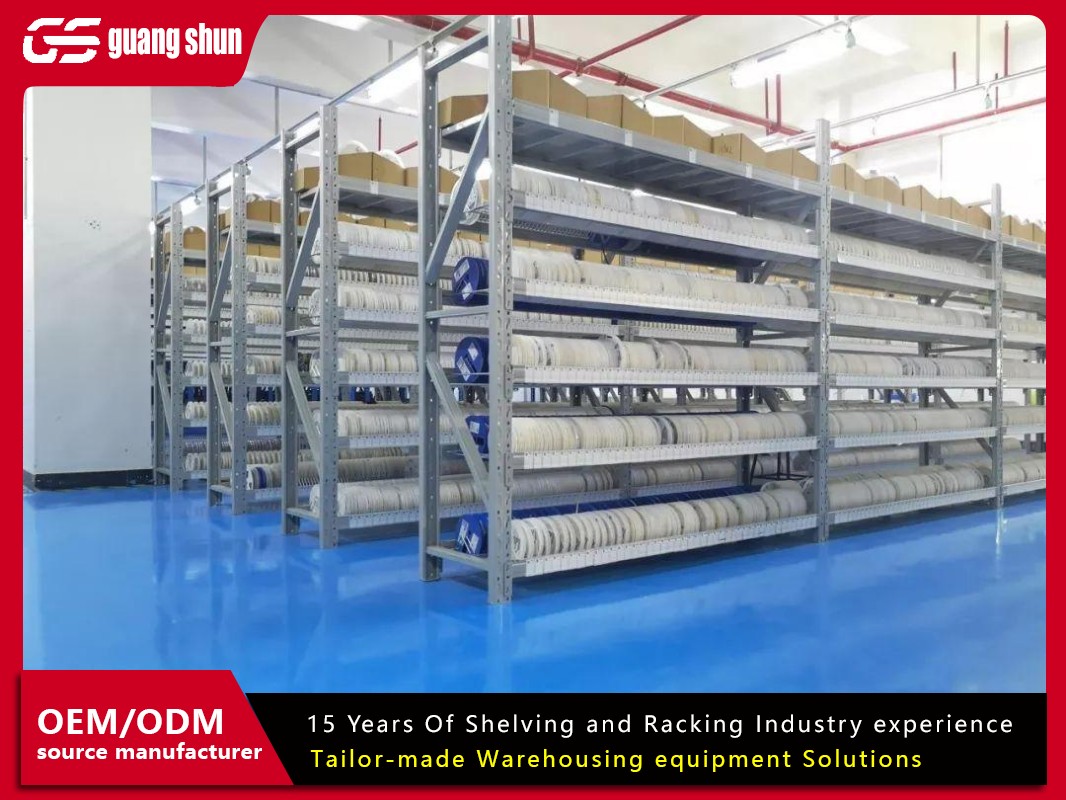
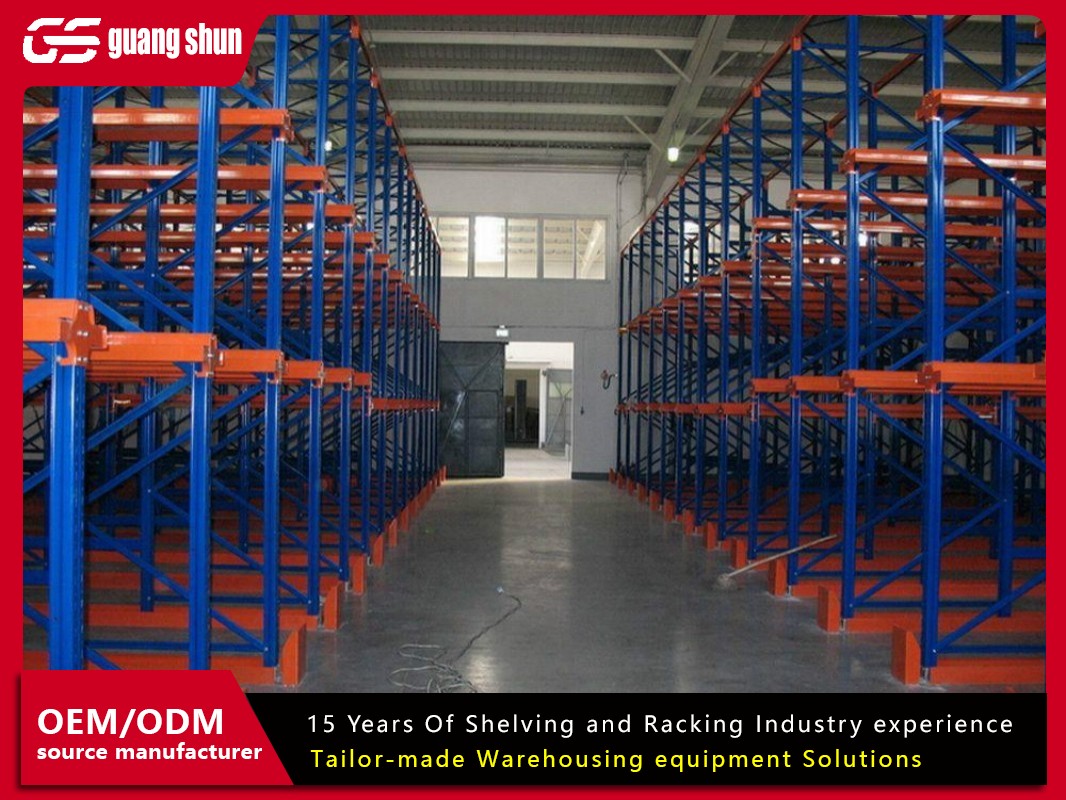
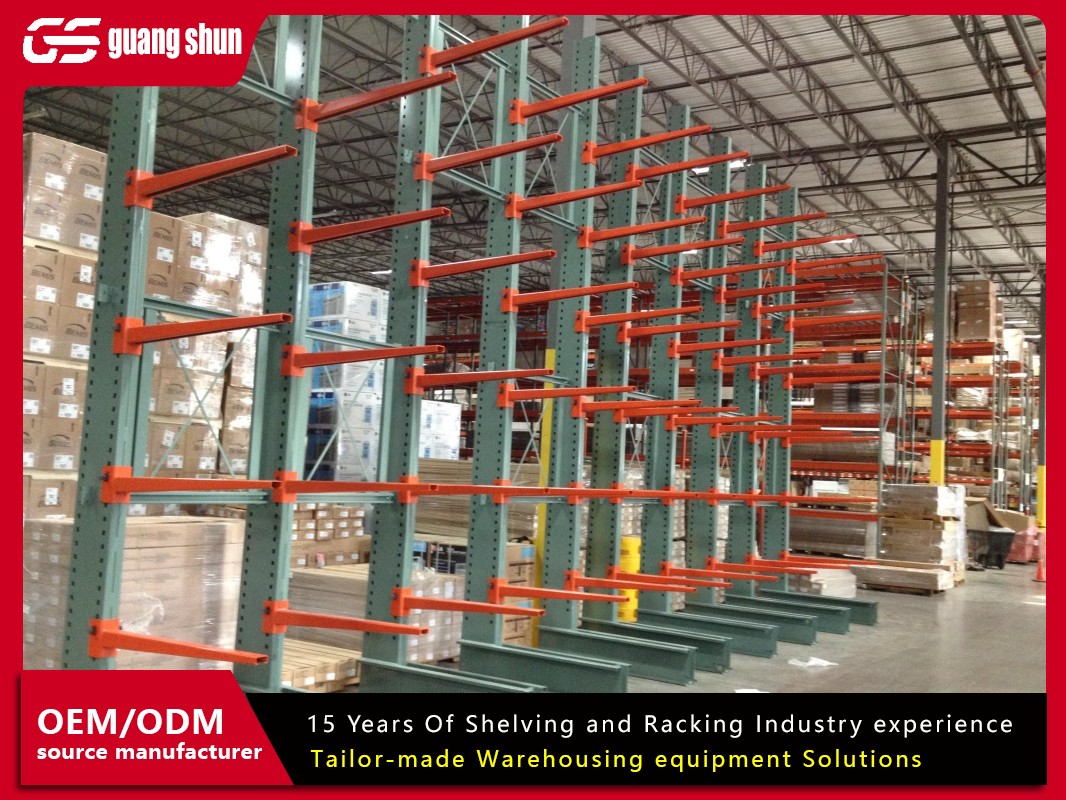
Warehouse efficiency depends on selecting the correct steel configuration.
Generic pallet
racking systems often fail when faced with mixed pallet sizes, high seismic
zones, or automated retrieval equipment. This article provides quantitative
methods for engineers to specify, validate, and maintain structural steel frames
that directly impact storage density, operator safety, and long‑term operating
cost. We examine six critical parameters that separate high‑performance racks
from problematic ones.
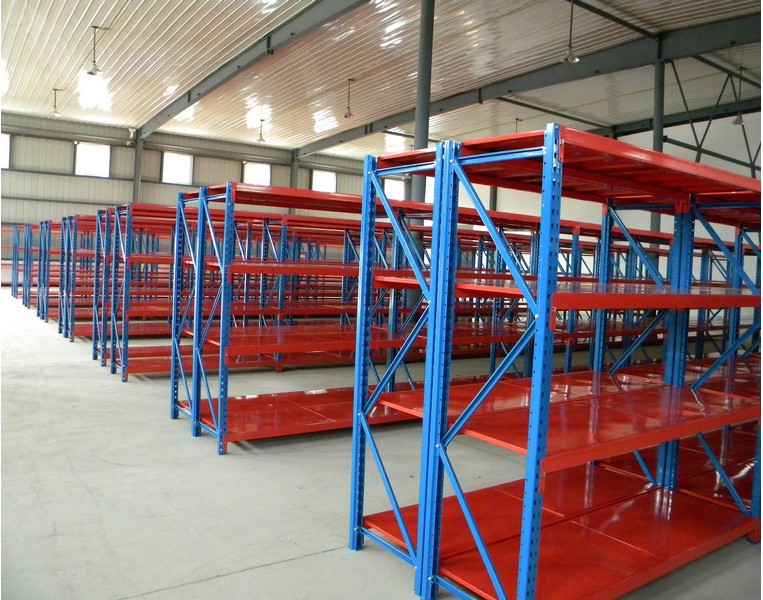
1. Structural Mechanics: Column Section & Slenderness Ratio
The load capacity of any steel rack hinges on upright column geometry. Most
selective pallet
racking systems use cold‑formed C‑sections with depths ranging from 80 mm to
150 mm. For a given steel grade (typically Q235B or Q355B), the allowable axial
load is governed by the slenderness ratio KL/r per AISI S100. For a 20‑ft tall
upright with unbraced length of 48″ (typical brace spacing) and radius of
gyration r = 1.2″, KL/r ≈ 40, which yields a critical buckling stress of 28 ksi
for Q355 steel. In practice, perforations for beam connectors reduce net section
area by 12‑18%, requiring a reduction factor φ = 0.85. A properly engineered
upright must include these reductions in its published load table – a detail
many generic suppliers omit.
1.1 Closed vs. Open Sections for High‑Impact Zones
Forklift impact is the primary cause of rack collapse. Open C‑sections are
prone to local flange bending at impact points. Rectangular hollow sections
(RHS) increase impact resistance by 40‑50% because the closed profile
distributes force to both faces. For drive‑in or double‑deep configurations, RHS
uprights are recommended. A California distribution center replaced damaged
open‑section uprights with RHS columns in their pallet
racking systems, reducing annual column replacements from 33 to 2 over three
years. The additional mass (30% higher) was offset by lower maintenance
labor.
2. Beam Step & Vertical Space Utilization
Standard beam increments are 75 mm (3″) or 100 mm (4″). However, mixed SKU
heights (e.g., 800 mm automotive parts next to 1,800 mm consumer goods) waste
cubic volume. Custom beam steps of 50 mm reduce vertical waste by up to 22%. For
facilities with more than 500 active SKUs, specifying 50 mm step pallet
racking systems yields an additional row of pallet positions within the
same building height. The trade‑off is higher fabrication cost and more beam
levels to manage. A mid‑west third‑party logistics provider switched to 50 mm
step racks and increased total pallet capacity by 17% without expanding
footprint.
2.1 Connector Design & Loosening Prevention
Beam‑to‑upright connectors must resist both vertical shear and horizontal
pull‑out forces. The most common failure is connector loosening due to dynamic
braking from reach trucks. Keyhole‑and‑stud connectors with anti‑lift tabs and
preload indicators reduce loosening by 60% compared to simple tab‑and‑slot
designs. Torque requirements for bolted connectors: 150 ft‑lbs for 1/2″ bolts,
with re‑torque after 30 days of operation. Guangshun provides digital torque monitoring
for every beam connection in their installations, with traceability records for
insurance compliance.
3. Seismic Performance & Bracing Patterns
Racking in seismic zones D/E requires special attention to inter‑story drift
and energy dissipation. According to RMI ANSI MH16.1‑2020, the allowable drift
under design basis earthquake (DBE) is 2% of height. For a 30‑ft tall rack, this
is 7.2″. Standard X‑bracing (1‑1/2″ angle) often yields drifts exceeding 3%
because of brace buckling. Improved solutions include:
K‑bracing with gusset plates – increases energy dissipation
by 25%.
Viscous dampers – added between uprights, reducing drift to
1.2% under DBE.
Base plate stiffeners – prevent column uplift; required
when anchor bolt tension exceeds 8,000 lbs per bolt.
A Chilean wine exporter installed pallet racking systems with K‑bracing and slotted base plates after a 6.8 magnitude event caused 14″
drift in standard racks. Post‑retrofit, measured drift was 2.1″ – well within
code limits.
4. Application‑Specific Configurations
Four common rack types each impose unique structural demands.
4.1 Selective Racking (Baseline)
Most common, offering 85‑90% accessibility. Load per beam pair typically
2,500‑6,000 lbs. Upright spacing: 8‑9 ft. For high throughput, consider adding
row spacers and back‑to‑back base plates to prevent tipping.
4.2 Drive‑In/Drive‑Through Racking
Vertical guides and rails create eccentric loads. Upright depth must increase
to 120 mm minimum, and rail brackets require 10 mm gusset plates. Load per
position: 2,200‑3,500 lbs. A common failure mode is rail bracket fatigue
cracking after 15,000 cycles; specify full‑penetration welds and annual
dye‑penetrant inspection.
4.3 Push‑Back & Pallet Flow Racking
These gravity‑based systems impose horizontal forces from cart movement. For
push‑back, each cart exerts a side force of 150‑200 lbs when fully extended. The
upright must resist cumulative forces from 4‑6 carts. Finite element analysis
(FEA) is mandatory for systems deeper than 4 positions. Guangshun offers
FEA validation reports for push‑back configurations, certified by third‑party
engineers.
4.4 Cantilever Racking for Long Goods
For lumber, piping, or steel bars, arms extend from a single column row. The
moment at the column base is arm length × load × number of arms. A 48″ arm with
1,000 lbs at tip generates 4,000 ft‑lbs moment. Standard uprights cannot resist
this; use reinforced columns with base plates sized for moment (typically
14″×14″ with four 1″ anchors).
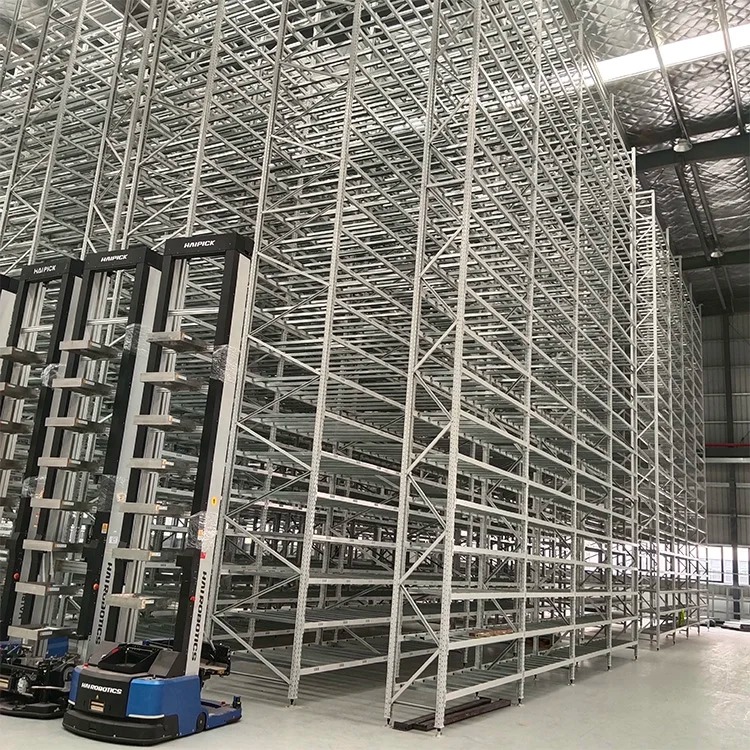
5. Quantifying Damage & Repair Protocols
Impact damage is the leading cause of rack collapse. Field data from 120
warehouses shows that 73% of uprights with dents deeper than 1/2″ failed within
18 months if not repaired. Repair methods:
Dent < 1/4″ depth – cold straightening allowed, followed
by magnetic particle inspection.
Dent 1/4″ – 1/2″ – bolt‑on column sleeve (12″ long, same
gauge) with eight grade 8.8 bolts. Restores 85% of original capacity.
Dent > 1/2″ or buckling – full column replacement using
load transfer posts.
Annual laser alignment surveys detect hidden deformations. A 0.5° lean in a
20‑ft upright reduces capacity by 32% due to P‑delta effects. Facilities using
pallet racking systems with quarterly alignment checks report
68% fewer collapse incidents.
6. Lifecycle Cost Model: Standard vs. Engineered Racking
Initial price is only 30% of total cost of ownership over 15 years. A
comparative model for a 5,000‑pallet facility:
Standard (off‑the‑shelf) – $72,000 initial, $31,000 annual
repairs, $14,500 downtime (lost throughput), $5,200 annual inspection. 15‑year
TCO = $72,000 + 15×($31,000+$14,500+$5,200) = $832,500.
Engineered (custom beam step, RHS uprights, seismic
bracing) – $110,000 initial, $8,500 annual repairs, $3,800 downtime,
$3,900 inspection. TCO = $110,000 + 15×($8,500+$3,800+$3,900) =
$353,000.
Savings of $479,500 over 15 years, plus 22% higher storage density from 50 mm
beam steps. Payback period for the engineered premium: 1.7 years. Many operators
overlook this analysis and pay far more over time.
7. Installation Tolerances & Floor Interface
Even the best pallet racking systems perform poorly on
uneven floors. According to ACI 302.1R‑15, the floor must have Fmin ≤
1.5 mm over 3 m. For base plates larger than 6″×6″, a self‑leveling epoxy grout
(compressive strength >7,000 psi) is required to achieve full contact. Anchor
bolts: 3/4″ diameter, embedded 6″ into concrete with minimum compressive
strength 3,500 psi. Torque to 250 ft‑lbs, re‑torque after 30 days. Missing this
re‑torque step leads to 40% higher loosening rates over 12 months.
Frequently Asked Questions (Engineering Focus)
Q1: What is the maximum allowable deflection for a beam in pallet
racking systems under full load?
A1: Per RMI/ANSI
MH16.1‑2020, vertical beam deflection at mid‑span should not exceed L/180 (where
L = beam length). For a 108″ beam (9 ft), maximum deflection is 0.6″. For
automated systems (AS/RS), a stricter L/240 is required (0.45″) to prevent
shuttle guidance errors. Deflection beyond these limits causes pallet
instability and load slippage. Always request certified beam load‑deflection
curves from the manufacturer.
Q2: How do I calculate the required anchor bolt pullout resistance
for seismic zones?
A2: Use the formula from ACI
318‑19 Chapter 17: Ncb = kc × λa ×
√(f’c) × hef1.5. For a 3/4″ bolt with effective
embedment hef = 6″ in 4,000 psi concrete, kc=17 (cracked
concrete), λa=1.0, Ncb ≈ 7,800 lbs. Apply safety factor
1.4 for seismic loads → required capacity 5,570 lbs per bolt. Four bolts per
upright → total 22,280 lbs uplift resistance. Most standard rack anchors provide
only 4,000 lbs per bolt – insufficient for seismic zone D. Guangshun provides
seismic anchor calculations with each project.
Q3: Can I install used pallet racking systems in a new
warehouse?
A3: Possible but with restrictions.
First, obtain original load test certificates – missing documents disqualify
reuse. Second, inspect every upright for fatigue cracks using magnetic particle
inspection (MPI). Reject any with cracks longer than 1/4″. Third, measure wall
thickness with ultrasonic gauge; reject if less than 90% of original (corrosion
or wear). Fourth, replace all beam connectors with new bolts and nuts. Even with
these steps, many insurers will not cover used racks. For seismic zones, reuse
is prohibited by most building codes.
Q4: What fire protection is required for pallet racking systems
storing Class III commodities?
A4: Per NFPA 13,
in‑rack sprinklers are required when storage height exceeds 12 ft for Class III.
Uprights must have fireproofing if they are within 2 ft of sprinkler heads. Two
methods: intumescent coating (minimum DFT 1.5 mm) or concrete‑filled columns.
Note that perforated uprights lose fire resistance at holes – specify
pre‑coating of hole edges. A fire test per UL 263 shows that bare steel uprights
reach critical temperature (1,000°F) in 12‑14 minutes. For 2‑hour rating,
intumescent coating adds 0.25‑0.35 mm per 15 minutes of protection.
Q5: How often should I perform a structural audit of existing pallet
racking systems?
A5: RMI recommends a formal audit
every 12 months by a certified rack inspector. The audit must include: laser
alignment of uprights (verticality within 1/200 of height), torque verification
of 10% of beam connectors, ultrasonic thickness measurement of 5% of uprights,
and visual inspection for dents, corrosion, or missing safety clips.
High‑traffic facilities (>1,000 forklift trips per day) should audit
quarterly. A 2022 study of 200 warehouses found that 64% had at least one
critical defect at the time of audit, with 22% requiring immediate
unloading.
Q6: What is the correct way to splice two uprights for height
extension?
A6: Splicing is permitted only with
engineered splice kits. The splice must cover the joint by at least 18″ on each
side, using grade 8.8 bolts at 3″ spacing. The splice plate thickness must equal
or exceed the upright thickness. Avoid welding – heat affects steel temper.
After splicing, the column’s allowable load is reduced by 20‑25% due to
discontinuity. For seismic zones, splicing is not allowed above 25 ft. Guangshun provides
certified splice designs with pre‑drilled holes and load validation.
Specifying pallet
racking systems requires balancing structural mechanics, application
demands, and lifecycle costs. Engineered solutions with proper beam steps,
closed‑section uprights, and seismic bracing deliver measurable ROI through
higher density and lower repairs. Work with a manufacturer like Guangshun to obtain
certified load tables, FEA reports, and installation protocols that meet
RMI/ANSI standards and local building codes.