In industrial storage engineering, the performance and safety of a pallet
racking system depend entirely on the quality, compatibility, and maintenance of
its individual components. While many operators focus only on overall capacity,
experienced engineers understand that each structural element—from the column
base to the beam lock—contributes to system rigidity and load distribution. This
guide dissects the essential parts of
racking, using data-driven criteria, failure mode analysis, and
practical solutions for warehouses, distribution centers, and cold storage
facilities. Drawing on global standards (RMI, FEM, AS4084) and field experience,
we examine material science, anchoring methods, and retrofit strategies that
maximize lifecycle value.
1. Upright Frames (Columns): The Vertical Backbone
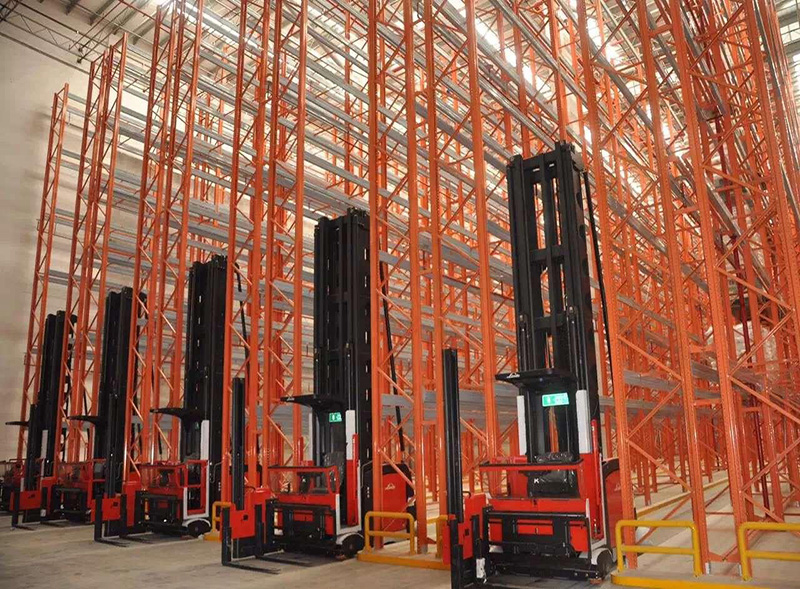
Upright frames, consisting of two columns with welded or bolted horizontal
and diagonal braces, bear the full vertical load from beams and pallets. The
most critical parts of
racking within this subsystem include column profiles, hole
patterns, and splice kits. Typical column steel grades are Q235B or Q345B (yield
strength 235–345 MPa), cold-rolled to closed or open sections (e.g., 80x60mm,
100x70mm, 120x95mm).
Column Profile & Material Specifications
Roll-formed vs. structural C-channels: Roll-formed sections
offer consistent thickness (1.5mm to 2.5mm) and integrated punched holes.
Structural channels are used for heavy-duty or seismic zones.
Corrosion protection: Electrostatic powder coating
(60–80µm) or hot-dip galvanizing (≥85µm) for aggressive environments (e.g.,
chemical storage, seafood cold rooms).
Punching patterns: Diamond or teardrop holes with 50mm or
75mm pitch; diamond holes provide 15% better load transfer in tests (RMI
standard).
Failure Points & Countermeasures
Field audits show >40% of racking damage occurs at column bases (forklift
impacts). Solution: bolt-on column protectors (12mm steel plate) or anchored
corner guards. For seismic regions, Guangshun recommends slotted base
plates with energy-absorbing anchors to prevent buckling during dynamic events.
Regular ultrasonic thickness testing (UTT) detects hidden corrosion or wear.
2. Horizontal Load Beams & Beam Safety Locks
Beams transfer pallet loads to upright frames. Key parts of
racking here are step beams (2.0–3.0mm steel), box beams for high
dynamic loads, and the integrated safety clip (anti-disengagement device). A
beam’s allowable deflection is limited to L/180 (L = span length) per AS4084;
exceeding this risks weld fracture or column distortion.
Beam-to-Upright Connection: The Critical Interface
Hook-and-slot design: Standard in selective racks. Requires
three-point engagement (top and bottom lugs plus spring-loaded safety
lock).
Safety lock inspection: Must automatically spring into the
upright hole. Forced locking with a hammer indicates wear or hole
deformation—replace immediately.
Load indicators: Some engineered beams include color-coded
deflection markers (green = safe, red = overload).
Statistically, 27% of rack collapses originate from missing or damaged beam
locks (data from HSE incident reports). Guangshun supplies retrofittable
safety clips with 1.5mm thicker spring steel, compatible with all major profiles
(teardrop, T-bolt, keyhole). A monthly lock-function test reduces disengagement
risk by nearly 70%.
3. Diagonal & Horizontal Braces – Lateral Stability
Braces resist horizontal forces (wind, seismic, uneven loading). They are
often overlooked but essential parts of
racking for overall rigidity. Typical brace cross-sections:
30x15x1.5mm C-sections or round tubes (25mm OD). Bolted brace connections should
be torqued to 35–45 Nm; welded brace frames offer higher stiffness but
complicate field repair.
Seismic & Dynamic Performance
In high-seismic zones (Z3/Z4 per ASCE 7), codes demand X-bracing or knee
braces every 2.4m. FEM 10.2.16 specifies minimum brace slenderness ratio (KL/r ≤
200). Loose brace bolts cause amplified sway: a 1mm gap at a connection can
reduce rack critical load capacity by 18% (FEM simulation). Use nylon-insert
locknuts or spring washers to maintain preload under vibration.
4. Base Plates & Floor Anchoring Systems
Base plates distribute column loads to the concrete floor and resist
overturning. Typical dimensions: 150x150mm to 200x200mm, 6–10mm thick, with four
anchor holes. Anchor bolts (M12 to M20 grade 8.8) must embed at least 100mm into
C25/30 concrete. Pull-out tests show epoxy anchors provide 300% higher pull-out
resistance than expansion anchors in cracked concrete.
Anchoring Best Practices
Torque verification: Re-torque anchors after 6 months
(concrete creep). Recommended torque: M16 = 90–110 Nm.
Shims & grouting: Use stainless steel shims under base
plates to correct floor unevenness (±5mm max). Non-shrink grout (≥50MPa)
prevents water ingress and fretting corrosion.
Load spreaders: For high point loads (>5 tons per leg),
add 12mm steel sole plates to avoid concrete shear failure.
According to a 2022 warehouse survey, 34% of racks have at least one loose
anchor bolt. A bi-annual check with a torque wrench reduces progressive collapse
risk. Guangshun offers pre-assembled
anchor kits with corrosion-resistant coating and installation templates to meet
EN 15512 compliance.
5. Row Spacers, Backrests & Protective Components
Beyond primary structure, auxiliary parts of
racking improve safety and efficiency: row spacers, backrest bars,
pallet supports, and column guards. Row spacers tie adjacent rack rows together,
preventing toppling under unbalanced loading. Spacers should be placed at each
upright level (max vertical interval 3m).
Pallet support bars: Placed perpendicular to beams, they
stop pallets from sagging between beams. 4mm thick Z-purlins with 600mm spacing
(for standard Euro-pallets).
Backrest (load stop) bars: Prevent over-insertion of
pallets into the rear aisle. Required for double-deep racks.
End-of-aisle protectors: Energy-absorbing posts (e.g.,
filled with polyurethane) reduce impact force by 50% at 6 km/h.
Industry data: Proper row spacers and backrests cut pallet misplacement
incidents by 44% and reduce beam damage by 30%.
6. Material Selection & Coating for Longevity
Environmental factors dictate material choices. For cold storage (-25°C),
standard carbon steel becomes brittle (ductile-to-brittle transition). Use
impact-tested steel (Charpy V-notch ≥27J at -30°C). For high-humidity or
chemical areas, hot-dip galvanizing per ISO 1461 (minimum 85µm zinc) outperforms
powder coating by 5–7 years. Stainless steel 304 or 316 is reserved for
pharmaceutical or food-grade wet zones.
Cost vs. Lifecycle Analysis
Powder-coated racks (epoxy-polyester hybrid) last 8–12 years in dry indoor
conditions, while galvanized racks exceed 25 years in mild corrosive
environments. Upfront cost difference: +30-40%, but ROI positive after 12 years
due to avoided replacements and downtime.
7. Common Failure Points & Preventive Measures
Even well-designed systems degrade. Top failure mechanisms among parts of
racking are:
Column denting: Dents deeper than 3mm or longer than 50mm
require immediate replacement (RMI). Install rack end protectors and floor
markings (1m safety zone).
Beam hook deformation: Overloading causes hook spread.
Measure hook opening: if > original +2mm, discard beam.
Missing safety pins: Use captive pins or tamper-proof
fasteners. Weekly visual audits.
Concrete spalling around anchors: Caused by dynamic
horizontal loads. Retrofit with chemical anchors and thick steel
washers.
Implement a three-level inspection schedule: daily operator checklist (beams,
safety pins, damage), monthly internal engineer (torque checks, alignment),
annual third-party (load testing, ultrasonic column thickness).
8. Engineered Solutions & Component Sourcing from Guangshun
When replacing or upgrading parts of
racking, compatibility with existing systems is critical.
Guangshun provides
component-level engineering support: 3D laser scanning of current upright hole
patterns, custom beam lengths (accuracy ±1mm), and seismic-rated base plates.
For multinational clients, we supply parts with full traceability reports,
material certificates (EN 10204 3.1), and load test verification. Over 700
warehouses globally have reduced downtime by 55% using our just-in-time
component delivery and QR-coded installation guides.
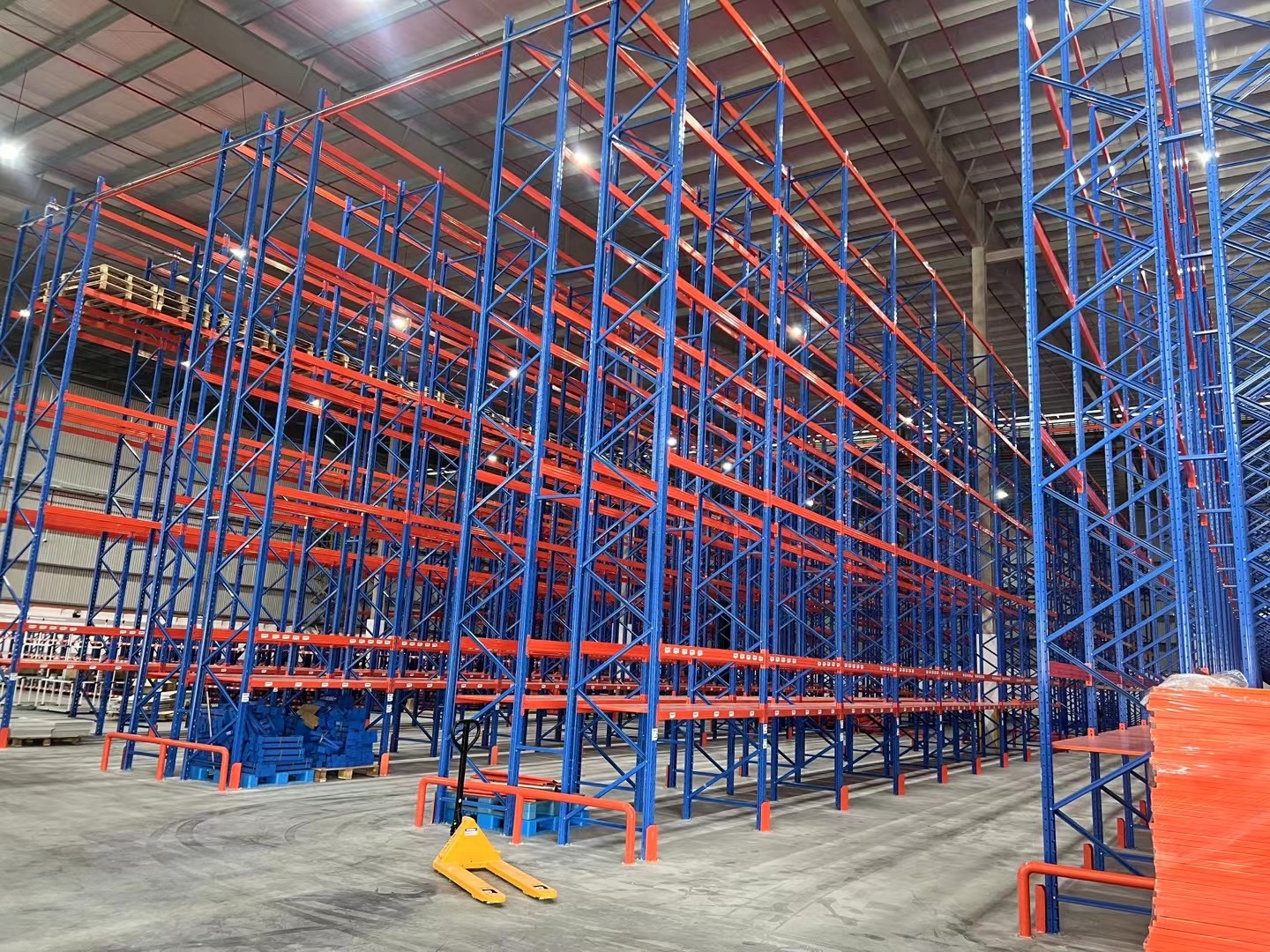
System Integrity Depends on Component Excellence
Every warehouse manager and safety officer must recognize that the
performance of the whole racking system is only as strong as its weakest
component. From column profiles and beam locks to anchors and protective guards,
understanding the engineering demands on each parts of
racking enables data-driven maintenance, safer operation, and lower
total cost of ownership. Prioritize regular inspections, use certified
replacement parts, and partner with specialists like Guangshun to ensure compliance
with international standards (RMI, FEM, AS4084). Invest in component quality—it
directly protects your workforce and inventory.
Frequently Asked Questions (FAQ) – Critical Parts of Racking
Q1: Which parts of racking require the most frequent safety
inspections?
A1: Beam safety locks
(anti-disengagement clips), column bases (dent/corrosion check), and anchor
bolts (torque verification) demand monthly inspections. Statistics show 80% of
rack failures originate from these three components. Always refer to RMI or FEM
guidelines for detailed checklists.
Q2: Can I mix beam brands from different manufacturers with existing
rack uprights?
A2: Mixing is risky unless beam
hooks exactly match the upright hole profile (teardrop, diamond, or T-bolt) and
steel grade. Even a 0.5mm dimensional mismatch reduces load capacity by up to
40%. Guangshun offers universal
adapter brackets for safe cross-brand compatibility after engineering
review.
Q3: What material grade is standard for cold-formed rack columns, and
when should I upgrade?
A3: Most selective racks use
S235JR (DIN EN 10327) or equivalent. Upgrade to S350GD+Z (350 MPa yield) for
double-deep racks, drive-in systems, or any application with impact loads
>2g. Seismic zones (Z3/Z4) require low-alloy high-strength steel with
documented Charpy impact values.
Q4: How do I calculate the remaining life of damaged rack
components?
A4: Use the “damage index” method: for
column dents, measure depth vs. width ratio. If dent depth exceeds 4% of column
width, remaining capacity drops below 70% and replacement is mandatory. For bent
beams (plastic deformation beyond L/200), no repair is allowed—only full
replacement. A structural engineer should perform FEA verification for
borderline cases.
Q5: Are there cost-effective retrofits to improve seismic resistance
of older racking parts?
A5: Yes. Add clip-on column
stiffeners (bolt-on steel channels), replace standard base plates with oversized
seismic base plates (wider footprint), and install horizontal cable bracing (7mm
galvanized steel wire rope with turnbuckles) between rows. These retrofits can
increase lateral resistance by 50-60% without full system replacement. Always
re-validate with a licensed structural engineer.
Q6: What is the acceptable torque range for M16 anchor bolts in dry
concrete?
A6: For grade 8.8 M16 anchors embedded
120mm in C25/30 concrete, recommended installation torque is 90–110 Nm.
Re-torque after 6 months to 100±5 Nm. Over-torquing (above 130 Nm) risks
concrete spalling and must be avoided. Use a calibrated torque wrench for each
bolt.
Q7: How often should load tests be performed on critical parts of
racking systems?
A7: Full dynamic load testing
(applying 125% of rated beam capacity) every 24 months for high-activity zones
(≥500 cycles/month). For static storage, every 5 years or after any structural
modification. Use hydraulic jacks with calibrated load cells and measure
deflection at mid-span.