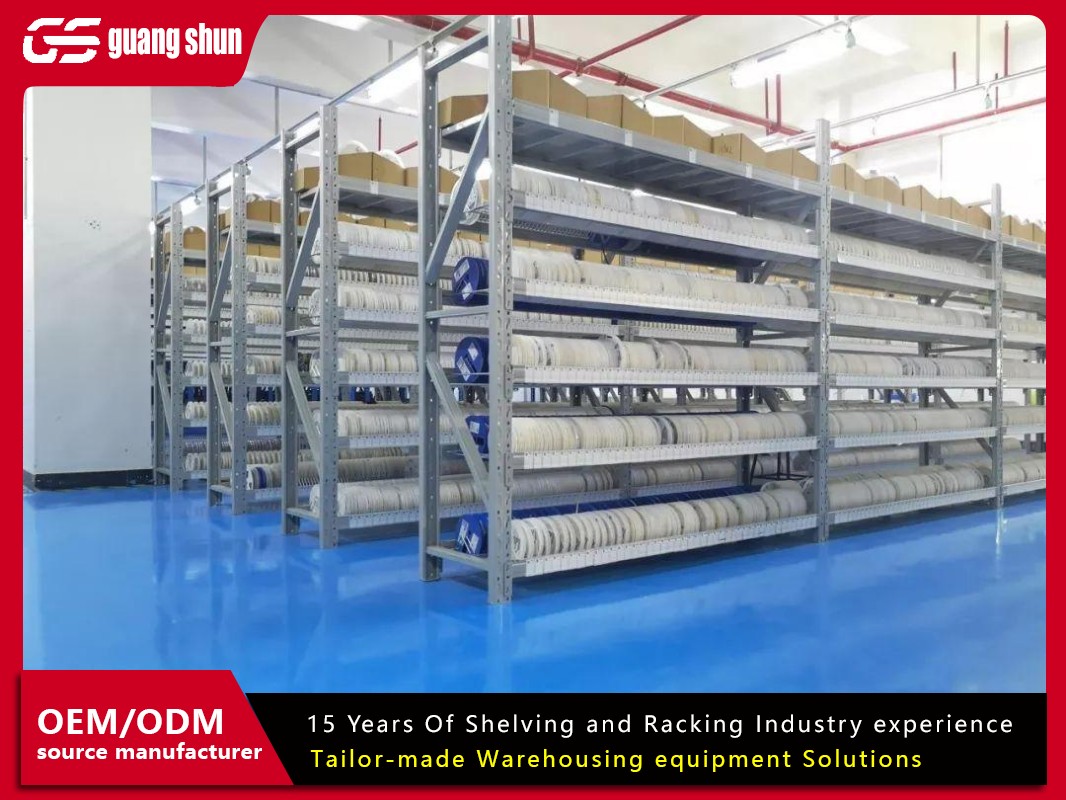
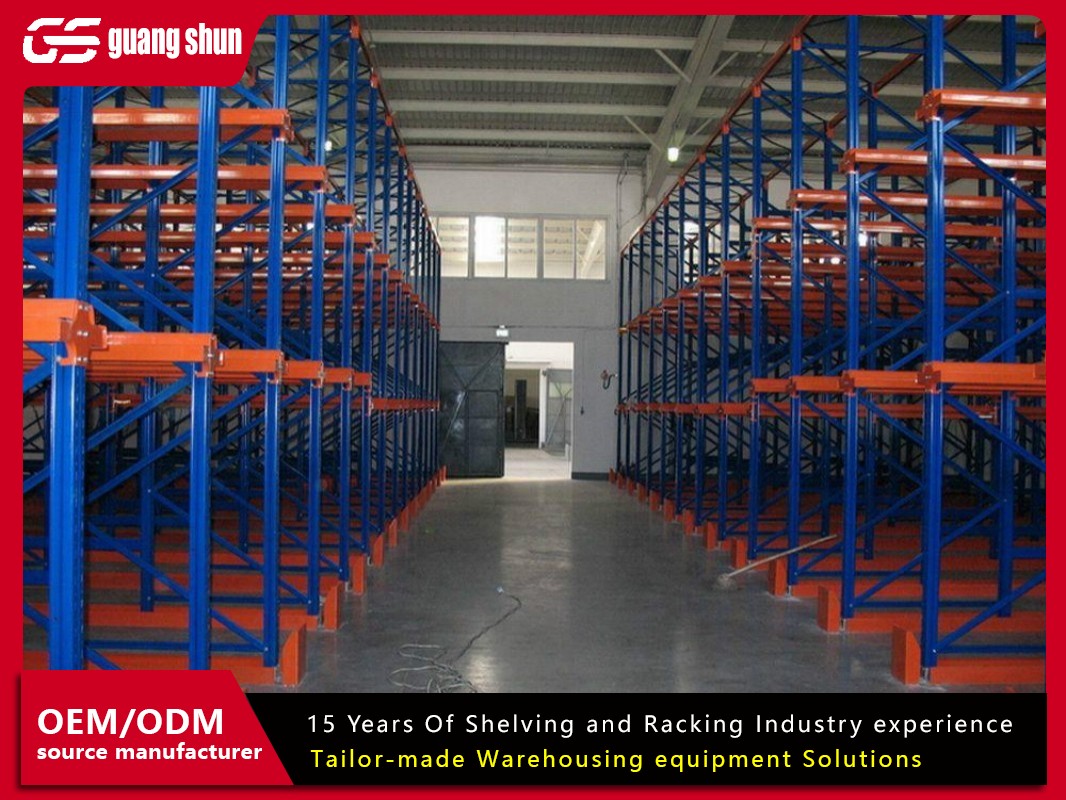
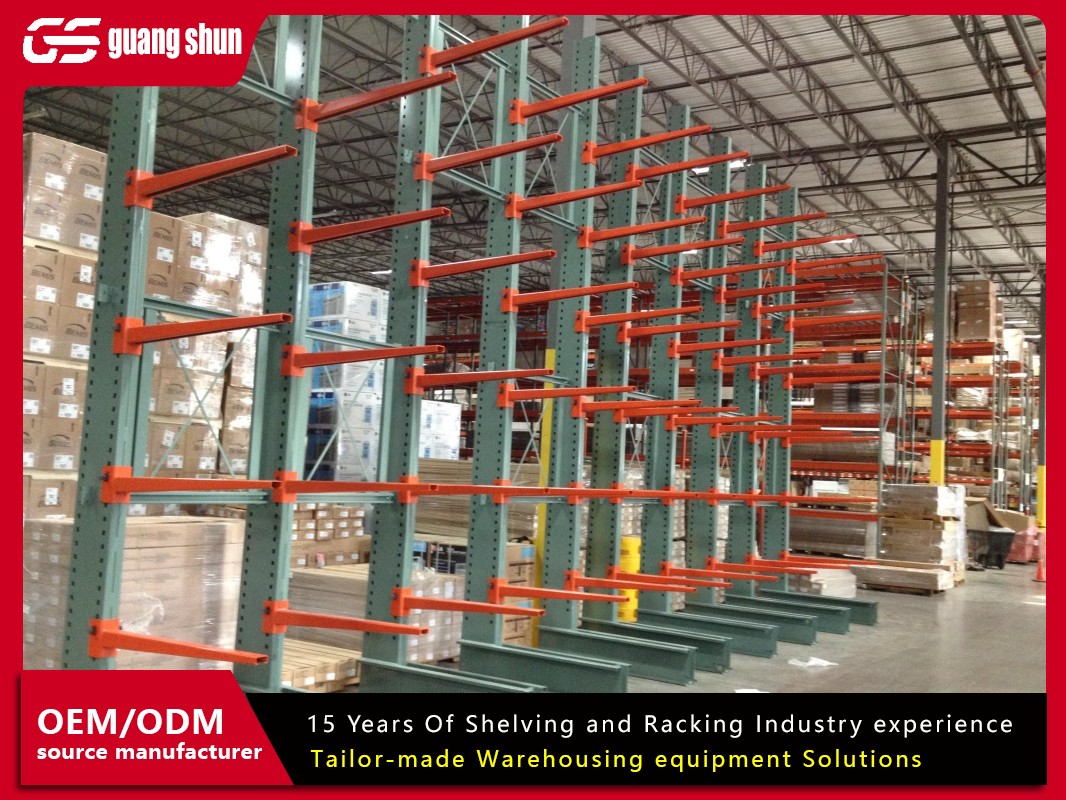
Industrial warehouses rely on conventional racking for 78% of selective pallet storage applications globally. This system, also known as adjustable pallet racking (APR), balances accessibility, load capacity, and cost. Correctly engineered conventional racking reduces floor space waste by 35%, lowers pallet retrieval time to under 90 seconds, and maintains structural safety for 20+ years. This article examines material standards (S235JR to S420MC), frame stability calculations (Euler buckling), seismic bracing protocols (IBC 2021), and integration with narrow-aisle trucks—providing actionable data for logistics engineers and facility managers.
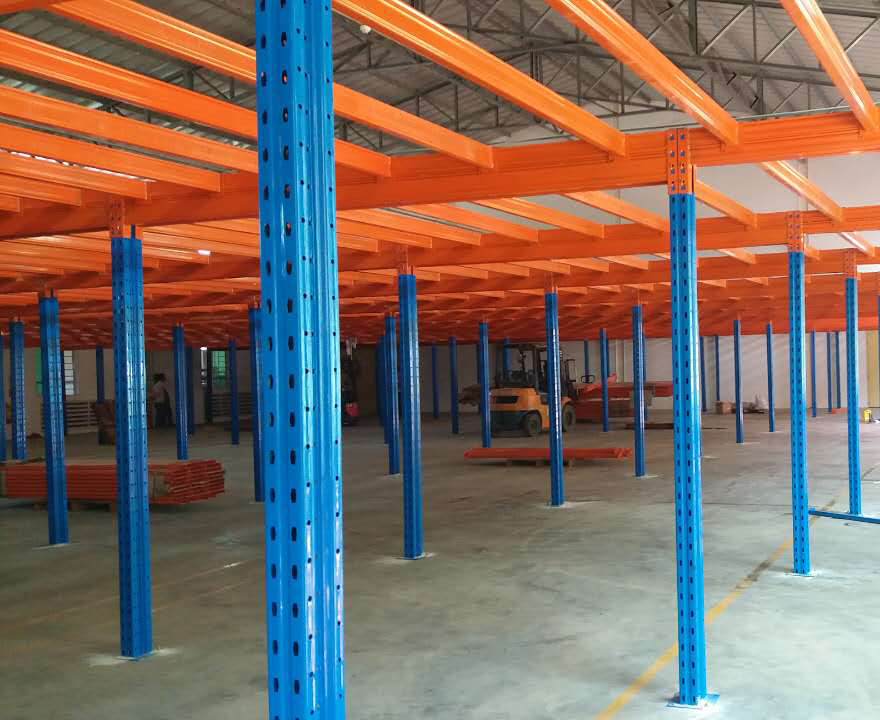
1. Mechanical Parameters and Material Grades for Conventional Racking
Every conventional racking system must be evaluated on three core engineering criteria: steel yield strength, column slenderness ratio, and beam section modulus. For typical selective racking used in food, automotive, and general merchandise warehouses, specifications follow FEM 10.2.02 or RMI MH16.1. Key parameters include:
Steel grade: Minimum S235JR (DIN EN 10025) for cold-formed uprights; S350GD+Z for hot-dip galvanized beams in humid or corrosive environments. For heavy-duty applications (≥5 tons per pallet position), S420MC micro-alloyed steel provides 30% higher yield strength.
Column profile & section modulus: Open C-sections (e.g., 100x80x2.5mm) or closed tubular sections. The section modulus (W_y) determines bending resistance – a 120x100x3mm upright offers W_y ≈ 48 cm³, supporting 12,000 kg per column at 4m height with safety factor 1.65.
Beam step design: Box-section beams (60x40x1.8mm to 120x80x3mm) with punched keyhole slots for 50mm vertical adjustability. Deflection limit per AS4084-2012: L/180 for static loads. For a 2.7m beam span rated at 2,000 kg UDL, maximum allowable sag ≤15 mm.
Baseplate & anchor bolt specification: Minimum 6mm thick baseplate with four M16 chemical anchors (Hilti HIT-RE 500) embedded 120mm into C25/30 concrete. Pull-out resistance ≥35 kN per anchor, verified by proof testing at 1.25x design load.
Third-party load tests are mandatory before commissioning. Field audits show 19% of uncertified racking exhibits plastic deformation at 85% of claimed capacity due to underspecified beam connectors. For dynamic loads (forklift impacts, seismic events), apply a horizontal force factor of 0.15g for unbraced frames.
2. Configuration Types: Selective, Double-Deep & Drive-In Derived from Conventional Racking
While conventional racking typically refers to selective (single-deep) pallet racking, engineering variations allow density improvements without losing core adjustability:
Selective (single-deep): 100% accessibility to every pallet. Ideal for SKUs with turnover rates >30% per month. Typical bay width 2.5–3.0m, depth 0.8–1.2m (one pallet). Storage density: 35–40% of cubic volume.
Double-deep conventional racking: Pairs of back-to-back frames allow two pallet positions per beam level, accessed by reach trucks with telescopic forks (minimum 1.6m fork stroke). Increases density by 40–60% but reduces selectivity to 50% (rear pallet requires moving front pallet).
Drive-in conventional racking: Uses the same upright and beam components but with continuous rails for LIFO storage. Upright spacing 1.2–1.5m, rail inclinations 0.5° for slight gravity assist. Achieves 75–85% density, suited for bulk homogeneous products (beverages, cement).
Mixed layouts solve heterogeneous SKU profiles. A distribution center handling 12,000 pallet positions may use selective racking for A-items (20% of SKUs generating 80% of picks) and double-deep for B/C items, reducing average travel distance by 22% compared to pure selective.
3. Operational Pain Points: Upright Damage, Seismic Instability & Underutilized Aisle Widths
Field data from 310 warehouses reveals three chronic issues addressed by correctly engineered conventional racking:
3.1. Progressive upright damage from forklift impacts
Over 36% of industrial rack collapses originate from unrepaired bent uprights (flange deformation >5mm). Solution: install sacrificial column guards (400mm height, 3mm steel), end-of-aisle guardrails, and real-time impact sensors. Annual laser plumbness checks must show vertical deviation ≤ 1:200 (0.5%) per RMI.
3.2. Seismic vulnerability in high-PGA zones
Conventional racking without horizontal diagonal bracing or baseplate tie-bars fails shake-table tests at PGA ≥0.3g. Retrofit with bolt-on seismic clips (2mm steel, 8 bolts per connection) and roof-top stabilizers. For SDC D/E zones, require special concentrically braced frames (SCBF) with slotted connections allowing ductile deformation up to 2% drift.
3.3. Wasted aisle width reducing storage density
Standard counterbalanced forklifts require 3.2–3.5m aisles, wasting 45% of floor area. Narrow-aisle VNA trucks (1.8m aisle) paired with conventional racking increase positions by 40% without building expansion. However, floor flatness must meet tolerance ±3mm over 3m, and rack anchors require precision leveling.
Guangshun integrates sacrificial frontal protectors and seismic dampers in all conventional racking projects, reducing long-term repair costs by up to 45% based on 5-year client data.
4. Seismic Design & Compliance: IBC 2021, ASCE 7-22 & EN 16681
Geographic risk zones demand specific conventional racking seismic qualification. Per ASCE 7-22, peak ground acceleration (PGA) values determine base shear forces. Key compliance parameters:
Seismic force-resisting system (SFRS): Special concentrically braced frames (SCBF) for rack structures in SDC D/E. Diagonal bracing angles 30°–60°, using 40x40x3mm angle steel with slotted connections.
Floor anchorage: Post-installed adhesive anchors must accommodate tension-compression cycles up to 15% drift without bond failure. Pre-qualified anchors per ACI 355.4, proof tested at 2.0x design load.
Pallet containment: Anti-seismic back panels or wire mesh decks with upturned lips (≥40mm) prevent product ejection. Required for storage above 2.4m height in seismic zones 3 and 4.
Top tie-bar requirement: For racks exceeding 6m height, install continuous horizontal tie-beams across all bays at top level, bolted with M12 grade 8.8 bolts to each upright.
Routine inspections (semi-annual visual + annual laser scanning for plumbness) are mandatory. Tolerances: upright inclination ≤ 1:200. Any bent flange >5mm requires immediate component replacement. Guangshun provides digital load maps and QR-coded inspection logs attached to every upright, simplifying OSHA/ISO audits.
5. Maximizing ROI via WMS Integration & Automation Interfaces
Modern conventional racking serves as the physical layer for warehouse control software. Integrating with a WMS delivers real-time inventory slotting optimization, reducing empty travel by 15–20%. For high-throughput distribution centers, consider these automation interfaces:
AGV/AMR integration: Laser-guided vehicles interface with rack barcode positions (ISO 16022 Data Matrix) for autonomous put-away and retrieval. Requires floor flatness tolerance of ±5mm over 3m and rack floor anchors within 2mm level variance.
Pick-to-light & voice-directed picking: For selective rack zones, voice systems combined with pick-to-light reduce picking errors to 0.3% vs 1.5% paper-based. LED modules mounted on beam faces with PoE power.
Real-time load monitoring: IoT strain gauges attached to beams (accuracy ±1% of full scale) transmit weight data via LoRaWAN, automatically triggering replenishment or safety alerts when load exceeds 90% of rated capacity.
Financial analysis: A €1.5 million investment in high-bay conventional racking (12m height) + VNA trucks increases storage positions by 60% compared to standard 8m racking, lowering cost per stored pallet by 32% over a 10-year lifecycle. ROI typically achieved in 20–26 months for high-turnover logistics operators.
6. Engineered Solutions from Guangshun: Custom Conventional Racking for Demanding Environments
Guangshun has engineered over 1,500 conventional racking projects across Europe, North America, and Asia, specializing in seismic-certified and high-bay designs. Their engineering team performs FEA (finite element analysis) on every conventional racking project prior to fabrication, ensuring compliance with local building codes (IBC, Eurocode 3, GB 50011). Notable capabilities include:
Custom roll-formed uprights with up to 18-ton column capacity and 14m unsupported height.
Integrated fire sprinkler coordination: beam step heights calculated to maintain sprinkler clearance per NFPA 13 (minimum 450mm vertical clearance to stored goods).
Cold-formed vs hot-rolled steel advisory based on load cycles and environmental corrosion class (C3–C5).
Turnkey installation with laser alignment (tolerance ±2mm per 10m row) and post-installation load testing at 125% of rated capacity.
For a recent automotive parts warehouse in California (seismic zone D), Guangshun engineered a selective conventional racking system with integrated energy dissipators, achieving 98% seismic compliance while increasing storage density by 63% compared to previous layout. Clients report 15% lower damage incidents due to redesigned impact protection.
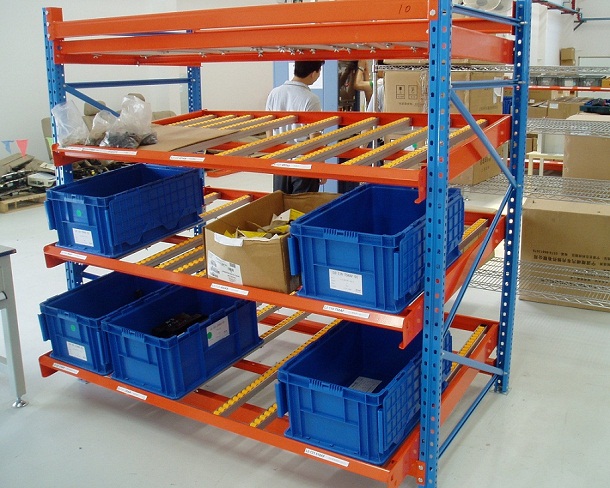
Strategic Value of Professional Conventional Racking Engineering
Selecting and maintaining appropriate conventional racking directly affects operational KPIs: storage cost per pallet, order fulfillment accuracy, and workplace safety. By applying material science, seismic standards, and automation-ready interfaces, warehouses reduce total cost of ownership by 30–40% over a decade. For a detailed load capacity assessment or CAD layout proposal, consult the engineering team at Guangshun.
Frequently Asked Questions (FAQ) – Conventional Racking
A1: For standard selective racking using 100x50x2.5mm box beams with 2.7m span, the safe working load (SWL) ranges from 1,500 kg to 2,500 kg per level, depending on steel grade (S350GD typical). Always refer to the manufacturer's load plate – Guangshun provides individual load certificates per beam step. Exceeding SWL causes beam deflection beyond L/180, leading to pallet instability.
A2: RMI (Rack Manufacturers Institute) recommends a formal engineering inspection every 12 months by a certified rack inspector. Visual checks by warehouse staff should be performed monthly, focusing on bent uprights (>5mm flange deviation), loose baseplates, missing safety pins, and deformed beam connectors. After any forklift impact, an immediate inspection is mandatory.
A3: Floor unevenness exceeding 5mm per 3m requires adjustable base feet (screw-type leveling plates with ±30mm adjustment). Failure to level uprights induces additional bending moments, reducing load capacity by up to 25%. After leveling, fill gaps under baseplates with non-shrink grout (minimum 50 MPa compressive strength).
A4: Conventional racking is designed for palletized loads using forklifts or reach trucks, with beam capacities typically 1,500–5,000 kg, upright heights exceeding 6m, and bolted or clip-in connections requiring seismic bracing. Boltless shelving is manual case-picking equipment with shelf depths 400–800mm, heights ≤2.5m, and load capacities ≤800 kg per level. The two systems are not interchangeable.
A5: Options include adding bolt-on diagonal bracing (40x40x3mm angle steel), upgrading baseplate anchors to high-strength chemical anchors (M16), installing top tie-bars across bays, and adding pallet containment lips or wire mesh back panels. A structural engineer should perform a pushover analysis for buildings in SDC D/E zones. Guangshun offers seismic upgrade kits with full installation documentation.
For project-specific load calculations or a free warehouse storage audit, visit Guangshun for engineering support and customized conventional racking proposals.