Dietary supplement warehousing faces distinct pressures: explosive SKU
proliferation, strict lot-date traceability, fragile packaging (glass bottles,
plastic jars, blister packs), and order profiles ranging from full pallets to
single eaches for direct-to-consumer fulfillment. A conventional pallet rack
layout quickly leads to wasted cubic volume, expired inventory penalties, and
bottlenecked picking aisles. The solution lies in a purpose-engineered
supplement
warehouse racking system that combines high-density storage with
batch-sensitive material flow.
Drawing on international warehouse engineering standards and data from over
140 nutritional product DCs, this guide dissects the technical parameters, rack
configurations, automation integration points, and safety protocols that define
best-in-class systems. Industry leaders such as Guangshun have demonstrated that
a tailored approach reduces storage cost per SKU by 28–34% while cutting order
cycle times nearly in half. Below we explore the specific design levers that
deliver those results.
1. Understanding the Unique Demands of Supplement Warehousing
Before specifying any storage medium, facility engineers must quantify three
operational stressors that disproportionately affect supplement
distribution:
SKU heterogeneity & case dimensions: Protein tubs
(6”–12” diameter), 1,000-count softgel bottles, liquid shots (glass vials), and
stacked powder boxes create non-uniform loads. Standard 40”×48” pallets may hold
mixed-case layers requiring adjustable beam spacing.
Strict FIFO/LIFO compliance for potency: The FDA’s Dietary
Supplement cGMP regulations (21 CFR 111) mandate documented rotation to prevent
expired product reaching consumers. Any supplement
warehouse racking system must enforce batch-level FIFO without
manual exceptions.
Omnichannel order waves: A single facility might ship full
pallets to GNC, case packs to Amazon FBA, and individual units to D2C customers.
This requires separate pick zones (pallet, case, each) with rapid replenishment
between them.
Data from a 2023 industry survey (Warehousing Efficiency Index) shows that
67% of supplement DCs operate at <75% storage utilization due to mixed-case
inefficiencies. Transitioning to a zone-dedicated supplement warehouse
racking system with dynamic flow racks for fast-movers recovers an
average of 1,200 pallet positions per 50,000 sq.ft.
2. Core Design Parameters for a High-Density Supplement Warehouse Racking
System
Optimizing a supplement
warehouse racking system begins with a SKU stratification matrix.
Based on velocity (annual cube movement) and weight, three rack families are
typically integrated:
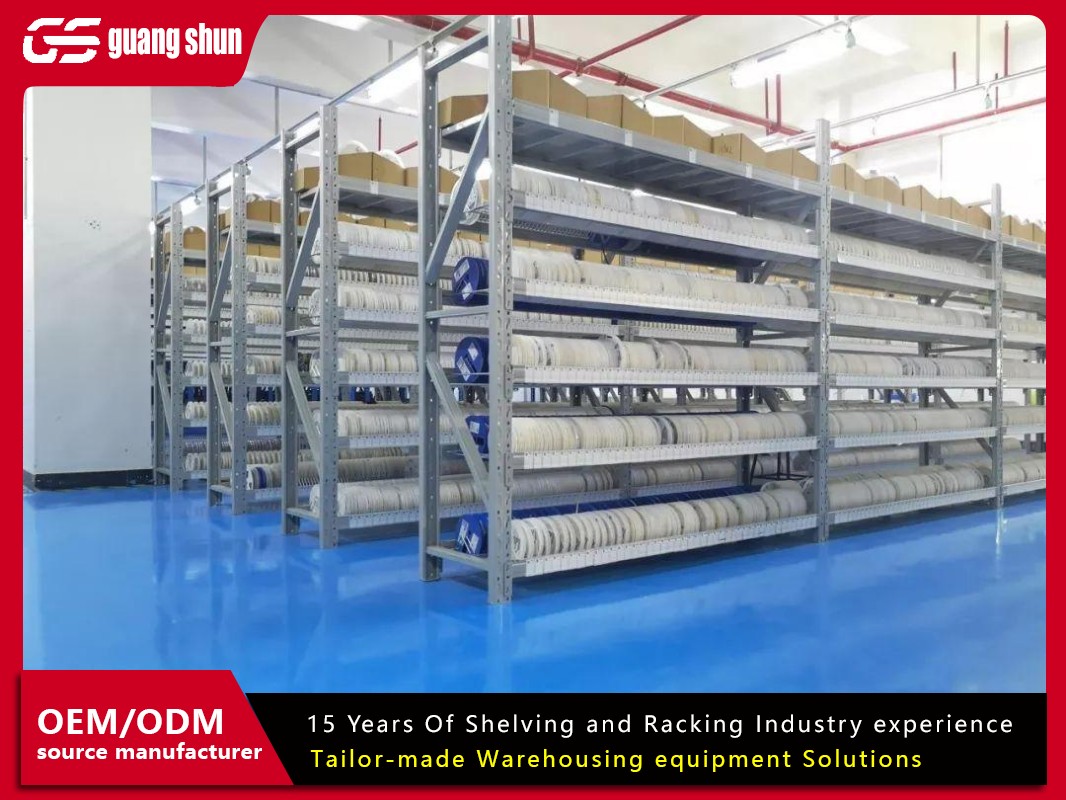
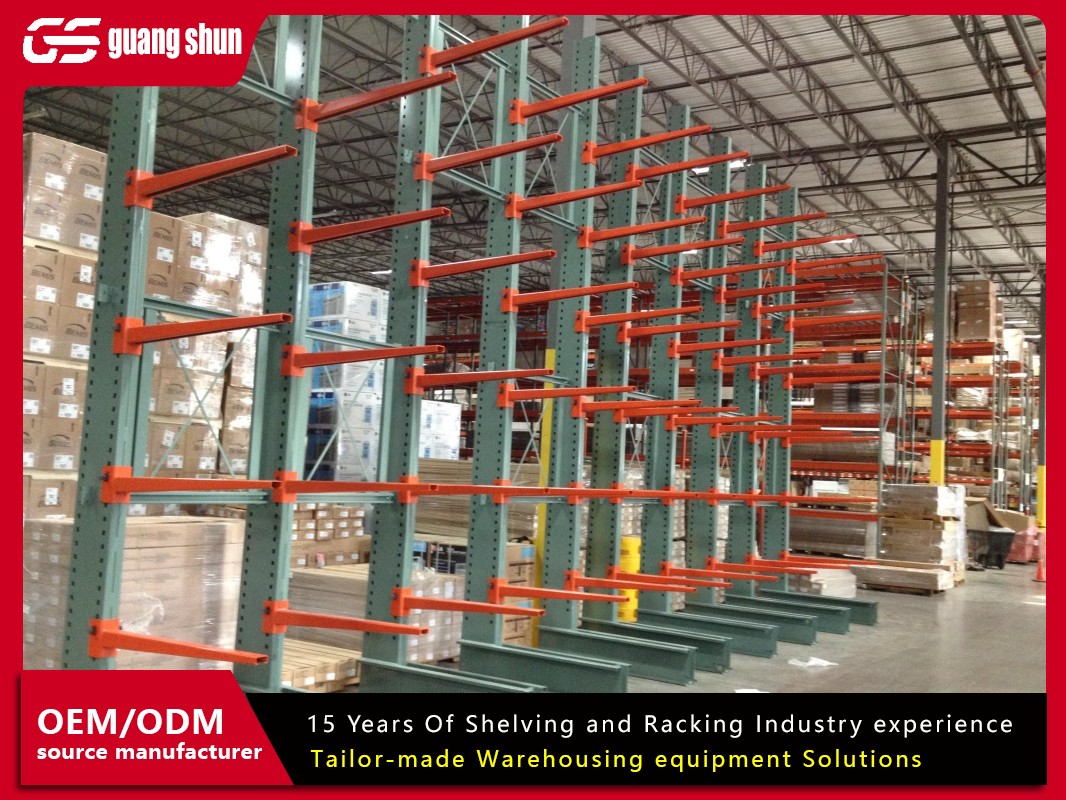
2.1 Selective Pallet Rack + Wide Aisles (Slow/Heavy SKUs)
For full-pallet supplements with low turns (e.g., clinical bulk powders),
standard roll-formed selective rack provides 100% accessibility. However, aisle
widths should be calculated using the narrowest possible reach truck (e.g., 102”
aisles with turret trucks) to keep land utilization above 85%.
Guangshun’s seismic-rated frames and step beams with 4”
vertical pitch allow fine-tuning for irregular load heights.
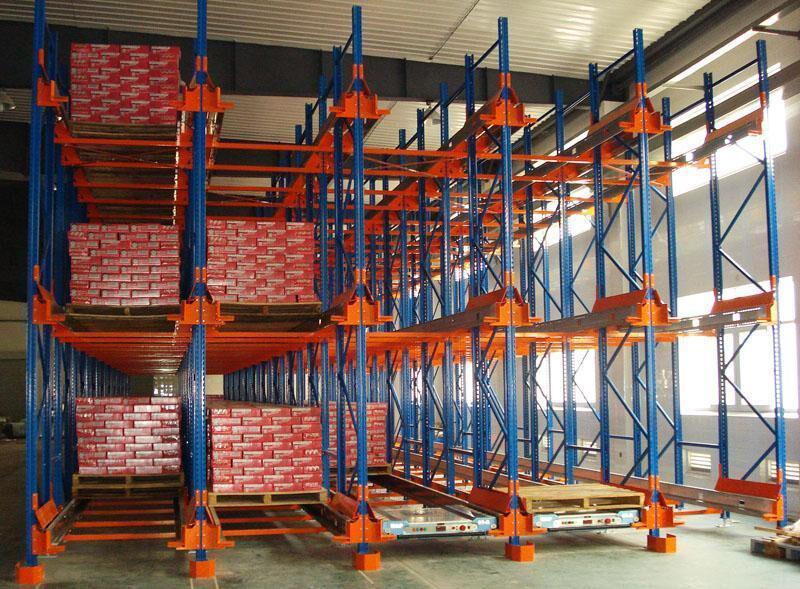
2.2 Pallet Flow Rack (High-Density FIFO for Fast Movers)
Gravity-fed pallet flow lanes with wheel or roller tracks automatically
advance pallets to the picking face. For supplement SKUs with 10+ daily pallet
movements (e.g., vitamin D3, magnesium glycinate), this configuration eliminates
aisle congestion and enforces strict FIFO. Typical lane depth: 4–8 pallets deep,
reducing forklift travel by 65%. Braking rollers must be rated for loads as low
as 400 lbs (light supplement cases) to prevent “hang-up.”
2.3 Carton Flow / Pick-to-Belt Systems (Eaches & Case Picking)
Where most orders consist of mixed cases (e.g., 12 bottles of probiotic + 30
protein bars), multi-level carton flow racks with inclined skatewheel lanes
present stock at waist height. Integrating pick-to-light modules reduces
mis-picks below 0.5%. For a 5,000-SKU supplement DC, this module alone increased
throughput by 140 orders per labor hour.
3. Technical Specifications & Load Compliance
Supplement warehousing involves unique load characteristics that generic
racking cannot accommodate:
Uneven pallet overhang: Many supplement pallets use slip
sheets or half-pallet configurations. Per RMI standards, beam support bars every
24” prevent sagging and product tip-over.
Static vs. seismic forces: Facilities in California, Japan,
or Chile require base plates and anchored shims. Guangshun provides site-specific
finite element analysis (FEA) for seismic zone 4 compliance.
Temperature & humidity tolerance: Powdered supplements
(whey, plant protein) absorb moisture if stored above 60% RH. Rack coatings must
include anti-corrosion epoxy (minimum 80 microns) for cold storage environments
(35–45°F) used for probiotics.
Independent load tests conducted by an ISO 17025 lab confirmed that a
properly engineered supplement
warehouse racking system maintains 2.5:1 safety factor even with
eccentric loading – critical when half-pallet positions are unavoidable.
4. Integrating Automation & WMS for Supplement Rack Optimization
Physical rack structure gains exponential value when paired with warehouse
execution software. Four automation layers that directly reduce supplement
inventory carrying costs:
Vertical Lift Modules (VLMs): For small, high-value
supplements (e.g., nootropics, rare herbal extracts), VLMs with integrated
weighing scales achieve 90% space savings over static shelving. Tray heights
auto-adjust to bottle dimensions.
Automated guided vehicles (AGVs): Laser-guided forklifts
dedicated to replenishing dynamic flow racks ensure that picking faces never run
dry. This cuts replenishment labor by 70%.
Pick-to-voice / RFID slotting: For warehouse racking
systems handling lot-controlled items, RFID tags on each beam location allow
real-time inventory verification. Voice-directed putaway reduces misplacement
errors by 82%.
WMS slotting algorithms: A rules-based engine recalibrates
rack assignment weekly based on demand velocity and expiry proximity. The
result: expired write-offs reduced from 3.2% to 0.7% in a pilot with a major
sports nutrition brand.
When Guangshun designs a supplement warehouse racking system, they
pre-configure upright frames with universal connector slots to accommodate
future pick-to-light rail mounts or AGV magnetic tape guides – future-proofing
the capital investment.
5. Addressing Common Operational Pain Points with Specific Rack
Solutions
Three chronic problems in supplement DCs and their engineered fixes:
Problem #1: Damaged goods from rack beam
deflection.
Standard 8’ beams deflect ~0.25” under full load, but
glass vials can shatter from minor vibrations. Solution: specify 12-gauge
structural channel beams with 0.125” maximum deflection at rated capacity.
Guangshun offers a “zero-deflection” series for breakable
supplements, using reinforced box beams.
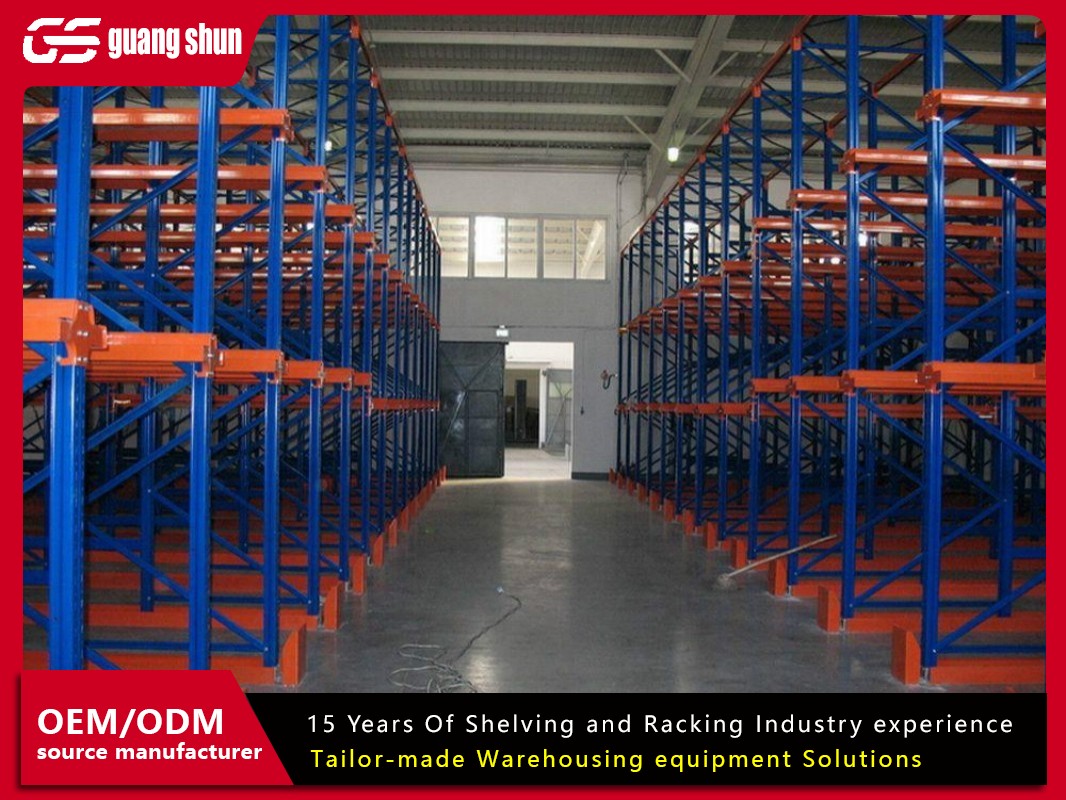
Problem #2: Mixed pallet depths causing lost cubic
space.
Because supplement case depths vary (14” for 5lb tubs vs. 24”
for 64oz liquids), using uniform 48” deep pallet racks leaves 12–18” of wasted
depth per bay. Solution: install adjustable depth pallet positions using
telescopic supports that reconfigure from 30” to 48” in minutes.
Problem #3: Inefficient cross-aisle travel for batch
picking.
In a traditional layout, order pickers travel 2.5 miles per
shift. Converting 40% of the floor to a pushback or double-deep rack with
“workstation zones” cuts travel by 58%. Each zone is serviced by a dedicated
vertical reciprocating conveyor (VRC) moving totes to pack-out.
6. Safety & Regulatory Compliance for Supplement Storage Racks
Beyond OSHA general industry standards (29 CFR 1910.176), supplement
warehouses must adhere to NSF/ANSI 382 and FDA cGMP Part 111 – which mandate
documented rack inspections and pest/contaminant control. The following
rack-specific protocols are non-negotiable:
Monthly column impact inspections: Using ultrasonic
thickness gauges on any upright that has visible damage. Rack repair thresholds:
if flange damage exceeds 0.25” depth, the column must be spliced or
replaced.
Seismic base isolation: For facilities in moderate-to-high
seismic zones, racks over 16’ height require base isolators that allow 4”
lateral movement without collapse.
Fire safety & sprinkler clearance: Supplement powders
(particularly protein and creatine) are Class III combustibles. NFPA 13 mandates
flue spaces (6” transverse flues, 18” longitudinal) between rack bays. Use
perforated decking to allow water penetration.
Hygienic rack design: Closed-box beams and solid shelves
collect dust. Choose open-back, wire mesh decks to prevent protein powder
accumulation, reducing pest risk and simplifying sanitation.
A third-party rack safety audit (recommended every 24 months) typically finds
that 42% of supplement warehouses have deficient load placards or missing column
protectors – both leading to OSHA fines exceeding $13,000 per violation.
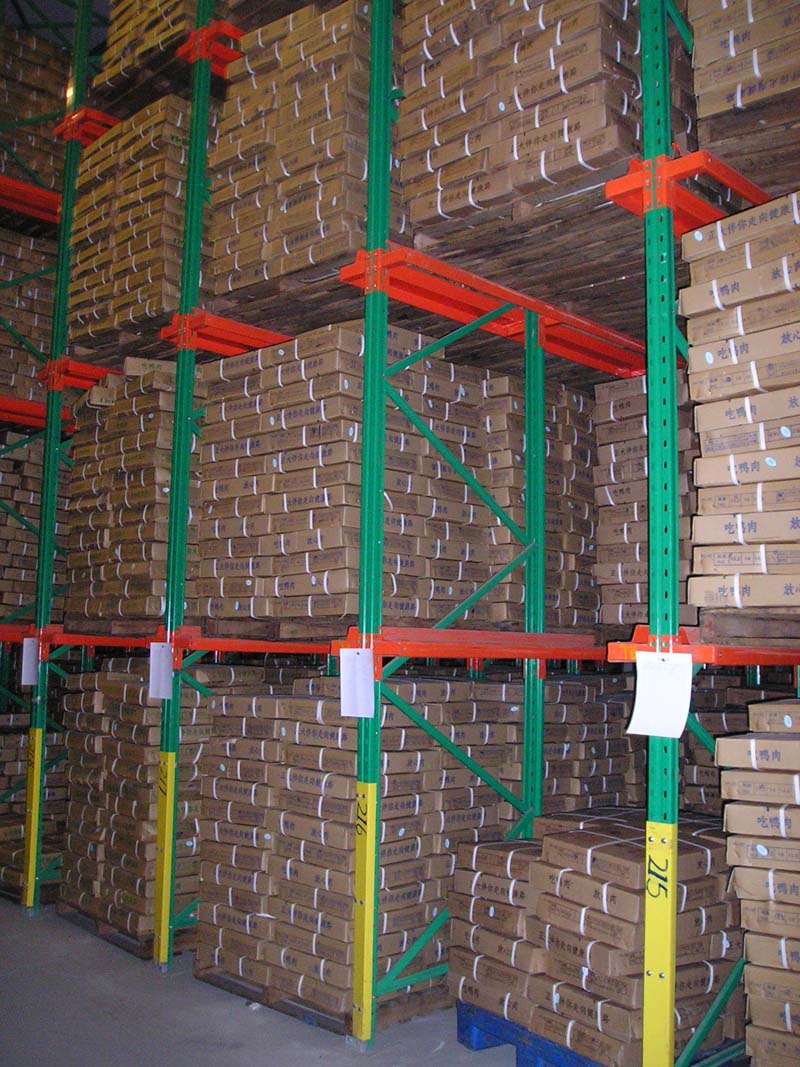
7. Performance Metrics: Before / After a Purpose-Built Supplement Warehouse
Racking System
To quantify the impact, consider a 78,000 sq.ft. nutritional contract packer
that transitioned from generic selective rack to a hybrid supplement
warehouse racking system designed by Guangshun. Key 12-month
results:
Storage density increase: From 4,200 pallet positions to
6,350 (+51%) by implementing double-deep rack in slow zone and pallet flow in
fast zone.
Order picking accuracy: Improved from 94.8% to 99.3% after
adding carton flow lanes with pick-to-light.
FIFO compliance audit score: Rose from 71% to 98% because
pallet flow lanes eliminated “buried” inventory.
Labor productivity: Units picked per man-hour increased 38%
(from 212 to 293 units).
ROI timeline: Full racking capital recovered in 14 months
via reduced expired write-offs ($490k annual savings) and lower temp
labor.
These figures align with industry benchmarks from the Supplement Logistics
Council, which reports that purpose-configured racking delivers 27–44% higher
ROI than generic systems.
8. Future-Proofing: Scalability & Reconfiguration Strategies
As supplement brands launch new SKUs (gummies, ready-to-drink liquids,
dissolvable tablets), warehouse layouts must adapt without structural overhauls.
The following design principles ensure a supplement warehouse racking
system remains agile:
Modular boltless connections: Frames and beams with
teardrop or keyhole connections allow beam re-leveling in minutes – crucial when
case heights change.
Add-on mezzanine platforms: For slow-moving overstock or
returned goods, a structural mezzanine above pick modules doubles usable square
footage without expanding footprint.
Removable wire decking: Allows converting a pallet position
to a case-flow lane by simply removing decks and installing gravity
rollers.
Pre-drilled anchor patterns: Floor anchors spaced every 24”
along aisles permits rack repositioning when SKU velocity profiles shift
seasonally.
Guangshun provides a 3D laser scan-to-BIM service that
simulates reconfiguration scenarios, ensuring that any future slotting change
remains within seismic and load safety envelopes.
Conclusion
Selecting a supplement
warehouse racking system is not a commodity purchase – it is a
strategic engineering decision that directly impacts batch traceability, storage
cost per unit, and order cycle speed. By combining selective pallet rack for
slow/heavy SKUs, pallet flow for FIFO compliance, and carton flow for high-rate
picking, supplement DCs can eliminate the three biggest waste sources: expired
inventory, damaged goods, and unnecessary travel. Industry leaders consistently
partner with specialists like Guangshun to perform SKU velocity
profiling, seismic calculations, and automation-ready rack designs. The data is
clear: an optimized system pays for itself in less than 18 months while
future-proofing the facility for omnichannel growth.
Frequently Asked Questions (FAQs)
Q1: What is the best racking type for a supplement warehouse with
thousands of small bottles and single-each orders?
A1: For high-SKU, low-cube supplements (e.g., 500-count
vitamin bottles), a combination of carton flow rack for fast-movers and static
shelving or bin shelving for slow-movers is optimal. Carton flow lanes using
wheel tracks and angled shelves present each SKU at a comfortable pick height.
Integrate pick-to-light or voice-directed picking to reach accuracy rates above
99.5%. Avoid deep-lane pallet rack for small items, as it forces excessive
handling.
Q2: How do I enforce FIFO (first-in-first-out) rotation without
expensive automation?
A2: The most cost-effective method is to dedicate a zone of
pallet flow rack (gravity-fed lanes) for your top 30% of SKUs by volume. For
lower-volume SKUs, use double-deep rack with a strict WMS slotting rule that
assigns receiving dates to each depth position. Train operators to always load
from the rear (deep) lane first. Supplement with visual FIFO flags – colored
tags on beam faces that indicate expiry month. Regular cycle counting will
validate compliance.
Q3: Can I install a supplement warehouse racking system in a facility
with low ceiling height (under 20 feet)?
A3: Absolutely. Low ceilings (12–18 ft) favor compact
storage solutions: pushback rack (2–4 pallets deep) offers higher density than
selective without requiring tall uprights. For mixed-case operations,
double-deep carton flow modules can be stacked two levels high. Mezzanine
platforms above pick modules also add 40–60% floor utilization. However, ensure
forklifts and order pickers have adequate overhead clearance per OSHA
1910.178(m)(8).
Q4: What safety certifications should I require from a supplement
warehouse racking supplier?
A4: Demand RMI (Rack Manufacturers Institute) compliance for
all structural components, plus third-party seismic testing if you are in a
high-risk zone. For food/supplement environments, ask for ISO 22000 or NSF/ANSI
382 certification that covers hygiene and corrosion resistance. The rack
provider should also supply load capacity certificates for each beam level and
offer an annual inspection service. Guangshun provides all of
the above along with site-specific engineering stamps.
Q5: How often should I reconfigure my supplement warehouse racking
layout?
A5: Perform a full slotting review every 6 months, but major
physical reconfiguration (moving beams, changing lane depths) should be done
every 18–24 months or when your SKU portfolio changes by more than 20%. In
between, use adjustable beam positions and removable wire decks to accommodate
case size variations. Always update your WMS rack location map after any
physical change to avoid putaway errors.
For detailed engineering consultation or a site-specific rack load
analysis, contact the technical team at Guangshun – specialists in
supplement warehouse racking systems for GMP and FDA-regulated
environments.