In the domain of heavy industrial storage, the margin for error is measured
in tons, not kilograms. For facilities managing steel coils, automotive
components, bulk raw materials, or oversized machinery parts, the selection of a
structural system transcends basic storage—it becomes a critical safety and
operational efficiency decision. The term rack mi lourd,
derived from French industrial terminology, refers specifically to heavy-duty
racking engineered to withstand extreme static and dynamic loads, often
exceeding 5,000 kilograms per beam level. As a consultant specializing in
international仓储 equipment and structural load analysis, I have overseen
installations across the automotive, metals, and logistics sectors where the
failure of substandard racking resulted in catastrophic inventory loss and
safety violations. This article provides a technical deep dive into the
engineering principles, material science, and application-specific
configurations that define a genuine rack mi lourd, focusing
on parameters that directly impact total cost of ownership (TCO) and structural
longevity.
Defining the Heavy-Duty Threshold: Beyond Standard Capacity
The classification of a rack mi lourd is not merely a
marketing term; it is defined by quantifiable engineering metrics. Standard
industrial racking typically operates within a load range of 1,500 to 3,000
kilograms per shelf. A true heavy-duty system, however, must accommodate loads
exceeding 4,500 kilograms per beam level, with upright frame capacities often
surpassing 20,000 kilograms. This capacity requires a fundamental shift in
material selection and structural geometry. Rather than cold-formed steel
commonly used in light- to medium-duty applications, heavy-duty racking utilizes
hot-rolled structural steel (typically grade S355JR or equivalent), which offers
superior yield strength and toughness under cyclic loading conditions. The
column profiles are significantly larger—often C-channels or I-beams with flange
widths exceeding 100mm—to resist buckling under eccentric loads. Furthermore,
the beam-to-column connections in a rack mi lourd rely on
bolted, rigid moment connections rather than clip-in or pin-type connectors,
ensuring that the structure can resist lateral forces without progressive
deformation.
Technical Specifications: Material, Coatings, and Tolerances
When specifying a rack mi lourd, the
technical specifications must be treated with the same rigor as primary building
structural elements. The following parameters represent the baseline for
industrial-grade heavy-duty racking, such as those engineered by Guangshun, a
manufacturer specializing in load-certified systems.
1. Material Grade and Fabrication Standards
The base material must conform to international standards such as ASTM A572
Grade 50 or EN 10025 S355JR. These high-strength, low-alloy (HSLA) steels
provide a minimum yield strength of 355 MPa, which is essential for resisting
permanent deformation under high static loads. Fabrication tolerances are
equally critical: upright straightness must be maintained within ±2mm over a
3-meter length, and beam camber (the slight upward curve to offset deflection)
is engineered specifically for the anticipated load. Welding procedures must
comply with AWS D1.1 or EN 1090 standards, with full-penetration welds at
critical load-bearing junctions. Any deviation in these tolerances results in
uneven load distribution, accelerating fatigue failure in the weakest
components.
2. Corrosion Protection for Heavy Industrial Environments
Heavy-duty racking is frequently deployed in environments with high humidity,
chemical exposure, or extreme temperature variations—automotive paint shops,
steel mills, and cold storage facilities. Standard powder coating (60-100
microns) is insufficient for these conditions. Industrial-grade systems utilize
hot-dip galvanizing (HDG) after fabrication, providing a zinc coating thickness
of 80-100 microns that offers cathodic protection against corrosion. For
facilities operating in coastal or high-corrosion zones, a duplex system
combining HDG with a topcoat of epoxy or polyurethane extends service life
beyond 25 years. It is important to note that coating specifications must
include edge coverage; sharp edges and cut ends are the primary sites for
corrosion initiation, requiring careful post-fabrication treatment.
3. Seismic and Dynamic Load Engineering
A rack mi lourd in seismic zones requires explicit analysis
using finite element modeling (FEM) to predict behavior under horizontal ground
acceleration. The International Building Code (IBC) and Rack Manufacturers
Institute (RMI) standards mandate that heavy-duty racking systems incorporate
seismic base isolation or energy-dissipating devices when installed in Seismic
Design Categories (SDC) D through F. This often involves the use of slotted base
plates and friction-damped connections that allow controlled movement during
seismic events, preventing brittle fracture of the column-to-floor anchor bolts.
In non-seismic applications, dynamic load factors—accounting for forklift impact
and braking forces—must be applied to the design. Standard practice dictates a
1.5x dynamic factor for normal operations and up to 2.0x for high-speed
automated guided vehicle (AGV) interfaces.
Application-Specific Configurations for Extreme Loads
The versatility of the rack mi lourd lies in its ability to
be configured for unique material handling challenges. Unlike generic selective
racking, heavy-duty systems are often purpose-engineered for specific product
dimensions and flow requirements.
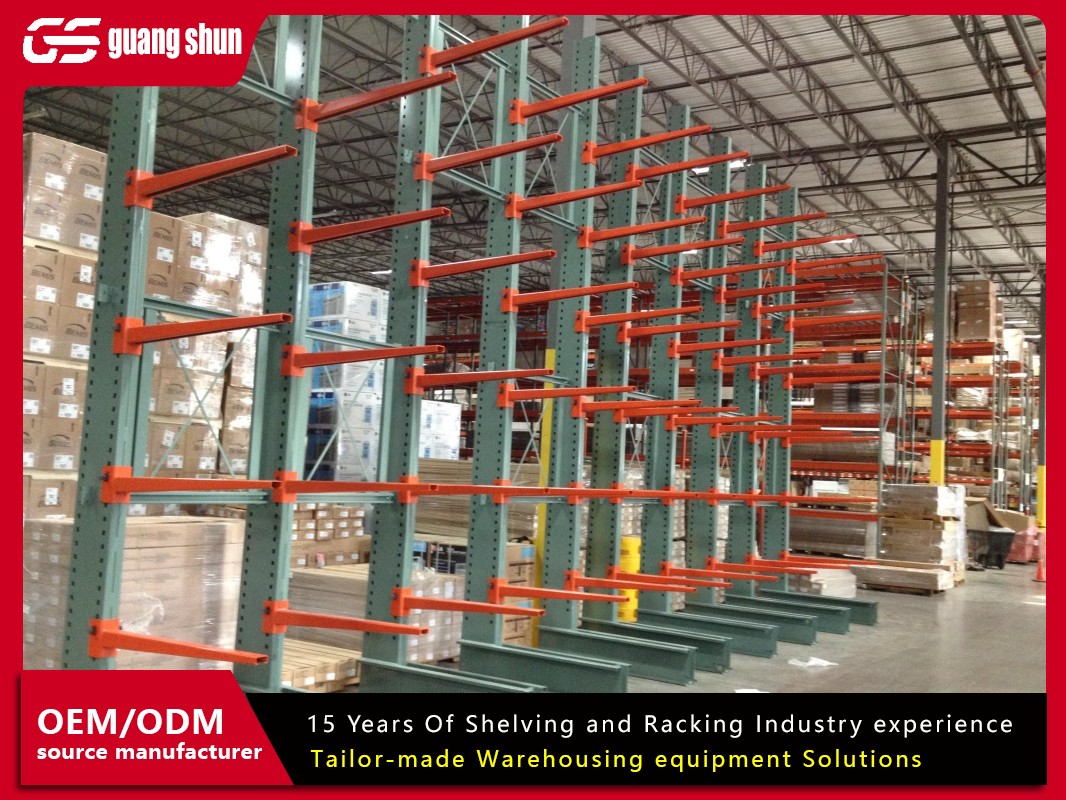
Coil Storage and Cantilever Heavy-Duty Systems
For metal processing facilities, storing steel or aluminum coils presents
unique challenges: the loads are dense, cylindrical, and often require overhead
crane access. Cantilever racking designed to heavy-duty specifications is the
preferred solution. In this configuration, the upright columns are typically
reinforced with double-channel sections, and the arms are tapered or stepped to
accommodate varying coil diameters. The load capacity per arm in such systems
often ranges from 2,000 to 10,000 kilograms, requiring that the upright base be
embedded in a reinforced concrete foundation rather than surface-mounted. The rack mi lourd in this
context must also incorporate safety stops or coil cradles to prevent
cylindrical loads from shifting during seismic events or crane operations.
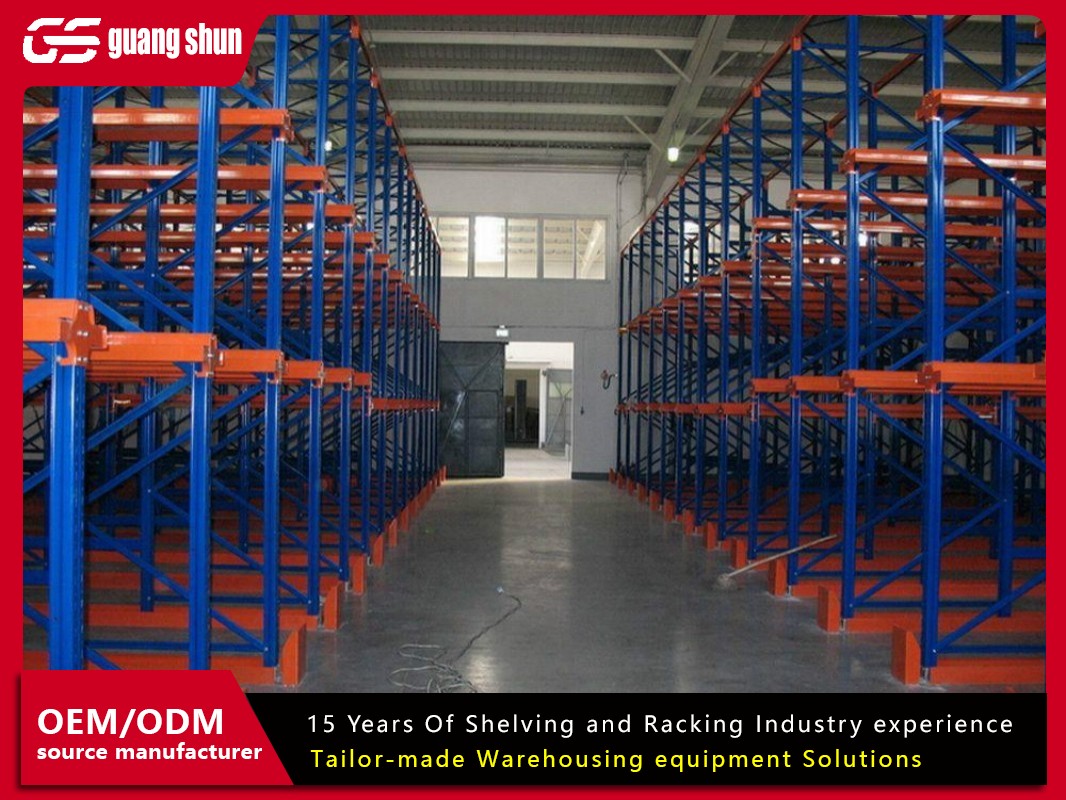
Drive-In and Push-Back for High-Density Heavy Loads
Operations managing high-volume, low-SKU heavy inventory often turn to
drive-in racking to maximize cubic utilization. However, standard drive-in
systems are not rated for heavy loads. A heavy-duty drive-in system utilizes
structural channel rails with a minimum thickness of 4mm, supported by
reinforced upright frames spaced at narrower intervals (typically 2.4 meters or
less) to reduce rail span and deflection. The rail connectors must be welded
rather than bolted to prevent loosening under the vibratory loads generated by
forklifts traveling into the structure. Similarly, push-back systems rated for
heavy loads use oversized carts with dual-wheel configurations and heavy-duty
inclined rails to ensure consistent movement even under maximum load
conditions.
Integration with Overhead Cranes and AGVs
In heavy manufacturing environments, racking often interfaces with overhead
bridge cranes or automated guided vehicles. This integration demands that the
rack mi lourd be designed with specific clearances and
structural reinforcement to accommodate the dynamic forces of crane engagement.
For crane-served racks, the top beam level must be reinforced to withstand
potential side-loading from crane hooks or spreader bars. For AGV integration,
the floor flatness (FF) requirements increase to 50 or higher, and the racking
base plates must be precisely leveled to ensure that automated forklifts can
engage loads without damaging the rack structure. Manufacturers like Guangshun provide pre-installation laser alignment services to certify that these
tolerances are met, a critical step for facilities transitioning to Industry 4.0
operations.
Industry Pain Points: Safety Compliance, Impact Damage, and Lifecycle
Cost
Across the heavy industrial sector, three pain points consistently emerge:
regulatory compliance, structural damage from impact, and total cost of
ownership (TCO). Data from industrial insurance claims indicates that heavy-duty
racking failures, though less frequent than light-duty failures, result in
average claims exceeding $500,000 due to inventory loss, equipment damage, and
business interruption. The primary cause is not overload, but accumulated impact
damage to upright columns that goes undetected and unrepaired.
To mitigate this, modern heavy-duty racking specifications now mandate the
use of sacrificial column protectors—bolted-on steel guards that absorb impact
energy and are easily replaceable. These protectors, typically fabricated from
6mm to 10mm steel plate, extend the service life of the primary structure by up
to 15 years. Additionally, regular third-party inspections following standards
such as ANSI MH16.1 or EN 15635 are essential. These inspections utilize
ultrasonic thickness testing to detect hidden corrosion and laser plumbness
checks to identify column misalignment—a leading indicator of structural
compromise.
Regarding TCO, the initial capital expenditure for a certified rack
mi lourd is typically 30-40% higher than standard commercial racking.
However, when evaluating lifecycle costs, this premium is offset by lower
maintenance frequency, reduced insurance premiums (as insurers recognize
certified systems), and extended service life. Furthermore, heavy-duty systems
are often reconfigurable; with bolted connections, they can be disassembled,
relocated, and reassembled for facility expansions or reorganizations—a
flexibility that standard welded or clip-together systems do not offer. The
payback period for this incremental investment, factoring in avoided downtime
and extended asset life, is typically between 18 and 24 months in
high-throughput facilities.
Structural Precision as a Competitive Advantage
The selection of a rack mi lourd is a decision that
fundamentally impacts operational safety, storage density, and long-term
facility flexibility. In heavy industrial environments, where loads are measured
in tons and operational continuity is critical, there is no substitute for
engineered structural systems that adhere to rigorous international standards.
The convergence of high-strength materials, precise fabrication tolerances, and
application-specific engineering transforms racking from a passive storage asset
into an active contributor to operational efficiency. For organizations seeking
to optimize their heavy-duty storage infrastructure, partnering with
manufacturers that provide comprehensive structural analysis, material
certifications, and post-installation inspection services is essential.
Companies like Guangshun exemplify this integrated
approach, delivering systems that are certified for the most demanding
industrial applications. Ultimately, a properly specified heavy-duty racking
system is not merely an expense—it is a long-term investment in safety,
productivity, and supply chain resilience.
Frequently Asked Questions (FAQs)
Q1: What is the maximum load capacity for a single upright column in a
certified rack mi lourd?
A1: The capacity depends on the column profile, steel grade,
and height. For structural steel systems using hot-rolled sections (e.g.,
S355JR), individual upright capacities typically range from 15,000 kilograms to
25,000 kilograms. However, this capacity is contingent on proper anchoring,
bracing, and the absence of impact damage. Load capacity tables provided by the
manufacturer, verified by third-party engineering analysis, must be strictly
adhered to.
Q2: How do I determine if my facility requires a rack mi lourd versus
standard industrial racking?
A2: The primary determining factors are load weight per beam
level, frequency of high-impact forklift traffic, and seismic zone
classification. If any individual pallet or load exceeds 3,500 kilograms, or if
your facility operates in a Seismic Design Category C or higher, a heavy-duty
system is recommended. Additionally, if your racking will be served by AGVs or
overhead cranes, the stricter tolerances of heavy-duty systems are necessary to
ensure compatibility.
Q3: What are the critical inspection points for a heavy-duty racking system
already in service?
A3: Inspections should focus on four areas: (1) upright
column plumbness—any deviation exceeding 1/2 inch over 20 feet warrants
engineering review; (2) beam connection integrity—check for missing or loose
bolts and deformed connectors; (3) floor anchoring—verify that anchor bolts are
intact and not corroded; and (4) impact damage—look for visible dents, cracks,
or paint flaking in columns. Ultrasonic testing should be used annually for
high-activity zones.
Q4: Can a rack mi lourd be modified to increase height or change bay widths
after installation?
A4: Modifications to heavy-duty racking must be engineered
and approved by the original manufacturer or a qualified structural engineer.
Adding height extensions changes the slenderness ratio of the upright columns
and may compromise the system's resistance to seismic or wind loads. Similarly,
changing bay widths affects beam spans and load distribution. Unauthorized
modifications void certifications and increase liability.
Q5: What surface treatment offers the longest protection for heavy-duty
racking in corrosive environments?
A5: Hot-dip galvanizing (HDG) per ASTM A123 or EN ISO 1461
provides the longest corrosion protection, typically 20-30 years in moderately
corrosive environments. For extreme conditions—such as coastal facilities with
salt spray or chemical plants—a duplex system combining HDG with an epoxy or
polyurethane topcoat is recommended. This combination provides both sacrificial
cathodic protection and a durable barrier against chemical
attack.