Managing a temperature-controlled warehouse requires a precise balance
between structural engineering and thermodynamics. Unlike standard dry storage,
a facility operating at -20°C to -30°C faces unique physical challenges, ranging
from material embrittlement to high energy consumption. The selection of a
robust cold
storage racking system is the most influential factor in
determining the long-term profitability of the operation. Since the cost of
conditioned air is exponentially higher than ambient air, maximizing cubic
storage density is not just an advantage; it is a financial requirement.
For global logistics providers, partnering with an experienced manufacturer
like [Guangshun]
ensures that the racking infrastructure is built to withstand the rigors of
sub-zero temperatures. This analysis examines the technical specifications and
strategic implementations necessary to maintain a high-performance cold chain
storage environment.
1. Metallurgy and Material Science: Combating Cold Embrittlement
The primary technical challenge in a refrigerated warehouse is the physical
change in steel properties. Standard carbon steel undergoes a transition known
as "ductile-to-brittle transition" when exposed to extreme cold. Under these
conditions, the steel loses its ability to absorb energy through deformation,
making it prone to sudden, catastrophic fractures under impact from forklifts or
seismic events.
To mitigate this risk, a high-quality cold
storage racking system must be constructed using steel grades with
higher manganese content or specific low-temperature alloys. These materials
maintain their toughness and ductility even at temperatures as low as -40°C.
Structural calculations must also account for thermal contraction; as the
temperature drops, the steel members contract, which can induce additional
stress on the bolted connections and floor anchors if not correctly factored
into the initial design.
2. Surface Treatments: Galvanization vs. Powder Coating
Corrosion is a persistent threat in cold environments due to the presence of
condensation. When doors are opened, warm air enters and meets the frozen steel
surfaces, leading to moisture buildup. If left unprotected, the resulting
oxidation can compromise the structural integrity of the uprights within a few
years.
Hot-Dipped Galvanization (HDG): This is the gold standard
for cold storage. By submerging the steel in molten zinc, a metallurgical bond
is formed that provides a thick, self-healing protective layer. HDG is
particularly effective in areas where pallets frequently scrape the rack, as the
zinc coating is much more durable than paint.
Specialized Powder Coatings: For facilities with less
extreme humidity or those storing non-corrosive goods, epoxy-based powder
coatings formulated for low temperatures are an option. However, these must be
applied with high precision to ensure zero porosity.
Expert manufacturers like [Guangshun] often recommend
hot-dipped galvanization for the baseplates and lower upright sections, which
are most vulnerable to moisture and impact.
3. High-Density Configurations: Maximizing Cubic Volume
In a freezer warehouse, "honeycombing" or empty air space is the enemy of
efficiency. The cost per pallet position is significantly higher than in dry
storage. Therefore, high-density cold
storage racking system configurations are prioritized over standard
selective racking.
Mobile Racking Systems
Mobile racking involves placing rows of racks on motorized heavy-duty bases
that move along floor-mounted rails. By eliminating multiple static aisles and
replacing them with a single "floating" aisle, facilities can increase storage
capacity by up to 80% within the same footprint. This is highly effective for
low-to-medium turnover goods.
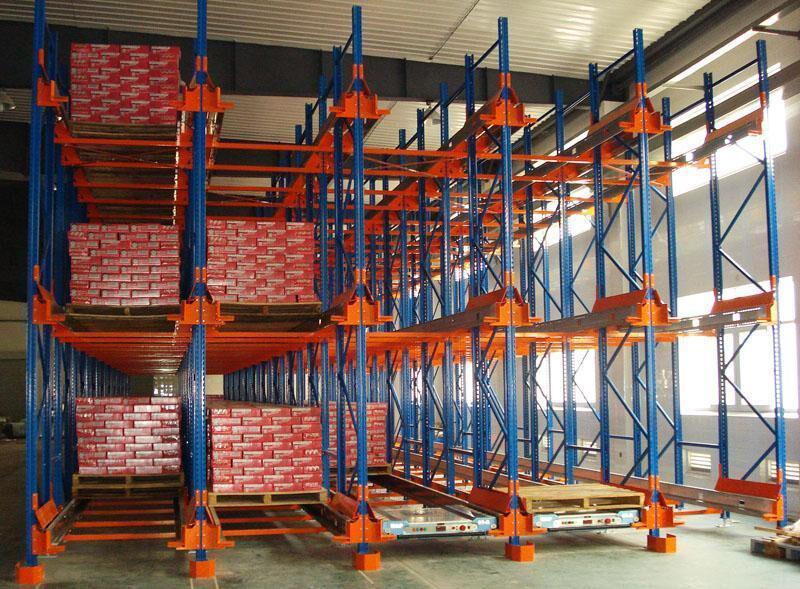
Radio Pallet Shuttle Systems
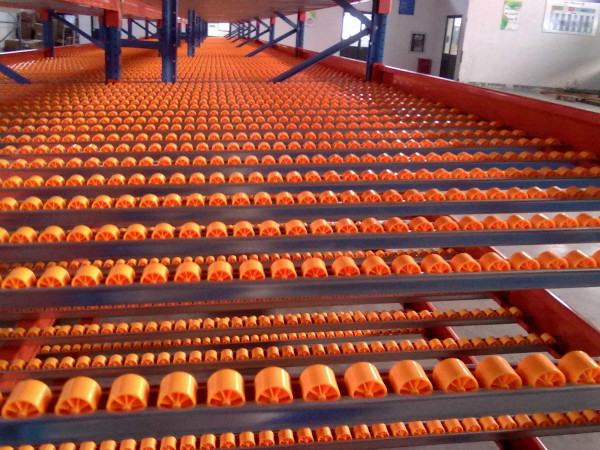
The pallet shuttle is a semi-automated solution where a self-powered robot
moves pallets within deep lanes of a racking structure. This removes the need
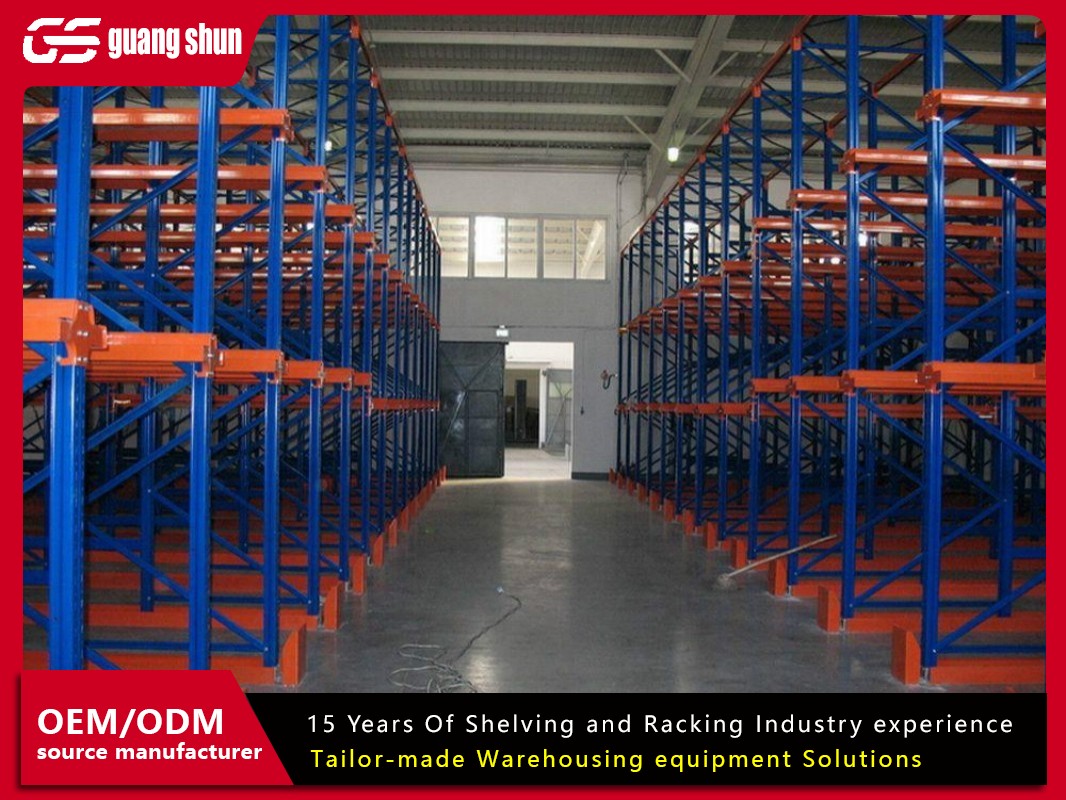
for forklifts to enter the rack (unlike drive-in racking), which significantly
reduces the risk of structural damage and improves operator safety. In the cold
chain, this speed of retrieval reduces the time the freezer doors remain open,
conserving energy.
4. Thermodynamic Considerations and Airflow Optimization
A common mistake in designing a cold
storage racking system is failing to account for air circulation.
If pallets are packed too tightly without regard for the refrigeration plant's
output, "hot spots" can develop. These temperature fluctuations can lead to
product spoilage and ice buildup on the racking components.
To avoid this, the rack layout must align with the position of the
evaporators. Longitudinal and transverse flue spaces—the gaps between
pallets—must be strictly maintained. Using wire mesh decking instead of solid
shelving is a standard practice, as it allows for vertical airflow, ensuring
that even pallets at the lowest levels remain at the required set-point
temperature.
5. Solving Operational Pain Points: Labor and Ergonomics
Working in a freezer is physically demanding. Human productivity drops
significantly in sub-zero temperatures, and the risk of error increases. A
well-engineered racking system addresses this by simplifying the retrieval
process. High-visibility markings, guided entry rails for forklifts, and
automated shuttle systems reduce the time a human operator must spend in the
cold zone.
Furthermore, the maintenance of the cold
storage racking system itself is a challenge. Performing repairs in
-25°C is difficult; welding is nearly impossible without specialized procedures.
Therefore, choosing a high-durability system from the outset is a proactive
strategy to avoid the logistical nightmare of clearing a frozen bay for
structural repairs.
6. Safety Compliance and Seismic Requirements
Safety in the cold chain is governed by strict international standards such
as those provided by the Rack Manufacturers Institute (RMI) and the European
Federation of Materials Handling (FEM). In seismic zones, the racking must be
designed to withstand the lateral forces of an earthquake while fully loaded.
Because cold-stressed steel is more brittle, the seismic engineering must be
even more conservative than in ambient warehouses.
Key safety features include:
Impact Protection: Heavy-duty floor-mounted column guards
are necessary to protect uprights from forklift collisions.
Over-Load Sensors: In automated systems, integrated sensors
prevent the shuttle from moving if the pallet weight exceeds the design
capacity.
Rack End Protectors: These guard the most vulnerable parts
of the row from high-speed forklift maneuvers at the aisle
entrances.
By sourcing from [Guangshun], facility managers
ensure that their infrastructure meets or exceeds these international safety
benchmarks.
7. ROI Analysis: The Long-Term Value of Quality
The initial capital expenditure for a specialized cold
storage racking system is higher than that of standard racking.
However, the Return on Investment (ROI) is realized through three main channels:
Energy Savings: Storing more pallets in a smaller
refrigerated volume reduces the cooling load per unit of product.
Reduced Product Loss: Stable racking and proper airflow
prevent temperature excursions that can ruin perishable inventory.
Operational Lifespan: High-grade steel and galvanized
finishes prevent the premature replacement of the system due to rust or brittle
failure.
Conclusion
The design and implementation of storage solutions in refrigerated
environments require a deep understanding of both mechanical engineering and
thermal physics. From selecting the appropriate grade of steel to choosing a
high-density configuration like a pallet shuttle, every decision has a direct
impact on the facility's bottom line. By investing in a high-quality cold
storage racking system and working with industry authorities like
[Guangshun],
businesses can ensure their cold chain remains resilient, safe, and highly
efficient. As global demand for temperature-sensitive goods continues to grow,
the infrastructure within the warehouse will remain the silent engine of the
modern supply chain.
Frequently Asked Questions (FAQ)
Q1: Why can't I use standard selective racking in a
freezer?
A1: Standard racking is typically made from steel that
becomes brittle in the cold, increasing the risk of fracture upon impact.
Additionally, standard paint may peel or crack, and selective racking has a low
storage density, making it very expensive to operate in a refrigerated
environment.
Q2: Is hot-dipped galvanization better than stainless
steel?
A2: For most industrial applications, hot-dipped galvanized
steel is preferred. It offers excellent corrosion resistance at a much lower
cost than stainless steel. Stainless steel is usually reserved for specific
hygienic zones in food processing where direct food contact is possible.
Q3: How does a pallet shuttle help with energy
efficiency?
A3: A pallet shuttle allows for extremely high-density
storage (up to 50 pallets deep). By storing more product in a smaller space, the
refrigeration system has less "empty" volume to cool, significantly lowering the
electricity bill per pallet position.
Q4: What is the most common cause of rack failure in cold
storage?
A4: Forklift impact is the most common cause. Because steel
is more brittle in the cold, even a minor bump that would only dent a rack in a
dry warehouse can cause a structural crack in a freezer. This is why heavy-duty
column protection is a requirement.
Q5: How do I manage ice buildup on the racking?
A5: Ice
buildup is usually a sign of poor airflow or high humidity entering the
warehouse. Ensuring that the racking layout facilitates proper circulation and
that "air curtains" or high-speed doors are functioning correctly at the
entrance will minimize condensation and frost.