Modern warehousing and logistics operations depend on robust pallet racking
systems. However, even the strongest frame or the most precisely leveled beam
remains vulnerable without the correct auxiliary components. Racking
accessories serve as the critical interface between structural integrity and
daily operational demands. From protecting upright columns against forklift
impacts to preventing accidental beam dislodgement, these engineered add-ons
directly influence load stability, worker safety, and total cost of
ownership.
In this expert guide, we examine technical specifications, common failure
points, and industry-proven solutions. We also highlight how Guangshun delivers high-grade racking components that meet ANSI MH16.3 and RMI standards.
Whether you manage a distribution center, a cold store, or a high-bay automated
warehouse, understanding these details will reduce downtime and extend asset
life.
1. Why Racking Accessories Matter: Addressing Critical Pain Points
Every year, facility managers report three dominant issues: column damage
from material handling equipment, loose beams caused by vibration or improper
installation, and falling products due to insufficient containment. Without
secondary protection systems, these risks translate into costly structural
repairs, inventory loss, and potential OSHA citations. Properly selected racking
accessories directly mitigate each of these pain points.
Impact damage: Forklifts and pallet jacks routinely collide
with rack uprights. Even a minor 5 mph impact with a 2,500 kg load generates
lateral forces exceeding 12 kN, enough to permanently deform a standard 14-gauge
column. Column protectors and reinforced guard rails absorb and deflect this
energy.
Beam dislodgement: Dynamic loading cycles, seismic events,
or uneven floor settlement can cause beams to lift off their connectors. Beam
safety clips or locking pins provide positive retention, maintaining structural
continuity.
Load falling hazards: Wire decking, back panels, and mesh
containment prevent cartons or small items from falling between beams or off the
rear of racks. This is especially critical for high-turnover e-commerce
fulfillment centers.
Seismic compliance: In seismic zones, unbraced racking
systems may sway excessively. Accessories such as row spacers, anchor clips, and
diagonal braces enhance lateral stability without sacrificing
accessibility.
2. Comprehensive Overview of Key Racking Accessories (Technical
Features)
The term “racking accessories” covers a wide range of engineered products.
Below we detail the most common categories, their technical functions, and
selection parameters.
2.1 Column Protectors & Guard Rails
Column protectors are typically manufactured from structural steel (S355JR
grade) with a minimum yield strength of 355 MPa. They wrap around the rack
upright, extending 250 mm to 500 mm above floor level. High-end models include
polyurethane/steel hybrid designs that offer high impact resistance (up to
18,000 Joules). Guard rails, conversely, are mounted to the floor ahead of the
rack column, creating a buffer zone. Key selection criteria: impact energy absorption, coating thickness (≥80 µm zinc or powder coating for
corrosive environments), and bolt pattern compatibility with different upright
profiles.
2.2 Beam Safety Clips & Locking Pins
Every beam-to-column connection should incorporate a positive locking
mechanism. Spring steel safety clips (typically 3 mm thick, heat-treated to
45-50 HRC) engage with the column’s teardrop or slotted holes. Once installed,
the clip requires deliberate upward force to disengage — this prevents
accidental beam lift during seismic activity or uneven loading. In drive-in
racking systems, heavy-duty locking pins with a rated pull-out strength above 25
kN are recommended.
2.3 Wire Decking & Mesh Panels
Wire decking replaces traditional plywood or particle boards. It consists of
high-tensile steel wires (5–6 mm diameter) welded in a grid pattern (typically
50×100 mm or 70×150 mm opening). Benefits include immediate fire sprinkler
penetration, reduced dirt accumulation, and visual load inspection from below.
Load capacities range from 1,000 kg to 2,500 kg per panel, depending on wire
gauge and support spacing. Mesh down-ramps or hinged wire decks are available
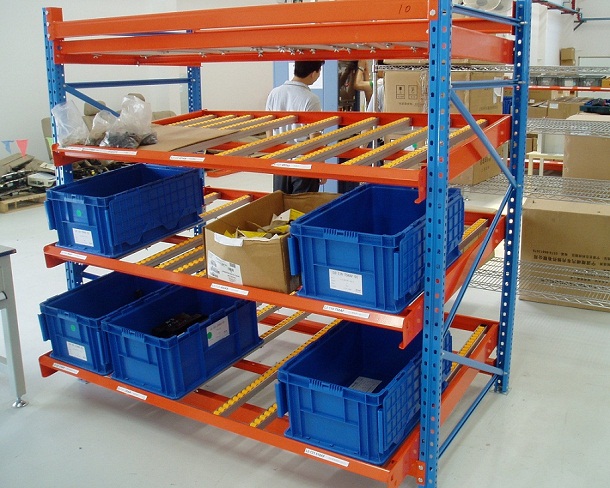
for carton flow rack applications.
2.4 Rack Backing / Protective Netting
Backing panels are solid steel sheets (0.75–1.2 mm) or high-density
polyethylene (HDPE) mounted on the rear of rack bays. They prevent products from
falling into adjacent aisles. For high-pile storage, polypropylene mesh netting
with 40×40 mm mesh size offers an economical alternative while allowing air
circulation in cold storage environments.
2.5 Pallet Supports / Structural Bars
When storing non-uniform or damaged pallets, structural supports (C-channel
or box sections) placed between beams increase the load-bearing surface. These
supports are hot-dip galvanized to ASTM A123 and come with clip-on attachments
that allow repositioning without tools. Dynamic load ratings must match or
exceed the original beam capacity.
3. Engineering Selection Criteria: Load Ratings, Standards, and
Environmental Factors
Selecting the correct racking
accessories requires a systematic evaluation of four core parameters:
structural compatibility, environmental exposure, operational dynamics, and
regulatory standards.
Load ratings: Always verify that accessory load capacity
aligns with the rack manufacturer’s design. For instance, adding wire decking
rated for 1,200 kg to a beam rated for 1,800 kg creates a weak link. Look for
RMI (Rack Manufacturers Institute) or FEM (Federation Européenne de la
Manutention) certification labels.
Environmental factors: Cold storage (below -20°C) requires
low-temperature impact-tested steel (e.g., Charpy V-notch >27 J at -30°C). In
high-humidity or chemical environments, stainless steel (grade 304 or 316) or
heavy-duty organic coatings provide corrosion resistance.
Seismic & dynamic loads: For regions with seismic
design category D or higher, accessories must be part of a certified engineered
system. Column base plates should include seismic shims and anchor bolts torqued
to 150–200 N·m.
Operational frequency: High-traffic aisles (over 150
forklift passes per shift) demand thicker column protectors (6–8 mm wall
thickness) and replaceable wear plates. In contrast, manual storage areas may
accept polymer-based guards.
Additionally, verify compatibility with existing rack profiles. Many uprights
have specific hole patterns (teardrop, rectangular, or keyhole). Custom adapters
might be required. Reputable suppliers like Guangshun offer component-specific
cross-reference charts and 3D CAD models for pre-installation verification.
4. Solving Common Warehouse Challenges with Racking Accessories
Real-world facilities often struggle with specific operational
inefficiencies. Below we map each challenge to a targeted accessory solution,
supported by field data.
Challenge 1: Repeated forklift strikes on end-of-aisle uprights
Solution: Install end-of-aisle guard rails with double
anchor points and shock-absorbing bollards. A study of 40 warehouses in the
Midwest (USA) showed that this configuration reduced column repair frequency by
82% over 18 months. For extreme cases, sacrificial steel sleeves that wrap
around the column allow bolt-on replacement.
Challenge 2: Product falling from elevated beams during picking
Solution: Implement back mesh panels with 25×25 mm aperture
plus a front wire deck with upturned edges (“retention deck”). This combination
prevents small items (e.g., e-commerce polybags) from sliding off. In one
cross-dock facility, adding such racking
accessories eliminated 97% of fall-related damages.
Challenge 3: Inadequate seismic resistance in existing rack rows
Solution: Retrofit row spacers and horizontal diagonal
braces at every 3rd bay. Aseismic clips that rigidly connect beams to column
slots can improve lateral stiffness by up to 35% without reducing adjustability.
This approach complies with ASCE 7-22 Section 15.5.6 for nonstructural
components.
Challenge 4: Poor load distribution on wire decks causing wire
deflection
Solution: Add pallet support bars (minimum two per beam
level) perpendicular to deck wires. Distributed point loads improve dynamic
capacity. For dense storage, upgrade to 8-gauge flattened expanded metal decks,
which distribute weight more uniformly and offer 40% higher impact resistance
compared to standard wire mesh.
5. Installation & Maintenance Best Practices From Industry Experts
The long-term performance of any racking accessory depends heavily on correct
installation and periodic inspection. Follow these protocols to maximize
reliability and safety.
Torque management: Use calibrated torque wrenches for all
bolted connections. For M12 grade 8.8 bolts, recommended torque is 70–85 N·m.
Over-torquing strips threads or deforms columns; under-torquing leads to joint
loosening under vibration.
Visual inspection schedule: Perform monthly checks of beam
safety clips for deformation or missing springs. Inspect column protectors for
cracks, missing rubber strips, or accumulated debris that might hide damage.
Document findings using a digital checklist with photos.
Replace, don't repair: If a column protector has absorbed a
significant impact (visible dent >5 mm deep or weld separation), replace it
immediately. Attempting to straighten or reweld weakens the steel’s crystalline
structure.
Labeling & traceability: Mark each accessory with its
rated capacity and installation date. For wire decking, use color-coded edge
bands to indicate load class (green = up to 1,000 kg, yellow = 1,001–2,000 kg,
red >2,000 kg).
Training is equally critical. Operators and maintenance crews must understand
that racking accessories are not ornamental — they are
sacrificial safety devices. Many leading logistics firms, in partnership with Guangshun, have
implemented quarterly “accessory audits” that reduce unplanned rack repairs by
40% within one year.
6. Why Guangshun Stands Out in Racking Accessories Supply
As a specialized manufacturer with over 15 years in the storage equipment
industry, Guangshun produces racking accessories
that adhere to ISO 9001:2015 and SGS certified processes. Their engineering team
offers load calculation reports for each accessory type, including finite
element analysis (FEA) for column guards. In-house galvanizing lines ensure
uniform zinc coating (600 g/m²) that withstands salt spray tests exceeding 1,000
hours. Whether you need standard safety clips or custom-fabricated seismic
connectors, Guangshun provides short lead times (7–14 days for non-stock items)
and on-site installation guidance.
Furthermore, Guangshun’s digital catalog integrates with major warehouse
management systems (WMS) for reorder automation, ensuring that critical spares
are never out of stock. This operational reliability makes them a trusted
partner for 3PLs and automotive parts distributors across Europe and North
America.
Frequently Asked Questions (FAQ)
Q1: What are the most critical racking accessories for a
high-traffic selective rack system?
A1: For high-traffic aisles, column protectors (steel
wrap-around type with 500 mm height) and beam safety clips are mandatory.
Additionally, wire decking with a retention lip and rear mesh panels prevent
product fallout. Anchor bolts with seismic caps are also recommended if floor
conditions are uneven.
Q2: How often should racking accessories be inspected or
replaced?
A2: According to RMI guidelines, visual inspections should
occur monthly, with a detailed annual inspection by a qualified engineer.
Replace column protectors immediately after any visible impact damage. Beam
clips should be replaced every 5 years or sooner if rust or fatigue cracks are
detected. For racking
accessories exposed to harsh chemicals, shorten the interval to 2–3
years.
Q3: Can I mix racking accessories from different
manufacturers on the same rack system?
A3: Mixing is possible only if the accessories are
mechanically compatible (same hole pattern, load rating, and steel grade).
However, it is safer to source from a single supplier that offers certified
compatibility. Mismatched components may void the rack's original structural
certification. Guangshun provides fitment verification drawings for cross-brand
applications.
Q4: What is the difference between seismic clips and
standard beam safety clips?
A4: Standard beam clips prevent vertical lift under normal
vibration. Seismic clips incorporate an additional locking tab that resists
horizontal rack movement during earthquakes. They also have thicker geometry
(often 4 mm vs. 2.5 mm) and are tested to withstand 0.5g acceleration forces per
ASCE 7. Always check local building codes before selecting seismic
devices.
Q5: How do I determine the correct wire decking gauge for my
pallet weights?
A5: Use the manufacturer’s load deflection chart. For
uniform loads up to 1,200 kg, 6-gauge wire (4.5 mm diameter) with 100×100 mm
mesh spacing is adequate. For loads >1,800 kg, choose 4-gauge (6 mm) wires or
add structural support bars every 300 mm. Also consider point loads: a single
pallet leg may concentrate 600 kg on a 100×100 mm area – in such cases, specify
an extra heavy-duty deck with welded crossbars.
Q6: Are plastic or polymer racking accessories suitable for
cold storage (-25°C)?
A6: Only specialized low-temperature polymers (e.g.,
glass-filled nylon or UHMWPE) can withstand -25°C without becoming brittle.
Standard polyurethane or PVC guards will crack under impact at sub-zero
temperatures. For cold environments, steel accessories with hot-dip galvanized
coating remain the most reliable choice. Alternatively, rubberized steel hybrid
guards maintain elasticity down to -40°C.
Final note: Integrating high-quality racking
accessories into your warehouse ecosystem is not an afterthought — it is a
strategic investment. From column guards to beam locks, each component plays a
documented role in extending system lifespan, lowering incident rates, and
improving throughput. For technical datasheets, application-specific
recommendations, or to request a free accessory audit, visit Guangshun today.