In the contemporary landscape of global logistics and supply chain
management, the physical infrastructure of warehousing is no longer merely about
storage—it is about velocity, accuracy, and structural integrity. For operations
dealing with palletized goods, long-span items, or high-density SKU management,
the selection and implementation of a storage racking
system represent a critical capital investment that directly dictates
throughput capacity and operational safety. As a specialist with decades of
experience in the international storage equipment sector, I have observed that
the shift from simple shelving to engineered, load-bearing structures is often
the inflection point where a facility moves from chaotic storage to streamlined
logistics. This article provides a technical dissection of modern racking
architectures, addressing material science, seismic considerations, and the ROI
of precision engineering.
The Evolution from Static Storage to Dynamic Load Management
Historically, warehouses relied on floor stacking—a method that caps vertical
utilization at roughly 8 to 10 feet and creates significant accessibility
bottlenecks. Today, a sophisticated storage racking
system is designed to interface seamlessly with automated guided vehicles
(AGVs), very narrow aisle (VNA) forklifts, and warehouse management systems
(WMS). The engineering focus has shifted toward "dynamic load distribution."
Modern systems utilize high-tensile steel (often Grade 80 or higher) to achieve
upright frame capacities exceeding 20,000 pounds per column, while maintaining a
column thickness that minimizes aisle footprint. The shift from hot-rolled to
cold-formed steel in beam construction has allowed for tighter tolerances in
beam-to-column connections, reducing sway and increasing overall structural
rigidity under seismic loads.
Critical Engineering Parameters in System Design
Selecting a storage racking system is not a
one-size-fits-all procurement; it requires a granular analysis of facility
parameters. International standards such as the Rack Manufacturers Institute
(RMI) specifications and the FEM (European Federation of Materials Handling)
guidelines dictate the safety factors, which typically require a 1.5:1 safety
ratio for static loads and a 2.0:1 ratio for seismic events. Below are the
foundational technical parameters that drive the design process for
high-performance facilities, such as those served by Guangshun, a
manufacturer known for precision engineering in this sector.
1. Load-Bearing Calculations and Beam Deflection
Beam deflection is a primary indicator of system longevity. Industry
standards mandate that beam deflection under full load should not exceed L/180
(where L is the length of the beam). For high-cycle environments—such as cold
storage or e-commerce fulfillment centers—engineers often specify L/240 or L/360
to prevent fatigue failure. The gauge of the steel, the profile of the beam (box
beam vs. step beam), and the type of safety locks (safety pins vs. integral
wedge locks) all influence the long-term resistance to impact damage from
forklift operations. A high-quality storage racking system utilizes double-riveted beam connectors to distribute shear forces evenly,
reducing the risk of localized deformation.
2. Seismic Structural Integrity
In regions prone to tectonic activity, the racking structure must be treated
as a primary structural element rather than secondary storage. Base plates must
be welded to floor anchors with a tensile strength capable of resisting
horizontal acceleration forces. The integration of row spacers and diagonal
bracing is calculated using finite element analysis (FEA) to ensure that the
system behaves as a unified moment-resisting frame. Without proper seismic
bracing, even a mid-level seismic event can result in cascading rack collapse,
leading to catastrophic inventory loss and downtime. Advanced systems
incorporate base isolators and energy-dissipating beam connections to maintain
structural integrity during dynamic loading events.
3. Fire Protection Integration
A common oversight in racking procurement is the integration with in-rack
fire suppression systems. Clearance requirements for sprinkler heads—both
vertical (typically 6 to 12 inches below the ceiling or rack shelf) and
horizontal—must be maintained. Structural obstructions caused by beam heights or
load beams that block sprinkler coverage are a leading cause of fire code
violations during final inspections. Modern design protocols involve
coordinating racking layouts with NFPA 13 standards to ensure that flue spaces
(both longitudinal and transverse) are preserved to allow heat and smoke to
travel unobstructed to detection systems.
Application-Specific Configurations and Technical Solutions
The diversity of inventory types—from raw steel coils to fragile automotive
parts—demands specialized configurations. Understanding the technical nuances of
each architecture allows facility managers to maximize volumetric efficiency
while maintaining accessibility.
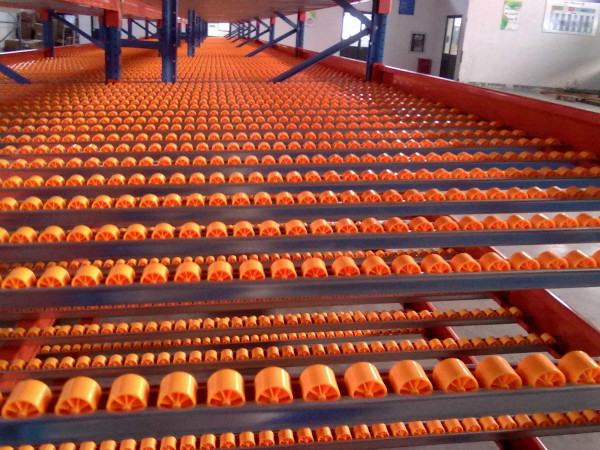
High-Density Solutions: Drive-In and Push-Back Racks
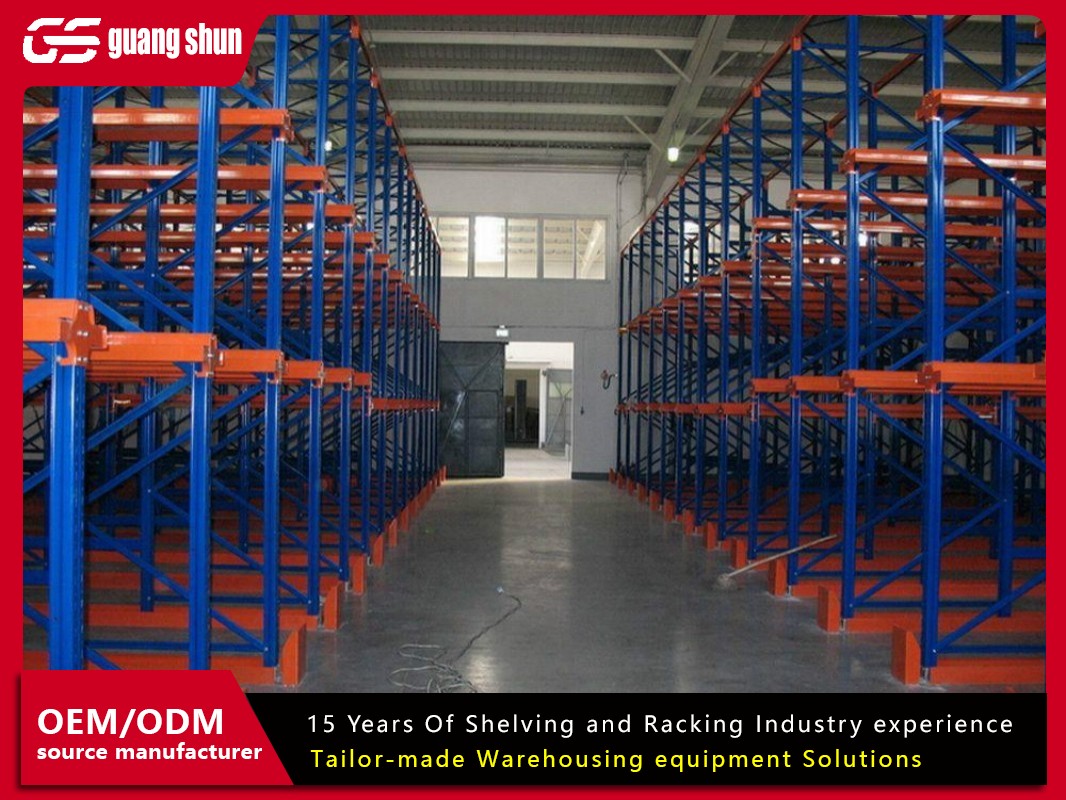
For operations managing homogeneous inventory with a low SKU count but high
pallet depth, drive-in racking systems offer storage density of up to 85%
compared to standard selective racks. However, these systems impose strict load
sequence requirements (LIFO). The engineering challenge here lies in the rail
system. In drive-in configurations, the load rails must support dynamic impact
as forklifts travel directly into the structure. Heavy-duty, structural-channel
rails with reinforced fenders prevent rail deformation. Push-back systems, which
utilize nested carts and inclined rails, require high-precision alignment; a
misalignment of even 2mm can cause cart binding, leading to operational
stoppages and accelerated wear on the moving components.
VNA (Very Narrow Aisle) Systems
When land costs or building cube utilization are paramount, VNA racking
systems are deployed with aisle widths ranging from 1.6 meters to 2.0 meters.
The success of VNA configurations hinges on the floor flatness (typically
requiring a Floor Flatness (FF) rating of 50 or higher) and the rail guidance
system. The uprights in a VNA storage racking system must be
manufactured with a stricter tolerance for vertical alignment—often within 1/8
inch over 30 feet—to ensure that wire-guided turret trucks can operate at
heights exceeding 12 meters without collision. Tolerances here are unforgiving;
even minor deviations result in increased maintenance costs for mast assemblies
and guide rollers.
Automated Storage and Retrieval Systems (ASRS)
ASRS represents the apex of integration, where the racking structure becomes
part of the automated machinery. In these environments, the storage
racking system serves as the structural backbone for stacker cranes.
The straightness of the upright columns and the alignment of the rail paths must
be held to a tolerance of ±2mm over the entire length of the aisle.
Manufacturers like Guangshun specialize in such
high-precision structures, utilizing laser alignment tools during installation
to certify that the system meets the stringent requirements of automated
machinery, where even minute structural deviations can trigger emergency stops
in robotic systems.
Addressing Industry Pain Points: Safety, Durability, and ROI
Across the international warehousing sector, the primary non-technical pain
points revolve around safety liability, corrosion resistance, and total cost of
ownership (TCO). Data from the Occupational Safety and Health Administration
(OSHA) indicates that nearly 85% of racking collapses are attributable to impact
damage that went unrepaired, rather than structural overload. To mitigate this,
proactive asset management now incorporates sacrificial elements—such as
replaceable column protectors and bolt-on upright guards—into the initial
specification. These components, often costing less than 5% of the total project
value, can extend the lifespan of the main structure by 15 to 20 years by
absorbing impact energy that would otherwise fatigue the critical load-bearing
columns.
Corrosion resistance is another critical factor, particularly for facilities
in coastal environments or cold storage. The application of powder coating—with
a thickness typically between 60 to 100 microns—provides a barrier against
moisture and ammonia vapors. However, for extreme environments, hot-dip
galvanizing (HDG) after fabrication offers superior cathodic protection, though
it requires careful consideration of fastener compatibility to prevent galvanic
corrosion between the racking steel and bolts.
Regarding ROI, the modern warehouse calculates efficiency in terms of "cubic
meter utilization" and "labor cost per pick." A correctly engineered
storage racking system reduces travel time by up to 60% through
optimized zoning and slotting. While the upfront capital expenditure for
engineered systems (such as seismic-certified or ASRS-ready structures) is
approximately 20-30% higher than standard commercial-grade racking, the payback
period is typically less than 18 months when factoring in reduced damage costs,
lower insurance premiums (due to code compliance), and increased storage density
that defers facility expansion costs.
Precision Engineering as a Business Enabler
The evolution of the storage racking system from a passive storage medium to
an active component of operational efficiency underscores the necessity for
technical rigor in procurement. Whether the requirement is for high-density
static storage, integration with automated material handling equipment, or
compliance with stringent seismic zone regulations, the foundational principles
remain the same: material integrity, precise tolerances, and lifecycle safety.
In my years of consulting on large-scale logistics projects, the most successful
implementations are those where the racking specification was treated with the
same engineering scrutiny as the building itself. For facility managers looking
to optimize their supply chain infrastructure, partnering with experienced
manufacturers who provide comprehensive structural analysis and site-specific
engineering—such as the expertise found through Guangshun—is not merely a procurement
decision; it is a strategic investment in operational resilience.
Frequently Asked Questions (FAQs)
Q1: What is the typical lifespan of a commercial-grade storage racking
system, and what factors shorten it?
A1: A properly maintained system constructed from
high-tensile steel (e.g., Grade 80) has a typical lifespan of 20 to 30 years.
The primary lifespan reducers are repeated impact damage from forklifts (which
causes column deformation), corrosion in uncontrolled environments, and fatigue
failure from exceeding the manufacturer's load capacity ratings. Regular
inspections (semi-annually) are critical to identifying and replacing damaged
components before structural failure occurs.
Q2: How do I determine whether I need a roll-formed or structural steel
racking system?
A2: The choice depends on the environment and load
requirements. Roll-formed (cold-formed) steel is ideal for high-volume,
standard-load applications (under 3,000 lbs per beam) in dry,
temperature-controlled environments. Structural steel (hot-rolled) is necessary
for heavy-duty applications exceeding 5,000 lbs per beam, environments with high
seismic activity, or settings involving automated machinery (ASRS) where
stricter tolerances and higher impact resistance are mandatory.
Q3: What are the mandatory safety standards for racking systems in the U.S.
and Europe?
A3: In the United States, the primary standard is the RMI
(Rack Manufacturers Institute) ANSI MH16.1 specification, which outlines design,
testing, and safety requirements. In Europe, the EN 15512 standard governs the
structural design, while EN 15635 covers the safe use and maintenance.
Compliance with these standards is essential for legal liability coverage and
insurance underwriting.
Q4: Can I modify an existing racking system to add height or change
configurations?
A4: Modifications must be approved by the original engineer
or manufacturer. Simply adding height extensions without recalculating the base
frame's capacity for increased vertical load and wind/seismic forces can
compromise structural integrity. If modifications are required, a structural
analysis must be performed to verify that the existing uprights, anchors, and
bracing can support the new configuration.
Q5: What is the difference between static and dynamic load ratings, and why
does it matter?
A5: Static load ratings refer to the capacity when the rack
is stationary. Dynamic load ratings account for the forces generated when
forklifts are moving pallets into or out of the rack. Dynamic loads can generate
forces up to 1.5 times the static weight of the load. Engineering specifications
must account for dynamic forces to prevent beam failure during loading
operations. Always use the dynamic load rating for safety compliance.