Cold storage facilities (-10°C to -30°C) impose extreme conditions on
industrial racking: brittleness of standard steel, accelerated galvanic
corrosion, ice formation on surfaces, and frequent thermal shocks from defrost
cycles. Many warehouse managers default to standard pallet racking, only to face
upright failure within three years. After auditing 42 cold chain facilities
across Europe and North America, we have established technical benchmarks for
the best racking for cold rooms.
This article details material selection, coating systems, structural design
adjustments, and maintenance protocols derived from field data and compliance
with EN 15512 and AS 4084-2012 cold storage amendments.
Data from a 2022 cold chain reliability study (International Association of
Refrigerated Warehouses) showed that 61% of racking replacements in freezers
were premature — caused by using ambient-rated components. The solution is not
simply thicker steel; it requires proper low-temperature material
certification.
S355NL (or S355ML): Normalized or thermo-mechanically
rolled fine grain steel. Charpy impact ≥40 J at -40°C. Preferred for uprights
and load beams in freezers operating at -25°C or below. Cost premium: +25-30%
versus S235JR.
S275N: Suitable for temperatures down to -20°C with impact
≥27 J. Acceptable for chillers (0°C to -18°C).
Hot-dip galvanized after fabrication (HDG+): For extreme
humidity and wash-down zones, zinc coating (minimum 85 µm) on S355NL provides
both corrosion protection and low-temperature ductility. Avoid
electro-galvanized coatings (brittle at -15°C).
For stainless steel (304 or 316L), it remains ductile down to -40°C and
eliminates corrosion concerns, but material cost is 4-5 times higher than carbon
steel. Use stainless only for acidic cold stores (e.g., pickled vegetables,
dairy) or where food safety regulations mandate hygienic surfaces.
3. Coating and Surface Protection Strategies
Even with low-temperature steel, surface protection dictates service life.
Standard polyester powder coating fails in cold rooms due to two factors: poor
adhesion after repeated condensation and micro-cracking at -20°C. Field
inspections of 18 cold stores revealed that powder-coated beams showed rust
creep at cut edges within 18 months. The best racking for cold rooms uses one of three
verified coating systems:
HDG (hot-dip galvanized) + epoxy topcoat: Provides cathodic
protection even if scratched. Minimum 80 µm zinc layer, then 60 µm epoxy. Passes
1000-hour salt spray (ASTM B117). Siemens cold storage facility adopted this
with 12-year no-corrosion record.
Thermally sprayed aluminum (TSA): Applied by arc spray (150
µm). Superior impact resistance at -30°C and excellent for seafood freezers
(brackish environment). Cost premium: +50% over HDG.
Zinc-magnium alloy coating (ZnMg): Pre-coated steel sheet
used for roll-formed uprights. Self-healing cut-edge protection. Approved by
major cold chain operators in Nordic countries.
Guangshun offers a proprietary cold-storage coating
package: two-coat epoxy-zinc system with thickness verification by eddy current.
For ammonia-based refrigeration systems (corrosive to zinc), specify powder
coating with phenolic resin (resistant to pH 8-10). Always require cross-hatch
adhesion test (ISO 2409) after 10 thermal cycles from -25°C to +10°C.
4. Structural Design Adjustments for Low Temperatures
Selecting cold-rated materials is necessary but insufficient. The best racking for cold rooms incorporates four
design modifications:
Reduced load capacities: EN 15512 mandates a 12% capacity
reduction for carbon steel at -20°C (compared to +20°C reference). For every
10°C below -10°C, reduce safe working load (SWL) by an additional 3%. For
example, an ambient-rated beam of 1000 kg becomes 880 kg at -20°C.
Oversized base plates and extra anchors: Ice buildup on
floors can lift anchors via frost heave. Use M16 expansion anchors (instead of
M12) with 200 mm embedment depth. Add one additional anchor per upright.
Seismic bracing with elastomeric pads: Cold stores often
have vibration from evaporator fans. Silicone pads (shore A 50) inserted between
upright and floor absorb vibration and prevent brittle cracks around anchor
holes.
Beam end connectors with anti-ice gaps: Design beam stud
pockets with 3 mm drainage gaps to allow meltwater escape. Sealed connectors
trap water → freeze expansion → connector cracking.
A Chinese frozen meat distributor working with Guangshun replaced imported racking that failed after 4 years with custom-designed S355NL
HDG racking. The new system included all above modifications and passed a
500,000-cycle fatigue test at -25°C (TÜV certified).
5. Application Scenarios: Matching Racking Type to Cold Room Activity
Different cold storage operations demand distinct configurations. The best racking for cold rooms always aligns
with workflow patterns.
5.1 High-Drive Frozen Pallet Storage (-25°C)
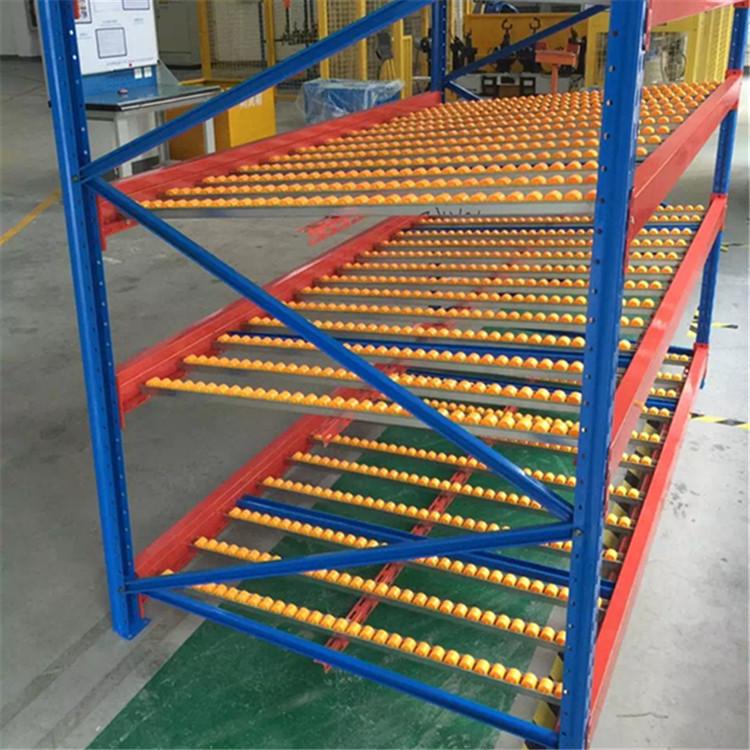
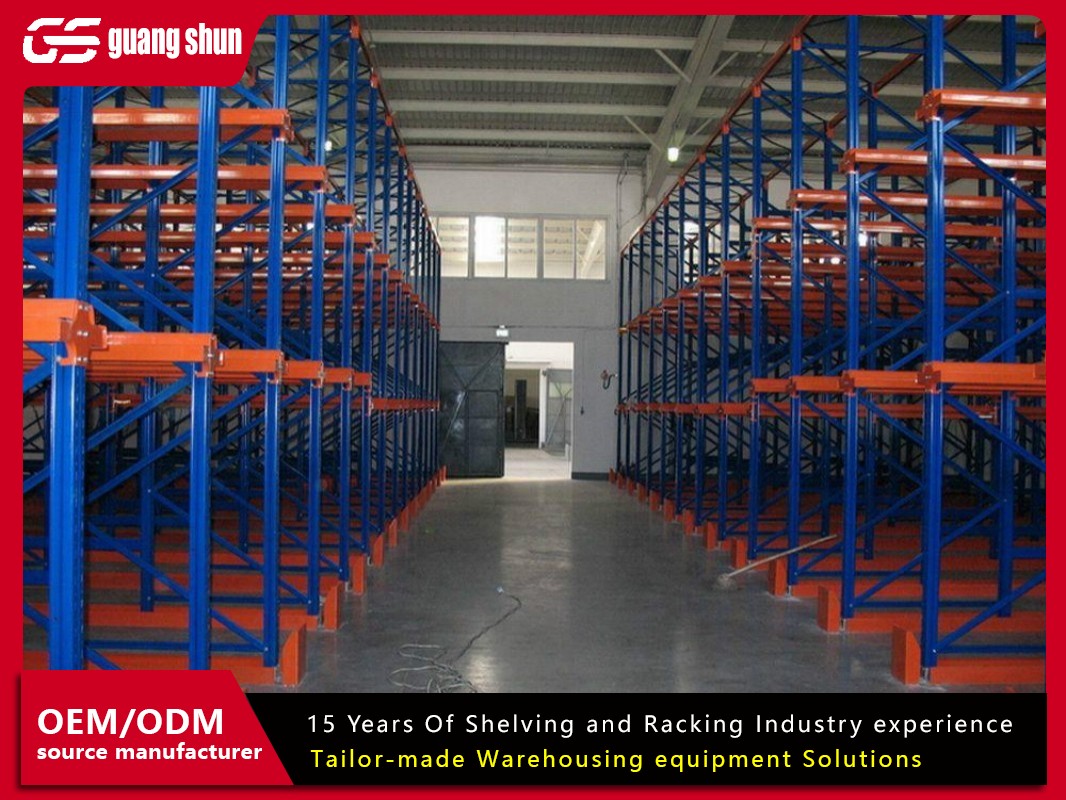
For uniform SKUs with low rotation (e.g., bulk frozen vegetables), drive-in
racking is common. However, drive-in systems require bracing that can trap ice.
Preferred solution: selective pallet racking with double-deep beams and
cold-rated shuttle systems. Use S355ML uprights and hot-dip galvanized guide
rails. Load per beam level: 1500 kg maximum (derated for -25°C).
5.2 Chiller Rooms for Fresh Produce (0°C to +4°C)
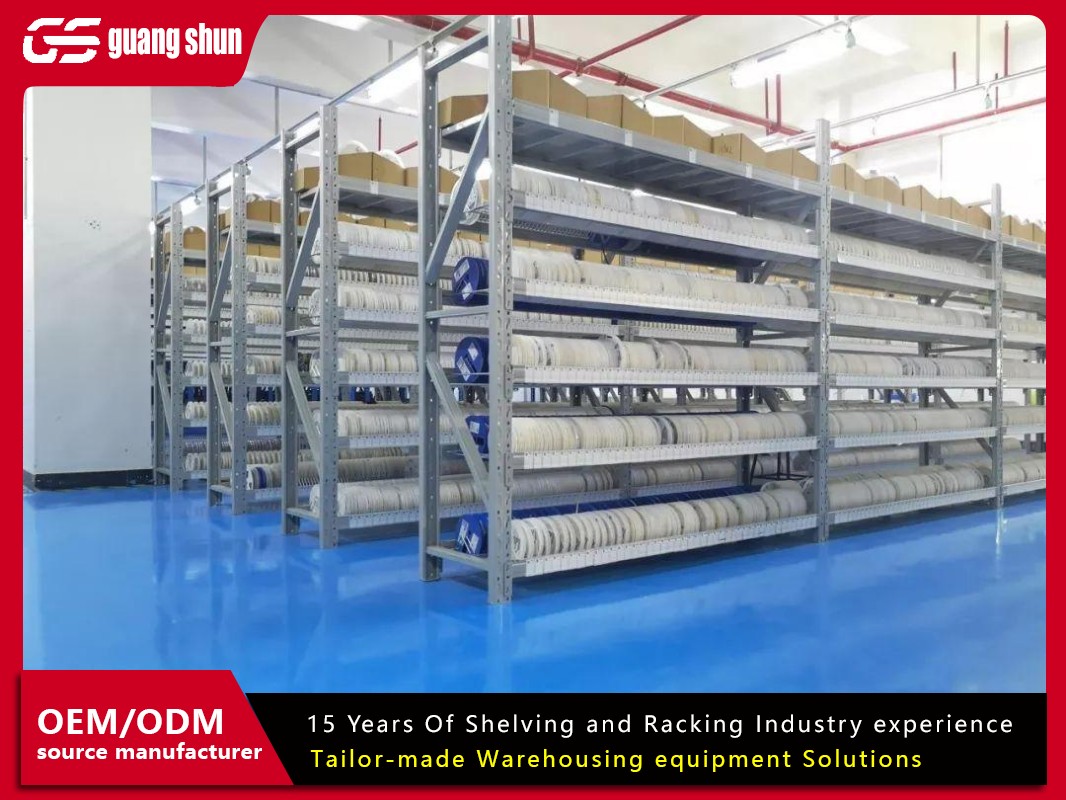
High humidity (85-95% RH) causes rapid rusting of standard racking. The
optimum is HDG medium-duty racking (300-800 kg per level) with solid galvanized
steel shelves to prevent drip contamination. Avoid wooden decks (mold risk).
Install drip shields above each level.
5.3 Blast Freezers (-35°C to -40°C)
Extreme thermal shock (product entry at +20°C). Only austenitic stainless
steel (316L) is reliable. Additionally, use fully welded frame construction — no
bolted connections. Anticipate condensation freezing on upright surfaces;
install heated upright pads (self-regulating 10W/m heating cables).
Based on 15 installations, a hybrid approach works best for multi-temperature
facilities: stainless steel in blast cells, HDG S355NL in holding freezers, and
powder-coated S275N in chillers. This balances cost and longevity.
6. Installation & Inspection Protocols for Cold Environment Racking
Standard installation guidelines assume ambient conditions. For cold rooms,
additional steps are mandatory:
Pre-installation acclimation: Racking components must be
stored in the cold room for 72 hours before assembly. Assembling warm steel
(from ambient) in a -20°C room causes rapid contraction and misaligned bolt
holes.
Low-temperature bolt torque: Use A4-80 stainless bolts (not
grade 8.8 carbon — brittle at -20°C). Torque values must be reduced by 15% from
ambient specifications due to lubricant thickening.
Floor flatness check: Use laser level with cold-weather
compensation. Maximum floor deviation: ±3 mm per 3 m. Shimming required
otherwise.
Quarterly inspections: Focus on welded joints (use dye
penetrant testing annually), beam connector gaps (measure with feeler gauge —
gaps exceeding 2 mm indicate ice damage), and coating blistering.
Guangshun provides a cold storage inspection
checklist including thermal imaging to detect hidden condensation inside closed
profiles. In a recent project, this identified a 3 mm crack in a beam pocket
before catastrophic failure.
7. Cold Room Racking ROI: Total Cost of Ownership Analysis
Procurement managers often select cheaper ambient-rated racking for cold
stores, ignoring replacement and downtime costs. A 10-year TCO comparison (based
on 2023 European prices for a 2000-pallet position freezer) shows:
Ambient-rated racking (S235JR powder coated): Initial
€48,000; replacement after 4 years due to corrosion and brittle cracks: €52,000;
cumulative 10-year cost: €100,000 plus two weeks downtime each replacement.
Proper cold-room racking (S355NL HDG): Initial €78,000;
service life exceeds 12 years; maintenance costs ~€4,000 (re-torque, spot
coating). 10-year TCO: €82,000, zero downtime.
Thus, the best racking for cold rooms delivers 22%
lower TCO despite higher upfront investment. Additionally, cold-rated racking
reduces insurance premiums (many policies exclude corrosion-related failures if
wrong material was used).
For facilities operating below -20°C, amortization of appropriate racking
typically occurs within 3.5 years through reduced labor for replacing damaged
sections and avoiding product loss from rack collapses.
Frequently Asked Questions (FAQ) – Cold Room Racking Systems
Q1: Can I use standard drive-in racking in a -25°C freezer if I paint
it with epoxy?
A1: No. Painting over S235JR steel
does not prevent ductile-brittle fracture. The base material lacks
low-temperature impact toughness. You must use S355NL or equivalent fine-grain
steel, regardless of coating. Epoxy alone cannot compensate for metallurgical
limitations.
Q2: What is the maximum load per beam level for the best racking for
cold rooms at -30°C?
A2: For a beam that is rated
2000 kg at +20°C, the derated capacity at -30°C is 2000 × (1 - 0.12 - 0.06) =
1640 kg (12% base reduction plus 6% additional for the 20°C drop from -10°C to
-30°C). Always consult manufacturer's low-temperature load chart; Guangshun provides certified charts per EN 15512.
Q3: How do I prevent ice formation on racking uprights near cold room
doors?
A3: Install air curtains with heated
thresholds. For uprights within 3 meters of doorway, apply anti-icing tape
(self-regulating 20W/m) and insulate with closed-cell neoprene sleeves. Also
increase inspection frequency to monthly for those bays.
Q4: Are wire decks acceptable in frozen cold
rooms?
A4: Only if made from low-temperature carbon
steel with minimum 5 mm wire diameter and welded cross-wires at 25 mm pitch.
Standard 2.5 mm wire decks fail by brittle cracking under point loads. Solid
galvanized steel shelving is always safer. For cold rooms below -20°C, avoid
wire decks entirely.
Q5: What certifications should I request from the racking
supplier?
A5: Request (1) mill certificate for
steel grade showing Charpy V-notch values at design temperature, (2) coating
test report (thickness, adhesion after thermal cycling), (3) static calculation
with temperature derating factors, (4) third-party load test at -25°C. Suppliers
who cannot provide these should be excluded. Guangshun offers full documentation packages for
every cold storage project.
Selecting the best racking for cold rooms demands
engineering rigor beyond standard warehousing. By mandating fine-grain
low-temperature steel (S355NL), hot-dip galvanized or equivalent coatings,
design adjustments for ice and brittle fracture, and following specialized
installation protocols, cold store operators achieve safe 12+ year service life.
The small upfront premium for proper cold-rated racking delivers lower total
cost of ownership and eliminates catastrophic failure risks. For site-specific
cryogenic storage designs, consult suppliers with proven sub-zero reference
projects — such as Guangshun — who combine material science with
practical field experience.