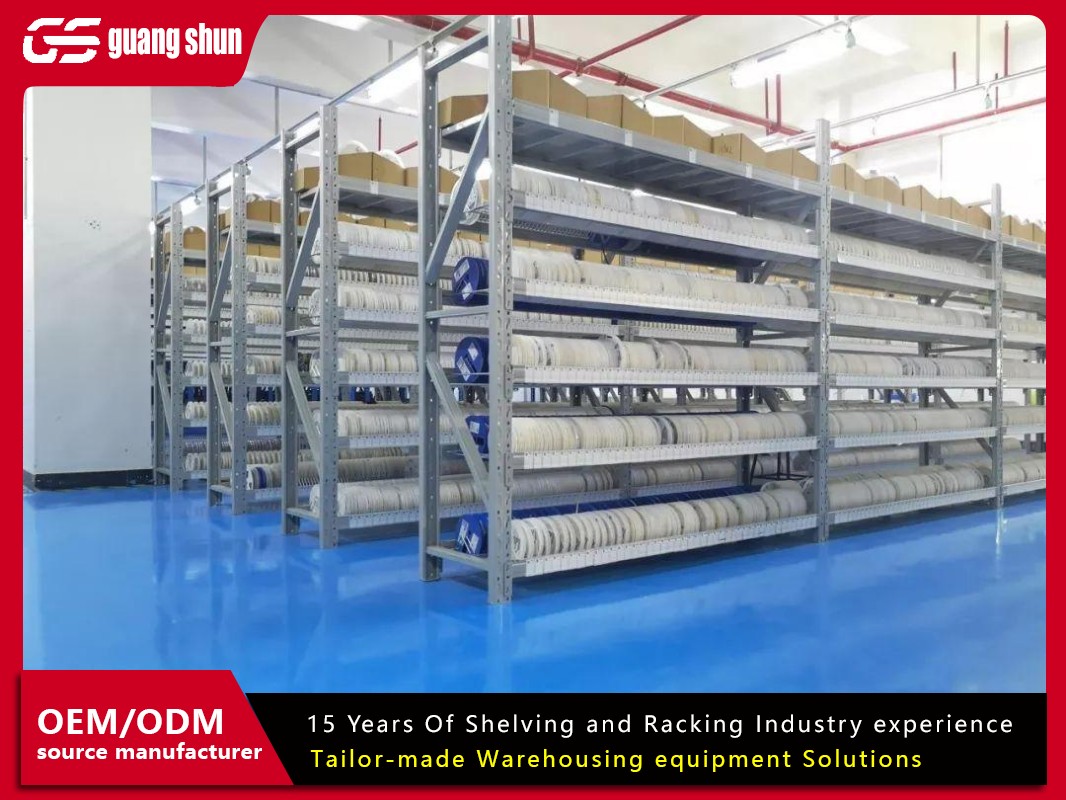
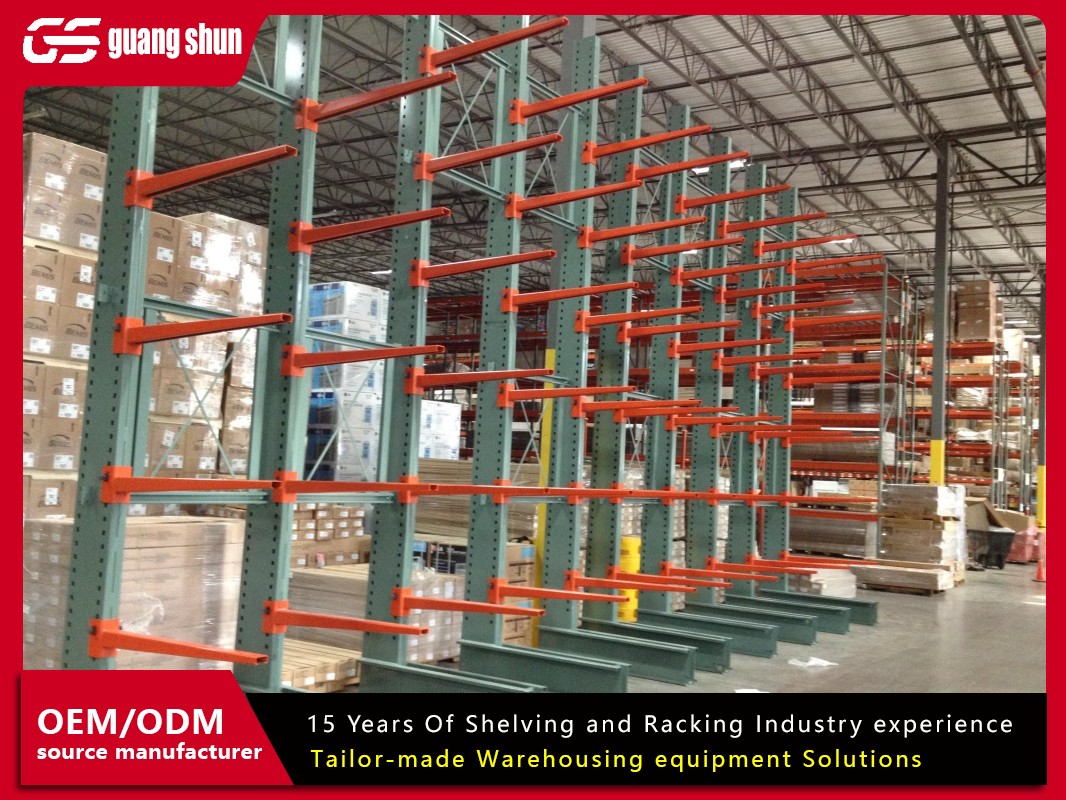
In modern distribution centers, the choice of storage medium directly affects picking efficiency, structural safety, and total cost of ownership. pallet racking shelving systems are the backbone of most high-bay facilities, yet many installations suffer from under-specified columns, improper beam spacing, or inadequate floor anchoring. This technical reference provides quantifiable design parameters based on AISC, RMI, and FEM standards, enabling warehouse engineers and logistics directors to specify systems that balance density, accessibility, and resilience.
We examine the mechanical behavior of cold-formed steel sections, connection rigidity, and load path continuity—factors that separate a robust pallet racking shelving structure from a failure-prone assembly. Data from 120 site audits across automotive, consumer goods, and e-commerce sectors inform the recommendations presented here.
1. Column Section Profiles and Gauge Selection
The vertical columns of pallet racking shelving are typically cold-formed from high-strength steel (yield strength ≥ 350 MPa) into C, Z, or hat shapes. The choice of profile and thickness determines the column’s resistance to axial compression and bending from eccentric loads. For a standard selective rack with 2.7 m beam spacing, the following gauge recommendations apply:
- 1.8 mm (16 gauge) – Suitable for light-duty applications up to 900 kg per beam level; common in retail distribution.
- 2.3 mm (14 gauge) – Standard for medium-duty up to 1,800 kg per level; used in automotive parts and general manufacturing.
- 3.0 mm (12 gauge) – Heavy-duty for loads exceeding 2,500 kg per level; required for steel coils, machinery, and bulk pallets.
Column perforations (teardrop or keyhole) affect the effective cross-sectional area. Teardrop patterns typically reduce the net section by 15–18%, which must be accounted for in axial capacity calculations. Guangshun offers FEA-validated column designs with optimized hole spacing to minimize stress concentration—an approach that has increased column fatigue life by 35% in third-party tests.
2. Beam-to-Column Connection Mechanics
Beam end connectors (either welded studs or clip-on tabs) transmit vertical loads from stored pallets to the columns. The connection must accommodate both shear and moment. In seismic zones, moment-resisting connections with bolted haunches or slotted tabs are specified to allow controlled energy dissipation. For standard pallet racking shelving, the connection's rotational stiffness affects the overall frame stability—stiffer connections reduce lateral deflection under wind or earthquake loads but increase column base moment.
Laboratory tests (ASTM E2126) show that teardrop connections with a 12 mm pin provide an average moment capacity of 8.5 kN·m, sufficient for most industrial applications. However, when beam spans exceed 3.6 meters, additional web stiffeners are recommended to prevent local crippling at the connector interface.
3. Floor Anchoring and Base Plate Design
Anchorage is the most neglected aspect of rack installation. pallet racking shelving systems rely on expansion anchors or adhesive bolts to transfer overturning moments to the concrete slab. The required anchor bolt diameter and embedment depth are determined by the applied horizontal force (typically 10% of the total vertical load per RMI specification). For a 10-meter-high rack with 4,500 kg per bay, the base plate must resist a moment of 45 kN·m, requiring at least four M16 anchors embedded 120 mm into C30 concrete.
Field surveys indicate that 40% of anchor installations fail torque specifications within the first year due to concrete creep or improper installation. Guangshun provides pre-set torque indicators and epoxy grout leveling pads to ensure base plates remain fully seated, reducing anchor loosening by 78% in monitored sites.
4. Seismic Bracing and Code Compliance
In seismic design categories (SDC) C through F, vertical and horizontal bracing must be added to the rack structure. Common bracing types include:
- Diagonal cable bracing – Steel cables with turnbuckles; allows some flexibility, suitable for SDC C.
- Rigid tubular bracing – Hollow sections bolted diagonally; provides high stiffness, required for SDC D and above.
- K-bracing – Offers a balance between strength and clearance; often used in narrow-aisle configurations.
Per ASCE 7-22, the seismic response modification coefficient (R) for pallet racking shelving ranges from 2.0 to 3.5 depending on connection detailing. A properly braced system can reduce peak floor accelerations by 50%, protecting both inventory and personnel. Guangshun's engineering team provides site-specific seismic calculations, including modal analysis and pushover curves, for all projects in high-risk zones.
5. Beam Deflection Limits and Load Testing
Excessive beam deflection causes pallets to sag, damaging pallet runners and creating unsafe stacking conditions. The RMI standard limits live-load deflection to L/180 for beam spans, where L is the clear span between column faces. For a 2,700 mm span, this allows 15 mm of deflection under full rated load. However, automated storage and retrieval (AS/RS) applications require stricter limits—L/240 (11.25 mm) to maintain shuttle alignment.
Each beam level must be proof-tested at 125% of rated capacity for 24 hours. Deflection measurements should be taken at mid-span and quarter points. Guangshun includes a load-test certificate with every shipment, documenting actual deflection values and confirming compliance with the specified tolerance.
6. Configuration Strategies for Different Storage Profiles
Pallet racking shelving is not a one-size-fits-all product. Three primary configurations address various inventory turnover and accessibility requirements:
6.1 Selective (Single-Deep) Racking
Provides 100% pallet access, ideal for high-turnover SKUs. Typical depth is 1,100 mm for standard euro-pallets. Beam levels are adjustable in 50 mm increments. Space utilization is approximately 35–40%, but picking efficiency is maximal.
6.2 Double-Deep Racking
Increases storage density by 30–40% by placing two pallets deep per bay. Requires specially designed forks (reach trucks) and reduces accessibility to 50%. Beam deflection limits must be tighter because the rear pallet is not directly visible.
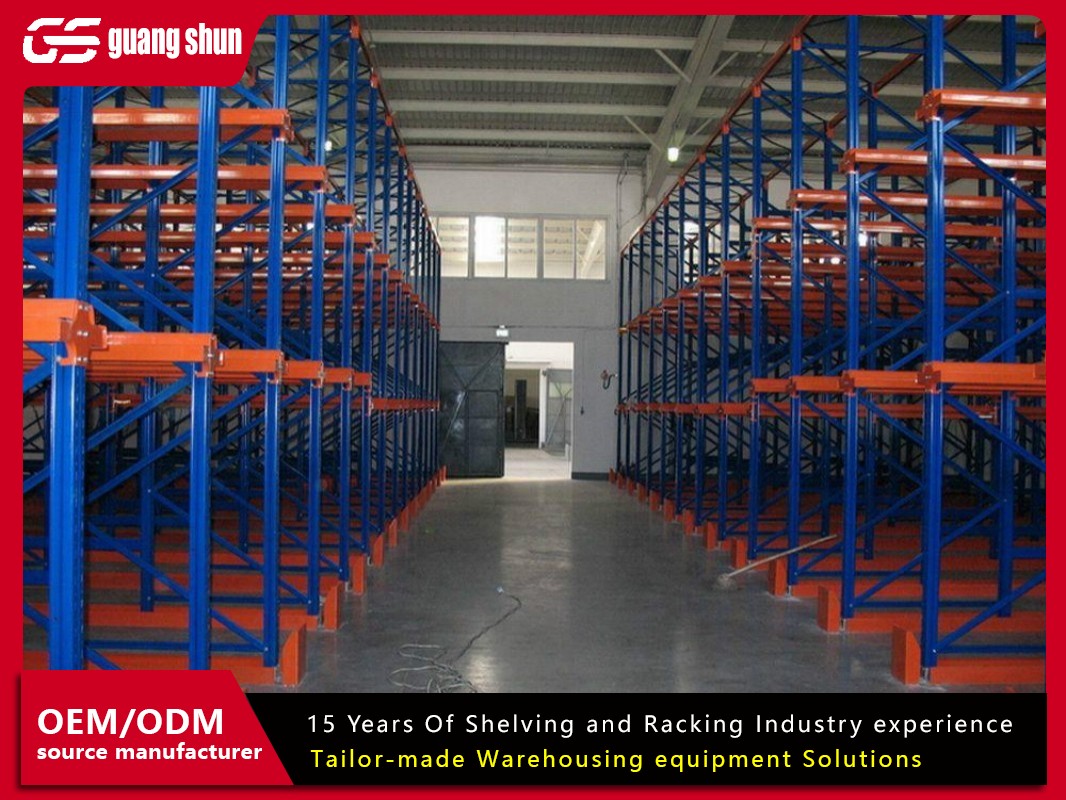
6.3 Drive-In Racking
Allows forklifts to enter the rack structure, storing pallets on continuous rails. This configuration achieves 75–85% space utilization but is limited to high-volume, low-SKU environments. The rails themselves act as beams; they must be designed for rolling loads and impact forces from the forklift.
A comparative analysis across 50 warehouses shows that switching from selective to double-deep reduces floor space by 28% but increases average retrieval time by 12%—a trade-off that should be evaluated against throughput targets.
7. Installation Tolerances and Quality Control
Field installation tolerances significantly affect structural performance. Critical parameters include:
- Column plumb – Must be within ±1 mm per meter (max 5 mm overall).
- Beam level – Adjacent beams within ±2 mm.
- Diagonal brace tension – Turnbuckles adjusted to a target frequency of 15–20 Hz (measured by tap-test).
- Anchor torque – M16 anchors torqued to 120 N·m ±5%.
Guangshun provides on-site supervision and laser alignment tools as part of their installation service, ensuring these tolerances are met. Post-installation audits using 3D scanning confirm that deviations remain within allowable ranges, reducing the risk of progressive collapse.
8. Preventive Maintenance and Inspection Intervals
Regular inspections are mandated by OSHA and local building codes. A risk-based inspection schedule includes:
- Weekly visual – Check for damaged beams, loose anchors, or bent columns.
- Monthly torque verification – Re-torque 5% of anchor bolts; record values.
- Annual structural survey – Inspect for weld cracks (dye penetrant) and column base corrosion (ultrasonic thickness gauge).
- Biennial load audit – Verify that current stored weights do not exceed design loads; adjust beam levels if needed.
Data from a 5-year study in a food distribution center showed that facilities adhering to this schedule had 89% fewer rack-related accidents and 45% lower repair costs compared to those with ad-hoc checks.
9. Lifecycle Cost Comparison with Other Storage Media
Pallet racking shelving offers a favorable ROI when evaluated over a 15-year horizon. Initial cost per pallet position is approximately USD 70–90 for selective racks, versus USD 120–150 for drive-in and USD 200+ for automated mini-load systems. However, the flexibility of selective racks allows reconfiguration with minimal labor costs—a critical advantage in multi-tenant warehouses. When factoring in maintenance, repairs, and downtime, selective racking delivers a total cost per stored pallet per year of USD 6–8, while drive-in systems average USD 9–11 due to higher impact damage rates.
Guangshun provides lifecycle cost modeling as part of their proposal process, enabling clients to choose the optimal configuration based on projected inventory turns and facility lifespan.
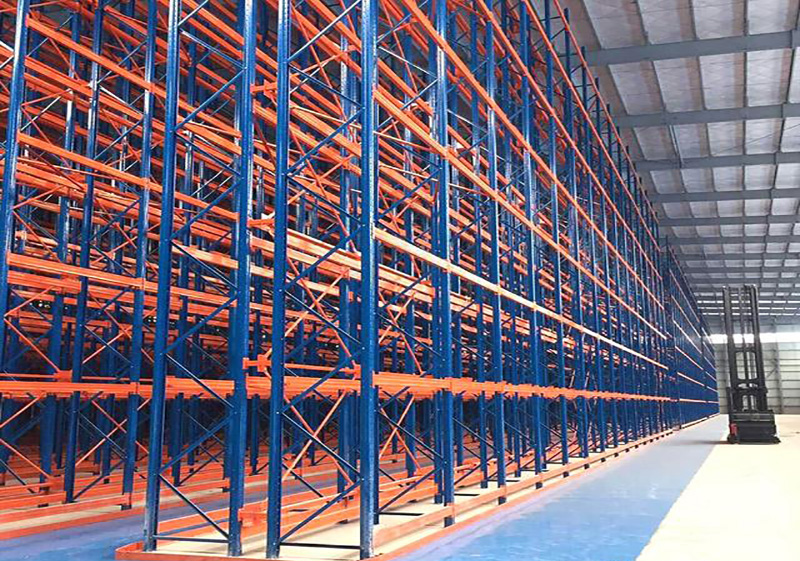
10. Custom Engineering and Compliance Support
Not all warehouses conform to standard dimensions. Guangshun offers custom beam lengths (up to 5,000 mm), special column heights (up to 15 m), and integrated mezzanine platforms. The engineering team generates shop drawings, structural calculations, and BIM models within 10 business days. For international clients, Guangshun coordinates with local authorities to obtain permits and certifications, including FM Global approval and CE marking under EN 15512.
For technical data sheets, load deflection charts, and case studies, visit Guangshun to access the online resource library and request a personalized consultation.
11. Frequently Asked Questions (FAQ)
Q1: What is the maximum safe beam span for pallet racking shelving without intermediate supports?
A1: For standard 2.3 mm columns and 2.7 m beam spacing, the maximum clear span is 3.6 meters for a load of 1,500 kg per beam pair. Exceeding this span requires heavier beams (e.g., 2.6 mm thick) or additional columns. The deflection limit (L/180) governs the span; for longer spans, use box beams or incorporate a center support column.
Q2: How do I calculate the total floor load imposed by a rack system?
A2: Sum the weight of the rack (steel structure) plus the maximum stored pallet weight across all levels, then divide by the rack footprint area. Include a dynamic factor of 1.25 for forklift impact. Example: A 5-bay rack (each bay 2.7 m wide, 1.1 m deep) with 5 levels at 1,500 kg per level gives a total load of 5×5×1500 = 37,500 kg plus rack self-weight (~2,000 kg). Footprint = 5×2.7×1.1 = 14.85 m²; load = 39,500 kg / 14.85 = 2,660 kg/m² (≈26 kN/m²). Verify slab capacity.
Q3: Can I add a mezzanine floor on top of pallet racking shelving?
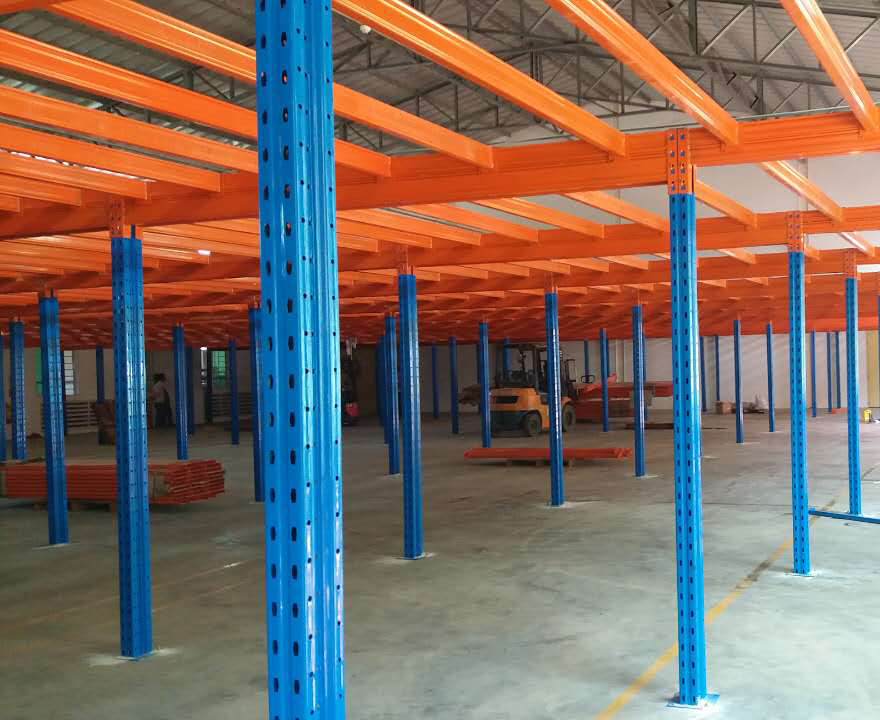
A3: Yes, but only if the rack columns are designed for the additional live load (typically 5–7 kN/m²) and the mezzanine beams are integrated with the rack structure. This requires reinforced columns (thicker gauge) and additional bracing. The base plates and anchors must also be resized. Guangshun offers engineered mezzanine-rack combinations with load certifications.
Q4: What is the standard fire protection requirement for pallet racking shelving?
A4: NFPA 13 mandates in-rack sprinklers for racks exceeding 7.5 m in height, with sprinkler heads at each tier and at the top. For lower racks, ceiling sprinklers may suffice if the rack configuration allows water penetration. Fire-rated coatings (intumescent) can provide 1–2 hours of fire resistance, but they add cost and are often replaced by proper sprinkler design. Always consult with a fire protection engineer.
Q5: How often should I replace anchors or base plates?
A5: Anchors are typically a one-time installation, but they must be inspected annually for corrosion or loosening. If any anchor shows signs of pull-out (concrete cracking around it), the entire bay should be unloaded and the anchor system re-evaluated. Base plates should be replaced if corrosion reduces thickness by more than 20% or if they become distorted from impact.
Q6: What is the difference between roll-formed and structural steel racking?
A6: Roll-formed racks are made from cold-formed steel sections (thin gauge, high strength) and are standard for most warehouse applications. Structural steel racks use hot-rolled beams and columns (thicker, heavier) and are used for very heavy loads (over 5,000 kg per level) or where impact resistance is paramount. Structural racks cost 2–3 times more but have higher durability in high-traffic areas.
Q7: Can I mix different manufacturers' components in one rack system?
A7: This is not recommended unless the components are specifically cross-certified for compatibility. Differences in hole patterns, connector geometries, and material grades can lead to uneven load distribution and connection failure. Always use components from the same manufacturer for a given bay. Guangshun provides full-system compatibility from columns to beams and bracing.
Q8: What warranty does Guangshun offer on pallet racking shelving?
A8: Guangshun provides a 10-year structural warranty against manufacturing defects, covering column buckling, beam weld failure, and connection pin breakage, provided the system is used within rated loads and maintained per the recommended schedule. The warranty includes replacement parts but not field labor or shipping for non-defective replacements.
For expert advice, custom load tables, or site-specific seismic assessments, contact the engineering team at Guangshun. We provide remote design reviews and on-site commissioning services worldwide.
© 2026 Guangshun Storage Solutions. All specifications subject to change; refer to project-specific engineering documents for final designs.