Selecting the appropriate commercial racking system is a strategic decision that directly impacts storage density,
operational efficiency, and workplace safety. This guide provides a data-driven
analysis of commercial racking technologies, structural considerations, and
application-specific configurations to support informed procurement choices.
Defining Commercial Racking: Beyond Basic Storage
Commercial racking refers to engineered steel structures designed for the
systematic storage of palletized or non-palletized goods in distribution
centers, retail warehouses, and manufacturing facilities. Unlike light-duty
residential shelving, these systems must comply with strict safety standards,
support dynamic loads, and integrate with material handling equipment (MHE) like
forklifts and order pickers.
Modern commercial racking solutions address five core operational
requirements:
Maximizing cubic utilization: vertical storage to reduce
floor space costs
Ensuring inventory accessibility: selective or dense
storage based on SKU velocity
Supporting load diversity: from lightweight cartons to
heavy industrial coils
Facilitating system integration: compatibility with WMS and
automated retrieval systems
Meeting safety regulations: seismic design, fire
protection, and load notices
Critical Engineering Parameters for Commercial Racking Systems
1. Load Capacity and Structural Integrity
The load-bearing capacity of commercial racking is determined by beam size,
steel gauge, bracing configuration, and connection types. Industry standards
(e.g., RMI, FEM) classify systems by per-layer capacity:
| Rack Type | Typical Load per Level | Primary Application |
|---|
| Light-duty (clip-in) | 100 – 500 kg | Manual picking, small parts |
| Medium-duty (boltless) | 500 – 1500 kg | Carton storage, e-commerce |
| Heavy-duty (pallet) | 1500 – 5000+ kg | Palletized goods, industrial |
When specifying commercial racking, factor a 20–25% safety margin above
maximum gross load to accommodate uneven weight distribution and dynamic forces
from forklift operations. Beam deflection should remain below L/180 to prevent
product damage and ensure stability.
2. Material Selection and Surface Protection
High-quality commercial racking utilizes cold-rolled steel (Q235B or SS400
grade) with a yield strength ≥ 235 MPa. For corrosive environments—such as cold
storage or chemical zones—hot-dip galvanized finishes offer superior resistance
compared to standard powder coating. Guangshun provides material
certifications and environmental adaptability reports to validate corrosion
protection levels.
3. Seismic and Anchoring Considerations
In seismic zones, commercial racking must include base plates, floor anchors,
and cross-aisle bracing. Engineering calculations should account for horizontal
forces (ZPA) and system ductility. Post-installation pull-out tests confirm
anchor bolt performance, ensuring compliance with local building codes.
Major Commercial Racking Product Categories and Use Cases
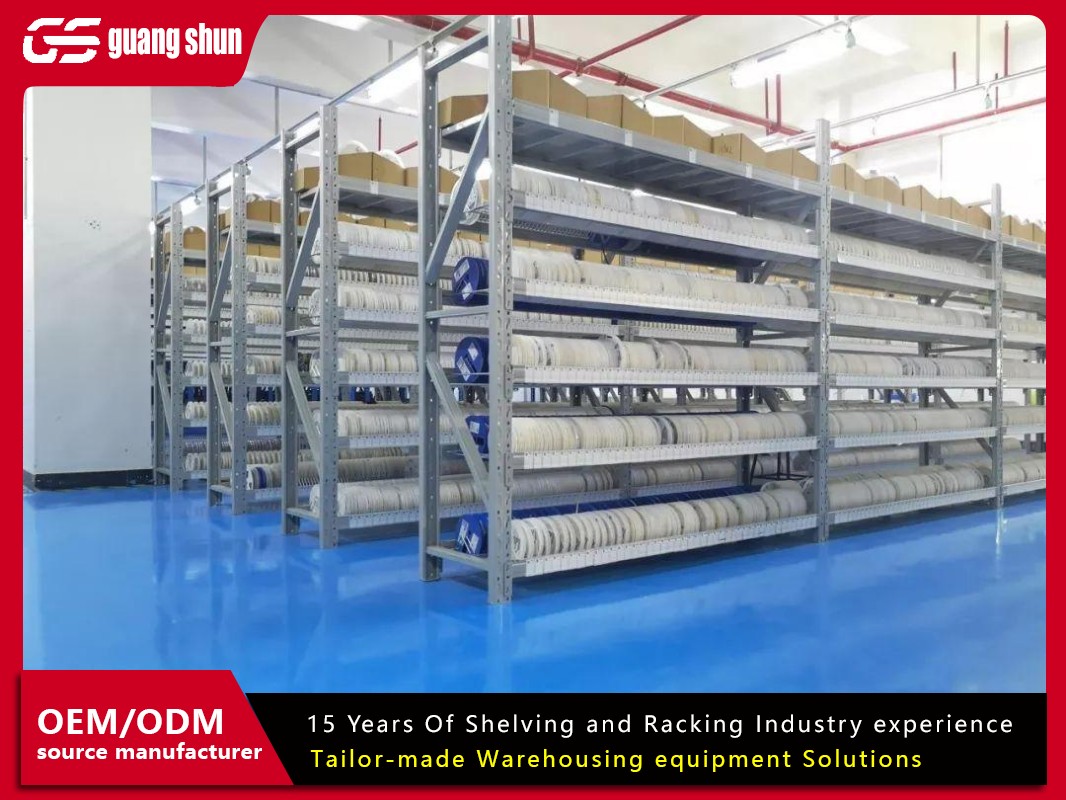
Selective Pallet Racking
Offers 100% selectivity for fast-moving SKUs. Ideal for mixed-load storage
where first-in-first-out (FIFO) is required. Aisle widths typically range from
2.8 to 3.5 meters for counterbalance forklift access. Vertical heights can reach
12 meters with proper bracing.
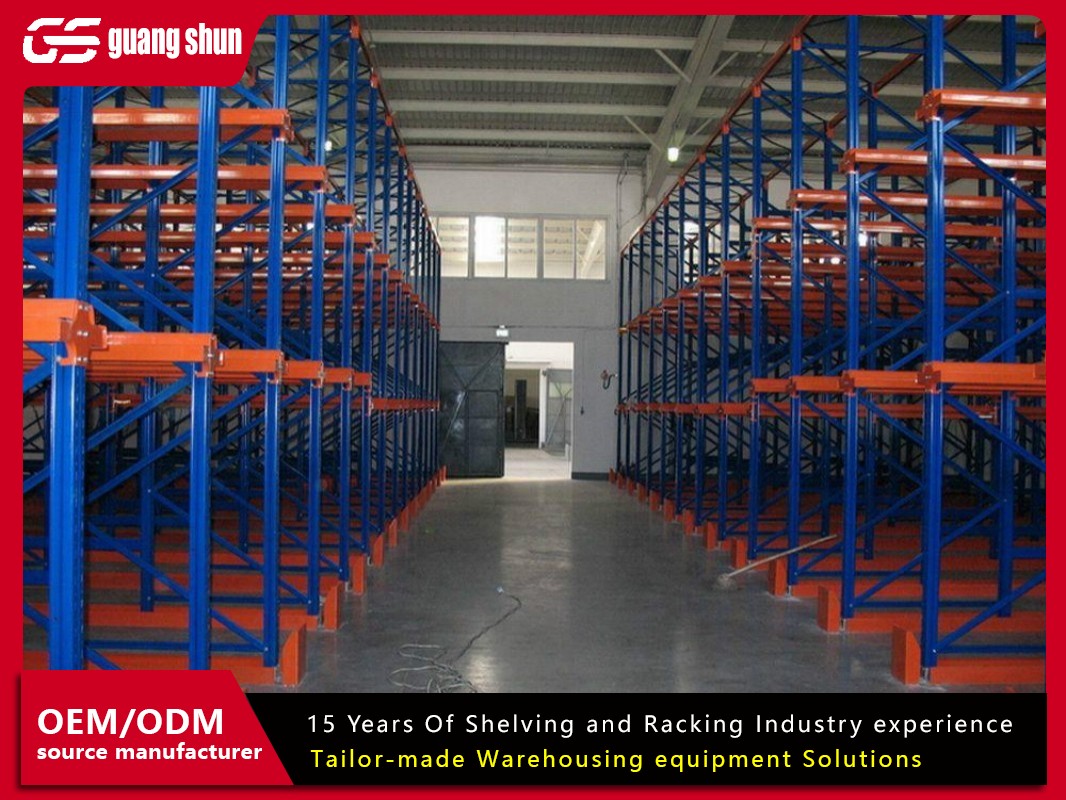
Drive-in / Drive-through Racking
Increases density by eliminating aisles; suitable for high-volume, low-SKU
count inventory (e.g., beverages, bulk commodities). Supports last-in-first-out
(LIFO) or FIFO with dual-entry designs. Requires precise forklift guidance and
rail alignment.
Push-back Racking
Utilizes nested carts and inclined rails; ideal for 2–6 pallet deep storage
with medium to high throughput. Improves space utilization by 30–50% compared to
selective systems while maintaining decent picking efficiency.
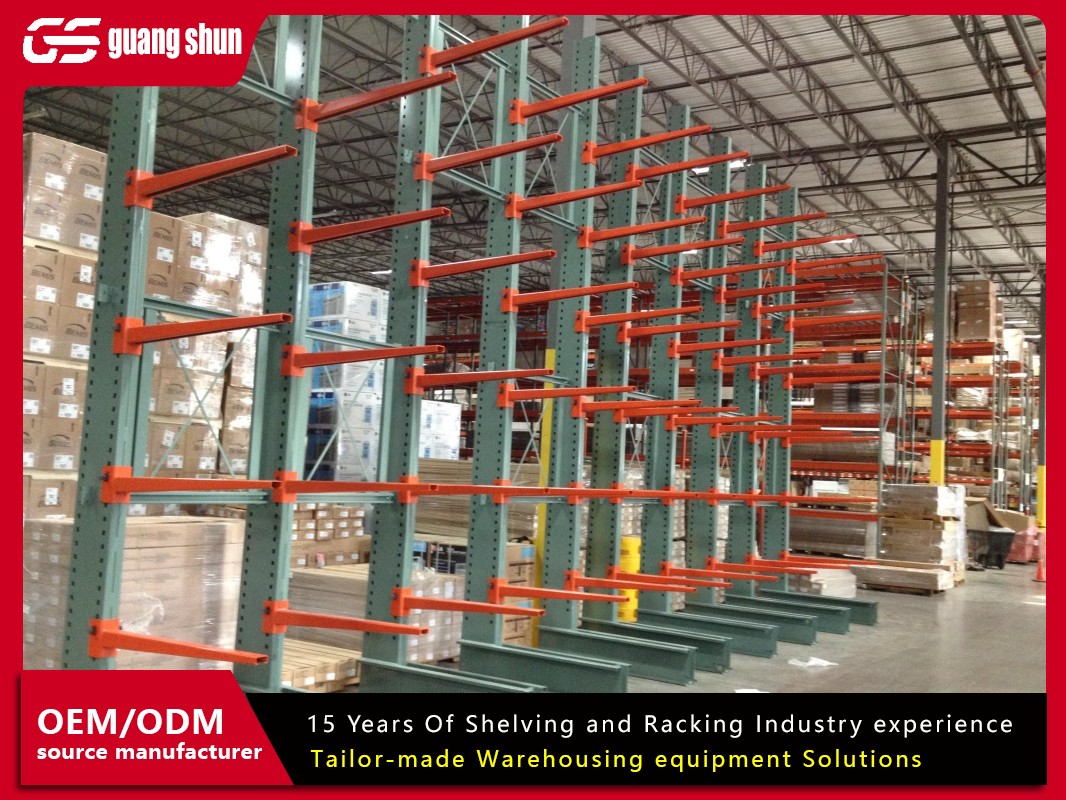
Cantilever Racking
Designed for long, bulky items like pipes, lumber, or furniture. Arms extend
outward from vertical columns, providing unobstructed access and adjustable arm
spacing.
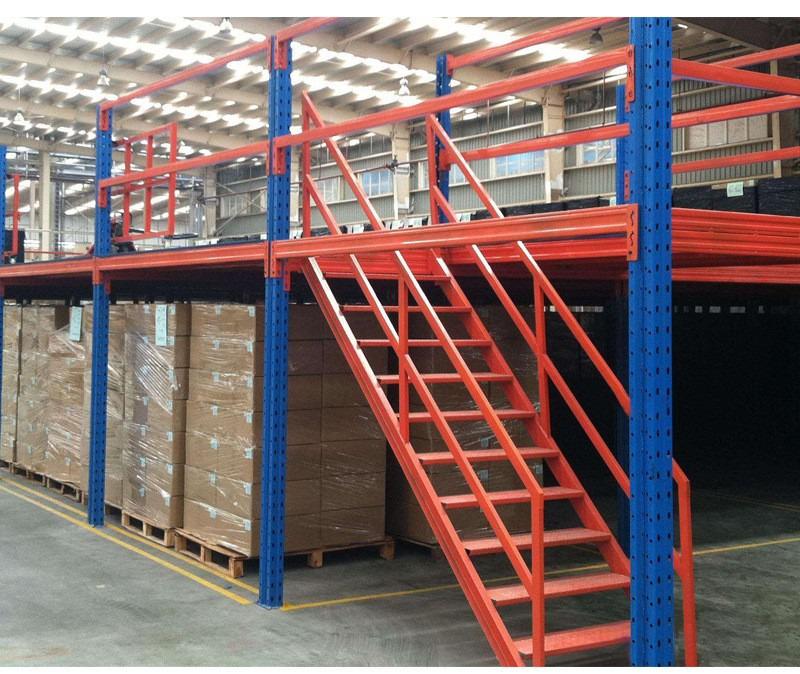
Mezzanine and Multi-tier Systems
Double or triple-floor platforms that double usable floor space. Often
combined with commercial racking to create combined storage and work areas. Load capacities for mezzanine floors
range from 500 to 1000 kg/m².
Optimizing Commercial Racking Layout: Data-Driven Space Planning
Warehouse layout directly affects travel time, throughput, and labor costs.
Use the following methodology to design efficient rack configurations:
Inventory profiling: Classify SKUs by ABC analysis—A-items
(20% of SKUs, 80% of picks) to be placed in primary picking zones.
Aisle optimization: Narrow-aisle (VNA) systems with turret
trucks reduce aisle width to 1.8–2.0 meters, increasing storage density by
30%.
Flow path design: Implement U-shaped or L-shaped flow to
separate receiving, put-away, and shipping activities.
Slotting strategy: Use software tools to assign pallet
positions based on velocity, weight, and dimensional compatibility.
Safety Standards and Compliance for Commercial Racking
Non-compliance with safety regulations poses serious operational and legal
risks. Key requirements include:
Load signs: Display maximum uniform and point loads per
level
Protective guards: Install column protectors and
end-of-aisle rails
Fire sprinkler clearance: Maintain minimum 1.0 m space
below sprinkler heads
Regular inspections: Conduct monthly visual checks and
annual professional audits
Consulting with an experienced manufacturer like Guangshun helps ensure all safety
protocols are integrated during the design phase, reducing liability and
extending system lifespan.
Total Cost of Ownership (TCO) Analysis
Beyond initial procurement cost, evaluate commercial racking investments
on:
Installation expenses: Floor preparation, anchoring,
assembly labor
Maintenance costs: Repairs, paint touch-ups, replacement
parts
Operational efficiency gains: Reduced travel distance,
faster put-away/picking
Durability and warranty: Expected service life (typically
15–25 years with proper care)
For example, upgrading to a narrow-aisle system may increase rack cost by 15%
but reduces required floor area by 30%, lowering rent or construction costs
significantly over the lease period.
Industry-Specific Applications
E-commerce Fulfillment Centers
Require high-density carton racking with pick-to-light or voice-directed
systems. Modular designs allow rapid reconfiguration for seasonal SKU
changes.
Cold Storage Warehouses
Demand galvanized or stainless-steel commercial racking to withstand sub-zero
temperatures (down to -30°C) and frequent freeze-thaw cycles. Iced surfaces
require slip-resistant flooring and careful aisle drainage.
Automotive and Heavy Equipment
Need heavy-duty cantilever or pallet racking for engine blocks, tires, and
large components. Custom beam lengths and column reinforcements are often
necessary.
Selecting a Commercial Racking Supplier: Key Evaluation Criteria
When evaluating manufacturers, request the following documentation and
services:
CE, RMI, or FEM certifications
Structural calculation reports (FEA analysis)
Material test reports (chemical composition, tensile strength)
Reference sites with similar operational profiles
After-sales support and spare parts availability
Established suppliers like Guangshun offer comprehensive
design consultation, 3D layout simulations, and on-site installation supervision
to streamline project execution.
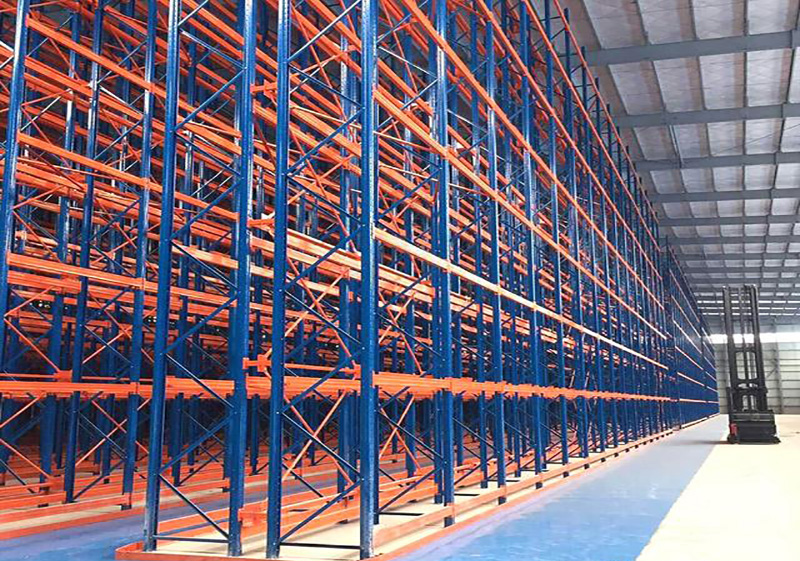
Conclusion: The Strategic Value of Proper Commercial Racking
Investing in well-engineered commercial racking is a long-term commitment that influences warehouse productivity, safety, and
adaptability. By focusing on load requirements, environmental conditions, and
integration with warehouse operations, professionals can achieve a strong ROI
while maintaining flexibility for future growth. Always collaborate with
manufacturers that emphasize engineering rigor, quality control, and lifecycle
support.
Frequently Asked Questions (FAQ)
Q1: How do I determine the appropriate load capacity for my commercial
racking?
A1: Calculate the maximum weight per pallet or storage unit,
multiply by the number of units per beam level, and add 20–25% safety margin.
Consult the rack manufacturer's load charts and consider dynamic forces from
forklifts. For mixed loads, use the heaviest item's weight as the base.
Q2: Can existing commercial racking be reconfigured to change storage
density?
A2: Yes, most selective pallet racking allows beam
repositioning at 75–100 mm intervals. However, major reconfigurations (e.g.,
changing from selective to drive-in) may require new uprights or bracing.
Contact the original supplier for engineering review before any
modification.
Q3: What is the typical lifespan of commercial racking in a dry warehouse
environment?
A3: With proper use and regular inspections, commercial
racking can last 20–25 years in ambient conditions. Periodic painting or coating
touch-ups address cosmetic wear, while structural integrity depends on load
management and accident prevention.
Q4: How does commercial racking differ from residential shelving?
A4: Commercial systems use heavier-gauge steel, engineered
connections, and seismic-rated designs. They support dynamic loads, integrate
with MHE, and comply with industrial safety standards (e.g., RMI). Residential
shelving lacks these structural and safety features.
Q5: What maintenance procedures are recommended for commercial racking?
A5: Conduct monthly visual inspections for bent beams, loose
anchors, and damaged columns. Annually, hire a certified inspector to check
upright alignments, weld integrity, and load capacity notices. Immediately
isolate and repair any damaged components to prevent cascading failures.
For tailored commercial racking solutions and free layout consultations,
contact Guangshun—a manufacturer with
over a decade of engineering experience and a proven track record of serving
diverse industries.