In modern logistics and materials handling, the question what is a racking goes far beyond a simple dictionary definition. Industrial racking—or pallet
racking—is the structural backbone of any warehouse, distribution center, or
manufacturing facility. It is an engineered system of steel frames, beams, and
accessories designed to store unit loads (typically pallets) in a multi-tiered
arrangement that maximizes cubic space utilization while ensuring safe,
accessible, and efficient inventory management.
This article provides a deep technical examination of racking systems, from
fundamental structural mechanics to application-specific configurations,
selection criteria, and performance metrics. Warehouse managers, facility
engineers, and supply chain professionals will find actionable insights grounded
in engineering principles and real-world operational data.
Defining the Core Concept: What Is a Racking System?
To fully understand what is a racking,
one must view it as a modular structural framework rather than a passive storage
surface. A racking system consists of vertical upright frames (columns),
horizontal beams that support pallet loads, and various bracing elements that
provide lateral stability. These components work together to transfer loads—both
static (stored goods) and dynamic (forklift impacts, seismic forces)—safely to
the warehouse floor.
Racking systems are governed by strict engineering standards, including the
Rack Manufacturers Institute (RMI) specifications in North America and the FEM
(Fédération Européenne de la Manutention) standards in Europe. These standards
dictate material grades, connection designs, deflection limits, and safety
factors. A properly designed racking system will have a load capacity that
accounts for the weight of pallets, the distribution of loads across beams, and
the cumulative effect of multi-level storage.
Beyond physical storage, racking systems serve as the integration point for
warehouse operations. They determine pick paths, influence forklift traffic
patterns, and directly affect order fulfillment speed. In automated warehouses,
racking structures interface with shuttle systems, automated storage and
retrieval systems (AS/RS), and conveyor networks, making their design even more
critical.
Structural Components of Industrial Racking
Every racking system is built from a set of standardized components, each
with specific engineering functions. Understanding these parts is essential for
anyone evaluating what is a racking from a technical perspective.
Upright Frames (Columns)
Upright frames are the vertical load-bearing members of the racking system.
Manufactured from high-strength steel (typically with yield strengths of 350–550
MPa), these columns feature a punched hole pattern along their length to
accommodate beam connectors at variable heights. Column cross-sections are
engineered to resist both axial compression and bending moments. Common profiles
include open C-sections, closed box sections, and roll-formed shapes with
stiffening ribs to prevent local buckling under heavy loads.
Beams (Horizontal Load Supports)
Beams span between upright frames and directly support pallet loads. They are
typically roll-formed from high-tensile steel and feature step-end connectors
that lock into the upright column holes. Beam capacity is a function of section
modulus, steel grade, and span length. Standard beam depths range from 80 mm to
160 mm, with thicknesses from 1.5 mm to 3.0 mm depending on load requirements.
Beams are designed with a predetermined deflection limit—usually L/180 or L/240
of the span—to ensure structural integrity and prevent pallet instability.
Bracing and Tie Assemblies
Bracing provides lateral stability to the racking structure, resisting wind
loads, seismic forces, and impact from material handling equipment. Diagonal and
horizontal bracing members connect upright frames into rigid bays. In seismic
zones, additional bracing and base plates are required to meet local building
codes. The bracing pattern—whether X-bracing, Z-bracing, or portal
bracing—affects both structural stiffness and the accessibility of stored
pallets.
Safety and Accessory Components
Modern racking systems incorporate a range of safety accessories: column
guards to protect uprights from forklift impacts, beam safety clips to prevent
accidental beam dislodgement, row spacers to maintain alignment between adjacent
racks, and load backstops to prevent pallets from falling through the rear of
the rack. Wire decking or wood panels may be added between beams to support
smaller items or provide fall-through protection.
Major Racking Types and Their Application Scenarios
Choosing the right racking type requires a clear understanding of your
inventory profile, throughput requirements, and facility constraints. The
following configurations represent the most common solutions in the
industry.
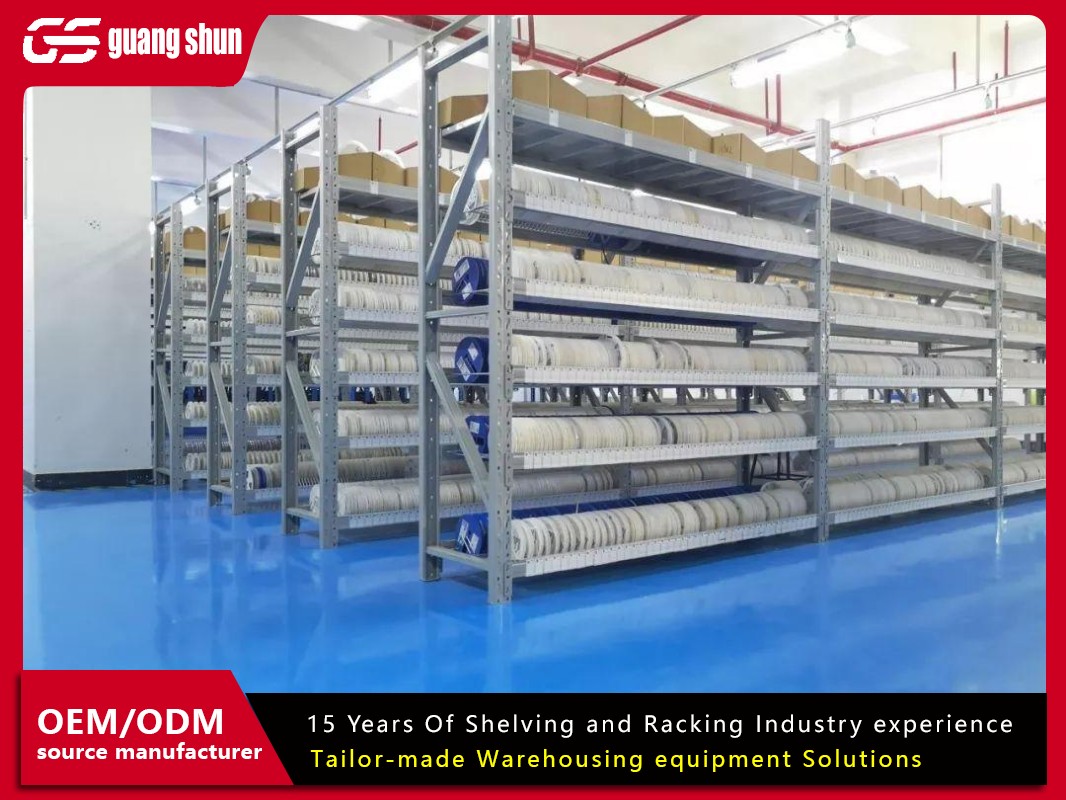
Selective Pallet Racking
Selective racking is the most widely used system, offering 100% accessibility
to every pallet position. Each pallet is stored on a pair of beams, and each bay
typically accommodates two to three pallets per level. This configuration is
ideal for operations with high SKU variety, rapid turnover, and
first-in-first-out (FIFO) inventory management. However, selective racking
provides the lowest storage density among all racking types because each pallet
requires its own dedicated beam position.
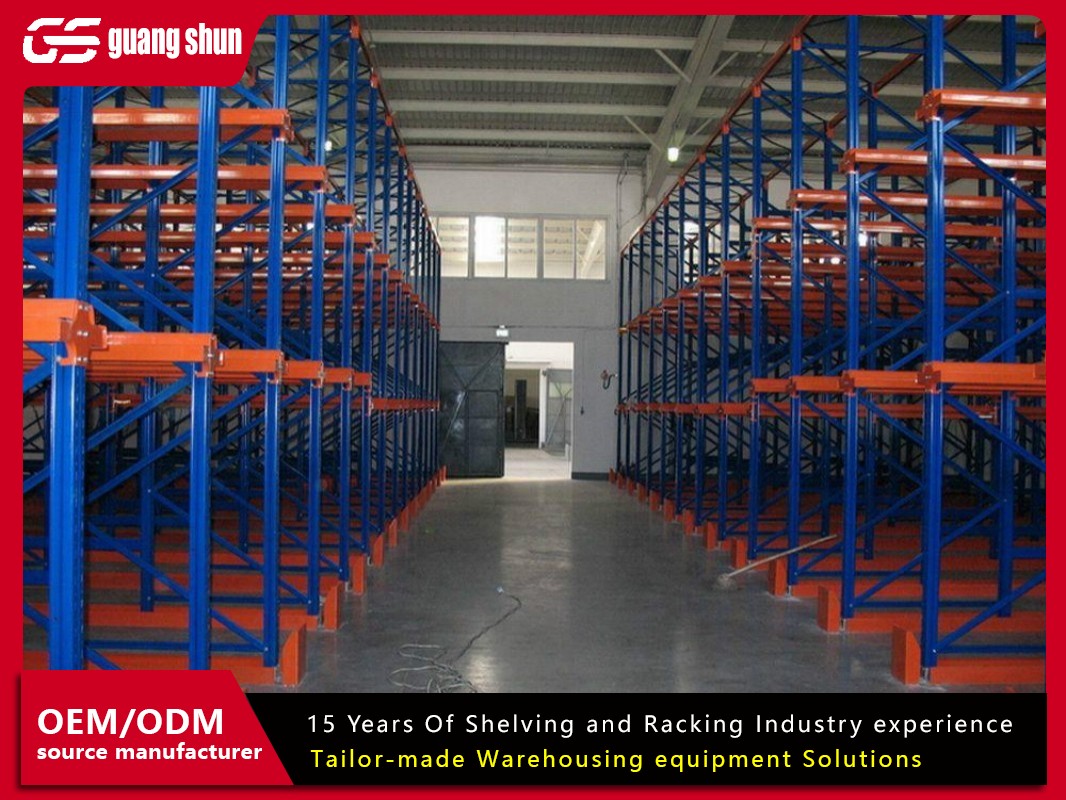
Drive-In and Drive-Through Racking
Drive-in racking eliminates aisles between rack rows, allowing forklifts to
enter the storage structure directly. Pallets are stored on continuous rails,
with the forklift traveling inside the rack to deposit or retrieve loads. This
system maximizes storage density but operates on a last-in-first-out (LIFO)
basis, making it suitable for bulk storage of homogeneous products with low
turnover. Drive-through racking, a variation, allows forklifts to enter from
both ends, enabling FIFO flow when combined with a gravity feed mechanism.
Push-Back Racking
Push-back racking uses a series of nested carts on inclined rails. When a
pallet is placed on the front cart, it pushes the existing pallets back along
the incline. When the front pallet is removed, the remaining pallets roll
forward under gravity. This system provides high density with FIFO capability
and is commonly used for operations with moderate SKU variety and medium
turnover rates. Push-back systems typically offer storage depths of two to six
pallet positions.
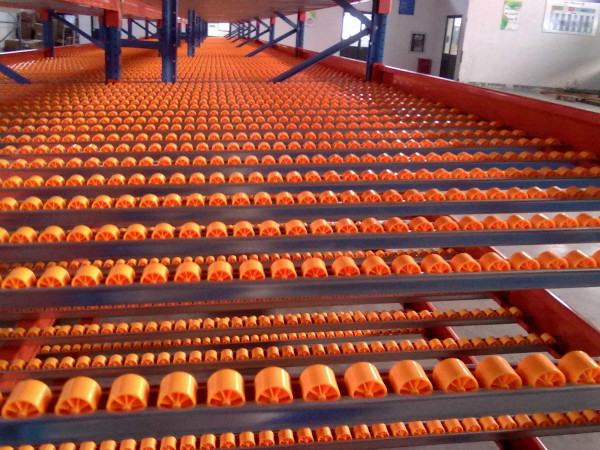
Pallet Flow Racking (Gravity Flow)
Pallet flow racking, also known as gravity flow racking, uses wheeled or
roller tracks with a slight incline. Pallets are loaded from one end and flow by
gravity to the picking face on the opposite end. This configuration provides
FIFO inventory management with high density and is ideal for perishable goods,
batch production, and high-volume SKUs. The flow rate is controlled by braking
rollers or speed controllers to prevent pallet damage during descent.
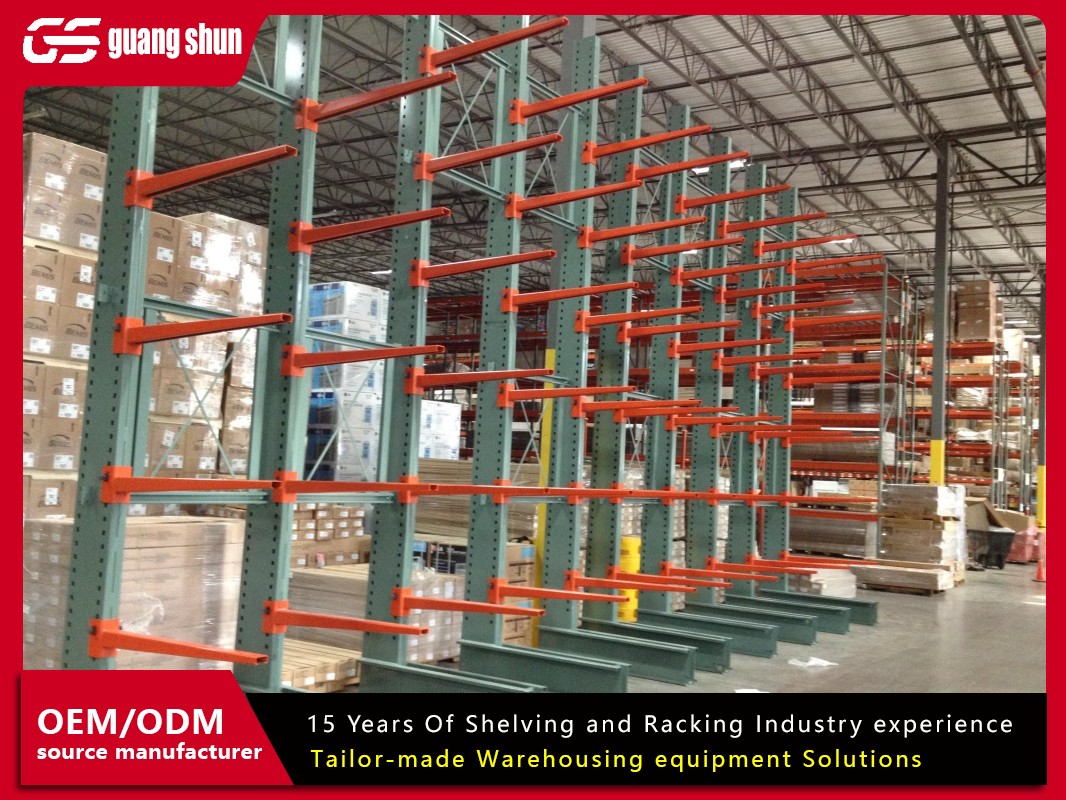
Cantilever Racking
Cantilever racking is specifically designed for long, bulky items such as
lumber, piping, sheet metal, and furniture. Arms extend from a single row of
upright columns, providing unobstructed storage without the need for front
beams. This system is highly customizable in terms of arm length, capacity, and
spacing, making it essential for building material warehouses and industrial
supply centers.
Technical Parameters That Define Racking Performance
When specifying a racking system, several engineering parameters must be
evaluated. These metrics directly influence safety, operational efficiency, and
the total cost of ownership.
Load Capacity Per Level
Each beam level has a defined maximum load capacity, determined by beam
section, span length, and column pitch. Manufacturers provide capacity charts
that correlate beam size, gauge, and span with allowable load. It is standard
practice to apply a safety factor of 1.5 to 2.0 when calculating design loads to
account for dynamic forces, impact loads, and uneven weight distribution. For
example, a beam with a 2.7-meter span and a 100×50 mm section may support 2,500
kg uniformly distributed, but this capacity decreases as span increases.
Upright Frame Capacity
The vertical capacity of upright frames depends on column section, steel
grade, and bracing configuration. A typical upright frame with 90×70×2.5 mm
columns and X-bracing can support axial loads up to 80 kN per column pair.
However, this capacity must be derated for taller heights, as column buckling
becomes the limiting factor. Manufacturers use Euler buckling formulas and
finite element analysis to determine safe working loads for each frame
configuration.
Height and Depth Configurations
Racking height is constrained by building clear height, forklift reach
capability, and seismic regulations. In standard warehouses, rack heights range
from 4 meters to 12 meters. High-bay warehouses with automated systems can
exceed 40 meters. Depth—measured from the aisle face to the rear of the
rack—varies from 1.0 meter for selective racking to 2.5 meters or more for
drive-in configurations. Depth selection affects both storage density and
forklift maneuverability.
Seismic and Wind Load Design
In regions with seismic activity, racking systems must be designed to
withstand lateral forces specified by local building codes (e.g., ASCE 7 in the
United States, Eurocode 8 in Europe). Seismic design involves base shear
calculations, ductility detailing, and special connection designs that allow
controlled energy dissipation during an earthquake. Wind loads are also a factor
for outdoor racking or open-sided buildings, requiring additional bracing and
foundation anchorage.
Fire Protection and Sprinkler Clearance
Racking systems must comply with fire safety regulations, which mandate
specific clearances for sprinkler heads. In-rack sprinklers may be required for
high-piled storage, with beam levels designed to accommodate sprinkler piping
and deflector positions. Fire protection engineers typically require a minimum
clearance of 0.3 meters between the top of stored loads and sprinkler
deflectors, affecting the usable height of each storage level.
The Selection Process: Matching Racking to Operational Requirements
Selecting the optimal racking system involves a multi-step analysis that
balances storage density, accessibility, cost, and safety. Guangshun provides comprehensive site assessments to guide this process, ensuring that
each client's unique operational profile is addressed with precision.
SKU Profiling and Inventory Analysis
The first step is to analyze the SKU (Stock Keeping Unit) profile: number of
distinct items, pallet dimensions, weights, and turnover rates. Operations with
thousands of SKUs and low turnover may benefit from selective racking, while
those with few SKUs and high volume may justify drive-in or flow systems. A
Pareto analysis (80/20 rule) often reveals that a small percentage of SKUs
account for the majority of throughput, guiding the allocation of prime picking
positions.
Throughput and Picking Strategy
Warehouse throughput—measured in pallets per hour—determines the required
density and accessibility of the racking system. High-throughput operations
require wide aisles for fast forklift travel and multiple pick faces, whereas
low-throughput bulk storage can tolerate narrow aisles and deeper storage lanes.
The picking strategy (piece picking, case picking, or pallet picking) also
influences rack design, with piece-picking operations often requiring carton
flow racking or bin shelving integrated with pallet racking.
Building Constraints and Equipment Compatibility
Existing building dimensions, column spacing, floor flatness, and overhead
clearances impose physical constraints on racking design. Forklift type—reach
trucks, counterbalance, turret trucks, or very narrow aisle (VNA)
equipment—determines aisle width and rack height. For example, VNA trucks can
operate in aisles as narrow as 1.6 meters, but require rail guidance and flat
floors, which may influence racking layout and foundation design.
Lifecycle Cost Analysis
Beyond initial capital expenditure, lifecycle costs include installation,
maintenance, repairs, and potential downtime due to rack damage. Systems with
greater structural redundancy (e.g., more upright frames per row) may have
higher upfront costs but lower long-term risk. A thorough cost-benefit analysis
should factor in the expected lifespan of the racking (typically 15–25 years),
the cost of replacement parts, and the availability of spare components from the
manufacturer.
Addressing Industry Pain Points Through Racking Design
Warehouse operators face persistent challenges that directly impact
profitability. An engineered racking solution—backed by manufacturers like Guangshun—can
systematically address these pain points. To appreciate what is a racking in
practice, consider how it resolves the following operational issues.
Underutilized Cubic Space
Many warehouses operate with storage utilization below 60% of available cubic
volume. This is often due to mismatched rack heights, excessive aisle widths, or
single-deep storage configurations. By implementing higher racking with
appropriate material handling equipment, operators can increase storage density
by 30–50% without expanding the building footprint. For example, converting from
selective racking to push-back or flow racking can triple storage capacity in
the same floor area.
Safety Incidents and Product Damage
Forklift impacts are the leading cause of racking damage, leading to
structural failures, product damage, and worker injuries. Modern racking designs
incorporate column protectors, end-of-aisle guards, and impact-resistant
uprights (with thicker steel gauges). Regular structural inspections, combined
with clear aisle marking and operator training, reduce incident rates. Data from
the Occupational Safety and Health Administration (OSHA) indicates that proper
racking maintenance and protection can reduce warehouse injuries by up to
40%.
Inefficient Picking Paths and Low Throughput
Poorly designed racking layouts increase travel distance and picking time.
Zone picking, wave picking, and batch picking strategies require thoughtful rack
placement to minimize travel. Slotting optimization—assigning fast-moving SKUs
to the most accessible positions—improves throughput by 20–30%. Racking systems
with adjustable beam levels allow dynamic slotting adjustments as demand
patterns shift.
High Maintenance and Replacement Costs
Replacing damaged racking components can be expensive and disruptive.
Selecting racking with modular, field-replaceable parts reduces downtime. Beams,
connectors, and upright sections from reputable manufacturers are designed for
interchangeability, allowing quick repairs without special tools. Preventive
maintenance programs, including regular torque checks on connections and visual
inspections, extend the service life of racking systems.
Quantifying the Impact of Racking on Warehouse Metrics
The choice of racking system influences key performance indicators (KPIs)
across the supply chain. Data-driven warehouse managers track these metrics to
justify capital investments and optimize operations.
Storage Density and Space Utilization
Storage density is measured as pallet positions per square meter of floor
area. Selective racking typically achieves 20–30 positions per 100 m², while
drive-in and push-back systems achieve 50–70 positions per 100 m². Pallet flow
systems can exceed 80 positions per 100 m² when combined with deep-lane
configurations. Higher density directly reduces the cost per pallet stored,
making racking selection a critical financial decision.
Picking Accuracy and Order Fulfillment
Racking layout affects pick accuracy by influencing how easily operators can
access and identify products. Clear labeling, consistent slotting, and logical
arrangement of SKUs reduce picking errors. Research shows that well-organized
racking with visual cues (e.g., colored beams, location labels) can improve pick
accuracy from 99.0% to 99.8%, translating to significant cost savings in returns
and rework.
Cycle Time and Labor Efficiency
The time required to store and retrieve a pallet is directly influenced by
rack design and aisle configuration. Aisle width, rack height, and beam spacing
affect forklift travel time. For high-turnover warehouses, minimizing travel
distance through optimized rack placement and zoning can reduce cycle times by
15–25%, directly improving labor productivity.
Safety Incident Rates
Safety metrics, including lost-time injury frequency and damage costs, are
improved with robust racking design and safety accessories. Facilities that
implement comprehensive rack protection—including column guards, rack anchors,
and load-sensing systems—report 30–50% fewer incidents related to racking
collisions and pallet collapses.
Future Developments in Racking Technology
The racking industry continues to evolve with advances in materials science,
automation, and data analytics. Warehouse operators who stay informed about
these trends can future-proof their storage investments.
Integration with Automated Systems
Racking systems are increasingly designed for compatibility with automated
storage and retrieval systems (AS/RS), shuttle carts, and robotic forklifts.
These systems require tighter tolerances, specialized beam profiles for shuttle
guidance, and communication interfaces for tracking inventory positions. The
rise of "goods-to-person" (GTP) systems relies on racking that supports
high-speed extraction and precise load positioning.
Smart Racking with Embedded Sensors
IoT-enabled racking systems incorporate load sensors, strain gauges, and
temperature/humidity monitors to provide real-time data on storage conditions,
structural health, and inventory levels. These smart racks can alert operators
to overload conditions, track pallet positions, and even predict maintenance
needs based on cumulative stress cycles.
Sustainable Materials and Modular Design
Environmental regulations and corporate sustainability goals are driving
interest in racking systems made from recycled steel with reduced carbon
footprints. Modular designs that allow easy reconfiguration, relocation, and
repurposing reduce material waste over the lifecycle of the system. Some
manufacturers are exploring high-strength, lightweight alloys and composite
materials that offer comparable strength with lower material mass.
The question what is a racking opens a wide-ranging technical discussion that touches on structural
engineering, warehouse operations, safety, and supply chain strategy. A racking
system is not a commodity—it is a precision-engineered asset that, when properly
selected and maintained, delivers measurable returns in storage density,
operational efficiency, and workplace safety. From selective racking to
automated high-bay systems, each configuration offers distinct advantages that
must be aligned with inventory profiles, throughput goals, and facility
constraints.
Partnering with an experienced manufacturer ensures that your racking
investment is optimized for long-term performance. Guangshun brings decades of engineering
expertise, offering tailored solutions that address the specific demands of
modern warehousing. Whether you are upgrading an existing facility or planning a
new distribution center, a thorough understanding of racking fundamentals will
inform better decisions and drive operational excellence.
In summary, what is a racking is
a question that every warehouse professional must answer with both technical
rigor and practical foresight. The right racking system transforms a building
into a high-performance logistics hub, enabling scalability, safety, and
cost-effective materials handling for years to come.
Frequently Asked Questions (FAQ)
Q1: What is the main difference between selective racking and
drive-in racking?
A1: Selective racking provides 100% pallet accessibility with dedicated beam
positions for each pallet, making it ideal for high-SKU environments with FIFO
inventory. Drive-in racking, by contrast, uses continuous support rails and
allows forklifts to enter the rack structure, providing higher storage density
but operating on a LIFO basis. Drive-in racking is best suited for bulk storage
of homogeneous products with low turnover rates, whereas selective racking is
more flexible for mixed inventory and rapid picking operations.
Q2: How do I determine the correct load capacity for my racking
system?
A2: Load capacity is determined by beam size, span length, steel grade, and
connection type. Manufacturers provide load charts for each beam and frame
configuration. You must calculate the maximum pallet weight (including
packaging) and apply a safety factor (typically 1.5) to account for dynamic
forces, uneven load distribution, and impact loads. For example, if your pallets
weigh 1,200 kg, a beam level rated at 1,800 kg provides adequate safety margin.
Always consult the manufacturer's specifications and never exceed the rated
capacity.
Q3: What safety standards govern industrial racking
systems?
A3: Industrial racking is regulated by multiple standards depending on
geographic location. In North America, the Rack Manufacturers Institute (RMI)
Specification for the Design, Testing, and Utilization of Industrial Steel
Storage Racks is the primary reference. In Europe, the FEM (Fédération
Européenne de la Manutention) standards apply, alongside EN 15512 for design and
EN 15620 for tolerances. Additional requirements may include seismic design per
ASCE 7, fire protection per NFPA 13, and local building codes. Regular
inspections are mandated to maintain compliance and safety.
Q4: Can a racking system be reconfigured after initial
installation?
A4: Yes, most modular racking systems are designed for reconfiguration. Beam
levels can be adjusted to accommodate different pallet heights, and upright
frames can be relocated within the facility. However, significant
reconfiguration—such as changing from selective to drive-in layout—may require
new components and engineering approval. It is essential to consult the
manufacturer and conduct a structural analysis after any reconfiguration, as
load paths and stability can be affected.
Q5: How does racking system design affect warehouse picking
efficiency?
A5: Racking design directly influences pick path length, accessibility, and
ergonomics. Well-organized racking with fast-moving SKUs placed in the most
accessible "golden zone" (between waist and shoulder height) reduces travel time
and improves productivity. Zone picking, batch picking, and wave picking
strategies all depend on racking layouts that support efficient grouping of
items. Optimized slotting and clear location labeling can increase picking
efficiency by 20–40%, significantly reducing labor costs and order cycle
times.
Q6: What is the typical lifespan of a commercial racking
system?
A6: With proper maintenance and regular inspections, commercial racking
systems typically last 15 to 25 years. The lifespan depends on factors such as
the quality of the steel, the severity of operational impacts (forklift
collisions, overloading), environmental conditions (humidity, corrosion), and
adherence to maintenance schedules. Regular bolt torque checks, visual
inspections for damage, and prompt replacement of bent or overloaded components
can extend the service life. Manufacturers like Guangshun provide detailed maintenance
guidelines and inspection protocols to maximize system longevity.