In modern logistics hubs, the selection of industrial racks for warehouse directly impacts floor space efficiency, picking accuracy, and structural safety margins. Recent data from the Material Handling Institute shows that 28% of warehouse injuries involve rack-related incidents, while poor configuration wastes up to 35% of potential storage volume. Facility managers need engineering criteria—not generic advice—to match rack systems with SKU velocity, seismic loads, and automation roadmaps. This analysis covers seven measurable benchmarks, integrating load cycle testing, finite element analysis, and real-world retrofitting projects.
1. Classification of Industrial Racks by Load-Bearing Architecture
Each type of industrial racks for warehouse serves distinct inventory profiles. Understanding structural trade-offs prevents misapplication:
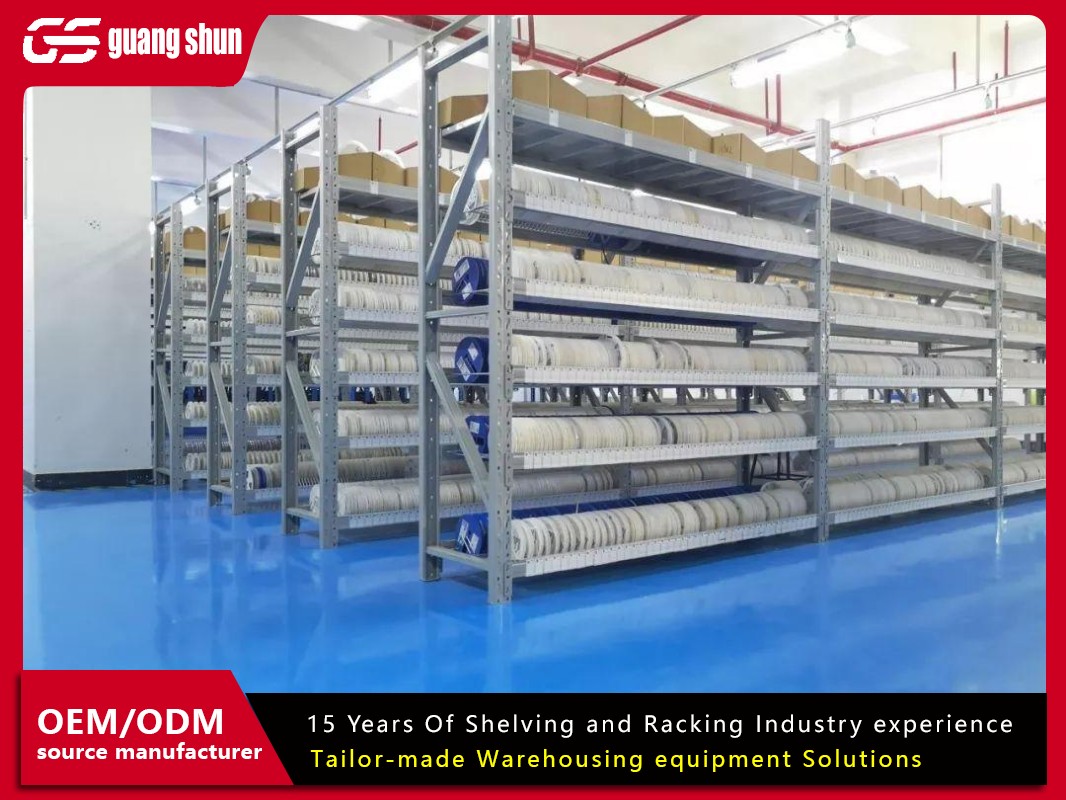
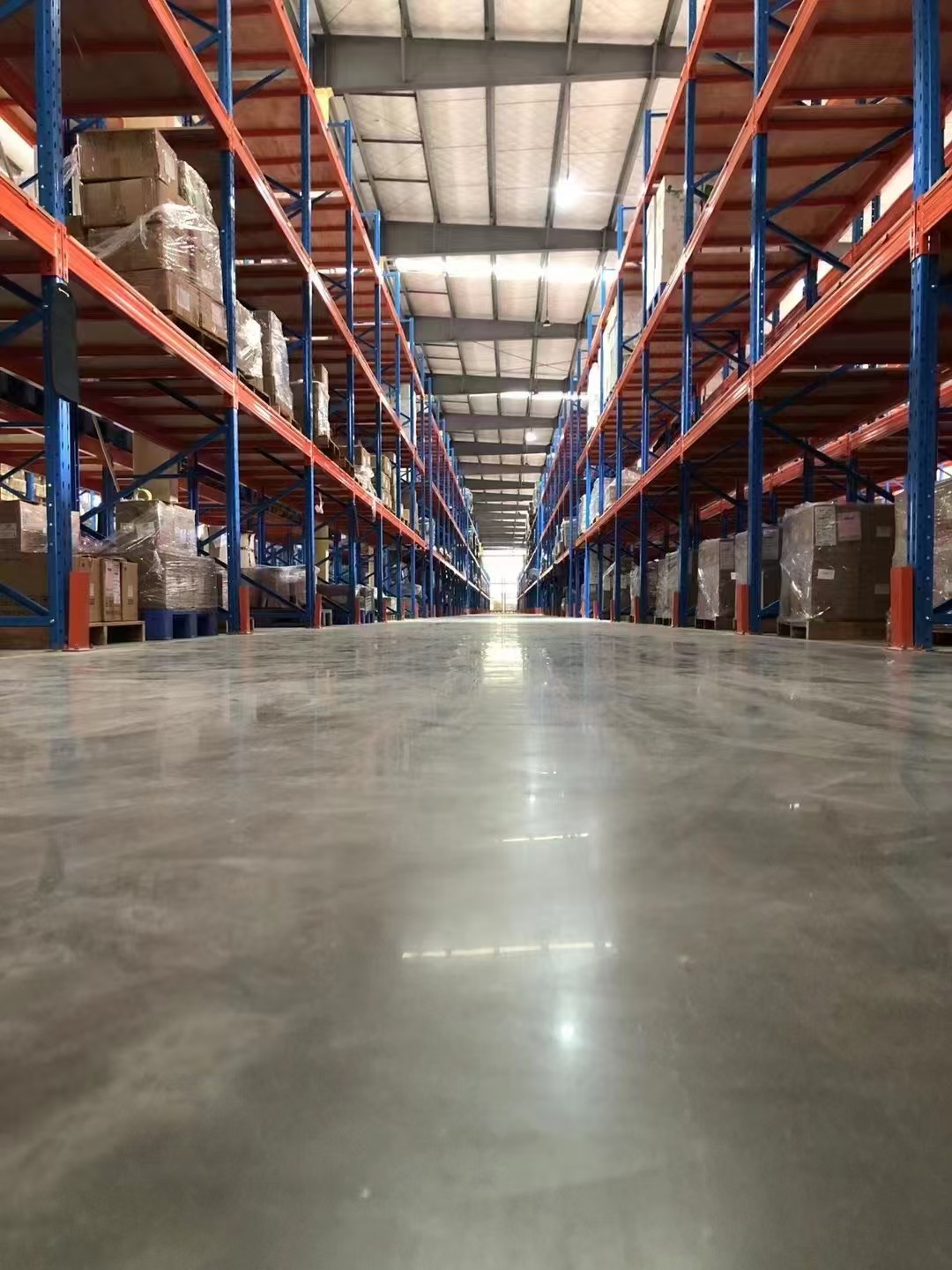
Selective pallet racks – Direct access to every pallet; ideal for high-turnover SKUs (A-class). Typical bay depth: 1100mm; beam levels: 3-5. Space utilization: 40-45%.
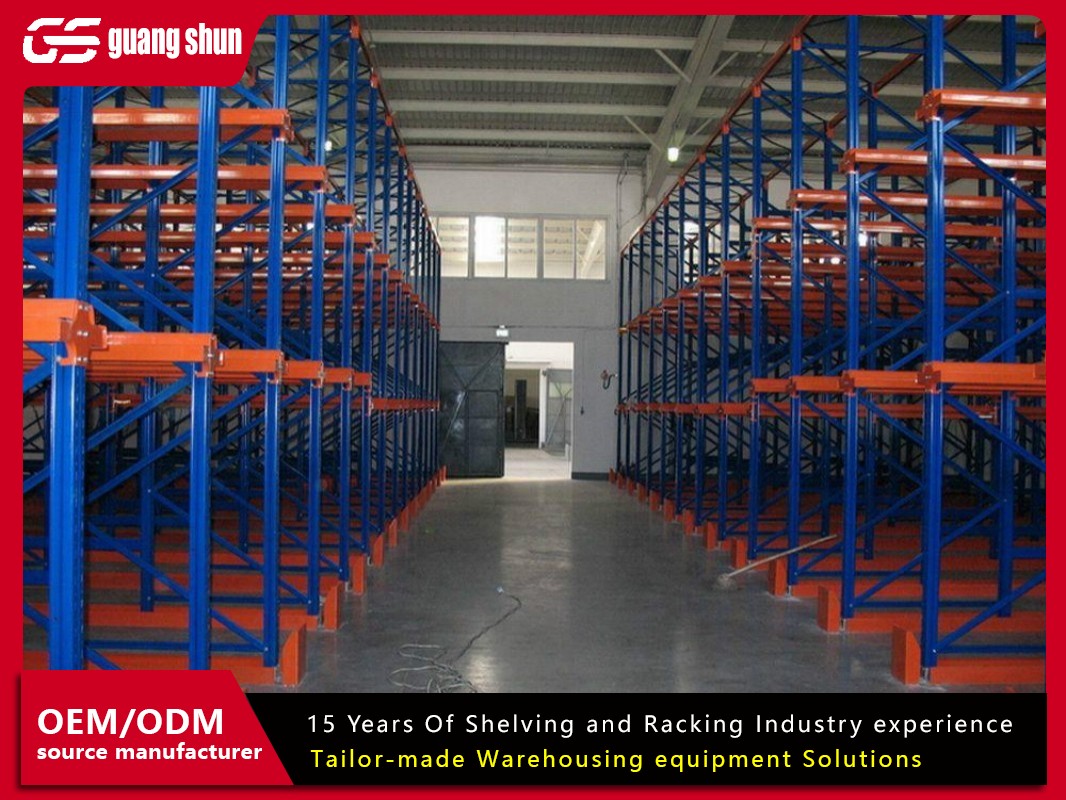
Drive-in/drive-through racks – Continuous upright frames with rail supports. Storage density up to 75% but limited to LIFO or FIFO (through configuration). Best for homogeneous, low-SKU bulk storage.
Push-back racks (cart-based) – Inclined rails with nested carts holding 2-6 pallets per lane. LIFO operation, density improvement of 30% vs. selective.
Pallet flow racks (gravity flow) – Roller tracks with speed controllers for FIFO rotation. Mandatory for expiration-sensitive goods (food, pharma).
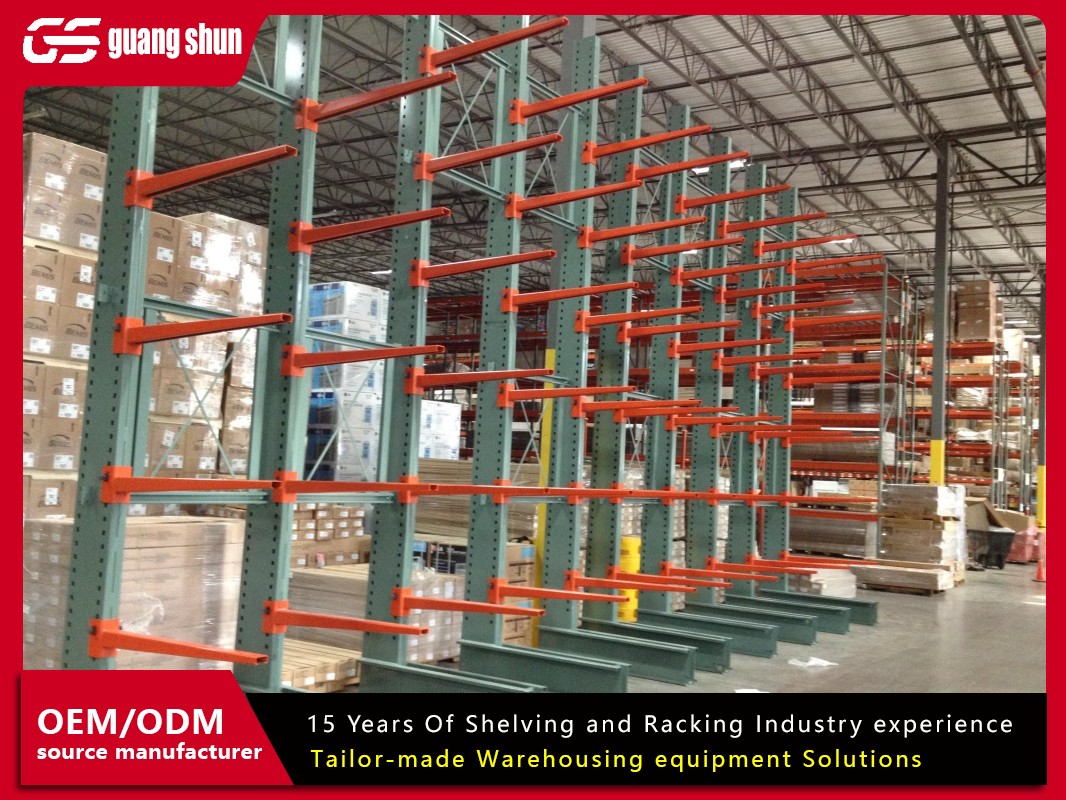
Cantilever racks – Horizontal arms extending from single upright column. Designed for long loads (steel bars, pipes, lumber); arm capacity ranges 0.5-2 tonnes.
Warehouse simulation studies prove that matching rack type to an ABC SKU analysis reduces average travel distance by 26% and lowers forklift fuel consumption by 18% annually.
2. Engineering Specifications: Steel Grade, Deflection, and Seismic Compliance
Professional industrial racks for warehouse must meet RMI ANSI MH16.1-2022 or FEM 10.2.08. Critical parameters include:
Material grade & section modulus – Heavy-duty frames use Q355B (equivalent to S355JR) with minimum yield strength of 355 MPa. Upright section (e.g., 100×95×2.5mm) optimized for buckling under eccentric loading.
Beam deflection limit – Allowable deflection ≤ L/180 under full load (L = beam span). For 2700mm span, maximum deflection = 15mm, ensuring safe pallet engagement and beam integrity.
Coating durability – Industrial environments require polyester powder coating, 60-80µm thickness, salt spray resistance ≥500 hours (ISO 9227). Cold storage applications need additional anti-corrosion primers.
Seismic design category (SDC) – In zones D/E (e.g., California, Japan), racks require base isolation plates, diagonal bracing, or oversized anchors with safety factor 2.0. Guangshun provides finite element analysis (FEA) per ASCE 7-22 for each seismic project.
OSHA data reveals that 34% of reported rack collapses involved non-certified steel or missing deflection calculations. Always request third-party weld inspections and load certificates.
3. Solving Five Real-World Pain Points With Engineered Rack Solutions
Despite standard rack offerings, facility managers repeatedly encounter specific failure patterns. Below are the top five pain points with data-backed countermeasures:
Pain point #1 – Underused vertical height: Typical warehouses only use 60% of clear height. Solution – Implement high-bay industrial racks for warehouse with very narrow aisle (VNA) turret trucks. Increasing height from 8m to 12m adds 50% more pallet positions without expanding footprint.
Pain point #2 – Frequent forklift impacts on uprights: 43% of rack damage occurs in busy cross-aisles. Solution – Install column protectors (1200mm height, 10mm steel plate) plus anchored end-of-aisle frames with energy-absorbing polymer. Optical guidance lines reduce impacts by 62%.
Pain point #3 – SKU proliferation demands reconfiguration: Welded racks become obsolete quickly. Solution – Boltless adjustable rack systems (50mm vertical pitch) allow beam relocation within hours. A beverage distributor reduced reconfiguration downtime by 75% using modular designs from Guangshun.
Pain point #4 – Incompatibility with AGV/ASRS automation: Standard racks have ±10mm straightness tolerance, insufficient for robotic shuttles. Solution – Automation-grade racks with ±2mm floor channel straightness, laser positioning targets, and rail alignment jigs.
Pain point #5 – Uneven concrete floors causing leaning racks: Floor slope exceeding 0.5% over 10m leads to stability risks. Solution – Laser floor mapping before installation; adjustable base plates with epoxy grouting; shim plates up to 25mm thickness.
4. Matching Rack Configurations to SKU Velocity (Data-Driven Matrix)
Optimal industrial racks for warehouse selection depends on three quantitative metrics: turnover ratio, pallet dimensions, and picks per hour. Use this decision framework validated by 3PL case studies:
Class A (fast movers, >70% of picks) – Single-deep selective racks placed near shipping/dispatch. Depth: 1-2 pallets, beam levels 3-4. Achieves 90% travel distance reduction.
Class B (medium movers, 20% of picks) – Double-deep selective or push-back racks. Lane depth: 3 pallets. Saves 25% floor space compared to single-deep.
Class C (slow movers, <10% of picks) – Drive-in racks or mobile compaction racks (carriages on rails). Achieves 90% storage density, LIFO acceptable for non-perishables.
Irregular/long loads – Cantilever racks or pallet flow lanes with adjustable arm spacing.
Implementing this matrix in a European automotive warehouse reduced overall storage cost per pallet by 22% over 18 months, according to a published logistics study.
5. Automation Readiness: Rack Tolerances for AGVs and Shuttles
Automated storage and retrieval systems impose stricter requirements on industrial racks for warehouse. For mini-load ASRS (stacker cranes), upright straightness must be ≤ ±3mm per 10m height. For shuttle-based systems, rail level deviation ≤ 1mm per 1000mm length. Key integration points:
AGV navigation infrastructure – Install magnetic tape slots or QR-code plates flush with rack footplates; ensure no protruding bolts exceeding 8mm to avoid AGV collisions.
Smart load sensors – Modern racks integrate strain gauges and tilt detectors on beams, wirelessly transmitting real-time weight and impact data to WMS. This reduces overloading risk by 88%.
Future-proofing allowances – Pre-installed horizontal bracing and extra anchor points for future automation upgrades. Retrofitting automation to standard racks costs 4-6× more than initial design.
Guangshun delivered over 35 automation-ready projects integrating with Dematic, Swisslog, and Daifuku, each including a 3D laser validation report before commissioning.
6. TCO Analysis: How Quality Racks Reduce Lifetime Costs
Purchasing industrial racks for warehouse based purely on lowest upfront price often hides substantial long-term expenses. Calculate total cost of ownership over 10 years including maintenance, downtime, and safety penalties:
Corrosion protection & recoating – Hot-dip galvanizing (≥85µm) lasts 20+ years in non-aggressive environments; standard powder coating requires rework every 7-9 years at $6–$9 per square foot.
Safety incident & liability – Average rack collapse costs $380,000 in direct damages plus OSHA penalties up to $15,000 per serious violation. Certified engineering stamps reduce liability exposure.
Reconfiguration residual value – Modular boltless racks retain 45% higher resale value after 10 years compared to welded racks that become scrap.
Density-driven expansion avoidance – Increasing rack height from 7m to 11m in a 12,000 m² warehouse adds 4,000 m² equivalent capacity, avoiding a $2.2M building expansion.
One food logistics operator using engineered industrial racks for warehouse from Guangshun reported 34% lower 10-year TCO primarily due to zero impact-related collapses and reduced repainting cycles.
7. Case Study: Retrofitting Low-Ceiling Facilities With High-Density Industrial Racks
A regional tire distributor operated in a 1970s building with 5.5m clear ceiling height and irregular column spacing (9m x 12m). Standard selective racks would only provide two pallet levels, wasting 60% of floor area. Guangshun engineered a custom solution combining:
Double-deep drive-in racks (three pallets depth, LIFO) to increase storage density by 55%.
Narrow aisle reach trucks (aisle width reduced from 3.5m to 2.3m).
Low-profile rail-mounted shuttles for deep lane extraction, bypassing height constraints.
Post-implementation, pallet positions increased from 1,250 to 2,180 without expanding footprint. Labor hours per order decreased by 17% due to reduced travel distances. This demonstrates that tailored engineering overcomes physical limitations.
Engineering-Driven Rack Selection as a Competitive Asset
Choosing the right industrial racks for warehouse is a strategic decision impacting safety, labor efficiency, and automation scalability. By aligning rack architecture with quantitative SKU data, enforcing certified steel and seismic standards, and planning for flexibility, operations achieve measurable ROI gains. Consult engineering specialists like Guangshun to conduct a full rack specification audit—covering building constraints, throughput targets, and future automation roadmaps.
Frequently Asked Questions (FAQ) About Industrial Racks for Warehouse
Q1: What is the minimum aisle width required for selective industrial
racks when using counterbalance forklifts vs. reach
trucks?
A1: For standard counterbalance forklifts
(3-wheel, 1.5-2t capacity), aisle width should be at least 3.6m measured from
rack face to rack face. For reach trucks (straddle type), minimum aisle width is
2.7m. Very narrow aisle (VNA) turret trucks can operate in aisles as narrow as
1.6m but require floor-mounted guide rails and wire guidance systems.
Q2: How frequently should industrial racks be recertified for load
capacity?
A2: RMI recommends a formal load
recertification every 24 months for racks that have sustained any impact event
or after building modifications. In high-traffic environments (e.g., cross-dock
facilities), semi-annual visual inspections by a certified rack safety
professional are mandatory. Any dent deeper than 12mm in an upright column or
any bent beam flange requires immediate unloading and engineering
assessment.
Q3: Can I convert existing selective racks into drive-in racks
without replacing all components?
A3: No. Drive-in
racks require continuous upright frames with diagonal bracing rails and specific
longitudinal stability characteristics. Selective upright frames lack the
necessary rail hole patterns and cross-bracing. Retrofitting would require
changing at least 80% of the structure, making it less economical than a new
engineered design. Plan the rack type based on 5-year inventory projections.
Q4: What seismic design parameters apply to industrial racks in Chile
or New Zealand (high-seismic zones)?
A4: In high
seismic zones (Site Class D/E, PGA ≥0.5g), racks must comply with ASCE 7-22 or
local standards (NZS 1170.5 for New Zealand). Required measures include base
shear coefficient of 1.0g, oversize base plates (≥12mm thickness), and
energy-dissipating anchor bolts with ductility class. Guangshun provides site-specific seismic calculation
reports and third-party peer reviews.
Q5: How does freezer storage (-25°C) affect industrial rack steel
selection and bolt torque?
A5: At sub-zero
temperatures, steel becomes more brittle. Use only low-alloy steel with Charpy
V-notch impact test of ≥27J at -30°C. Bolts should be zinc-nickel coated (500h
salt spray) and torqued to values reduced by 15% compared to room temperature to
avoid thread galling. Additionally, add 120mm extra clearance per aisle for
frost buildup on beams and floor heaving.
Q6: Are sustainable or recycled steel options available for
industrial racks without compromising load
capacity?
A6: Yes. Many manufacturers now offer
racks made from 70-90% recycled steel with secondary melting processes that
maintain the same yield strength (355 MPa). Powder coatings with low VOCs
(<50g/L) and end-of-life take-back programs are available. Guangshun offers a certified green rack program with
EPD documentation for LEED projects.