7 Technical Standards for Optimizing Industrial Racking Systems in 2025As global supply chains face increasing pressure for higher throughput and storage density, the physical infrastructure of the warehouse must evolve. The selection of industrial racking is no longer a simple procurement task; it is a complex engineering decision that influences facility safety, operational insurance, and long-term capital efficiency. In high-volume distribution centers, the racking system functions as the backbone of the entire logistics operation, necessitating a rigorous examination of material science and structural design.
Professional manufacturers, such as Guangshun, emphasize the importance of adhering to international standards like the Rack Manufacturers Institute (RMI) and EN 15512. These standards ensure that industrial racking can withstand not only the static weight of the inventory but also the dynamic forces generated during loading, unloading, and potential seismic events. This article provides a deep dive into the technical parameters that define high-performance storage solutions.
1. Steel Composition and Yield Strength Analysis
The structural integrity of any racking system begins with the metallurgical properties of the steel. In the production of industrial racking, engineers typically specify high-strength cold-formed steel. The yield strength, often exceeding 50,000 PSI (345 MPa), is a non-negotiable metric for upright frames that must support several tons of vertical load.
Cold-Formed Steel: This process involves rolling steel at room temperature, which increases the material's strength-to-weight ratio. It allows for complex profiles, such as teardrop or keystone punch patterns, without compromising the structural column's stiffness.
Hot-Rolled Structural Steel: For environments where forklift impact is a high risk, hot-rolled C-channel steel offers superior durability. This material is thicker and can absorb significant kinetic energy, making it suitable for lower-level beams and heavy-duty uprights.
Gauge Variance: Engineering teams must ensure that the steel gauge is consistent. A move from 14-gauge to 12-gauge steel can significantly increase the load-bearing capacity of a frame, allowing for higher vertical expansion in facilities with high ceilings.
2. Load Beam Dynamics and Deflection Ratios
The horizontal load beams of industrial racking are subject to intense stress. According to RMI specifications, the maximum allowable deflection for a beam under full load is L/180 (the length of the beam divided by 180). If a 96-inch beam bows more than 0.53 inches, it is considered structurally compromised.
Advanced beam designs incorporate "step" profiles, which allow for the integration of wire decking or pallet supports. This design ensures that the load is distributed evenly across the beam’s length. Guangshun utilizes precision welding techniques at the beam-to-end-plate connection—often employing a 3-pin or 4-pin connector system—to maximize shear strength and prevent accidental dislodgement during forklift operations.
3. Seismic Engineering and Baseplate Requirements
Seismic safety is a primary concern in many industrial regions. A racking system must be viewed as a flexible structure that can dissipate energy during a tremor. This requires specialized engineering of the baseplates and the anchoring system. For industrial racking installed in high-seismic zones, the baseplates are significantly larger than standard versions to spread the load over a wider area of the concrete slab.
Anchoring Depth: The choice between wedge anchors and chemical anchors depends on the psi rating of the warehouse floor. High-density storage requires deeper embedment to resist the overturning moments caused by lateral forces.
X-Bracing: Diagonal bracing across the back or between upright frames provides the necessary lateral stability. The tension and compression ratings of these braces must be calculated based on the total height-to-depth ratio of the rack.
4. Optimizing SKU Density with Advanced Configurations
The primary challenge in modern warehousing is SKU proliferation. Traditional selective racking provides 100% accessibility but low density. To solve this, logistics engineers deploy specialized industrial racking configurations:
Very Narrow Aisle (VNA) Systems
VNA systems reduce aisle width from 12 feet to as little as 5.5 feet. This configuration requires the use of specialized turret trucks or AGVs. The precision of the rack installation is paramount here; even a 0.1-degree deviation in plumbness can result in a collision at the top of a 50-foot rack. Facilities using VNA must also invest in "super-flat" (FM2) floors to ensure vehicle stability.
Push-Back and Pallet Flow Racking
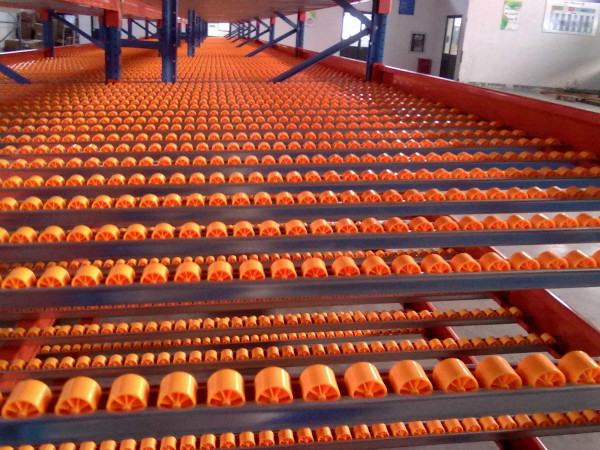
These systems utilize gravity to move pallets. Push-back racks use nested carts and are ideal for LIFO (Last-In, First-Out) operations, while pallet flow racks use rollers and centrifugal brakes for FIFO (First-In, First-Out) inventory management. These systems significantly increase the "cubic utilization" of the warehouse by eliminating multiple access aisles.
5. Addressing Structural Fatigue and Damage Prevention
A significant pain point in the industry is the hidden damage caused by repetitive, low-impact collisions. Over time, these impacts lead to structural fatigue in the steel. To mitigate this, high-quality industrial racking should be paired with proactive protection measures.
Column Protectors: Heavy-duty steel or polymer guards installed at the base of the uprights absorb the energy of a forklift strike.
Aisle-End Guards: These barriers protect the most vulnerable part of the racking row—the end frames—from turning vehicles.
Safety Pins and Locks: Each beam connection must be secured with an automatic locking device. This prevents "beam pop-out," a dangerous occurrence where a forklift upwardly displaces a beam while attempting to retrieve a pallet.
6. Finishing and Environmental Durability
The environment of a warehouse dictates the finish of the racking components. For standard ambient temperature warehouses, electrostatic powder coating is preferred. This finish is resistant to scratching and provides a clean, professional appearance. However, in cold storage or outdoor applications, corrosion becomes the primary threat.
In these scenarios, Guangshun recommends hot-dipped galvanized steel. This process involves coating the steel in zinc, creating a barrier that is chemically bonded to the material. This is a vital requirement for the food and beverage industry, where moisture and cleaning chemicals are prevalent, ensuring the racks do not become a source of contamination or structural failure due to rust.
7. The Economics of Total Cost of Ownership (TCO)
When evaluating the procurement of storage equipment, the initial purchase price is often a misleading metric. The Total Cost of Ownership (TCO) includes the costs of installation, maintenance, annual safety inspections, and potential downtime. A cheaper, lower-gauge rack may save money in the short term, but the frequency of repairs and the risk of a catastrophic collapse make it a poor investment.
Professional industrial racking systems are designed for a 15-to-25-year lifecycle. Investing in high-quality engineering ensures that the system can be reconfigured or expanded as business needs change. Furthermore, compliant systems reduce insurance premiums and ensure that the company remains in good standing with labor safety organizations like OSHA.
8. Future Trends: Automation and Digital Twins
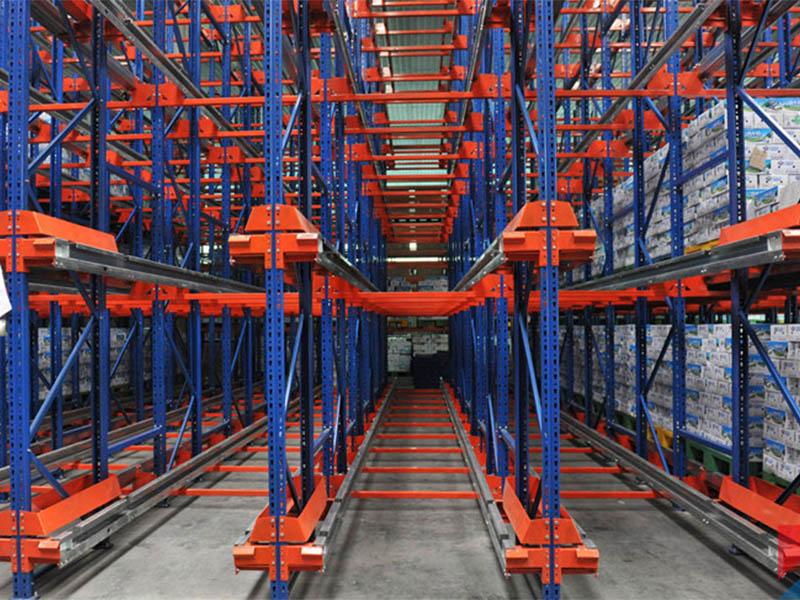
The integration of automation is the next frontier for storage infrastructure. Racking systems are now being designed to accommodate Radio Shuttle technology, where semi-automated robots move pallets within deep lanes. This requires precise rail alignment and specific beam heights to allow for the shuttle’s clearance. Furthermore, the use of "Digital Twins"—3D virtual models of the racking—allows facility managers to simulate load changes and seismic stresses before they occur in the physical world.
Conclusion: Prioritizing Structural Integrity
In conclusion, the engineering of industrial racking is a fundamental component of a resilient supply chain. By focusing on high-grade steel, seismic-ready design, and protective accessories, warehouse operators can create an environment that is both efficient and safe. Manufacturers like Guangshun continue to push the boundaries of what is possible in storage density and structural performance, providing the hardware that allows global trade to move without interruption. Selecting a racking partner with technical expertise is the most effective way to ensure long-term operational success.
Frequently Asked Questions (FAQ)
Q1: What is the significance of the R-Mark certification for industrial racking?
A1: The R-Mark is a certification from the Rack Manufacturers Institute (RMI) that indicates the manufacturer has met rigorous testing and engineering standards. It provides third-party verification that the load capacities and safety factors of the rack are accurate and reliable under real-world conditions.
Q2: How do I know if my warehouse floor can support a high-density racking system?
A2: A structural engineer must evaluate the concrete slab's thickness and PSI rating. High-density systems put significant "point loads" on the floor. If the slab is too thin or the subsoil is unstable, the floor may crack or settle, leading to a dangerous tilt in the racking structure.
Q3: Can roll-formed racking and structural steel racking be used together?
A3: Yes, this is known as a hybrid system. Many facilities use structural steel for the uprights (to resist impact) and roll-formed steel for the load beams (to save weight and cost). This approach provides a balance of durability and economic efficiency.
Q4: What are the inspection requirements for industrial racking?
A4: Most safety regulations require a thorough inspection at least once a year by a qualified rack professional. Additionally, warehouse supervisors should conduct weekly visual walkthroughs to identify any signs of beam deflection, missing safety pins, or damaged uprights.
Q5: Why is it important to use safety panels or wire decking?
A5: Wire decking acts as a safety net. It prevents loose boxes from falling through the rack levels and provides support for pallets that may be damaged or undersized. It also improves fire safety by allowing warehouse sprinkler systems to flow through the rack structure more effectively.