Warehouse operators and logistics managers consistently face the challenge of
maximizing storage density while maintaining rapid access to inventory. The
selection and engineering of industrial
warehouse shelving directly influences throughput, labor efficiency, and
facility safety. Unlike basic retail shelving, industrial-grade systems must
withstand repetitive loading cycles, seismic events, and the operational demands
of forklift traffic. This analysis examines the engineering parameters,
configuration options, and economic factors that determine optimal storage
solutions for high-volume distribution environments.
1. Defining Industrial Warehouse Shelving: Core Engineering Parameters
Industrial
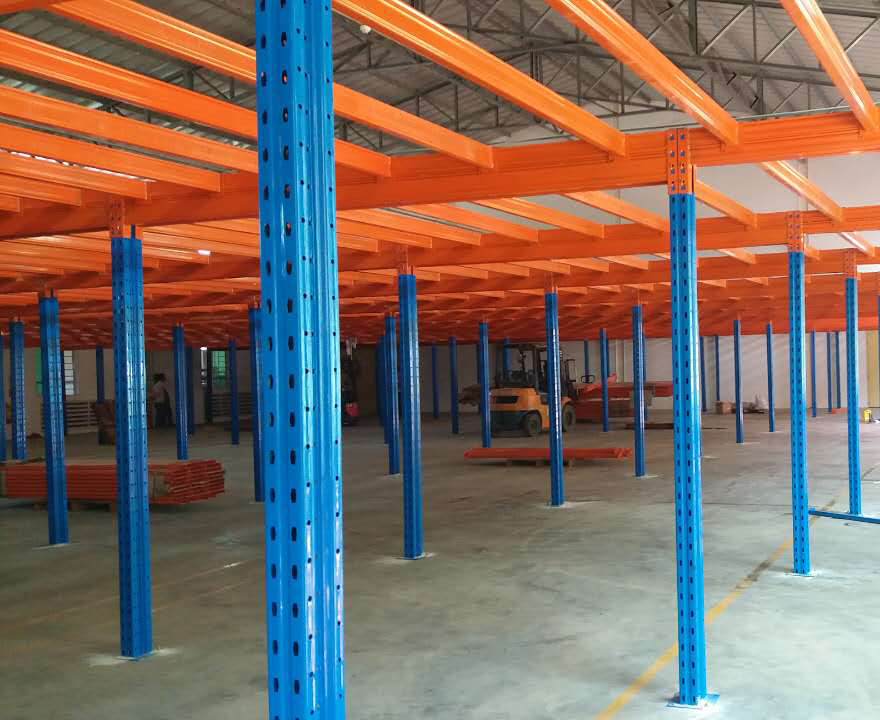
warehouse shelving encompasses a broad category of structural storage
systems engineered for palletized goods, bulk materials, and component parts.
These systems are characterized by their load-bearing capacity, adjustability,
and compliance with international safety standards. The fundamental engineering
parameters include beam deflection limits, upright frame buckling resistance,
and connection strength between horizontal and vertical members.
Material selection plays a decisive role in system performance. High-strength
steel grades—typically ASTM A36 or A572—provide the structural integrity
required for heavy loads. Surface treatments such as powder coating or hot-dip
galvanizing protect against corrosion in cold storage or high-humidity
environments. The gauge thickness of upright columns, typically ranging from 1.5
mm to 3.0 mm, directly correlates with load capacity and frame stability.
Upright frame design: Roll-formed or structural C-channel
profiles with punched holes at standard increments for beam attachment.
Beam construction: Box-section or step beams with integral
safety locks to prevent accidental dislodgement.
Base plates and anchors: Floor-mounted systems require
anchor bolts designed to resist both vertical and horizontal forces.
Load distribution: Uniformly distributed loads (UDL) vs.
concentrated point loads—each imposes different stress patterns on beam
spans.
For facilities operating in seismic zones, additional engineering
considerations apply. Base isolation systems, cross-aisle bracing, and
reinforced frame connections help maintain structural integrity during ground
motion. The American National Standards Institute (ANSI MH16.1) provides the
primary reference for seismic design provisions in steel storage racks.
2. Load Capacity Engineering: Static, Dynamic, and Seismic
Considerations
Accurate load capacity determination is the cornerstone of safe and efficient
storage operations. Industrial
warehouse shelving systems must accommodate three primary load categories:
static loads (dead weight of stored materials), dynamic loads (forces generated
during loading and unloading operations), and seismic loads (lateral forces
during earthquakes).
Static load calculations begin with the maximum weight per pallet position
and the number of pallet positions per bay. Beam deflection under full load must
not exceed L/180 of the span length—a standard engineering limit that prevents
excessive sagging and maintains rack stability. For example, a beam spanning
2,700 mm with a 1,500 kg UDL should exhibit deflection below 15 mm under full
load.
Dynamic loads are more complex to quantify. Forklift impacts, pallet
placement forces, and load transfer during retrieval create momentary stress
peaks that can exceed static loads by a factor of 1.5 to 2.0. Engineers
incorporate dynamic impact factors into the design load calculations, typically
applying a 25% to 40% increase to static loads for impact considerations.
Seismic load design: Based on site-specific spectral
acceleration coefficients and building response factors per ASCE 7.
Load combination rules: ASCE 7 load combinations that
include dead load, live load, seismic load, and wind load as applicable.
Capacity verification: Finite element analysis (FEA) is
increasingly used to validate structural performance under combined loading
scenarios.
Safety factors: Industry practice typically applies a
minimum safety factor of 1.5 against ultimate failure.
Manufacturers and third-party testing laboratories conduct full-scale rack
testing to verify load capacities. The Rack Manufacturers Institute (RMI) and
the Storage Equipment Manufacturers' Association (SEMA) provide standardized
testing protocols. Facilities should always refer to load placards posted on
each rack system, which indicate the maximum safe working load per beam level
and per bay.
For specialized applications such as cold storage (temperatures below -20°C),
steel grades with low-temperature impact toughness are required. Carbon steels
with fine grain structures and controlled sulfur content reduce the risk of
brittle fracture at sub-zero temperatures—a consideration often overlooked in
general warehouse planning.
3. Configuration Types for Industrial Warehouse Shelving Systems
The selection of configuration type directly impacts storage density,
accessibility, and capital investment. Each configuration addresses specific
operational requirements, from high-turnover fast-moving goods to long-term bulk
storage of slow-moving inventory. Industrial
warehouse shelving systems are available in several standardized
configurations, each with distinct engineering characteristics and performance
envelopes.
3.1 Selective Pallet Racking
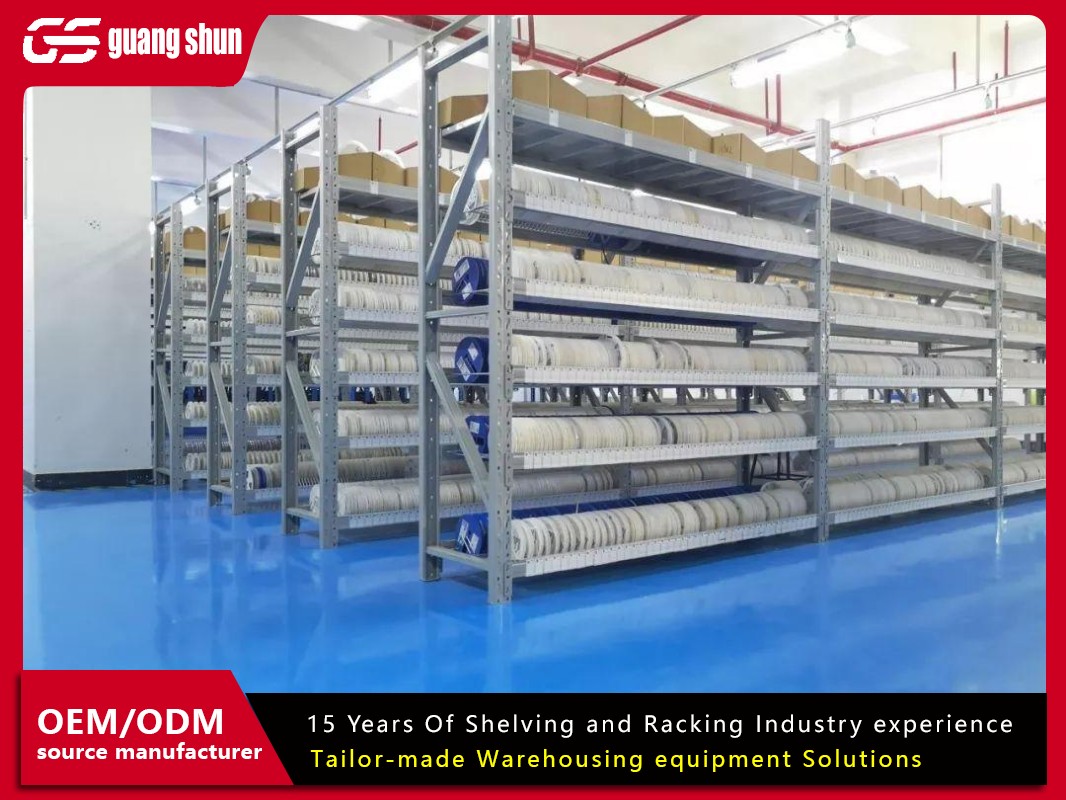
Selective pallet racking remains the most widely adopted configuration,
offering direct access to every pallet position. The system consists of upright
frames and horizontal beams that support pallets in a single-deep configuration.
Selective racking provides 100% selectivity—any pallet can be retrieved without
moving other pallets—making it ideal for inventory management systems with high
SKU diversity and variable demand patterns.
Storage density: Low to moderate, with typical space
utilization of 35% to 45% of total warehouse volume.
Loading/unloading speed: Rapid, with forklift operators
able to access any bay directly.
Capital cost: Lowest among heavy-duty racking systems,
approximately $150–$250 per pallet position.
Best application: High-turnover operations, multi-SKU
environments, and e-commerce fulfillment centers.
3.2 Drive-In and Drive-Through Racking
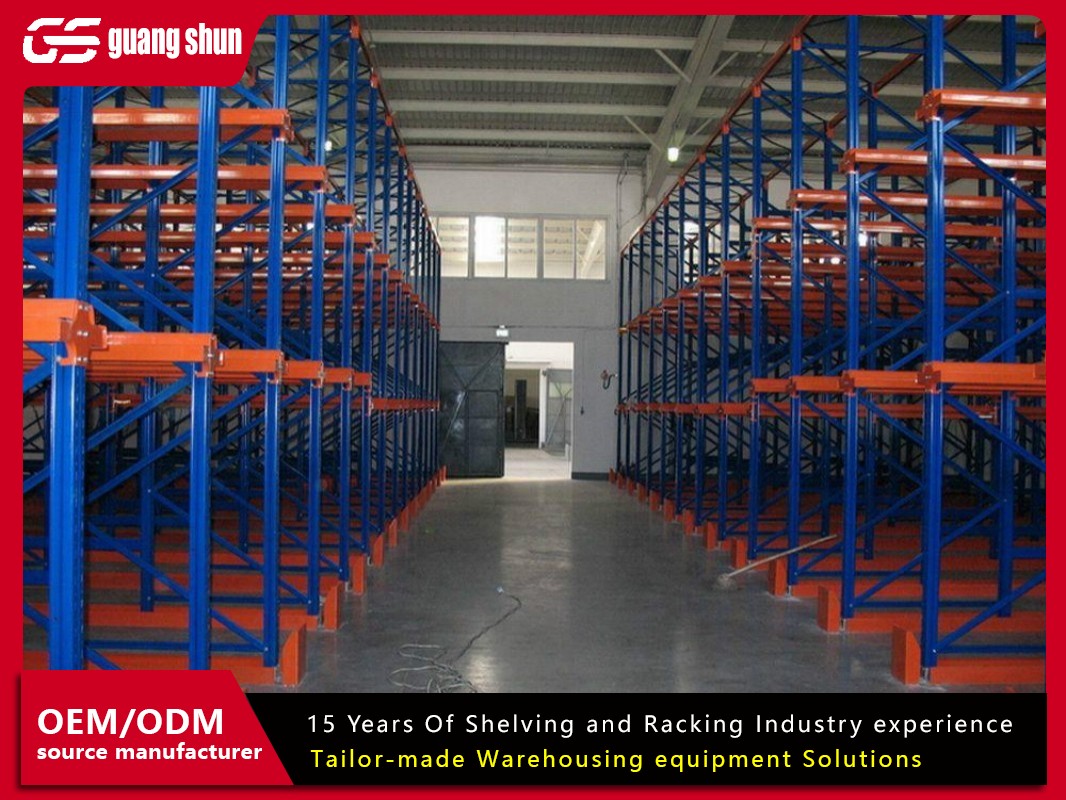
Drive-in racking eliminates aisles between rows by allowing forklifts to
enter the rack structure from one side and deposit pallets on cantilevered
rails. The system operates on a Last-In-First-Out (LIFO) principle, as pallets
are retrieved in the reverse order of storage. Drive-through racking extends
this concept with access from both ends, enabling First-In-First-Out (FIFO)
inventory rotation when combined with lane-depth management.
Storage density: High, achieving 60% to 75% space
utilization.
Loading/unloading speed: Moderate, with limited access
points and greater forklift maneuvering requirements.
Capital cost: Premium pricing, approximately 30% to 50%
higher than selective racking due to rail and guide systems.
Best application: Bulk commodities, food and beverage
storage, and applications with low SKU count and high volume per SKU.
3.3 Push-Back and Pallet Flow Racking
Push-back racking uses nested carts on inclined rails to store pallets in a
multi-deep configuration. Each new pallet pushes the previous pallet back on the
rails, providing dense storage with FIFO or LIFO options depending on the rail
arrangement. Pallet flow racking uses gravity rollers with speed controllers to
move pallets from the loading side to the picking face, enabling FIFO inventory
management with high storage density.
Storage density: High, comparable to drive-in systems but
with improved selectivity.
Loading/unloading speed: Fast for push-back (LIFO),
moderate for pallet flow (FIFO) with required flow regulation.
Capital cost: Premium pricing, with costs ranging from $250
to $400 per pallet position.
Best application: High-volume SKUs, cold storage, and
automated warehouse environments.
3.4 Cantilever Racking
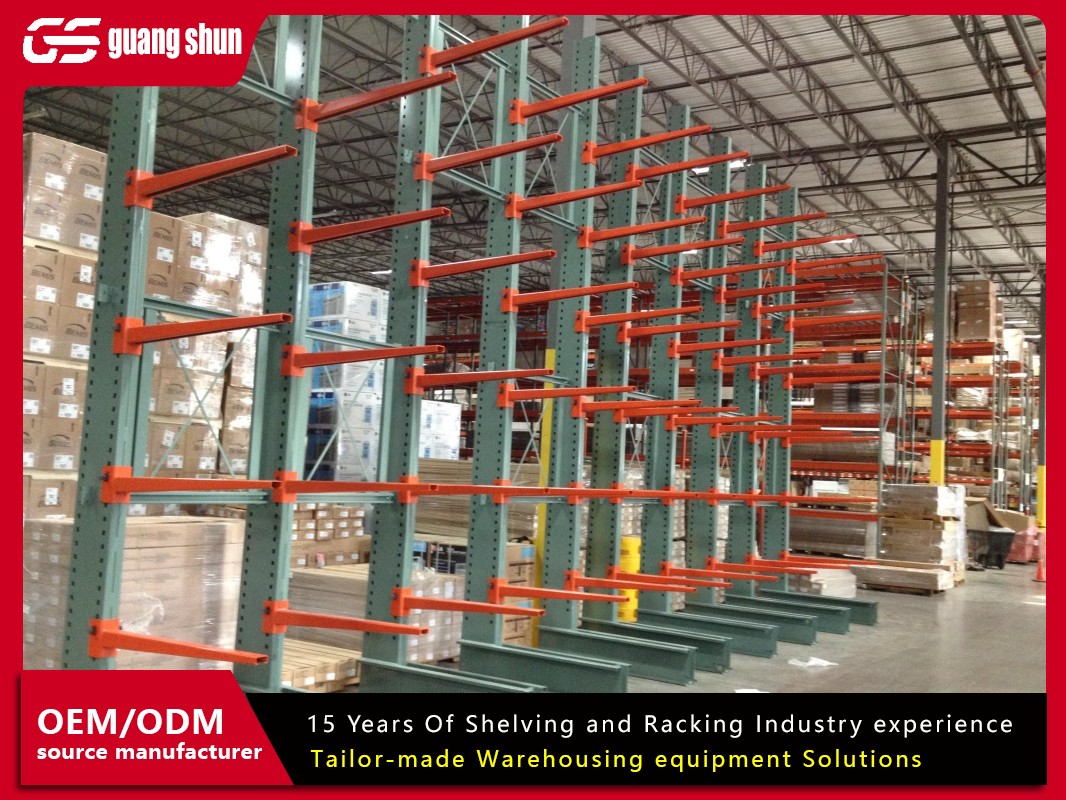
Cantilever racking is designed for long, bulky items such as steel beams,
pipes, lumber, and furniture components. The system features a central column
with horizontal arms extending outward on one or both sides. Loads are supported
along the entire length of the arm, eliminating the need for pallets and
enabling direct loading by overhead cranes or specialized forklift
attachments.
Storage density: Moderate to high for long goods, with
customizable arm lengths and heights.
Loading/unloading speed: Variable, depending on handling
equipment.
Capital cost: Moderately high, with pricing based on arm
length and load capacity.
Best application: Construction material storage, steel
service centers, and industrial manufacturing facilities.
When evaluating configuration options, warehouse managers must consider the
trade-off between storage density and accessibility. High-density systems reduce
floor-space requirements but may increase retrieval times and labor costs. A
comprehensive operational analysis, including SKU velocity data and order
profile patterns, provides the basis for configuration selection.
4. Industry-Specific Applications and Operational Demands
Different industries impose distinct operational requirements on storage
systems. The automotive sector, for example, requires Just-In-Time (JIT)
delivery capabilities with high-frequency, low-volume picking from rack systems.
Automotive parts suppliers typically deploy selective pallet racking with
integrated pick-to-light systems to achieve the necessary throughput rates.
E-commerce distribution centers face the challenge of enormous SKU
proliferation and order variability. These facilities increasingly adopt
automated storage and retrieval systems (AS/RS) integrated with industrial rack
structures. Mini-load cranes, shuttle systems, and autonomous mobile robots
(AMRs) operate within rack aisles, achieving pick rates exceeding 500 lines per
hour in optimal configurations.
Food and beverage warehouses operate under stringent hygiene and
temperature-control requirements. Cold storage facilities (maintaining -25°C to
+5°C) require rack systems designed for thermal cycling resistance and corrosion
protection. Stainless steel or galvanized steel components are specified for
environments with high humidity or washdown requirements. The operational costs
of refrigerated storage make every square meter of racking space
critical—drive-in and push-back systems are preferred for their high
density.
Pharmaceutical and healthcare logistics demand traceability and contamination
prevention. Industrial rack systems in these environments must accommodate
cleanroom protocols, with smooth surfaces that facilitate cleaning and minimize
particle accumulation. Seismic performance is particularly critical in
pharmaceutical storage, as product loss during earthquakes can result in supply
chain disruptions and regulatory non-compliance.
For heavy manufacturing facilities, including foundries and assembly plants,
the storage of raw materials (steel coils, casting forms, machinery components)
requires robust racking with high load capacities. Cantilever and heavy-duty
selective systems are common, with capacities exceeding 5,000 kg per beam level
in some applications.
Guangshun provides
engineered solutions for these diverse industry segments, offering customized
rack designs that address specific load requirements, environmental conditions,
and operational workflows. Their engineering team collaborates with facility
planners to optimize rack layouts for maximum throughput and safety
compliance.
5. Safety Standards, Structural Compliance, and Inspection Protocols
Safety compliance is non-negotiable in industrial storage operations.
Regulatory frameworks such as OSHA 1910.176 (handling materials) and ANSI MH16.1
(design, testing, and utilization of steel storage racks) establish minimum
requirements for rack construction and installation. Compliance with these
standards not only protects workers but also reduces liability exposure and
insurance premiums.
The ANSI MH16.1 standard covers all aspects of rack engineering,
including:
Material requirements: Minimum steel grades, yield
strength, and ductility.
Design loads: Dead loads, live loads, and impact
loads.
Structural analysis: Frame stability, beam-to-column
connections, and base plate design.
Seismic design: Provisions for seismic zones and required
lateral-force-resisting systems.
Testing requirements: Full-scale load testing and component
testing protocols.
In addition to design standards, routine inspection and maintenance programs
are essential for long-term safety. The RMI recommends visual inspections at
least annually, with more frequent inspections for facilities operating in
high-impact environments. Inspection checklists typically include:
Upright column integrity: Check for dents, bends, or
vertical alignment deviation exceeding 15 mm over the column height.
Beam condition: Inspect beam ends, connectors, and safety
locks for signs of wear or deformation.
Floor anchorage: Verify that anchor bolts are properly
torqued and that base plates are not lifted or corroded.
Load placards: Ensure placards are legible and match the
current configuration and load data.
Seismic restraints: Check cross-aisle bracing and wall ties
for secure attachment and tension.
Facilities should maintain inspection logs documenting the date, findings,
and corrective actions taken. For serious structural damage—such as cracked
welds, severely bent columns, or failed beam connections—immediate load removal
and professional structural assessment are required before the rack is returned
to service.
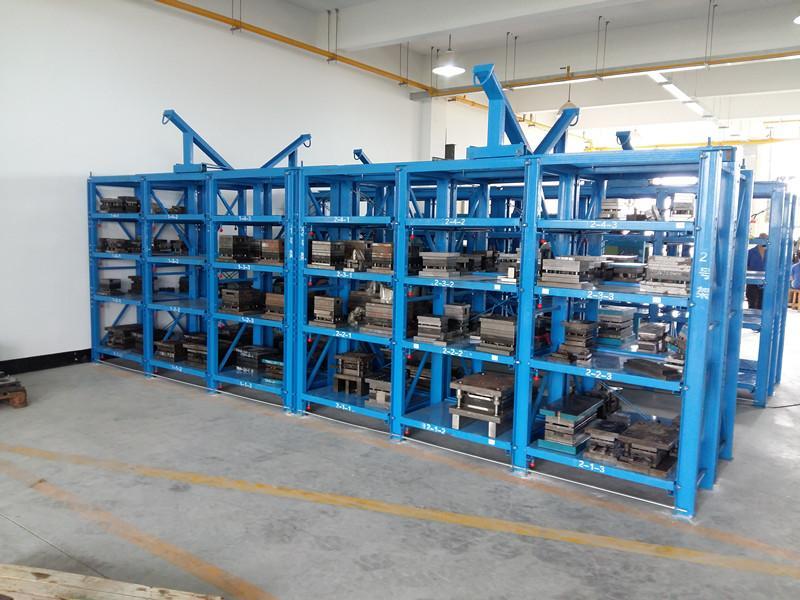
Guangshun offers
inspection and rack repair services, supporting warehouse operators with ongoing
maintenance programs that extend system life and ensure continuous compliance.
Their field service technicians are trained to identify structural issues before
they become critical, providing cost-effective repair solutions rather than full
replacement.
6. Maintenance Strategies and System Lifecycle
Industrial rack systems are long-term capital investments with typical
service lives of 20 to 30 years when properly maintained. However, operational
demands—particularly forklift traffic and load variations—can accelerate wear
and structural degradation. A proactive maintenance strategy reduces unplanned
downtime and prevents catastrophic failures.
Preventive maintenance includes regular cleaning of rack surfaces to remove
debris and corrosion-inducing contaminants, particularly in food processing or
chemical storage environments. Lubrication of moving parts (such as push-back
cart wheels and flow track rollers) maintains system responsiveness and prevents
binding. Electrical systems integrated with racking—including pick-to-light
devices and automated shuttle controls—require periodic calibration and firmware
updates.
Predictive maintenance uses sensor-based monitoring to detect structural
anomalies before they become visible. Strain gauges, accelerometers, and
displacement sensors can be installed on critical rack components to track
stress patterns over time. When combined with IoT analytics platforms, these
sensors provide early warnings of fatigue, overload, or alignment shift—enabling
condition-based maintenance scheduling rather than fixed-interval service.
Lifecycle cost analysis reveals that preventive maintenance typically costs
10% to 20% of the replacement value of a rack system over a 20-year horizon. By
contrast, reactive maintenance—responding to failures after they occur—can
exceed 50% of replacement value, not including the cost of operational
disruption and product damage. The economic case for structured maintenance is
compelling.
At end-of-life, industrial rack systems can be decommissioned and recycled.
Steel components have high scrap value, and many manufacturers offer take-back
programs for retired racking. Structural steel recycling reduces environmental
impact and recovers a portion of the original capital investment.
7. Economic Analysis: ROI, Total Cost of Ownership, and Operational
Efficiency
Investment in industrial
warehouse shelving must be justified through rigorous financial analysis.
Total Cost of Ownership (TCO) includes the initial capital expenditure,
installation costs, ongoing maintenance, and operational costs associated with
inventory management and labor. A comprehensive TCO assessment enables informed
decision-making that balances upfront investment against long-term operational
savings.
Capital expenditure components include:
Rack hardware: Upright frames, beams, and accessories
(decking, dividers, load stabilizers).
Installation labor: Site preparation, rack assembly, and
anchoring.
Engineering fees: Structural analysis, seismic compliance,
and permit documentation.
Material handling equipment: Forklifts, shuttles, or AS/RS
integration required for the selected configuration.
Operational cost savings arise from increased storage density, reduced travel
distances, and improved inventory turnover. For example, converting from
selective racking to drive-in racking can increase storage capacity by 40% to
60% within the same floor area, deferring the need for facility expansion. The
cost of new warehouse construction ($150–$300 per square foot) is substantially
higher than the incremental cost of high-density racking systems.
Labor productivity improvements from optimized rack configuration are equally
significant. Aisle width reduction, shorter travel paths, and better pick-face
organization reduce order fulfillment time by 15% to 30%, according to industry
benchmarks. For a 100-person warehouse operation, this translates to annual
labor savings of $300,000 to $600,000—a figure that justifies premium rack
investments with payback periods under 18 months.
Warehouse management system (WMS) integration adds further efficiency by
providing real-time inventory location data, optimizing pick routes, and
managing slotting strategies. Modern rack systems are designed with barcode and
RFID compatibility, facilitating automated inventory tracking and cycle
counting. Data-driven slotting—placing high-velocity items in the most
accessible rack positions—reduces travel time and improves overall
throughput.
Guangshun provides
ROI modeling as part of their consulting services, helping warehouse operators
quantify the financial impact of different racking configurations. Their
modeling tools incorporate labor rates, facility costs, inventory velocity data,
and capital costs to project payback periods and net present value for each
design option.
Frequently Asked Questions
Q1: What is the maximum load capacity for industrial warehouse shelving
systems?
A1: Load capacity varies significantly by configuration and
engineering specifications. Selective pallet racking typically supports 1,000 to
3,000 kg per beam level, while heavy-duty systems can handle 5,000 kg or more
per level. Cantilever racking arms support loads ranging from 500 to 5,000 kg
depending on arm length and column spacing. Always refer to the manufacturer's
load placard for the specific system installed—never exceed the rated capacity.
Engineering calculations must consider both static loads and dynamic impact
factors, with a minimum safety factor of 1.5 incorporated into the design.
Q2: How often should industrial warehouse shelving systems be
inspected?
A2: The RMI recommends visual inspections at least annually,
with more frequent inspections—quarterly or even monthly—for facilities with
high forklift traffic or severe operating conditions. Comprehensive engineering
inspections should be performed every 5 years or after any significant
structural impact or modification. Inspection logs should be maintained as part
of the facility's safety documentation. Signs of deformation, damaged beam
connectors, missing safety pins, or misaligned uprights warrant immediate
attention and professional assessment.
Q3: What are the most space-efficient industrial warehouse shelving
configurations?
A3: Drive-in and drive-through racking systems achieve the
highest storage density, utilizing 60% to 75% of available warehouse volume.
Push-back racking offers comparable density with improved selectivity, while
pallet flow systems provide FIFO inventory rotation with high density. The
optimal configuration depends on the facility's inventory profile—high SKU
diversity favors selective racking (35%–45% density), while bulk storage of
low-SKU items benefits from high-density drive-in systems. Automated storage and
retrieval systems can achieve densities exceeding 80% but require substantial
capital investment.
Q4: What safety certifications should industrial warehouse shelving systems
have?
A4: Certified systems should comply with ANSI MH16.1 (USA),
AS 4084 (Australia), EN 15512 (Europe), or equivalent national standards. Look
for third-party testing reports from accredited laboratories verifying load
capacity and structural performance. Seismic certifications per ASCE 7 or local
building codes are essential for facilities in earthquake-prone regions. The
manufacturer should provide documentation of compliance with all applicable
regulations, including OSHA 1910.176 for material handling safety. Many
facilities also require UL certification for electrical components integrated
into rack systems.
Q5: How does seismic activity affect industrial warehouse shelving
design?
A5: Seismic design is a critical engineering consideration
for facilities located in areas with moderate to high seismic risk. Industrial
rack systems must be designed to withstand lateral forces generated during
earthquakes, with provisions including cross-aisle bracing, wall ties, base
isolation, and reinforced column connections. The ANSI MH16.1 standard provides
specific seismic design requirements, including the calculation of seismic
design forces based on site spectral acceleration coefficients and building
response modification factors. Retrofitting existing racks with seismic
reinforcements can be costly, so seismic considerations are best addressed
during the initial design phase. Professional structural engineers should
perform seismic analysis for any facility subject to seismic design
requirements.
Q6: What is the expected service life of industrial warehouse shelving
systems?
A6: With proper maintenance and normal operating conditions,
industrial rack systems have service lives of 20 to 30 years. Factors that
influence longevity include corrosion exposure, impact frequency, load cycling
intensity, and environmental conditions. Cold storage environments can
accelerate corrosion if proper coating systems are not specified. Regular
maintenance, timely repairs, and avoidance of overload extend system life. Some
systems remain in service for 40 years or more with diligent care, although
component replacement—particularly beams and connectors—may be required at 15–20
year intervals.