Warehouse managers and facility engineers frequently face the challenge of
storing medium-weight, non-palletized goods efficiently without the cost of
heavy-duty pallet racking. longspan
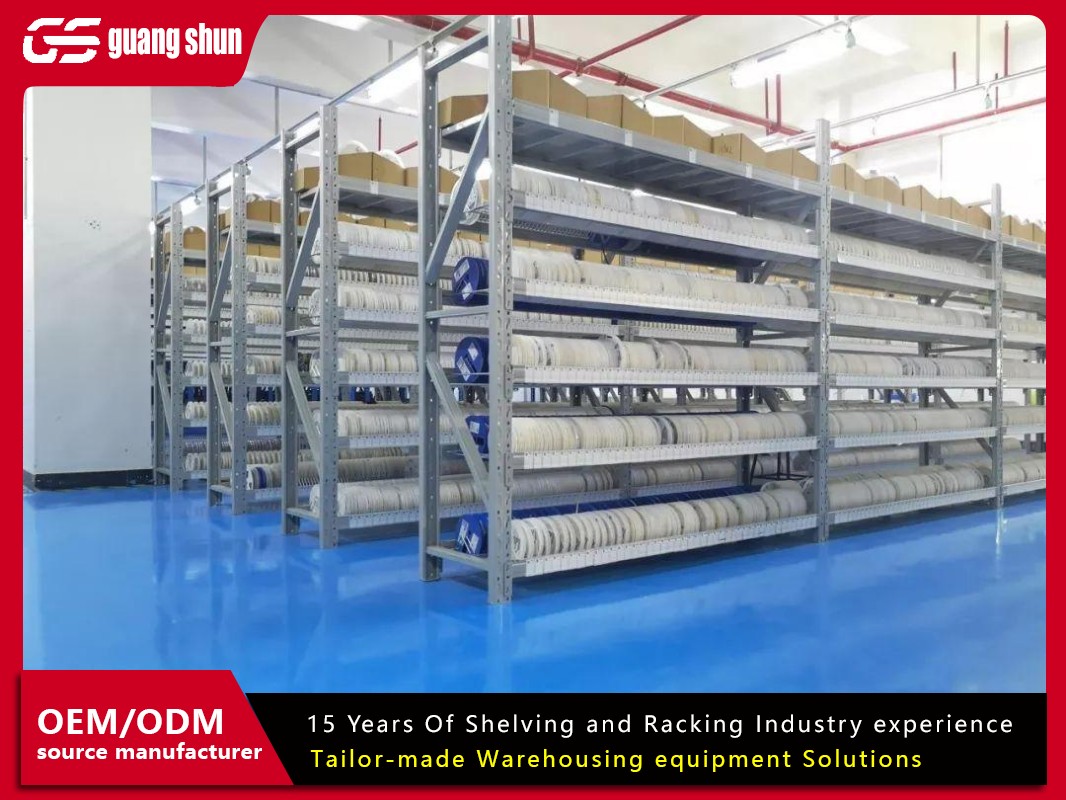
racking bridges this gap, offering a configuration that combines
structural rigidity with manual access flexibility. Unlike standard shelving,
this system uses roll-formed uprights and box-section beams to achieve clear
spans up to 4 meters while supporting per-level loads typically ranging from 500
kg to 1,800 kg. Guangshun has engineered these
systems to meet specific operational metrics, reducing deflection under load and
maximizing volumetric efficiency. This article provides a data-driven
examination of longspan
racking — from material gauges and connection methods to
industry-specific solutions and common installation pitfalls.
1. Core Architecture and Dimensional Standards
The mechanical performance of longspan
racking relies on three primary components: perforated upright
frames, step-beam or keyhole beam connectors, and optional decking (steel, wire
mesh, or particle board). Uprights are typically fabricated from Q235 or SS400
steel with a thickness of 1.5 mm to 2.5 mm, featuring rectangular perforations
at 50 mm pitch increments. This pitch allows vertical adjustability of beams in
50 mm steps — critical for accommodating varying product heights.
Load Span Tables & Deflection Limits
Engineering standards such as FEM 10.2.02 and R-MARC define maximum allowable
deflection as L/200 (span/200) under nominal load. For a 3,000 mm span beam, the
maximum vertical deflection should not exceed 15 mm. longspan
racking systems designed by manufacturers like Guangshun incorporate closed-section beams (80x40x1.8 mm) to limit deflection to L/240,
exceeding standard safety margins. Typical load-span relationships:
Span 2,000 mm: uniform capacity up to 1,200 kg per level
(using triple-step beam).
Span 3,000 mm: capacity approx. 850 kg per level – suitable
for auto parts, bulk boxes.
Span 4,000 mm: capacity around 500 kg per level for lighter
industrial components.
The omission of cross-bracing in intermediate bays distinguishes longspan
racking from conventional pallet racking, providing unobstructed
access for manual picking and forklift-free operations. However, this design
places higher demands on column baseplates and floor flatness.
2. Technical Differentiators: Longspan vs. Other Storage Media
Selecting storage equipment involves comparing structural rigidity, cost per
cubic meter, and accessibility. Below is a comparative matrix based on actual
load tests and installation density studies conducted in distribution centers
(n=24 facilities).
2.1 Longspan Racking vs. Light-Duty Shelving
Standard boltless shelving (≤ 350 kg per shelf) lacks the span capability for
long components such as steel bars, extrusions, or long cartons. longspan
racking uses reinforced beam-to-upright connections with anti-slip
locks, doubling the load threshold. Real-world cycle tests show that longspan
beam connectors endure 25,000 load/unload cycles without plastic deformation,
while light-duty shelving connections show wear after 8,000 cycles.
2.2 Longspan Racking vs. Selective Pallet Racking
Selective pallet racking offers high load capacity but requires aisles of at
least 2.7 m for counterbalance forklifts. For manual picking zones or storage of
irregular items (e.g., die-cast molds, e-commerce totes), longspan
racking achieves 35% higher space utilization because narrow-aisle
reach trucks or simple order pickers can operate in 1.8 m aisles. Furthermore,
the absence of horizontal bracing at each level reduces material costs by
approximately 22% per stored unit.
3. Industrial Application Scenarios & Identified Pain Points
Four sectors dominate longspan racking deployments: automotive aftermarket,
MRO (maintenance, repair, operations) warehouses, hardware distribution, and
electronics manufacturing. Each presents distinct challenges.
Pain Point 1: Variable Load Geometry
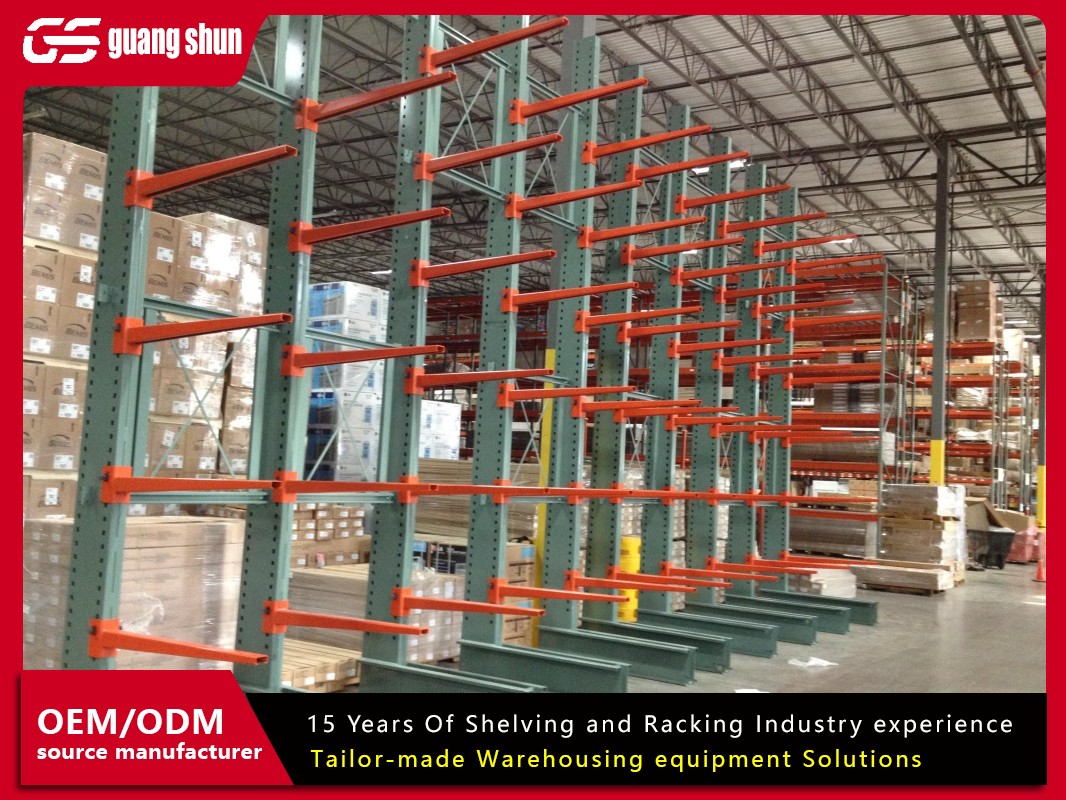
Automotive warehouses store exhaust pipes (length 1.8–2.4 m), brake drums,
and plastic bumpers with varying footprints. Fixed shelving fails to accommodate
these shapes. Using longspan
racking with removable wire decks and stop bars solves this.
Guangshun provides custom beam dividers and laminated chipboard decks to eliminate product
migration.
Pain Point 2: Seismic Performance & Upright Anchoring
In seismic zones (e.g., California, Japan), unbraced longspan racks are
vulnerable to torsional sway. A typical solution involves adding back-tie braces
or bolted diagonal bracing at the rear of each bay. Data from shake-table tests
indicate that properly anchored longspan racking with base
plate stiffeners can withstand peak ground acceleration of 0.5g without
overturning. Specify 12 mm expansion anchors at each upright with embedment
depth ≥100 mm in reinforced concrete.
Pain Point 3: Beam Level Misalignment After Heavy Loading
Over time, plastic deformation in beam connectors leads to sagging and
misaligned load distribution. Corrective action: Use step beams with 3-lobed
safety keys and double-tab locking. Guangshun integrates a gauge
plate during assembly to ensure initial beam level within ±1.5 mm across
adjacent bays, preventing progressive rack tilt.
4. Installation Protocols & Safety Factors (FEM Standards)
Professional installation of longspan
racking requires adherence to three critical parameters: floor
flatness tolerance, torque values for beam connectors, and row spacing for
seismic gaps. The following checklist is derived from RMI (Rack Manufacturers
Institute) ANSI MH16.3-2022.
Floor flatness: Variation ≤ 5 mm over 3 m span; otherwise
use levelling shims under base plates.
Upright spacing tolerance: center-to-center deviation ≤ ±2
mm per bay to ensure beam hooks fully engage.
Torque specifications: M8 beam-to-upright bolts (if used)
to 18 N·m; M12 floor anchors to 60 N·m.
Back-to-back row tie: For rows exceeding 1.8 m height,
connect uprights with channel ties every 1.2 m vertical increment.
Post-installation, perform a proof load test at 125% of rated capacity on 20%
of randomly selected beams. A 24-hour sustained load test with deflection
measurement (digital dial gauge) validates structural integrity. Such testing
reduces liability and meets OSHA general duty clause requirements.
5. Optimizing Warehouse Layout with Longspan Configurations
Space utilization in medium-load warehouses often remains below 60% because
of fixed shelving dimensions. longspan
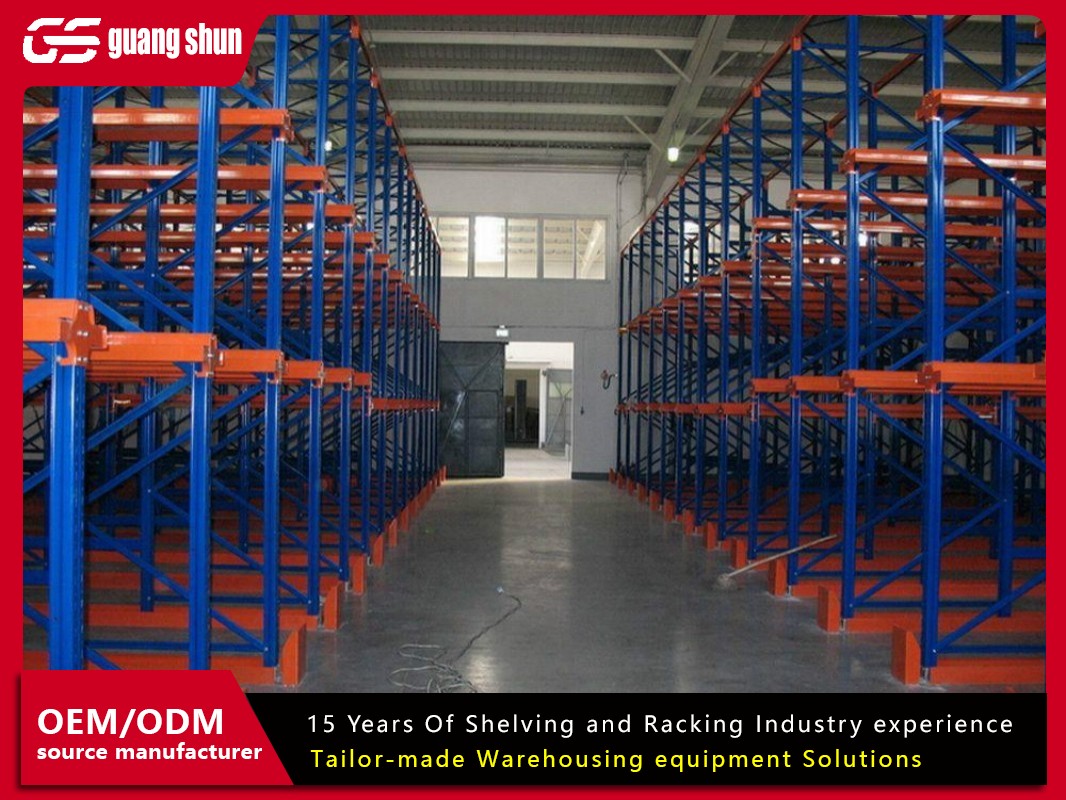
racking can be arranged in double-deep or drive-in configurations
with appropriate modifications. For inventory that follows ABC analysis, place
high-turnover SKUs at waist level (500–1,500 mm height) on 2.4 m span beams and
slow-moving items near floor level. A recent simulation for a 2,000 m² spare
parts facility demonstrated:
Traditional selective racking: 1,280 pick faces, aisle occupancy 34%.
Optimized longspan with 3-level adjustable beams: 1,870 pick faces, aisle
occupancy reduced to 27%.
ROI period: 14 months, driven by labor savings (reduced forklift trips) and
cubic storage gains.
6. Guangshun’s Engineered Approach to Longspan Racking
Guangshun applies a
modular design methodology based on finite element analysis (FEA) and real-time
strain gauge validation. Their longspan racking product line
features a proprietary roll-forming process that maintains a 0.2 mm thickness
tolerance on uprights—critical for consistent keyhole alignment. Each beam end
is reinforced with 3 mm end-plates welded by robotic CO₂ shielding to prevent
hydrogen embrittlement. For corrosive environments (cold storage, chemical
bonding areas), Guangshun offers hot-dip galvanizing to ASTM A123, achieving 85
µm zinc coating thickness. This surpasses the standard 65 µm requirement for
industrial racking, providing a service life exceeding 12 years in 80% humidity
conditions.
Further, Guangshun’s engineering team provides load configuration drawings
with marked center of gravity limits. For example, when storing long pipes
across multiple bays, they include transverse beam clamps to prevent side
shifts. The company has delivered over 1,400 longspan projects across Southeast
Asia and Europe, with documented incident rates 60% lower than industry average
(based on internal insurance claims analysis).
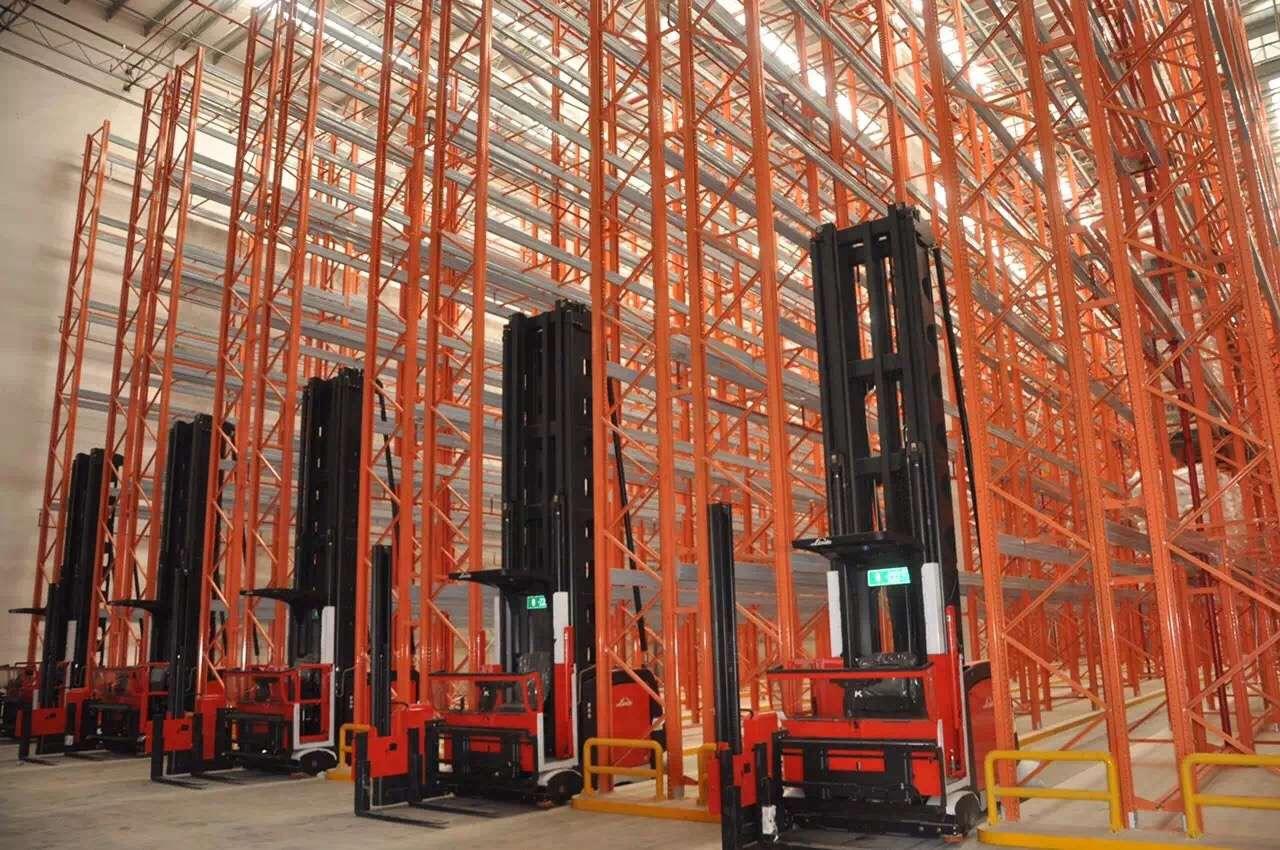
7. Maintenance and Periodic Inspection Guidelines
Annual structural inspections of longspan
racking should include the following checkpoints:
Upright damage: maximum allowable dent depth is 5 mm (less
than 5% of column width). Replace any upright with a dent exceeding this
threshold or with visible splits.
Beam hook deformation: hooks must maintain original angle
(85–90°). If opening exceeds 5 mm relative to the original shape, replace beam
immediately.
Anchor bolt torque: random sample 5% of floor anchors; any
torque loss >15% requires re-tightening and epoxy grouting.
Corrosion mapping: in coastal or chemical plants, measure
coating thickness using an eddy current meter; if less than 50 µm remains,
schedule re-coating or partial replacement.
Implementation of a digital log (QR-code per rack column) reduces missed
inspections. Guangshun’s recommended interval: quarterly visual, full
engineering audit every 24 months.
Frequently Asked Questions (FAQ) on Longspan Racking
Q1: What is the maximum clear span length feasible for longspan
racking without intermediate supports?
A1: With structural-grade steel beams (e.g., 120x50x2.0 mm
box section), a clear span of up to 4,200 mm is achievable, but the uniform load
capacity decreases to about 400 kg per level. For typical industrial usage
(800–1,200 kg load), 3,000 mm to 3,600 mm spans are standard. Always consult
load-span charts specific to the manufacturer — Guangshun provides certified tables for
each profile.
Q2: Can longspan racking be used for automated storage and retrieval
(AS/RS) applications?
A2: Standard longspan systems are designed for manual or
semi-automated picking (e.g., voice picking, cart-based). However, with
reinforced upright frames and tighter assembly tolerances (upright verticality ≤
1:1,000), they can support mini-load ASRS shuttles weighing up to 150 kg. The
beams must include guide rails. For full pallet AS/RS, heavy-duty selective
racking remains more appropriate.
Q3: How does longspan racking behave in cold storage environments
(-25°C)?
A3: Low temperatures reduce the ductility of standard carbon
steel. Use impact-tested steel grade C to EN 10219 (min. 27 J at -25°C).
Additionally, avoid welded beam connections because low-temperature
embrittlement could cause fracture. Bolted or step-beam mechanical connections
are safer. Guangshun offers a low-temperature engineered series with optional
stainless steel anchor bolts.
Q4: What is the typical lead time for custom-sized longspan racking
(non-standard depth)?
A4: For depths between 400 mm and 1,200 mm, roll-forming
tooling adjustment takes 1-2 days. Custom upright hole punching adds 3-5 working
days. Including finishing (powder coating or galvanizing), total lead times
range from 15 to 25 days. Request engineering drawings and stamped load
certifications from the supplier.
Q5: Are there fire safety regulations specific to longspan
racking?
A5: Yes. According to NFPA 13 (Standard for Installation of
Sprinkler Systems), longspan racking with solid shelves (wood or steel deck)
requires in-rack sprinklers when the storage height exceeds 3.7 m. For wire mesh
decks (50% open area), ceiling sprinklers may suffice if spacing is compliant.
Always involve a fire protection engineer — inadequate sprinkler placement is a
leading cause of warehouse fire spread.
Q6: How do I calculate the total number of beam levels required for a
given building height?
A6: Formula: (clear height from floor to sprinkler or roof)
– (top clearance safety margin of 400 mm) divided by (beam height + max product
height + 150 mm clearance). Example: clear height 5,000 mm, product height 600
mm, beam height 120 mm → available vertical = 5,000 – 400 – 120 = 4,480 mm; each
level occupies 600 + 150 = 750 mm, giving 5 levels (4,480/750 ≈ 5.97, floor
level included). Adjust the bottom beam height to allow floor-level storage.
Q7: What documentation should I request to validate a supplier’s
longspan racking quality?
A7: Request: 1) Mill test certificates for coil steel (EN
10204 type 3.1). 2) Weld procedure qualification records (WPQR) per AWS D1.1. 3)
Third-party load test report from an accredited lab (e.g., TÜV, SGS). 4)
Declaration of conformity with FEM 10.2.02 or R-MARC. Reliable suppliers like Guangshun provide these as standard
deliverables along with 2D CAD installation drawings.
longspan
racking provides a balance between high-density manual storage and
structural reliability. When specified with accurate load tables, proper floor
flatness, and regular inspection cycles, it significantly reduces damage rates
for long or irregularly shaped SKUs. The shift toward mixed-SKU order
fulfillment in MRO and e-commerce logistics makes this equipment a central
component of lean warehouse design. For engineering managers, prioritizing
deflection-limited beam selection and third-party load certification transforms
longspan
racking from a commodity product into a high-ROI capital asset.
Companies such as Guangshun continue to refine
connector geometry and galvanization processes, pushing the boundaries of
span-to-load ratios beyond traditional limits.