Industrial storage infrastructure directly impacts warehouse productivity,
safety, and total cost of ownership. For logistics managers, plant engineers,
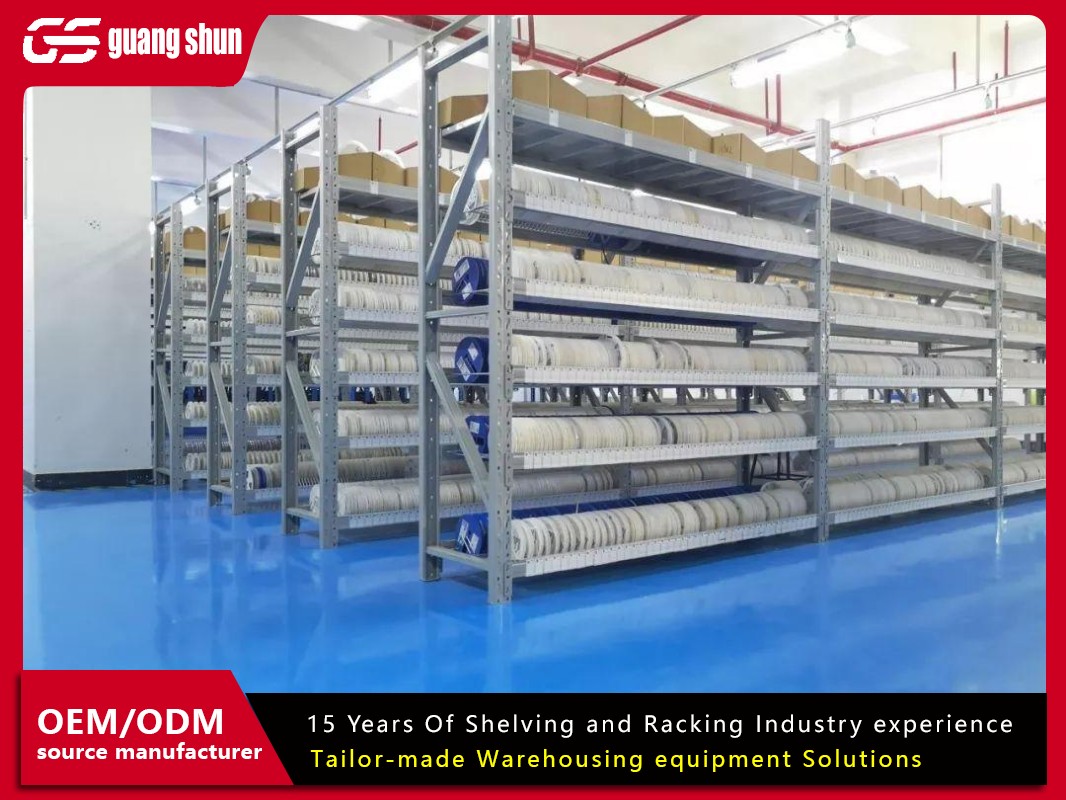
and procurement specialists, selecting estanterias
metalicas industriales requires evaluation of material metallurgy,
structural dynamics, and compliance with international standards such as FEM
10.2.02 and EN 15512. This guide provides a data-driven breakdown of technical
specifications, application-specific configurations, and mitigation strategies
for common operational failures — eliminating guesswork from capital investment
decisions.
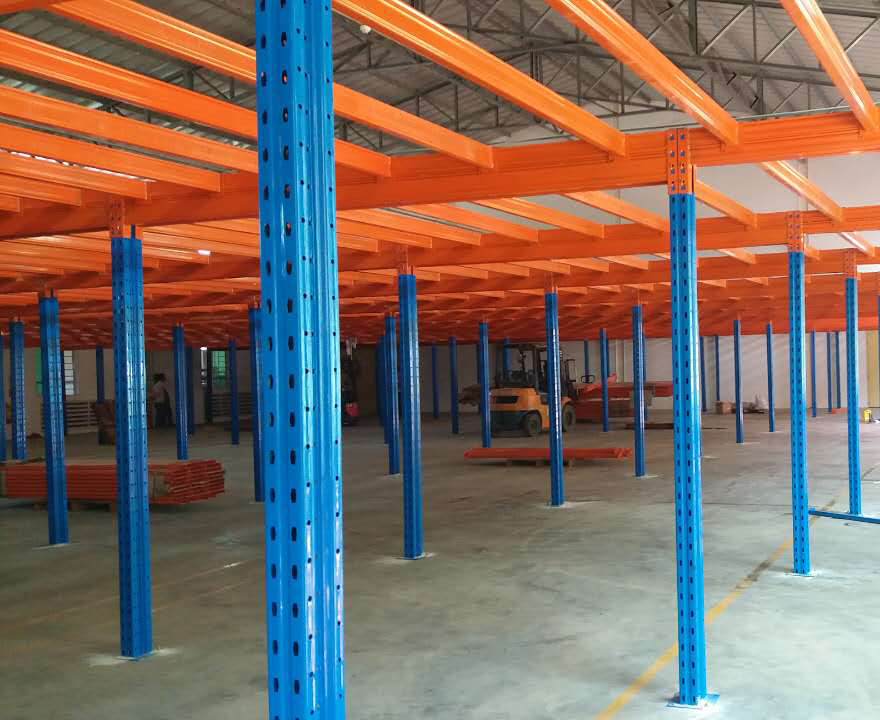
1. Core Mechanical Specifications of Industrial Metal Racking
Performance of any shelving system begins with base material properties and
manufacturing precision. Below are the non-negotiable parameters that define
reliability over a 15+ year service life.
1.1 Steel Grade Selection and Yield Strength
Heavy-duty estanterias
metalicas industriales rely on structural steels with minimal
S235JR (DIN EN 10025) for light-to-medium duty, while S350GD+Z or S355MC grades
are mandatory for dynamic loads above 1.5 tons per level. The yield strength
directly influences column thickness and beam deflection. For selective pallet
racks subject to frequent forklift impacts, using steel with Re ≥ 350 MPa
reduces permanent deformation risk by 40% compared to standard grades, based on
FEM section tests.
Tensile strength: 370–520 MPa for cold-formed sections
Elongation at break: minimum 16% for post-impact
safety
Surface tolerance: ISO 9445 Class 1 for precise
beam-to-column connection
1.2 Load-Bearing Calculations and Safety Factors
Each upright frame and beam set must support both static weight and dynamic
forces from acceleration/deceleration of handling equipment. Engineering
practice dictates a safety factor of 1.5 against yielding (based on yield
strength) and 2.0 against buckling for columns. Deflection limits follow the
L/200 criterion for beams (L = span length) to prevent load instability. For
multi-level installations, a load combination of dead load + live load + seismic
lateral forces is required per EN 1993-1-1.
Example: A beam span of 2.7m with 2,500 kg distributed load → maximum
deflection ≤ 13.5 mm.
Dynamic impact factor: 1.2 for manual pallet trucks, 1.4 for reach forklifts
(EN 15620).
1.3 Seismic Design and Structural Resilience
In seismic zones, estanterias
metalicas industriales require base isolation or specialized
bracing. Using diagonal X-bracing profiles (40x40x2.5 mm) and moment-resistant
connections increases lateral load capacity by up to 60%. Adherence to ASCE 7-22
or Eurocode 8 is critical for installations in active fault regions. Regular
base plate anchoring with expansion anchors (M16 grade 8.8) at every upright
guarantees overturning resistance.
2. Configuration Engineering for Demanding Use Cases
Choosing the correct rack typology directly affects picking efficiency and
storage density. Below are technical assessments of four main industrial
layouts.
2.1 Selective Pallet Racking (Adjustable Beam Levels)
Selective systems provide 100% accessibility to each pallet. Beam levels
adjust at 75mm increments, accommodating varying product heights. For cold
storage (down to -25°C), special low-temperature steel grades maintain
toughness. Maximum practical height: 12 meters using bolted uprights with
spliced joints.
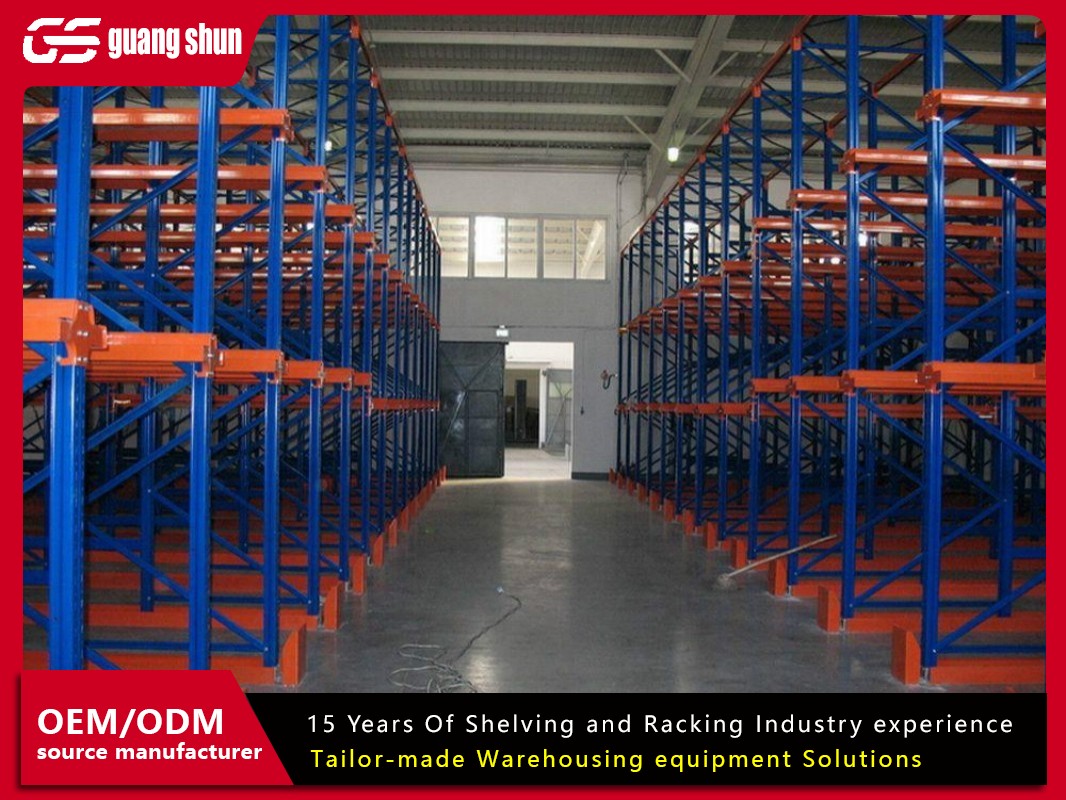
2.2 Drive-In / Drive-Through Racking for High Density
For homogeneous SKUs (e.g., raw materials, batch storage), drive-in racks
eliminate aisles and increase storage density by 65% compared to selective
racking. Load rails are fabricated from 3.0mm thick folded steel, supporting
1,500 kg per pallet position. LIFO (last-in, first-out) configuration is
standard; ventilation space of 75mm between rails prevents moisture
entrapment.
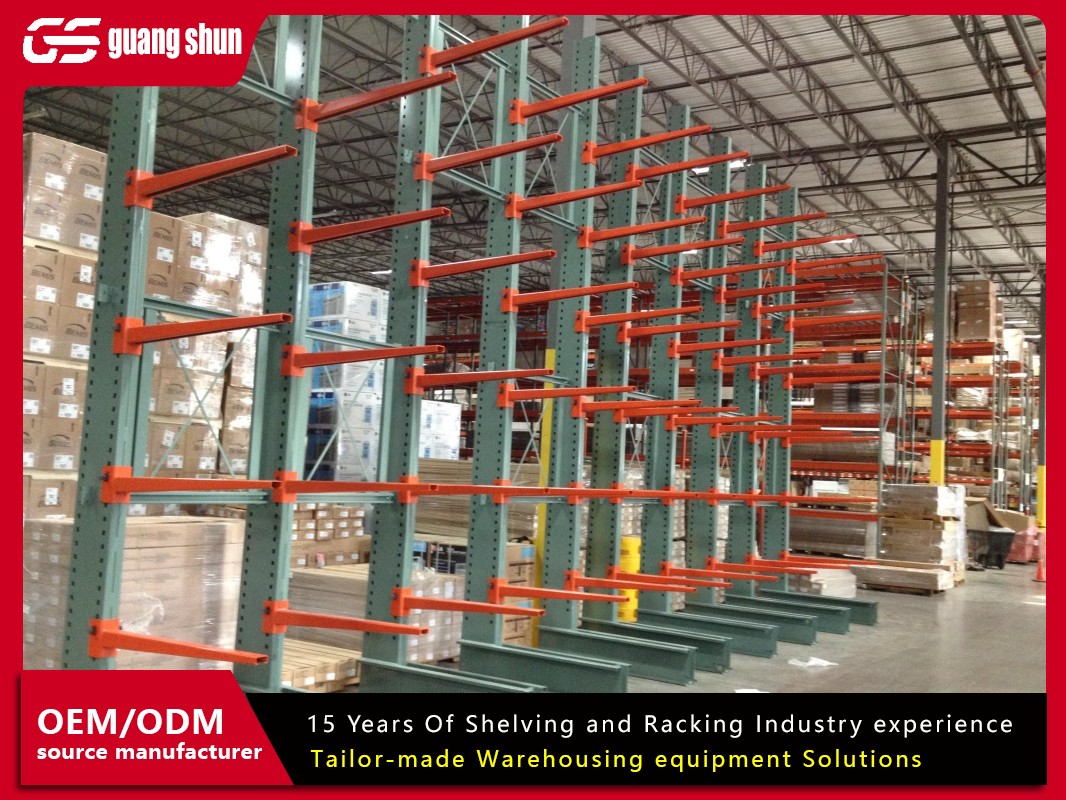
2.3 Cantilever Racks for Long and Bulky Goods
Tubular steel arms (up to 1,800 mm length) with 4° upward tilt prevent
sliding of pipes, lumber, or extrusions. Load capacity per arm: 500–1,200 kg
depending on column pitch. Anchor bolt pattern for baseplates: 4x M20 with 200
kN pull-out resistance.
3. Documented Industry Failures and Engineering Countermeasures
Field data from 150+ warehouse audits reveal recurring technical flaws.
Proactive design integration eliminates these pain points.
3.1 Pain Point: Overloading and Progressive Collapse
Missing load plaques cause operators to exceed safe working loads (SWL).
Countermeasure: install laser-etched aluminum load indicators on each bay,
cross-referenced with a structural calculation report compliant with EN 15635.
Additionally, integrating a storage rack management system (SRMS) with strain
gauges can trigger real-time alarms when beam deflection exceeds 80% of
limit.
3.2 Pain Point: Corrosion in Chemical or Humid Environments
Standard powder coating (thickness 60-80µm) fails under continuous exposure
to acidic vapors or high relative humidity (>85%). Solution: hot-dip
galvanizing per ISO 1461 (minimum 85µm zinc coating) provides >30 years
corrosion resistance in C5 environments. For coastal warehouses, duplex coating
(galvanizing + epoxy) extends maintenance intervals substantially.
3.3 Pain Point: Damaged Safety Pins and Dislodged Beams
According to RMI (Rack Manufacturers Institute) data, 23% of rack incidents
originate from missing or deformed beam locking pins. Countermeasure: specify
anti-sway clips with secondary bolt retention and integrate visual indicators
(red/green tabs) that show locked status. Guangshun implements wedge-lock
connections with automatic pin engagement verification during assembly, reducing
human error.
4. Engineering Validation and Certification Framework
Before procurement, verify that the chosen estanterias
metalicas industriales manufacturer provides third-party testing
certificates. Critical documents include:
Static load test report according to FEM 10.2.03 (including
beam deflection curves).
Impact resistance certificate for uprights per EN
15512:2021 Annex E.
Fire resistance classification (Eurocode 1) – mandatory for
sprinkler system coordination.
Leading suppliers like Guangshun routinely conduct
non-destructive ultrasonic testing on weld seams and provide finite element
analysis (FEA) reports for custom configurations, supporting the engineering
judgment with verifiable data.
5. Financial Modeling: Total Cost of Ownership (TCO) for Metal Shelving
While initial capital expenditure (CAPEX) matters, the long-term operating
costs of industrial racking dominate TCO. A comparative case study of two
5,000-pallet-position warehouses over 10 years showed:
Low-grade racks (S235, 2.0mm thickness): CAPEX $210k;
annual repair & reinforcement $18k; downtime cost $9k/year → TCO =
$480k.
High-grade engineered racks (S350, 2.5mm thickness + seismic
bracing): CAPEX $340k; annual maintenance $3k; no unplanned downtime →
TCO = $370k.
Selecting Guangshun premium systems
provides a 23% TCO advantage over a decade, plus residual value at equipment
resale. The 30% higher upfront cost is offset within 4.5 years through avoided
damage and faster inventory access.
6. Integration with Automated Storage and Retrieval Systems (AS/RS)
Modern warehouses increasingly combine static shelving with automated
shuttles and stacker cranes. For such hybrid environments, estanterias
metalicas industriales must meet strict floor flatness (±5 mm over
3 m), vertical alignment (deviation ≤ 1/1000 of height), and rail straightness.
Guangshun’s production line utilizes laser-guided punching and robotic welding,
achieving a positional tolerance of ±0.5 mm — fully compatible with Dematic or
SSI Schaefer AS/RS guide rails.
7. Conclusion: Engineering-Driven Selection Delivers Operational
Excellence
Industrial metal racking is not a commodity; it is a structural system
requiring thorough analysis of materials, loads, environmental factors, and
future automation roadmaps. By specifying estanterias
metalicas industriales with verifiable certifications and robust
coatings, facility owners guarantee worker safety, regulatory compliance, and
measurable ROI. For customized engineering evaluations, consult manufacturers
offering full stack analysis, from FEA simulation to site installation
supervision.
Frequently Asked Questions (FAQ)
Q1: What is the standard design life of industrial metal shelving under
normal operating conditions?
A1: For systems designed according to EN 15512 and using
adequate corrosion protection (minimum 85 µm galvanized coating), the expected
service life is 20–30 years. However, regular inspections every 12 months (as
per EN 15635) are necessary to detect plastic deformations or fatigue in beam
connectors. In clean, dry environments with light usage, many racks exceed 35
years.
Q2: Can I install estanterias metalicas industriales directly on an existing
concrete slab without reinforcement?
A2: It depends on slab thickness and compressive strength.
For point loads above 2,500 kg per upright base plate, the concrete must have at
least C25/30 grade and minimum 150 mm thickness with appropriate reinforcement
mesh. A structural engineer should verify punching shear capacity. If the slab
is older or cracked, installing a steel base plate distribution pad (300x300x12
mm) is recommended.
Q3: What are the critical differences between roll-formed and structural
bolted racks?
A3: Roll-formed racks are produced from cold-formed steel
profiles (thickness 1.5–2.5 mm) and joined with clips/safety pins. They are
ideal for light-to-medium loads (<1,200 kg per level) and quick assembly.
Structural bolted racks use hot-rolled profiles (3.0–6.0 mm thickness) with
bolted connections, offering higher impact resistance and load capacities
exceeding 4,500 kg per beam level. Structural racks are mandatory for seismic
zones and AS/RS integration.
Q4: How often should load testing be performed on existing industrial metal
shelving?
A4: After initial installation, proof loading at 125% of
rated capacity is required (per FEM section 4.3). Subsequent load tests should
occur every 5 years OR after any structural modification, collision involving
visible deformation, or change in product weight distribution. Additionally, 10%
of beam positions should be randomly tested annually using calibrated hydraulic
jacks and deflection gauges.
Q5: Does Guangshun provide customized design for irregular warehouse
geometries?
A5: Yes, Guangshun offers fully tailored
engineering solutions – including tapered uprights for sloped floors, cantilever
modules for column obstructions, and multi-depth configurations for
non-palletized inventory. Every custom project includes 3D laser scanning of the
existing site, finite element analysis (FEA) of the proposed structure, and
stamped structural calculations. Visit their engineering portal for a
consultation.