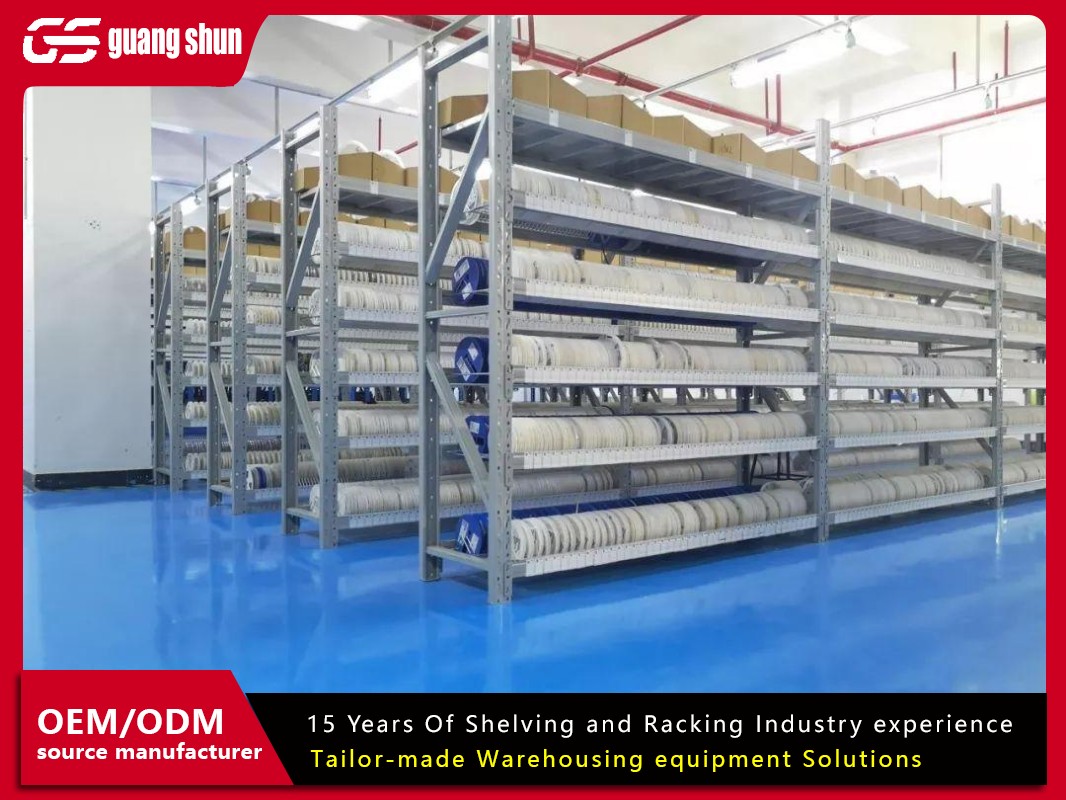
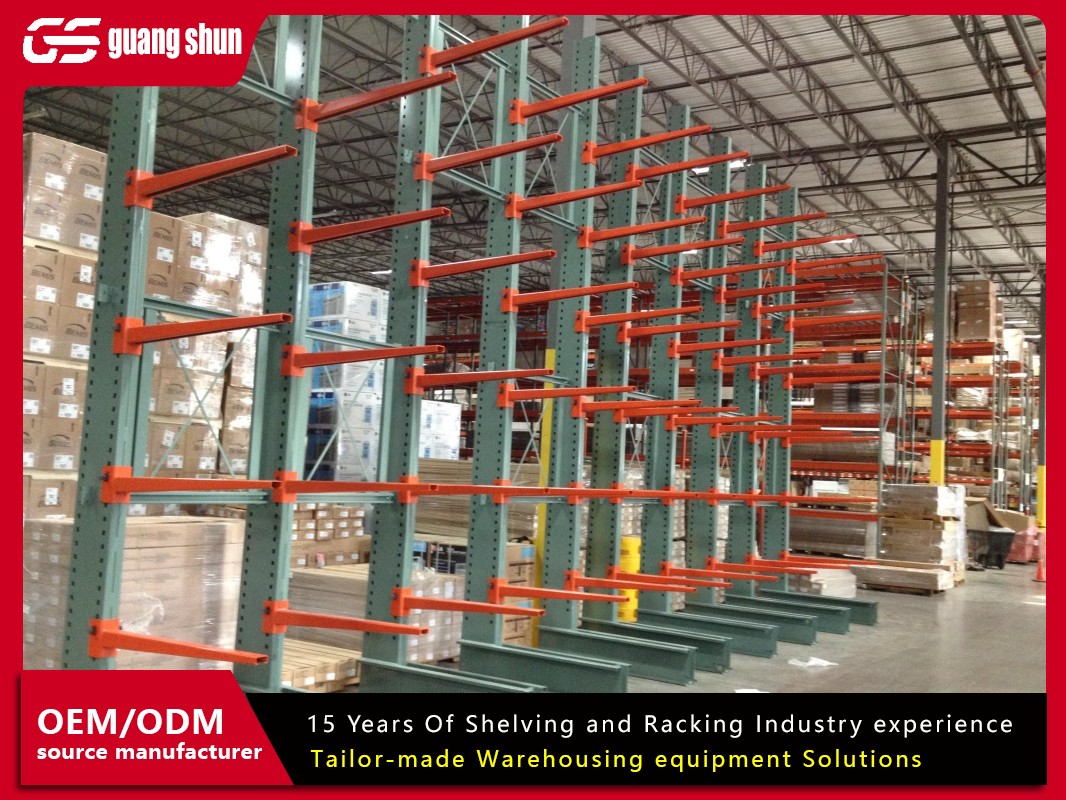
Warehouse operators and logistics engineers face continuous pressure to
increase storage density without compromising retrieval speed or safety. The
backbone of most high-throughput distribution centers remains pallet shelving — a
system where small deviations in beam pitch, upright gauge, or anchor
specification directly impact operational KPIs. This technical guide examines
the engineering principles, selection methodologies, and maintenance standards
that separate efficient, durable racking from costly, hazardous
installations.
1. Fundamentals of Pallet Shelving: Structural Mechanics and Load Paths
Every pallet shelving configuration transfers vertical and
horizontal loads through three primary components: upright frames (columns),
load beams, and horizontal/ diagonal braces. Industrial designs follow the RMI
(Rack Manufacturers Institute) or FEM 10.2.02 standards, which prescribe maximum
deflection limits — typically L/180 for beams under full rated load. For a beam
spanning 2,700 mm, this means elastic deflection cannot exceed 15 mm at
mid-span. Exceeding this limit accelerates weld fatigue and increases seismic
vulnerability.
Key mechanical parameters that dictate system selection:
Column base plate thickness – minimum 6 mm for seismic
zones, with four anchor bolts per upright.
Beam step load capacity – common ratings range from 1,500
kg to 5,000 kg per beam level, dependent on steel grade (typically S235JR or
S355MC).
Upright frame depth – 800 mm to 1,200 mm for standard
euro-pallets; deeper frames allow double-deep or drive-in configurations.
Safety lock engagement – all beams must incorporate
positive mechanical locks (safety clips or bolts) that prevent accidental
dislodgement under dynamic fork truck impacts.
Modern warehouses also require load testing certificates after assembly. A
static load test at 125% of rated capacity verifies that residual deformation
stays within 0.2% of the original dimension — a critical acceptance criterion
for third-party logistics providers.
2. Critical Selection Factors: Bay Sizes, Upright Frames, and Beam
Levels
Defining the optimal bay configuration requires analyzing your SKU pallet
mix, inventory turnover (ABC analysis), and fork truck turning radius. Standard
selective pallet shelving offers
100% accessibility but lower density. For warehouses handling 300+ SKUs with
mixed turnover rates, the following matrix guides decisions:
Selective (single-deep) – aisle width ≥ 2,700 mm
(counterbalance truck). Best for FIFO operations with high SKU velocity. Typical
storage density: 35–40% of floor space.
Double-deep – requires reach trucks (1,800 mm aisle).
Increases density by 30–40% but reduces accessibility to 50% of positions (LIFO
for each deep lane).
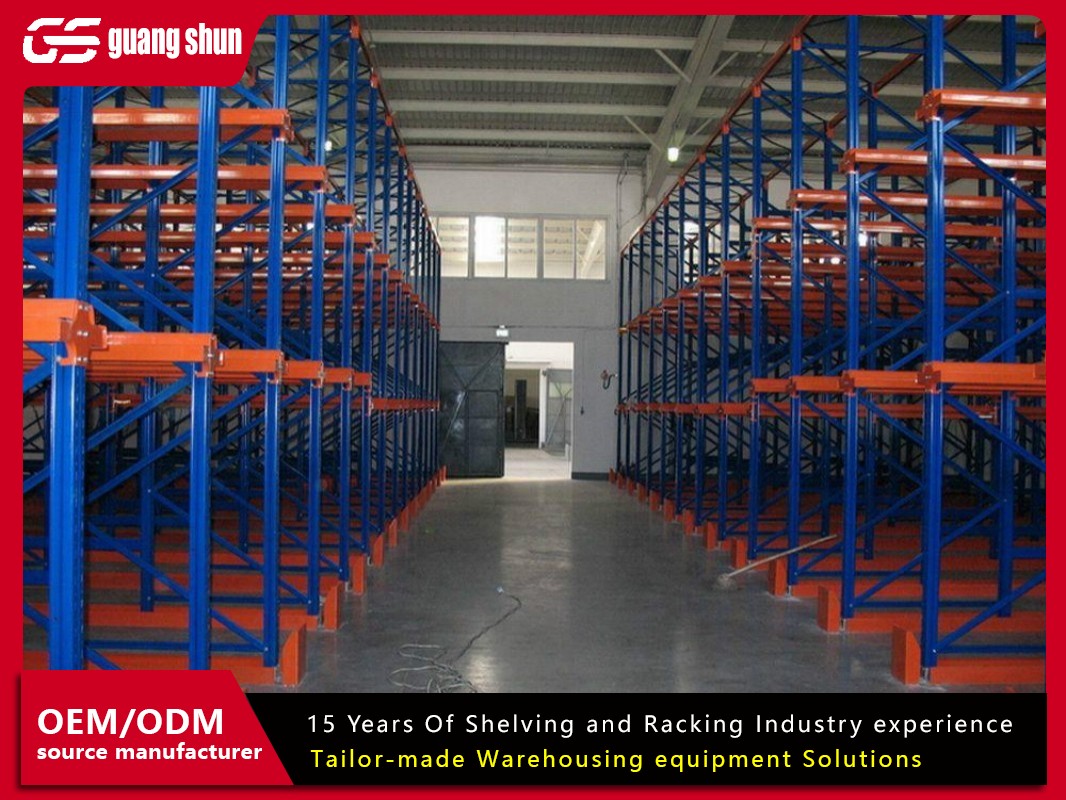
Drive-in / drive-through – continuous upright frames with
rail supports. Density up to 75%, but limited to homogeneous pallets (same SKU
per lane). Fork truck enters the bay — rail thickness must resist repeated wheel
loads (minimum 3 mm hot-rolled steel).
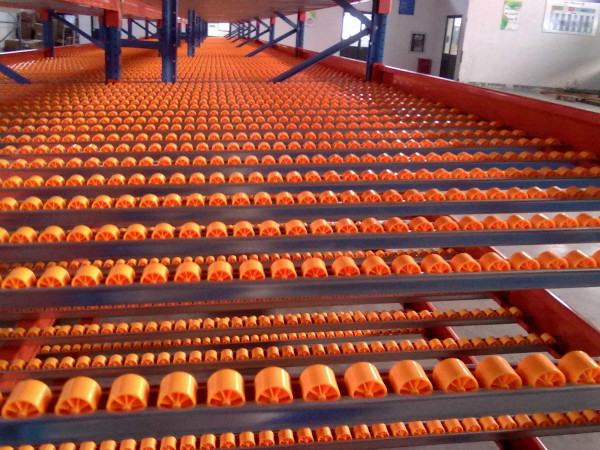
Push-back & pallet flow – dynamic systems using
inclined rails or carts. Density between selective and drive-in, but higher
component cost (€250–400 per pallet position).
Beam levels typically range from 3 to 8 per upright frame, with vertical
pitch increments of 50 mm or 75 mm. Adjustable boltless beams allow
reconfiguration but have lower dynamic load resistance than bolted connections.
For cold storage (≤ -25°C), steel grades must provide adequate low-temperature
toughness — avoid standard S235JR; specify S355J2 or equivalent.
3. Application Scenarios: Cold Storage, E‑commerce Fulfillment, and
Just-in-Time Manufacturing
Each environment imposes distinct mechanical and operational demands on
pallet shelving systems. In frozen food warehouses (e.g.,
-28°C), ice formation on uprights increases wind load surface area, while steel
becomes more brittle. Solutions include hot-dip galvanizing (≥ 85 µm coating
thickness) and seismic bracing with oversized base plates. For e‑commerce
fulfillment with small, non-standard cartons, adding wire mesh decking or solid
steel panels between beams prevents product fall-through and enables split-case
picking directly from pallet positions.
In automotive just-in-sequence manufacturing, pallet
shelving often integrates with floor-mounted guide rails and
laser-guided vehicles (LGVs). Tolerance requirements become extreme: beam level
flatness must be within ±2 mm over 6 m to allow automated pallet shuttles.
Leading projects use FEM-optimized beam profiles (omega or C-sections) that
reduce weight while maintaining stiffness. Additionally, anti-seismic
back-to-back ties are mandatory in regions with peak ground acceleration >
0.3g — often overlooked but crucial for preventing domino collapse.
4. Addressing Industry Pain Points: Space Wastage, Inventory Damage, and Low
Picking Speed
Common operational inefficiencies directly traceable to suboptimal pallet
shelving designs:
Underutilized cubic volume – many facilities operate with
only 60% of maximum vertical capacity because beams are placed at fixed,
suboptimal heights. Solutions: add mezzanine-supported racking or use telescopic
beam levels that adjust to pallet height variations.
Impact damage from forklifts – 78% of racking collapses
start with a single bent upright frame. Installing sacrificial upright
protectors (300 mm height, 5 mm wall thickness) and column guards reduces damage
claims by over 60%.
Inefficient slotting – without proper slotting software,
fast-moving pallets end up on top levels, increasing travel time by 15–20%.
Implementing dynamic slotting with labeled beam positions (QR code or RFID)
improves productivity.
Regulatory non-compliance – OSHA (US) and HSE (UK) mandate
regular racking inspections (at least every 12 months, or after any impact).
Many operators lack documented inspection protocols, leading to fines and
liability.
Engineered solutions include fitting all pallet shelving with
convex safety footplates that distribute point loads and warn of overload via
visible deflection indicators. For retrofits, adding bolted row spacers and
seismic base isolation significantly upgrades safety without full
replacement.
5. Engineering Solutions: Seismic Upgrades, Safety Clips, and Floor
Anchoring
For existing warehouses, a structural audit of pallet
shelving should verify anchor bolt torque (minimum 80 Nm for M12
anchors in 25 MPa concrete) and brace weld integrity. Seismic retrofits often
involve:
Installing X‑bracing on back-to-back rows using 5 mm steel cables or solid
flat bars.
Adding clip-in upright splice kits to extend column height while maintaining
load continuity.
Replacing standard nut‑and‑bolt beam connectors with anti-vibration locknuts
(grade 8.8 or higher).
Floor anchoring failures represent the most common hidden defect. Anchor
pull-out tests should be performed on 5% of all base plates. For cracked
concrete or post-installed anchors, adhesive epoxy systems (Hilti HIT-RE 500 or
equivalent) achieve tensile capacities > 20 kN per anchor. Additionally, for
drive-in racking, each column line must be anchored both at the front and rear
uprights; omitting rear anchors creates a lever arm that collapses under lateral
loads.
Guangshun provides engineered solutions including pre‑drilled upright frames with
certified load tables and seismic connection kits, validated through finite
element analysis per EN 15512:2020. Their approach integrates safety clips as
standard — not optional — reducing installation errors common in field-assembled
systems.
6. Quantitative ROI of Upgraded Pallet Shelving: A Data-Driven Approach
Investing in high-specification pallet shelving yields
measurable returns across three categories: space efficiency, labor
productivity, and damage reduction. Consider a mid-size DC (10,000 m² floor
area) currently using outdated selective racking with 4 m height. Replacing it
with drive‑in racking at 8 m height increases positions from 2,500 to 6,200 — a
148% increase. At an average lease cost of €80/m²/year, this eliminates the need
for an additional 7,400 m² satellite warehouse (saving ~€592,000 annually).
Labor productivity: Adding beam-level pick lights and integrating with WMS
reduces search time per pallet by 12 seconds. For 800 picks/day, that’s 2.66
hours saved daily — €65,000/year in direct labor. Damage reduction: Installing
upright protectors and laser alignment guides reduces annual rack repairs from
an average of €18,000 to under €3,000. These figures assume a 5‑year system
life, yielding an ROI of 22–35% depending on configuration.
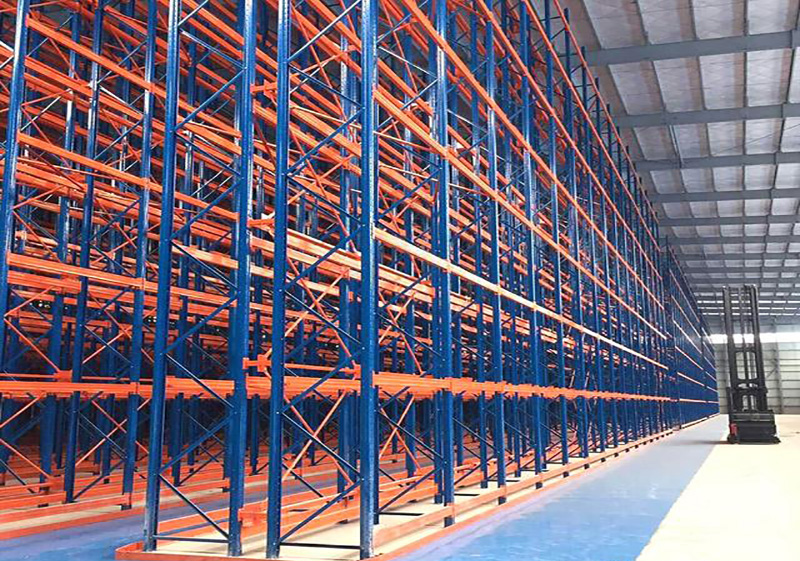
7. Integration with Warehouse Automation and WMS
Modern pallet shelving is no longer a passive structure; it acts as the
physical interface for automated storage and retrieval systems (AS/RS). For
mini-load cranes, the rack structure must include rail alignment brackets with
±1 mm vertical tolerance. For shuttle systems, every bay requires integrated
electric contacts or inductive power transfer plates — a detail often overlooked
in conventional rack design. When using Guangshun shuttle-ready racking, the beam
profiles include pre-cut channels for wiring looms, reducing field installation
time by 30%. Furthermore, connecting the racking system to a cloud-based WMS
enables real-time load monitoring: strain gauges on critical beams send alerts
when approaching 90% of rated capacity, preventing structural overload.
8. Maintenance and Compliance Standards (RMI, FEM, EN 15635)
Operational safety of pallet shelving relies on a rigorous
inspection schedule aligned with EN 15635:2008 (“Application and maintenance of
storage equipment”). The standard mandates three inspection levels:
Daily visual checks – operators report missing safety
clips, visible beam deflections > L/150, or damaged footplates.
Monthly engineering audits – torque verification on 10% of
anchor bolts, ultrasonic weld inspection on high-stress joints.
Annual third-party certification – full load test at 125%
of nominal capacity, with certified report for insurer and regulator.
Non-compliance directly affects insurance coverage; many policies void claims
if racking lacks current inspection records. For multinational operations, the
FEM 10.2.03 guideline adds requirements for corrosion protection in
high-humidity environments (e.g., coastal or cold storage). Zinc coating mass
should be ≥ 600 g/m² (equivalent to 85 µm thickness) to prevent red rust within
10 years. Using powder coating over galvanized steel doubles protection but adds
15–20% to component cost.
9. The Role of Guangshun in High-Density Storage Optimization
For over a decade, Guangshun has engineered
application-specific pallet shelving solutions for industries ranging from
third-party logistics to cold chain. Their approach integrates structural
simulation (SolidWorks FEA) with on-site strain gauge validation. Recent
projects include a 12,000‑position drive‑in racking system for a European
automotive tier‑1 supplier, achieving 94% space utilization while maintaining
FIFO compliance via sequential loading lanes. Guangshun also provides digital twin
documentation — each upright’s load certificate and weld map is accessible via
QR code, simplifying audits and reducing liability. For operations seeking to
modernize legacy racking, their retrofitting team performs non-destructive
testing (magnetic particle inspection) to certify continued use or recommend
targeted reinforcements.
Frequently Asked Questions (FAQ)
Q1: How do I determine the correct beam load capacity for my pallet
shelving?
A1: Start by calculating the maximum
gross weight of your heaviest pallet (product + pallet weight). Multiply by 1.25
for dynamic factors (fork truck acceleration and braking). Then select a pallet shelving beam
with a rated capacity at least 15% higher than that value. Always verify that
the upright frame capacity (per pair) exceeds the sum of all beam loads on that
frame. For multi-level systems, use the manufacturer’s combined load charts —
exceeding upright capacity is a leading cause of collapse.
Q2: Can I convert existing selective racking into drive-in pallet
shelving?
A2: Generally no, because drive-in
systems require continuous upright frames without horizontal cross-aisle
bracing, plus thicker rail supports. Selective racking lacks the necessary
lateral stiffness for drive-in configuration. However, you can add a “push-back”
retrofit using roll-formed cart channels if the original uprights have at least
5 mm wall thickness. Always consult a structural engineer before any conversion;
Guangshun offers conversion feasibility studies based on laser-scan data.
Q3: What are the signs that my pallet shelving needs immediate
replacement?
A3: Critical indicators: (1) Bent
upright flanges — any deviation > 5 mm from vertical over 1 m height; (2)
Missing or broken beam safety clips; (3) Cracked welds at column-to-baseplate
joints; (4) Concrete spalling around anchor bolts; (5) Deflection of beams under
no load (permanent sag). If any of these are observed, offload the affected bay
immediately and schedule a professional audit per EN 15635.
Q4: How often should anchor bolts be retorqued on pallet
shelving?
A4: For new installations, retorque after
1 month of operation (to account for concrete settlement). Thereafter, every 12
months or after any significant forklift impact near the rack. Use a calibrated
torque wrench; M12 anchors require 70–80 Nm. If any bolt turns more than 30°
without reaching torque, replace the anchor — this indicates concrete creep or
damaged threads.
Q5: Does seismic bracing add significant cost to pallet shelving
projects?
A5: In high-seismic zones (e.g.,
California, Japan, Chile), adding seismic clips, X‑bracing, and larger base
plates typically increases total rack cost by 12–18%. However, the cost of
non-compliance is far higher: structural collapse can cause $500k+ in inventory
damage and business interruption. Moreover, many building codes now require
seismic certification for racking above 6 m height. The incremental investment
is justified by both safety and insurance premium reductions (typically 7–10%
lower).
Q6: How can I improve pallet shelving safety in a low-budget
operation?
A6: Start with low-cost, high-impact
measures: (a) install yellow safety tape to define rack aisle boundaries; (b)
train forklift operators on “touch‑free” loading using laser guides; (c) add
bolt-on column protectors (as low as €25 each); (d) implement a daily checklist
for visible damage. These steps reduce impact frequency by over 50% without
replacing the entire system. For structural weaknesses, prioritize replacing
only the most damaged uprights rather than full system overhaul.
Q7: Is it possible to integrate automated pallet shuttles into
existing pallet shelving?
A7: Yes, but requires
modification. Shuttles need continuous steel rails and power contacts at each
beam level. Existing selective racking can be retrofitted with bolt‑on shuttle
rails and busbars, provided the beam profiles have adequate torsional stiffness.
However, the cost of retrofitting often reaches 60–70% of a new dedicated
shuttle system. For operations with more than 5,000 pallet positions, a
dedicated shuttle-ready pallet shelving system is more
economical over 10 years.
Q8: What documentation should I request from a pallet shelving
supplier?
A8: Always demand: (1) FEM or RMI load
tables specific to the exact component configuration; (2) mill certificates for
steel grade (e.g., S355J2+N); (3) seismic qualification report if applicable;
(4) weld procedure specifications (WPS) and welder certifications; (5)
installation manual with torque values and anchoring patterns. Reputable
suppliers like Guangshun provide these as standard. Avoid
any supplier that cannot produce independent test certificates.
This technical guide is based on current engineering standards (EN 15512,
RMI 2020, FEM 10.2.03) and field data from industrial storage projects. For
site-specific structural analysis or retrofit planning, consult a certified
racking engineer.