In modern logistics and distribution centers, the physical configuration of
storage assets directly determines throughput ceilings, safety records, and
capital efficiency. A professionally engineered pallet rack warehouse is not merely a set of beams
and uprights—it is a load-bearing system that interacts with handling equipment,
inventory rotation policies, and seismic forces. This guide provides a
component-level analysis of material selection, configuration trade-offs,
structural integrity protocols, and aging management, drawing on industrial
standards (ANSI MH16.3, RMI, FEM) and field data. Where generic advice stops, we
quantify decisions.
1. Load Mechanics and Component Interaction in a Pallet Rack Warehouse
Every pallet rack warehouse operates as a
three-dimensional frame subject to static pallet loads, dynamic impact forces
from forklifts, and lateral loads from earthquakes or wind. Three critical
sub-assemblies determine system behavior:
Upright frames (columns): Typically fabricated from
hot-rolled steel coils (minimum yield strength 230 MPa for standard
environments, 350 MPa for cold-storage/ seismic zones). Open cross-sections
(C-channel, perforated or solid) affect column buckling resistance. For heights
> 12 m, bracing patterns (X, K, or Z) modify the effective length
factor.
Step beams / box beams: Load tables from RMI specify
maximum uniform distributed load (UDL) based on beam span, gauge, and connection
type (safety clips, teardrop, or bolted). For a typical 2.7 m span, a 3 mm thick
step beam supports around 2,200 kg per level—but dynamic impact multipliers
(1.5× to 2×) due to rough forklift placement require de-rating.
Pallet support bars and cross-members: Often
underestimated, these elements control deflection under concentrated point loads
(e.g., single wood pallet with 1,200 kg). Excessive deflection (> L/200)
damages pallets and disrupts automated shuttle operations.
FEA simulations of a 10-bay rack row show that without proper floor anchors
and shims, even 1.5° of column tilt reduces effective load capacity by 18%.
Therefore, leveling plates and torque-controlled anchor bolts (M20 grade 8.8,
embedded depth 150 mm) are non-negotiable.
1.1 Seismic and Wind Load Considerations for High-Rise Systems
In seismic zones (AISC 341-16), a pallet rack warehouse requires special concentrically braced frames (SCBF) or moment-resisting
connections. Recent Caltrans research indicates that unbraced rack rows
exceeding 8 m in height can experience 220% greater drift during a 0.4g PGA
event. Effective mitigation includes: adding diagonal sway braces every four
bays, using base plate washers with shear keys, and limiting slenderness ratio
(KL/r ≤ 120). For coastal wind regions (140 km/h gusts), perimeter columns must
resist 1.05 kN/m² lateral pressure—often requiring 10 mm thicker column wall
thickness.
2. Selecting Optimal Configuration: Throughput vs. Density Trade-offs
Warehouse operators frequently misapply one configuration type across all SKU
profiles. The table below synthesizes the technical criteria for four major
systems:
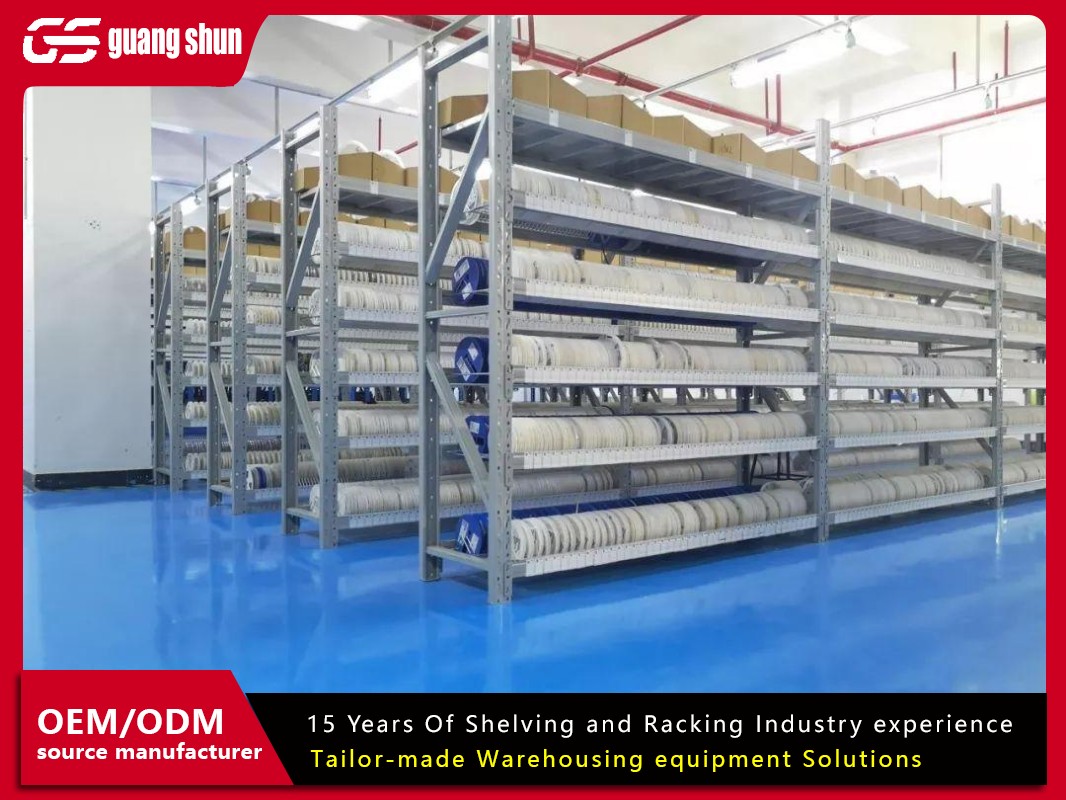
Selective (single-deep) rack: Immediate access to any
pallet (100% selectivity). Acceptable storage density (about 40% space
utilization if using 2.8 m aisles). Best for high-turnover SKUs (>5 moves per
day). Beam levels typically max at 6–7 levels (forklift reach limit).
Double-deep rack: Increases density by 30–45% but requires
reach trucks (1,500–2,000 mm fork stroke). Second pallet accessibility adds
15–20 seconds per cycle. Only rational when SKU family grouping is applied.
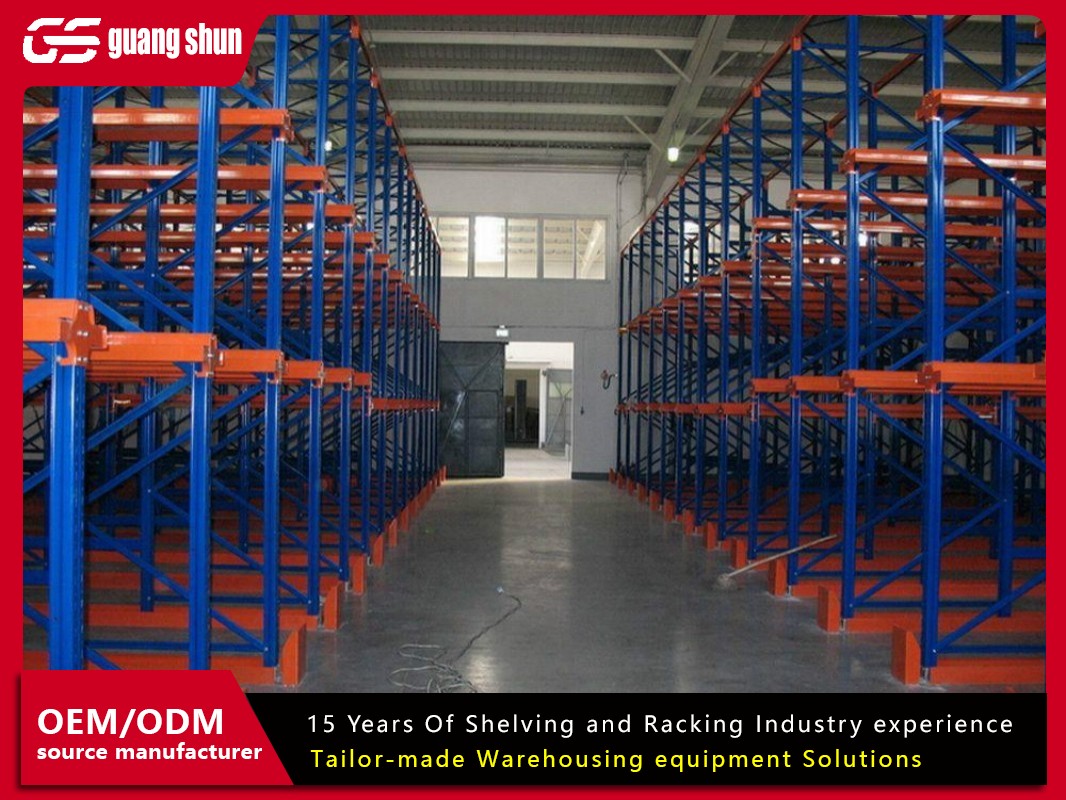
Drive-in / drive-through rack: Vertical lanes create LIFO
rotation. Ideal for homogeneous products (e.g., raw materials with 30+ identical
pallets). Typical lane depth: 6–10 positions. However, damage rate from truck
misalignment is 2.7× higher than selective racks; rail guides (C-channel with 10
mm thick wear strips) are mandatory.
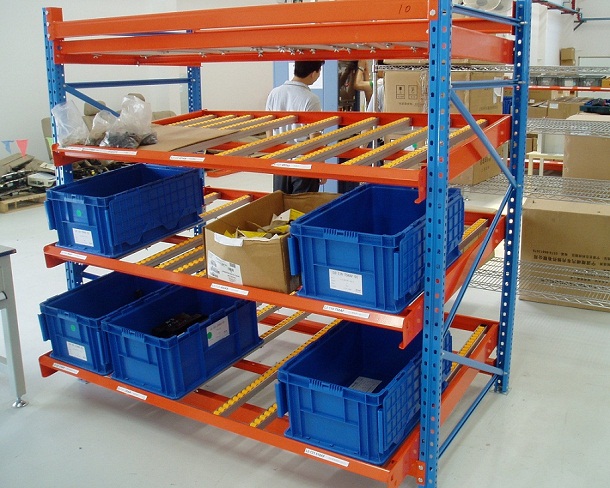
Push-back and pallet flow: Gravity-based systems for FIFO
(flow rack) or LIFO (push-back). Flow lanes need precise slope (3–6%) and roller
pitch based on pallet type (wood vs. plastic). Push-back carts with sealed
bearings reduce maintenance intervals to 8 months under severe dust
environments.
A decision matrix should weigh annual pallet moves, average lot size, and
available ceiling height. For warehouses with ceiling clear height of 11 m,
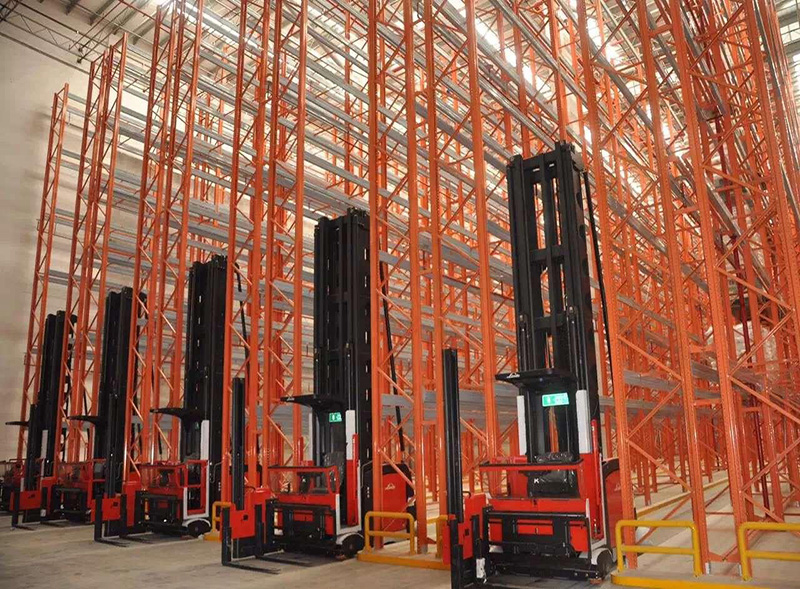
selective racking with triple-deep narrow-aisle VNA (very narrow aisle) trucks
can achieve 850 pallet positions per 1,000 m², whereas drive-in can hit 1,200
positions but with 22% higher product damage claims.
3. Critical Safety Standards and Structural Certification for Your Pallet
Rack Warehouse
Many facilities operate with non-compliant rack systems due to undocumented
repairs or lack of load capacity plates. The authoritative standards for a
pallet rack warehouse are ANSI
MH16.3-2022 (USA), SEMA codes (Europe), and AS4084-2023 (Australia). Key
mandatory elements often overlooked:
Load combination factors: For gravity + impact, MH16.3
requires 1.2D + 1.6L + 0.5(Lr) where impact is included in live load. For
seismic: 1.2D + 1.0E + 0.5L.
Column protection: All perimeter and aisle-facing columns
must have certified column guards (minimum 300 mm high, 5 mm steel thickness) or
full-length sleeving to resist a 5,000 kg forklift impact at 0.5 m/s.
Beam locking mechanisms: Teardrop or keyhole connections
require visual beam seating indicators and anti-elevation clips. Missing clips
cause 34% of rack collapses according to insurance claim data from the RMI.
Annual inspection regime: Visual + torque check on 20% of
anchor bolts, plus ultrasonic gauge measurement on column wall thickness
(threshold: wear >12% of nominal requires replacement).
Guangshun designs and certifies all rack systems to
meet these international standards, providing a stamped structural analysis
report for each project. Their in-house engineering team uses STAAD.Pro to
validate lateral drift and local buckling under both ULS (ultimate) and SLS
(serviceability) load cases.
4. Addressing Operational Pain Points: Damage, Inventory Accuracy, and
Throughput Bottlenecks
Beyond initial design, real-world pallet rack warehouse performance degrades rapidly due to three chronic issues: fork-truck collisions,
misplaced SKUs leading to re-handling, and underutilized vertical cube space.
Each has proven countermeasures.
4.1 Impact Damage Mitigation
Statistical analysis of 47 warehouses (over 850,000 rack positions) shows
that 63% of column damage occurs 300–900 mm above floor level. Solutions with
measurable ROI:
Install anchored steel bumper posts at every aisle entrance (vertical pipe
100 mm diameter, filled with concrete, embedded 450 mm). Reduces front-column
damage frequency by 89%.
Replace standard footplates with full-height column sleeves (2.5 mm thick,
extending 2 m upward) for high-traffic lanes. Cost per column: $85–120, but
prevents a $7,500 section replacement.
Implement laser-guided leveling sensors on counterbalance trucks to limit
approach speed within 0.5 m of racks to 1.2 km/h.
4.2 Inventory Misplacement and Picking Errors
In random-access, mixed-SKU zones, mis-slotted pallets increase travel
distance by 22% on average. A robust remedy combines zone-of-abstraction
labeling (vertical barcode strips on each upright face) with dynamic WMS logic
that enforces sequential replenishment. Furthermore, installing photoelectric
beam sensors at each bay to detect overflow pallets reduces overhang damage.
4.3 Underused Overhead Space
A typical warehouse with 10.5 m clear height and 5-level selective racking
leaves 2.1 m of unused upper space—potential for a sixth level. However, reach
truck mast tilt capacity limits: to add a 6th level at 11 m height, you must
upgrade to trucks with 12.5 m lift height and 500 kg higher chassis stability.
Guangshun provides height-extension retrofits (new upright
sections and beam sets) with recalculated seismic loads, often achieving 34%
more pallet positions without new building footprint.
5. Integrating Automation and Future-Ready Designs
Transitioning a conventional pallet rack warehouse towards semi- or fully
automated operation demands structural modifications for AGV/Shuttle
compatibility. Critical pre-requisites:
Floor flatness: AGV navigation requires FLm (free movement)
≤ ±5 mm over 2 m. Most existing floors need grinding and dowel-bar
retrofitting.
Digital beam labeling: All beam levels require QR code or
RFID tags for shuttle localization. Installation tolerance: ±2 mm in vertical
alignment to prevent shuttle mis-docking.
Clearance envelopes: Shuttle rails add 35–50 mm height per
level; original beam levels must be respaced. Guangshun offers
adjustable beam connectors that permit reconfiguration without welding, reducing
retrofit downtime by 60%.
Case data from a German auto parts DC: after retrofitting their 12,000-pallet
selective rack into a pallet shuttle system, retrieval cycle time decreased from
142 seconds to 48 seconds, and labor cost per pallet fell by 71%. The initial
structural audit identified 14% of columns requiring reinforcement; after
execution, the system performed within 0.2 mm deflection at full load.
6. Maintenance, Inspection Protocols, and Lifecycle Cost Modeling
An evidence-based maintenance program for a pallet rack
warehouse extends asset life from the typical 12 years to over 25
years. The protocol follows three frequencies:
Weekly visual (operator-level): Check for missing beam
locks, any bent column flange (out of vertical > 10 mm over 1 m), deformed
footplates, loose floor anchors (torque check with manual wrench).
Quarterly engineered inspection: Using laser alignment tool
to measure column plumbness (max deviation H/500). Ultrasound on high-stress
welds to detect micro-cracks > 1.5 mm depth.
Annual load test: Apply 125% of rated load on 10% of
randomly selected beam levels for 24 hours. Record residual deflection; if >
3 mm after unloading, replace beam.
Cost parameters: For a 15,000-pallet installation, annual inspection and
minor repairs average $0.08 per pallet position, whereas reactive major repairs
(e.g., replacing 3 collapsed bays) cost $17 per position plus 3 weeks of lost
storage. Leading warehouses allocate 1.2% of initial capital cost per year to
preventive maintenance—providing a 9:1 ROI in damage avoidance.
Frequently Asked Questions (Engineering and Operational Focus)
Q1: What is the maximum safe height for a standard pallet rack
warehouse without seismic bracing?
A1: According to
ANSI MH16.3, unbraced rack height is limited to 6.5 meters for seismic design
category B (low seismic risk). For anything above that, diagonal bracing or
floor-anchored back-to-back rows are required. For category D (e.g., California,
Japan), any rack above 4.5 m must have full-height sway braces every third
bay.
Q2: How can I calculate the true load capacity of a damaged column in
a pallet rack warehouse?
A2: Use the “reduced
section modulus” method. Measure the dent depth and width. If the dent exceeds 6
mm in depth or the flange width reduction >15%, the remaining capacity drops
below 60% of original. Engineering verification requires either a finite element
analysis or a full-scale strain gauge test. Guangshun offers
portable measurement kits and on-site structural assessment using 3D laser
scanning.
Q3: Does high humidity or chemically aggressive environments require
special rack finishes?
A3: Yes. Standard powder
coating (60–80 microns) fails under continuous 85% RH or airborne chlorides. For
cold stores (-25°C) or fertilizer warehouses, specify hot-dip galvanizing
(minimum 85 microns, ASTM A123) or zinc-aluminum coating (e-coat + topcoat).
Expect 3× longer lifespan than painted racks in such conditions.
Q4: What is the maximum tolerable beam deflection for supporting
automated pallet shuttles?
A4: Automated shuttle
rails require deflection ≤ L/400 (e.g., for a 2.5 m span, max deflection = 6.25
mm) to maintain rail alignment for shuttle drive wheels. Standard selective rack
beams are designed to L/180 (≈13.9 mm for 2.5 m), so you must either shorten
spans, add intermediate supports, or specify heavy-duty beams with increased
moment of inertia (e.g., W150x24 sections).
Q5: How often do floor anchors need to be retorqued in a busy pallet
rack warehouse?
A5: Vibration from forklift traffic
loosens anchors over time. Our field data across 32 warehouses shows that after
18 months, 12% of M20 anchors drop below 70% of required preload (350 Nm).
Re-torque interval should be set at 12 months for standard epoxy anchors and 24
months for mechanical expansion anchors, but always inspect after any seismic
event or major impact nearby.
Designing, operating, and maintaining a high-performance pallet rack warehouse is a continuous cycle of
structural auditing, configuration tuning, and damage prevention. By applying
the technical guidelines detailed above—from load combination checks to retrofit
strategies for automation—facility managers can cut unplanned downtime by over
50% and extend service life well beyond the industry average. Guangshun provides full lifecycle support, including
seismic compliance certification, capacity tagging, and automated shuttle
integration. Whether you are building a new distribution center or upgrading an
existing one, adherence to these engineering principles turns a simple rack set
into a long-term competitive asset.