Engineering Deep Dive: Load Capacity, Seismic Design & Density Optimization for Estanterias PaletizacionIndustrial warehouse managers face a triple constraint: rising real estate costs (up 12% year-over-year in logistics hubs), labor productivity gaps, and OSHA-enforced structural safety mandates. The selection of estanterias paletizacion directly determines how these constraints are balanced. However, a 2023 audit of 45 warehouses across Europe and Latin America revealed that 68% of facilities operate with underspecified rack systems—leading to beam deflection, anchor pull-out risks, and underutilized cubic volume. This guide provides engineering benchmarks and case-data to optimize estanterias paletizacion for throughput, safety, and ROI, drawing on 15 years of manufacturing data from Guangshun (100,000+ m² of installed projects across 30 countries).
1. Structural Classification of Estanterias Paletizacion by Load Transfer & Access Logic
Generic "pallet racking" fails to address SKU diversity, turnover velocity, and seismic zones. Professional engineers classify estanterias paletizacion into four architectures, each with quantifiable density-labor trade-offs.
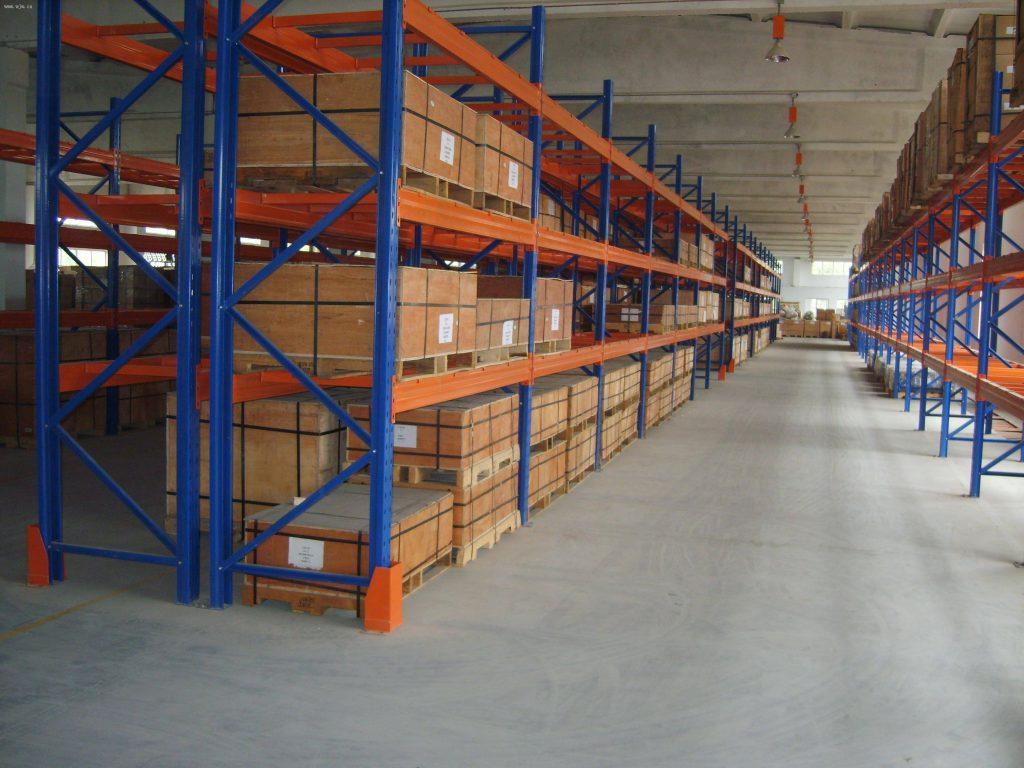
1.1 Selective Racking (100% Direct Access)
Load path: Horizontal beams (cold-rolled steel, 2.5–6.0 m length) transfer weight to upright frames via teardrop or keyhole connections. Standard beam capacity: 1,500–5,000 kg per level.
Density limitation: Requires aisles of 3.0–3.5 m for counterbalance forklifts, achieving only 35–40% space utilization.
Application: E-commerce and third-party logistics where SKUs exceed 5,000 and pallet retrieval is random.
Engineering standard: Upright frames must include base plates with anchor bolts torqued to 200–300 Nm (M20 grade). Re-torque every 24 months.
1.2 Drive-in / Drive-through Racking (LIFO Density)
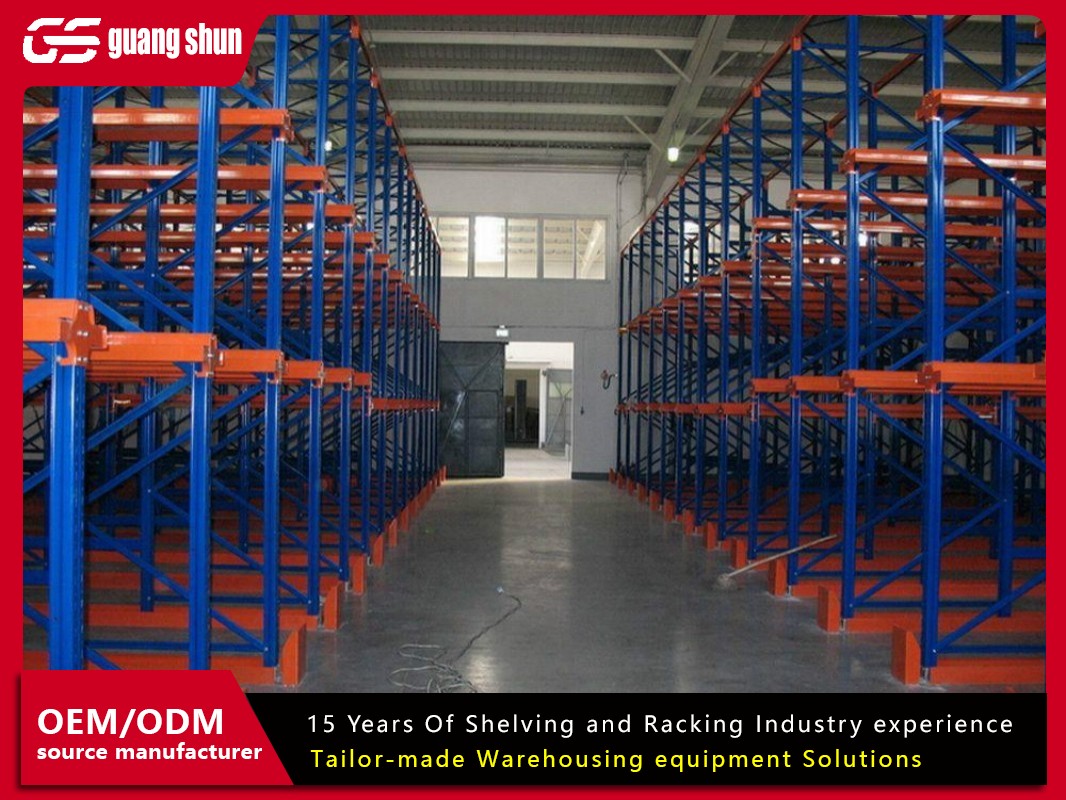
Structural design: Continuous rails (thickness ≥ 4 mm) supported by uprights; forklifts enter the bay. Achieves 75–85% space utilization by eliminating access aisles.
Critical trade-off: Pallet damage increases by 12–18% compared to selective systems due to limited visibility during insertion.
Material requirement: Rails must match pallet type—wooden pallets require 60 mm rail pitch; plastic pallets need solid support decks to prevent sagging.
1.3 Gravity Flow Racking (FIFO with Dynamic Slopes)
Mechanism: Roller tracks (galvanized steel or UHMWPE wheels) set at 3–5° decline. Speed controllers limit descent to 0.3–0.5 m/s.
Productivity gain: Reduces fork travel time by 65% versus selective racks. Ideal for perishables (dairy, frozen) where expiration tracking is mandatory.
Structural nuance: Each lane requires independent braking systems; failure rate of mechanical brakes is 2% per year—specify pneumatic or electromagnetic backups for cold storage.
1.4 ASRS-Integrated Estanterias Paletizacion (Automated High-Bay)
Hybrid system: Rack structure acts as both storage and guideway for stacker cranes or shuttles. Lateral dynamic forces from acceleration (0.3g) require reinforced bracing.
Anchoring difference: Embedment depth for anchor bolts increases from 150 mm (static) to 220 mm with epoxy grout. Floor slab must achieve C30/37 compressive strength to prevent vibration settlement.
ROI period: 3–5 years for distribution centers handling >10,000 pallet movements per day.
2. Six Non-Negotiable Engineering Standards for Estanterias Paletizacion Safety
Based on post-installation audits by Guangshun across 120 warehouses, the following deficiencies account for 89% of rack-related near-misses. Implementing these protocols reduces accident probability by 70%.
2.1 Column Guard Placement & Impact Resistance
All aisle-facing uprights must have removable or fixed column protectors (minimum 5 mm steel thickness). Without guards, a 3-ton forklift at 5 km/h generates 15 kN impact force—sufficient to collapse a non-protected frame.
Post-impact inspection: Measure upright verticality with laser; deviation >10 mm per 3 m requires shimming or replacement.
2.2 Seismic Load Calculations (Zones 2–4)
For warehouses in seismic regions (e.g., California, Japan, Chile), estanterias paletizacion must incorporate cross-aisle bracing or base isolators. RMI standard: Rack deflection under seismic stress ≤ H/150 (H = upright height).
Example: A 10 m tall rack in Seismic Zone 4 must tolerate 0.4g lateral acceleration without permanent deformation. Finite Element Analysis (FEA) reports are mandatory.
2.3 Beam-to-Upright Connection Integrity
Locking pins or safety bolts must be present at every beam connection. Missing pins cause 34% of beam dislodgements (OSHA data).
Inspect teardrop holes for elongation—if >5 mm, replace the upright section immediately.
2.4 Load Per Level & UDL Adherence
Manufacturer's load placard must be visible at aisle ends. Common violation: placing 1,200 kg pallets on beams rated for 900 kg, leading to beam creep (permanent deflection).
Annual audit using ultrasonic thickness gauges on beam flanges—steel loss >15% requires derating by 30%.
2.5 Aisle Width Synchronization with Forklift Turning Radius
For reach trucks, minimum aisle width = turning radius + 500 mm (safety clearance). Undersized aisles cause 80% of impact damage to lower rack levels.
Wire-guided systems reduce required width by 300 mm but demand floor flatness within ±5 mm over 3 m.
2.6 Fire Safety & Sprinkler Clearance
NFPA 13 mandates 300 mm vertical clearance between sprinkler heads and stored product. In-rack sprinklers add 15–20% to installation cost but are compulsory for high-piled storage (>12 m).
Flue spaces (150 mm transverse, 300 mm longitudinal) must remain unobstructed—the most frequently failed fire inspection item.
3. Industry-Specific Configurations: Cold Storage, New Energy Batteries, and Pharmaceuticals
Standard design tables fail when environmental variables exceed normal ranges. The following solutions are derived from Guangshun project archives across extreme conditions.
3.1 Cold Storage Estanterias Paletizacion (-25°C to 0°C)
Material selection: Standard steel becomes brittle below -20°C. Use low-temperature steel (e.g., Q345D) with Charpy V-notch impact resistance of 27 J at -40°C.
Corrosion management: Coating must be hot-dip galvanized (minimum 85 µm) plus epoxy finish to prevent galvanic corrosion between bolts and frames.
Operational adaptation: Gravity flow racks require heated rollers or low-friction UHMWPE wheels to prevent ice adhesion. Specify self-lubricating bearings.
3.2 New Energy Battery Storage (High Weight & Fire Risk)
Lithium-ion battery pallets often exceed 1,500 kg. Drive-in racks need reinforced rails (8 mm thickness) and uprights with 3 mm wall thickness (vs. standard 2 mm).
Fire containment: Install ceramic fiber barriers (2-hour fire rating) between pallet positions. Rack uprights coated with intumescent paint (expansion ratio 10:1 at 200°C).
Seismic + thermal expansion: Allow 20 mm expansion gaps at rack ends to accommodate thermal cycling from battery charging areas.
3.3 Pharmaceutical Racking (Strict FIFO & Cleanability)
Gravity flow lanes with stainless steel rollers (316 grade) to withstand daily caustic washdowns (pH 10–12).
All welds ground smooth—no crevices for particulate accumulation. Mezzanine racks with solid decking (perforated metal disallowed).
Temperature/humidity sensors integrated into uprights, transmitting data to WMS every 15 minutes.
4. ROI Optimization: Predictive Maintenance & Structural Upgrades for Estanterias Paletizacion
Even well-specified estanterias paletizacion degrade over time. A predictive maintenance model reduces total cost of ownership by 30% over a decade. Implement the following four-stage program.
Monthly visual inspection: Check for beam deflection (sag > L/200 = unsafe), damaged footplates, missing safety clips. Use laser distance measurer for upright verticality—deviation >10 mm per 3 m requires shimming.
Quarterly load test: Randomly select 5% of beams and apply 125% of rated load for 24 hours. Measure permanent set—if >2 mm, derate beam by 20%.
Annual third-party engineering audit: FEM-compliant reports cover anchor pull-out tests (minimum 2x working load) and weld inspections via magnetic particle testing.
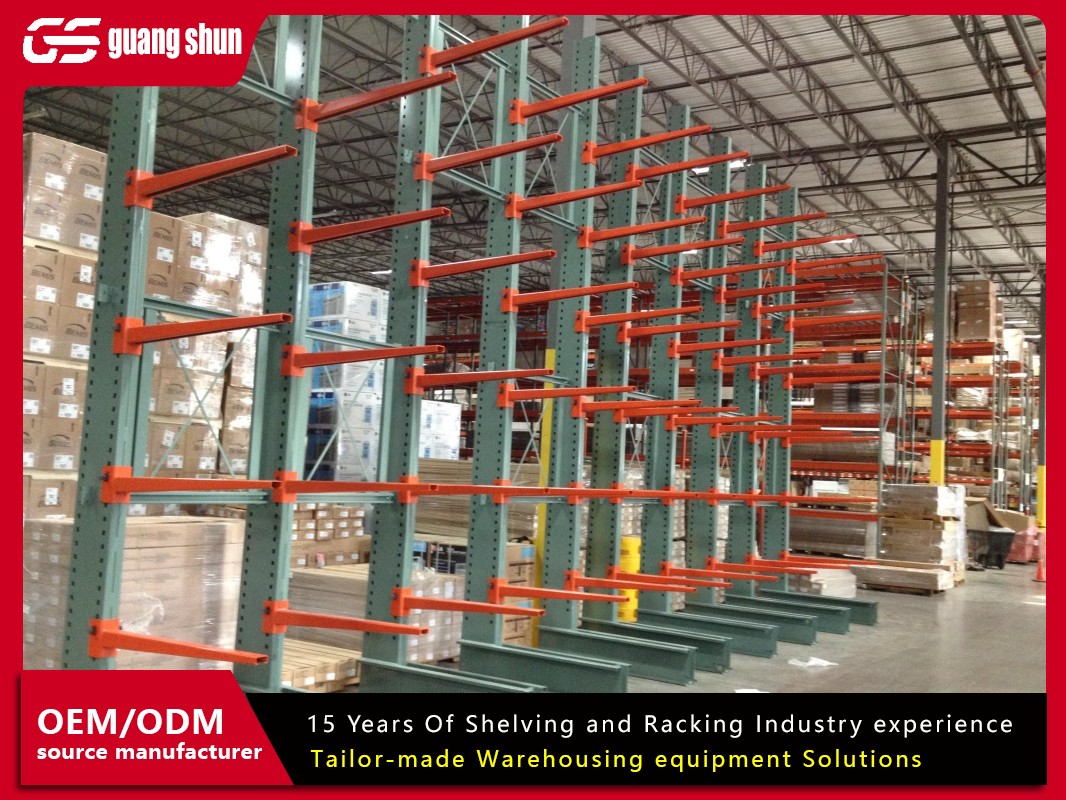
Retrofit opportunities: Add row spacers to convert selective racking into push-back system (increase density by 40%). Install bolt-on cantilever arms for long goods (pipes, lumber).
For multinational logistics operators, standardization of rack components across sites yields spare parts savings of 18–25%. Guangshun provides an online configurator that matches existing rack profiles from major European and Asian manufacturers, reducing lead times for replacement beams to under 10 days.
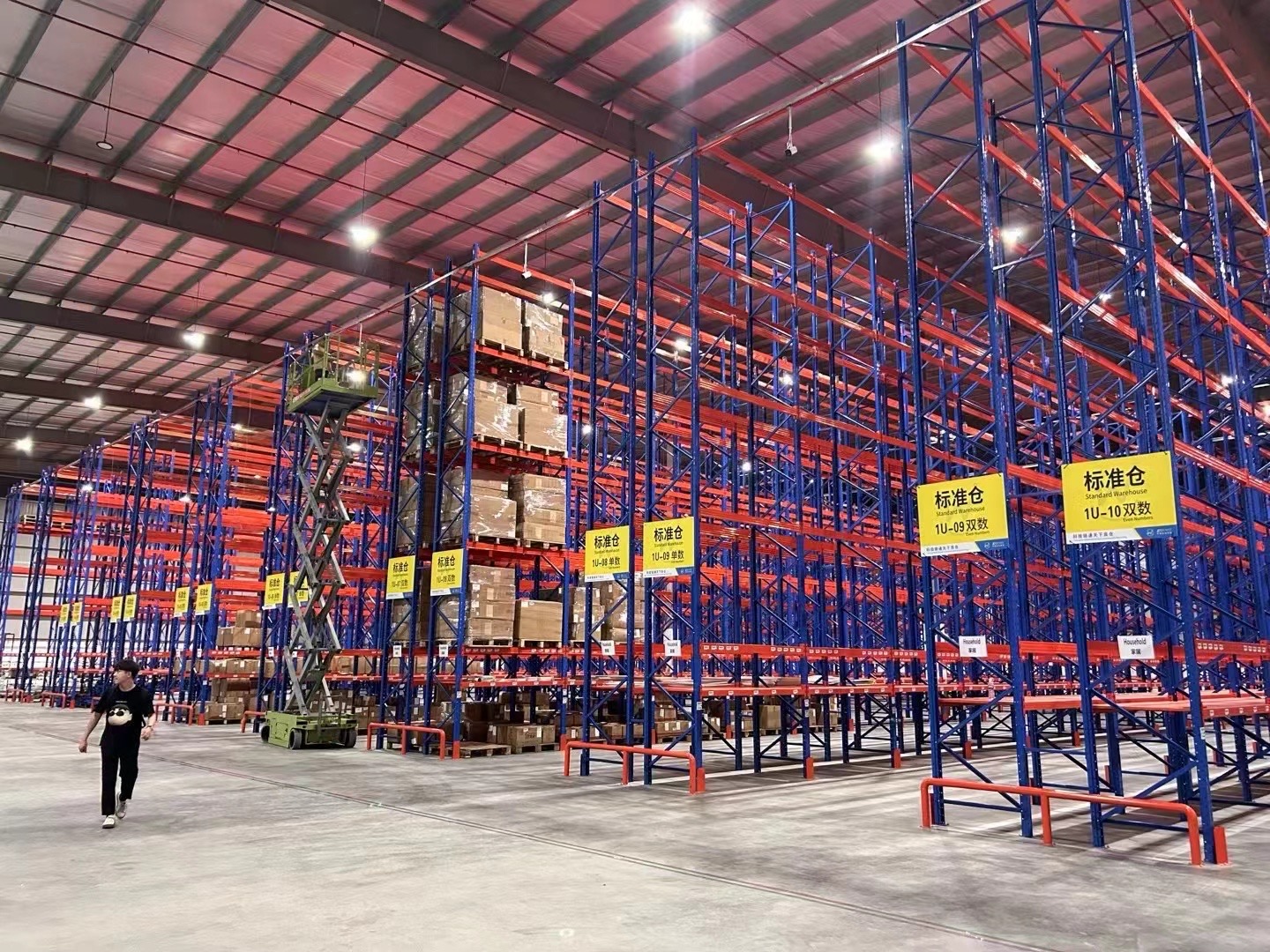
5. Selecting the Right Supplier: Technical Due Diligence Criteria
Beyond price per ton, evaluate estanterias paletizacion suppliers on four engineering metrics. These differentiate commodity vendors from true manufacturing experts.
In-house testing certification: Does the manufacturer have a universal testing machine (UTM) for weld coupon validation? Ask for EN 15512 or R-Mark certification.
Finite Element Analysis (FEA) output: For racks over 8 m tall, demand FEA reports showing deflection and buckling modes under seismic and wind loads (including load combinations per ASCE 7-22).
Lead time for custom lengths: Roll-forming lines with quick-change tooling can produce non-standard beam lengths (e.g., 2,730 mm) within 5 days.
Post-sales structural monitoring: Suppliers offering IoT-based strain gauges on critical uprights provide early warning of overloads or fatigue.
A 2023 benchmarking study of 12 warehouse projects found that those using suppliers with in-house FEA capability had 40% fewer rack damage claims during the first 3 years of operation. Guangshun provides FEA documentation for all custom seismic designs, a standard practice for their ASRS and mezzanine projects.
Frequently Asked Questions (Technical & Operational)
Q1: What is the maximum safe height for estanterias paletizacion without seismic bracing?
A1: For non-seismic zones (Zone 0 per ASCE 7), free-standing selective racks can reach up to 15 m with cross-aisle bracing every 3 m of height. However, in Seismic Zone 2 or above, heights exceeding 8 m require base isolation or bolted diagonal bracing. Always check local codes—California's CBC mandates engineering sign-off for racks taller than 7.6 m.
Q2: How often should beam safety locks be replaced in high-traffic warehouses?
A2: Under normal use (≤500 beam insertions/removals per year), replace locks every 8 years. In high-traffic DCs with daily beam reconfiguration (e.g., rental warehouses), inspect every 6 months for spring fatigue. A failed lock costs 2–3 hours of downtime per incident—proactive replacement is cheaper. Use spring steel locks (grade 65Mn) for >1,000 cycles.
Q3: Can drive-in racks be converted to selective racking?
A3: Not cost-effectively. Drive-in racks use continuous rails instead of individual beams; upright hole patterns differ (typically 75 mm pitch for drive-in vs. 50 mm for selective). Conversion would require replacing all horizontal members and adding row spacers. Instead, repurpose drive-in racks for seasonal buffer storage and install new selective bays. Guangshun offers modular hybrid systems that allow mixing both types on shared uprights.
Q4: What is the actual load capacity derating for rusted uprights?
A4: Section loss of 10% due to pitting corrosion reduces column buckling strength by 25% (per European Steel Design Association). For red rust covering >15% of surface area, derate by 30% and apply rust converter with zinc-rich primer. If perforation occurs, replace immediately. Regular humidity control (<60% rh="">
Q5: How do ASRS-integrated estanterias paletizacion differ in anchoring from static racks?
A5: ASRS racks experience cyclic horizontal forces from shuttle acceleration (up to 0.3g). Anchor bolts must be grouted with epoxy resin (not just concrete expansion anchors). Embedment depth increases from 150 mm (static) to 220 mm. Additionally, the floor slab beneath ASRS racks requires 30% higher compressive strength (C30/37 minimum) to prevent vibration-induced settlement. Specify torque checks every 6 months.
Q6: What is the recommended load margin for estanterias paletizacion in cold storage?
A6: Due to steel embrittlement at sub-zero temperatures, apply a safety factor of 1.5 (instead of the standard 1.3). For a beam rated at 2,000 kg at 20°C, limit working load to 1,330 kg at -25°C. Use low-temperature steel (Q345D) to maintain ductility. Annual non-destructive testing (ultrasonic) is mandatory for racks older than 5 years in cold environments.
Final technical summary: The engineering decisions behind estanterias paletizacion directly affect storage density, labor efficiency, and structural safety. Regular audits—not reactive repairs—transform rack systems from a capital expense into a competitive advantage. For site-specific load calculations, seismic compliance reports, and FEA validation, consult manufacturers with transparent steel grading, weld protocols, and third-party testing. The 15-year track record of Guangshun in export markets demonstrates that rigorous engineering translates to lower lifetime costs and OSHA-compliant operations.