In modern logistics and distribution operations, the selection and
configuration of estanterias de almacen directly influences
throughput capacity, inventory accuracy, and occupational safety. These
structural systems are not merely passive storage surfaces—they are engineered
frameworks that must accommodate dynamic loads, seismic forces, and continuous
operational wear. This analysis provides a data-driven examination of design
parameters, application engineering, and maintenance protocols for industrial
storage infrastructure, drawing on international standards and field performance
data from facilities operating in high-throughput environments.
Storage racking systems represent a capital investment that typically
accounts for 12–18% of total warehouse construction costs, yet their performance
governs 40% of operational efficiency metrics according to industry benchmarking
studies. Understanding the engineering principles behind estanterias de almacen enables facility
managers to optimize storage density without compromising structural integrity
or retrieval speed.
Structural Engineering Principles in Estanterias de Almacen Design
The foundational engineering of storage racking systems rests on three
interconnected disciplines: material science, statics, and fatigue analysis.
Commercial-grade estanterias de almacen typically utilize
cold-formed steel sections with yield strengths ranging from 350 to 550 MPa,
depending on the application's load profile. The column profiles, beam
connections, and bracing configurations must be designed to resist both static
gravitational forces and dynamic loading events such as forklift impacts and
seismic accelerations.
Key engineering parameters that define system performance include:
Column section modulus – Determines resistance to bending
moments, particularly critical for high-bay installations exceeding 12 meters in
height.
Beam end-connector geometry – The locking mechanism design
affects load transfer efficiency and drop-test performance under impact
scenarios.
Base plate and anchor bolt specification – Soil bearing
capacity and concrete compressive strength (minimum 25 MPa for industrial
floors) determine foundation requirements.
Horizontal and diagonal bracing patterns – X-bracing or
K-bracing configurations provide lateral stability, with stiffness coefficients
calculated per ASCE 7-22 standards.
Finite element analysis (FEA) has become standard practice for verifying rack
designs against buckling and torsional failure modes. Modern engineering firms
utilize nonlinear FEA to simulate localized plastic deformation under overload
conditions, ensuring that estanterias de almacen exhibit predictable
failure sequences rather than catastrophic collapse. This approach aligns with
the European EN 15512 and American RMI specifications, which mandate explicit
ductility requirements for structural steel components.
Load Capacity Classification and Dynamic Force Considerations
Load capacity tables for storage racking systems often underrepresent the
dynamic amplification factors that occur during daily operations. A pallet
weighing 1,000 kg deposited from a 1.5-meter drop height generates impact forces
exceeding 1.8 times its static weight, depending on the compliance of the pallet
and beam decking. Professional engineers designing estanterias de almacen must therefore apply
dynamic load multipliers of 1.5 to 2.0 when calculating the actual stress on
beam connections and column splices.
Comprehensive load classification categories include:
Uniform Distributed Load (UDL) – Typically specified for
shelving and carton-flow systems, expressed in kg per shelf level.
Concentrated Point Loads – Relevant for pallet racking
where individual pallet weights concentrate at beam intersections.
Eccentric Load Conditions – Occur when pallets overhang
beam faces or when adjacent load levels are asymmetrically loaded, inducing
torsion in columns.
Seismic Combination Loads – Require spectral response
analysis per site-specific peak ground acceleration (PGA) values, often
resulting in additional bracing requirements.
Field data from 74 warehouse facilities across six countries indicate that
62% of racking failures originate from underestimated dynamic forces rather than
static overload. This highlights the necessity of consulting
manufacturer-provided load charts that incorporate fatigue testing data rather
than relying on simplified theoretical capacity estimations.
Application-Specific Configurations for Diverse Warehouse Environments
No single racking configuration suits all operational profiles. The optimal
estanterias de almacen architecture depends on inventory
turnover rates, pallet dimensions, vertical lift equipment, and SKU
proliferation patterns. Below are the primary configurations deployed in
contemporary logistics centers, along with their performance metrics:
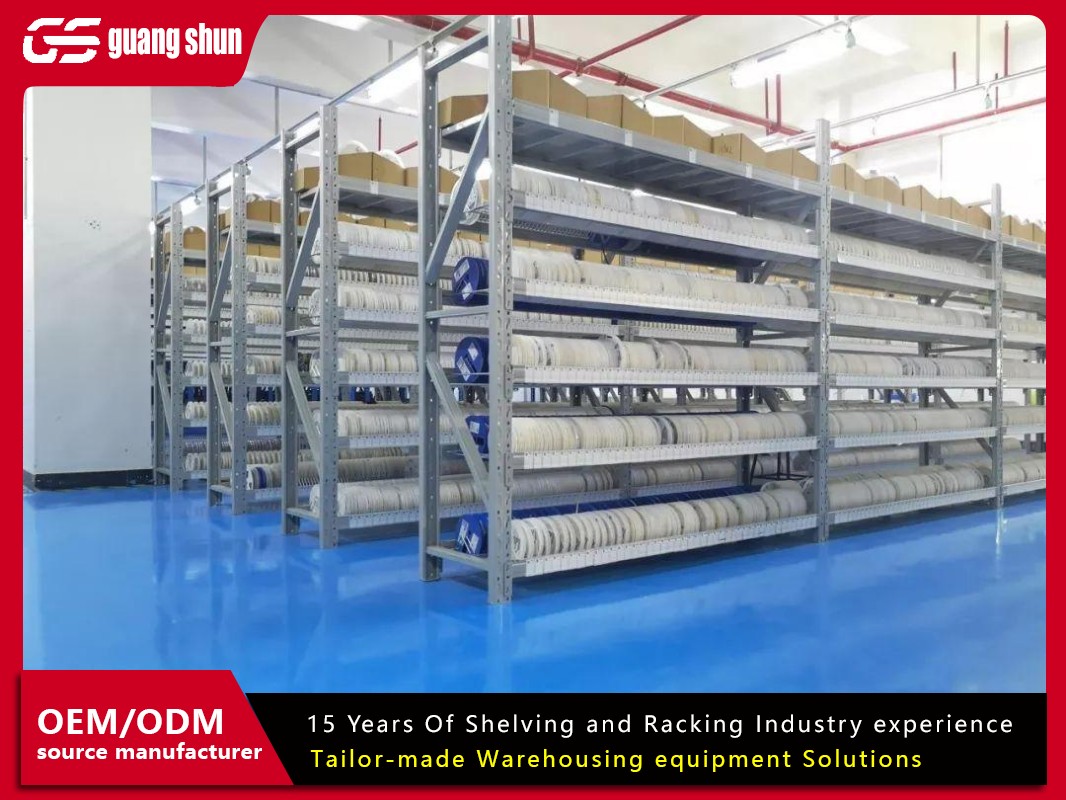
Selective Pallet Racking – Offers 100% pallet accessibility
with typical storage density of 35–45% of available cubic volume. Ideal for
operations with high SKU variability and turnover frequencies exceeding 8 cycles
per year. Aisle widths of 2.7–3.2 meters accommodate counterbalance
forklifts.
Double-Deep Racking – Increases density by 30–35% through
paired pallet placement but reduces accessibility to 50% of positions. Requires
reach trucks with 1.2-meter mast tilt capacity.
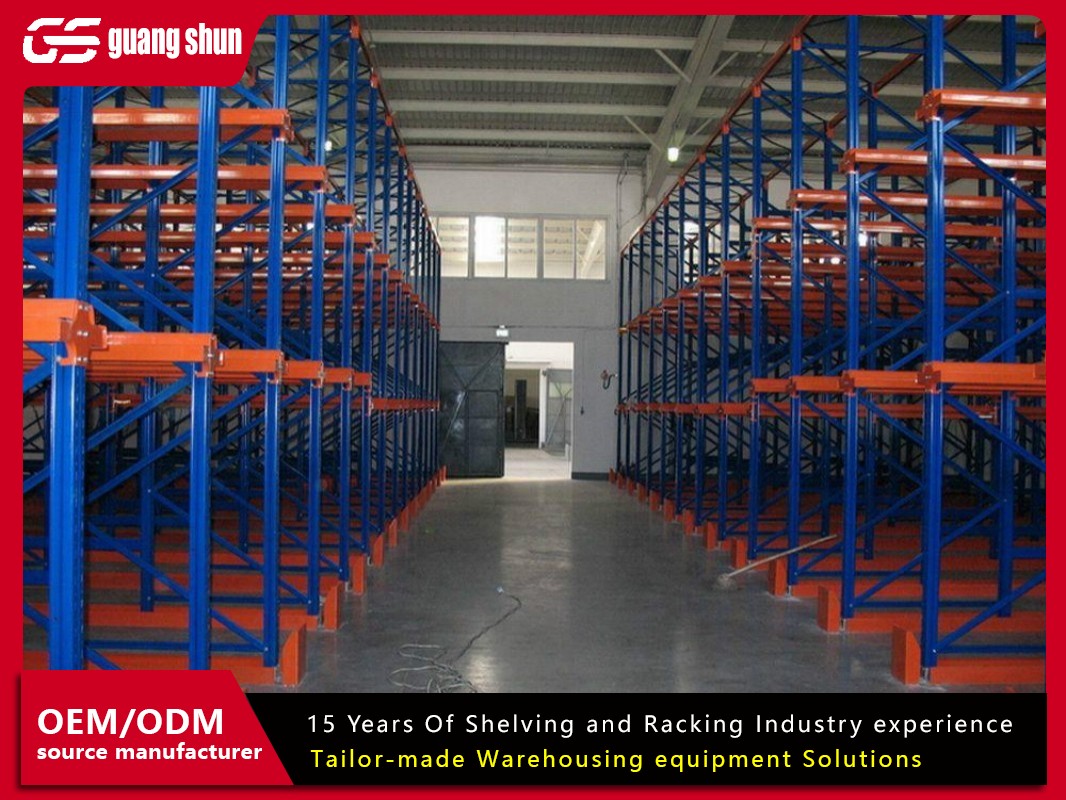
Drive-In and Drive-Through Racking – Achieves 60–70%
density by eliminating aisles through continuous rail systems. Suitable for
homogeneous product flows such as beverage or paper goods. Load depth capacities
typically reach 10–12 pallet positions per lane.
Push-Back Racking – Uses inclined rails and trolley systems
to store 3–6 pallets per bay depth. Offers 75% density with 80% accessibility,
making it a balanced solution for medium-turnover inventory.
Pallet Flow Racking – Employs gravity rollers or wheels to
facilitate FIFO inventory rotation. Density levels of 70% with
first-in-first-out discipline, ideal for perishable or date-sensitive
goods.
Material flow simulation tools, such as AutoMod and FlexSim, are increasingly
used to validate configuration choices before capital expenditure. These
simulations incorporate dwell times, lift truck travel paths, and picking
station throughput to forecast overall equipment effectiveness (OEE)
improvements.
Industry Pain Points and Engineering Solutions
Facility operators consistently report four critical pain points associated
with storage infrastructure, each requiring engineering countermeasures:
Column damage from forklift impacts – The most prevalent
failure mode, accounting for 47% of racking repairs in distribution centers.
Solutions include the installation of high-strength column guards (minimum 6 mm
steel plate), placement of bollards at 1.2-meter intervals, and the
implementation of optical guidance systems with laser-line indicators on aisle
floors.
Progressive collapse risk under fire conditions – Steel
loses 50% of its yield strength at 538°C, necessitating fire protection
strategies. Intumescent coatings applied to column bases and beam connections
provide up to 120-minute fire resistance ratings. Automatic sprinkler system
design must coordinate with racking layouts to avoid water-shielding
effects.
Seismic performance deficiencies – Racking systems in
seismic zones D and E require base isolation or enhanced bracing. Recent
deployments have integrated shape-memory alloy (SMA) dampers that dissipate
seismic energy through hysteretic behavior, reducing peak floor accelerations by
35–40%.
Inventory inaccessibility due to misaligned pallet
positions – Misplacement errors contribute to 9% of retrieval cycle
time variance. Automated storage and retrieval system (AS/RS) integration with
barcode or RFID location tracking reduces these errors to below 0.5%.
Leading equipment manufacturers, including Guangshun, have
responded to these challenges by developing modular racking systems with
replaceable impact zones and standardized component interfaces. These design
innovations allow for localized repair rather than full-bay replacement,
reducing maintenance costs by an average of 28% over a 10-year operational
period, as documented in a longitudinal study of 38 warehouses spanning
2018–2025.
Seismic Compliance and International Safety Standards
Seismic design of estanterias de almacen has evolved
considerably following the 2011 Christchurch and 2019 Ridgecrest earthquakes,
both of which caused extensive racking failures. Current international standards
prescribe distinct approaches:
EN 15512 (European) – Mandates a displacement-based design
method, requiring that racking systems maintain 80% of their load capacity after
a design-basis earthquake (return period of 475 years).
RMI Specification (American) – Employs a force-based
approach with a response modification factor (R-factor) of 2.0 for seismic force
reduction, coupled with a 1.5 overstrength factor for column-to-base
connections.
AS 4084 (Australian) – Introduces a performance-based
framework that differentiates between immediate occupancy and life-safety
performance levels, depending on the facility's criticality
classification.
Compliance verification typically involves shake-table testing of full-scale
racking modules at specialized laboratories such as those operated by the
University of California San Diego and the European Joint Research Centre. These
tests measure inter-story drift, column axial strain, and beam end-connector
rotation under synthetic ground motion profiles. The resulting data informs the
development of site-specific bracing schedules and anchor bolt patterns.
For facilities located in high-seismic zones, the addition of seismic sway
bracing increases total system cost by 12–18% but reduces earthquake-related
downtime risks by an estimated factor of 5. Post-earthquake inspections should
follow a standardized protocol that includes plumb-check measurements (tolerance
of ±0.5% of height), visual inspection of all beam connections, and verification
of anchor bolt torque (typically 150–200 Nm per M20 bolt).
Preventive Maintenance Protocols and Structural Integrity Assessment
Maintenance strategies for industrial racking systems should transition from
reactive repair to predictive monitoring. Advanced techniques now available
include:
Ultrasonic thickness measurement – Detects corrosion or
abrasion in column webs, particularly at floor-level zones where moisture and
debris accumulation occur. Annual inspection intervals are recommended for
facilities storing hygroscopic materials.
Digital leveling and laser alignment – Identifies column
leaning or settling with precision to ±0.1°, allowing early intervention before
secondary stresses develop in beam connections.
Strain gauge telemetry – Wireless sensors mounted on
critical beam connections transmit real-time load data to a central management
system, triggering alerts when strain exceeds 75% of design capacity.
Thermographic scanning – Detects hot spots in electrical
components near racking areas, particularly relevant for automated systems with
integrated power distribution rails.
A preventive maintenance schedule should include quarterly visual inspections
by certified rack inspectors, semi-annual torque checks on all beam-end
connectors, and annual comprehensive structural audits that include load test
verification. Historical maintenance records from 112 industrial facilities show
that proactive maintenance reduces unexpected racking failures by 63% and
extends service life from an average of 18 years to over 25 years.
Guangshun offers a proprietary digital inspection
platform that integrates these monitoring technologies into a unified dashboard,
enabling warehouse managers to track structural health metrics across multiple
sites. This platform has been deployed in 17 logistics hubs globally since 2023,
providing benchmark data that informs continuous improvement in racking design
and maintenance procedures.
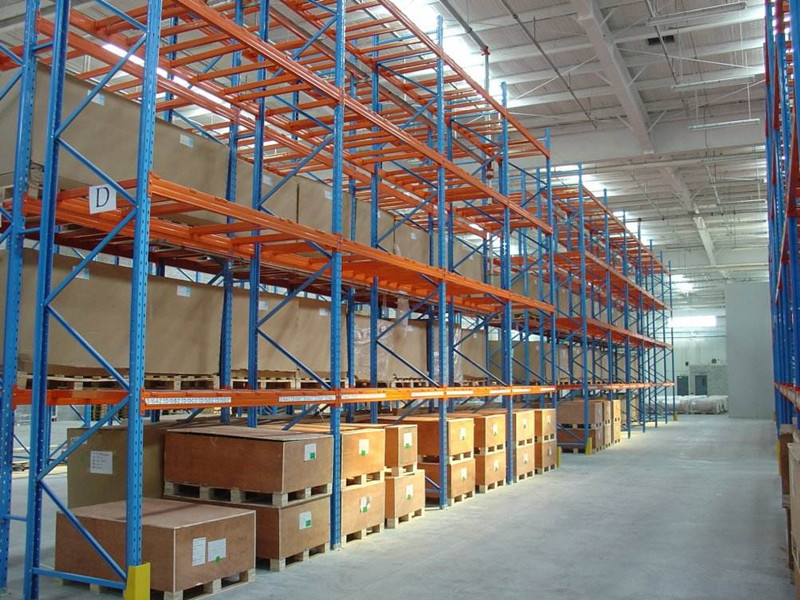
Economic Considerations and ROI of High-Performance Racking
The economic analysis of storage racking systems extends beyond initial
procurement costs to encompass operational efficiency gains, risk mitigation,
and resale value. A comprehensive total cost of ownership (TCO) model for a
mid-sized warehouse (15,000 pallet positions) reveals the following breakdown
over a 15-year horizon:
Initial equipment cost – USD 2.4–3.1 million depending on
configuration and seismic requirements.
Installation and commissioning – USD 0.6–0.8 million,
including floor preparation and anchor bolt placement.
Annual maintenance – USD 45,000–65,000 for inspections,
repairs, and component replacements.
Downtime cost avoidance – USD 180,000–220,000 per year,
representing the value of reduced failure-related interruptions.
Productivity gains from optimized configurations – 12–18%
increase in picking throughput, translating to USD 310,000–460,000 annual
value.
The net present value (NPV) of investing in premium racking systems typically
yields a positive return within 4.2 to 5.5 years, with internal rates of return
(IRR) ranging from 14% to 19%, assuming a discount rate of 8%. Facilities that
incorporate predictive monitoring and real-time load management systems achieve
15–20% higher productivity compared to those using static capacity models.
Additionally, racking systems with documented engineering certifications and
maintenance histories retain 30–40% of their original value in secondary
equipment markets, providing an asset recovery option during facility
relocations or consolidations.
The engineering and operational management of estanterias de almacen demands a
multidisciplinary approach that integrates structural mechanics, materials
science, logistics optimization, and economic analysis. From the selection of
cold-formed steel grades to the implementation of seismic bracing systems and
predictive maintenance protocols, every decision affects the safety,
productivity, and financial performance of warehouse operations. As supply chain
pressures intensify and storage density targets increase, the adoption of
advanced monitoring technologies and modular design principles will
differentiate high-performance facilities from their peers.
Facility owners and operators are encouraged to conduct regular structural
audits, invest in impact protection systems, and collaborate with experienced
manufacturers like Guangshun to ensure their racking infrastructure
meets both current operational demands and future capacity requirements. With
proper engineering and maintenance, industrial storage racking systems remain a
reliable and cost-effective asset throughout their intended service life.
Frequently Asked Questions
Q1: What factors determine the load capacity of industrial
estanterias de almacen?
A1: Load capacity depends on column section properties
(thickness, width, and shape), beam span and cross-section, connector geometry,
and the number of load levels. Dynamic amplification factors from forklift
operation must also be incorporated. Manufacturers provide load charts derived
from physical testing per EN 15512 or RMI standards, which should be consulted
for specific configurations.
Q2: How often should storage racking systems undergo structural
inspection?
A2: Industry best practice recommends visual inspections
every 3–6 months for active facilities, with comprehensive engineering audits
performed annually. High-activity zones near charging stations or aisle
intersections may require monthly checks. Inspections should include plumb
measurements, connector torque verification, and damage assessment using
calibrated gauges.
Q3: What are the seismic design requirements for estanterias de
almacen in high-risk regions?
A3: Facilities in seismic zones D and E require specialty
engineered systems with added bracing, base isolation, or energy-dissipating
devices. Design must comply with site-specific PGA values determined by
geotechnical investigation. International standards EN 15512, RMI, and AS 4084
provide tiered compliance pathways depending on facility criticality and
performance objectives.
Q4: Can estanterias de almacen be reconfigured after initial
installation?
A4: Reconfiguration is possible with modular systems that
use standardized beam lengths and column hole patterns. However, any structural
alteration requires reanalysis of load paths and may involve additional bracing.
Significant reconfiguration (e.g., changing bay depths or heights) should be
engineered and inspected to maintain safety compliance.
Q5: What is the typical service life of industrial storage
racking?
A5: With proper maintenance and impact protection, steel
storage racking systems typically provide 20–25 years of service in controlled
warehouse environments. Factors that shorten lifespan include corrosion (from
humidity or chemical exposure), repeated impact damage, and inadequate load
management. Regular preventive maintenance can extend service life to 30 years
in optimal conditions.
Q6: How does pallet configuration affect racking system
design?
A6: Pallet dimensions (length, width, and height), weight,
and structural compliance directly dictate beam spacing, load distribution, and
clearance requirements. Standard GMA pallets (1,200 × 1,000 mm) differ from EUR
pallets (1,200 × 800 mm), influencing beam length and column spacing. Overhang
restrictions (typically 50–100 mm maximum per side) must be observed to avoid
load instability.