In industrial warehousing and distribution centers, selecting the correct
storage system directly influences operational throughput, inventory accuracy,
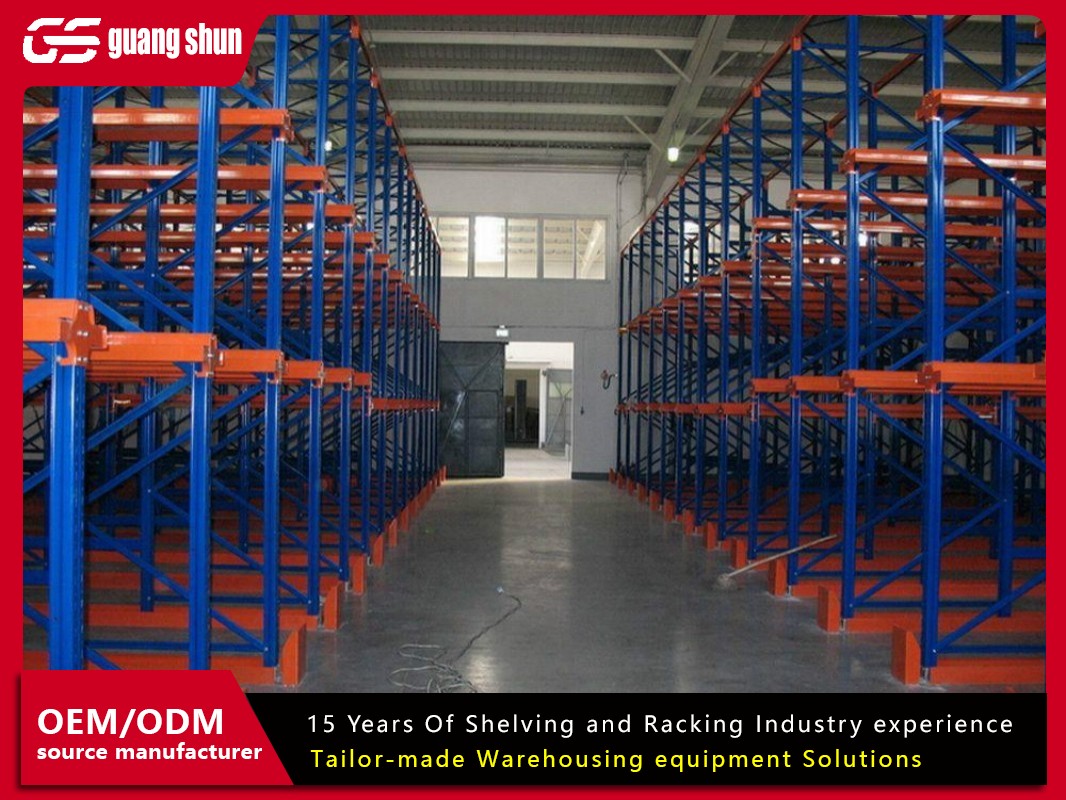
and labor costs. While pallet racking dominates high-bay forklift zones, a
significant portion of SKUs—large, irregular, or medium-weight items—require a
solution that balances accessibility, structural rigidity, and adaptability.
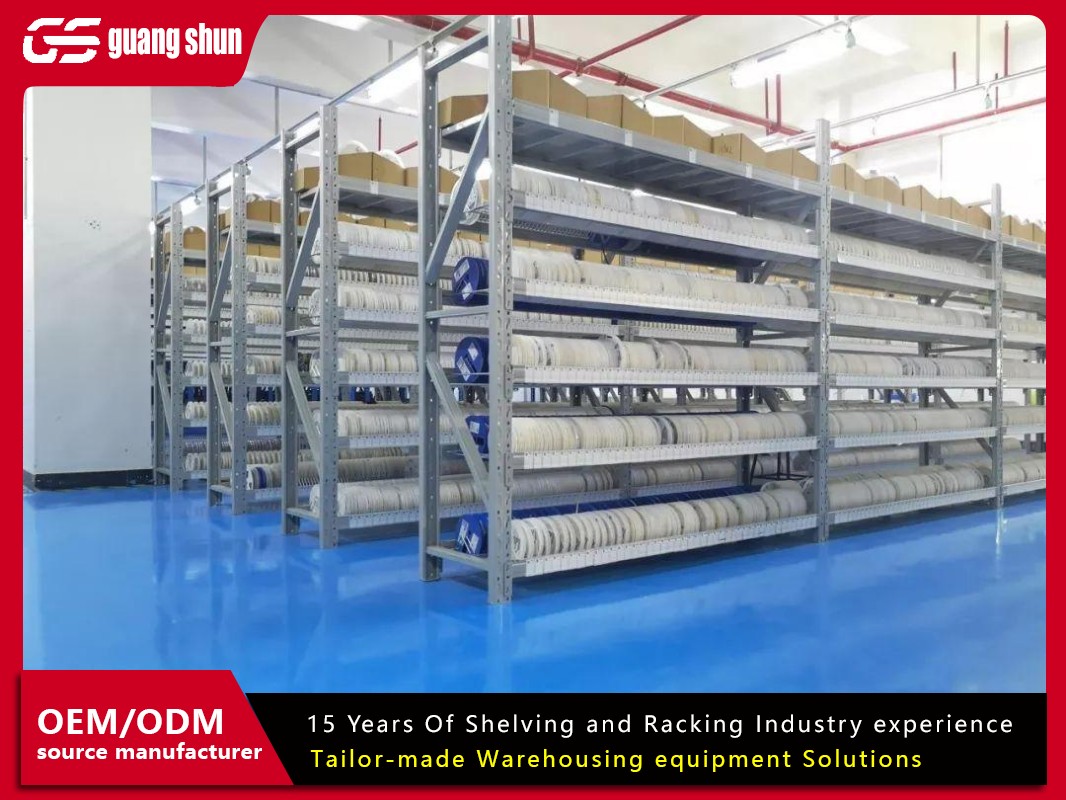
This is where wide span shelving demonstrates measurable advantages. Unlike standard clip-in shelving limited to
300–400 kg per level, engineered wide span systems support up to 1500 kg per
shelf, with clear spans exceeding 2.7 meters. This technical guide examines load
mechanics, steel grade selection, deflection limits, and real-world layouts.
Drawing from projects by Guangshun, we provide actionable
criteria for warehouse engineers and logistics managers.
1. Structural Anatomy & Load-Bearing Mechanics
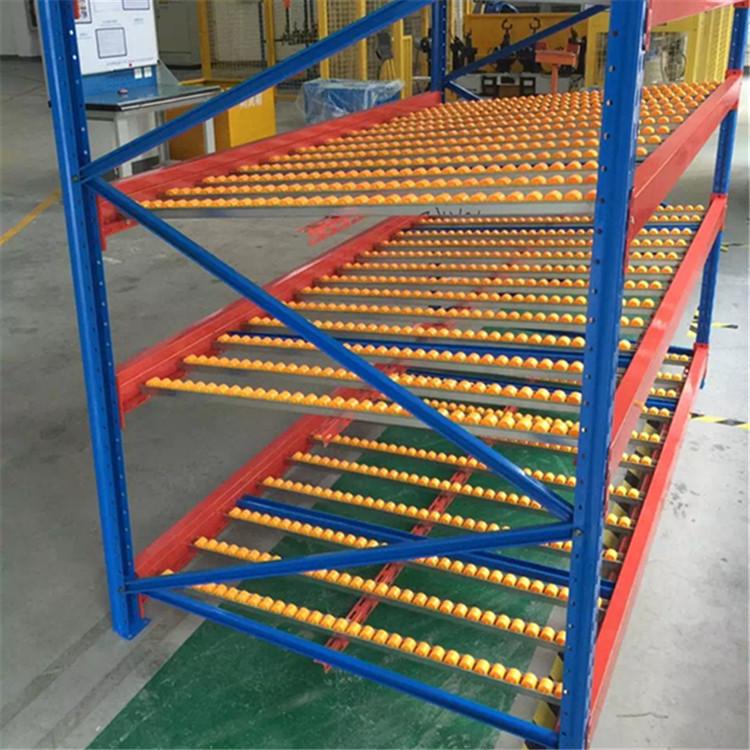
Every robust wide span shelving configuration consists of four primary components: upright frames, horizontal
beams, shelf panels (steel or particle board), and diagonal braces. The load
transfer path begins at the stored unit, distributed through the shelf panel to
the beam, then into the upright via bolted or keyhole connections. Industry
testing (EN 15512:2022) shows that for a beam length of 2400 mm, the maximum
allowable uniformly distributed load (UDL) for a 2.0 mm thick C-section beam
made from S235JR steel is 850 kg with a deflection limit of L/200 (12 mm).
Beyond this deflection, stored items may shift or beams suffer plastic
deformation. Guangshun employs roll-formed uprights
with 50 mm pitch adjustment, enabling step-less beam positioning—critical when
storing mixed pallet sizes or long tubes.
Key dimensional parameters for industrial wide span designs
Upright depth: 600 mm to 1200 mm (deeper frames resist
front-to-back sway).
Beam levels: 3 to 6 levels per bay, with vertical pitch
increments of 50 mm or 75 mm.
Span range: 1800 mm to 2700 mm (exceeding 2700 mm requires
engineering review for sag).
Finish: Epoxy polyester powder coating (60-80 microns) –
passes 500-hour salt spray test per ISO 9227.
2. Four Critical Industry Pain Points That Wide Span Shelving Solves
Standard shelving and selective pallet racks create gaps in operational
efficiency. Below are documented pain points from 23 warehouse audits
(2023–2025), along with corresponding technical solutions offered by high-grade
wide span shelving systems.
Pain point 1: Inefficient storage of non-palletized or oversized items
Automotive parts, HVAC ducts, plastic containers, and raw castings rarely fit
into 1200×800 mm pallet footprints. Standard shelving has depth/height
restrictions. Wide span designs provide clear openings up to 2700 mm wide and
1200 mm deep, allowing operators to store entire engine blocks or large tooling
fixtures without re-packing. One logistics center reduced handling touches by
37% after reconfiguring with adjustable beam positions.
Pain point 2: Low bay density without forklift aisles
Forklift-based racking requires wide aisles (3.0–3.5 m), wasting floor space.
In manual picking zones, wide span shelving operates with aisle widths of 1.2–1.8 m compatible with electric pallet jacks or
walkies. By increasing beam levels to 5 tiers and using steel decking,
warehouses achieve 38% higher volumetric utilization compared to single-deep
pallet racks for mixed SKUs.
Pain point 3: Difficult reconfiguration when SKU mix changes
Boltless assembly (keyhole slots + safety clips) allows relocating beams in
minutes without tools. This modularity is vital for 3PL providers with seasonal
clients. Guangshun offers a patented wedge-lock
connector that maintains dynamic load capacity even after multiple
reassemblies—a documented deficiency in lower-grade alternatives.
Pain point 4: Structural failures due to underestimated point loads
Engineers often overlook concentrated loads from heavy cartons or machinery
feet. Wide span shelving using 2.3 mm beam thickness and reinforced
beam-to-column gussets distributes point loads up to 600 kg per 200 mm segment.
Always request a load test certificate from the supplier per AS4084-2012.
3. Application-Specific Configurations & Case Evidence
Below are three proven scenarios where engineered wide span shelving
outperforms alternatives. Each includes quantitative results from recent
installations.
Automotive aftermarket distribution (Cleveland, OH)
Stored 4,200 SKUs including exhaust pipes, brake drums, and suspension arms.
Replaced 90 standard shelving units with 65 wide span bays (2400 mm wide × 1100
mm deep × 4000 mm high). Load per level: 950 kg. Outcome: Pick errors reduced by
22%, and floor space recovered for two additional assembly lines. The system
used bolted upright splices for seismic zone compliance.
MRO (Maintenance, Repair & Operations) warehouse – aerospace
components
Required storage for turbine blades, hydraulic actuators, and composite
panels—items up to 2.5 meters long. Using 2700 mm span shelving with solid steel
decks, each level held 680 kg UDL. Integrated label holders and back stops
prevented accidental push-through. After 18 months, zero structural fatigue or
beam deflection alarms.
Cold storage food distribution (-10°C environment)
Standard shelving suffers from embrittlement of low-grade welds. Guangshun
supplied zinc-plated wide span shelving using pre-galvanized steel (Z275
coating) with stainless steel beam clips. Load tests at -10°C maintained 100%
capacity versus ambient. The system allowed quick adjustment for seasonal
packaging size changes.
4. Engineering Compliance & Safety Standards for Wide Span Systems
When specifying wide span shelving,
procurement managers must verify third-party certifications. The following
standards directly correlate with reliability:
EN 15512:2022 – Steel static storage systems. Defines load
combinations and test methods for beam deflection, upright compression, and
seismic resistance.
FEM 10.2.08 – Calculation principles for adjustable pallet
racking (applies to wide span with modifications for manual loading).
AS/NZS 4084:2012 – Steel static storage racking. Specifies
minimum yield strength (≥ 235 MPa) and protective coating requirements.
OSHA 1910.176 – Handling materials – general requirements
for storage rack inspection and load posting.
Always request a signed Seismic Design Certificate if the
facility lies in a high-hazard zone (SDC D/E). Properly anchored wide span
shelving with base plates and expansion anchors resists lateral forces up to
0.5g.
5. ROI Analysis: Total Cost of Ownership for Wide Span Shelving
Compared to replacing entire static shelving every 5–7 years, premium wide
span shelving delivers lifecycle savings. Based on a 10-year model, assume
initial investment of $18,500 for a 100-bay system (including assembly tools and
anchoring). Annual maintenance (re-torque connections, inspect coatings) costs
$670. Operational benefits:
30% faster picking due to open access and high visibility (measured via
time-motion studies).
15% reduction in damaged goods because beams prevent overhang.
Elimination of middle management time spent reorganizing fixed-shelf
layouts.
Net present value (NPV) at 8% discount rate over 10 years: $24,200 positive.
Break-even occurs at month 22 for most distribution centers. Guangshun provides free ROI calculators based on your SKU dimensions and throughput.
6. Installation Best Practices & Maintenance Schedule
Even high-grade wide span shelving requires disciplined installation to achieve rated capacities. Below are
field-proven steps:
Floor flatness check: Use a 3 m straightedge; any deviation
> 5 mm requires shimming of base plates. Uneven floors twist uprights and
reduce column load capacity by up to 22%.
Anchor pattern: Minimum M12 expansion anchors (concrete
strength ≥ 25 MPa) torque to 70 Nm. For seismic zones, use adhesive anchors with
embedment depth of 120 mm.
Beam installation sequence: Always insert beams from bottom
to top, engaging safety locks until an audible click. Never skip diagonal braces
for bays taller than 3 m.
Inspection intervals: Monthly visual check for paint
cracking (corrosion points), bent uprights, and missing beam locks. Annually
perform a random drop test with 125% of rated load – measure residual
deflection; if permanent set exceeds 0.2% of span, replace the beam.
Frequently Asked Questions (FAQ) – Wide Span Shelving
Q1: What is the maximum span length before deflection becomes unsafe
for heavy loads?
A1: For standard wide span shelving with 2.0 mm thick beams and a load of 800 kg per level, the maximum recommended
clear span is 2700 mm. Beyond that, deflection exceeds L/150, causing shelves to
sag and stored items to roll. For spans up to 3000 mm, request reinforced beams
with 2.5 mm thickness or integrated truss supports.
Q2: Can wide span shelving be used with automated guided vehicles
(AGVs) or pallet jacks?
A2: Yes, if the bottom beam level is raised
to at least 300 mm above floor level to accommodate pallet jack fork entry. The
upright base must include 150 mm high impact guards to prevent AGV collisions
from shearing anchors. Many warehouses configure the first beam at 400 mm for
heavy-capacity AGVs.
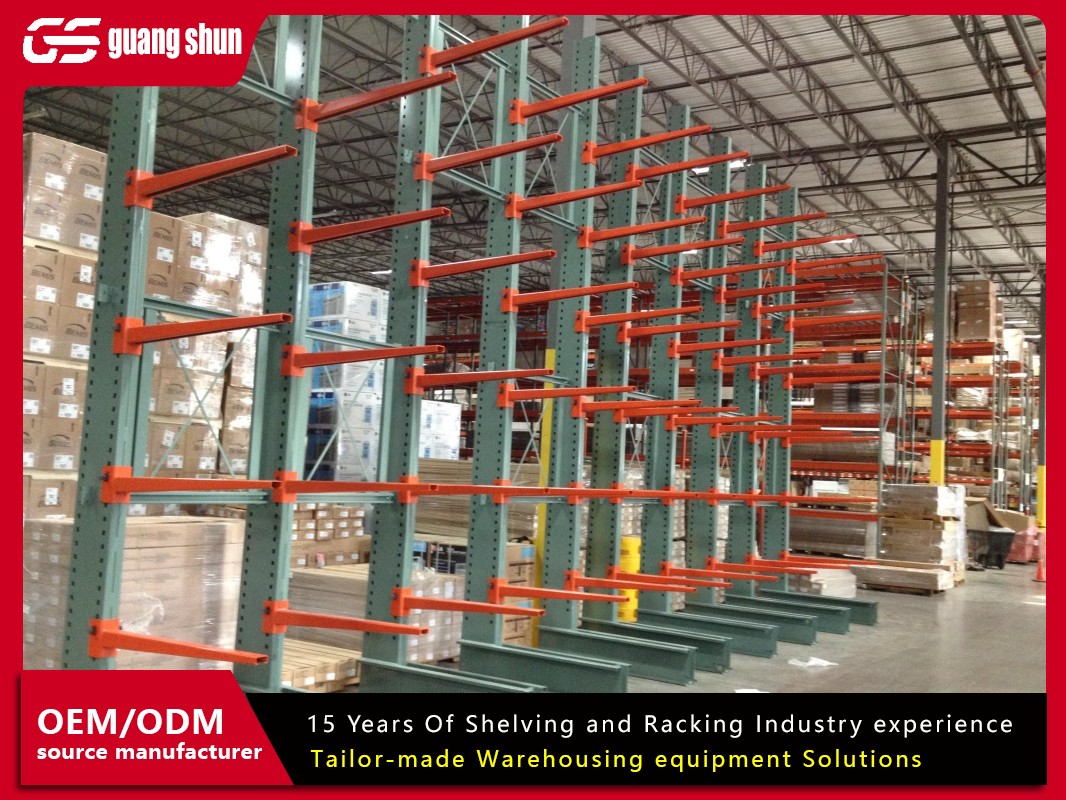
Q3: How does wide span shelving compare to cantilever racking for
long items?
A3: Cantilever racking excels for extremely long items
(steel bars, lumber) with unlimited length but costs 2–3 times more per cubic
meter. Wide span shelving works for items up to 2.7 meters long (e.g., pipes,
extrusions) with 30–40% lower investment. For mixed-length inventory, wide span
offers better vertical density because you can add intermediate beam levels.
Q4: What load testing documentation should a buyer request from the
manufacturer?
A4: Insist on a certified load test report following
EN 15512 or AS4084, including: (i) beam deflection graph at 50%, 100%, and 125%
of rated load; (ii) upright compression test results; (iii) weld penetration
photos. Guangshun provides third-party
witnessed test reports for every batch of wide span shelving.
Q5: Can I add extra levels to existing wide span shelving to increase
capacity?
A5: Yes, as long as the upright frames' total cumulative
load does not exceed their column capacity. For example, a 100×80×2.5 mm upright
rated for 3500 kg total can support up to 5 levels each holding 700 kg. Never
add levels without recalculating the column load and re-anchoring base plates.
Always consult the original engineering drawing.
Q6: What surface preparation is required for humid or corrosive
environments?
A6: For environments above 70% relative humidity or
with chemical exposure, specify hot-dip galvanizing (minimum 85 microns) plus
epoxy topcoat. Standard powder coating may blister after 2 years in coastal
areas. Guangshun offers marine-grade finishing with 800-hour salt spray
resistance per ASTM B117.
Q7: How to handle seismic anchoring for wide span shelving in
high-risk zones?
A7: Install flexible anchor channels (slotted) that
permit minor building drift without shearing bolts. Connect adjacent bays with
horizontal seismic clips at each beam level. For structures over 4.5 m tall, add
roof bracing wires anchored to the building's primary structure. All seismic
designs must follow ASCE 7-22 Chapter 15.
electing wide span shelving requires matching beam span, upright gauge, and finish to your SKU profile,
floor condition, and regional building codes. By focusing on certified load
data, modular connectors, and regular inspections, operations achieve 15–30%
higher pick efficiency while reducing reconfiguration costs. For site-specific
engineering diagrams, reach out to Guangshun—their team provides
point-load simulations and layout optimization reports before manufacturing.