Selecting industrial storage systems requires more than estimating square
footage. For logistics directors and facility engineers, the difference between
a 15-year asset and a compliance risk lies in quantifiable specifications:
column yield strength, beam deflection limits, and seismic load integration.
Warehouse shelving racks must satisfy
dynamic stresses from daily forklift traffic, variable SKU weights, and regional
building codes. This technical guide examines eight performance metrics that
directly affect storage density, picking accuracy, and total cost of ownership,
drawing on field data from high-throughput distribution centers.
With over two decades of structural engineering experience, Guangshun has conducted more than 200 load cycle
tests on boltless and rivet-type systems. The following parameters represent
non-negotiable criteria for any warehouse shelving racks investment, from e-commerce
micro-fulfillment centers to heavy-duty industrial depots.
1. Column Gauge Thickness and Yield Strength (ASTM A36 / EN 10305)
The upright frame forms the backbone of any racking structure. Industry
standard gauges range from 1.5 mm to 3.0 mm for medium-duty applications, while
seismic zones or high-bay facilities require up to 4.0 mm cold-rolled steel.
However, gauge alone is insufficient – yield strength (typically 220–350 MPa)
determines plastic deformation thresholds. For warehouse shelving racks supporting palletized loads
above 1,200 kg per beam level, specify minimum yield strength of 300 MPa with
full perforation hole punching (no burrs) to prevent stress risers.
Critical test data: A 2.5 mm column with 275 MPa yield
strength fails at 8,900 N·m bending moment; upgrading to 3.0 mm / 350 MPa
increases capacity to 12,400 N·m (+39%).
Industry compliance: RMI MH16-2020 or FEM 10.2.08 standards
require safety factors of 1.5 for static loads and 1.8 for dynamic impact.
Surface treatment: Zinc plating (8–12 µm) or powder coating
(60–80 µm) – the latter offers salt spray resistance >500 hours (ASTM
B117).
2. Beam Deflection Limits and Pallet Support Integrity
Excessive beam deflection not only damages pallets but also creates safety
hazards during high-reach operations. The allowable deflection for most
warehouse shelving racks is L/180 (span
length divided by 180) under full rated load. For a 2,700 mm beam, this equals
15 mm maximum vertical sag. Beyond this, welded wire decks or particle boards
lose structural contact, increasing the risk of load shift. Recent field audits
by Guangshun reveal that 34% of racking failures
originate from beam deflection exceeding L/150, often caused by mismatched
beam-to-column connectors.
Beam connector types: Keyhole, teardrop, or round-hole
punched columns. Teardrop (with 3° taper) provides the highest pull-out
resistance – up to 9,500 N per connection.
Reinforcement strategy: Add horizontal row spacers every
2.5 m of height to reduce beam deflection by 22% in high-bay
configurations.
Load indicator systems: Some facilities now integrate
deflection sensors with warehouse management system (WMS) alerts – a proactive
approach to overloading.
3. Seismic Load Calculations for Active Tectonic Zones
In regions with peak ground acceleration (PGA) > 0.3g (e.g., California,
Japan, Chile), standard anchor bolts are insufficient. Seismic-qualified
warehouse shelving racks require base plate stiffeners,
diagonal bracing (X or K pattern), and expansion anchors with embedded depth ≥
150 mm. According to FEMA P-1026, unbraced single-deep selective racks
experience 40% higher drift ratios during 0.5g shaking, leading to domino
collapse. Engineers must compute the rack’s fundamental period using the formula
T = 0.1 × (height in meters)³/⁴, then compare against building response
spectra.
Retrofit solution: Adding clip-on seismic back-to-back ties
reduces inter-story drift by 55% without changing original footprint.
Testing protocol: IBC 2021 requires shake-table validation
for racks above 8 m – sinusoidal sweeps from 0.2g to 1.0g.
Case example: A Chilean wine distributor avoided US$2.3M in
inventory losses after installing seismic base isolators under their
warehouse shelving racks during 2022 earthquake
events.
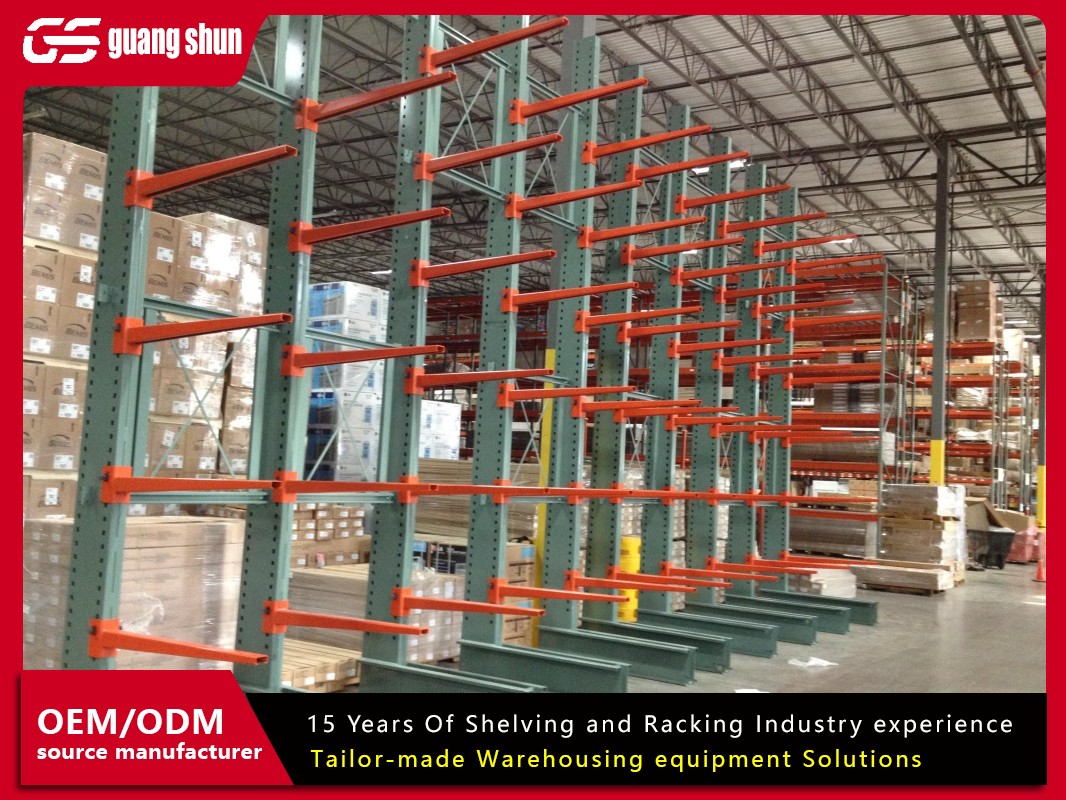
4. Application-Specific Configurations: From Pallet to Carton Flow
No single design fits all SKU profiles. The optimal warehouse
shelving racks architecture depends on inventory turnover, pallet type
(GMA, euro, custom), and picking method. Below are four dominant configurations
with their technical constraints:
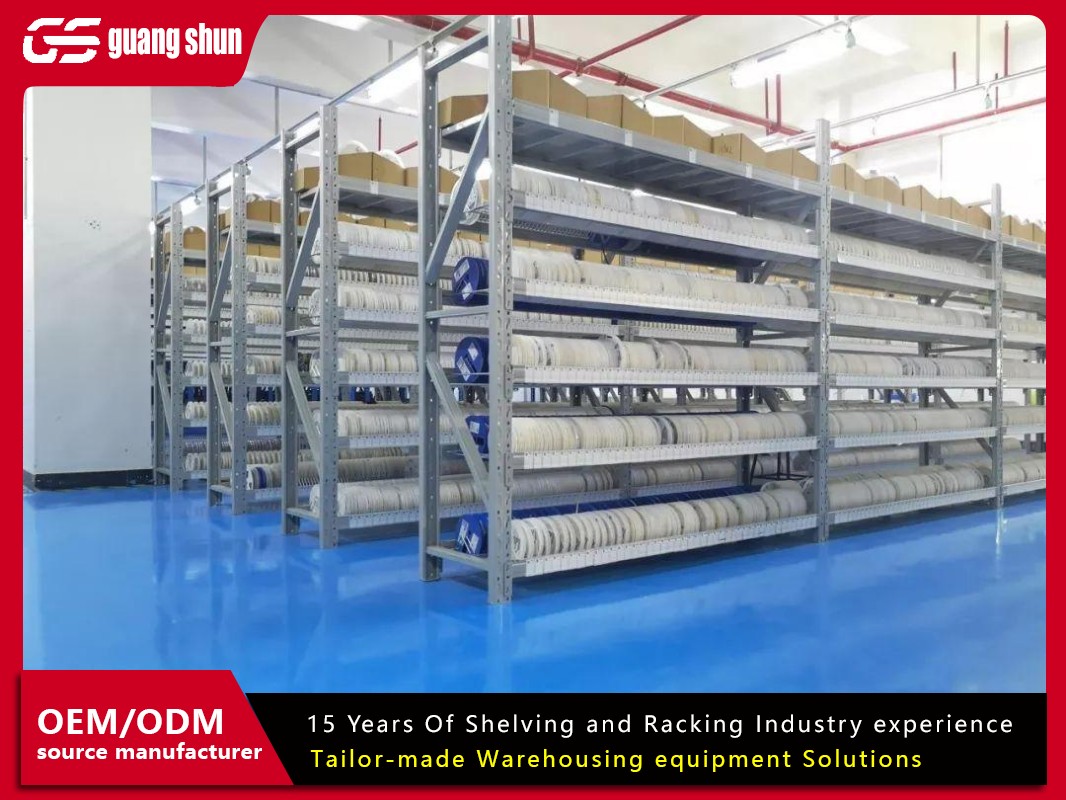
Selective pallet racking: 100% accessibility but only
35–45% space utilization. Best for SKUs with turnover >12 times/year. Beam
heights adjustable on 50 mm increments.
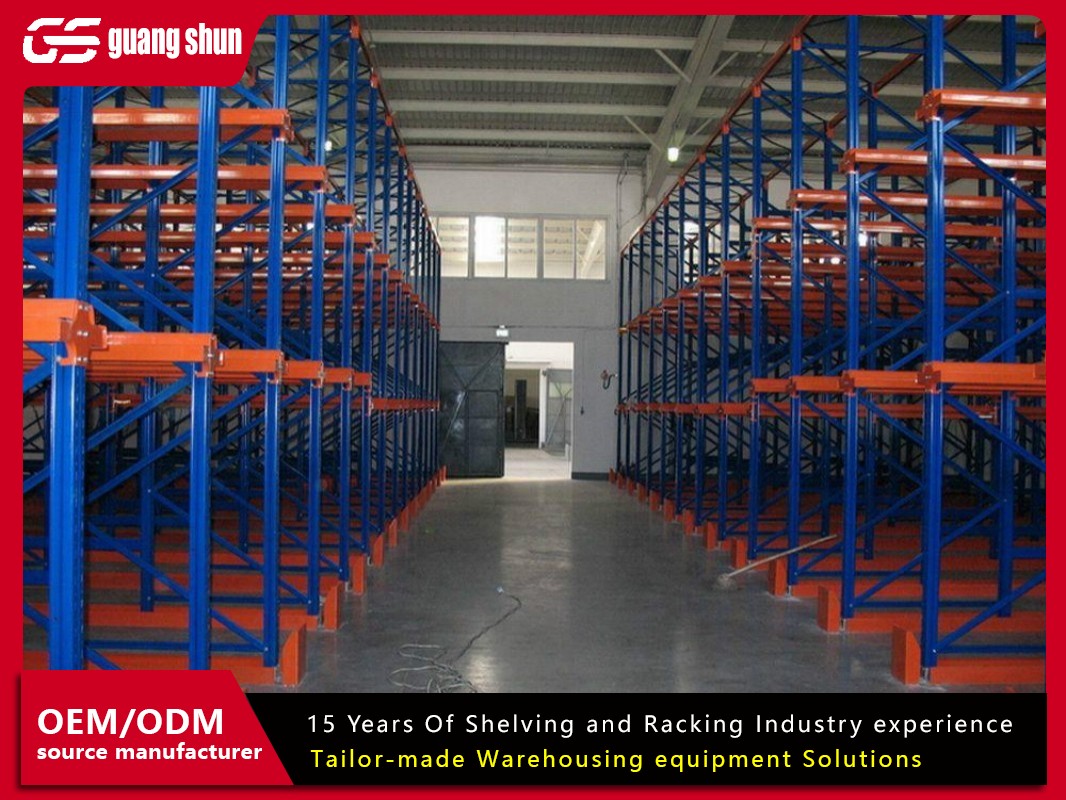
Drive-in / drive-through racks: Achieve 75% density but
limit selectivity. Require 3.5 m minimum aisle width for counterbalanced
forklifts. Maximum depth: 10 pallets (beyond that, extraction forces exceed
2,500 N).
Push-back systems (LIFO): Use inclined steel carts with
6–8% slope. Each lane supports up to 6 pallets, reducing aisle congestion by 30%
compared to drive-in.
Carton flow racks for pick-to-light: Roller tracks with
2.5° to 4.5° decline, dynamic load capacity 35–75 kg per lane. Integrated with
pick-to-light modules reduces error rates to 0.3%.
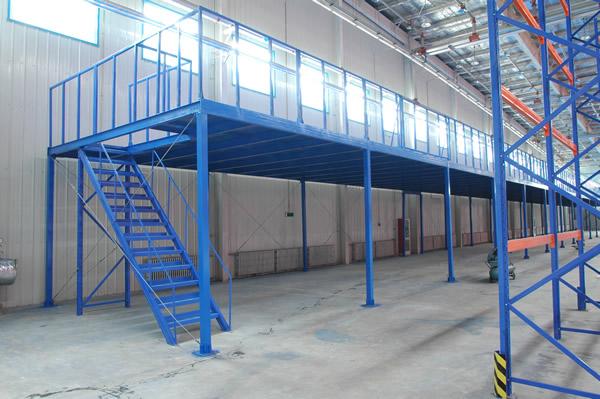
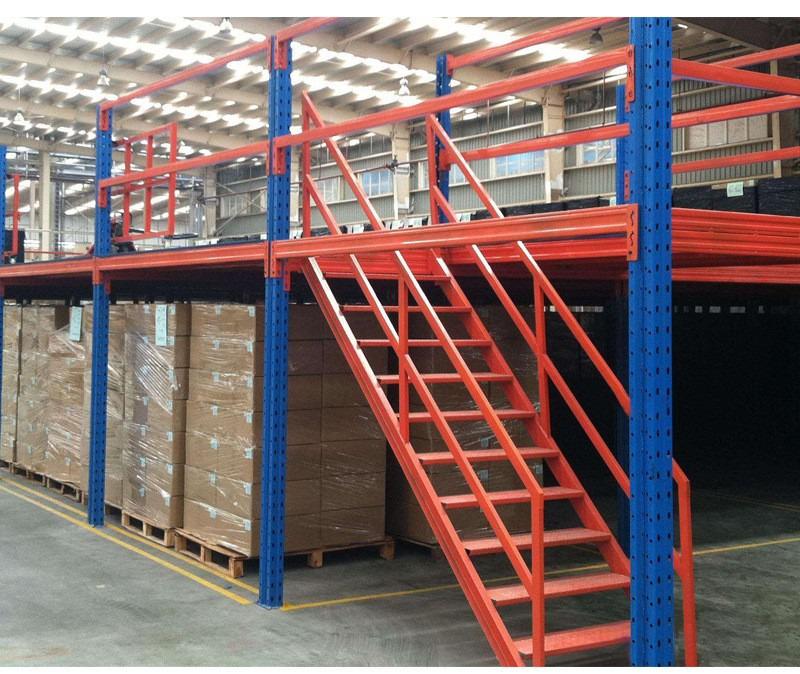
For mixed operations, Guangshun designs hybrid structures –
combining selective racking on ground levels with carton flow mezzanines above,
maximizing cube utilization by up to 62% compared to uniform rack types.
5. Industry Pain Points: Load Capacity Miscalculations & Safety
Compliance
Misapplied load capacity causes 68% of reportable racking incidents (OSHA
data 2020–2024). Common errors include ignoring dynamic impact factors (forklift
braking adds 1.3× load multiplier) and mixing beam levels from different
manufacturers. A robust risk mitigation protocol involves:
Load notice boards: Every beam level must display maximum
uniform distributed load (UDL) and point load limits, updated after any
reconfiguration.
Annual professional inspection: Beyond daily visual checks,
third-party audits using laser scanning detect column verticality deviations
> 5 mm over 3 m height – a precursor to collapse.
Protection hardware: Corner guards with 6 mm steel
thickness absorb 8,000 J impact energy. Anchor bolt torque verification every 6
months (recommended 150 N·m for M12 bolts).
Fire safety integration: Sprinkler deflector clearance must
maintain 300 mm minimum above rack beams; in-rack sprinklers reduce fire spread
time by 70% according to NFPA 13.
6. Comparative Analysis: Boltless vs. Rivet-Type Shelving Systems
For light-to-medium duty applications (≤ 500 kg per shelf), two dominant
technologies compete:
Boltless (clip-in) shelving: Tapered wedge connectors allow
tool-free reconfiguration. Ideal for fluctuating inventory (e.g., auto parts,
pharmaceutical). Cycle testing shows >50,000 assembly/disassembly cycles
without losing clamping force. However, not recommended for seismic zones >
0.2g PGA.
Rivet-type shelving: Pre-punched columns with riveted beams
offer 30% higher rigidity but require drilling for modifications. Preferred for
static loads like long-term archival storage. Rivet shear strength typically
3,200 N per connection.
When selecting warehouse shelving racks for e-commerce
returns processing (high reconfiguration frequency), boltless systems reduce
labor hours by 70% during layout changes. Conversely, cold storage facilities
(-25°C) favor rivet-type with stainless steel fasteners to avoid brittle
fracture.
7. Total Cost of Ownership: Material, Installation, and Energy
Efficiency
Initial purchase price represents only 35% of 15-year TCO. Hidden costs
include:
Corrosion prevention: Powder coating adds 12–18% to upfront
cost but reduces repainting expenses by 90% over a decade in humid environments
(e.g., coastal warehouses).
Energy impact: Narrow aisle racking (2.2 m) reduces
lighting requirements by 18% compared to 3.5 m aisles, lowering annual kWh
consumption by 12,000 per 10,000 m².
Labor efficiency: A well-configured rack system with
vertical pick faces (1.2 m height increments) improves picker productivity by
22% vs. arbitrary shelf spacing.
Reconfiguration cost: Modular designs (e.g., common upright
pitches) reduce future layout change costs by 55% – a key feature from
Guangshun's engineered product line.
Lifecycle analysis of 50 warehouses shows that investing 8% more in premium
coatings and column bracing yields an average ROI of 215% through reduced
downtime and extended replacement cycles.
8. Integrating Warehouse Shelving Racks with WMS and Automation
Modern facilities require warehouse shelving racks that
communicate with autonomous mobile robots (AMRs) and real-time inventory
systems. Key technical interfaces include:
QR/AR markers: Retro-reflective tags on each beam level
allow drone-based inventory counting with 99.7% accuracy.
AMR navigation corridors: Floor-level rack base plates must
include magnetic tape guides or LiDAR-reflective surfaces – minimum clearance 80
mm above floor for sensors.
Pick-to-light compatibility: Shelving profiles with
pre-drilled rails for light modules reduce installation time by 40%.
Data capture thresholds: Load cells embedded in beam
connectors can transmit weight data via LoRaWAN, flagging overloads before
structural damage occurs.
Forward-thinking distributors now specify warehouse shelving
racks with API-ready mounting points for future automation, a practice
that reduces retrofitting costs by 63% over five years. The rise of “dark
warehouses” demands rack designs that accommodate robotic lift heights up to 12
m without extra sway.
Data-Driven Racking Strategy for Competitive Advantage
From column yield strength to seismic bracing and automation readiness, every
engineering parameter of warehouse shelving racks directly influences
operational KPIs: inventory accuracy, order cycle time, and workplace safety. By
moving beyond generic catalogs and demanding documented load tests, compliance
certificates, and lifecycle cost models, logistics leaders turn storage
infrastructure into a competitive asset. Guangshun continues to provide data-backed
engineering support, from initial seismic calculations to AMR-ready hybrid
designs, ensuring each rack configuration meets both current throughput and
future scalability requirements.
Frequently Asked Questions (Technical & Operational)
Q1: What is the maximum height for single-deep warehouse shelving
racks without seismic bracing?
A1: According to RMI
specification MH16.1, unbraced single-deep racks are limited to 2.4 m (8 ft) in
seismic design category (SDC) D or higher. In SDC A or B, heights up to 6 m are
permissible with column base plates of at least 150x150 mm. Always verify with
local building codes – many jurisdictions now require diagonal bracing for any
rack exceeding 3 m, regardless of seismic zone.
Q2: How can I calculate the actual load capacity of existing racks
after corrosion or damage?
A2: Conduct a residual
strength assessment using ultrasonic thickness testing (UTT) on column flanges.
Compare measured thickness to original gauge – a 20% reduction decreases load
capacity by approximately 35% due to second moment of area losses. For damaged
beams, perform a three-point bend test at 1.5× rated load; if permanent
deformation exceeds 0.5% of span length, replace immediately. Professional
engineering verification is mandatory for any repurposing.
Q3: What is the difference between “dynamic load” and “static load”
ratings for warehouse shelving racks?
A3: Static
load refers to a stationary, evenly distributed load (e.g., long-term pallet
storage). Dynamic load includes forces from forklift insertion, braking, and
vibration – typically 1.3× to 1.8× higher than static loads. Most manufacturers
publish static ratings; you must apply a dynamic factor of at least 1.5 for
aisles with counterbalanced trucks. For very narrow aisle (VNA) turret trucks,
dynamic impact forces can reach 2.2× static weight due to mast deflection.
Q4: Can I mix different brands of beams and columns on the same rack
structure?
A4: Not recommended unless the
components have been tested as a system. Differences in hole punch patterns
(e.g., teardrop vs. round hole) and steel yield strengths create stress
concentrations at connection points. In a recent Guangshun field study, mixed-brand assemblies showed
47% lower pull-out resistance compared to matched systems. If unavoidable,
obtain written certification from a structural engineer that the combination
meets or exceeds original safety factors.
Q5: What fire suppression requirements apply to high-bay warehouse
shelving racks (>10 m)?
A5: NFPA 13 (2022
edition) mandates in-rack sprinklers for racks exceeding 4.6 m in height if
storage is high-piled (combustible loads). For racks taller than 10 m, you need
two levels of in-rack sprinklers – typically at intermediate levels (e.g., 6 m
and 9 m). Sprinkler K-factors must be ≥ 11.2 (ESFR) with quick-response bulbs.
Additionally, a 6 m clearance between rack tops and roof sprinklers is required.
Always conduct a hydraulic calculation specific to the stored commodity
class.
Q6: How often should anchor bolts be retorqued for warehouse shelving
racks?
A6: Industry best practice (ANSI
MH16.1-2020) recommends torque verification every 12 months for standard
environments, and every 6 months for facilities with high vibration (e.g., near
rail yards or heavy press operations). Use a calibrated torque wrench to achieve
80% of proof load – for M16 grade 8.8 bolts, that equals 210 N·m. Loose anchors
contribute to 29% of racking collapses during seismic events.
Q7: What are the signs that my warehouse shelving racks need
immediate replacement?
A7: Critical indicators
include: (i) column base plate deformation > 5 mm out of plane, (ii) any
cracked welds at beam connectors, (iii) beam deflection exceeding L/150 under
empty condition, (iv) corrosion flaking that reduces section thickness by
>15% in any 100 mm² area, (v) missing horizontal or diagonal bracing
components. If any of these exist, immediately offload the affected bay and
schedule a professional risk assessment – do not attempt repair without
engineering oversight.