In modern warehousing and distribution, the selection of a rack system is not merely a storage decision—it is a foundational engineering choice that directly impacts throughput, safety, capital expenditure, and operational agility. With industrial facilities facing rising construction costs (averaging 8–12% year-over-year) and increasingly complex SKU profiles, static shelving is no longer sufficient. A professionally engineered rack system integrates material science, seismic design, and workflow optimization to deliver measurable ROI. Industry specialists like Guangshun provide fully engineered solutions that balance density, accessibility, and long-term structural reliability.
1. Taxonomy of Industrial Rack Systems: Structural Configurations & Application Suitability
Every warehouse operation demands a specific balance between storage density and accessibility. The following core rack system architectures address distinct inventory profiles.
1.1 Selective Pallet Rack – Maximum Accessibility
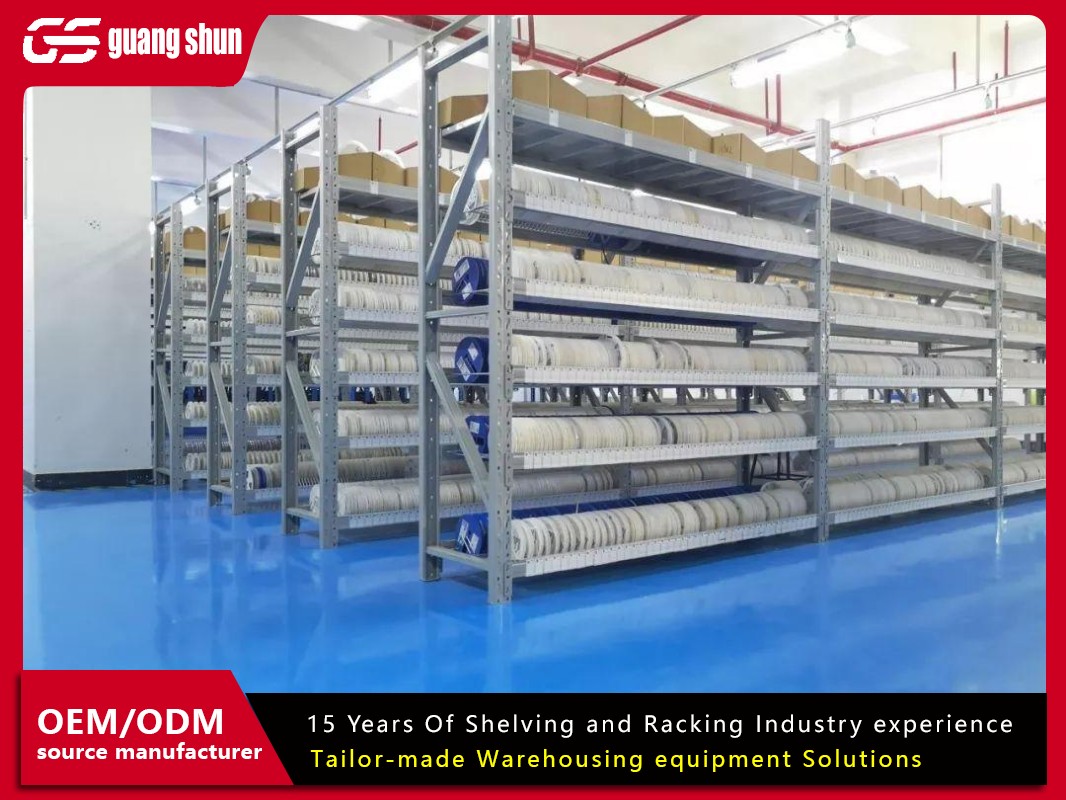
Selective pallet rack remains the most widely deployed configuration, offering 100% accessibility to each pallet position. Its adjustable beam levels accommodate varying load heights, while roll-formed or structural steel columns (typically 2.0–3.0 mm thickness) provide load capacities up to 4,500 kg per beam level. This configuration is ideal for SKU-diverse environments where first-in-first-out (FIFO) inventory rotation is mandatory. When paired with wire decking and row spacers, selective rack achieves a storage density of roughly 35–45% of cubic volume.
1.2 Drive-In & Drive-Through Rack – High-Density, Low Selectivity
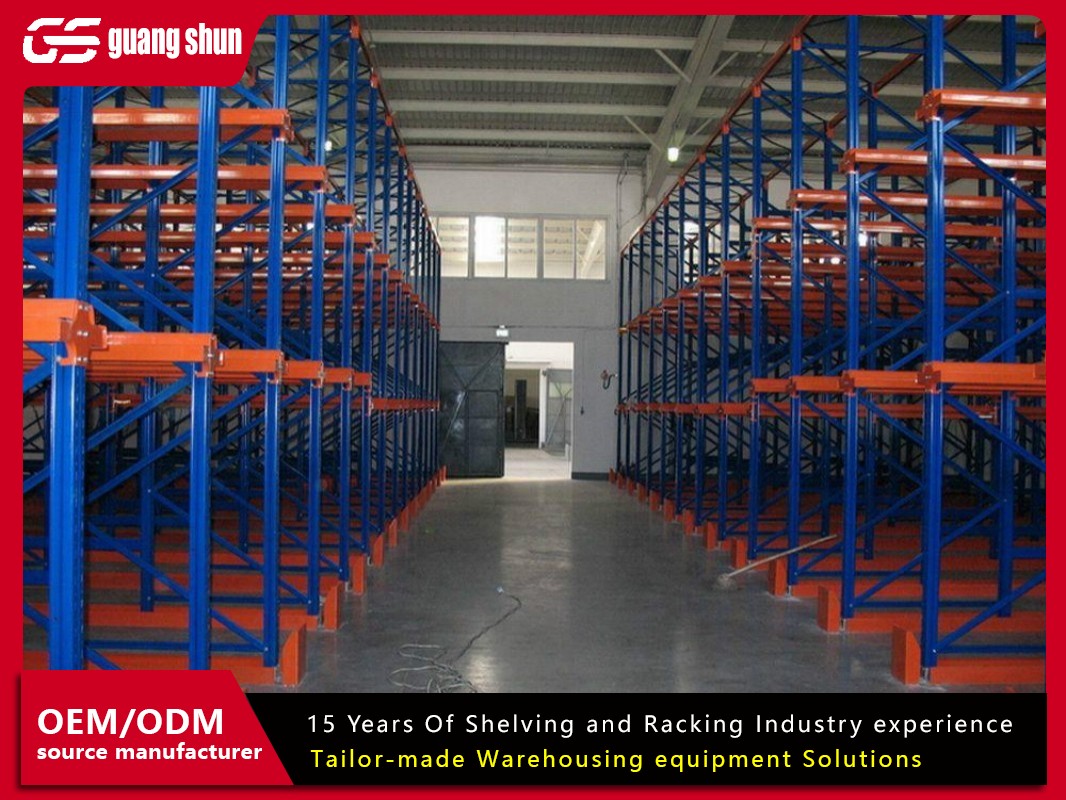
For homogeneous, high-turnover SKUs (e.g., bulk commodities, fast-moving consumer goods), drive-in rack eliminates aisles by allowing forklifts to enter the storage bay. Load rails support pallets in a continuous depth (typically 5 to 10 pallets deep). Drive-through variants provide entry from both sides, enabling strict FIFO discipline. Structural engineering for these systems requires precise column spacing and rail-level bracing to withstand repeated lateral impacts. Densities exceed 80% of available floor space, though selectivity is limited to lane-level retrieval.
1.3 Push-Back & Pallet Flow Rack – Gravity-Based Dynamics
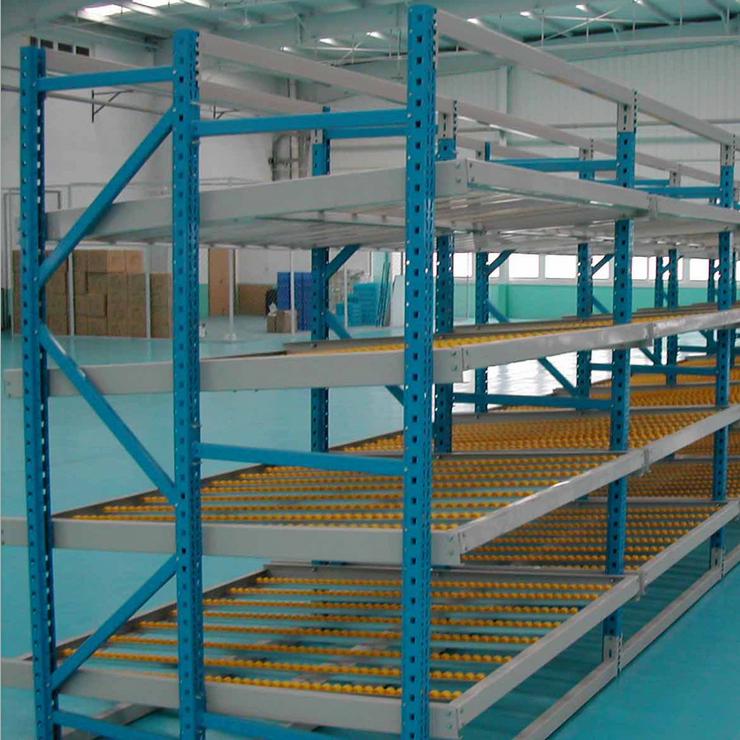
Push-back rack uses nested carts on inclined rails; each added pallet pushes the previous one deeper, offering last-in-first-out (LIFO) storage with densities between selective and drive-in. Pallet flow rack, conversely, uses roller tracks with speed controllers for FIFO applications. Both require exacting slope calculations (typically 3–5% for push-back, 4–6% for flow) and high-grade bearings to ensure consistent movement. These configurations reduce fork truck travel time by up to 50% compared to selective rack.
1.4 Cantilever Rack – Long Loads & Irregular Dimensions
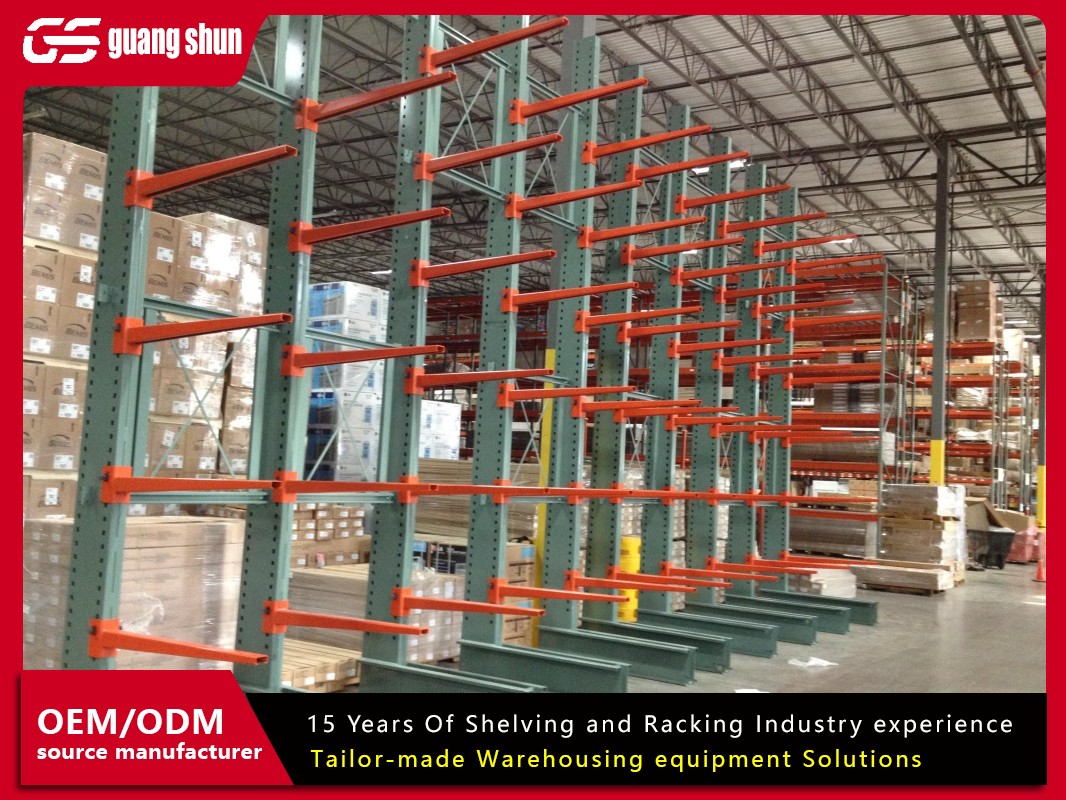
Cantilever rack is engineered for lumber, piping, steel bars, and furniture components. Arms are attached to a single column line, with capacities reaching 1,500 kg per arm. Structural analysis focuses on column base plates and arm-to-column connections to resist torsional forces. Variable arm heights and inclined designs accommodate tapered loads.
2. Engineering Parameters: Load Calculations, Seismic Design & Material Standards
A robust rack system begins with site-specific structural engineering that goes far beyond standard catalog ratings.
Load & Deflection Limits: RMI (Rack Manufacturers Institute) ANSI MH16.1-2022 specifies maximum beam deflection of L/180 under full load. Columns must withstand 1.7 times the design seismic load in high-hazard zones. Finite element analysis (FEA) validates beam-to-column connector integrity, particularly in multi-tier installations exceeding 10 m height.
Seismic Engineering: In regions with peak ground acceleration (PGA) >0.2g, racks require base isolation, cross-aisle horizontal bracing, and roof attachments. Special concentrically braced frames (SCBF) or moment-resisting connections are mandatory for structures above 12 m. Third-party seismic certification (e.g., OSHPD pre-approval for California) adds 8–12% to initial cost but prevents catastrophic collapse during seismic events.
Material Specifications: Structural steel grade ASTM A1011 or equivalent with a minimum yield strength of 345 MPa. Hot-dip galvanizing (≥ 85 μm coating) is recommended for cold storage or corrosive environments, extending service life beyond 25 years.
3. Addressing Industry Pain Points Through Engineered Rack Solutions
Facility managers confront converging challenges that a poorly specified rack system exacerbates. Engineered systems provide quantifiable solutions.
3.1 Space Underutilization & Land Cost Pressure
Conventional selective rack typically uses only 35% of available cubic volume. By implementing double-deep or drive-in configurations, operators reclaim up to 60% of floor space. For facilities in urban industrial zones where land costs exceed $150 per square foot, this density improvement defers new construction by 7–10 years.
3.2 Forklift Collisions & Structural Damage
Impact damage is the leading cause of rack failure. Engineered rack systems now integrate column protectors (cast steel or polymer), end-of-aisle guardrails, and anchored base plates with impact-absorbing designs. Annual structural inspections using laser scanning identify deflections exceeding 5 mm before failure occurs. Facilities adopting these measures report 75% reduction in unplanned downtime due to rack repairs.
3.3 SKU Proliferation & Order Complexity
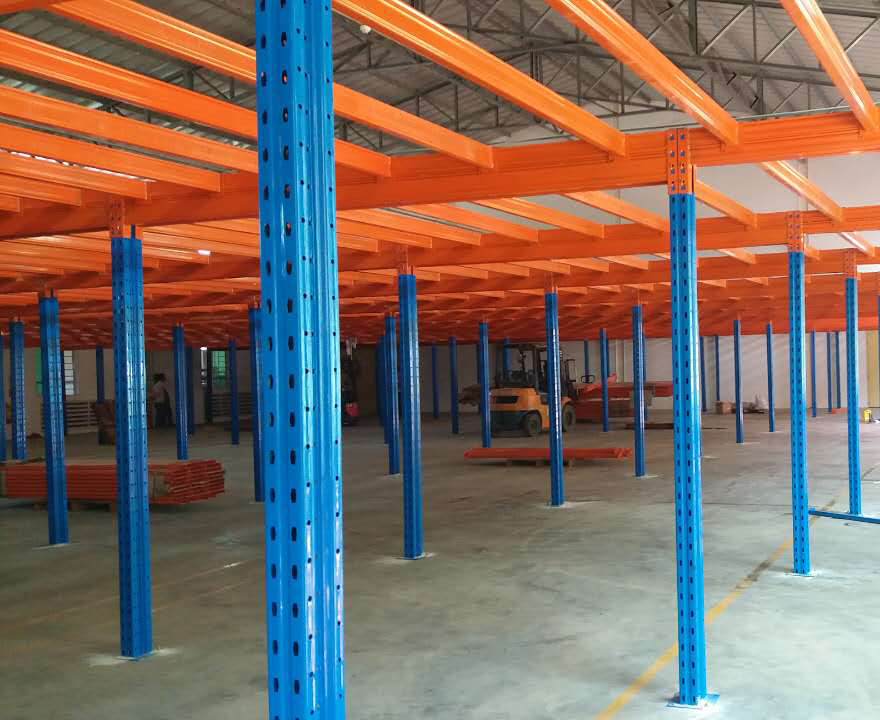
As e-commerce drives SKU counts from 5,000 to over 50,000, fixed rack configurations become bottlenecks. Modular rack systems with adjustable beam levels and convertible bays allow reconfiguration during weekend maintenance windows, avoiding costly facility redesigns. Carton flow and multi-level mezzanine rack integrations increase pick-face density by 200% without expanding footprint.
4. Cost-Benefit Analysis: Total Cost of Ownership for Industrial Rack Systems
Initial procurement cost represents only 30–40% of total cost of ownership (TCO) over a 15-year lifecycle. Comprehensive evaluation must consider:
Installation & Foundation Costs: Structural rack systems require laser-screened floors with flatness tolerances of Fmin 65 (ASTM E1155). For high-bay installations (≥12 m), reinforced concrete foundations with anchor bolt templates add $15–$25 per square foot.
Maintenance & Replacement: Annual preventative maintenance programs (torque checks, coating repairs) cost 1–2% of initial capital. Conversely, reactive repairs from unplanned collapses average $150,000 per incident, including inventory loss and business interruption.
Labor Productivity: A correctly configured rack system reduces average travel distance per pick by 30–50%, directly improving labor efficiency. For a facility with 50 pickers, this equates to $400,000–$700,000 annual labor savings.
Tax & Depreciation Benefits: In many jurisdictions, rack systems qualify for accelerated depreciation (e.g., 7-year MACRS in the U.S.), improving net present value calculations by 12–18%.
Leading engineering suppliers such as Guangshun provide full lifecycle cost modeling, integrating energy consumption (lighting penetration), fire suppression modifications, and future automation adaptability into the analysis.
5. Integration with Automation & Warehouse Execution Systems
The modern rack system is increasingly designed as the structural backbone for automation. Shuttle-ready racks incorporate dedicated rail profiles, inductive power transfer channels, and precision leveling tolerances (± 2 mm over 20 m) to enable autonomous shuttle operation. AS/RS-integrated racks feature crane runway beams with flatness tolerances of L/1,500. By specifying automation-ready rack structures during initial installation, operators reduce future retrofit costs by 60–70%.
Additionally, warehouse execution systems (WES) now interface with RFID-tagged rack locations, enabling real-time inventory mapping. This convergence of mechanical structure and software intelligence creates a foundation for Industry 4.0 warehouse operations.
6. Implementation Best Practices: Site Survey, Phasing, and Safety Compliance
Successful rack system deployment follows a rigorous engineering workflow:
Phase 1 – Data-Driven Layout Engineering: 3D laser scanning of existing facilities captures column locations, overhead obstructions, and floor flatness. Slotting analysis software optimizes bay depth, beam spacing, and aisle width based on SKU velocity profiles.
Phase 2 – Seismic & Structural Stamping: Licensed structural engineers produce sealed drawings for permitting. Fire marshal review ensures compliance with NFPA 13 sprinkler clearance requirements (typically 18 inches below ceilings and 3 inches between rack beams and sprinkler deflectors).
Phase 3 – Phased Installation & Material Flow Continuity: For operational warehouses, phased implementation minimizes disruption. Installation occurs during off-hours, with swing gates and temporary storage zones to maintain throughput.
Phase 4 – Post-Installation Certification: Load testing, anchor torque verification, and infrared thermography of electrical connections (for automated systems) precede final acceptance. Ongoing safety audits every 6 months are recommended.
7. Future-Proofing Rack Systems for Adaptive Warehousing
As supply chain volatility increases, rack systems must accommodate rapid reconfiguration. Emerging trends include:
Modular & Demountable Rack Structures: Bolted connections allow relocation of entire rack blocks to different facility zones within 72 hours.
IoT-Embedded Components: Strain gauges and vibration sensors embedded in columns provide real-time structural health monitoring, alerting managers to overloads or impacts via cloud dashboards.
Robotic Integration Interfaces: Standardized interface points for automated guided vehicles (AGVs) and autonomous case-handling robots enable incremental automation without structural modification.
Frequently Asked Questions About Industrial Rack Systems
Q1: What is the typical lifespan of a structural steel rack
system?
A1: With proper maintenance, a structural steel rack system
has a design life of 20–30 years. Key factors affecting longevity include
environmental conditions (humidity, corrosive atmospheres), impact frequency,
and adherence to annual inspection protocols. Galvanized finishes extend service
life by 10+ years in corrosive environments.
Q2: How do I determine whether I need seismic base isolation for my
rack system?
A2: Seismic requirements depend on local building codes
(e.g., IBC, ASCE 7), site soil class, and rack height. Generally, if the
facility is located in seismic design category (SDC) D, E, or F, and rack height
exceeds 8 feet, a licensed structural engineer must perform dynamic analysis.
Base isolators or additional bracing are typically mandated for SDC D and
above.
Q3: Can an existing rack system be modified to accommodate taller
loads or different pallet sizes?
A3: Yes, many rack systems offer
adjustable beam levels with 2-inch or 3-inch increments. However, increasing
beam heights or changing load configurations requires re-evaluation of column
capacity and seismic bracing. Any modification must be reviewed by a qualified
engineer to maintain compliance with RMI standards.
Q4: What fire protection considerations are unique to high-density
rack systems?
A4: High-density rack (drive-in, push-back, flow)
obstructs sprinkler water penetration. NFPA 13 requires in-rack sprinklers for
racks exceeding 25 feet in height or where storage density limits ceiling
sprinkler effectiveness. Specialized k-factor sprinklers (K16.8 or K25.2) and
dedicated fire pumps may be required. Coordination with fire protection
engineers during the design phase is essential.
Q5: How does Guangshun ensure structural compliance and quality
control for its rack systems?
A5: Guangshun operates ISO 9001-certified manufacturing
facilities, with full traceability from steel mill certificates to final
assembly. Each project undergoes third-party load testing and seismic
certification where required. Their engineering team provides sealed structural
calculations and collaborates with local authorities to streamline permitting.
Post-installation, they offer annual safety audits and remote structural
monitoring options.
References: RMI ANSI MH16.1-2022, ASCE 7-22 Minimum Design Loads, NFPA 13 Sprinkler Systems Handbook, and Guangshun engineering case studies.