Warehouse operators facing volumetric constraints and rising real estate
costs consistently evaluate high-density storage alternatives. Among the most
efficient solutions is drive in pallet racking, a system that eliminates aisles
between racks and allows forklifts to enter the storage structure directly. For
operations requiring bulk storage of homogeneous SKUs, drive in
pallet racking for sale represents a strategic capital investment that
directly impacts storage density, picking efficiency, and long-term operating
costs. This analysis examines the engineering principles, application
parameters, and financial considerations that warehouse managers must evaluate
when specifying this equipment.
Understanding Drive In Pallet Racking: Core Technology and Design
Principles
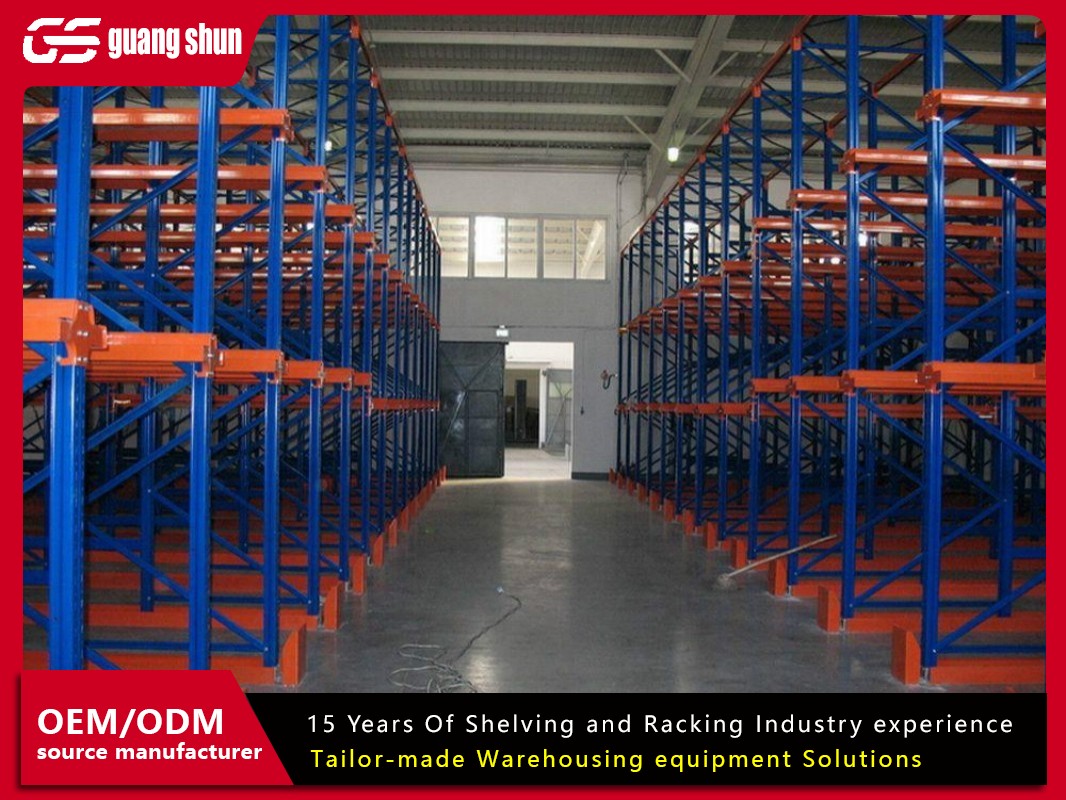
Drive in pallet racking operates on a last-in, first-out (LIFO) inventory
rotation principle. The structural configuration consists of continuous rails
supported by upright frames, forming lanes that accommodate pallets in a dense,
contiguous block. Forklifts drive directly into the lane to deposit or retrieve
loads, eliminating the need for dedicated aisles between every rack face. This
design achieves storage densities of up to 85% of the available cubic volume,
compared to 60–65% for selective racking systems.
The primary structural components include:
Upright columns – Roll-formed steel sections with punched
holes for beam connection, typically rated for 10–15 tons per frame.
Rail beams – Horizontal members supporting pallet loads,
available in step-beam or box-beam configurations.
Pallet support rails – Longitudinal rails that guide
forklift wheels and support pallet edges.
Base plates and floor anchors – Foundation elements that
transfer loads to the warehouse floor.
End restraints and row spacers – Stabilizing components
that maintain lane alignment and prevent rack drift.
Load transfer mechanics differ significantly from selective systems. In drive
in racking, each pallet load is supported by the rails rather than being
independently beam-supported. This distributed load path requires precise
calculation of rail deflection, weld integrity, and column capacity under
dynamic forklift impact. Reputable suppliers offering drive in
pallet racking for sale typically provide structural calculations per FEM
(Fédération Européenne de la Manutention) or RMI (Rack Manufacturers Institute)
standards.
Key Technical Specifications for Drive In Pallet Racking
When evaluating drive in pallet racking, warehouse engineers must consider
several critical specifications that determine system performance and
safety.
Load Capacity and Rail Configuration
Standard drive in racking supports pallet loads ranging from 800 kg to 2,500
kg per position. Rail thickness (typically 2.0–3.5 mm galvanized steel) and
section modulus directly influence deflection under load. For operations
handling heavy payloads exceeding 2,000 kg, reinforced rails with additional
support braces become necessary. The number of pallets per lane—commonly ranging
from 3 to 10 deep—affects both storage density and forklift retrieval time.
Deeper lanes improve density but require more powerful forklifts with extended
mast reach.
Forklift Compatibility and Aisle Width
The internal lane width must accommodate the forklift's outside turning
radius and the pallet overhang. Typical lane widths range from 2.8 m to 3.5 m,
depending on the forklift model and pallet dimensions. Counterbalanced forklifts
with 1.2 m to 1.5 m wide chassis are standard, though narrow-aisle variants can
operate in lanes as tight as 2.5 m. Vertical clearance requirements include the
forklift mast height, the lifting height to the highest rail level, and an
overhead clearance allowance of at least 200 mm above the highest pallet
load.
Structural Steel Grades and Corrosion Protection
High-strength steel grades (S350GD or S450GD with minimum yield strength of
350 MPa) are industry benchmarks for upright frames and rail beams. Hot-dip
galvanization to EN ISO 1461 standards provides corrosion resistance for cold
storage environments, where condensation and temperature cycling accelerate
oxidation. For ambient warehouses, powder-coated finishes with 60–80 micron
thickness offer adequate protection with aesthetic customization options.
Application Scenarios and Industry Use Cases
Drive in pallet racking delivers maximum value in specific operational
contexts. The following sectors consistently adopt this system for its density
advantages.
Cold Storage and Frozen Food Facilities
Refrigerated warehouses operate at -18°C to -25°C, where every cubic meter of
storage space incurs significant energy costs. Drive in racking reduces the
floor area requiring refrigeration by consolidating inventory into dense blocks.
Facilities storing frozen meat, seafood, and ready meals routinely achieve
40–50% higher pallet positions per square meter compared to selective racking.
The reduced aisle footprint also lowers the air volume that must be maintained
at freezing temperatures, generating measurable energy savings.
Automotive Parts and Raw Material Warehouses
Automotive manufacturers maintain large inventories of stamped parts,
castings, and subassemblies with high unit volumes and low SKU diversity. These
operations benefit from the LIFO flow of drive in racking, as batch production
schedules naturally align with last-in, first-out material flow. Tier-1
suppliers often implement multi-depth systems with 6–8 pallets per lane to
support just-in-sequence delivery to assembly lines.
Beverage and Consumer Goods Distribution
Beverage distributors handling palletized cans, bottles, and cartons use
drive in racking to maximize storage capacity in high-ceiling warehouses (12
m+). The system's ability to support full-pallet loads without intermediate
beams reduces installation complexity and cost. Many distributors combine drive
in racking with flow-through lanes for fast-moving SKUs, creating hybrid
configurations that balance density with accessibility.
Industry Pain Points and Engineering Solutions
Warehouse operators encounter several recurring challenges when implementing
drive in pallet racking. Understanding these pain points enables informed
procurement decisions.
Inventory Accessibility and SKU Proliferation
The LIFO constraint limits accessibility to the most recently stored pallets
in each lane. For operations with high SKU velocity or frequent batch changes,
this restriction can create inefficiencies. Engineering solutions include:
Selective lane allocation – Reserving specific lanes for
high-turnover SKUs while using deeper lanes for slow-movers.
Multi-depth variation – Installing lanes of varying depths
(3, 5, or 7 pallets) to match inventory profiles.
Integrated inventory systems – Using WMS (warehouse
management system) to optimize lane assignment based on real-time stock
data.
Forklift Impact Damage and Structural Integrity
Forklift collisions with upright columns and rails are the leading cause of
rack damage in high-density systems. Impact forces can compromise column
plumbness and rail alignment, creating safety hazards. Mitigation measures
include:
Column guard systems – Steel bollards or polymer impact
barriers placed at lane entrances.
Reinforced end frames – Thicker gauge steel at the first
upright row to absorb impact energy.
Forklift guidance rails – Floor-mounted rails that restrict
forklift lateral movement within the lane.
Operator training protocols – Specific driving techniques
for entering and maneuvering within drive in lanes.
Pallet Damage and Load Stability
Pallet edges overhanging support rails are prone to damage during retrieval
operations. Standardized pallet dimensions (1200x1000 mm or 1200x800 mm) with
consistent quality reduce the risk. Rail spacing that matches pallet foot
positions ensures optimal load distribution. For operations using plastic
pallets, rail designs with wider bearing surfaces prevent stress cracking.
Procurement Considerations When Searching for Drive In Pallet Racking for
Sale
Purchasing drive in
pallet racking for sale requires rigorous supplier evaluation and
specification alignment. The following factors should guide the selection
process.
Supplier Engineering Capability and Certification
Qualified suppliers provide stamped engineering drawings, load charts
certified by third-party structural engineers, and compliance with EN 15512 or
AS 4084 standards. On-site structural surveys are essential to verify floor
flatness, seismic zone requirements, and overhead clearance constraints.
Suppliers without in-house engineering teams often rely on generic designs that
fail to address site-specific conditions.
Customization Options and Modularity
Standardized components reduce lead times but may not optimize space
utilization. Customized solutions include:
Variable lane depths – Tailoring each lane to specific
pallet quantities.
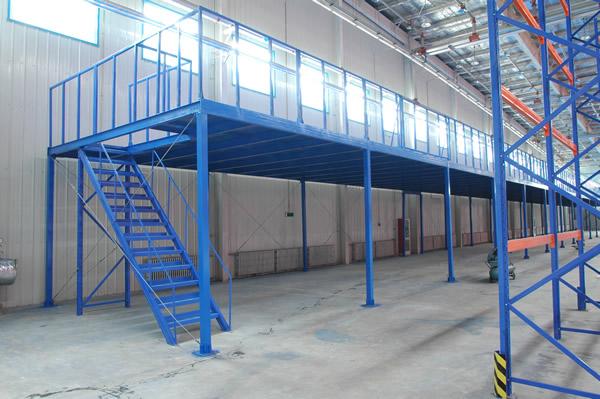
Integrated mezzanine levels – Adding a second level of
racking for ultra-high density.
Hybrid configurations – Combining drive in with push-back
or drive-through systems.
Modular designs allow future reconfiguration as inventory profiles change. Guangshun offers
modular drive in racking systems with interchangeable components, enabling
warehouses to adapt storage layouts without replacing entire structures.
Installation Services and Project Management
Professional installation ensures proper alignment, anchor torque, and load
testing. Reputable suppliers manage the full project lifecycle—from site
measurement to final handover. Installation timelines typically range from 2 to
6 weeks for a 5,000-pallet system, depending on complexity and site
accessibility. Post-installation inspections and load tests validate structural
integrity before operations commence.
Long-Term Maintenance and Spare Parts Availability
Routine maintenance includes bolt torque checks, rail wear inspection, and
corrosion monitoring. Suppliers with regional service networks provide faster
response times for repairs and spare part deliveries. When evaluating drive in
pallet racking for sale, inquire about spare parts availability, lead times
for replacement components, and warranty coverage on structural elements. Guangshun maintains a global spare parts inventory and offers technical support for the
operational lifespan of the system.
ROI Analysis and Financial Justification
Quantifying the return on investment for drive in pallet racking involves
comparing storage capacity gains against capital expenditure and operational
adjustments.
Storage Density and Real Estate Savings
A warehouse with 10,000 pallet positions requiring selective racking would
occupy approximately 8,000 m² of floor space at 2.5 m aisle widths. Drive in
racking with 5-pallet depth lanes reduces the footprint to roughly 5,200 m²—a
35% reduction. At commercial warehouse rents of $6–10 per m² per month, annual
savings range from $201,600 to $336,000 for a 10,000-pallet operation.
Forklift Travel Time Reduction
While retrieval times increase slightly due to LIFO constraints, the reduced
travel distance between lanes compensates in high-density configurations.
Studies indicate that drive in racking reduces average forklift travel per cycle
by 20–30% compared to selective racking in warehouses with more than 50 aisles.
For a 20-forklift fleet, this translates to productivity gains of 10–15%,
equivalent to reducing fleet size by 2–3 units.
Capital Cost Comparison
Drive in racking typically costs 15–25% more per pallet position than
selective racking due to higher steel content and engineering complexity.
However, the increased storage density offsets this premium through reduced
building requirements and lower ongoing operating costs. The breakeven point
generally occurs between 18 and 30 months, depending on local real estate costs
and energy prices.
Common Questions About Drive In Pallet Racking
Q1: What is the maximum depth for drive in pallet racking lanes?
A1: Practical lane depths range from 3 to 10 pallets, with 5 to 7 being the
most common in industrial applications. Depths beyond 10 pallets significantly
increase retrieval time and require specialized forklifts with extended reach.
Structural engineering calculations must account for the accumulated load of
multiple pallets per lane, as each rail segment supports the combined weight of
all pallets in that lane segment.
Q2: Can drive in racking be used with a FIFO inventory system?
A2: Standard drive in racking is inherently LIFO (last-in, first-out). For
operations requiring FIFO, drive-through racking—a variant with access from both
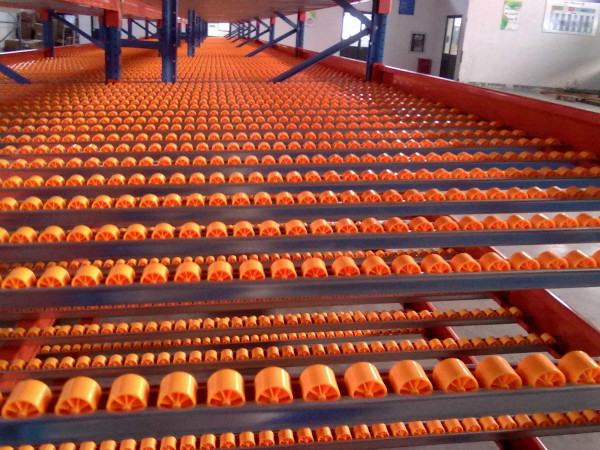
ends—allows first-in, first-out flow. Alternatively, pallet flow racking uses
gravity rollers to achieve FIFO. However, drive in remains the preferred choice
for bulk storage where batch rotation or shelf-life constraints do not
necessitate FIFO.
Q3: What forklift types are compatible with drive in pallet racking?
A3: Counterbalanced forklifts with 1.2–1.5 m chassis width are the most
common. Reach trucks and narrow-aisle forklifts may also operate in narrower
lanes (2.5–2.8 m). Forklift specifications must include sufficient mast height,
lifting capacity at maximum height, and steering geometry that permits
straight-line entry and exit without cross-aisle maneuvering.
Q4: How does seismic activity affect drive in racking design?
A4: Seismic zones require additional bracing and structural reinforcements to
resist horizontal forces. Design calculations incorporate peak ground
acceleration (PGA) values and building response spectra. In high-seismic regions
(Zone 4), racking structures may require base isolation systems or diagonal
cross-bracing at every frame bay. Suppliers must provide seismic certification
per local building codes.
Q5: What maintenance schedule is recommended for drive in pallet
racking?
A5: Quarterly visual inspections for column damage, rail deformation, and
loose bolts are standard practice. Annual comprehensive inspections by certified
engineers should include load testing of representative lanes and verification
of floor anchor torque. Immediate inspection is required after any significant
forklift impact. Replacement of damaged components should follow manufacturer
specifications to maintain structural integrity.
Q6: Can drive in racking be installed in cold storage environments?
A6: Yes, but material specifications must account for reduced steel ductility
at sub-zero temperatures. Structural steel grades with guaranteed Charpy impact
values at -20°C are recommended. Galvanized coatings must meet adhesion
requirements for thermal cycling environments. Guangshun offers cold-adapted racking
systems with validated performance at temperatures as low as -30°C.
Q7: What is the typical lead time for a custom drive in racking system?
A7: Lead times vary from 4 to 12 weeks, depending on system size,
customization requirements, and supplier production capacity. Standardized
components from inventory reduce lead times to 2–4 weeks. Custom
designs—including non-standard depths, special coatings, or seismic
reinforcements—extend the timeline to 8–12 weeks. Site installation typically
adds 1–4 weeks to the schedule.
Selecting drive in
pallet racking for sale demands a disciplined evaluation of technical
specifications, operational requirements, and financial metrics. Warehouse
managers who prioritize structural integrity, supplier engineering expertise,
and long-term maintenance support achieve the highest returns on their storage
investments. The density advantages of drive in racking, when properly specified
and maintained, deliver measurable improvements in space utilization and
operational efficiency across diverse industrial sectors.
For professional consultation and engineered drive in racking systems, Guangshun provides site-specific designs, structural certifications, and comprehensive
after-sales support to ensure optimal performance throughout the system's
service life.