Drive In Pallet Racking: 9 Critical Design Parameters for Maximum Storage DensityWhen warehouse space is at a premium and inventory consists of homogeneous, high‑turnover products, conventional selective racking often wastes valuable cubic volume by dedicating aisles to every row. Drive in pallet racking offers a dense storage alternative by eliminating aisles and allowing forklifts to enter the rack structure itself. This article provides a technical examination of the structural, operational, and economic factors that determine the success of a drive‑in installation. Drawing on the expertise of Guangshun, we analyze load paths, safety considerations, and application fit to help you decide whether this LIFO‑based system aligns with your logistics strategy.
1. Fundamentals of Drive In Pallet Racking
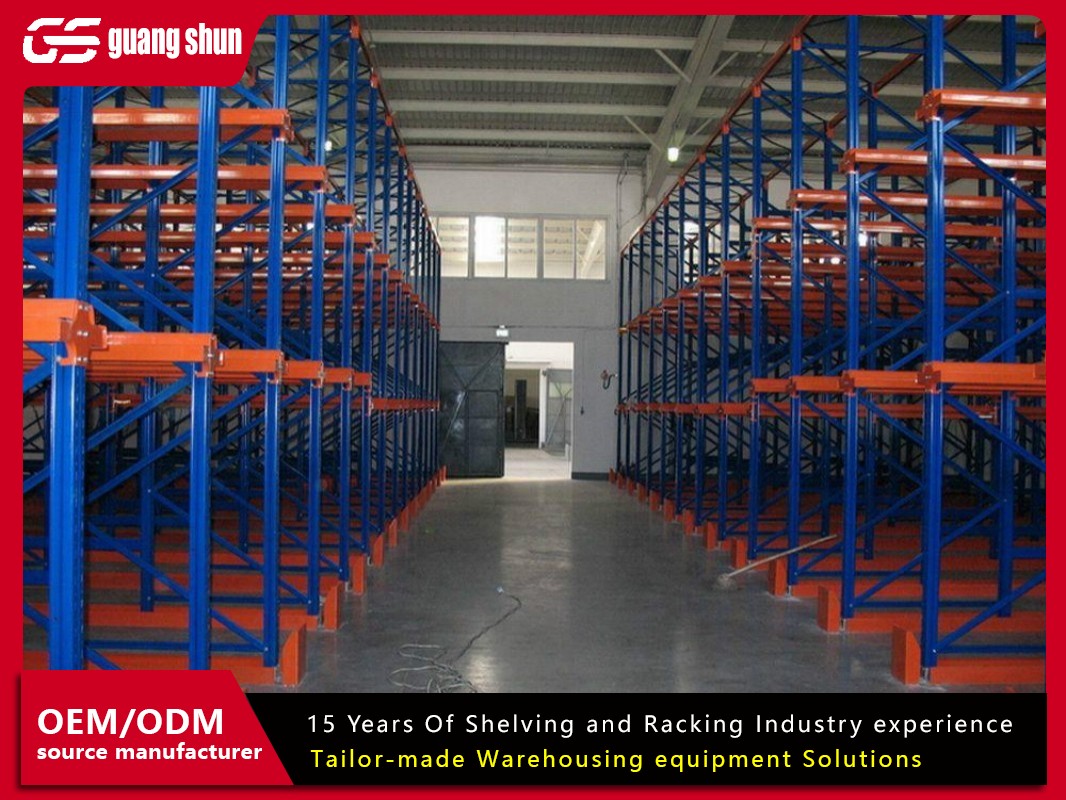
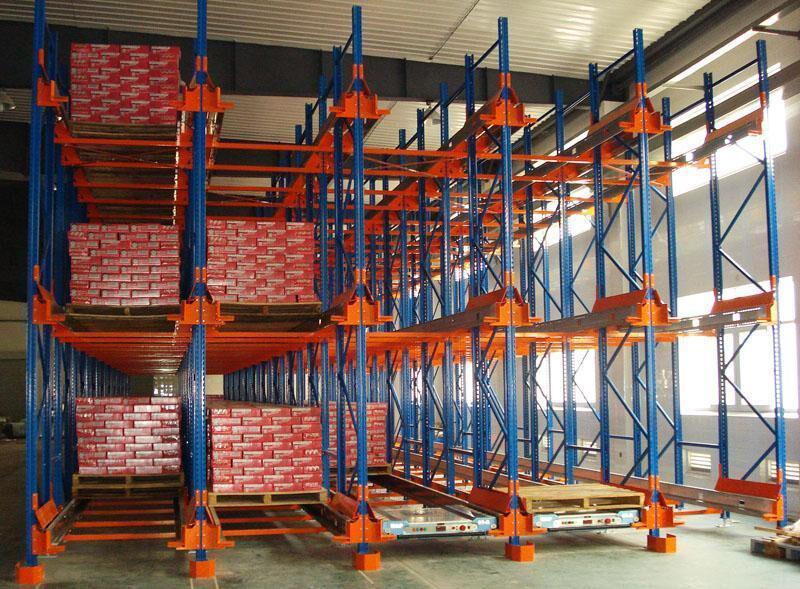
Unlike selective systems where each pallet position has a dedicated aisle, drive in pallet racking compresses storage by creating deep lanes. Forklifts enter the rack from one side, traveling on guide rails set into the floor, and deposit or retrieve pallets in a last‑in, first‑out (LIFO) sequence.
1.1 Structural Anatomy
A typical drive‑in system consists of:
Upright frames: Constructed from cold‑formed steel (commonly 80‑120 mm section modulus), these vertical supports carry the entire load. They are braced horizontally and diagonally to resist the lateral forces exerted by moving forklifts.
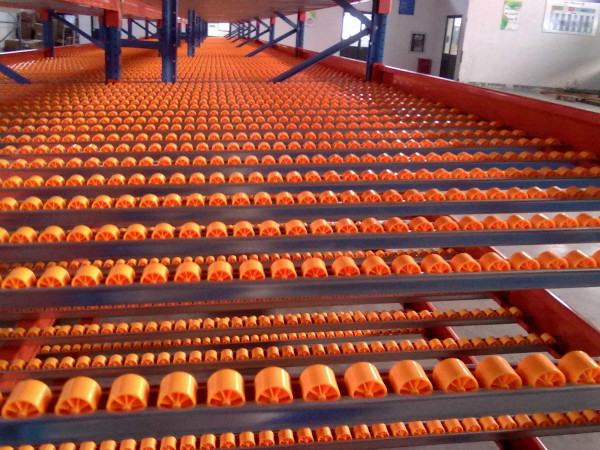
Pallet support rails: Welded to the uprights at each level, these continuous rails provide the bearing surface for pallets. Rail depth and gauge vary with load requirements; for heavy loads, reinforced “structural” channels are used.
Floor guides: Steel angles or channels anchored to the slab guide the forklift’s rear wheels, ensuring straight travel and preventing column strikes.
Back‑to‑back ties: Where two rows are placed back‑to‑back, horizontal ties connect the frames to improve overall stability.
1.2 The LIFO Principle and Its Implications
Because access is from one side only, the last pallet stored must be the first retrieved. This makes drive‑in ideal for products with a short shelf life or where stock rotation is not critical—for example, bulk storage of identical items in cold storage warehouses or manufacturing raw material silos. If FIFO (first‑in, first‑out) is mandatory, a drive‑through configuration (with entry and exit at opposite ends) or a push‑back system may be more appropriate.
2. Load Analysis and Engineering Specifications
Designing a safe drive in pallet racking system requires precise calculation of dead loads, live loads, and impact forces.
2.1 Frame Capacity and Bay Depth
Each upright frame must support the cumulative weight of all pallets stored in the bays adjacent to it. For a typical 10‑pallet‑deep lane with 1,000 kg per pallet, a single frame may carry 10,000 kg, plus the self‑weight of the structure. Engineers must verify that the column slenderness ratio does not exceed allowable limits (usually ≤ 200 for compression members) and that base plates are adequately anchored to resist overturning.
2.2 Rail Design and Load Distribution
Pallet support rails are subjected to both static loads and dynamic loads from forklift entry. The Australian Standard AS 4084, for example, requires that rails be designed for a point load equal to 1.5 times the rated pallet weight to account for uneven pallet placement. Guangshun’s rail profiles are roll‑formed with integrated stiffening ribs to minimize deflection under load, ensuring that pallets remain stable during storage and retrieval.
2.3 Seismic and Wind Bracing
In seismic zones, the rack structure must resist lateral forces. Drive‑in systems, with their deep continuous cells, behave differently than selective racks. The longitudinal direction (parallel to the lanes) relies on the bracing of the upright frames, while the cross‑aisle direction (perpendicular) depends on the connection between frames and the floor. Special seismic ties are often required at the top of the racks to link adjacent rows, creating a monolithic block that distributes earthquake forces. Guangshun offers seismic kits engineered to IBC and CBC requirements, complete with base plate shear lugs and horizontal struts.
3. Optimal Applications for Drive In Racking
Drive in pallet racking is not a universal solution; it excels under specific conditions:
Cold storage and freezer warehouses: Space is expensive, and energy costs drive the need for maximum density. Drive‑in systems can increase pallet positions by 60‑80% compared to selective rack within the same footprint, directly reducing refrigeration costs per pallet.
Food and beverage bulk storage: Products like canned goods, bottled water, or seasonal beverages are often stored in large quantities with minimal SKU variety. LIFO rotation is acceptable because production batches are homogeneous.
Automotive parts consolidation: Tier‑1 suppliers frequently use drive‑in to store finished goods awaiting shipment, where space on the manufacturing floor is limited.
E‑commerce overflow: During peak seasons, drive‑in can be used for temporary high‑density storage of slow‑moving or oversized items.
4. Addressing Operational Challenges
While dense, drive‑in systems introduce operational complexities that must be managed through design and training.
4.1 Forklift Impact Protection
Forklifts operating inside the rack structure can accidentally strike uprights or rails. To mitigate this:
Install column guards (steel or polyurethane) at the base of all exposed frames.
Provide floor‑mounted rail guidance that aligns the forklift’s rear wheels, keeping it centered in the lane.
Specify a minimum clearance of 100‑150 mm on each side of the forklift to the uprights.
Use reflective tape or photoelectric sensors to warn operators when they approach the end of a lane.
4.2 Inventory Rotation and SKU Segregation
The LIFO nature means that different SKUs cannot be mixed in the same lane without risking blocking. Best practice is to assign each lane to a single SKU or to use lane dividers when multiple SKUs must be stored. If your operation requires FIFO, consider a drive‑through layout (open at both ends) or pair drive‑in with a dynamic slotting system that rotates lanes by batch.
4.3 Floor Flatness and Anchorage
Drive‑in racks depend on precise floor flatness to ensure stable forklift travel and proper engagement of safety guides. The floor tolerance should meet FM 2 or better (variation ≤ 3 mm over 3 m). All uprights must be anchored with expansion bolts or chemical anchors tested for the specific concrete strength.
5. Comparative Analysis: Drive In vs. Other High‑Density Systems
To select the right technology, logistics engineers often compare drive‑in with alternatives:
Drive In vs. Drive Through: Drive‑through allows access from both ends, enabling FIFO. However, it requires two aisles, reducing density slightly. Cost per pallet position is similar.
Drive In vs. Push Back Racking: Push‑back uses nested carts that move on inclined rails, offering higher selectivity (2‑4 deep) but lower density than deep‑lane drive‑in. Push‑back is better for mixed SKUs with moderate turnover.
Drive In vs. Pallet Shuttle: Automated shuttles can operate in deep lanes with FIFO or LIFO, increasing throughput and safety. Initial investment is higher, but labor costs drop. For very deep lanes (> 12 pallets), shuttle systems often outperform manual drive‑in.
Drive In vs. Selective Rack: Selective offers 100% accessibility but uses 40‑50% of floor space for aisles. Drive‑in recaptures that aisle space at the cost of accessibility.
6. ROI and Space Utilization Metrics
The financial justification for drive in pallet racking is rooted in space efficiency. Consider a warehouse with 1,000 m² of floor area and a clear height of 10 m:
Selective racking (3 m aisles) might accommodate 1,500 pallets.
Drive‑in racking, with 10‑pallet‑deep lanes, can store 2,700‑3,000 pallets—an 80‑100% increase.
If new construction costs $1,500/m², avoiding an expansion saves $1.5 million. Even after accounting for higher rack cost (drive‑in steel is heavier), the net capital saving is substantial.
Labor productivity: Picking from drive‑in is slower than from selective because operators must travel into the lane. However, for bulk storage where whole pallets are moved, throughput is often acceptable. The trade‑off is density vs. access speed.
In cold storage, every square meter saved reduces ongoing refrigeration energy costs by $100‑$200 annually, further improving ROI.
7. Design Best Practices and Safety Compliance
When commissioning a drive‑in installation, adhere to these guidelines:
Perform a seismic risk assessment and include appropriate bracing (longitudinal and transverse).
Ensure that the rack manufacturer provides load capacity certificates based on physical testing, not just theoretical calculations.
Mark lane depths and maximum pallet weights conspicuously at each entry.
Train forklift operators specifically for drive‑in maneuvering; many accidents occur because drivers misjudge the lane width.
Conduct annual inspections, paying special attention to rail welds and anchor integrity.
Guangshun’s engineering team offers site surveys and 3D layout simulations to optimize lane depth and column spacing before fabrication.
8. Future Trends: Drive In Racks and Automation
The rise of automated guided vehicles (AGVs) and pallet shuttles is reshaping drive‑in applications. Some facilities now combine manual drive‑in lanes for bulk storage with automated retrieval for fast‑moving items. Hybrid systems—where AGVs equipped with laser guidance navigate the lanes—are becoming feasible as sensor technology improves. While fully automated drive‑in is still niche, the underlying structure remains compatible with mechanized handling, provided that floor flatness and guide rails meet tighter tolerances.
In summary, drive in pallet racking delivers unmatched density for homogeneous, LIFO‑compatible goods. Its success hinges on correct engineering, operator discipline, and regular maintenance. With decades of experience, Guangshun provides tailored solutions that balance safety, durability, and space utilization. Whether you are expanding a cold store or consolidating a distribution center, drive‑in deserves serious consideration as the backbone of your high‑density storage strategy.
Frequently Asked Questions (FAQ)
Q1: What types of products are best suited for drive in pallet racking?
A1: Drive‑in is ideal for homogeneous, high‑volume products where stock rotation is not critical—such as canned goods, bottled beverages, bulk raw materials, and seasonal items stored in cold storage. It is less suitable for mixed SKUs or products requiring strict FIFO.
Q2: What is the maximum recommended lane depth for a drive in system?
A2: Lane depth typically ranges from 4 to 12 pallets. Deeper lanes (beyond 10) may cause excessive forklift travel time and increase the risk of product damage. For depths greater than 12, a pallet shuttle system is often more efficient.
Q3: How do I protect the rack structure from forklift impacts?
A3: Install floor‑mounted rail guides to steer the forklift, add protective column guards at the base of every upright, and ensure adequate clearance (min. 100 mm) on both sides of the truck. Regular operator training is equally important.
Q4: Can drive in racks be used in freezer environments?
A4: Yes, drive‑in is common in freezers because of its high density. However, steel specifications must account for low‑temperature brittleness (use notch‑tough steel), and all moving parts (if any) require low‑temperature lubricants. Guangshun offers galvanized or epoxy finishes to resist corrosion from condensation.
Q5: How does drive in racking compare to push back racking?
A5: Push‑back allows 2‑4 pallets deep with easier access to individual SKUs but has lower overall density than deep‑lane drive‑in. Drive‑in is cheaper per pallet position for very deep storage, while push‑back offers better selectivity for moderate‑depth applications.
Q6: What are the seismic requirements for drive in racks?
A6: In seismic zones, drive‑in racks must be designed with additional cross‑aisle bracing and top ties that connect adjacent rows, forming a rigid block. The system should comply with local codes (IBC, ASCE 7, or FEM). Always consult a structural engineer familiar with storage racks.
Q7: Do I need special forklifts to operate in drive in racks?
A7: Standard counterbalance forklifts can be used if they have sufficient mast height and the overall width fits within the lane. However, many operators prefer reach trucks or four‑way trucks for better maneuverability. The key is matching the truck’s turning radius and aisle width to the rack design.
Q8: Can I convert an existing selective rack warehouse to drive in?
A8: Possibly, but it requires removing existing rack, assessing floor flatness, and installing new uprights with proper anchoring. The existing slab must be thick enough to accommodate the higher point loads. A feasibility study by Guangshun’s engineers can determine if conversion is cost‑effective.
For a personalized assessment or to request a quote, visit Guangshun or explore detailed specifications on the drive in pallet racking product page.