In high-capacity industrial warehousing, structural integrity and layout
efficiency dictate operational throughput and facility safety. As supply chains
adapt to higher vertical storage demands and increased inventory velocity, the
implementation of durable steel racking becomes a
foundational decision for warehouse operators, logistics managers, and
procurement professionals.
Choosing the correct storage infrastructure involves analyzing mechanical
stress, steel metallurgy, safety compliance, and spatial configurations. When
sourcing equipment, partnering with established manufacturers like Guangshun helps ensure that
industrial systems comply with rigorous global engineering codes while
optimizing floor-space utilization.
1. Steel Metallurgy: Material Grades and Mechanical Properties
The performance of any industrial storage structure depends heavily on the
quality and grade of the raw steel used in its fabrication. For structural
uprights, beams, and bracing, the mechanical properties of the steel determine
the maximum load capacity, elastic limit, and resistance to permanent
deformation.
Carbon Steel Grades: Q235B vs. Q355B
In international manufacturing, structural steel grades are selected based on
their yield strength and tensile properties. The two most common grades utilized
in heavy-duty warehousing applications are:
Q235B Steel: This grade is a carbon structural steel
equivalent to ASTM A36. It has a yield strength of approximately 235 MPa and a
tensile strength of 370 to 500 MPa. Q235B is widely selected for standard pallet
rack beams and bracing due to its balance of weldability, ductility, and cost
efficiency.
Q355B Steel: Equivalent to ASTM A572 Grade 50, this
high-strength low-alloy steel features a minimum yield strength of 355 MPa and a
tensile strength of 470 to 630 MPa. It is typically specified for heavy-duty
upright columns, seismic-resistant structures, and tall, high-bay storage
configurations where load density is exceptionally high.
Cold-Formed vs. Hot-Rolled Structural Steel
The fabrication method significantly influences the physical behavior of the
storage frame:
Cold-Formed Steel: Roll-formed from thin sheets of steel at
room temperature, these profiles are versatile and highly customizable.
Continuous roll-forming machines create complex bend patterns, such as teardrop
or hexagonal holes, which increase the strength-to-weight ratio of the upright
columns. This is the standard choice for most distribution centers.
Hot-Rolled Structural Steel: Formed at high temperatures,
structural channel steel profiles offer thicker walls and higher resistance to
impact. These systems are ideal for heavy manufacturing plants, drive-in systems
prone to forklift collisions, and extreme cold-storage environments where steel
becomes more brittle.
2. International Structural Standards and Compliance Frameworks
Structural stability cannot be assumed; it must be calculated, tested, and
certified. Because a failure of high-density storage can cause severe inventory
loss and endanger personnel, the design of reliable steel racking structures
must account for specific international testing standards.
| Standard Reference | Governing Region | Primary Engineering Focus |
|---|
| RMI (ANSI MH16.1) | North America | Design, testing, and utilization of industrial steel storage racks,
including seismic load calculations and beam-to-column connection
stiffness. |
| EN 15512 / FEM 10.2.02 | Europe | Structural design codes for adjustable pallet racking systems, dictating
strict safety factors for steel deflection and structural tolerances. |
| AS 4084-2012 | Australia / Oceania | Steel storage racking design and operation, focusing on regular safety
inspections, column guard requirements, and strict installation
tolerances. |
Compliance with these standards ensures that the structure can handle dynamic
actions (such as forklift placement and removal of pallets), static loads (the
weight of the stored goods), and environmental forces (seismic activity or wind
loads in outdoor configurations).
3. Maximizing Floor Space via Structural Configurations
The choice of storage configuration dictates the storage density,
accessibility, and operational throughput of a warehouse. It is vital to match
physical footprint demands with structural capability factors to ensure that the
steel racking configuration delivers optimal space efficiency.
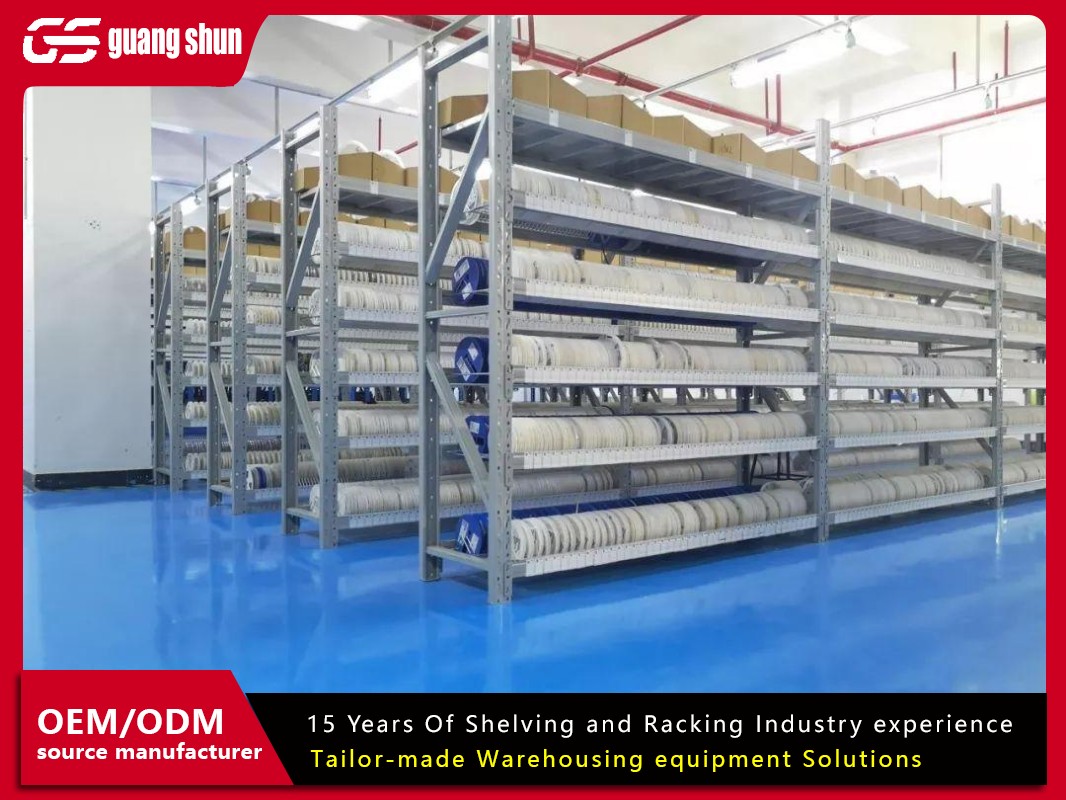
Selective Pallet Racking
As the most common standard configuration, selective racking provides 100%
accessibility to every pallet location. It utilizes standard cold-formed
uprights and step beams, allowing forklift operators to access any pallet
without moving others. While highly flexible, selective configurations require
wide aisles (typically 3.0 to 3.5 meters), which limits storage density to
roughly 30% to 40% of the total warehouse volume.
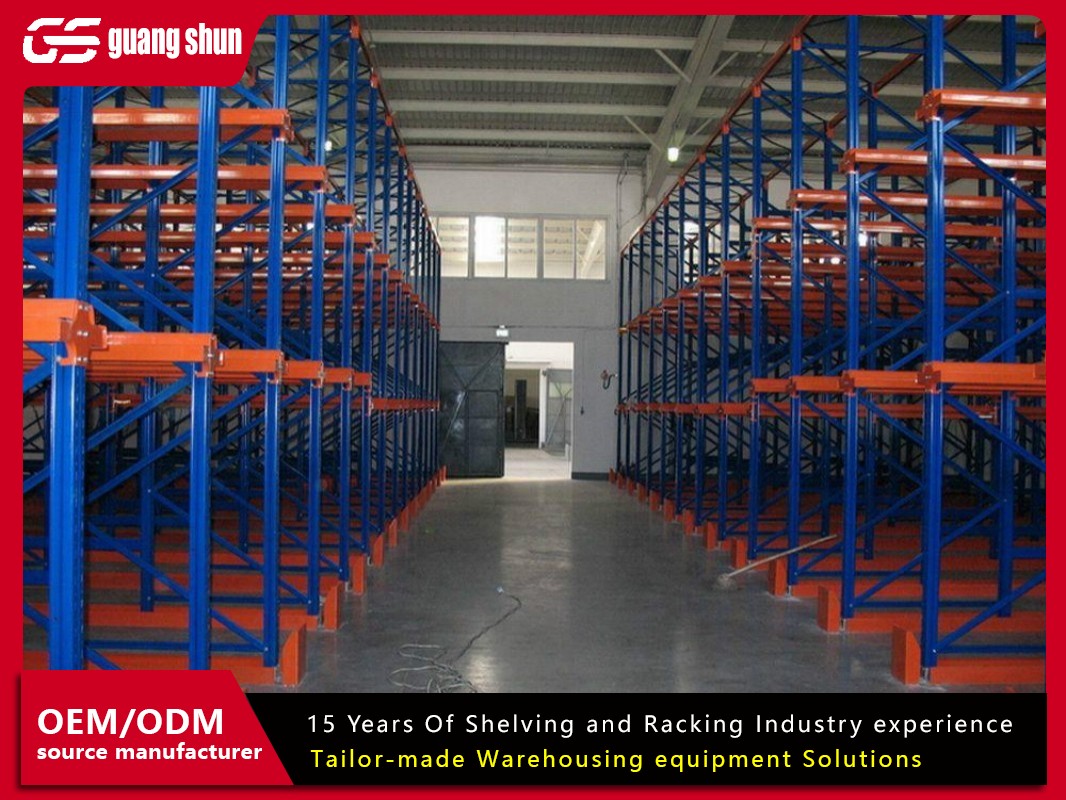
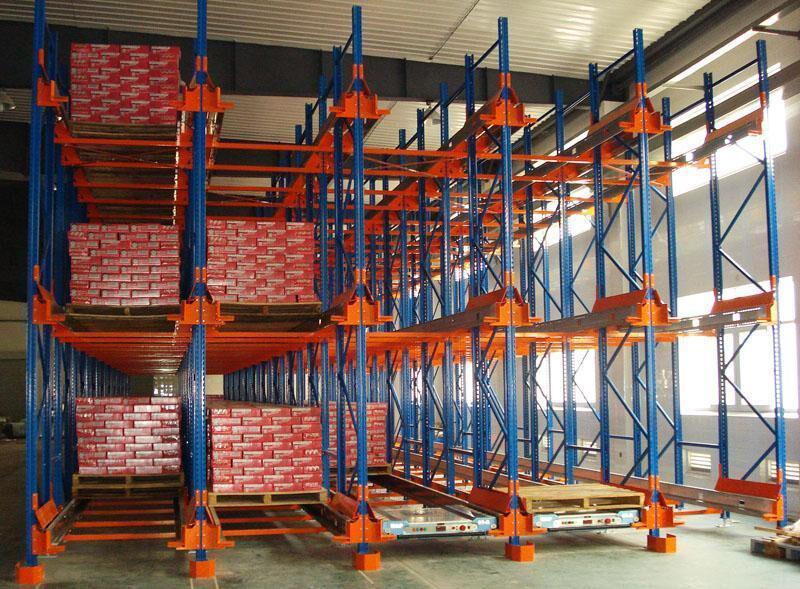
Drive-In and Drive-Through Systems
For high-density storage of homogeneous goods, drive-in systems allow
forklifts to enter the physical bay structure to place or retrieve pallets. This
system operates on a Last-In, First-Out (LIFO) inventory model. High-density
configurations manufactured by Guangshun are engineered with
heavy-duty top ties, base anchoring, and thick guide rails to resist the
continuous loading cycles and potential forklift contact associated with this
deep-lane storage method.
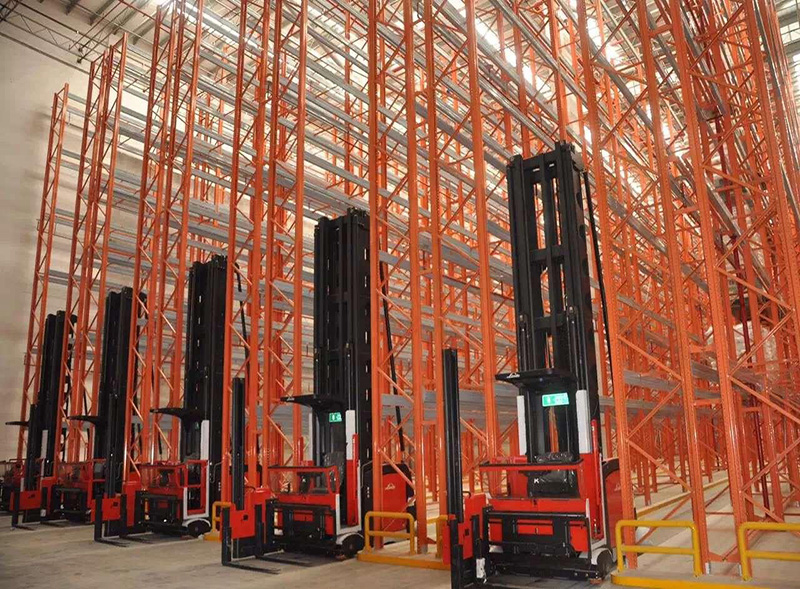
Very Narrow Aisle (VNA) Systems
When floor space is limited and vertical clearance is high, VNA
configurations reduce aisle widths down to 1.5 to 1.8 meters. By utilizing
specialized articulated forklifts or wire-guided turret trucks, operators can
store pallets up to heights of 15 meters or more. This maximizes storage volume
while retaining 100% pallet selectivity, making it a preferred choice for urban
distribution hubs.
4. Load Capacity Calculations and Structural Safety Metrics
Safe operation requires a precise understanding of load distribution,
structural deflection limits, and safety margins. System failures are rarely
caused by a single overloaded beam; instead, they are usually the result of
dynamic forces, improper anchoring, or cumulative structural fatigue.
Static and Dynamic Load Distribution
The operational stresses applied to steel racking systems
involve both static and dynamic factors:
Uniformly Distributed Load (UDL): Beam load capacities are
rated based on a UDL, which assumes that the weight of the palletized load is
evenly distributed across the support beams. Point loading—where weight is
concentrated on a small section of the beam—can lead to localized buckling and
beam failure.
Impact and Dynamic Loading: The moment a forklift places a
heavy pallet onto a pair of beams, the static load is temporarily multiplied by
a dynamic factor. Standard engineering designs typically incorporate a safety
factor of 1.4 to 1.5 on material yield strength to absorb these transient
stresses safely.
Deflection Limits (L/200 and L/240)
Under maximum design load, racking beams will naturally flex downwards.
International standards dictate that this deflection must not exceed a specific
fraction of the beam length (L). For example:
L/200 Deflection Limit: In standard pallet storage, a
2.7-meter beam is permitted to deflect vertically by a maximum of 13.5 mm under
full load.
L/240 Deflection Limit: In automated storage and retrieval
systems (ASRS) or high-tolerance setups, the limit is restricted to 11.25 mm to
prevent automated handling equipment from misidentifying pallet position or
striking adjacent loads.
5. Protection Measures and Corrosion Resistance
Industrial environments expose steel components to physical wear and chemical
elements. Implementing protective measures is crucial to maintaining the
load-bearing integrity of the structural steel over its lifecycle.
Upright Column Guarding
Forklift impacts are highly detrimental to steel racking components, particularly at ground-level column bases. Structural uprights
should be outfitted with floor-anchored steel column guards or heavy-duty
polymer protectors. These guards absorb the kinetic energy of minor forklift
collisions, isolating the load-bearing frame from structural deformation.
Additionally, baseplates must be securely anchored to the concrete slab with
expanding anchor bolts. In high-seismic zones, larger heavy-duty baseplates are
required to distribute the tensile and compressive forces generated during a
seismic event across a wider surface area of the floor.
Surface Treatment: Powder Coating vs. Hot-Dip Galvanizing
The operational environment dictates the required surface protection
technology:
Epoxy Powder Coating: Applied electrostatically and cured
under heat, this finish provides excellent resistance to scratches, chemicals,
and general wear in indoor, dry warehouse environments.
Hot-Dip Galvanizing (HDG): Immersing the steel components
in a bath of molten zinc at roughly 450°C creates a metallurgical bond that
provides comprehensive corrosion protection. HDG is highly recommended for cold
storage, outdoor yards, and chemical facilities where high humidity and
condensation would cause standard painted steel to rust and weaken
prematurely.
6. Custom Structural Design and Quality Assurance
Because every warehousing project presents unique spatial limitations and
material handling profiles, standard configurations are often modified to meet
specific parameters. System designers at Guangshun configure industrial
systems by evaluating the facility slab strength, forklift turning radiuses, and
pallet packaging dimensions.
By using Finite Element Analysis (FEA) software, structural engineers can
simulate how a customized layout will respond to complex static loads and
lateral dynamic forces. This analytical rigor prevents material
over-engineering—which raises construction costs—while ensuring the system
remains completely secure under maximum capacity conditions.
Purchasing high-quality industrial storage systems requires an objective
evaluation of raw materials, manufacturing standards, and structural
configurations. By understanding the metallurgy of grades like Q235B and Q355B,
ensuring compliance with international codes like RMI and EN 15512, and
employing robust impact-protection accessories, warehouse operators can
establish a safe and highly efficient logistics facility.
Frequently Asked Questions
Q1: What is the main structural difference between cold-rolled and
hot-rolled racking uprights?
A1: Cold-rolled uprights are formed from thin steel sheets
at room temperature, allowing for complex, lightweight profiles with highly
adjustable punch patterns. Hot-rolled uprights are formed at high temperatures,
resulting in thicker structural steel channels that offer much higher impact
resistance and load capacity, making them suitable for high-abuse
environments.
Q2: How do seismic zones affect the engineering of a steel storage
system?
A2: In seismic zones, racking must be engineered to resist
lateral horizontal acceleration forces. This requires larger and thicker steel
baseplates, heavy-duty floor anchoring, robust horizontal and diagonal bracing,
and a high-strength steel grade like Q355B to absorb dynamic seismic energy
without collapsing.
Q3: What are the consequences of exceeding the recommended deflection limit
on a load beam?
A3: Exceeding the deflection limit (typically L/200 or
L/240) can result in permanent structural deformation, also known as plastic
deformation, which permanently compromises the weight capacity of the beam. It
also creates safety hazards, as unstable pallets may slide or lean, and
automated storage systems may experience alignment errors.
Q4: Why is hot-dip galvanizing preferred over powder coating for cold
storage warehouses?
A4: Cold storage facilities experience high humidity levels
and frequent condensation cycles when warmer air enters. Hot-dip galvanizing
provides a thick, metallurgically bonded zinc barrier that protects both the
interior and exterior surfaces of hollow steel profiles from rust, whereas
powder coatings can crack under thermal contraction, allowing moisture to
corrode the underlying steel.
Q5: How often should industrial steel racking systems undergo safety
inspections?
A5: According to international standards like EN 15635 and
SEMA guidelines, storage racking should undergo formal structural inspections by
a competent professional at least once every 12 months. In addition, warehouse
staff should perform weekly visual inspections to identify and report any
forklift impact damage, missing safety pins, or overloaded shelves.