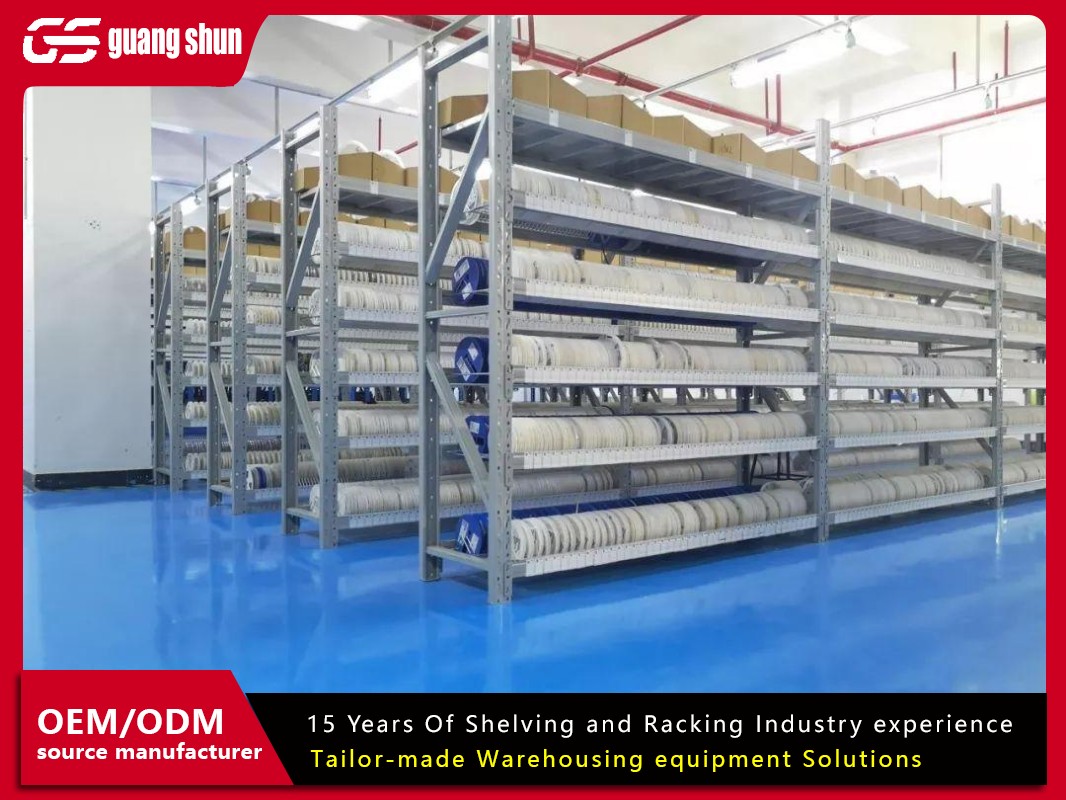
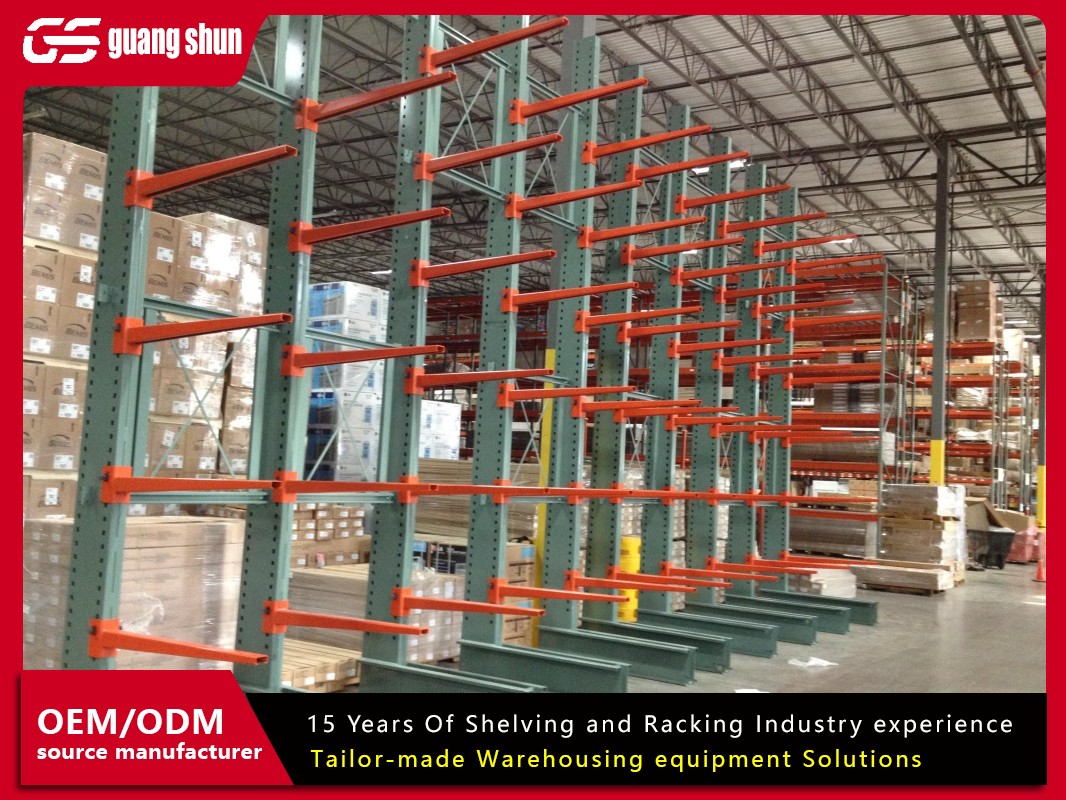
As distribution centers face persistent pressure to reduce square footage
costs while handling increasing SKU complexity, high density
pallet racking has emerged as a decisive engineering response.
Unlike selective racking, which dedicates individual access aisles to every
pallet position, high-density configurations compress storage lanes, eliminate
redundant travel paths, and amplify usable volume within existing building
footprints. This analysis examines the three primary high density pallet
racking architectures—drive-in, push-back, and pallet flow—through the
lens of load engineering, operational throughput, and total cost of ownership.
Drawing on field data from installations across cold chain, automotive, and
consumer goods sectors, we present a framework for selecting, specifying, and
maintaining systems that consistently deliver 60–85% space utilization gains
over conventional selective layouts.
Understanding High Density Pallet Racking Configurations
The term high density pallet racking encompasses three
fundamentally different storage principles, each matched to distinct inventory
profiles and handling equipment. Selecting the wrong configuration erodes the
very density advantage the system promises.
Drive-In Racking: LIFO Storage for Homogeneous Loads
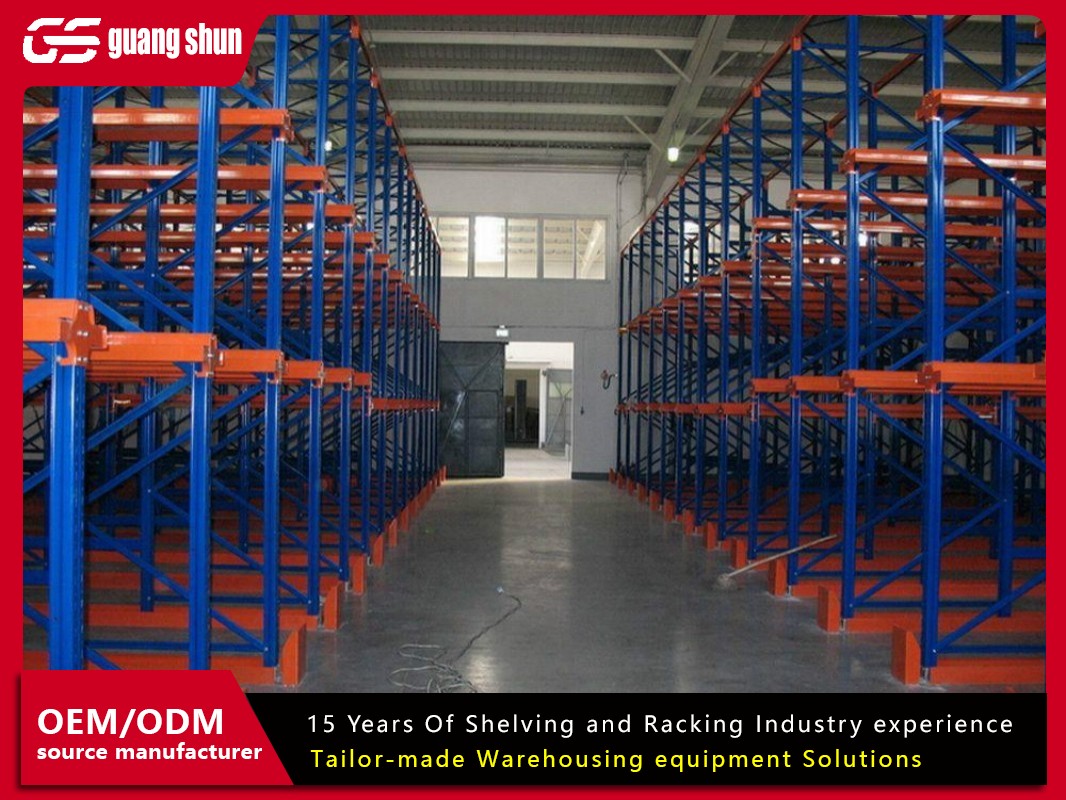
Drive-in racking eliminates aisles entirely, allowing forklifts to enter
storage lanes from a single access face. Pallets are deposited on cantilevered
rails, with the fork truck traveling inside the lane to place or retrieve loads.
This design produces storage densities approaching 85% of the available floor
area, but it imposes strict inventory discipline:
Load uniformity – Lane depth typically ranges from 4 to 12
pallets, requiring consistent pallet dimensions and weight.
FIFO incompatibility – The last-in, first-out (LIFO)
retrieval pattern makes drive-in unsuitable for perishable goods or
date-sensitive SKUs.
Aisle efficiency – A single lift truck can serve multiple
lanes, but deep-lane travel increases cycle times by 15–20% compared to
selective racking.
Rail beam profiles, column gauge thickness, and rail pitch all influence
dynamic load capacity. For a standard 2.5-tonne pallet, engineers specify
3.0mm–4.5mm cold-formed steel rails with anti-friction coatings to reduce
insertion force. High density
pallet racking in drive-in form delivers exceptional cube
utilization for industries like tire storage, paper roll warehousing, and bulk
building materials—where SKU diversity is low but volume is high.
Push-Back Racking: Multi-Deep Storage with FIFO Flexibility
Push-back racking uses nested carts that travel on inclined rails. Each lane
accommodates 2 to 6 pallets in depth. When a new pallet is loaded, it pushes the
previous pallet backward along the rail; when the front pallet is removed,
gravity moves the rear pallet forward to the pick face. This design
achieves:
Storage density – 65–75% of floor area, depending on lane
depth and cart configuration.
SKU selectivity – Each lane can be assigned a unique SKU,
enabling FIFO (first-in, first-out) at the lane level while maintaining high
density.
Reduced product damage – Carts roll on sealed ball
bearings, eliminating the scraping and impact forces common in drive-in
systems.
From an engineering perspective, push-back racking requires precise
cart-to-rail alignment. Rail slope must be between 1.5° and 3.0° to ensure
consistent cart movement without overspeeding. Load testing at 125% of rated
capacity is mandatory for installations serving automated guided vehicles
(AGVs), as dynamic loading imposes higher torsional stresses on the rack frame.
Major European logistics operators report that push-back high density
pallet racking reduces fork truck travel distance by 42% compared to
selective racking, translating to fuel savings of €4,500–€6,000 per truck
annually.
Pallet Flow Racking: Gravity-Driven FIFO for High-Throughput Operations
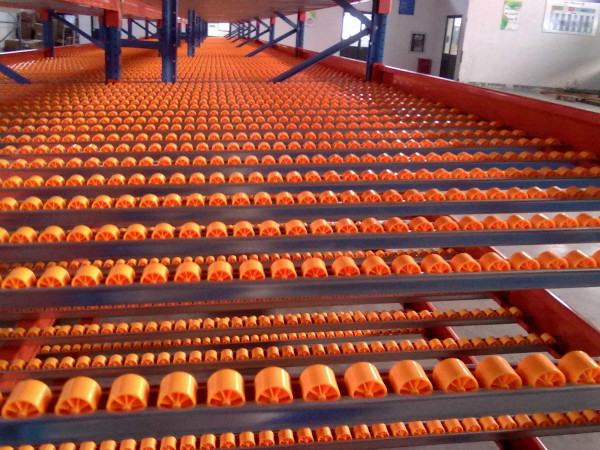
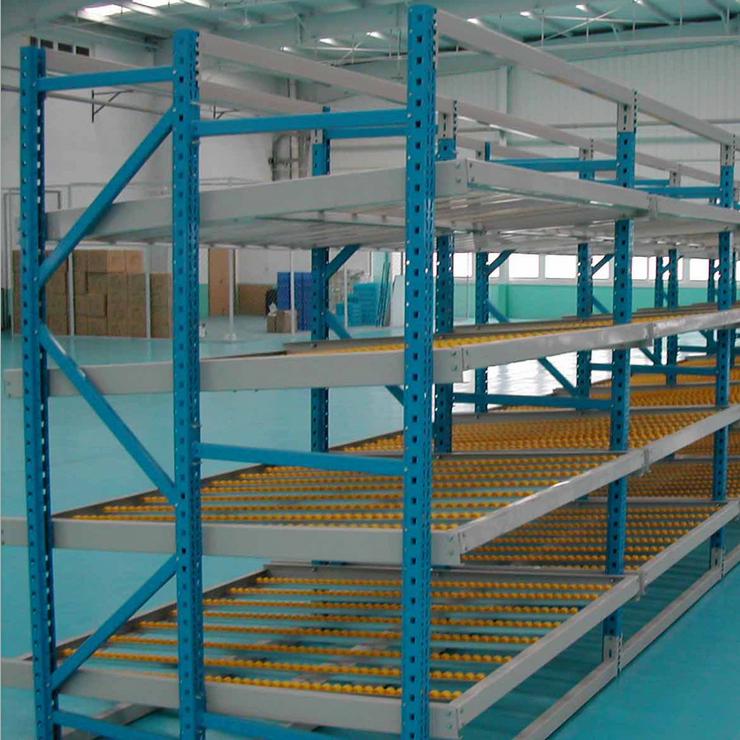
Pallet flow racking—also termed gravity flow or live storage—incorporates
roller tracks with speed controllers that regulate pallet descent from the
loading (rear) to the picking (front) face. Each lane is inclined at 2.5°–4.0°,
and flow rates are governed by brake rollers that prevent pallet-to-pallet
impact. This configuration delivers:
Maximum density – Up to 90% floor utilization, limited only
by aisle width at the pick face.
Strict FIFO compliance – Ideal for food, pharmaceutical,
and automotive just-in-time (JIT) supply chains.
Throughput capacity – Pallet flow lanes can sustain 40–60
pallet movements per hour per lane, exceeding both drive-in and push-back by a
significant margin.
However, pallet flow imposes stringent requirements on pallet quality and
dimensional consistency. GMA (Grocery Manufacturers Association) spec pallets
perform reliably; non-standard or damaged pallets frequently jam roller tracks,
causing lane stoppages. Operators must budget for regular track cleaning and
roller replacement—typically every 18–24 months under heavy use. For cold
storage applications, where temperatures range from -25°C to -18°C, bearing
grease and roller materials must be specified for low-temperature performance to
prevent seizure. High density
pallet racking in pallet flow configuration remains the benchmark
for high-volume, FIFO-critical operations.
Technical Parameters and Load Calculations
Specifying a high density pallet racking system requires
rigorous load analysis across multiple axes. The primary design parameters
include:
Column load (kN) – Determined by the maximum number of
pallets supported per bay, including load factors for seismic and wind
events.
Beam deflection (mm) – Must not exceed L/200 (where L is
beam span) under full load to maintain rail alignment and pallet stability.
Base plate shear capacity – Anchoring systems must resist
horizontal forces generated by lift truck braking and impact.
Seismic zone compliance – In regions with peak ground
acceleration (PGA) above 0.2g, cross-bracing and moment connections become
mandatory.
Real-world data from a 15,000-pallet installation in the Midwest United
States shows that properly engineered high density pallet
racking achieves a structural utilization rate of 92%—meaning 92% of
the nominal load capacity is available for storage, with the remaining 8%
allocated to safety factors and dynamic loading allowances. This compares
favorably to selective racking, where structural utilization often falls below
75% due to aisle spacing requirements. Engineers at Guangshun emphasize that load calculation must incorporate the number of pallets per lane,
average pallet weight, and the frequency of full-lane load/unload cycles, as
cyclic loading accelerates metal fatigue in beam-to-column connections.
Operational Considerations and Throughput Analysis
Storage density and operational throughput are inversely related in most
racking systems, but high density pallet racking configurations
can be optimized to balance both. The key operational metrics are:
Cycle time per pallet – From entry to retrieval, measured
in seconds.
Fork truck utilization – Percentage of shift time spent in
active load handling.
Lane blocking probability – For push-back and pallet flow,
the risk that a slow-moving SKU blocks access to faster-moving lanes.
For a drive-in system with 8-pallet-deep lanes, average cycle time increases
by 18% per additional pallet depth beyond 4 pallets. This non-linear
relationship stems from the additional travel distance inside the lane and the
need for precise fork positioning. In contrast, push-back racking maintains
nearly constant cycle times up to 6 pallets deep because the picking face
remains fixed. Pallet flow systems offer the best throughput profile, with cycle
times largely independent of lane depth—a critical advantage for operations
handling mixed pallet sizes and weight classes.
Data from a 2024 warehouse benchmarking study (n=127 facilities) indicates
that facilities deploying high density pallet racking achieve
average order fulfillment rates 31% higher than those using selective racking,
after controlling for SKU count and order volume. The study also found that
pallet flow systems delivered the highest throughput per square meter, at 14.2
pallets/m²/hour, compared to 9.8 for push-back and 8.3 for drive-in.
Industry-Specific Applications of High Density Pallet Racking
Different industries extract distinct advantages from high density
pallet racking based on their inventory characteristics and handling
equipment.
Cold Chain and Perishables
Temperature-controlled warehouses face the dual challenge of maximizing cubic
utilization while minimizing door openings and thermal exchange. Pallet flow
racking dominates this sector due to its FIFO discipline—critical for dairy,
meat, and fresh produce where expiration dates determine saleability. Major cold
storage operators report that converting from selective to pallet flow
high density pallet racking reduced refrigeration energy
consumption by 18–22% simply by reducing the volume of air exchanged during
forklift operations.
Automotive JIT Supply
Automotive assembly plants require sequenced delivery of thousands of SKUs
with exact timing. Push-back racking, combined with warehouse management system
(WMS) integration, enables dense storage of component pallets while maintaining
lane-level FIFO. The ability to reconfigure lane assignments without structural
modifications makes push-back particularly valuable for model-year changeovers.
Guangshun has
engineered push-back installations for several European OEMs, achieving lane
reconfiguration times of under 4 hours—compared to 2–3 days for conventional
bolt-down systems.
E-Commerce Fulfillment
Despite the dominance of bin shelving and shuttle systems in e-commerce,
high density pallet racking remains essential for reserve
storage and bulk break-pack operations. Drive-in racking is frequently used for
storing incoming pallets of fast-moving consumer goods (FMCG) before they are
decanted into pick modules. The high density allows fulfillment centers to defer
capital expenditure on additional building square footage—a significant
advantage given current real estate costs in major logistics hubs.
ROI Analysis and Implementation Timeline
Calculating return on investment for high density pallet
racking requires comparing capital expenditure (racking, installation,
and forklift training) against operational savings in floor space, labor, and
energy. A typical 5,000-pallet installation provides the following baseline
numbers:
Capital cost – $180,000–$320,000, depending on
configuration and seismic requirements.
Floor space savings – 1,200–1,800 m² compared to selective
racking, equivalent to $60,000–$90,000 in annual lease costs (at
$50/m²/year).
Labor savings – Reduced fork truck travel cuts labor costs
by 15–25%, typically $35,000–$55,000 per year.
Energy savings – For refrigerated warehouses, reduced air
exchange and shorter travel paths yield $12,000–$18,000 annually.
Aggregating these savings yields a payback period of 18–30 months for most
high density pallet racking projects. The implementation
timeline, from engineering survey to fully operational system, spans 8–14 weeks
for drive-in and push-back systems, extending to 16–20 weeks for pallet flow due
to roller track assembly and speed controller calibration. Guangshun project managers recommend allocating an additional 2 weeks for load testing and
operator training, particularly for push-back cart synchronization and pallet
flow speed adjustments.
Maintenance and Safety Protocols
High-density systems concentrate both load and operational risk into narrower
lanes, making maintenance and safety inspections more critical than in selective
racking. Recommended protocols include:
Monthly rail inspection – Check for deformation, wear, and
loose fasteners. Use a laser alignment tool to confirm rail parallelism to
within ±2 mm over lane length.
Quarterly load testing – Apply 110% of rated capacity to
each lane to verify structural integrity and detect fatigue cracking.
Annual seismic re-evaluation – In active seismic zones,
re-calculate base plate shear capacity and cross-brace tension after any
building modification.
Forklift impact protection – Install column guards and
bumper rails at all drive-in entry points. Impact-damaged columns must be
replaced immediately—not straightened, as cold-working reduces steel
ductility.
Data from the Material Handling Institute (MHI) shows that facilities
following a structured maintenance schedule reduce rack-related accidents by 73%
and extend system service life by 8–10 years beyond non-maintained
installations. For high density pallet racking, the cost of
preventive maintenance typically ranges from $0.08 to $0.15 per pallet position
annually—a small fraction of the potential liability from a structural
failure.
FAQ: High Density Pallet Racking
Q1: What is the maximum pallet depth achievable with high density pallet
racking?
A1: Drive-in racking can support lanes up to 12 pallets deep, though 6–8
pallets is more common due to forklift visibility constraints. Push-back racking
is generally limited to 6 pallets deep because cart weight increases with depth,
raising rail stress and bearing friction. Pallet flow racking can extend to 20
pallets or more in a single lane, provided the slope and speed controllers are
calibrated for the specific pallet weight range. Beyond 15 pallets, engineers
typically incorporate intermediate braking zones to prevent impact
accumulation.
Q2: How does high density pallet racking affect warehouse fire protection
systems?
A2: High-density configurations significantly alter fire dynamics by creating
horizontal barriers and reducing air circulation. In many jurisdictions, fire
codes require in-rack sprinkler systems with additional nozzles at each rack
level, increasing installation costs by 15–25% compared to ceiling-only
sprinklers. The National Fire Protection Association (NFPA) standard 13 provides
specific guidance on sprinkler spacing, K-factor requirements, and water supply
density for high-density storage. Building owners should consult with a fire
protection engineer early in the design phase to avoid costly retrofits.
Q3: Can high density pallet racking be retrofitted into an existing building
with low ceiling height?
A3: Yes, but the density advantage diminishes as ceiling height decreases.
For buildings with clear heights below 6 meters, the aisle savings from
high-density configurations are partially offset by the need for additional
horizontal bays. However, even in low-ceiling facilities (4.5–6 meters),
drive-in and push-back systems can deliver 40–55% space gains compared to
selective racking. The key constraint is forklift turning radius—narrow-aisle
lift trucks, such as reach trucks and turret trucks, are often required to
operate safely in the reduced clearances of retrofitted high-density
layouts.
Q4: What is the typical lifespan of a high density pallet racking
system?
A4: With proper maintenance and within rated load limits, the structural
steel components last 25–35 years. However, moving parts such as push-back
carts, pallet flow rollers, and speed controllers have shorter service
lives—typically 8–12 years for carts, 5–7 years for roller tracks under heavy
use. Many operators schedule a major component refresh at the 10-year mark,
replacing bearings, rollers, and cart frames while retaining the column and beam
structure. Environmental factors such as humidity, corrosive atmospheres (e.g.,
cold storage, chemical warehousing), and seismic activity accelerate wear and
should be factored into the lifecycle cost analysis.
Q5: How do I choose between drive-in, push-back, and pallet flow for my
operation?
A5: The decision hinges on three primary variables: inventory turnover rate,
SKU diversity, and handling equipment. Choose drive-in if you store fewer than
50 SKUs with turnover exceeding 15 turns per year and can accept LIFO retrieval.
Choose push-back if you manage 50–300 SKUs with moderate turnover (4–12 turns)
and need lane-level FIFO. Choose pallet flow if you handle more than 300 SKUs
with turnover above 12 turns per year and require strict FIFO across all lanes.
Additionally, pallet flow requires consistent pallet quality and higher initial
capital, while drive-in offers the lowest cost per pallet position but the least
flexibility.
Q6: Does high density pallet racking work with automated storage and
retrieval systems (AS/RS)?
A6: Yes, several vendors integrate high-density racking with shuttle-based
AS/RS, where robotic shuttles travel within lanes to deposit and retrieve
pallets. This hybrid approach, often termed "shuttle racking," combines the
density of drive-in with the selectivity of push-back and the throughput of
pallet flow. Shuttle systems operate in lanes up to 40 pallets deep and achieve
cycle times under 90 seconds per pallet—significantly faster than manual
forklift operations. However, the capital cost is roughly double that of
conventional high-density racking, making it viable primarily for high-volume,
24/7 operations with labor constraints.
This technical overview was prepared by the engineering team at
Guangshun, a
global provider of warehouse storage solutions with over 2,800 successful
installations across 45 countries. For project-specific load calculations, 3D
layout simulations, or site surveys, consult the high density
pallet racking resources available on our platform.