For warehouse operators and supply chain directors, the decision to install a
mobile pallet racking system is rarely simple. While the promise of dramatically
increased storage density is attractive, the primary question that stalls most
capital expenditure approvals is straightforward: mobile
pallet racking system cost per square foot. This figure is not a
static number; it is a complex variable influenced by building specifications,
load requirements, and operational workflow. This analysis moves beyond
surface-level estimates to dissect the true cost structure, offering a
data-driven framework for evaluating this significant investment.
Deconstructing the Cost Components of Mobile Racking
When calculating the mobile
pallet racking system cost per square foot, it is essential to
break down the total investment into three primary categories: capital
expenditure (CAPEX), installation and engineering, and long-term operational
costs. A holistic view prevents budget overruns and ensures the selected system
aligns with both current and future warehouse needs.
Initial Capital Expenditure (CAPEX)
The most visible portion of the cost is the hardware itself. This includes
the mobile carriage bases, electric motors, control systems, and the static rack
structure mounted on top. The gauge of steel used, the capacity of the motors
(typically ranging from 0.75 HP to 5 HP per bay), and the type of control
interface—from simple push-button to advanced PLC with remote
diagnostics—directly influence the base price. For a typical high-bay warehouse
with a 30-foot clear height, the base hardware can account for 60-70% of the
total system cost.
Installation and Engineering Costs
This is where many cost estimates become inaccurate. Mobile racking is not a
"plug-and-play" solution. It requires precise floor flatness specifications
(often within ±1/8 inch over 10 feet), specialized seismic bracing in active
zones, and integration with existing fire suppression and lighting systems.
Engineering fees for structural calculations and permit acquisition, combined
with the labor for assembling the carriages and racking, can add a significant
premium. For complex retrofits in older buildings, these costs can increase the
overall mobile
pallet racking system cost per square foot by 25-35% compared to a
new build.
Operational and Maintenance Expenses
Ongoing costs are often underestimated. The electric motors, wheel bearings,
and busbar systems require regular preventive maintenance. Additionally, the
system's control software needs periodic updates. Energy consumption, while
relatively low (a typical carriage uses less than 1.5 kWh per full movement
cycle), accumulates over years of operation. A robust maintenance contract,
which is recommended for high-availability systems, typically adds a recurring
cost of 2-4% of the initial CAPEX annually.
Calculating the True Cost Per Square Foot in Real-World Scenarios
Arriving at a reliable mobile
pallet racking system cost per square foot requires a dynamic
calculation that considers "net usable" vs. "gross" floor space. For example, a
system that occupies 10,000 square feet of floor space might provide 22,000
square feet of usable storage positions due to the elimination of multiple fixed
aisles. This gives a "cost per net usable square foot" that is far more
meaningful than a simple gross area calculation. In many high-density projects,
the cost per usable square foot can be 40-50% lower than that of a traditional
fixed rack system when factoring in the land or building cost avoided by not
expanding the warehouse footprint.
Mobile vs. Static Racking: A Data-Driven Cost-Benefit Comparison
To justify the premium of a mobile system, one must perform a total cost of
ownership (TCO) analysis over a 10-year horizon. While the initial
mobile pallet racking system cost per square foot is typically
30-60% higher than a comparable static selective rack, the savings in building
costs (or rent), reduced forklift travel time, and improved inventory management
often yield a payback period of 18 to 36 months. For operations with high SKU
velocity and large seasonal inventory swings, the flexibility of mobile
systems—allowing for variable aisle widths on demand—provides an operational
hedge that static racks cannot offer.
Industry-Specific Cost Considerations
Different sectors impose unique requirements that affect the overall
investment. Understanding these nuances is critical for accurate budgeting.
Cold Storage and Refrigeration
In cold storage environments, the racking system must be constructed with
specialized steel grades to handle sub-zero temperatures without becoming
brittle. The electrical components must also be rated for cold, humid
conditions. Additionally, the reduced aisle space in mobile systems minimizes
the volume of cold air exchanged with warmer zones, leading to significant
energy savings. This long-term operational benefit partially offsets the higher
initial cost of the specialized mobile equipment.
High-Bay Warehouses (Exceeding 40 Feet)
For high-bay applications, the structural engineering requirements escalate
rapidly. Carriage stability under high vertical loads demands heavier-duty rails
and multiple synchronization systems to prevent sway. The cost per square foot
in high-bay settings is often lower on a per-pallet-position basis because the
same carriage footprint supports many more levels of rack, making the investment
highly efficient for very tall buildings.
Retail Distribution Centers with High Throughput
In retail DCs, the focus is often on "goods-to-person" or batch picking
integration. Mobile systems can be integrated with automated shuttle systems or
conveyor networks. These integrations, while expensive, can dramatically reduce
labor costs—often the largest warehouse expense—justifying a higher initial cost
per square foot through rapid labor savings.
Hidden Costs and Effective Mitigation Strategies
Several less obvious cost factors can impact the final project budget.
Proactive planning can mitigate these issues.
Floor Preparation: Existing concrete floors often require
grinding or a new overlay to meet flatness and levelness specifications. This
can add a substantial cost.
Fire Safety Compliance: In-rack sprinkler systems must be
redesigned to interface with the moving carriages, often requiring specialized
flexible hoses and additional water supply capacity.
Data Integration: Connecting the mobile racking control
system to a Warehouse Management System (WMS) for automated carriage movement
based on picking orders requires software development and integration
testing.
Training: Operators and maintenance staff need specialized
training to handle the system safely and efficiently.
ROI and Payback Period Analysis
A comprehensive financial model for a mobile racking project should include
the following variables:
Avoided Cost: The cost per square foot of new warehouse
construction or leasing in your region.
Labor Efficiency: Reduction in travel time (often 30-50%)
and improved picking accuracy.
Inventory Carrying Cost: Better organization and FIFO/FEFO
management can reduce obsolete stock.
Energy Savings: In cold storage, the reduction in air
exchange can lead to significant kWh savings.
For many operations, the combination of avoided construction costs and labor
savings results in a payback period of 2 to 3 years, making the mobile
pallet racking system cost per square foot a highly strategic
expenditure with a strong internal rate of return (IRR).
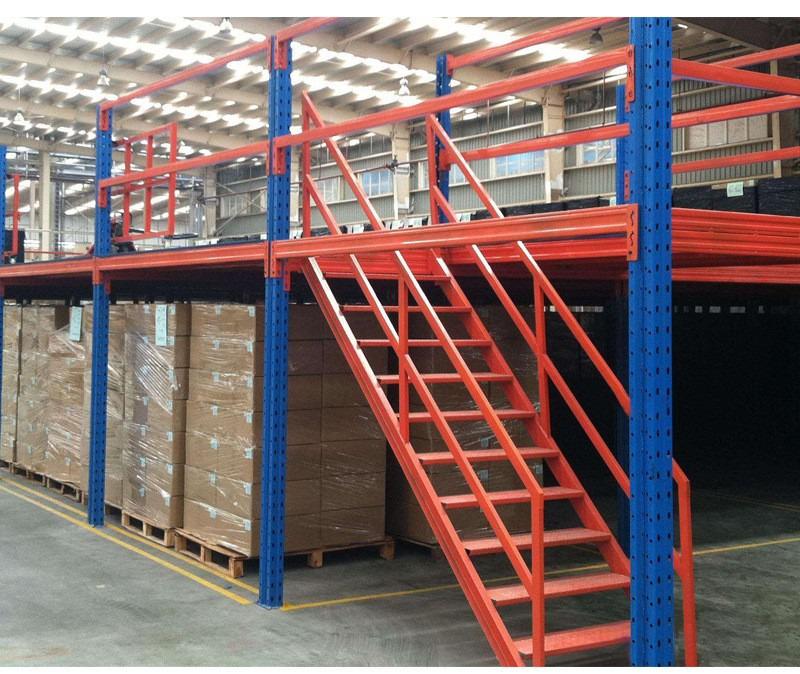
Engineering Excellence and Value: The Guangshun Advantage
Experience and precision in manufacturing are decisive factors in the
long-term performance and cost-effectiveness of a mobile racking system.
Guangshun has
established a reputation for delivering robust, high-tolerance systems that
minimize downtime and maximize storage efficiency. Their engineering approach
focuses on the entire lifecycle cost, not just the initial price per square
foot. By utilizing high-grade steel and precise motor control technology,
Guangshun systems
consistently demonstrate lower maintenance requirements and higher operational
availability, which directly reduces the total cost of ownership. For warehouse
operators analyzing the mobile pallet racking system cost per square
foot, partnering with a manufacturer that prioritizes long-term
reliability over short-term cost reduction is a critical success factor.
Frequently Asked Questions (FAQ)
Q1: What is the typical range for mobile pallet racking system cost per
square foot in 2026?
A1: Industry data indicates a broad range from $120 to $280 per gross square
foot for a fully engineered and installed system in the U.S. market. The wide
variance is due to factors like building height, load capacity (e.g., 2,000 lbs
vs. 4,000 lbs per pallet), and the complexity of the control system. It is
crucial to obtain a site-specific engineering quote for an accurate
estimate.
Q2: How does the cost per square foot of a mobile system compare to a VNA
(Very Narrow Aisle) fixed rack system?
A2: While the initial cost per square foot for a mobile system is often
15-25% higher than a VNA system, the mobile system typically offers 30-50% more
storage positions in the same footprint. When calculating cost per "pallet
position," the mobile system is often more cost-effective, especially in
high-value real estate markets.
Q3: Are there financing or leasing options available that can offset the
high initial mobile pallet racking system cost per square foot?
A3: Yes, many material handling manufacturers and third-party finance
companies offer equipment leases, often with terms of 5-7 years. Leasing can
convert the large CAPEX into a predictable operational expense (OPEX), which can
be easier for some companies to approve. Additionally, energy efficiency and
performance-based incentives may be available in certain regions.
Q4: How does floor flatness affect the installation cost and long-term
viability of a mobile racking system?
A4: Floor flatness is a critical specification. A floor that does not meet
the required tolerance (typically Fmin ≥ 100 for mobile systems) will cause
premature wear on wheel bearings, lead to carriage misalignment, and can cause
system faults. Remediating an existing floor can add $5-$15 per square foot to
the project cost, but it is a non-negotiable investment for system
longevity.
Q5: What are the primary maintenance costs to anticipate over a 10-year
period for a mobile pallet racking system?
A5: The primary recurring costs include periodic lubrication of wheel
bearings and carriage mechanics, replacement of worn motor brushes or drive
belts, and software updates for the control system. Additionally, annual
inspections by a certified technician are highly recommended. Budgeting
approximately 2-3% of the initial system cost per year for a comprehensive
preventive maintenance program is a safe industry benchmark.
This technical and financial analysis is provided to assist in the
strategic evaluation of high-density storage solutions. For a detailed and
binding project proposal, a professional site assessment with engineering
validation is the necessary next step.