You’ve reached that familiar breaking point. The aisles in your archive, warehouse, or storage room are getting narrower. Your team spends more time walking and searching than actually working with the items. Expanding the building is off the table—it's too expensive or simply impossible. This is the exact scenario where heavy duty mobile shelving transitions from an interesting idea to a necessary solution.
This isn't about light-duty library carrels. Heavy duty mobile shelving refers to robust, industrial-grade storage systems where entire shelving bays are mounted on carriages that glide along embedded tracks. A single access aisle opens only where you need it, collapsing the wasted space of multiple static aisles into dense, high-capacity storage.
If you're managing bulky parts, archived files, manufacturing components, or any inventory that’s eating up your floor plan, this system deserves a close look. Let’s walk through how it works, where it excels, and what you must consider before installing it.
How Heavy Duty Mobile Shelving Actually Works
The concept is mechanically straightforward but brilliantly efficient. Picture a series of standard industrial shelving units or pallet racking bays placed side-by-side.
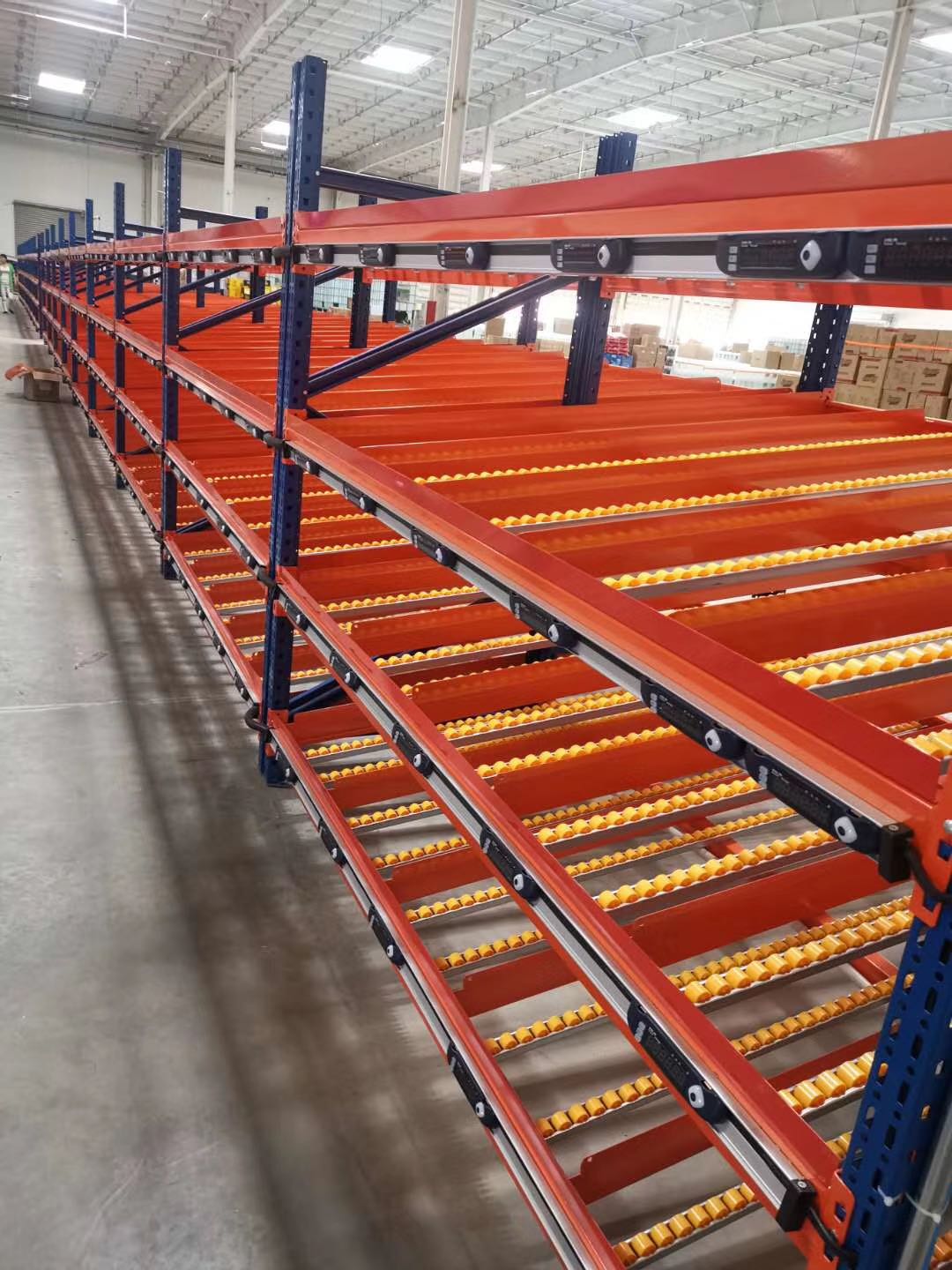
Instead of anchoring each unit to the floor with a permanent aisle in front, they are all mounted onto a sturdy metal base carriage. This carriage sits on a series of wheels or bearings. These wheels run on steel rails that are securely fixed into the building’s concrete floor.
A hand crank, a mechanical assist handle, or an electric motor drives the movement. To access a specific bay, you move the adjacent units left or right along the track, creating an aisle exactly where you need it. When you’re done, you move the units back, and the aisle disappears.
This transforms what was previously 50% aisle space into nearly 100% storage space. The “heavy duty” designation means these systems are engineered to support significant weight—often thousands of pounds per bay—making them suitable for industrial applications far beyond document storage.
The Primary Advantage: Massive Space Recovery
The headline benefit of a heavy duty mobile shelving system is undeniable: space savings. It’s the most direct answer to spatial constraints.
In a traditional static layout with multiple aisles, up to 50% of your total floor area is dedicated to empty walkways. This is non-productive space. A mobile storage system consolidates all that wasted square footage.
By eliminating multiple fixed aisles, you can typically double your storage capacity within the same footprint. In some layouts, the gains are even higher. For a business facing high real estate or lease costs, this is a game-changer. It allows you to store more inventory, house more equipment, or keep more archives without adding a single square foot of building space.
This reclaimed space can also be reallocated. Maybe you use the new open area to add more workstations, install a new piece of equipment, or simply create a safer, less cluttered operational environment.
Key Benefits Beyond Just Square Footage
While space is the main driver, the advantages of implementing heavy duty mobile shelving extend into several other operational areas.
Enhanced Security and Controlled Access
When the aisles are closed, the storage face is essentially a solid wall. This provides a natural physical barrier, reducing casual pilferage or unauthorized access. You can even lock the entire system or individual bays when closed.
Improved Organization and Retrieval Time
With a higher density of items in a smaller area, workers spend less time walking long distances between aisles. The compact nature of the system means everything is closer together. With good labeling, retrieval becomes faster and less physically demanding.
Environmental and Cost Control
In facilities with climate control or specialized environments (like clean rooms or cold storage), minimizing the volume of air that needs to be treated is crucial. A heavy duty mobile shelving system creates a smaller, denser storage envelope, leading to significant savings on heating, cooling, and energy costs.
Adaptability and Scalability
These systems are modular. You can start with a specific section and add more carriages and bays later as your needs grow. The design can often be reconfigured if your storage profile changes, offering long-term flexibility.
Investment in Employee Safety
Reducing clutter and creating a more organized storage environment minimizes trip hazards. Many systems also feature integrated safety floor surfaces, anti-tilt mechanisms, and safety sweeps that stop movement if an obstacle is detected.
Ideal Applications: Where This System Shines
Heavy duty mobile shelving isn't for every storage scenario, but in the right setting, it's transformative.
Industrial Parts and Tool Storage
MRO (Maintenance, Repair, and Operations) rooms in manufacturing plants are perfect candidates. Storing heavy machine parts, tools, and components in a dense, organized system saves critical floor space in high-value production areas.
Archival Records and Document Management
Law firms, hospitals, universities, and government agencies with long-term retention needs use these systems to store boxes of files. The heavy duty capacity handles the substantial weight of paper records securely.
Aerospace and Automotive Manufacturing
These industries deal with expensive, bulky, and often sensitive components. Heavy duty mobile shelving provides secure, high-density storage for everything from avionics kits to transmission assemblies, all within easy reach of the production line.
Libraries and Special Collections
Beyond public stacks, research libraries and museums use these systems for compact storage of special collections, artifacts, and lesser-used materials, protecting them while saving valuable building space.
Cold Storage and Freezer Warehouses
Given the extreme cost of refrigerated space, maximizing every cubic foot is paramount. Heavy duty mobile shelving systems, built with materials that withstand low temperatures, are a premium solution for frozen food, pharmaceuticals, and biotechnology storage.
Critical Considerations Before You Invest
Shifting to a mobile storage system is a significant infrastructure project. Careful planning is non-negotiable.
Floor Load Capacity is the First Check
This is the most important technical hurdle. A fully loaded heavy duty mobile shelving system concentrates immense weight onto the rails and the floor beneath. A professional structural engineer must assess your slab’s capacity to support the live load. Reinforcement may be required.
Choosing the Right Drive Mechanism
- Manual Crank: Lowest cost, suitable for lighter loads and infrequent movement.
- Mechanical Assist: Uses a gear system to reduce the effort needed to move heavy bays.
- Electric Motor: Essential for the heaviest systems. Operated by push-button or touchpad, often with safety sensors. Requires electrical conduits to the track area.
Integrating Safety Systems
Look for features like:
- Safety Sweeps: Bars at floor level that stop movement if they contact an object.
- Anti-Tilt/Seismic Locks: Prevent the carriages from shifting or tipping.
- Aisle Warning Lights and Alarms: Signal when the system is in motion.
- Separate Aisle Entry Systems: Ensure an aisle cannot be closed while someone is inside.
Analyzing Workflow and Access Frequency
If you need constant, simultaneous access to multiple different storage bays, a traditional static system might offer better throughput. Heavy duty mobile shelving is ideal for scenarios where access is needed to one or two bays at a time. Analyze your peak access patterns carefully.
Professional Installation and After-Sales Support
This is not a DIY project. Installation requires precise leveling of tracks, assembly of heavy components, and integration of safety systems. Choose a supplier with certified installers and a clear plan for ongoing maintenance and support.
The Cost Perspective: Understanding the Investment
The upfront cost per bay for a heavy duty mobile shelving system is higher than for static shelving. You are paying for the carriage mechanism, the track system, the drive units, and the enhanced engineering.
However, the correct financial comparison is cost per stored item or return on floor space. When you factor in the space savings—effectively doubling your capacity—the cost per stored unit becomes very competitive.
The real economic argument is often against the alternative: constructing a building addition, leasing more space, or moving to a larger facility. Compared to these massive capital expenditures, the investment in a high-density mobile storage system is typically far lower. It allows you to defer or completely avoid those larger costs, providing a strong and calculable return on investment.
Frequently Asked Questions (FAQs)
Q1: How much weight can heavy duty mobile shelving typically hold?
A1: Capacity varies significantly by design and manufacturer. Industrial-grade systems commonly handle between 1,000 to 2,500 pounds per shelf level, with total loads of 10,000 pounds or more per carriage bay. Always consult with an engineer to specify a system rated for your specific load requirements, including the weight of the shelving itself.
Q2: Is it safe to have people inside the aisles when the system is moving?
A2: Absolutely not. Standard safety protocols mandate that no one should be in an aisle while the shelving units are in motion. Proper systems have multiple safeguards to prevent this, including aisle presence sensors, warning lights, audible alarms, and physical locking mechanisms that must be disengaged before movement can start, ensuring the aisle is clear.
Q3: Can heavy duty mobile shelving be installed on an existing concrete floor, or does it require special reinforcement?
A3: It can often be installed on an existing floor, but reinforcement is frequently necessary. The concentrated loads are immense. A structural engineer must core-test your slab to determine its psi (pounds per square inch) rating. If the slab is insufficient, it will need to be cut and reinforced with rebar and additional concrete before the tracks are installed. This is a critical and non-negotiable part of the planning process.
Q4: What happens if the power goes out in an electrically-driven system?
A4: Reputable electric systems have manual override capabilities. In a power failure, you can disengage the motor drive and use a manual crank or release mechanism to move the carriages and open an aisle. It requires more physical effort but ensures you are never locked out of your stored items.
Q5: How much maintenance does a mobile shelving system require?
A5: With proper use, maintenance is minimal but essential. An annual inspection by a qualified technician is recommended. This includes checking and lubricating the tracks and wheels, testing all safety mechanisms (sensors, brakes, locks), and verifying the structural integrity of bolts and connections. For electric systems, electrical components should also be inspected. Regular cleaning of the tracks to remove debris is a simple but important user task.