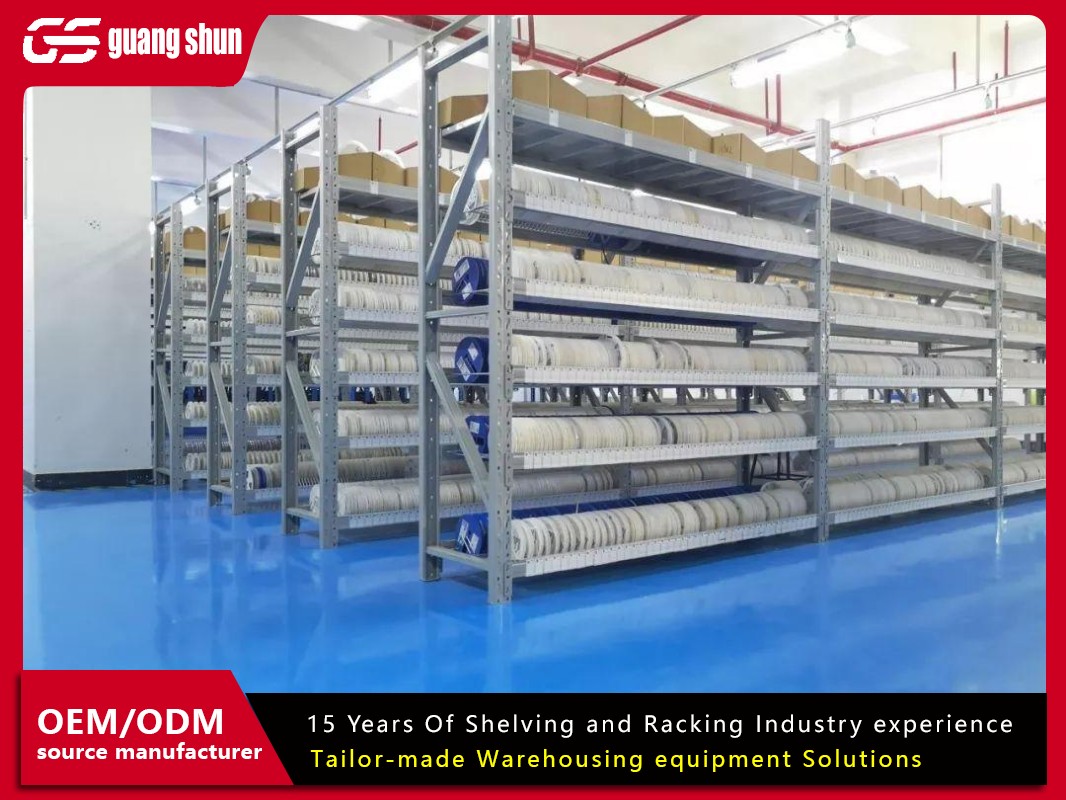
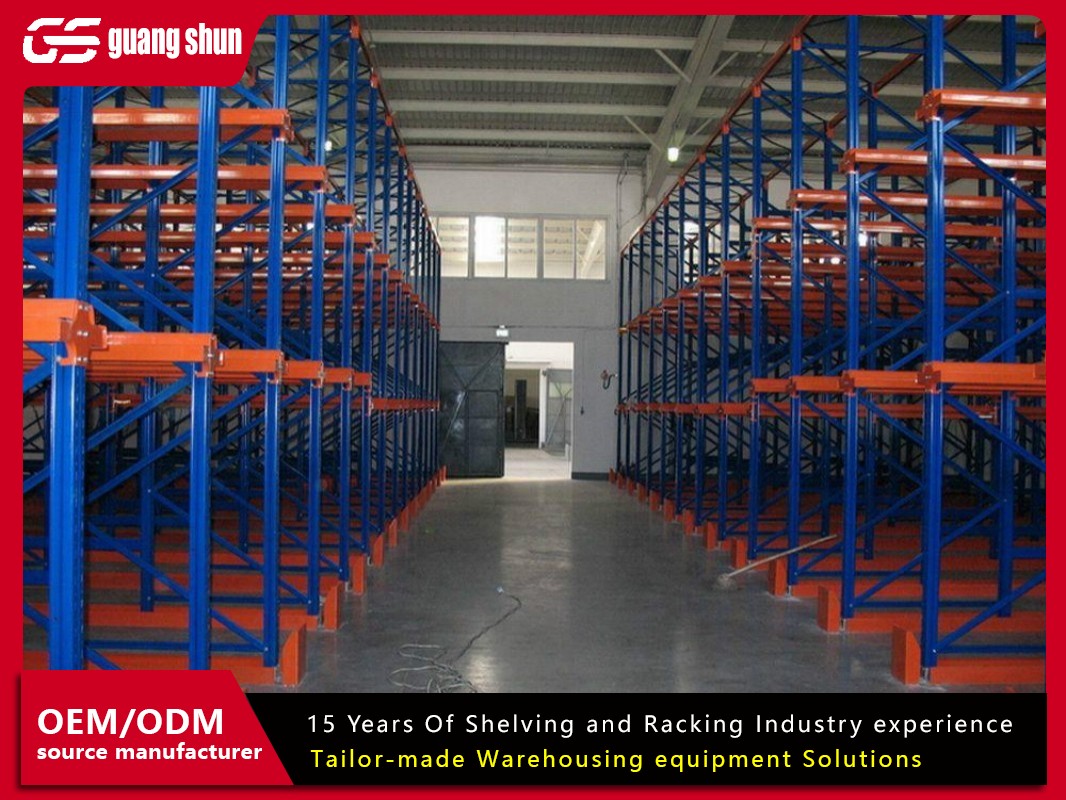
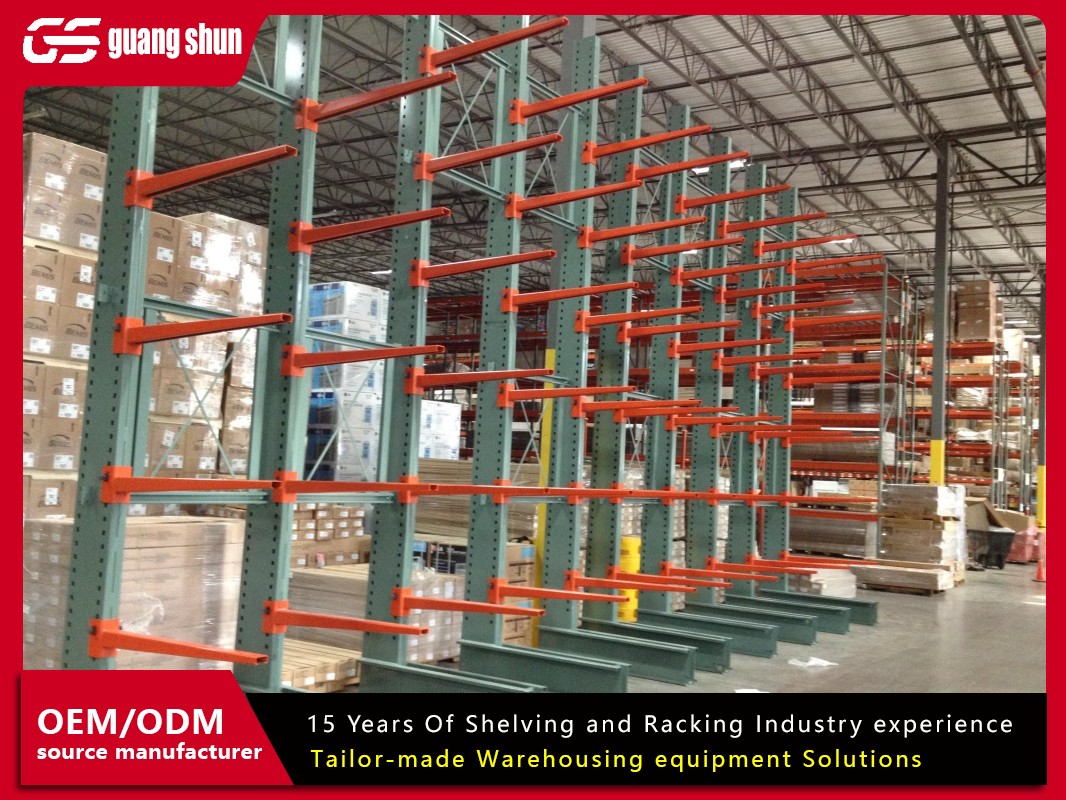
Warehouse operators seeking to maximize cubic utilization without relocating
to a larger facility frequently turn to high-density storage solutions. Among
these, very narrow aisle
racking (VNA) stands out as a proven, cost-effective strategy to
increase pallet positions within an existing footprint. Unlike standard
selective racks that require wide aisles for counterbalanced forklifts, VNA
systems operate with aisles typically between 1.6 and 2.0 meters, enabling
storage density improvements of 30% to 50%. This article provides a granular
examination of very narrow aisle racking—from structural engineering principles
to total cost of ownership—equipping decision-makers with the data required for
a sound capital investment.
Defining Very Narrow Aisle Racking: Core Components and Operational
Parameters
At its foundation, very narrow aisle racking is a
configuration of pallet racking that uses specialized, guided forklift trucks to
navigate exceptionally tight spaces. The system comprises three interdependent
elements: the rack structure itself, the rail guidance system, and the
VNA-compatible material handling equipment.
Rack Structure and Design Specifications
The rack uprights and beams in a VNA system are engineered to withstand
higher lateral forces compared to standard racks, due to the close proximity of
the lift truck's mast and the need for precise alignment. Typical upright
capacities range from 10,000 to 30,000 pounds per leg, depending on beam levels
and load distribution. The beam heights are usually adjustable on 2-inch or
3-inch increments to accommodate varying pallet heights. For high-bay warehouses
exceeding 40 feet, additional bracing and seismic tie-downs are mandatory.
Guidance Systems: Rail Types and Tolerances
The defining feature of VNA is the floor-mounted or overhead rail guidance
system. The most common variant is the floor-embedded rail, which uses a groove
or angle section to guide the truck's wheels. This system requires a concrete
floor with a flatness tolerance of Fmin ≥ 100 (per ASTM E1155) to prevent truck
wander and ensure safe operation. Alternatively, wire-guided systems use
inductive loops buried in the floor, allowing for more flexibility but with
higher installation complexity. Both systems demand meticulous floor
preparation, which often accounts for 10-15% of the total project
expenditure.
Operational Advantages and Throughput Considerations
Adopting very narrow aisle racking is not merely about stacking more pallets;
it fundamentally alters warehouse workflow. The reduction in aisle width means
that forklift operators must follow a straight, guided path, which can increase
travel speed and reduce the risk of product damage. However, this comes with a
trade-off in terms of maneuverability.
Storage Capacity Increase: By reducing aisle width from the
conventional 3.5-4.0 meters to 1.8 meters, a warehouse can add one or two
additional rack bays across the same building width. For a 100,000 sq ft
facility, this translates to roughly 15,000-20,000 additional pallet positions,
effectively deferring the need for a new building.
Selectivity and Accessibility: Unlike drive-in or push-back
racks, VNA maintains 100% selectivity for each pallet position. This is a
significant advantage for operations with high SKU counts and frequent
partial-pallet picking.
Forklift Technology: VNA trucks are typically man-up turret
trucks or swing-reach trucks that can rotate their forks 180 degrees to retrieve
pallets from either side of the aisle without turning the entire vehicle. These
trucks are equipped with electronic guidance sensors that interface with the
floor rails, allowing travel speeds up to 6-8 km/h even in narrow
aisles.
Cost Analysis: Initial Investment vs. Long-Term Gains
The financial justification for very narrow aisle racking hinges on comparing the capital expenditure against the cost of alternative
strategies—such as building expansion, off-site warehousing, or using
lower-density systems with additional handling equipment. A typical VNA
installation includes the racking, rail guidance, floor preparation, and the
acquisition of specialized VNA forklifts, which are notably more expensive than
standard counterbalanced units.
Breaking Down the Capital Expenditure
For a medium-scale project (e.g., 5,000 pallet positions at 30-foot height),
the per-pallet-position cost for VNA racking is generally 20-30% higher than
standard selective racking. However, when amortized over the land cost (or
rental cost) per square foot, the total cost per stored pallet often favors VNA.
For example, if warehouse rent is $8 per square foot annually, saving 15,000 sq
ft through VNA can generate annual savings of $120,000, which directly offsets
the premium paid for the specialized equipment.
Operational Expenses: Energy, Maintenance, and Labor
VNA trucks are electric and consume less energy per pallet moved compared to
heavy counterbalanced IC (internal combustion) trucks, especially in multi-shift
operations. Maintenance costs, however, are slightly higher due to the precision
guidance systems and the need for periodic rail alignment checks. On the labor
side, VNA operators require specialized training and certification, but the
improved pick rates (often 20-30% higher for bulk putaway) can reduce the
required headcount in high-volume DCs.
Industry-Specific Applications and Design Considerations
The suitability of very narrow aisle racking varies across
sectors, driven by pallet size, turnover rates, and building height. Below are
three common use cases where VNA delivers demonstrable value.
Food and Beverage Distribution
In ambient and chilled food warehouses, product rotation is paramount. VNA's
full selectivity supports FIFO (first-in-first-out) without the complexity of
gravity flow systems. Additionally, the closed rack structure can be easily
integrated with climate-controlled airflow systems to maintain uniform
temperature. Many food DCs use VNA with wire guidance to enable semi-automated
putaway, reducing the risk of human error in high-hygiene environments.
Automotive Parts and Aftermarket
The automotive sector handles a vast array of SKUs with varying dimensional
profiles—from small bins to bulky exhaust systems. VNA racking can be designed
with mixed beam depths (e.g., 30 inches for small parts, 42 inches for engines)
on the same bay, providing flexibility without sacrificing density. Moreover,
the reduced aisle width mitigates the risk of mast-swing damage to stored
products, which is a common issue in wider aisles where operators have more room
for error.
E-Commerce Fulfillment Centers
For e-commerce operations with high order volatility, VNA is often combined
with pick-to-light or voice-picking systems. The narrow aisles force a
disciplined workflow, reducing unnecessary travel between picking zones.
However, it is worth noting that VNA is less effective for extremely
high-turnover "fast movers" that require continuous access; in such cases, a
hybrid design with a few wide aisles for bulk replenishment and VNA for reserve
storage is a common solution.
Engineering and Safety Protocols
Safety is a non-negotiable aspect of any VNA installation. The interaction
between the lift truck and the rack structure demands rigorous compliance with
standards such as ASME B56.1 and RMI (Rack Manufacturers Institute) guidelines.
Key safety features include:
Floor Proximity Sensors: These detect any floor debris or
misalignment and automatically reduce travel speed or stop the truck.
Overhead Guarding: In man-up turret trucks, the operator
cabin is reinforced with rollover protection (ROPS) and fall-arrest
systems.
Aisle Entry Interlocks: To prevent simultaneous entry of
two trucks in the same aisle, some systems use light curtains or laser-based
lane controllers.
Rail Anchoring: The floor rails must be anchored to the
concrete with high-tensile bolts, with regular torque checks to ensure
stability.
Moreover, the rack structure itself must be designed with appropriate column
guards and end-of-aisle protection to absorb impact from accidental contact.
Although the guidance system minimizes such incidents, human error or equipment
malfunction can still occur.
Total Cost of Ownership (TCO) and Payback Horizon
A rigorous TCO model for very narrow aisle racking should
incorporate the following variables over a 10-year asset life:
Avoided Real Estate Cost: Calculate the local cost per
square foot for additional warehouse space, including property tax, maintenance,
and utilities.
Labor Productivity Gain: Measure current putaway/picking
hours per pallet and project the reduction with VNA (typically 15-25% fewer
travel minutes).
Energy and Maintenance Differentials: Compare the kWh
consumption and annual maintenance contract costs between VNA trucks and the
forklift fleet it replaces.
Residual Value: VNA racking has a long service life (often
20+ years) and can be reconfigured, offering a tangible residual value at the
end of the analysis period.
In most real-world case studies, the payback period for a VNA conversion
ranges from 24 to 42 months, with higher returns in urban areas where land costs
are elevated. For instance, a distribution center in the Chicago metro area
reported a 29-month payback after converting 80,000 sq ft of conventional
racking to VNA, enabling them to absorb a 40% SKU increase without expanding the
building footprint.
Integration with Automation and Future-Proofing
Modern VNA systems are increasingly designed to interface with warehouse
execution systems (WES) and automated storage and retrieval systems (AS/RS). By
installing a shuttle-based VNA configuration, where a robotic shuttle moves
within the rack beams, operators can achieve even higher throughput. This hybrid
approach—known as "shuttle + VNA"—is gaining traction in high-volume operations.
Furthermore, the structured layout of VNA makes it easier to implement slotting
optimization algorithms, which assign pallet positions based on velocity,
reducing travel time further.
When planning a VNA project, it is prudent to consider future expansion. Many
manufacturers offer modular beam and upright systems that allow adding
additional bays or levels without structural redesign. This scalability protects
the initial investment against changing business needs.
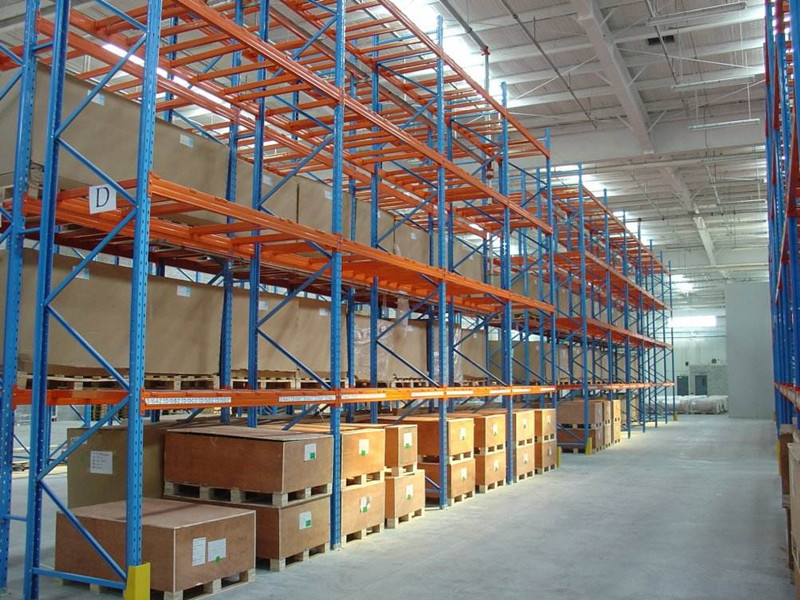
Leveraging Expertise: The Guangshun Advantage in VNA Systems
The success of a very narrow aisle racking project depends heavily on the
design precision and manufacturing quality of the racking components. Guangshun has extensive
experience delivering VNA solutions for diverse industries, with a focus on
high-strength steel profiles and tight manufacturing tolerances that ensure
compatibility with leading guidance systems. Their engineering team conducts
on-site laser scanning to map floor conditions and customizes rail anchoring
solutions, reducing installation time and avoiding costly rework. By integrating
Guangshun racking with
trusted VNA forklift brands, warehouse operators achieve a synergistic system
where mechanical and electrical components are perfectly aligned. This attention
to detail translates to lower long-term maintenance and higher system
availability—factors that directly influence the total cost of ownership.
Frequently Asked Questions (FAQ)
Q1: What is the minimum aisle width for a very narrow aisle racking
system?
A1: The industry standard for VNA is an aisle width between 1.6 meters (63
inches) and 2.0 meters (79 inches), measured from rack face to rack face. The
exact width depends on the type of VNA truck used (turret vs. swing-reach) and
the load dimensions. Some specialized systems can go as low as 1.4 meters, but
this requires ultra-precise floor rails and reduced travel speeds.
Q2: Can an existing selective racking system be converted to very narrow
aisle racking?
A2: In most cases, it is not feasible to convert existing selective racking
to VNA because the upright frame depths and beam spans are different. VNA
requires deeper uprights (often 4-5 inches) to handle the lateral forces.
However, some manufacturers offer conversion kits that involve replacing
uprights and relocating beams, but this is rarely cost-effective compared to a
new installation.
Q3: How does floor flatness affect the performance of very narrow aisle
racking?
A3: Floor flatness is one of the most critical success factors. The tolerance
for VNA is typically Fmin ≥ 100 (or FL ≤ 0.5 mm per meter). Poor flatness causes
the guided truck to "hunt" or oscillate, leading to premature wheel wear,
reduced travel speed, and potential impact with the rack. Many projects include
a floor survey and remediation (grinding or leveling) as part of the budget.
Q4: What are the fire safety requirements for very narrow aisle
racking?
A4: Fire codes (e.g., NFPA 13) require in-rack sprinkler systems in high-bay
VNA configurations because the narrow aisles restrict access for manual
firefighting. These systems must be designed with flexible couplings to
accommodate potential rack movement. Additionally, the roof sprinkler system
must be upgraded to provide sufficient water density to penetrate the dense
storage array.
Q5: Is very narrow aisle racking suitable for cold storage environments
(e.g., -25°C)?
A5: Yes, with appropriate material selection. The steel grade must be
suitable for low temperatures (often S355J2 or equivalent) to avoid brittleness.
The guidance rails and truck components also require low-temperature lubricants
and heating elements for control panels. Many cold storage operators have
successfully implemented VNA to reduce the refrigerated volume, as narrower
aisles mean less cubic space to cool, generating significant energy savings.
Q6: What is the typical lead time from design to installation for a VNA
project?
A6: For a medium-sized project (e.g., 3,000–5,000 pallet positions), the
end-to-end timeline is usually 4 to 6 months. This includes 4-6 weeks for
engineering design and permitting, 6-8 weeks for manufacturing and delivery, and
6-10 weeks for floor preparation and installation. The actual installation
duration depends on the site access and the number of crews, but a typical
100,000 sq ft conversion takes about 8-12 weeks of on-site work.
This technical and economic analysis is provided to support strategic
decision-making for warehouse infrastructure investments. For project-specific
engineering assessments and binding quotations, professional consultation with
certified suppliers and structural engineers is strongly recommended.