In modern logistics and distribution, the optimization of storage density
directly impacts operational costs and throughput. At the core of this
optimization lies the racking
system, a critical infrastructure investment that determines not
only storage capacity but also warehouse safety and workflow efficiency.
Selecting the appropriate configuration requires a granular understanding of
load capacities, material handling equipment compatibility, and SKU profile
characteristics.
1. The Structural Anatomy of Industrial Storage Racks
A racking system is far more than simple shelving; it is an
engineered structure composed of precision components. The primary elements
include upright frames, which bear the vertical load, and step beams, which
support the stored pallets. Beam levels are adjustable in small increments,
allowing warehouse managers to adapt to varying product heights without
structural modification.
Key technical specifications to evaluate include:
Load Capacity: Measured in kilograms per beam level and per
bay, this determines the total weight the structure can safely support.
Frame Bracing: Diagonal and horizontal braces provide
torsional resistance, crucial for stability, especially in seismic zones.
Beam Deflection: Engineering standards dictate maximum
deflection under load to prevent beam roll-out and ensure long-term
integrity.
Protection Components: Column guards, end-of-aisle
protectors, and wire mesh decking are essential for mitigating impact damage
from forklifts.
For warehouses seeking a tailored configuration, exploring the diverse
options from a specialized manufacturer like Guangshun ensures
that the chosen solution aligns precisely with the operational load
requirements.
2. Selective vs. High-Density Configurations
The choice of configuration dictates the fundamental trade-off between
accessibility and storage density. The traditional racking
system, known as selective pallet racking, offers 100%
accessibility to every pallet. This makes it ideal for warehouses with high SKU
variety and fast-moving inventory.
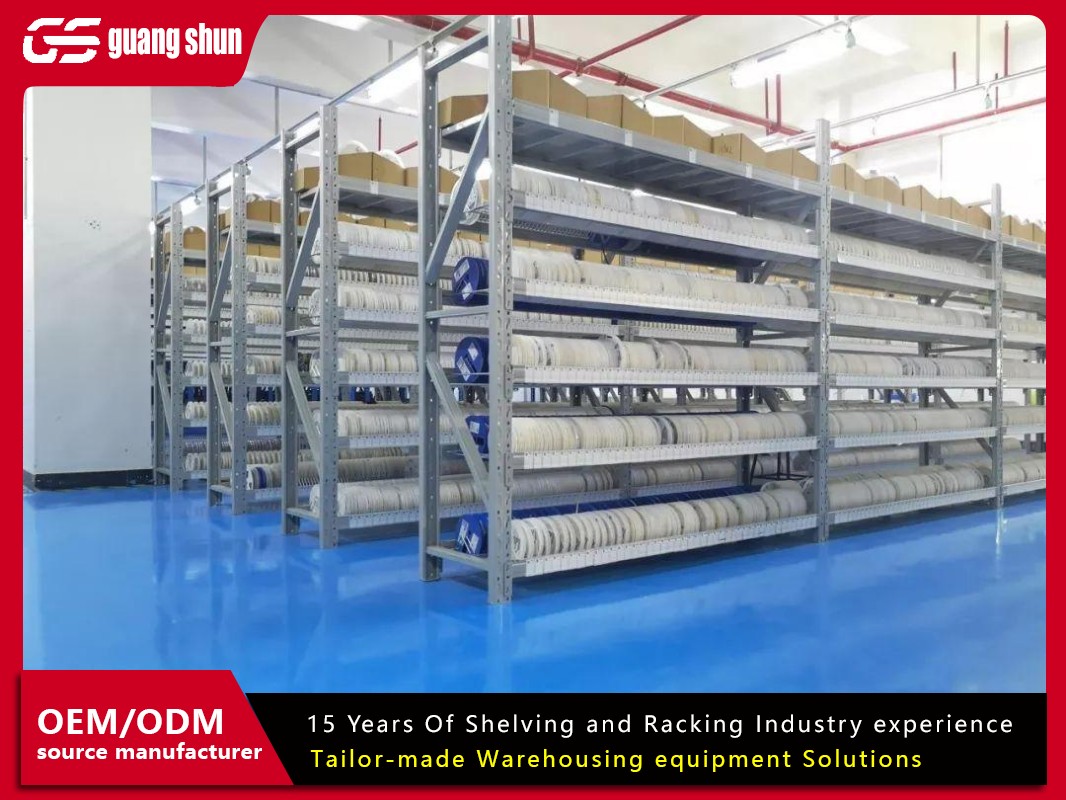
2.1 Selective Pallet Racking
In this setup, each row of racking is independent, and forklifts enter the
aisle to place or retrieve loads. While density is lower due to the space taken
by aisles, inventory management is straightforward, and FIFO (First-In,
First-Out) rotation is easily maintained.
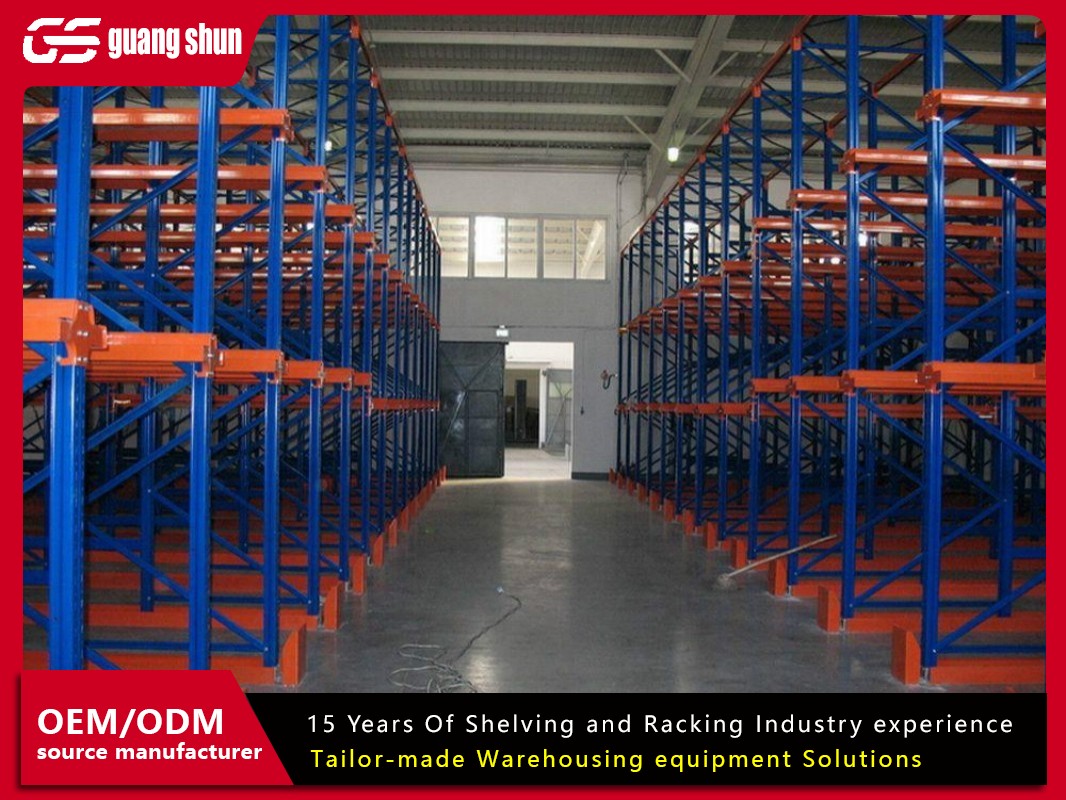
2.2 Drive-In and Drive-Thru Racking
For businesses prioritizing density for homogeneous, high-volume products,
drive-in configurations are optimal. Forklifts drive directly into the storage
structure to deposit or retrieve pallets. This LIFO (Last-In, First-Out) system
significantly reduces aisle space, increasing storage capacity by up to 60%
compared to selective alternatives. It is particularly effective for cold
storage facilities where minimizing the building footprint reduces energy
costs.
2.3 Push-Back and Pallet Flow Racks
These dynamic systems utilize gravity or cart mechanisms. Pallet flow racks,
equipped with rollers or wheels, automatically move pallets from the loading
(rear) end to the picking (front) end, enforcing strict FIFO rotation for
perishable goods. Push-back systems store pallets on nested carts that slide on
rails, offering high density with moderate selectivity.
3. Critical Factors in System Design and Safety
Designing a robust racking system involves a complex safety
calculus. Engineers must consider static loads, dynamic impacts from material
handling equipment, and seismic forces. Compliance with standards such as the
RMI (Rack Manufacturers Institute) or FEM (Federation Europeenne de la
Manutention) is non-negotiable for ensuring structural reliability.
Common failure points often relate to installation and maintenance rather
than manufacturing defects. Regular audits should inspect for:
Visible damage to uprights, such as dents or bends.
Missing or loose safety locks on beam connectors.
Proper anchoring to the warehouse floor.
Clearance between stored loads and sprinkler systems to comply with fire
safety codes.
A partnership with a provider like Guangshun typically
includes site assessment and installation supervision to mitigate these risks
from the outset.
4. Integration with Automation and WMS
The modern warehouse is increasingly automated. A racking
system must interface seamlessly with automated storage and retrieval
systems (AS/RS), robotic shuttles, and automated guided vehicles (AGVs). This
integration demands tighter tolerances in the rack structure and specialized
interfaces like rail guides for shuttles.
Furthermore, the physical layout must be mirrored within the Warehouse
Management System (WMS). Accurate location labeling—using bar codes or RFID tags
on each rack beam—ensures that the WMS knows the exact coordinates of every SKU.
This digital twin of the rack structure is essential for directing operators and
optimizing put-away and picking routes.
5. Lifecycle Cost and ROI Analysis
While the initial investment is a significant factor, procurement decisions
should be based on Total Cost of Ownership (TCO). A high-quality racking system
made from high-tensile steel offers superior longevity and reduced maintenance
over its 20+ year lifespan. Conversely, choosing a lower-cost, lighter-gauge
system might lead to higher damage rates and earlier replacement.
Calculating ROI involves quantifying the value of vertical space utilization.
By raising the height of the racking system to utilize the full clear height of
the building, a warehouse can avoid the capital expenditure of expanding the
physical footprint. This vertical intensification directly translates to lower
cost per pallet position.
6. Specialized Racking for Unique Applications
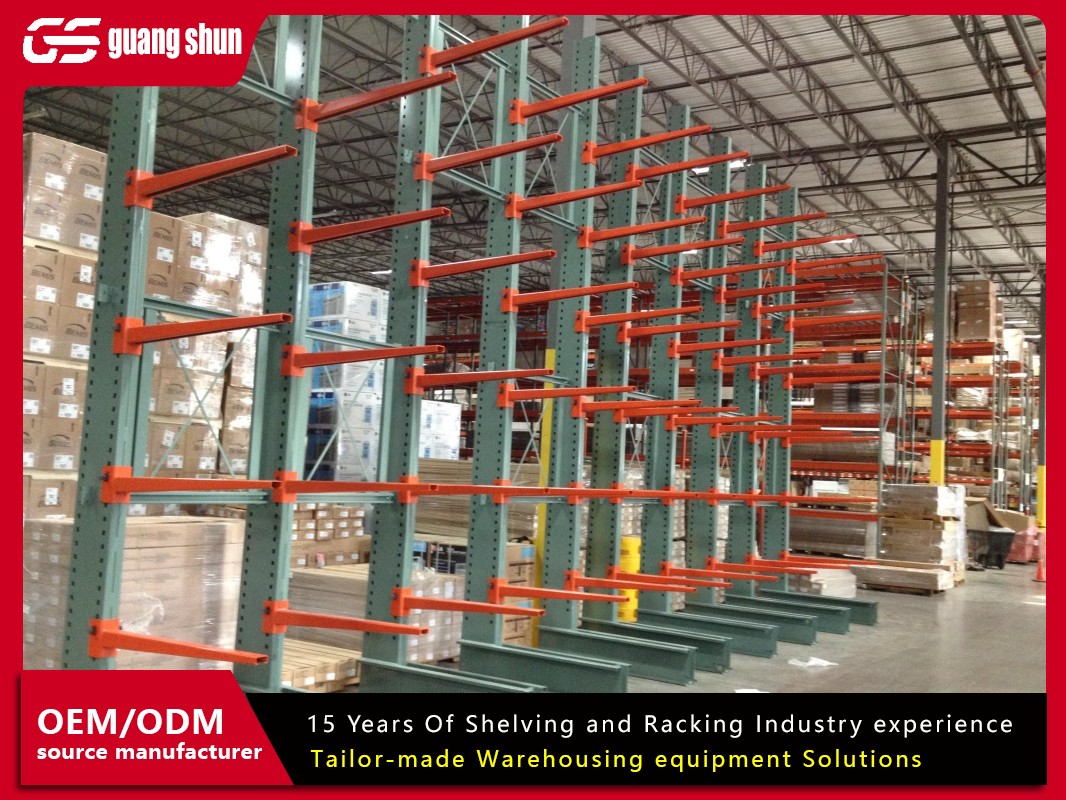
Certain industries demand highly specialized configurations. Cantilever
racking, for example, is engineered for long, bulky items like lumber, pipes, or
steel bars, featuring arms that extend from a single column without a front
vertical barrier. For very narrow aisles (VNA), specialized turret trucks
require wire guidance systems and racks designed for minimal clearance,
maximizing density while retaining some selectivity.
Even within standard categories, customization is key. The integration of
panel protection, specific beam locking mechanisms, and corrosion-resistant
coatings for cold or humid environments are all parameters that a consultant
from Guangshun can help define based on the specific
operational context.
7. Future-Proofing Warehouse Storage
As supply chains evolve, flexibility in storage becomes paramount. Modular
racking designs that allow for reconfiguration without welding or cutting offer
the ability to adapt to changing inventory profiles. Features like easily
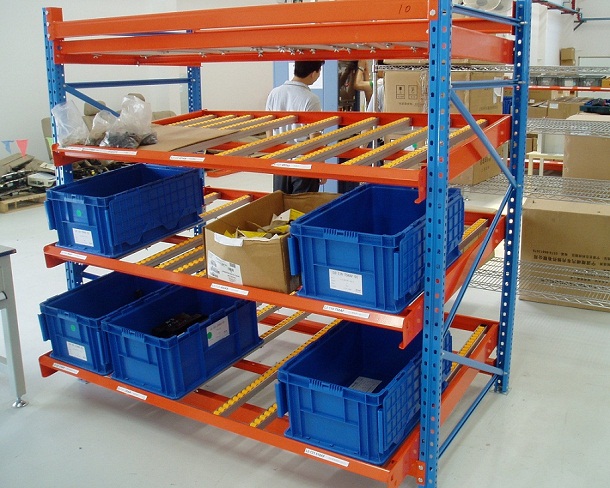
re-positionable beam connectors and compatible add-ons for carton flow or
mezzanine floors ensure that the initial investment remains relevant.
Additionally, the rise of e-commerce fulfillment, with its need for
broken-case picking, is driving the integration of racking with pick modules and
conveyor systems. This convergence of static storage and dynamic material flow
requires racking that is not just a container, but a structural platform for the
entire order fulfillment process.
Frequently Asked Questions
Q1: What is the maximum weight capacity of a standard pallet racking
beam?
A1: There is no single "standard" capacity; it varies based on
beam size, steel gauge, and span. Heavy-duty beams commonly support between
2,000 kg and 5,000 kg per level. The specific load capacity is always calculated
by the engineer based on the design requirements and must be clearly marked on
the racking system.
Q2: Can I install a racking system on my own, or do I need
professional installation?
A2: While some boltless systems are
designed for relatively straightforward assembly, professional installation is
strongly recommended. Certified installers ensure proper anchoring to the floor,
correct beam lock engagement, and overall structural alignment, which is
critical for safety and warranty validity. Incorrect installation is a leading
cause of racking failure.
Q3: How often should a pallet racking system be
inspected?
A3: Industry best practices and safety standards
recommend a formal expert inspection at least annually. However, visual
inspections for damage should be conducted daily or weekly by warehouse staff as
part of regular operations. Any rack that has been struck by material handling
equipment should be inspected immediately.
Q4: What is the difference between roll-formed and structural steel
racking?
A4: Roll-formed racking is made from steel coils that are
shaped at room temperature, resulting in a lighter, more cost-effective frame
suitable for many applications. Structural steel racking is made from hot-rolled
steel (like I-beams or C-channels) and offers higher impact resistance, making
it ideal for high-traffic areas and environments with rough forklift
operation.
Q5: How do I determine the optimal beam height for my mixed SKU
sizes?
A5: The optimal configuration involves analyzing your current
inventory profile (pallet heights). You should set beam levels to accommodate
the tallest pallet in each lane while minimizing wasted vertical space. For
mixed SKUs, consider using adjustable beams or implementing a "random storage"
strategy where the WMS directs pallets to locations with sufficient clear
height.
Q6: Is it possible to seismically retrofit an existing racking
system?
A6: Yes, in many cases, existing racking can be upgraded to
meet updated seismic codes. This typically involves adding extra bracing,
increasing anchoring strength, or installing baseplate restraints. A structural
engineer must assess the current system's capacity and design the specific
retrofit measures required for your geographic region.