The Complete Guide to Warehouse Racking Systems: Optimize Storage & SafetyIn the fast-paced world of logistics, the efficiency of your storage infrastructure directly impacts order fulfillment speed, inventory accuracy, and operational costs. A well-designed warehouse racking system is the cornerstone of modern material handling, enabling facilities to leverage vertical space, organize diverse SKUs, and protect valuable goods. However, selecting the optimal configuration from the myriad of options—selective, drive-in, push-back, flow, and cantilever—requires deep technical knowledge. This comprehensive guide provides warehouse professionals, operations managers, and facility planners with the engineering insights and best practices needed to design, implement, and maintain a warehouse racking system that delivers maximum ROI.
1. Anatomy of a Warehouse Racking System: Core Components & Terminology
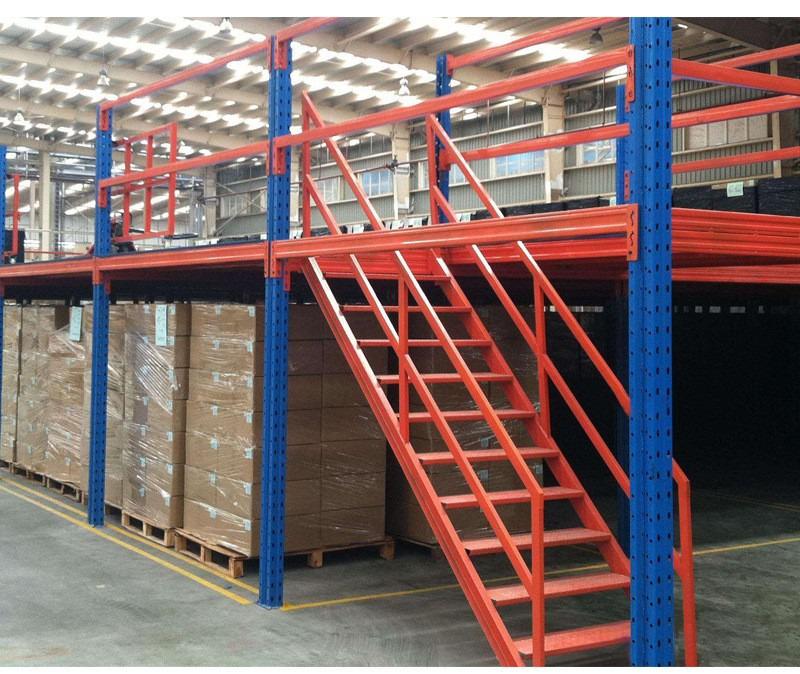
Before diving into system types, it is essential to understand the fundamental building blocks. Every warehouse racking system comprises two primary structural elements: upright frames (vertical columns with diagonal bracing) and load beams (horizontal members that support pallets). Beams lock into frames via integral connectors or bolts, with adjustability typically in 50 mm or 2-inch increments. Critical accessories include wire decking (to prevent product fall-through), row spacers (to tie rows together for seismic stability), column guards (to protect against forklift impacts), and shim plates (for uneven floors). All components must comply with standards such as ANSI MH16.1 (specification for the design, testing, and utilization of industrial steel storage racks) and RMI guidelines.
2. Major Types of Warehouse Racking Systems
Different inventory profiles demand different storage philosophies. Below is a technical breakdown of the most prevalent systems, each with distinct operational logic and load dynamics.
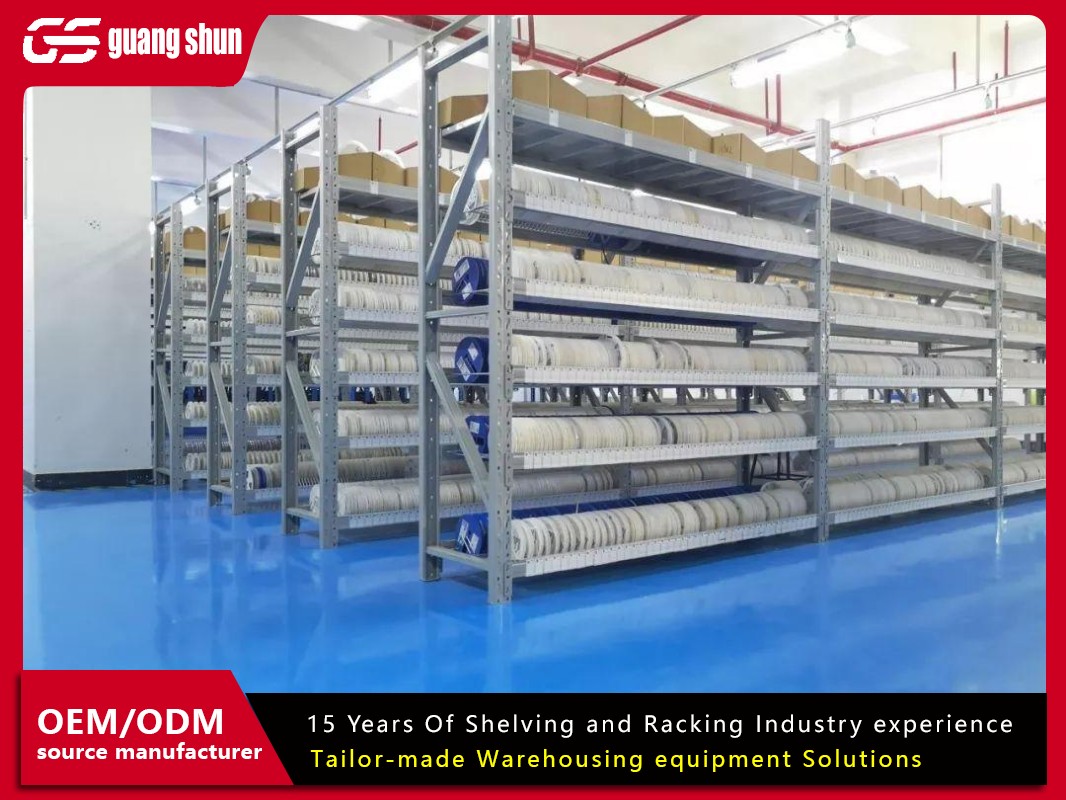
Selective Pallet Racking
The most common warehouse racking system, selective racking offers direct access to every pallet position. Rows are arranged back-to-back with aisles between each row for forklift maneuverability. Pros: 100% SKU accessibility, flexible FIFO/LIFO rotation. Cons: Lower storage density due to multiple aisles (typically 25-35% of floor space is aisles). Typical beam capacities range from 2,500 kg to 6,000 kg per level, depending on steel gauge. It is ideal for warehouses with high product variety and medium turnover rates.
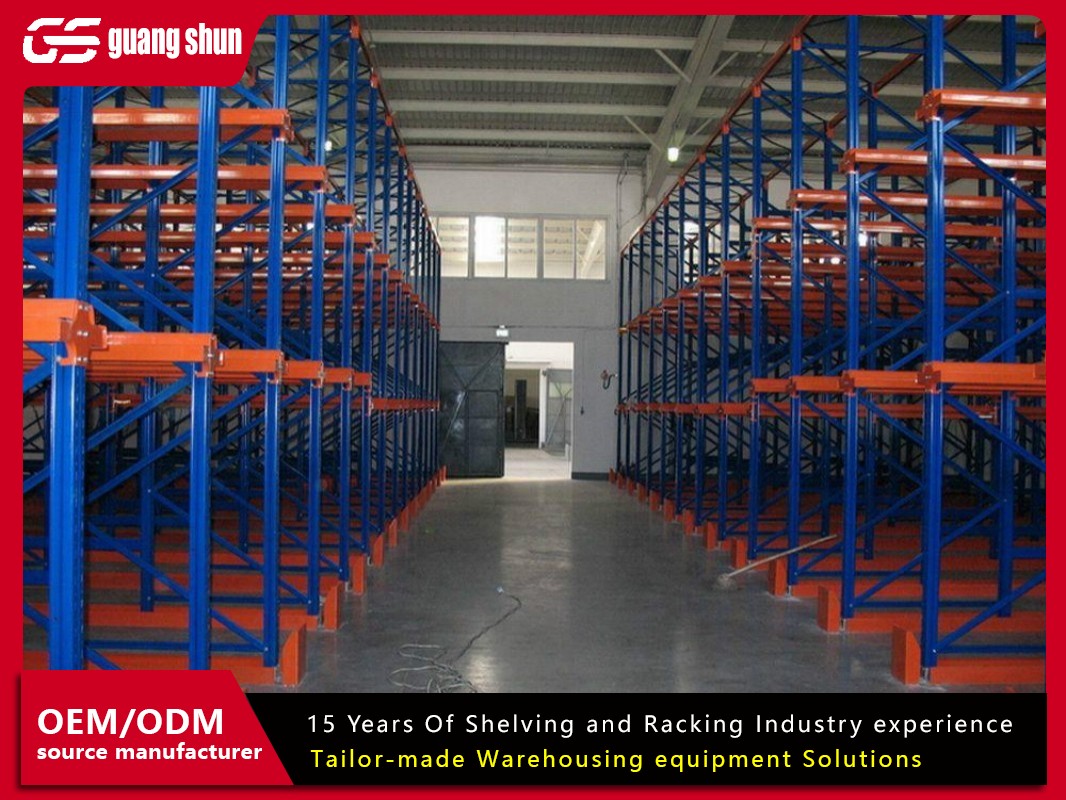
Drive-In / Drive-Through Racking
For high-density storage of homogeneous products (e.g., large batches of the same SKU), drive-in racking eliminates aisles by allowing forklifts to enter the structure. Pallets rest on rails, stored from the innermost position outward, following Last-In, First-Out (LIFO) rotation. Drive-through variants permit access from both ends, enabling First-In, First-Out (FIFO). Storage density can increase by up to 60% compared to selective systems, but throughput is lower due to sequential handling. Ideal for cold storage or bulk raw materials.
Push-Back Racking
Push-back systems utilize inclined rails with nested carts. Each new pallet pushes the preceding one back; removal advances remaining pallets forward. This LIFO configuration delivers high density while improving access speed compared to drive-in. Depths of 2 to 5 pallets are standard. It is well-suited for medium-turnover SKUs with batch sizes of 2-5 pallets.
Pallet Flow Racking
Gravity-powered pallet flow racking uses slightly inclined rollers or tracks. Pallets load at the rear and flow to the front, ensuring strict FIFO rotation—critical for perishable goods, pharmaceuticals, or time-sensitive materials. Speed controllers regulate descent to prevent impact damage. This system maximizes density and reduces forklift travel time but requires consistent pallet quality (no bottom protrusions).
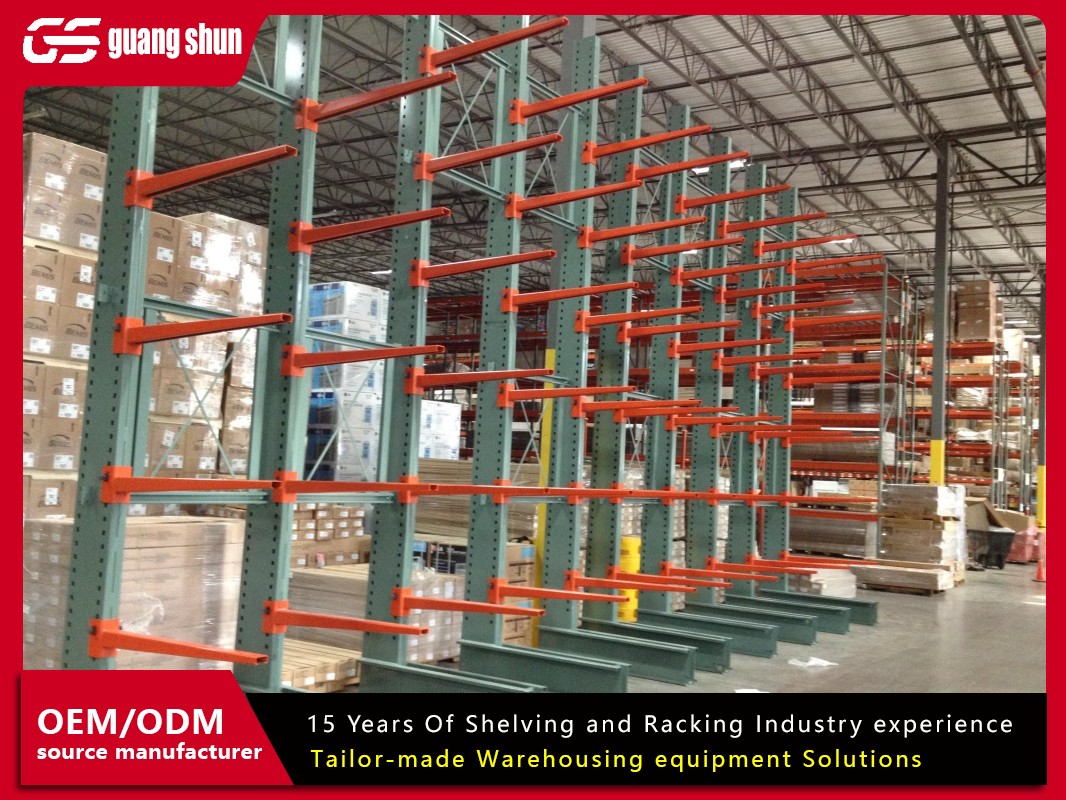
Cantilever Racking
Designed for long, awkward loads such as lumber, pipes, or furniture, cantilever racking has arms extending from a central column with no front columns to obstruct length. Capacities vary widely, from light-duty (500 kg per arm) to heavy industrial (5,000+ kg). Ideal for warehouses handling dimensional products.
3. Engineering Design Criteria for Warehouse Racking Systems
Selecting a warehouse racking system is an engineering decision that must integrate building constraints, load requirements, and operational workflows. Key considerations include:
Building Specifications: Ceiling height determines maximum upright height. Column spacing influences row lengths. Floor flatness (F-min number) must accommodate forklift tolerances and rack base plates. Seismic zone dictates frame bracing and anchoring methods.
Load Characteristics: Unit load weight, pallet dimensions (including overhang), and dynamic loads from forklift impacts. Always factor in a safety margin (typically 1.5:1 for structural design).
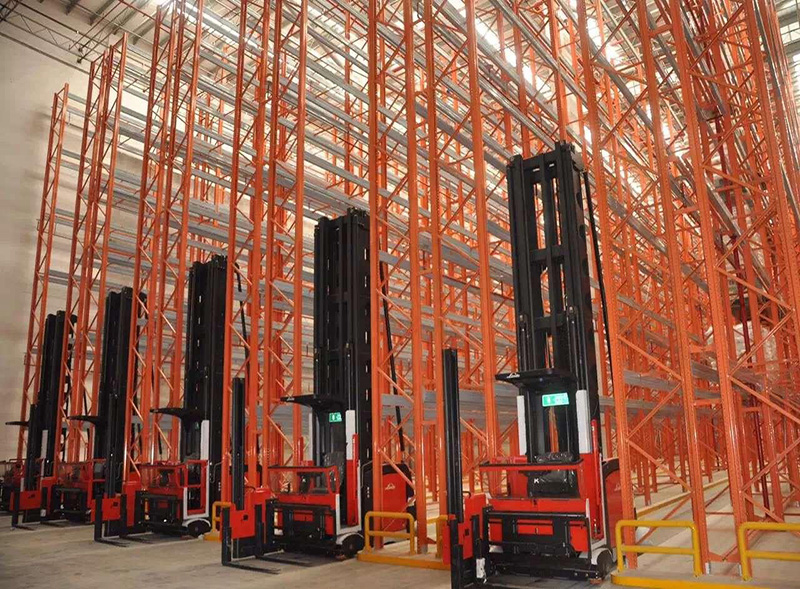
Material Handling Equipment: Reach trucks require aisles of 2.5-3.0 m; counterbalanced trucks need 3.5-4.0 m; Very Narrow Aisle (VNA) turret trucks operate in aisles as narrow as 1.5 m but require guidance systems and higher floor flatness.
Throughput Requirements: Fast movers should be placed at waist height in selective systems. Slow movers can be stored in high-density configurations like drive-in.
Future Flexibility: Modular designs with adjustable beam levels allow adaptation to changing product mixes. Consider the ease of reconfiguring beams and relocating rows.
Professional engineering calculations must comply with local building codes and standards such as the Rack Manufacturers Institute (RMI) or FEM guidelines. For expert-engineered solutions, explore the wide range of configurations offered by GS Racking's comprehensive warehouse racking systems, designed to meet international safety and performance standards.
4. Solving Common Warehouse Challenges with the Right Racking System
Even well-managed warehouses face operational pain points that a correctly specified warehouse racking system can mitigate.
Pain Point: Underutilized Cubic Space
Problem: Many facilities store goods only up to 6–7 m, wasting valuable vertical cube. Solution: Implement high-bay selective or drive-in racking with appropriate beam spacing and invest in VNA forklifts. This can increase storage capacity by 30–50% without expanding the footprint.
Pain Point: Confusing Inventory Rotation Leading to Spoilage
Problem: Mixed SKUs in selective racks cause missed FIFO compliance and product expiry. Solution: In food or pharmaceutical sectors, install pallet flow systems that mechanically enforce FIFO. For mixed SKUs, use color-coded beam tags and integrate with a Warehouse Management System (WMS) for directed putaway.
Pain Point: Frequent Product Damage and Safety Incidents
Problem: Forklift impacts bend uprights and dislodge beams, causing inventory loss and worker risk. Solution: Install column protectors, aisle-end guards, and row spacers. Regular inspections (at least quarterly) should check for bent components and torque loss on bolts. Adhere to OSHA 1910.176(b) for storage safety.
Pain Point: Low Order-Picking Productivity
Problem: Pickers travel excessive distances in low-density layouts. Solution: Combine your warehouse racking system with pick modules or use push-back racking to consolidate fast-moving SKUs near shipping docks. Implementing a pick-to-light system on rack faces can improve accuracy by 30%.
5. Safety First: Best Practices for Racking Maintenance and Compliance
A warehouse racking system is structural equipment; its failure can have catastrophic consequences. Adhering to OSHA, ANSI, and RMI standards is non-negotiable. Essential safety protocols include:
Daily Visual Checks: Operators should report any visible damage—bent uprights, missing safety clips, or loose anchors.
Annual Professional Inspections: A certified engineer must evaluate the entire system for overloading, corrosion, anchor integrity, and beam locking mechanisms.
Load Signage: Every row must display maximum uniform load per level and per bay. Overloading is a leading cause of collapses.
Beam Safety Locks: Ensure all beams are secured with spring-loaded clips or bolted connections to prevent dislodgement from forklift contact.
Seismic Retrofitting: In earthquake-prone regions, use base plates with expansion anchors and add row spacers to create a continuous structure that resists lateral forces.
Protective Barriers: Install heavy-duty column guards at aisle intersections and end-of-aisle barriers to absorb impacts.
6. Selecting a Reliable Warehouse Racking System Supplier
A supplier should offer more than steel components—they must provide engineering expertise, installation support, and after-sales service. When evaluating vendors, consider:
Certifications: Look for ISO 9001 quality management and membership in trade associations like RMI or FEM.
Customization: Can they design for non-standard pallet sizes, special coatings (e.g., galvanized for cold storage), or seismic conditions?
Project Management: Do they handle site surveys, layout drawings, and professional installation with certified crews?
Warranty and Parts Availability: Ensure replacement beams and frames are available for decades to come.
One supplier that meets these rigorous criteria is GS Racking. Their product portfolio includes everything from selective to drive-in, push-back, and cantilever systems, backed by engineering calculations and compliance with European and North American standards.
7. Frequently Asked Questions (FAQ) about Warehouse Racking Systems
Q1: What is the difference between selective and drive-in racking?
A1: Selective racking provides direct access to every pallet by maintaining aisles between rows, offering 100% accessibility but lower density. Drive-in racking eliminates aisles by allowing forklifts to enter the structure, boosting density by up to 60% but restricting access to LIFO rotation. Choose selective for high SKU variety; choose drive-in for bulk storage of few SKUs.
Q2: How do I determine the load capacity for my warehouse racking system?
A2: Load capacity depends on beam gauge, frame depth, column thickness, and bracing pattern. Manufacturers provide load tables based on uniform distribution. Always consult an engineer and never exceed the rated capacity. Factors like seismic zone and impact loads must also be considered.
Q3: Can warehouse racking systems be reconfigured or expanded after installation?
A3: Yes, most systems are modular. Beam levels can be adjusted (within frame punch patterns), and additional bays can be added if floor space permits. However, any modification should be reviewed by a qualified engineer to ensure structural integrity and compliance.
Q4: What safety accessories are required for a warehouse racking system?
A4: Essential accessories include column protectors (to shield uprights), row end protectors, wire mesh decking (to prevent falling items), and back stops (to prevent pallet over-travel). For seismic areas, base plates and row spacers are mandatory. Reflective tape and load signs also enhance safety.
Q5: How often should warehouse racking be inspected?
A5: Industry best practice (RMI/ANSI) recommends a formal inspection by a competent person at least annually. Additionally, conduct weekly informal checks by warehouse staff, focusing on visible damage. Inspect immediately after any forklift impact.
Q6: What is the typical lifespan of a warehouse racking system?
A6: With proper use and maintenance, a steel racking system can last 20-25 years or more. However, components that suffer impact damage should be replaced immediately. Regular inspections help identify fatigue or corrosion early.
Conclusion: Future Trends in Warehouse Racking Systems
As warehouses evolve toward Industry 4.0, warehouse racking systems are integrating with automation. Automated storage and retrieval systems (AS/RS) often use rack structures that also serve as the track for shuttles. Additionally, smart racking with embedded sensors (IoT) can monitor load weights, detect damage, and report utilization in real time. By partnering with an experienced supplier and adhering to safety standards, you can build a storage infrastructure that not only meets today's demands but also adapts to tomorrow's innovations.
For further technical details or to request a layout assessment, explore the engineered solutions available at GS Racking's warehouse racking system page.