Maximizing Storage Density: The Engineering and Application of Double Deep Pallet Racking SystemsAs warehousing costs continue to rise and available floor space becomes increasingly scarce, operations managers are constantly seeking ways to store more product within the same footprint. The double deep pallet racking system has emerged as one of the most effective solutions to this challenge, offering a balance between accessibility and density that is hard to achieve with other configurations. Unlike standard selective racking, which provides immediate access to every pallet, a double deep arrangement stores pallets two deep on each side of the aisle, effectively doubling the storage depth while maintaining reasonable selectivity. However, this configuration requires specialized material handling equipment and meticulous engineering to ensure structural integrity and operational efficiency. This article explores the technical nuances, application scenarios, and critical design parameters of double deep racking, helping you determine whether it is the right fit for your facility.
What is a Double Deep Pallet Racking System?
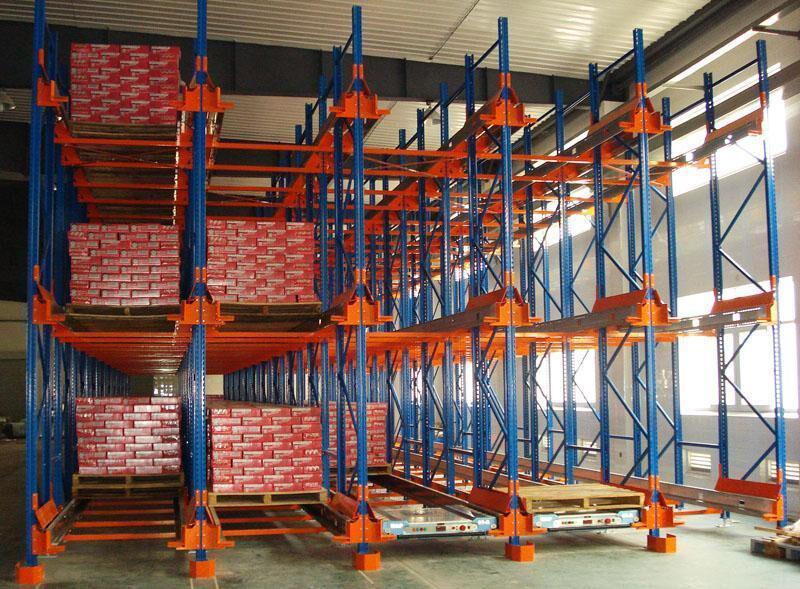
A double deep pallet racking system is a variation of selective pallet racking where racks are arranged two pallets deep instead of one. This means that for every aisle, there are four rows of storage—two on each side—compared to two rows in standard selective racking. To access the second (rear) pallet, the lift truck must first remove the front pallet. This imposes a Last-In, First-Out (LIFO) inventory rotation, which is acceptable for many product categories but must be considered in the overall warehouse management strategy. The system is typically served by reach trucks equipped with a double-deep attachment, or by specially designed deep-reach trucks that have a mast capable of extending the forks to the second position. The reduction in aisle count (by approximately 40-50% compared to single-deep selective) allows for significantly higher storage density, often increasing capacity by 40% to 60% within the same floor area.
Technical Specifications and Design Parameters
Designing an efficient double deep racking system requires precise engineering that accounts for load capacities, lift equipment dimensions, and structural stability.
Depth and Beam Configuration
The total depth of the rack is determined by the pallet size plus necessary clearances. Standard pallets are typically 48 inches deep, so a double deep configuration requires at least 96 inches of clear depth, plus allowances for beam thickness and overhang. Beams must be positioned to support both pallets, and special attention must be paid to the front beam, which carries the load of the front pallet, and the rear beam, which supports the rear pallet. Often, a single continuous beam spans the entire depth, with intermediate supports if required. The beam profile and gauge are selected based on the combined weight of the two pallets. Manufacturers like Guangshun offer engineered beams with certified load tables for various depths, ensuring that each level can safely accommodate the specified loads.
Height and Load Capacity
The maximum height of a double deep pallet racking system is influenced by the reach capability of the double-deep forklift. Typical reach trucks can handle lifts up to 30–35 feet, but this varies by model. The vertical load capacity must account for the combined weight of the two pallets per bay, plus the dynamic forces exerted during insertion and retrieval. Each upright frame must be designed to resist the overturning moment caused by the cantilevered load of the extended forks. Structural calculations must also consider seismic loads if the facility is located in an active zone. Guangshun provides seismic-rated designs that comply with IBC and ASCE 7, ensuring safety even under extreme conditions.
Aisle Width Requirements
One of the key advantages of double deep racking is that it does not require extremely narrow aisles. Standard reach trucks can operate in aisles as narrow as 9 to 10 feet, which is comparable to single-deep reach truck applications. However, if double-deep reach trucks are used, they may require slightly wider aisles to accommodate the extended mast. The exact aisle width must be calculated based on the turning radius and the length of the load. Proper aisle design ensures that operators can maneuver safely without damaging the rack structure or the lift truck.
Advantages and Operational Trade-offs
Adopting a double deep pallet racking system involves a clear set of benefits and compromises that must be evaluated against your specific operational requirements.
Increased Storage Density: By eliminating one aisle for every two rows of racking, double deep systems can boost pallet positions by 40–60% compared to single-deep selective. This translates to higher inventory capacity without expanding the building footprint.
Reduced Aisle Space: Fewer aisles mean more room for storage. In a typical warehouse, aisles consume 30–40% of the floor area; halving the number of aisles directly increases storage efficiency.
Lower Equipment Cost Compared to VNA: While very narrow aisle (VNA) systems offer even greater density, they require specialized turret trucks and guidance systems, which are costly. Double deep racking uses standard or slightly modified reach trucks, keeping capital expenses lower.
Inventory LIFO Constraint: The primary operational limitation is that access to the rear pallet is blocked by the front pallet. This forces a LIFO rotation, which may not be suitable for perishable goods or fast-moving SKUs. Careful slotting and warehouse management system (WMS) logic are required to minimize reshuffling.
Increased Forklift Travel Time: Retrieving a rear pallet takes longer because the front pallet must be moved first. This can reduce overall throughput, especially in high-turnover environments. However, for medium to slow movers, the impact is often acceptable.
Ideal Applications and Industry Use Cases
The double deep pallet racking system is particularly well-suited for operations that store large quantities of a limited number of SKUs, where LIFO rotation is acceptable. Common applications include:
Food and Beverage: Many beverage distributors store pallets of the same product (e.g., identical soda brands) two deep, as FIFO is not critical for non-perishable items.
Retail Distribution: Large retailers often use double deep for slow-moving or seasonal merchandise that is stored in bulk and retrieved less frequently.
Manufacturing: Raw materials like plastic granules, metal parts, or packaging components are often received in bulk and used in a LIFO manner.
Automotive Parts: Aftermarket parts with long shelf life and consistent demand are ideal candidates.
Third-Party Logistics (3PL): 3PL warehouses with diverse clients may allocate double deep zones for customers whose inventory does not require strict FIFO.
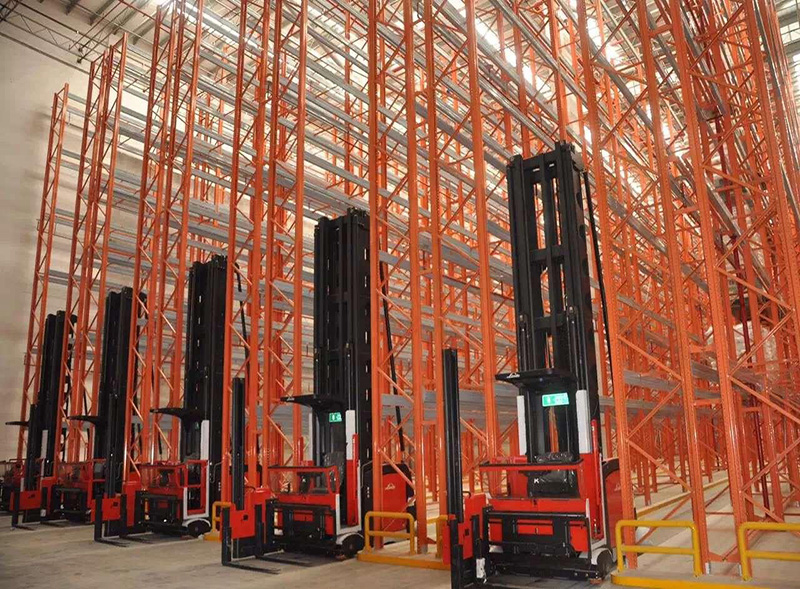
Designing a Double Deep Racking System: Key Considerations
To ensure long-term safety and performance, several engineering factors must be addressed during the design phase.
Structural Stability: Because the load is positioned deeper, the moment arm on the upright frame increases. This requires stronger frame bracing and often heavier base plates. Cross-aisle stability is enhanced with horizontal and diagonal braces, and sometimes with overhead ties.
Ground Conditions: The floor must be level and capable of supporting the combined weight of the rack structure, the stored goods, and the lift truck. Uneven floors can cause the racks to lean, compromising safety and alignment. A professional floor flatness survey is recommended before installation.
Safety Accessories: To protect the rack from impact, install column guards at aisle entrances and along exposed corners. Wire mesh decking or beam-mounted safety bars can prevent pallets from falling through. Rack netting may be required for items that could topple.
Fire Protection: Double deep configurations can obstruct sprinkler coverage because pallets are stacked deeper. Local fire codes may require in-rack sprinklers or specific flue space arrangements. Consult a fire protection engineer early in the design process.
Guangshun offers comprehensive design assistance, including 3D layout modeling and seismic analysis, to ensure that every double deep system meets the highest safety and performance standards.
Installation and Maintenance Best Practices
Proper installation is critical for the safe operation of any double deep pallet racking system. Because the beams are longer and the uprights are spaced further apart, precise alignment is essential. During installation, all uprights must be plumbed vertically and aligned horizontally to ensure that the beam connectors seat correctly. Shim plates are used under baseplates to compensate for floor variations. After installation, a load test may be performed to verify deflection and stability. Ongoing maintenance should include:
Monthly visual inspections for damage, especially to beam ends and uprights.
Annual professional inspections to check for hidden fatigue, anchor integrity, and corrosion.
Prompt replacement of any damaged components—never attempt to weld or repair bent beams.
Operator training to ensure proper handling techniques and to avoid collisions.
Comparing Double Deep with Other High-Density Systems
When evaluating storage options, it is useful to compare double deep racking with other density-enhancing technologies:
Drive-In / Drive-Thru Racking: Offers extremely high density (up to 75% more than selective) but requires the lift truck to enter the rack structure, which slows operations and increases damage risk. Double deep is faster and safer.
Push-Back Racking: Uses nested carts to store pallets up to 5 deep, with LIFO access. It provides higher density than double deep but at a higher cost and with more moving parts.
Very Narrow Aisle (VNA) Racking: Achieves maximum density with aisles as narrow as 5.5 feet, but requires expensive turret trucks and guidance systems. Double deep offers a lower-cost entry into high-density storage.
Pallet Flow Racking: Ideal for FIFO applications with high throughput, but requires gravity conveyors and is more expensive per pallet position.
For many operations, double deep represents the optimal balance between cost, density, and operational simplicity.
Conclusion
The double deep pallet racking system is a proven strategy for increasing storage density without the complexity and expense of fully automated or VNA systems. By carefully considering load characteristics, equipment compatibility, and inventory rotation requirements, warehouse managers can achieve significant space savings and operational efficiencies. However, success depends on meticulous engineering, quality manufacturing, and proper installation. Partnering with an experienced provider like Guangshun ensures that your system is designed to the highest standards, backed by comprehensive load testing and seismic certification. Whether you are expanding an existing facility or designing a new one, double deep racking deserves serious consideration as part of your storage mix.
Frequently Asked Questions (FAQ)
Q1: What type of forklift is required for a double deep pallet racking system?
A1: Double deep racking is typically serviced by reach trucks equipped with a double-deep attachment, or by specialized deep-reach trucks that have a mast capable of extending the forks to the second pallet position. Standard counterbalanced forklifts are generally not suitable due to their longer turning radius and inability to reach the rear pallet.
Q2: What is the maximum depth for a double deep rack?
A2: The depth is determined by the length of the pallet plus clearance. For standard 48-inch pallets, the total depth is typically around 104–108 inches to allow for beam thickness and overhang. In some custom applications, depths up to 120 inches are possible, but this requires longer fork extensions and careful structural analysis.
Q3: How do I manage inventory in a double deep system to avoid excessive reshuffling?
A3: Effective slotting is key. Use a warehouse management system (WMS) to assign SKUs with similar velocity to the same lane, and store slow-moving items in the rear positions. Some operations dedicate whole lanes to single SKUs, so reshuffling is minimal. Regular cycle counting helps maintain accuracy.
Q4: Can double deep racking be used in seismic zones?
A4: Yes, but the rack must be engineered to meet local seismic codes. This includes using stronger frames, additional bracing, and certified base plates. Guangshun offers seismic-rated double deep systems that have been tested to IBC and ASCE 7 standards.
Q5: What is the typical cost comparison between double deep and selective racking?
A5: Double deep racking costs more per pallet position than selective racking due to the need for longer beams, heavier frames, and sometimes more complex installation. However, because it stores more pallets in the same floor area, the overall cost per pallet stored may be lower when factoring in building and land costs. A detailed ROI analysis is recommended for your specific situation.
Q6: How does the LIFO constraint affect product expiration?
A6: LIFO (Last-In, First-Out) means the most recently stored pallet is retrieved first. This is not suitable for perishable goods with expiry dates. For such products, FIFO (First-In, First-Out) systems like pallet flow or selective racking are preferred. Double deep is best for non-perishable items or those with long shelf life.
Q7: What maintenance is required for double deep racking systems?
A7: Regular inspections should check for beam damage, upright alignment, and secure connections. Operators should be trained to report any collisions. Annual professional inspections are recommended to identify hidden issues. Any damaged components must be replaced immediately using parts from the original manufacturer.