Modern industrial warehousing requires highly optimized spatial design to
manage rising real estate costs and fluctuating inventory levels. Selecting the
appropriate storage configuration directly impacts a facility's operational
throughput, material handling safety, and long-term cost efficiency. Because no
single system fits all inventory profiles, selecting appropriate types of
warehouse racking remains a pivotal decision for logistics and supply chain
managers.
To maximize cubic space utilization, storage systems must be tailored to
specific stock-keeping unit (SKU) profiles, rotation models, and handling
equipment. Leading manufacturers like Guangshun design highly
engineered systems that balance selective accessibility with structural
stability. This guide provides a detailed technical analysis of the main storage
systems utilized in modern industrial facilities.
1. Selective Pallet Racking: The Industry Standard for Maximum
Selectivity
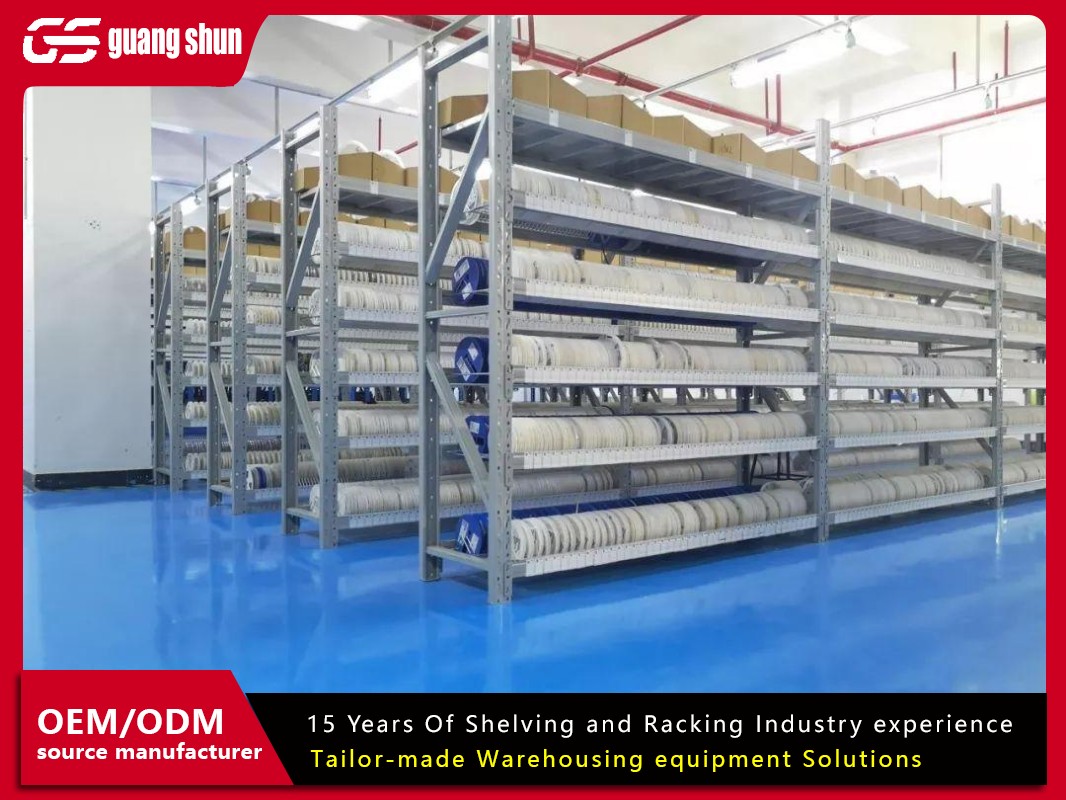
Selective pallet racking is the most common storage system utilized globally.
It is designed to provide direct, unobstructed access to every individual pallet
in the system. This layout utilizes single-deep or double-deep rows of racking
separated by access aisles, allowing forklift operators to retrieve any pallet
at any time without shifting other stock.
Key Structural Components and Design
Upright Frames: Cold-formed vertical steel columns
featuring punched teardrop or slotted patterns for adjustable beam
placement.
Horizontal Load Beams: Heavy-duty roll-formed or structural
steel beams locked into the uprights with safety pins to prevent accidental
displacement.
Support Accessories: Wire mesh decking, pallet support
bars, and row spacers that maintain structural alignment and prevent pallets
from falling.
Strategic Applications
Selective racking is ideal for operations with highly diversified SKU
portfolios, low stock volumes per SKU, and fast-moving inventory. It supports
First-In, First-Out (FIFO) stock rotation perfectly, making it suitable for
retail distribution, third-party logistics (3PL) providers, and pharmaceutical
warehouses. However, because it requires an aisle for every two rows of racking,
its storage density is relatively low compared to more compacted
configurations.
2. Drive-In and Drive-Through Racking: High-Density LIFO/FIFO Storage
For warehouses storing large volumes of homogeneous inventory, implementing
dynamic LIFO-based types of
warehouse racking can consolidate floor space by eliminating dedicated
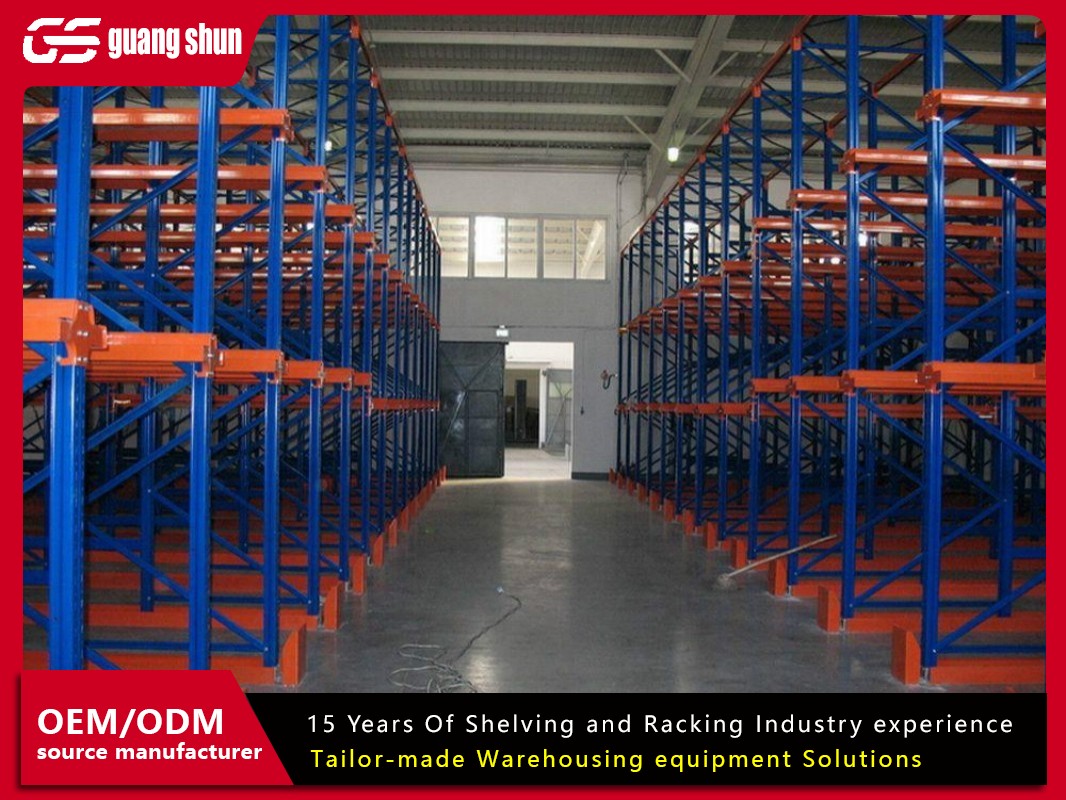
forklift aisles. Drive-in and drive-through racking configurations allow
forklifts to drive directly into the storage bays to deposit or retrieve pallets
on continuous horizontal rails.
The Structural Distinction
Drive-In Racking (LIFO): This configuration utilizes a
single entry and exit point per bay. Pallets are loaded and unloaded from the
same aisle, enforcing a Last-In, First-Out stock rotation. It is highly
efficient for non-perishable goods with long shelf lives.
Drive-Through Racking (FIFO): This system features open
entry points on both ends of the bay. Forklifts load pallets from one side and
retrieve them from the opposite side, enabling a First-In, First-Out flow. This
is preferred for high-volume products with expiration dates.
Engineering Considerations
Because forklifts physically enter the racking frame, the risk of column
impact is significantly higher than in selective setups. Heavy-duty structural
uprights, reinforced floor-mounted guide rails, and column protectors are
necessary components to ensure long-term structural integrity and protect
operators.
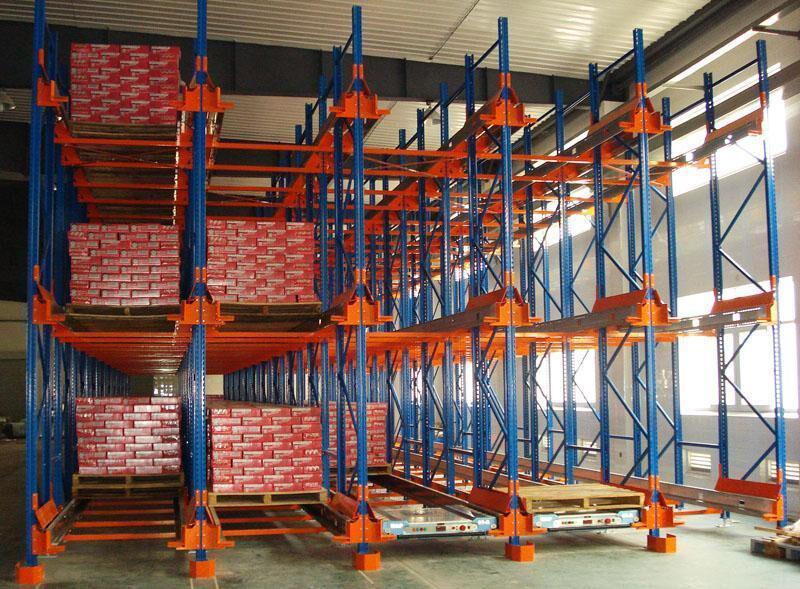
3. Push Back Racking: Nested Cart Gravity Systems
Push back racking offers high-density storage while maintaining better
selectivity than drive-in systems. This dynamic storage solution utilizes a
series of nested, wheeled carts that slide along inclined steel rails under the
influence of gravity. The rails are pitched at a slight gradient toward the
front aisle.
Operational Mechanics
When a forklift loads a pallet into a bay, it pushes the existing pallet
back, exposing the next nested cart underneath. When a pallet is retrieved from
the aisle face, the remaining pallets glide forward automatically to the front
position. This LIFO configuration typically supports storage depths ranging from
2 to 6 pallets deep per lane.
Operational Benefits
Reduced Forklift Travel: Forklifts do not need to enter the
racking structure, which minimizes cycle times and significantly reduces
structural damage risks.
High SKU Occupancy: Each lane can store a different SKU,
providing much higher selectivity and flexibility compared to traditional
drive-in configurations.
Enhanced Safety: The controlled speed of the inclined carts
ensures smooth pallet movement during retrieval operations.
4. Pallet Flow Racking: Gravity-Driven FIFO High-Density Storage
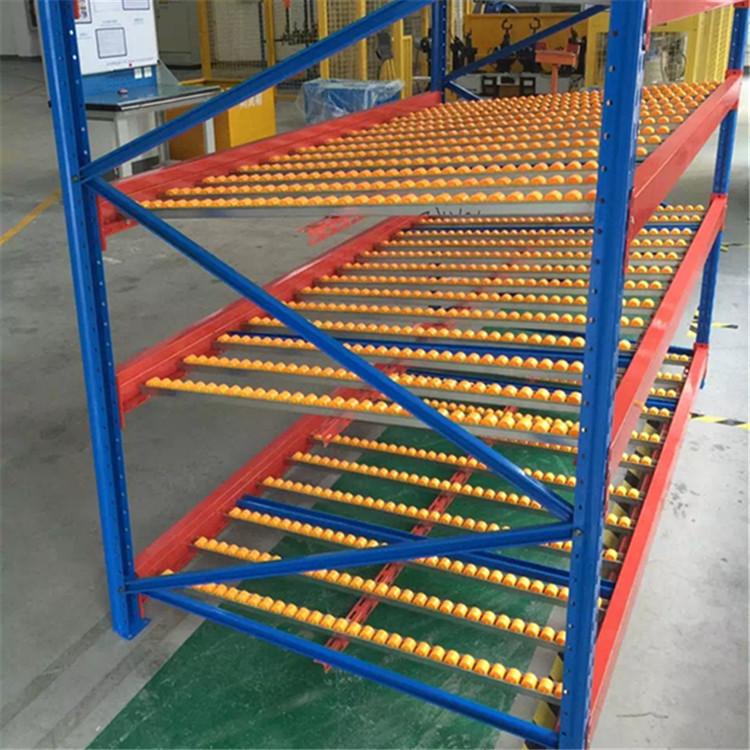
Pallet flow racking, also referred to as gravity flow racking, is a dynamic
storage system designed for high-density, high-volume FIFO operations. It
utilizes inclined roller tracks or skate-wheel beds integrated into the racking
structure, allowing pallets to flow automatically from the loading side to the
unloading side.
Mechanical Controls for Speed Regulation
To prevent heavy pallets from accelerating excessively along long flow lanes
(which can exceed 20 pallets in depth), specialized engineering components are
integrated directly into the roller tracks:
Centrifugal Brake Rollers: These rollers regulate the
descent speed of the pallets, ensuring they slide down the lane at a safe,
controlled pace.
Pallet Separator Devices: Positioned at the discharge end,
these mechanical separators decouple the first pallet from the pressure of the
trailing pallets, allowing for safe, friction-free retrieval by forklifts.
Entry Guide Protectors: Help forklift operators align
pallets correctly at the loading face, preventing track jams.
Primary Use Cases
Pallet flow systems are heavily utilized in the food and beverage industry,
cold storage facilities, and high-velocity consumer goods distribution centers
where strict FIFO rotation is mandatory to prevent product spoilage.
5. Specialized Racking Systems: Cantilever, VNA, and Mobile
Configurations
For environments with highly irregular inventories, specialized types of
warehouse racking are necessary to maximize storage safety and floor-space
utilization.
Cantilever Racking
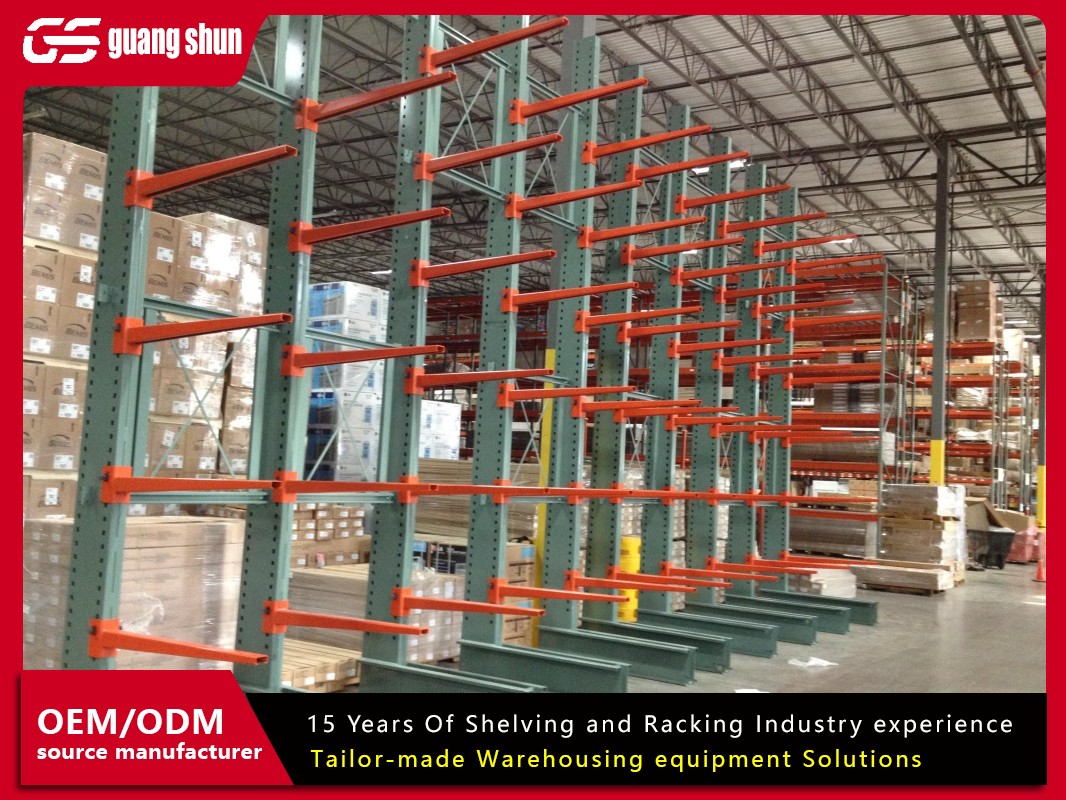
Designed specifically to handle long, bulky, or non-palletized loads such as
steel pipes, lumber, drywall sheets, and heavy machinery parts. It features
central vertical columns with cantilevered arms extending outward, removing the
front vertical barriers found in standard pallet racks to allow for unobstructed
horizontal loading.
Very Narrow Aisle (VNA) Racking
VNA systems use standard selective racking components but reduce aisle widths
to between 1.5 and 1.8 meters (compared to standard 3.2-meter aisles). This
system requires specialized swing-reach or turret trucks guided by
floor-embedded inductive wires or side guide rails to navigate safely without
steering errors.
Mobile Pallet Racking
Standard racking structures are mounted on heavy-duty motorized carriages
that slide laterally on floor-embedded steel tracks. By opening only one active
access aisle at a time, mobile racking recovers up to 50% of otherwise wasted
aisle space, making it a preferred solution for high-density cold storage where
climate-controlled space is extremely expensive.
6. Engineering and Manufacturing Standards for Warehouse Safety
Evaluating structural integrity across different types of
warehouse racking is standard practice to ensure long-term warehouse safety.
Storage systems must withstand static vertical loads, dynamic forklift impacts,
and potential seismic forces. Racking designs should adhere to rigorous global
standards, such as the Rack Manufacturers Institute (RMI) guidelines in North
America and the FEM 10.2.02 codes in Europe.
The manufacturing quality control systems implemented by Guangshun ensure compliance with
these international standards. Utilizing certified structural steels (such as
Q235 or Q355) and implementing robotic welding processes guarantees that the
load-bearing capacities of the uprights and beams remain stable under continuous
industrial stress.
Preventative Safety Measures
Column Protectors: Steel guards wrapped around the base of
peripheral uprights to deflect forklift impacts.
Load Capacity Plaques: Highly visible warning signs
indicating the maximum load limit per shelf level and per bay.
Regular Safety Audits: Scheduled visual inspections to
check for bent columns, missing safety pins, and unlevel frames.
Technical Comparison of Core Storage Systems
Understanding the operational trade-offs of each system is vital for making
an informed procurement decision. The table below compares key metrics for the
most common racking configurations:
| Racking Type | Selectivity Ratio | Storage Density | Inventory Rotation | Typical Aisle Width Required |
|---|
| Selective Racking | 100% (High) | Low | FIFO | 3.2m - 3.5m (Standard) |
| Double-Deep | 50% (Medium) | Medium-High | LIFO | 3.2m - 3.5m |
| Drive-In | Low | High | LIFO | N/A (Forklift enters bay) |
| Push Back | Medium-Low | High | LIFO | 2.8m - 3.2m |
| Pallet Flow | Low | Very High | FIFO | 2.8m - 3.2m |
| VNA Racking | 100% (High) | High | FIFO | 1.5m - 1.8m |
Conclusion: Choosing the Right Warehouse Racking Configuration
Choosing among the various types of
warehouse racking requires a careful balance between storage density
requirements, SKU selectivity, and capital investment budgets. While selective
racking offers immediate access to all inventory, high-density configurations
like push back, pallet flow, and mobile racking are much more effective at
conserving floor space and reducing overall footprint requirements.
By partnering with experienced technical manufacturers like Guangshun, operations can obtain
customized layout drawings, structural finite element analysis (FEA), and
certified installation services that guarantee maximum warehouse capacity and
compliance with structural safety regulations.
Frequently Asked Questions
Q1: What is the main difference between roll-formed and structural
steel racking?
A1: Roll-formed racking is made from thin, cold-rolled sheet steel, which is
cost-effective and easy to adjust. Structural racking is constructed from
hot-rolled heavy C-channel steel, providing significantly higher load capacity
and superior resistance to forklift impacts, making it ideal for harsh
industrial environments.
Q2: How do I choose between FIFO and LIFO racking
systems?
A2: FIFO (First-In, First-Out) is required for perishable items,
pharmaceuticals, or goods with high obsolescence risks. LIFO (Last-In,
First-Out) is suitable for bulk, non-perishable goods with long shelf lives,
allowing you to maximize storage density without worrying about product
expiration.
Q3: What are the floor flatness requirements for a Very Narrow Aisle
(VNA) system?
A3: VNA systems require extremely flat floors (measured by high FF/FL
numbers). Because turret trucks operate with very tight tolerances at heights
exceeding 10 meters, even minor floor variations can cause the top of the mast
to sway, posing severe collision risks with the racking structure.
Q4: Why do I need safety pins on pallet rack beams?
A4: Safety pins are vital mechanical locks that prevent load beams from being
accidentally dislodged from the upright frames when a forklift operator lifts a
pallet too high or miscalculates a retrieval angle.
Q5: Can I mix different types of racking within the same
warehouse?
A5: Yes. Many modern distribution centers utilize hybrid configurations. For
example, they may use high-density pallet flow racking for fast-moving bulk
inventory and selective racking or carton flow racking for slower-moving SKUs
and split-case order picking.