Managing a warehouse is essentially a high-stakes game of Tetris. You have a limited amount of cubic footage and an endless stream of inventory that needs to be stored, organized, and shipped. If you pick the wrong storage method, you end up with bottlenecks, wasted space, and frustrated forklift drivers.
The backbone of any successful distribution center is its steel infrastructure. However, navigating the different types of racking system in warehouse setups can be confusing. There is no single "best" rack. There is only the rack that is best for your specific products and workflow.
Some systems prioritize storage density, packing as many pallets as possible into a tight corner. Others prioritize speed and accessibility, ensuring you can grab any SKU at a moment's notice. Understanding the trade-offs between these configurations is vital for your bottom line.
Whether you are fitting out a brand-new facility or retrofitting an old one to squeeze out more space, this breakdown will help you make an informed decision. Here are the 9 most common types of racking system in warehouse operations and how they function in the real world.
1. Selective Pallet Racking
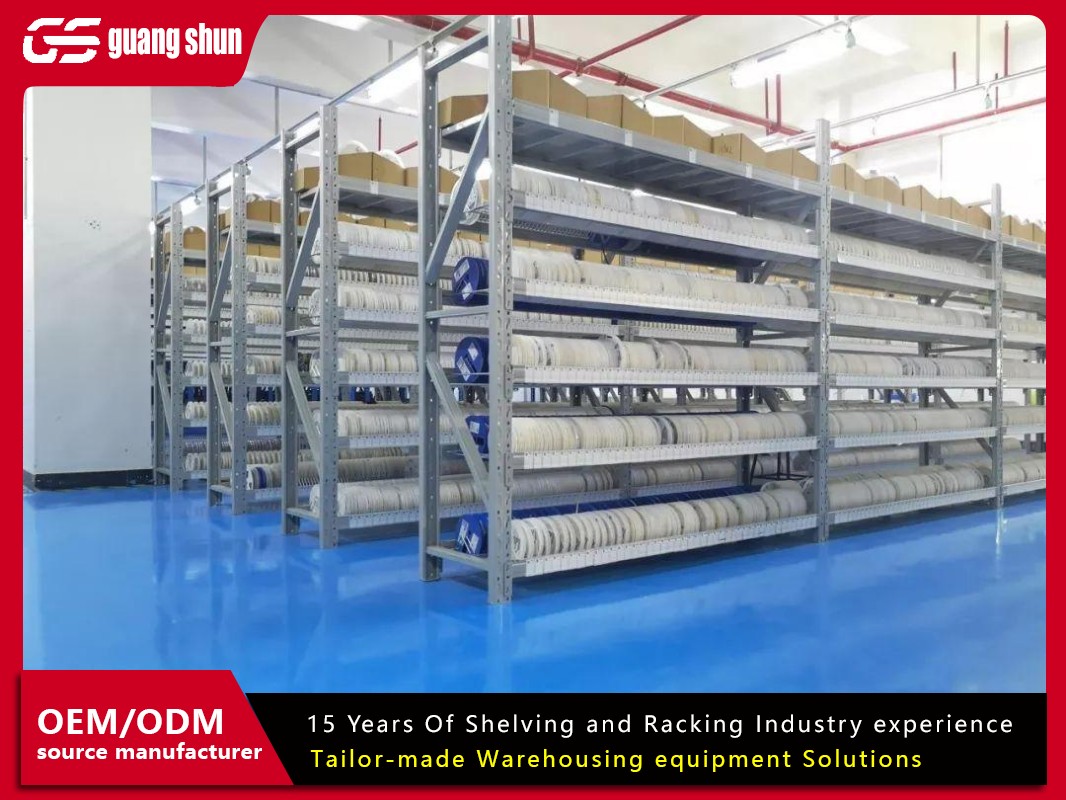
This is the most common storage solution in the world. If you walk into a standard warehouse, this is likely what you will see. Selective racking gets its name because it offers 100% selectivity. You can access every single pallet directly without having to move another one first.
It works like a giant bookshelf for pallets. It is usually arranged in single rows along walls and back-to-back rows in the middle of the floor. This configuration requires a significant number of aisles, typically about 12 feet wide for a standard counterbalance forklift.
The main advantage here is flexibility. If you have a high number of different SKUs (Stock Keeping Units) but low quantities of each, selective racking is ideal. You don’t have to bury inventory behind other items.
However, the downside is density. Because you need so many aisles, you are using a lot of floor space just for travel. Among the various types of racking system in warehouse designs, this one has the lowest storage density, utilizing only about 40% of the available floor space for actual storage.
2. Drive-In and Drive-Through Racking
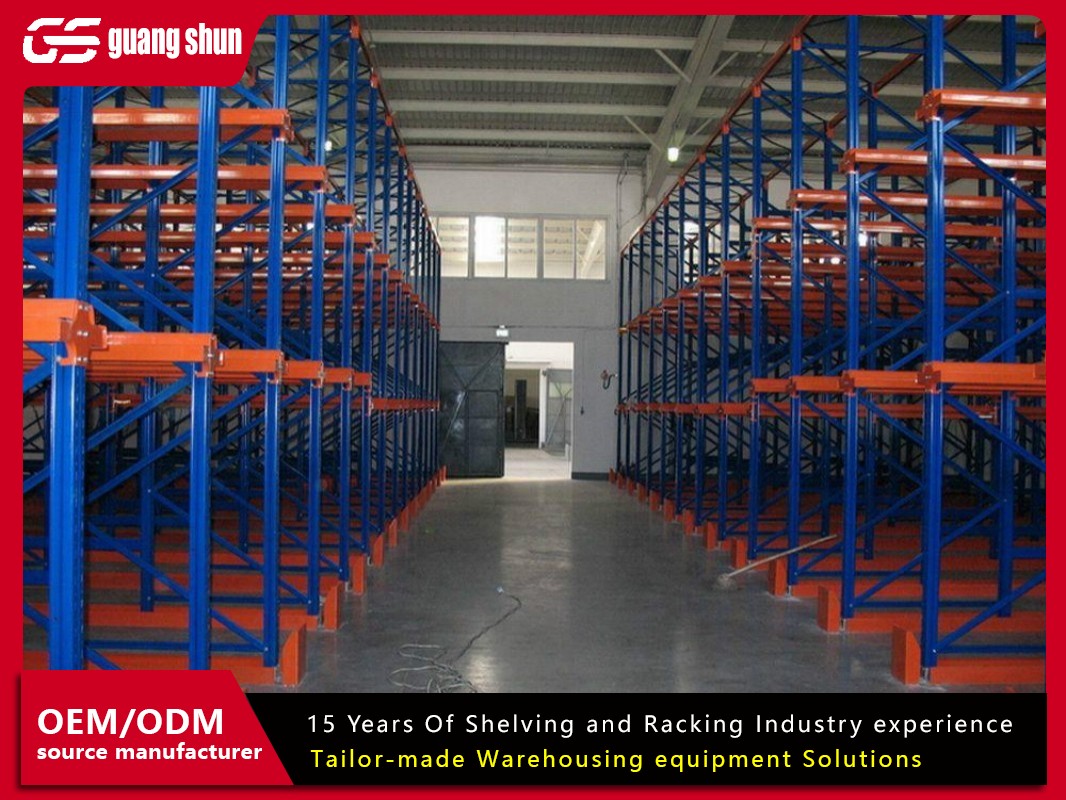
If selective racking is about access, Drive-In racking is about density. This system eliminates aisles. It consists of continuous lanes of racking that allow forklifts to drive directly into the structure to place or retrieve pallets.
The pallets rest on rails that run the depth of the rack, rather than on beams. This allows you to store pallets 6, 7, or even 10 deep. It is perfect for storing huge quantities of the same item.
This is a Last-In, First-Out (LIFO) system. The first pallet you put in is the last one you get out because it is buried at the back. This makes it unsuitable for perishable goods unless you clear out the entire lane at once.
Drive-Through racking is a variation where you can enter from both ends. This allows for First-In, First-Out (FIFO) management, but it requires an aisle on both sides of the block. When evaluating types of racking system in warehouse efficiency for bulk storage, this is often the most cost-effective high-density option.
3. Push Back Racking Systems
Push back racking offers a middle ground between the density of Drive-In racks and the selectivity of flow racks. It uses a system of nested carts on inclined rails.
When a forklift driver loads a pallet, they place it on the top cart and push it back to reveal the next cart. When they retrieve a pallet, the remaining pallets behind it gently roll forward due to gravity.
This allows for high-density storage (usually 2 to 6 pallets deep) but with better access than Drive-In systems. Each lane and level is independent. You can store a different SKU on every level of a bay.
This is still a LIFO system, but it is much faster for forklift operators because they do not have to drive inside the rack structure. This reduces the risk of rack damage and increases safety. Among the high-density types of racking system in warehouse options, push back is favored for its durability and operational speed.
4. Pallet Flow (Gravity Flow) Racking
For businesses that deal with expiration dates, such as food and beverage distributors, stock rotation is critical. You need a strict First-In, First-Out (FIFO) workflow. Pallet flow racking is the best solution for this.
This system looks similar to drive-in racking but uses inclined tracks with heavy-duty rollers or wheels. You load the pallet from the rear (the charge side). Gravity pulls the pallet down the incline to the front (the discharge side).
Brakes and speed controllers are installed along the lane to ensure the heavy pallets don’t crash into the front. When a picker removes the front pallet, the one behind it rolls into place.
This system provides extremely high density and perfect stock rotation. However, it is one of the more expensive types of racking system in warehouse investments due to the cost of the rollers and engineering required. It is an investment in labor savings and inventory control.
5. Cantilever Racking
Not everything fits neatly on a 48x40-inch pallet. If you store lumber, steel pipes, PVC tubing, or furniture, standard pallet racks are useless. This is where cantilever racking comes in.
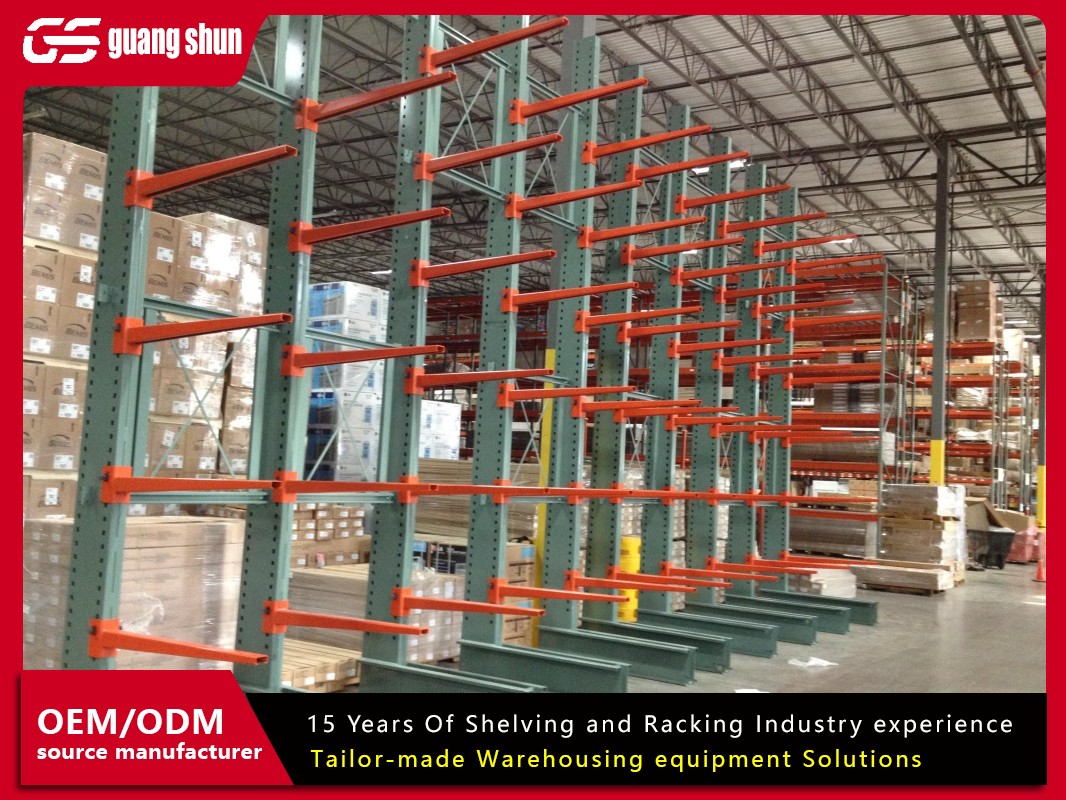
Cantilever racks consist of a heavy vertical column, a base, and arms that extend outward. There is no vertical obstruction at the front of the shelf. This allows you to store items of varying lengths without worrying about a front column getting in the way.
You can load these racks with a forklift or by hand. They are highly adjustable; the arms can usually be moved up or down to accommodate different bundle sizes.
While not designed for standard pallets, decking can be added to the arms to create a shelf for awkward, bulky boxes. When discussing specialized types of racking system in warehouse storage, cantilever is the industry standard for long-load inventory.
6. Mezzanine Flooring Systems
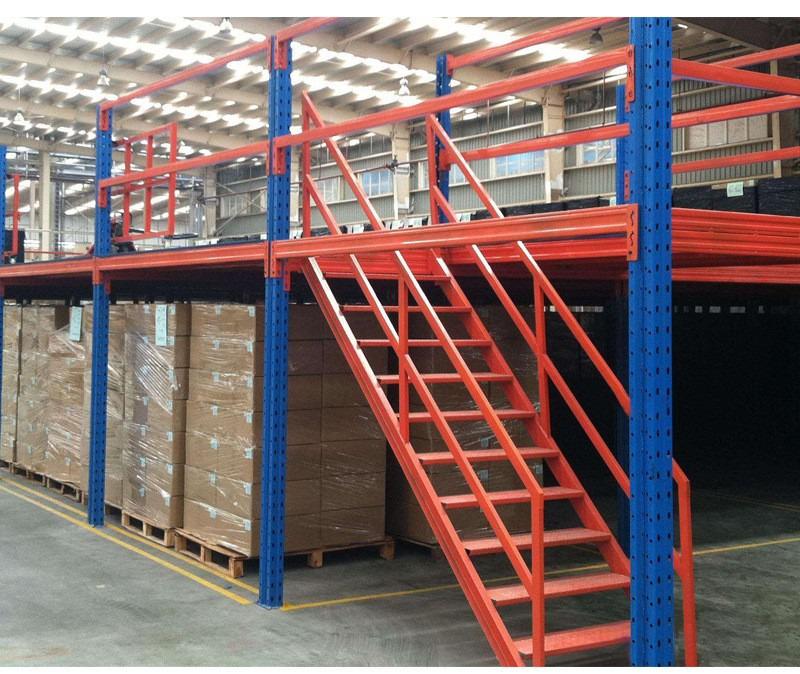
Sometimes the best way to get more space isn't a rack, but a new floor. A mezzanine is a raised platform that is independent of the building structure. It effectively creates a second story inside your warehouse.
Mezzanines are often built over existing ground-level operations. You can put shelving on top of the mezzanine for small parts storage, or use it for office space, packing areas, or light assembly.
This utilizes the vertical cube of the building more effectively than almost any other method. It can double your floor space instantly. While technically a structural addition, it is often categorized alongside other types of racking system in warehouse solutions because it is constructed from similar steel components and solves the same problem: space.
Industrial steel mezzanines are heavy-duty and can support pallet jacks and heavy shelving. They are customizable and can be dismantled and moved if you relocate to a new facility.
7. Carton Flow Racking
Not all warehouses move full pallets. If your operation involves "each picking" or "case picking," you need a system designed for smaller units. Carton flow racking is essentially a miniature version of pallet flow racking.
It uses inclined shelves with small rollers or plastic wheels. Workers load boxes from the back, and they slide down to the picker at the front. This keeps the picking face constantly stocked.
This is incredibly efficient for high-volume order fulfillment centers. It reduces the walking time for employees because the product comes to them. It is often integrated into the lower levels of pallet racking or set up as standalone bays.
For businesses shipping directly to consumers (e-commerce), carton flow is one of the essential types of racking system in warehouse setups to speed up pick times and organize thousands of small SKUs.
8. Mobile Racking Systems
Mobile racking is a fascinating solution for maximizing space. In this setup, the racks are mounted on motorized carriages that run on floor tracks.
Normally, the racks are compacted together with no aisles between them. When a forklift operator needs to access a specific aisle, they push a button (or use a remote), and the racks slide apart to open that specific aisle.
This means you only need one aisle’s worth of empty space for the entire block of racking. You can reduce your footprint by 50% or double your storage capacity in the same area.
It is expensive and requires significant floor preparation. However, it is very popular in cold storage. Freezing air is expensive, and mobile racking minimizes the volume of air you need to cool. When energy costs are high, mobile racking becomes one of the most cost-efficient types of racking system in warehouse options over the long term.
9. Automated Storage and Retrieval Systems (AS/RS)
At the top of the technology pyramid sits the AS/RS. This is where the human element is largely removed from the storage process. Cranes or shuttles move automatically up and down aisles to retrieve and deposit loads.
These systems can go much higher than standard forklifts, often reaching 100 feet or more. This allows for "high-bay" warehousing that utilizes every inch of vertical height.
AS/RS systems are integrated with Warehouse Management Software (WMS). The computer tells the machine what to get, and it brings it to a pickup station. This eliminates picking errors and drastically increases throughput.
While the upfront cost is massive, the reduction in labor costs and the increase in accuracy make it viable for large-scale operations. It is the most advanced of the types of racking system in warehouse technologies available today.
Factors to Consider When Choosing
Selecting the right system involves more than just looking at the price tag. You must analyze your product flow.
First, look at your SKU count versus your volume. If you have thousands of unique items but only one pallet of each, high-density systems like Drive-In will be a disaster. You need Selective Racking. Conversely, if you have 500 pallets of the same raw material, Selective Racking is a waste of space.
Second, consider your forklift equipment. Standard racking works with standard forklifts. But if you go with "Very Narrow Aisle" (VNA) racking or deep drive-in systems, you may need to purchase specialized reach trucks or turret trucks. The cost of equipment must be factored into your decision on the types of racking system in warehouse implementation.
Third, look at your building. What is your clear height? Fire suppression sprinklers also play a role. Some high-density racks require in-rack sprinkler systems to meet fire codes, which adds to the installation cost.
Integration and Hybrid Systems
In reality, most large warehouses do not rely on just one type of rack. They use a hybrid approach. It is common to see Selective Racking for slow-moving oddball items, combined with Push Back Racking for the fast-moving popular products.
You might have a Mezzanine for your small parts picking area and Cantilever racks in the yard for lumber. The goal is to match the storage method to the velocity and physical characteristics of the product.
Understanding the different types of racking system in warehouse designs allows you to zone your warehouse effectively. You can create a "fast pick" zone and a "bulk reserve" zone, optimizing the labor required to move inventory between them.
Safety and Maintenance
Regardless of the system you choose, safety is paramount. All racking systems are engineered structures. They have strict weight limits. Overloading a beam can lead to a catastrophic collapse.
Regular inspections are necessary. Forklift impacts can weaken uprights, and these damages are not always obvious to the untrained eye. Rack protection, such as column guards and end-of-aisle barriers, should be part of your budget.
When you install any of these types of racking system in warehouse setups, ensure you have load plaques clearly visible. These signs tell your drivers exactly how much weight each beam level can support. Ignoring these limits is the primary cause of warehouse accidents.
The efficiency of your warehouse is directly tied to the steel that holds your inventory. There is no one-size-fits-all solution.
Selective racking offers access. Drive-in and push back offer density. Pallet flow ensures rotation. Cantilever handles the awkward stuff. Mobile racking saves floor space, and automation changes the game entirely.
By carefully evaluating your inventory mix, your turnover rates, and your budget, you can select the right combination of storage systems. Investing in the correct types of racking system in warehouse infrastructure is not just a storage decision; it is a business strategy that directly impacts your profitability and speed of service.
Frequently Asked Questions (FAQ)
Q1: Which of the types of racking system in warehouse is the most cost-effective for a startup?
A1: Selective Pallet Racking is generally the most cost-effective option for startups. It has the lowest upfront material and installation costs. It allows you to use standard forklifts, meaning you don’t have to buy expensive specialized equipment. It is also the most versatile, allowing you to handle a wide variety of product sizes and weights as your business figures out its inventory profile.
Q2: What is the main difference between "structural" and "roll-formed" racking?
A2: This refers to how the steel components are made. Roll-formed steel is lighter and snaps together with tear-drop style connections; it is cheaper and easier to install but less durable against forklift impacts. Structural steel is hot-rolled (like the beams in a building), much heavier, and bolted together. Structural rack is used in high-abuse environments or for extremely heavy loads, making it one of the most durable types of racking system in warehouse options.
Q3: Can I mix different types of racking systems in the same warehouse?
A3: Absolutely. In fact, it is recommended for optimized operations. You can install Drive-In racking for your bulk raw materials and Selective racking for your finished goods. You can also install Carton Flow tracks into the bottom levels of your Selective racks to create a picking zone. A hybrid design usually yields the best efficiency.
Q4: How does aisle width affect the choice of racking system?
A4: Aisle width dictates your storage density. Standard aisles (12 ft) eat up floor space. Narrow Aisle (8-10 ft) and Very Narrow Aisle (VNA, under 6 ft) systems significantly increase the amount of room available for storage. However, moving to VNA requires wire guidance systems in the floor and specialized turret trucks. You cannot simply narrow the aisles of standard types of racking system in warehouse setups without changing your forklift equipment.
Q5: What are the seismic requirements for warehouse racking?
A5: If your warehouse is located in an earthquake-prone zone, your racking must be engineered to withstand seismic forces. This usually means larger footplates, thicker steel columns, and more robust bracing patterns. Local building codes will dictate the specific engineering standards. You must ensure your rack supplier provides a "seismic calculation package" to prove the system meets local safety laws.