Storage infrastructure decides how a distribution center performs long before
the first pallet is put away. Aisle width, beam level pitch, upright frame
capacity, and floor tolerance all determine how many SKUs you can hold, how fast
a lift truck can cycle, and whether your operation stays compliant under local
building codes. Choosing among warehouse
rack systems is therefore an engineering decision, not a purchasing
formality. This article breaks down the structural, operational, and financial
variables that separate a rack installation that scales from one that becomes a
bottleneck within eighteen months.
The Structural Anatomy of a Pallet Rack System
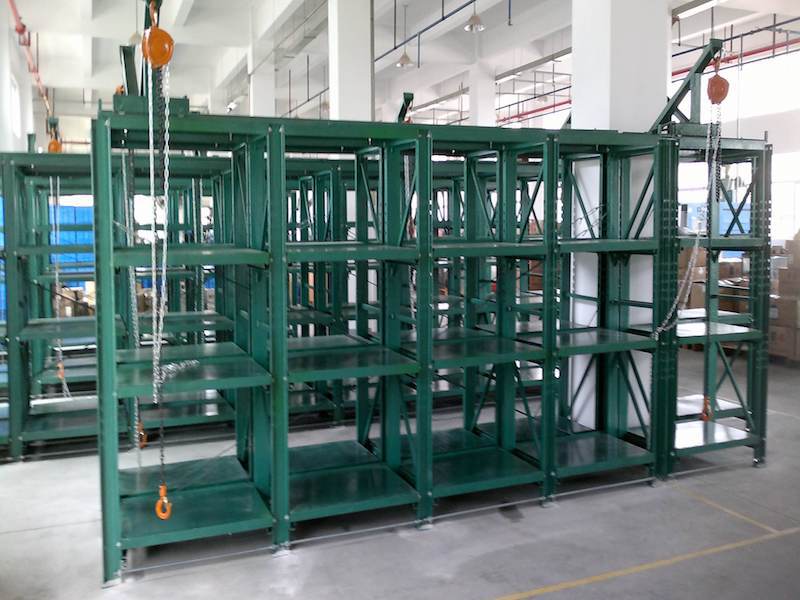
Every selective rack bay consists of three primary load paths: the upright
frame, the horizontal beam, and the connection hardware that transfers force
between them. Understanding how each element is rated prevents the most common
specification error — matching a beam to a pallet weight while ignoring the
frame capacity behind it.
Upright frames: Fabricated from roll-formed or structural
steel posts, braced laterally and diagonally. Frame capacity is expressed in kN
or lbs per frame at a stated height, and it falls as the unsupported height
increases.
Load beams: Step beams, box beams, and structural channel
beams each carry different section modulus values. Beam capacity is quoted as a
uniformly distributed load per pair, at a defined deflection limit — typically
L/180 for general storage.
Connectors and safety clips: The beam-to-upright interface
governs impact resistance. Boltless teardrop and rivet-style connections allow
height adjustment, but they depend on correctly seated safety locks to resist
upward disengagement from forklift contact.
Base plates and shims: Anchored to a slab that must meet
flatness and compressive strength requirements. Slab thickness and joint
condition frequently limit total system height more than the steel itself
does.
A frame rated at 20,000 lbs at 120 inches may only support 14,000 lbs at 240
inches. Planners who stack selective racking to the roof without recalculating
frame capacity per level create a silent structural risk that only appears
during a seismic event or a loaded impact.
Rack Types and Their Operating Envelopes
Storage density and selectivity exist in direct tension. The more pallet
positions you compress into a footprint, the fewer faces you can access without
moving another load. Each rack family resolves that trade-off differently.
Selective Pallet Racking
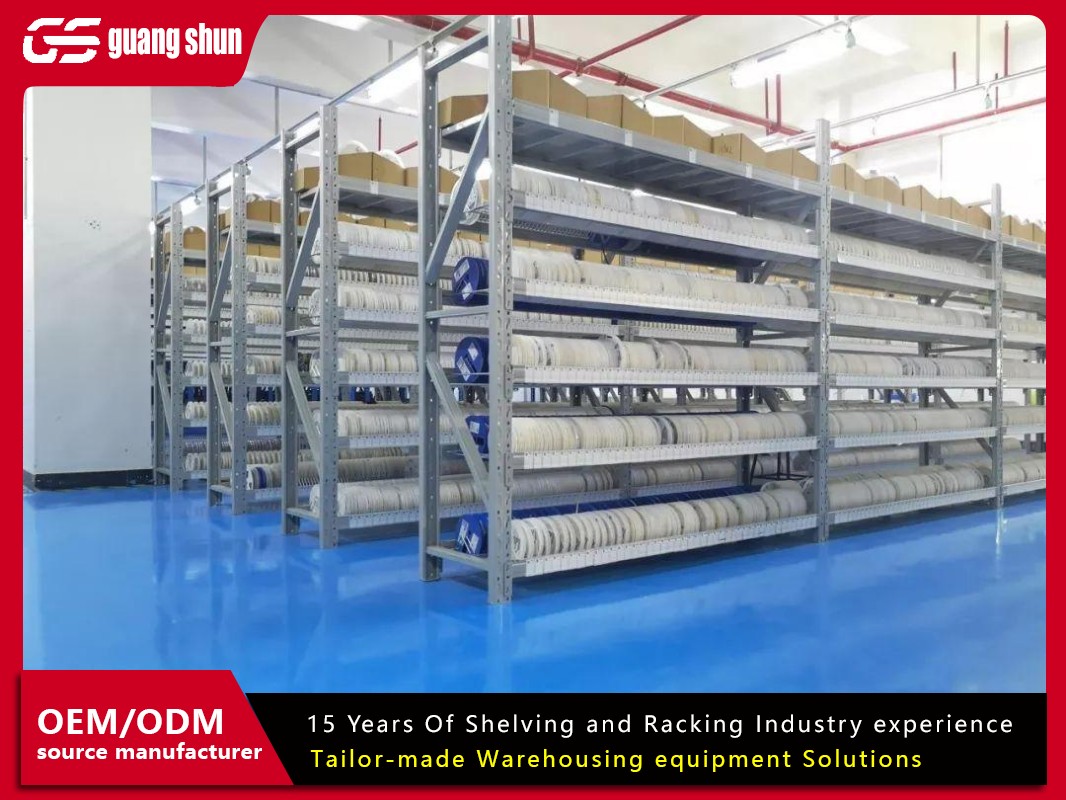
One pallet deep, one pallet wide, every pallet directly accessible.
Selectivity is close to 100%, but aisle count drives the footprint. This remains
the default choice for operations with high SKU counts and unpredictable pick
sequences.
Double-Deep and Drive-In / Drive-Through
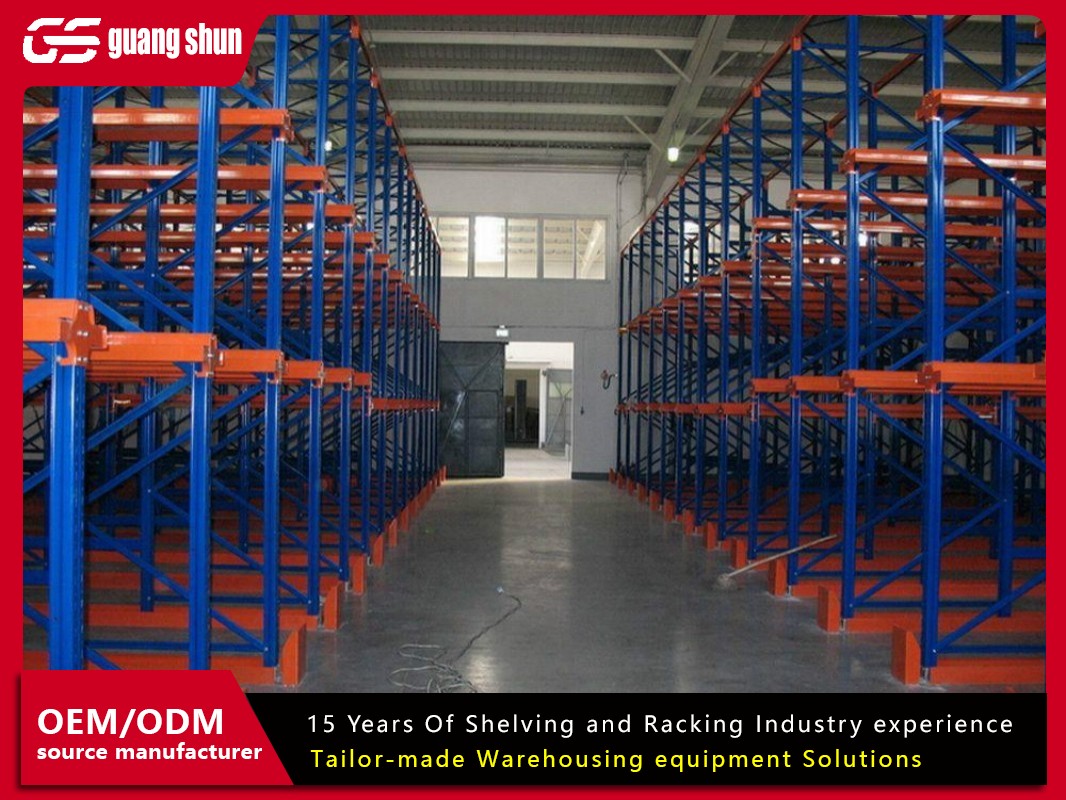
Double-deep racking stores two pallets back-to-back, normally served by a
reach truck. Drive-in configurations compress storage to 5–10 pallets deep,
delivering LIFO access; drive-through corridors provide FIFO access where a
pass-through aisle exists at both ends. Density rises sharply, but honeycombing
losses and slower cycle times must be modelled honestly.
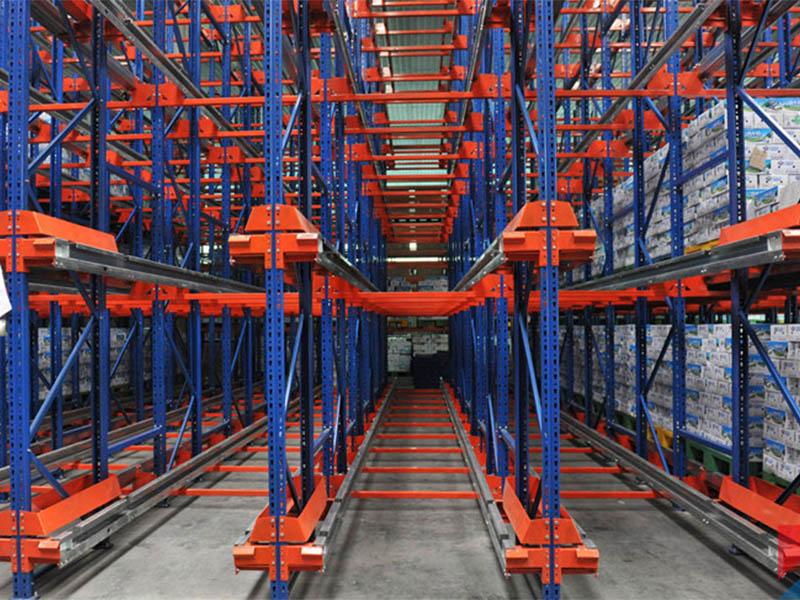
Push-Back and Pallet Flow
Push-back racks use nested carts on inclined rails, typically 2–6 pallets
deep, offering LIFO retrieval with better face-level selectivity than drive-in.
Cart-based flow systems push density further and are widely used in high-volume
beverage and grocery distribution.
Cantilever and Mezzanine Systems
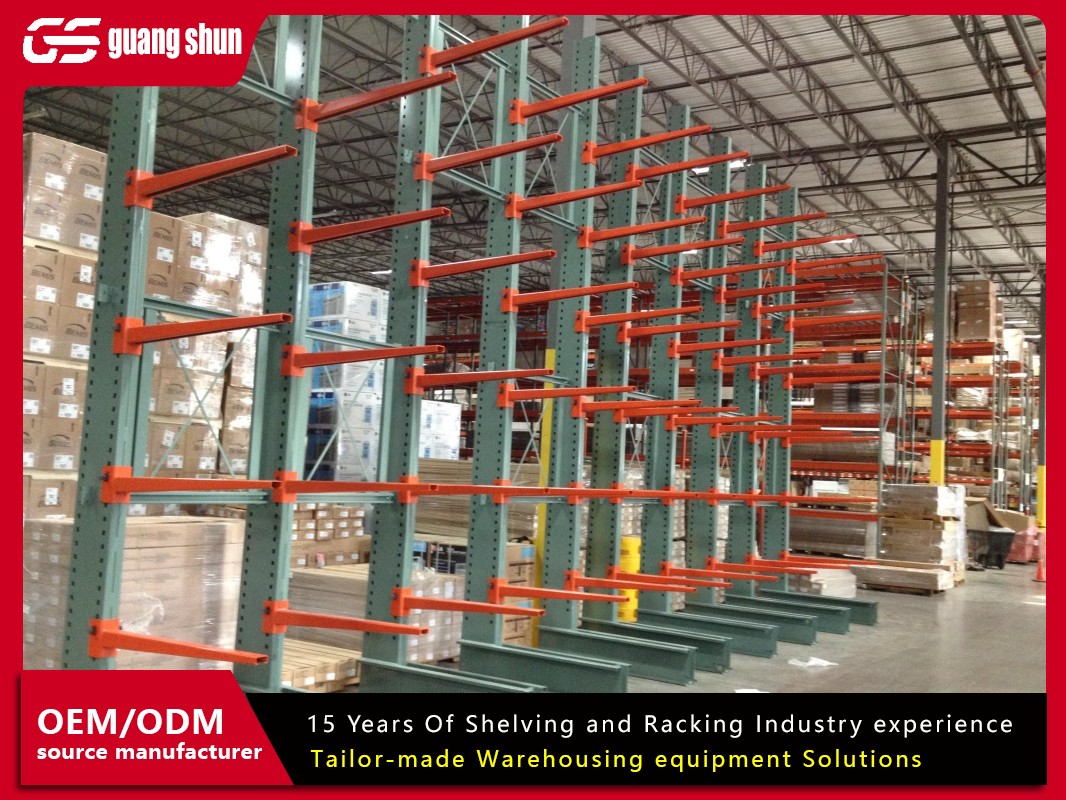
Cantilever arms handle pipe, timber, and long-profile goods that cannot sit
on a beam. Structural mezzanines convert vertical air into pick modules, often
combined with carton flow or shelving decks to create a two-level picking
environment without expanding the building.
Shuttle and AS/RS Configurations
Radio-shuttle and pallet-shuttle systems separate the lift truck from the
storage lane, allowing a single truck to serve deeply compressed blocks. When
paired with stacker cranes or autonomous mobile robots, these layouts shift the
constraint from truck travel time to software scheduling.
Matching Configuration to SKU Profile and Throughput
Rack selection should follow a data exercise, not a preference. Pull twelve
months of inventory and transaction history, then segment it:
Velocity (ABC): A-items belong in the most accessible
golden zone, ideally between 30 and 60 inches from the floor.
Pallet count per SKU: Single-pallet SKUs rarely justify
deep-lane storage; multi-pallet SKUs justify push-back or shuttle lanes.
Rotation discipline: Regulated goods or date-sensitive
inventory require FIFO, which rules out drive-in and standard push-back unless
flow rails are used.
Pallet quality: Flow and shuttle systems demand consistent,
undamaged pallets. Mixed pallet populations cause jams and rail damage that
erode the business case quickly.
Order profile: Full-pallet outbound moves favor dense
blocks; broken-case picking favors selective racking plus a dedicated forward
pick area.
Slotting a facility with the wrong rack family typically shows up as labor
cost, not storage cost. A drive-in block that forces 40% of picks to wait for
lane access can erase the footprint savings in a single quarter.
Load Calculations, Deflection, and Floor Conditions
Rack design starts with the pallet, not the product. Confirm the following
before any layout drawing is issued:
Maximum pallet load, including packaging, slip sheets, and any overhang
Pallet type and condition — GMA wood, block, plastic, or custom
footprint
Beam level spacing required for load height plus clearance for lift-off and
put-away
Point-load versus uniformly distributed load behaviour, particularly for
heavy machinery or bagged goods
Slab thickness, flatness tolerance, and joint locations relative to base
plate anchoring
Uniform and concentrated floor loading, checked against the building's
structural drawings
Deflection limits matter beyond appearance. Excessive beam deflection makes
pallet entry and retrieval harder, increases the chance of forklift contact, and
in flow applications can stall cart movement. Structural engineers generally
specify stricter limits for racks served by automated equipment than for those
served manually.
Safety Standards, Inspection, and Damage Control
Rack safety is governed by published standards rather than manufacturer
discretion. In North America, ANSI MH16.1 defines design, testing, and
utilization requirements, with seismic provisions addressed separately for
high-risk zones. Comparable European frameworks apply under EN 15512 and the FEM
guidelines. Compliance is the baseline, not a differentiator.
What distinguishes a durable installation is the damage-control program built
around it:
Column protectors and end-of-aisle guards at every
high-traffic corner and lift-truck turning radius
Scheduled inspections at defined intervals, with documented
severity grading for bent uprights, sheared connectors, and deflected beams
Load capacity plaques posted at aisle ends so operators
never exceed the rated configuration
Repair discipline using OEM-specified components rather
than field-welded substitutes, which void capacity ratings
Operator training covering approach speed, fork height
during travel, and reporting procedures after any impact
A rack system that has been struck but not reported is more dangerous than
one that is visibly damaged. Inspection culture, not steel gauge, prevents most
collapse events.
Integrating Rack with Automation and Warehouse Software
Modern warehouse rack systems are increasingly specified alongside automation rather
than before it. Three integration points deserve early attention:
Tolerance stack-up: AS/RS cranes, shuttles, and AMRs
require tighter rack construction tolerances — typically ±3 mm to ±5 mm across
the aperture — than manual systems.
WMS slotting logic: The warehouse management system should
control put-away based on lane depth, weight limits per level, and rotation
rules, not just available locations.
Interface data: Location IDs, level numbering, and lane
designations must map cleanly between the rack layout drawing and the WMS
location master.
Retrofitting automation onto a rack layout designed for manual picking is
expensive and often impossible. Planning the tolerance envelope at the start
costs a fraction of a later rebuild.
Total Cost of Ownership and a Procurement Checklist
Purchase price represents a minority of lifetime rack cost. The larger
drivers are footprint efficiency, labor hours per pallet moved, damage
frequency, and reconfiguration flexibility over a ten-to-fifteen-year
horizon.
When evaluating suppliers, request and verify:
Sealed structural calculations stamped by a licensed engineer for your
jurisdiction
Independent test data for beam and frame capacities, not marketing
figures
Powder-coat or galvanized finish specification and expected corrosion
performance
Lead times, installation supervision scope, and warranty terms on structural
components
Availability of replacement parts and compatible accessories for future
expansion
Working with a manufacturer that also engineers the layout reduces the gap
between drawing and installed reality. Guangshun supplies
selective, drive-in, push-back, flow, cantilever, and shuttle-based storage
solutions with project-specific engineering documentation, which matters when a
building inspector or insurer requests load verification. For operations
comparing multiple configurations across several sites, a single engineering
partner also keeps capacity assumptions consistent from project to project.
Frequently Asked Questions
Q1: How much weight can a standard selective pallet rack
hold?
A1: There is no universal figure. Capacity is a combination of
upright frame rating, beam section, beam length, and level height. A typical bay
might hold 2,000–3,000 lbs per beam level, but that number changes with span.
Always use the load capacity plaque generated for your specific
configuration.
Q2: What is the difference between drive-in and push-back
racking?
A2: Drive-in racking lets a lift truck enter the lane and
lift pallets directly onto rails, storing 5–10 pallets deep with LIFO access.
Push-back uses carts on inclined rails, so the truck stays in the aisle and
pushes loads backward. Push-back generally offers faster cycle times and less
rack damage; drive-in offers slightly higher density.
Q3: How often should warehouse rack systems be
inspected?
A3: Most safety guidelines recommend formal inspections
at least annually, with more frequent intervals — monthly or quarterly — in
high-traffic or high-impact areas. Any rack struck by equipment should be
inspected immediately before returning to service.
Q4: Can I add levels to existing racking to increase
capacity?
A4: Sometimes, but not automatically. Adding a level
increases the load on the upright frames and the floor slab. The frame's
capacity at its new unsupported height and the slab's concentrated load rating
must both be verified by an engineer before modification.
Q5: What aisle width do I need for a reach truck versus a
counterbalance truck?
A5: Counterbalance trucks typically require
12–13 feet of aisle width; reach trucks can operate in roughly 8–10 feet, and
very narrow aisle (VNA) equipment in under 7 feet. Narrower aisles raise storage
density but demand better floor flatness, guide rails, and operator skill.
Q6: Is galvanized or powder-coated racking better for cold
storage?
A6: Cold storage and freezer environments accelerate
corrosion from condensation and washdown. Galvanized or zinc-rich finishes
generally outperform standard powder coat in these conditions, though the choice
also depends on humidity cycling, cleaning chemicals, and food-safety
requirements.
Closing Perspective
Storage density, throughput, and safety cannot be optimized independently. A
layout that maximizes pallet positions while lengthening truck travel or
reducing selectivity usually costs more in labor than it saves in rent. The
disciplined approach is to model the SKU profile first, select the rack family
that fits it, verify the structural calculations against the actual slab and
seismic conditions, and then build an inspection program that keeps the
installation within its rated envelope. That sequence — data, structure,
compliance, maintenance — is what separates storage infrastructure that supports
growth from racking that has to be replaced. Evaluating warehouse rack systems against those four criteria, with engineering documentation in hand,
gives procurement teams a defensible basis for both capital approval and
long-term operational performance.