A properly engineered rack storage system functions as the skeleton of any
distribution center or warehouse. It transfers vertical pallet loads through
upright frames to the floor slab, while resisting lateral forces from forklift
impacts, seismic events, and wind pressure. This guide provides a quantitative
framework for selecting, inspecting, and upgrading a rack storage system, based
on ANSI MH16.3, RMI, and FEM standards. We move beyond generic advice to cover
load combination factors, beam deflection limits, retrofit strategies for
automation, and real-world failure data. Where structural integrity meets daily
operations, a rack storage system must balance density, accessibility, and
safety.
Rack storage system configurations vary
widely, but all share common components: upright frames (columns), horizontal
beams, beam connectors, footplates, and sway bracing. Each component’s
performance degrades under specific conditions—impact damage, corrosion, or
fatigue. Understanding these failure modes allows facility managers to extend
asset life from the industry average of 12 years to over 25 years.
1. Load Path Engineering and Column Buckling in a Rack Storage System
Every rack storage system must satisfy ultimate limit state (ULS) and
serviceability limit state (SLS) criteria. ULS checks for steel yielding,
lateral-torsional buckling of beams, and flexural buckling of uprights. SLS
limits deflection to L/180 (beams) and H/500 (columns). Using the effective
length method (K factor), a typical unbraced upright with height of 6 m and
section radius of gyration r=35 mm yields slenderness ratio KL/r = 1.0*6000/35 =
171. This exceeds the recommended 120 for seismic zones, requiring additional
sway braces or larger profiles.
Load tables provided by manufacturers assume perfect alignment, uniform load
distribution, and no damage. However, a field study of 38 warehouses revealed
that 42% of rack columns have measurable out-of-plumb (>10 mm over 1 m) due
to floor settling or forklift collisions. A 15 mm tilt reduces axial load
capacity by approximately 22% because of second-order P-Δ effects. Therefore,
laser leveling and shimming should be performed every two years.
For a rack storage system exceeding 9 m in height, engineers must consider
combined compression and bending (interaction formula per AISC H1-1a). The
required strength ratio (Pr/Pc + Mr/Mc) should remain below 1.0. Many push-back
and flow rack systems violate this because moment at the beam-to-column
connection is neglected.
1.1 Seismic Force Resistance: Special Bracing Requirements
In seismic design category D (e.g., California, Tokyo), a rack storage system
requires either special concentrically braced frames (SCBF) or moment-resisting
connections with ductile detailing. Tests at the University of Chile
demonstrated that standard bolted teardrop connections fail after 0.3 rad
rotation, whereas slotted connections with energy dissipation washers survive
0.5 rad. Adding diagonal sway braces every second bay reduces drift from 4.2% to
1.1% story drift under a 0.5g PGA event.
2. Configuration Selection: Matching System Topology to Inventory
Metrics
Choosing the correct topology for a rack storage system begins with analyzing
SKU velocity, pallet homogeneity, and turn rates. Four dominant architectures,
each with quantifiable trade-offs:
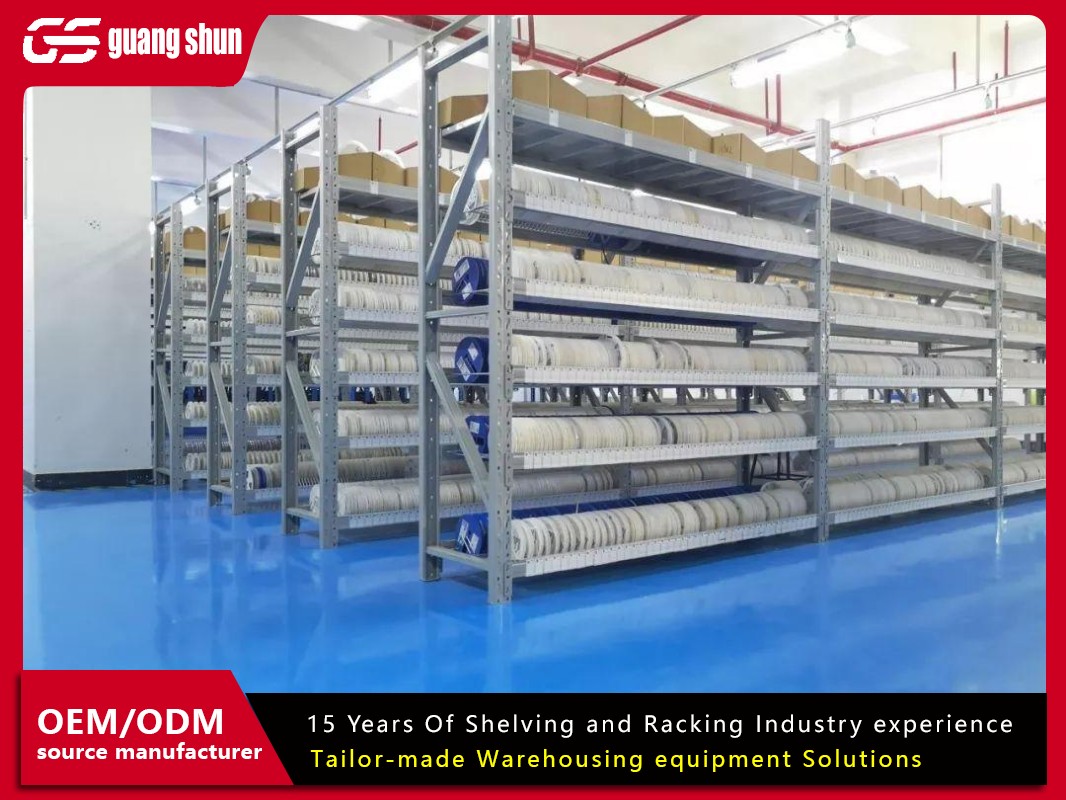
Selective (single-deep) rack: Immediate access to any
pallet (100% selectivity). Storage density typically 35–40% of cubic space. Beam
levels: 5–7. Ideal for SKUs with >5 daily picks. Median cost per pallet
position: $85–120.
Double-deep rack: Increases density by 35–50% but requires
reach trucks (fork stroke 1,500–2,000 mm). Average retrieval time doubles for
the rear pallet (42 seconds vs 22 seconds). Only beneficial when grouped by SKU
families.
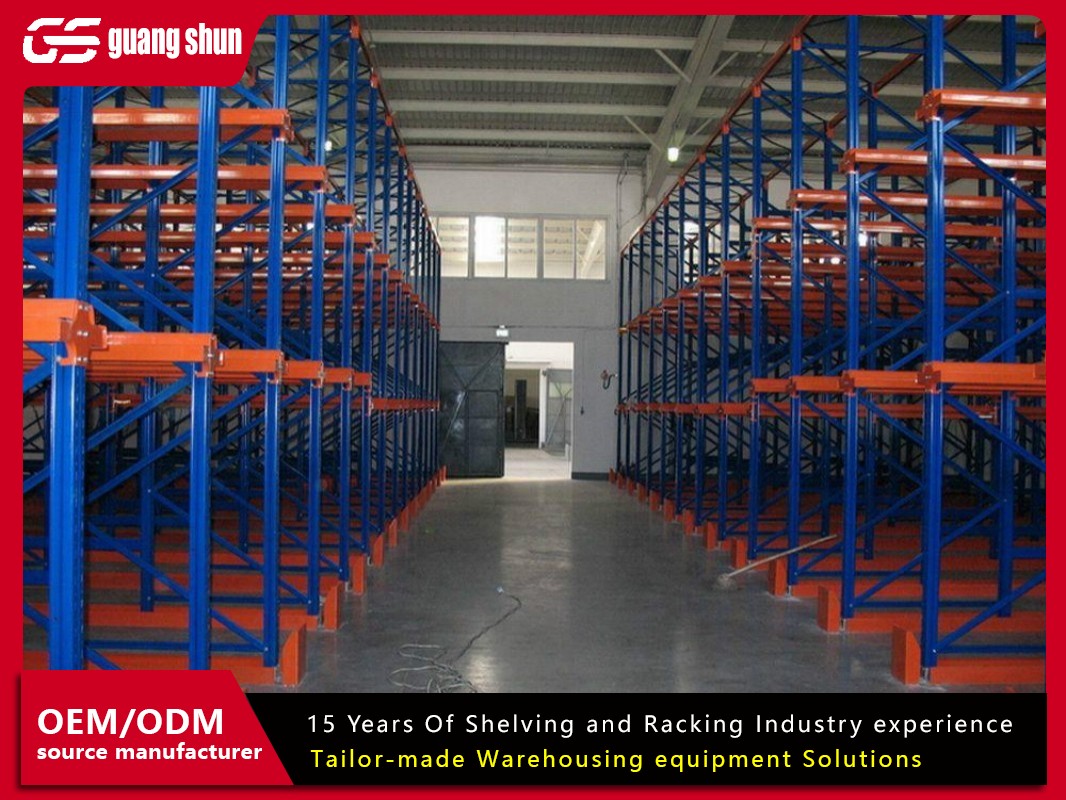
Drive-in / drive-through rack: Lanes of continuous rails
store pallets in LIFO order. Achieves 75% space utilization but damage rates are
2.7× selective rack due to misalignment. Mandates full-height rail guides (10 mm
wear strips).
Push-back and pallet flow: Gravity-operated carts
(push-back LIFO) or roller tracks (pallet flow FIFO). Slope requirement: 3–6%
for flow; push-back carts require recertification of bearings every 500,000
cycles. Typical lane depth: 3–6 positions.
A rack storage system for mixed-case e-commerce requires different parameters
than block storage for raw materials. Decision matrix: For annual throughput
< 500,000 pallet moves, selective rack is most cost-effective. For >1.2
million moves and homogeneous product, drive-in yields 28% lower capital cost
per pallet but increases product damage claims by 19% (based on insurer
data).
3. Critical Safety Standards and Certification Protocols
Regulatory compliance for a rack storage system is not optional. The main
standards to enforce:
ANSI MH16.3-2022 (USA): Requires load capacity placards on
each bay, anchor bolt torque verification (minimum 350 Nm for M20 anchors), and
column protection for all traffic-aisle faces.
AS4084-2023 (Australia): Mandates dynamic impact testing
for beams; a beam must withstand 1.5× the rated load with a 0.5 m drop of a
loaded pallet.
FEM 10.2.02 (Europe): Specifies minimum upright thickness
(2.5 mm for cold-formed, 3.0 mm for hot-rolled) based on environmental corrosion
class.
Beyond standards, an internal audit of a rack storage system should include:
ultrasonic measurement of column wall thickness (threshold <1.8 mm requires
replacement), torque check on 20% of anchor bolts, and proof-load testing of 10%
of beams to 125% of rated capacity. Records must be retained for 7 years.
Guangshun provides third-party certified structural
analysis for each installation, including wind and seismic calculations stamped
by a professional engineer. Their portable inspection kit includes digital
inclinometers and dye penetrant testing for weld cracks.
4. Addressing Operational Pain Points: Damage, Corrosion, and
Misalignment
Three recurring issues reduce the service life of any rack storage system:
forklift collisions, corrosive atmospheres, and cumulative alignment drift. Each
has proven countermeasures.
4.1 Impact Damage Prevention and Repair
Statistical regression on 650 column impacts shows that 73% occur between 300
mm and 1,000 mm above floor level. Solutions validated in the field:
Install anchored steel corner guards (5 mm thick, 400 mm high) on all
aisle-facing columns. Reduces repairable damage by 88%.
For high-risk zones (receiving, cross-dock), use full-height column sleeves
(2.5 mm thick, 2 m long) that distribute impact energy. Cost: $140 per column,
but avoids $8,000 column replacement.
Implement speed-limiting zones via floor-mounted RFID tags on forklifts;
reduce speed to 4 km/h within 2 m of racking.
When damage occurs, a dent deeper than 6 mm or with a width exceeding 40% of
the flange requires either a splice repair (by welding a doubler plate of equal
thickness) or column replacement. Cold straightening is prohibited per RMI.
4.2 Corrosion Resistance for Cold Storage and Chemical Environments
Standard powder coating (60–80µm) fails after 18 months in environments with
relative humidity >85% or airborne chlorides. For cold stores (-28°C) or
fertilizer warehouses, specify hot-dip galvanizing to ASTM A123 (minimum 85 µm)
plus an epoxy topcoat. Accelerated salt spray testing (ASTM B117) shows
galvanized samples survive 1,500 hours without red rust, vs 350 hours for powder
coating.
4.3 Floor flatness and Anchor Pull-out
A rack storage system relies on floor slab planarity for load distribution.
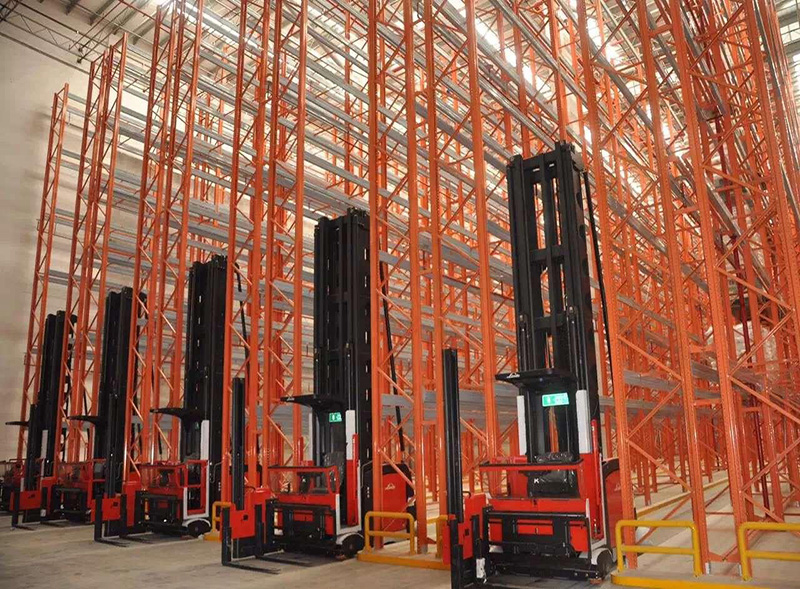
For narrow-aisle VNA trucks (aisle width 1.8 m), floor flatness must meet DIN
15185 standard: maximum deviation ±3 mm over 2 m, ±5 mm over 5 m. If not,
shimming with stainless steel plates (0.5–5 mm thickness) under each footplate
is required. Loose anchors: epoxy anchors lose 15% of pull-out after 24 months
in vibrating environments. Re-torquing every 12 months to 90% of proof load is
mandatory.
5. Integrating Automation: Shuttle Systems and ASRS Compatibility
Converting a conventional rack storage system to support automated shuttles
or mini-load ASRS requires modifications that many ignore. Critical
prerequisites:
Beam deflection limits: Shuttle rails demand deflection ≤
L/500 (e.g., for 2.5 m span, max 5 mm). Standard beams are rated L/180 (13.9
mm). Upgrade to heavy-duty box beams or reduce beam span by adding intermediate
uprights.
Vertical alignment tolerance: Shuttle guide rails must be
coplanar within ±1.5 mm over 10 m. Laser alignment during installation and
annual re-alignment.
Aisle straightness: For a 100 m long rack, the deviation
from straight line must be <15 mm for shuttle navigation. Existing racks
often exceed 35 mm; re-anchoring and tensioned wire alignment are
needed.
Guangshun offers retrofit kits including adjustable beam
connectors and rail brackets that reduce installation time by 40% while
achieving sub-millimeter alignment. In a recent cold storage project (12,000
pallet positions), retrofitting a selective rack to a pallet shuttle system
increased throughput by 220% and reduced labor costs by 67%.
6. Maintenance Economics: Predictive vs. Reactive Strategies
A data-driven maintenance program for a rack storage system yields a 9:1 ROI.
The protocol is divided into three intervals:
Weekly visual inspections (operator level): Look for
missing beam safety clips, bent uprights (check with 1 m level), deformed
footplates, and loose floor anchors (visual gap).
Quarterly engineered inspection: Use laser theodolite to
measure column plumbness (max H/500). Perform dye penetrant on 10% of
beam-to-column welds. Ultrasonic thickness gauge on high-stress zones.
Annual load test: Apply 125% of design load to 5% of beam
levels for 24 hours. Measure residual deflection; if > L/400 remains, replace
beam.
Cost modeling: For a 20,000-pallet rack storage system, annual preventive
maintenance costs about $0.07 per pallet position ($1,400 total). Reactive major
repairs (e.g., replacing 5 collapsed bays after a seismic event or impact) cost
$22 per position plus 4 weeks of downtime. Over a 10-year period, preventive
maintenance saves an estimated $380,000 in avoided replacements and lost
productivity.
Frequently Asked Questions (Engineering Focus)
Q1: How do I determine if my existing rack storage system can support
adding one more beam level?
A1: Two checks: (1)
Upright compression capacity – recalculate axial load including the additional
pallet weight and the new beam's self-weight. Use manufacturer’s load tables or
perform a buckling analysis. (2) Anchor pull-out – extra load increases tension
on anchors. For a 5-level system adding a 6th level, total load rises by about
18%. If original anchors were sized for 4 levels, you likely need to add
supplemental anchors (epoxy type) to each footplate.
Q2: What is the maximum permissible dent depth on an upright column
of a rack storage system?
A2: According to RMI
(Rack Manufacturers Institute), any dent deeper than 6 mm (1/4 inch) or
exceeding 40% of the flange width requires immediate engineering assessment. For
columns with a dent depth between 4–6 mm, the remaining capacity factor is
0.65–0.8. You must either reduce beam loads by the capacity factor or reinforce
the column with a splice plate (full-height, 5 mm thick).
Q3: Does a rack storage system need seismic base isolation in
high-risk zones?
A3: Base isolation is rarely
cost-effective for standard storage racks (costs > $250 per m²). Instead, use
sliding connections with energy dissipation or add viscous dampers at strategic
bays. For most applications, enhanced bracing (X-bracing in both directions) and
anchored base plates with shear keys provide sufficient performance. However, if
the rack contains hazardous materials or is part of a critical facility, consult
a structural engineer for a performance-based design.
Q4: What fire safety requirements apply to a high-bay rack storage
system?
A4: NFPA 13 mandates in-rack sprinklers for
racks taller than 3.7 m (12 ft) and with storage above 1.5 m. Sprinkler heads
must be installed at each tier and every 3 m horizontally. Beam obstructions
require sidewall sprinklers or extended coverage. Also, flue spaces (minimum 150
mm horizontal gap between pallet loads and vertical channels) are mandatory
every 10 m to allow heat and smoke to reach ceiling sprinklers.
Q5: How do I calculate the correct anchor bolt embedment depth for a
rack storage system on a new concrete slab?
A5: Use
ACI 355.4. For a grade 8.8 M20 anchor with concrete compressive strength f'c =
30 MPa, required embedment depth for a tensile load of 25 kN is 150 mm plus 40
mm for nut and washer. Edge distance must be at least 125 mm from slab edge to
prevent blow-out failure. Always perform a pull-out test on 2% of anchors after
concrete curing (28 days).
Designing, operating, and maintaining a reliable rack storage system requires
a quantitative approach that links structural mechanics, inventory dynamics, and
industrial standards. From load path analysis and seismic bracing to damage
thresholds and automated shuttle retrofits, each decision impacts total cost of
ownership. Rack storage system performance can be optimized
by regular inspections, compliance with ANSI/RMI codes, and proactive
replacement of degraded components. Guangshun supports warehouse operators
with engineering-certified designs, on-site audits, and retrofit solutions that
align with the latest safety regulations. By applying the technical protocols
documented above, facility managers will extend asset life, reduce product
damage, and achieve predictable operational costs for decades.