Warehouse efficiency depends on the seamless integration of storage media
with material handling workflows. Among the most ubiquitous yet misunderstood
solutions is the shelf racking
system. Often conflated with pallet racking, shelf racking serves a
distinct purpose: supporting hand-loaded, carton-based, or bin-based inventory
rather than full pallet loads. This article provides a technical examination of
shelf racking—covering structural design, load capacity classes, bay
configurations, and the financial logic that governs its selection. We will
address common engineering pitfalls and offer a framework for comparing this
system against alternative storage media, ensuring that your investment is
optimized for both current throughput and future scalability.
Defining the Shelf Racking System: Components and Structural Anatomy
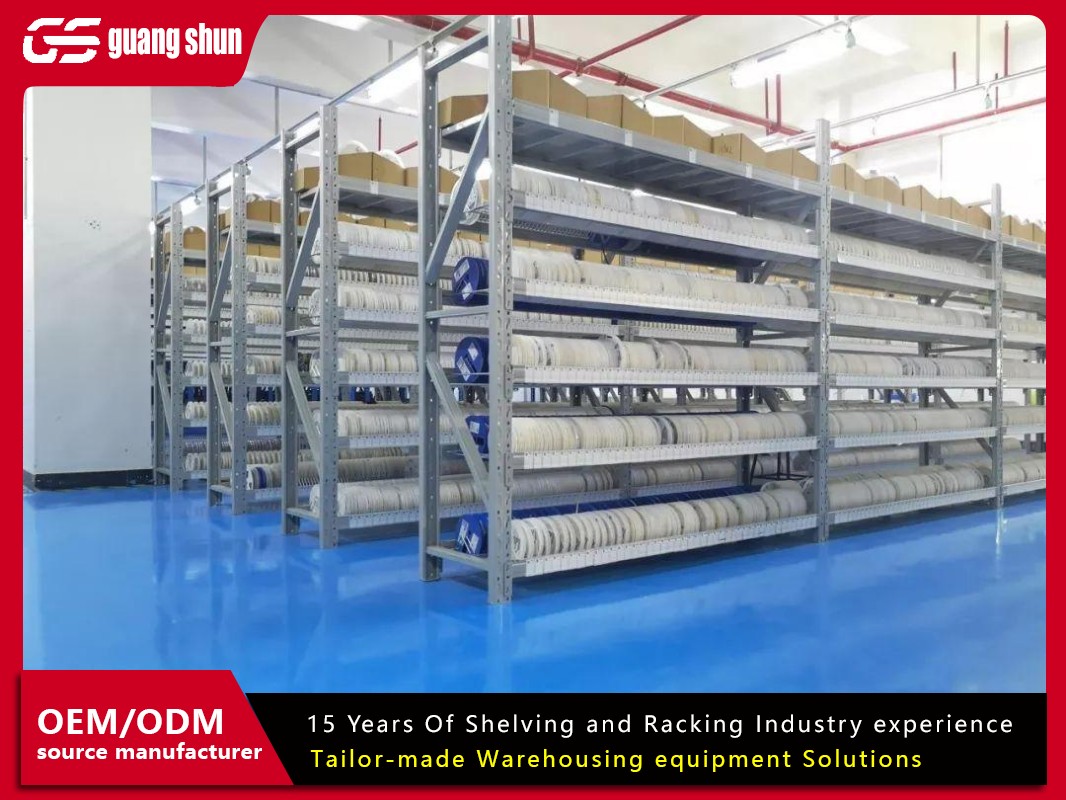
A shelf racking system is a modular assembly of upright
frames, horizontal beams, and shelf panels (typically steel, wire mesh, or
particle board) that create multiple levels of storage surfaces. Unlike pallet
racking, which uses beams to support pallets directly, shelf racking
incorporates a solid or grid deck across which individual items, cases, or totes
are placed manually or via light-duty conveyors. The system's structural
integrity relies on the interaction between the uprights (usually C-channel or
roll-formed steel), the beam-to-upright connections (rivet or bolt-on), and the
decking material, which distributes the load across the beams.
Upright Frames and Column Sizes
Uprights in shelf racking are typically lighter gauge than those used in
pallet racking, with common dimensions ranging from 1.5" x 1.5" to 2.5" x 2.5"
cross-sections. The gauge (thickness) varies from 1.2 mm to 2.0 mm, depending on
the expected load per shelf level. Column pitch—the distance between holes on
the upright—is often 50 mm or 75 mm, allowing for beam adjustments in 25 mm or
50 mm increments. This granular adjustability is beneficial for warehouses that
handle mixed carton sizes, as it minimizes wasted vertical space.
Beam Types and Connection Mechanisms
Three primary beam profiles are used in shelf applications: step beams, box
beams, and z-profile beams. Step beams are the most common, featuring a rolled
edge that supports the decking panel. Box beams provide higher torsional
rigidity and are preferable for longer spans (over 1.2 meters). Connections are
either clip-on (boltless) for rapid assembly or bolted for seismic zones. The
choice affects not only installation time but also the system's resistance to
horizontal forces—a factor often underestimated in non-seismic regions where
forklift impact or building sway can induce dynamic loads.
Decking Options: Load Distribution and Material Selection
The decking material determines the shelf's surface friction, fire
resistance, and load concentration. Common options include:
Steel decks (solid or perforated): High load capacity,
fire-resistant, but heavier and more expensive. Perforated decks are used to
allow fire sprinkler water penetration to lower levels.
Wire mesh decks: Lightweight, allow visual inspection of
lower levels, and facilitate airflow. However, small items may fall through gaps
if mesh size is too large.
Particle board or plywood: Economical, provides a smooth
surface for small items, but susceptible to moisture and offers lower load
ratings. Often used in retail backrooms rather than industrial
warehouses.
Load Capacity Classifications and Engineering Standards
Determining the appropriate load rating for a shelf racking
system requires understanding both uniform distributed load (UDL) and
point-load capacity. The rated capacity per shelf level is typically expressed
in kilograms per square meter (kg/m²) or pounds per square foot (psf). Industry
standards such as ANSI MH 16.1 (for industrial steel storage racks) and the RMI
(Rack Manufacturers Institute) guidelines provide design criteria, but they are
not mandatory for light-duty systems. However, for warehouses that integrate
conveyor interfaces or robotic picking, dynamic loading factors must be
considered.
For example, a standard medium-duty system might have a UDL rating of 350 kg
per shelf level (approximately 72 psf) with a maximum beam span of 1.5 meters.
If the warehouse stores heavy automotive batteries, each weighing 25 kg and
occupying a 0.5 m² footprint, the point-load calculation becomes critical. A
shelf could theoretically hold 14 batteries (350/25), but if concentrated in a
small area, the decking may deflect locally. This is why many engineering
specifications include a point-load limit (e.g., 150 kg over a 300 mm x 300 mm
area) in addition to UDL.
Configuration Parameters: Bay Width, Depth, and Number of Levels
The physical configuration of a shelf racking installation directly
influences storage density and picking efficiency. Key variables include bay
width (distance between uprights along the beam direction), bay depth
(front-to-back dimension), and the number of shelf levels. For manual picking,
the optimal shelf height is between 1.2 and 1.8 meters for the first three
levels, with upper levels reserved for slower-moving inventory and accessed via
ladders or rolling steps. In high-throughput DCs, it is common to add a fourth
or fifth level at 2.2 meters for reserve storage, though accessibility becomes a
concern.
Aisle width is another determinant of overall floor space utilization. For
carton-picking operations using manual pallet jacks, aisles of 2.5–3.0 meters
are typical. However, when integrating with automated guided vehicles (AGVs) or
order-picking robots, the aisle requirement may shrink to 1.8 meters, allowing
more shelving bays per square meter. This has led to a growing trend of
"narrow-aisle shelf racking" where the system is designed for robotic access,
though the structural beam spans must be adjusted to ensure stability under
dynamic loads.
Operational Advantages and Trade-Offs
Compared to other storage media like pallet racking or drive-in systems,
shelf racking offers specific benefits and limitations. Understanding these is
essential for making a justified investment.
Advantages: Selectivity, Modularity, and Cost-Effectiveness
Shelf racking provides 100% selectivity—every carton or bin is directly
accessible without moving other items. This is a significant advantage over
block stacking or deep-lane systems. The modular nature allows for easy
reconfiguration; beams can be moved to accommodate changes in product mix, and
additional bays can be integrated seamlessly. From a financial perspective, the
cost per cubic meter of storage is lower than automated solutions like miniload
AS/RS, making it a favorable choice for operations with moderate throughput and
SKU diversity.
Disadvantages: Labor Intensity and Vertical Space Utilization
The primary downside is that shelf racking relies heavily on manual labor for
putaway and picking. Each item must be individually placed or retrieved, which
limits throughput compared to automated systems. Additionally, because shelves
require clear vertical space between levels, the system does not achieve the
density of pallet racking, which uses beams without decking and allows pallets
to be stacked with minimal clearance. In high-ceiling warehouses (over 10
meters), shelf racking is rarely used above 4–5 levels due to ergonomic
constraints, leaving the upper airspace underutilized.
Fire Safety and Seismic Design Considerations
Safety engineering is a non-negotiable aspect of any shelf racking
system. Two major risk factors are fire propagation and seismic
response. In fire scenarios, shelf racking—particularly with solid steel or
wooden decks—can act as a vertical barrier that impedes heat and smoke movement.
Sprinkler systems must be designed with in-rack heads for high-bay
installations, and the decking material must meet flame spread ratings (e.g.,
Class A per ASTM E84). Wire mesh decks are often preferred because they allow
sprinkler water to reach lower levels, reducing the fire risk.
For seismic zones (e.g., California, Japan), the racking must be anchored to
the floor with specific bolt patterns and supplemented with cross-bracing. The
brace members are typically x-braced or shear-braced to resist lateral forces.
The choice of bolted connections over clip-on types is more common in seismic
designs, as the latter may loosen under cyclic shaking. Many local building
codes require a professional structural engineer to sign off on the racking
design for facilities exceeding a certain height or load threshold.
Total Cost of Ownership: Acquisition, Installation, and Maintenance
The financial analysis for a shelf racking project should extend beyond the
initial purchase price. The total cost of ownership (TCO) over a 10-year horizon
includes:
Material cost: Price per bay based on gauge, deck type, and
finish (paint or galvanized). Powder-coated finishes cost more but offer
superior corrosion resistance.
Installation labor: Typically 15-20% of material cost, but
can be higher for complex configurations or seismic anchoring.
Floor preparation: Leveling and, in some cases, application
of epoxy coatings to maintain cleanliness and reduce dust.
Maintenance and repairs: Replacing damaged beams or decks
(due to impact or overloading), re-torquing connections, and repainting.
Energy consumption: Additional lighting needed for the
racking aisles, especially in deep bay configurations.
For a medium-duty system (3,000 bays), the total installed cost often ranges
between $150 and $300 per bay, depending on region and customization. A
warehouse with 10,000 bays can expect to invest between $1.5M and $3M. When
compared to the cost of an automated shuttle system, which may exceed $8M for
the same capacity, shelf racking remains a competitive option for applications
where labor costs are moderate and throughput does not exceed 200 picks per hour
per zone.
Application-Specific Configurations: Beyond the Standard
While the standard shelf racking system is designed for uniform boxes,
several specialized variants address industry-specific needs. Below are three
representative examples.
E-commerce Multi-Bin Shelving
In e-commerce fulfillment, the shelf racking is often divided into small
compartments (bins) using dividers and back fences. This configuration supports
"pick-to-cart" or "pick-to-tote" workflows. The decking is usually wire mesh to
allow visual identification of items from below, and the beam levels are closely
spaced (often 250–300 mm) to accommodate small SKUs. Many operators add label
holders and LED pick indicators directly on the shelf edges, turning the system
into a semi-automated picking station.
Automotive Aftermarket Parts Racks
Automotive parts are often heavy and irregularly shaped. Here, the shelf
racking system may feature reinforced decks (thicker steel) and deeper bays (up
to 1.2 meters) to accommodate oversized parts like brake drums or exhaust pipes.
Some installations integrate pull-out sliding shelves for heavy items, reducing
the ergonomic strain on operators. This reduces the risk of back injuries and
improves picking speed for items weighing over 20 kg.
Cleanroom and Pharmaceutical Shelving
In controlled environments, the shelf racking must be constructed from
stainless steel or coated with anti-microbial materials. The decking is
typically solid with a smooth finish to prevent particle accumulation.
Additionally, the system is designed with minimal horizontal surfaces to reduce
dust trapping. For pharmaceutical warehouses, the racking must comply with FDA
21 CFR Part 211 (current good manufacturing practices) regarding storage
conditions and traceability.
Integration with Warehouse Management and Automation
Modern shelf racking is no longer a passive storage medium; it is
increasingly instrumented with sensors, labels, and connectivity.
Radio-frequency identification (RFID) tags attached to shelves can track
inventory levels in real time, feeding data to the warehouse management system
(WMS). This enables dynamic slotting—where the WMS assigns items to specific
shelf positions based on velocity, reducing travel time. Furthermore, the
physical layout of shelf racking is often designed to align with the paths of
autonomous mobile robots (AMRs), allowing for "goods-to-person" picking where
robots bring the entire shelf bay to a stationary pick station. This hybrid
model preserves the low cost of shelf racking while introducing automation
benefits.
When planning such integration, it is important to consider the clearance
requirements for robots. Most AMRs need a minimum aisle width of 1.5 meters and
require that the shelf legs are free of obstacles. Therefore, the racking's base
feet must be designed with a low profile (e.g., shim feet or anchor plates) to
allow robot passage. Additionally, the shelf beams should not protrude into the
aisle path beyond a certain tolerance, which may necessitate narrower beam
depths or recessed front edges.
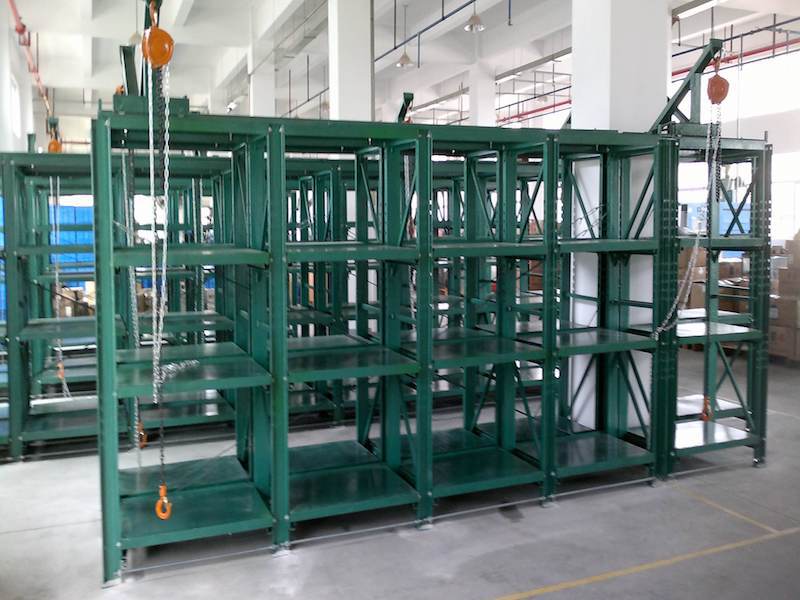
Partnering for Performance: The Guangshun Approach to Shelf Racking
Engineering
A shelf racking system is only as reliable as its design and manufacturing
precision. Guangshun has been supplying industrial shelving solutions for over two decades, with a
focus on high-strength steel formulations and advanced roll-forming techniques
that ensure tight tolerances on upright holes and beam connections. Their
engineering team routinely works with clients to perform finite element analysis
(FEA) of shelf structures, identifying stress points and recommending optimal
beam spacing and deck gauge. By using Guangshun systems, warehouse
operators benefit from a reduction in beam deflection—often below L/300
(span/300)—which prolongs deck life and prevents product damage. Their
pre-shipment assembly verification process reduces installation errors, cutting
commissioning time by up to 15% compared to industry averages. For companies
evaluating a shelf racking investment, engaging with a manufacturer that
provides design support and after-sales engineering consultation is a prudent
risk-mitigation strategy.
Frequently Asked Questions (FAQ)
Q1: What is the maximum load capacity per shelf for a standard shelf racking
system?
A1: There is no single maximum capacity, as it depends on beam span, deck
material, and upright gauge. However, typical industrial systems are rated
between 150 kg and 500 kg per shelf level (UDL) for spans up to 1.5 meters.
Heavy-duty versions can go up to 800 kg per level, but these require thicker
beams (box beams) and deeper uprights. Always consult the manufacturer's load
charts, which provide capacity curves for various span and depth
combinations.
Q2: Can I add more levels to an existing shelf racking system after
installation?
A2: Yes, provided that the upright frames have spare punched holes and the
overall column load does not exceed the frame's compression capacity. Adding
levels typically requires purchasing additional beams and decking. However, you
must ensure that the new total load (including the weight of the new decks) does
not surpass the maximum load per upright as calculated in the initial design. A
structural assessment is recommended before any modifications.
Q3: What is the typical lead time for a custom shelf racking system
order?
A3: For a custom-sized system (non-standard bay widths or depths), lead times
from engineering approval to delivery are usually 4–8 weeks, depending on the
manufacturer's production schedule. Standardized, pre-engineered systems are
often available within 2–3 weeks. Installation time varies based on bay count; a
500-bay project typically requires 5–7 working days for a two-person crew.
Q4: How do I select between steel decks and wire mesh decks for my shelf
racking?
A4: The choice depends on fire safety, item size, and load type. Wire mesh
decks are recommended for general carton storage because they allow sprinkler
water penetration and improve air circulation. Steel solid decks are better for
small parts that could fall through mesh gaps, or for applications requiring a
flat, continuous surface (e.g., storing boxes with uneven bottoms).
Additionally, solid decks provide higher point-load capacity but add more weight
to the beam structure.
Q5: What maintenance is required for a shelf racking system over its
lifetime?
A5: Routine maintenance includes: (a) visual inspection for beam deflection
or damage (bent uprights, cracked welds) on a quarterly basis; (b) torque checks
on bolted connections every 6 months; (c) cleaning of decks to prevent dust
accumulation, which can affect sprinkler performance; and (d) repainting or
touch-up of any exposed steel to prevent rust. In high-traffic areas, column
guards should be replaced if worn. Many operators contract an annual
professional inspection to ensure compliance with RMI guidelines.
Q6: Is it possible to integrate a shelf racking system with an automated
storage and retrieval system (AS/RS)?
A6: Yes, but this typically requires redesigning the racking to accommodate
shuttle rails or crane runways. For mini-load AS/RS, the shelf racking acts as
the storage grid, with the shuttle riding on rails integrated into the beam
structure. This approach is common in pharmaceutical and e-commerce DCs where
item-level storage is needed. The shelf decking must be robust enough to support
the shuttle weight and its acceleration forces, which often means upgrading to
thicker steel decks and reinforced beams. Consult with the AS/RS vendor and
racking manufacturer to ensure compatibility.
This comprehensive analysis provides the technical and economic framework
for evaluating shelf racking systems. Each warehouse application presents unique
constraints; therefore, engaging with qualified engineers and obtaining
site-specific design calculations is strongly advised before
procurement.