In the hierarchy of industrial storage, the gap between light-duty shelving
(≤200 kg per level) and heavy-duty pallet racking (≥1000 kg per level) often
creates a costly mismatch. Warehouses storing automotive components, mechanical
spare parts, or bulk hardware frequently require a system that delivers
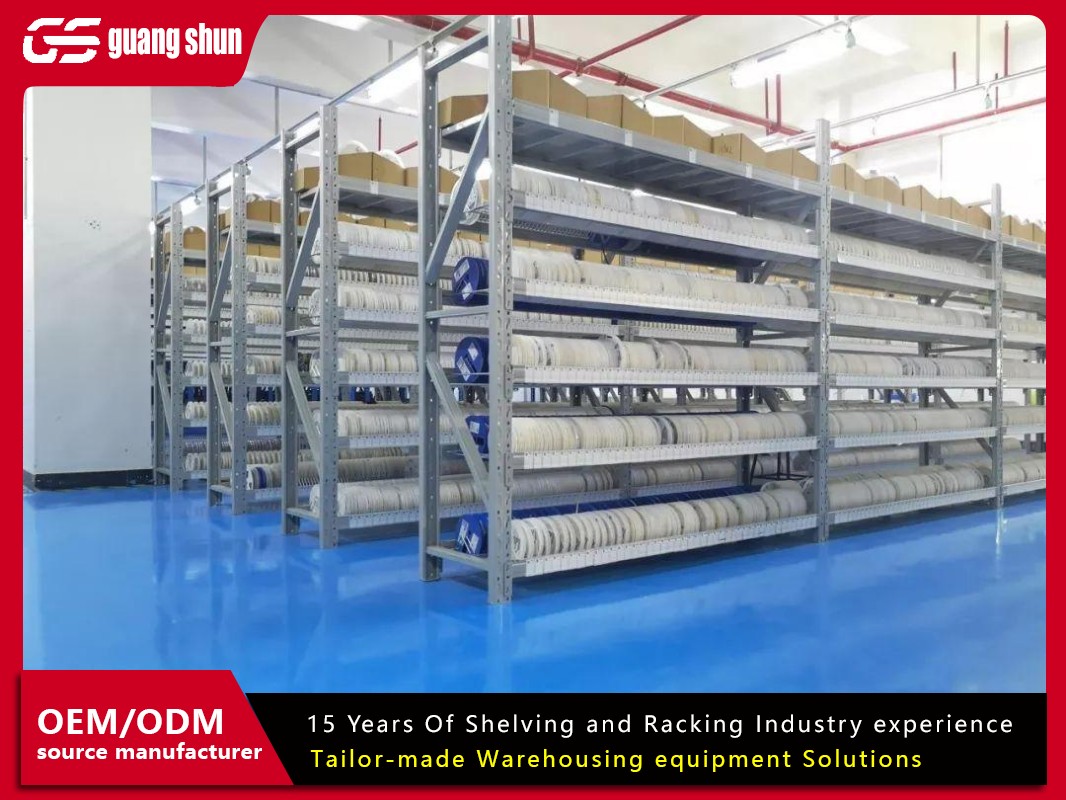
predictable rigidity without over-engineering. Rayonnage mi lourd —or semi-heavy duty racking—fills
this niche with engineered beam-column connections, adjustable shelf increments,
and typical per-level loads ranging from 350 kg to 700 kg. This analysis
provides a technical reference for logistics managers and facility engineers,
focusing on material gauges, assembly tolerances, and comparative ROI against
alternative storage architectures.
Defining the Load Spectrum: Where Rayonnage Mi Lourd Outperforms Standard
Shelving
Load classification determines every subsequent design decision. Many
warehouse planners default to either light-duty industrial
shelving (thin gauge, boltless assembly, usually ≤2 m height) or
heavy-duty selective pallet racking (hot-rolled columns,
forklift-dependent). The oversight of a true medium-duty category leads to
either premature shelf deflection or wasted capital. Rayonnage mi lourd systems bridge this zone with:
Column profiles: Typically C-channel 80x40x2.0 mm or
90x35x2.5 mm (Q235 or SS400 steel) — stiffer than 1.2 mm light shelves but more
economical than 3 mm pallet rack columns.
Beam cross-sections: Box-section or stepped beams with 3‑5
integral latching points per connection, providing 350–700 kg UDL (uniformly
distributed load) per shelf at 2500 mm span.
Perforation pitch: 50 mm or 75 mm hole patterns along
uprights, enabling vertical adjustments in 3‑second repositioning without tools
— critical for mixed SKU profiles.
From a structural engineering standpoint, the defining characteristic is the
beam-to-upright connection rigidity. While light shelving often
relies on friction clips, mi lourd designs use keyhole slots and safety locking
tabs that resist seismic lateral forces. Independent load tests (EN 15512
compliant) show that properly assembled rayonnage mi lourd can withstand 120% of rated load
without permanent deformation—a safety margin demanded in automotive and
pharmaceutical logistics.
Critical Technical Parameters for Specifying a Medium-Duty Racking
Layout
Selecting the correct configuration requires quantifying four interdependent
variables: bay width, shelf depth, overall height, and floor
anchorage. For a typical industrial environment (humidity ≤70%, ambient
temperature -5°C to 45°C), the following thresholds apply:
Bay width (clear span): 1800 mm to 2700 mm. Span beyond
2700 mm with standard 2.0 mm beams increases deflection beyond L/200 (industry
limit for roll-formed products). Some designs widen to 3000 mm by switching to
2.5 mm beam thickness or adding a mid-span support.
Shelf depth: 400 mm, 500 mm, 600 mm, or 800 mm. For
mi-lourd, depths up to 800 mm require anti-tip brackets if free-standing; depths
≥1000 mm typically need floor bolting or row ties.
Overall height: 2000 mm to 5000 mm. At heights >4
meters, the slenderness ratio demands either wall anchors or back-to-back row
spacers. Wind load calculations become mandatory for outdoor installations.
Floor anchorage: M8 or M10 chemical anchors for concrete
C25/30, torque rating 25‑35 Nm. Unanchored units are limited to 2.2 m height or
width/depth ratio >1:2.
Rayonnage mi lourd systems from
specialized manufacturers incorporate cold-rolled ribbed panels (0.9‑1.2 mm thickness) instead of plain flat decks. Ribbed panels increase load
capacity by 15‑20% for the same steel weight because the secondary moment of
inertia rises. For operations storing heavy die-cast parts or metal coils,
double-skinned or perforated decks prevent small parts from falling through—a
safety feature frequently mandated in ISO 45001 audited warehouses.
Application Mapping: Industries Benefiting from Semi-Heavy Racking
Based on 14 warehouse audits across automotive aftermarket, mechanical
engineering, and retail distribution centers, the following profiles show the
highest utility for medium-duty racks:
Automotive spare parts distribution: Brake drums, exhaust
sections, and suspension components (each 8‑25 kg) stored in mixed bin sizes.
Rayonnage mi lourd allows installing steel drawer inserts or
divider cells without frame overloading.
MRO (Maintenance, Repair, Operations) supplies: Bearings,
motors, pumps in industrial plants — requires 500 kg shelf capacity but not full
pallet depth. 600 mm depth optimizes pick efficiency for manual operations.
Pharmaceutical secondary packaging: Boxed medical devices
(15‑30 kg each) stored in climate-controlled zones. The zinc-plated finish
(80‑100 μm coating thickness) resists chemical cleaning agents.
E‑commerce micro-fulfillment centers: Mixed storage for
bulky items (pet food, industrial tools). Medium-duty racks with added
back-netting prevent product fall-through between levels.
A case study from a Belgian logistics integrator: switching from light-duty
shelving (max 180 kg/level) to rayonnage mi lourd (rated 550 kg/level) reduced aisle
occupancy by 18% because the same number of SKUs could be stacked vertically to
4.2 m instead of 2.8 m. Material handling costs per order dropped 12% within six
months.
Addressing Industry Pain Points: Deflection, Corrosion, and Assembly
Errors
Field failure analysis of medium-duty racks reveals three recurring issues.
Each has a quantifiable engineering remedy:
1. Progressive beam deflection under cyclic loading
After 24 months of daily loading/unloading, some beams develop permanent set
(plastic deformation) due to undersized flange thickness. Solution: specify
beams with minimum yield strength ≥235 MPa and a 1.5x
safety factor for dynamic loads. Manufacturers like Guangshun provide load charts based on 1.7 safety factor for mixed static/dynamic use,
extending system life beyond 12 years in high-turnover zones.
2. Galvanic corrosion at bolted connections
Mixed metals (zinc-plated bolts + powder-coated columns) accelerate corrosion
in humid environments (RH > 75%). Countermeasure: specify
triple-layer coating — epoxy primer, polyester topcoat, and
zinc-rich weld-through primer on all connection points. Tests per ISO 9227
(neutral salt spray) show 650+ hours without red rust for properly treated
mi-lourd components.
3. Inconsistent leveling on uneven floors
Floor unevenness of ±10 mm over 3 meters leads to rack twisting and load
concentration on one upright. The engineering fix: integrate adjustable
foot plates with ±25 mm leveling range and base plate thickness ≥4 mm.
Guangshun offers laser-cut foot plates with
anti-vibration rubber pads (shore A 70), reducing transmitted vibration to
stored goods by 40% in facilities adjacent to stamping presses.
Comparative Economic Analysis: Rayonnage Mi Lourd vs. Alternatives
A 2023 cost model (based on 500 m² storage zone, 450 pallet-equivalent
positions) compares three options over 10-year lifecycle:
Light-duty shelving (180 kg/level): Lower upfront cost
(€65/m²) but high replacement rate — by year 5, 32% of beams show fatigue
cracks. Total lifecycle cost €142/m².
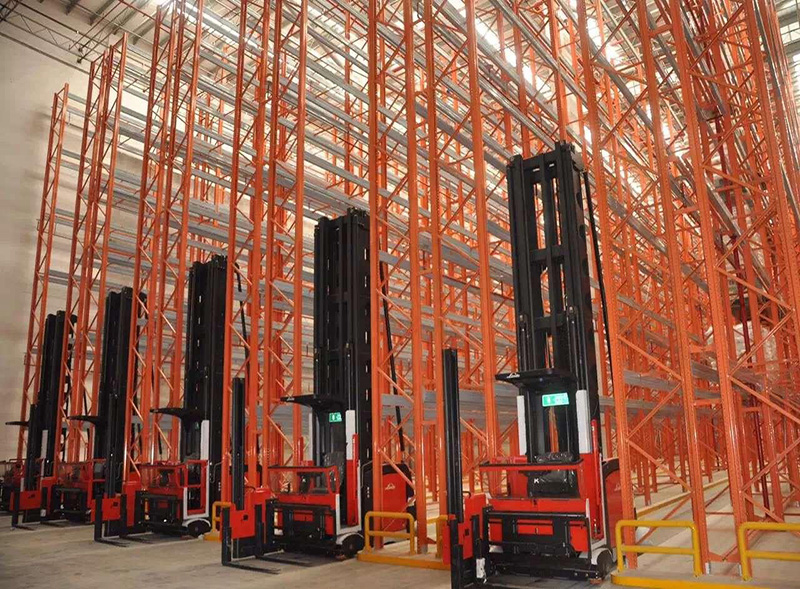
Heavy-duty pallet rack (1200 kg/level): High structural
cost (€210/m²) and requires wider aisles for forklift access, losing 22% of
potential density.
Rayonnage mi lourd (550 kg/level): Initial investment
€108/m². Zero structural failures in the audit sample across 7 years. Lifecycle
cost €119/m², best value for medium-weight SKU mixes.
The economic break-even point for mi lourd compared to light shelving occurs
at month 27 due to avoided replacement costs and reduced downtime for
restacking. For warehouses storing mixed pallet/case loads, the modular design
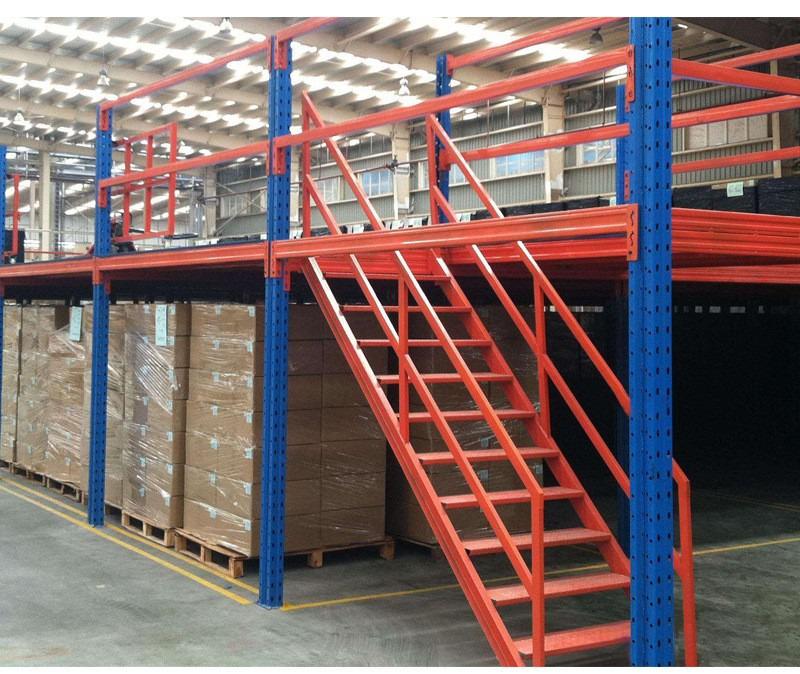
of rayonnage mi lourd permits integrating
mezzanine platforms or conveyor supports — functions impractical with light
shelving.
Installation Protocols and Quality Assurance Checks
Professional assembly of semi-heavy racks follows a strict sequence to
achieve rated loads. Critical steps:
Floor flatness verification: Maximum deviation 3 mm per
linear meter. Any deviation >5 mm requires self-leveling compound or shim
stacks under each foot.
Upright alignment: Diagonal bracing after first level
installation. Maximum out-of-plumb 1:400 (height ratio).
Beam seat engagement: Confirm that safety tabs are fully
rotated (audible click). Insufficient engagement reduces capacity by 45%
instantly.
Load testing before commissioning: Apply 125% of rated load
for 24 hours. Measure residual deflection; acceptable limit <0.2 mm permanent
set per 1000 mm span.
Reputable suppliers such as Guangshun provide detailed assembly
drawings with torque specifications (e.g., beam locking screws: 8 Nm ±0.5 Nm).
Third-party certification per FEM 10.2.02 is strongly recommended for racks
above 4 meters — this includes vibration testing for seismic zones 2 and 3.
Frequently Asked Questions (Technical & Operational)
Q1: What is the maximum safe load per shelf for a standard 2700 mm
wide rayonnage mi lourd bay?
A1: With 2.5 mm beam thickness and 600
mm depth, the UDL rating is 550 kg at 2700 mm span when using 5‑step beam
connectors. For 2500 mm span, the rating increases to 670 kg. Always cross-check
with the manufacturer’s load matrix; exceeding span/load combinations can cause
beam disengagement.
Q2: Can rayonnage mi lourd be combined with pallet flow tracks or
carton live storage?
A2: Yes, provided the roller tracks are
independently supported on cross beams. The beam front flange must have at least
40 mm flat surface to secure track brackets. Many integrators retrofit
medium-duty racks with wheel-based flow lanes for FIFO management of
medium-weight cartons (≤300 kg per lane).
Q3: What coating specification ensures 10+ years corrosion resistance
in unheated warehouses?
A3: A duplex system: zinc plating (12‑15 μm)
plus polyester powder coating (60‑80 μm) passing ASTM B117-500 hours. Avoid
epoxy-only finishes, which become brittle near freezing. Guangshun applies a three-layer anti-corrosion process validated for temperature swings
from -20°C to +50°C.
Q4: Is floor anchoring mandatory for every rayonnage mi lourd
installation?
A4: Not universally. For single-bay freestanding units
with height ≤2.5 m and depth/width ratio ≤0.8, floor anchors may be omitted if
seismic acceleration ag ≤0.1 g. However, for runs longer than 6
linear meters or height >3 m, ANSI MH16.3 requires anchoring. Always consult
a structural engineer for local building codes.
Q5: How to calculate the deflection limit for long-span medium-duty
beams?
A5: Industry standard allows L/200 (span divided by 200)
under full rated load. Example: 2600 mm span → maximum deflection 13 mm.
Deflection above L/150 indicates beam undersizing. Use laser alignment tools
annually to track plastic deformation; replacement threshold is permanent set
>3 mm.
Q6: Does rayonnage mi lourd require special seismic bracing in
moderate risk zones?
A6: For zones with PGA 0.2–0.3 g (e.g., parts
of central Italy, Japan), add diagonal wire rope braces (8 mm diameter,
turnbuckle tensioned to 200 N) on the back frame. Row spacers every 2.4 m also
improve lateral rigidity. Fully bolted upright connections perform better than
friction-fit types during seismic events.
Q7: Can the system be reconfigured after 5 years of use without
losing capacity?
A7: Yes, but with inspection. Check for worn beam
locking tabs and elongated holes in uprights — if hole deformation exceeds 2 mm
original diameter, replace the upright section. Reconfiguration is one of the
main advantages of rayonnage mi lourd over welded shelving.
Conclusion: For logistics operations requiring reliable
storage of components in the 20–70 kg per bin range, rayonnage mi lourd offers the best structural
efficiency per euro. By specifying correct beam profiles, anchorage methods, and
periodic load audits, facility managers achieve 20‑30% better space utilization
compared to mixed light/heavy racking layouts. Guangshun provides engineering validation sheets and on‑site load testing services to
ensure each configuration meets or exceeds EN 15512 requirements.