In the relentless pursuit of warehouse efficiency, the movement of goods from receiving to shipping is where time and money are either saved or lost. Static shelving and standard pallet racks, while useful, often create bottlenecks in order picking—the most labor-intensive operation. This is where the dynamic nature of a flow racking system fundamentally changes the game. By harnessing gravity to create a continuous, first-in, first-out (FIFO) product flow, this system not only accelerates picking rates but also slashes labor costs and minimizes human error. For operations dealing with high-SKU counts and time-sensitive products, understanding the mechanics, benefits, and ideal applications of a gravity flow rack is essential for staying competitive.
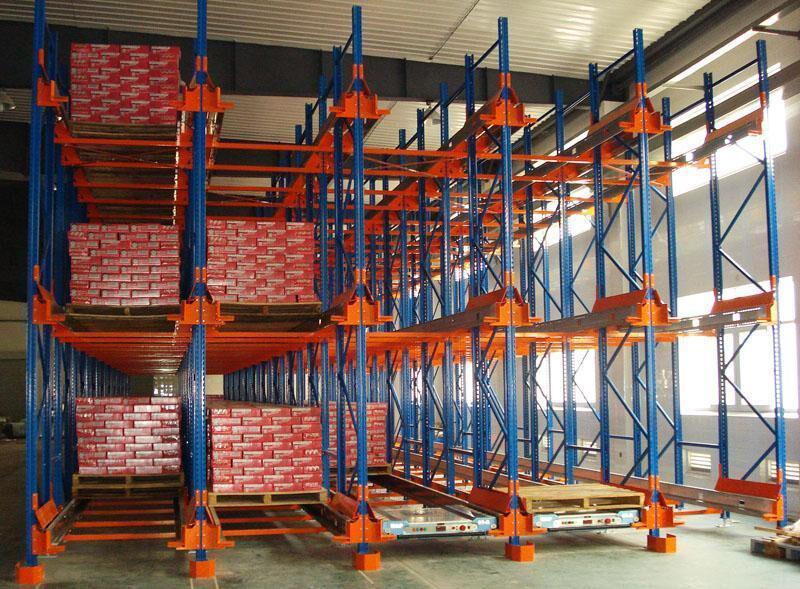
A flow racking system, also known as dynamic storage, is a high-density live storage solution designed to automatically move pallets or cartons from the loading end to the picking face using gravity. Unlike static shelving where a picker walks to the product, the product moves to the picker. The system is constructed with a slight decline from the back (load face) to the front (pick face). Within this inclined structure, wheeled tracks or rollers are installed, creating lanes for each SKU. When a new unit is loaded into the rear, it gently pushes the entire line of products forward until the front unit is presented at the pick face, ready for order fulfillment. This self-replenishing mechanism is the heart of its efficiency.
The Inner Workings: How Gravity Powers Your Warehouse
The magic of a flow racking system lies in its elegantly simple mechanical design. Breaking down the components clarifies how it achieves such seamless operation:
The Frame Structure: This is the robust skeleton of the system, designed to support significant weight and provide the precise incline necessary for product movement.
Rollers or Wheels: The core of the "flow" mechanism. High-quality, gravity flow wheels or rollers are arranged in lanes. The choice between the two depends on the product's weight and bottom surface. Rollers are often used for heavier pallet loads, while wheels can be suitable for lighter cartons.
Speed Controllers (Brakes): To prevent pallets or cartons from accelerating uncontrollably and crashing into the pick face, mechanical or hydraulic speed controllers are integrated. These brakes ensure a smooth, controlled descent, protecting both the product and the picker.
Load and Pick Faces: The system is designed with two distinct sides. The load face is typically located in an area accessible by forklifts or stockers, often at a higher level or a separate aisle. The pick face is where order selectors operate, optimized for ergonomics and speed.
This coordinated setup ensures a constant, automated rotation of inventory, making a gravity flow rack a highly reliable and low-maintenance solution.
Carton Flow vs. Pallet Flow: Choosing the Right Tier
The flow racking system is versatile and can be implemented at different scales of material handling:
Carton Flow Racking: This application is used for case-level picking. Individual cartons are loaded into the rear of the system and flow forward. It is commonly installed within pick modules and shelving systems to create high-density, dynamic storage for small to medium-sized items. This is ideal for fulfilling e-commerce orders or retail replenishment.
Pallet Flow Racking: Designed for full pallet loads, this is a large-scale high-density storage solution. Instead of wheels, heavier-duty rollers are used. Pallets are loaded into the rear, often from one aisle, and flow forward to a picking aisle on the opposite side. This is an excellent alternative to drive-in racking for FIFO pallet management, offering much faster throughput.
Quantifiable Benefits: Why Operations are Switching to Flow Racks
The decision to implement a flow racking system is driven by a compelling return on investment, demonstrated through several key performance indicators:
Dramatically Increased Picking Productivity: By eliminating travel time within the aisle and creating a consistent, ergonomic pick point, companies regularly report productivity increases of 30% to 60%. Pickers no longer search, reach, or bend excessively; they simply take the product presented directly in front of them.
Guaranteed FIFO Inventory Management: For industries dealing with perishable goods, pharmaceuticals, or items with expiration dates, the FIFO characteristic is not just an advantage—it's a requirement. A flow racking system enforces this automatically, removing the risk of human error where older stock might be overlooked in a static system.
Optimal Space Utilization: By utilizing depth and gravity, these systems can achieve very high storage density. A single pick face can service a deep lane of storage, freeing up valuable floor space for other operations or allowing for more SKUs within the same footprint.
Reduced Labor Fatigue and Improved Safety: The ergonomic design reduces walking, reaching, and lifting motions, leading to less physical strain on workers. This can lower the incidence of workplace injuries and improve overall employee morale. Furthermore, the reduction of forklift traffic in picking aisles enhances safety.
Cost Analysis and Investment Considerations
The initial cost of a flow racking system is higher than that of standard shelving or static pallet racking. The specialized rollers, speed controllers, and custom engineering contribute to this. However, a proper financial analysis must be total-cost-based:
Initial Investment: Includes the cost of the rack structure, flow rails/rollers, speed controllers, and professional installation.
Operational Return: The justification comes from the dramatic reduction in labor costs per picked line, the reduction in product loss from improved FIFO, and the value of the increased throughput and accuracy. For many businesses, the payback period is surprisingly short, often between 12 to 24 months, due to the labor savings alone.
Comparative Value: When evaluated against other high-density storage options like drive-in racking, a pallet flow system offers significantly faster throughput and true FIFO, often justifying the higher per-pallet-position cost.
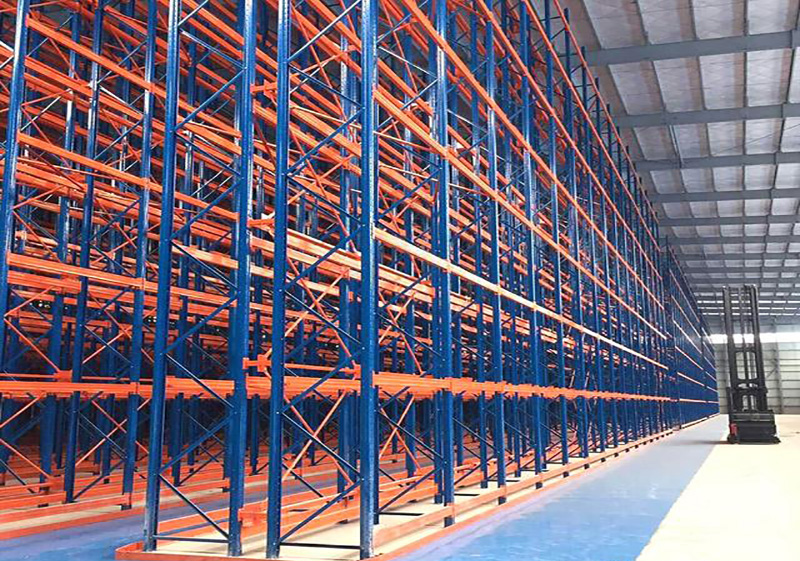
Is a Flow Rack System the Right Fit for Your Operation?
While powerful, a flow racking system is not a universal solution. It performs best under specific conditions:
High-Volume, Medium-to-High SKU Count: It is perfect for distributing a large number of SKUs with a relatively fast turnover.
FIFO Requirement: Essential for food, beverage, and any time-sensitive products.
Product Uniformity: For optimal performance, products within a single lane should be of uniform size and weight. A significant variation can cause jams or uneven flow.
Sufficient Volume per SKU: To justify dedicating an entire lane to a single SKU, you need a consistent volume of that product. Lanes are not easily reconfigured on the fly, making the system less flexible for ultra-slow-moving items.
Implementation and Best Practices
Successful implementation of a gravity flow rack requires careful planning. A detailed SKU analysis is the first step to determine lane depth and the number of lanes required. The system must be integrated thoughtfully into the broader warehouse layout, considering how replenishment and picking workflows will interact. Furthermore, staff need training on both loading protocols (e.g., ensuring product is centered) and what to do in the rare event of a jam. Properly planned and maintained, a flow racking system becomes the backbone of a highly efficient and responsive distribution center.
In an era where speed and accuracy in order fulfillment are directly tied to profitability, the flow racking system stands out as a brilliantly effective solution. By making gravity do the work of moving inventory, it unlocks significant gains in productivity, accuracy, and space utilization. For businesses whose operational profile aligns with its strengths—particularly those requiring FIFO and handling a high volume of picks—the investment is not just in storage hardware, but in a fundamental upgrade to the entire logistics workflow.
Frequently Asked Questions (FAQs)
Q1: What is the main difference between flow racking and push-back racking?
A1: Both are high-density systems, but they operate on different principles and inventory methods. A flow racking system uses gravity on a decline to move products, enforcing a FIFO (First-In, First-Out) method. Push-back racking uses a series of nested carts on a slight incline and relies on a forklift to "push" pallets back, making it a LIFO (Last-In, First-Out) system. FIFO is critical for perishables, while LIFO can be acceptable for non-perishable goods.
Q2: How deep can a single lane in a flow rack system be?
A2: Lane depth is primarily limited by the weight of the product and the resulting pressure on the front unit. While lanes can be designed to be very deep (over 20 pallets in some pallet flow systems), practical considerations like SKU turnover and investment cost also play a role. An engineer must calculate the maximum safe depth based on the load per pallet and the roller/brake specifications.
Q3: Can a flow racking system handle products of different sizes in the same lane?
A3: It is generally not recommended. For smooth and reliable operation, all units within a single lane of a gravity flow rack should be identical in size, weight, and base type (e.g., same pallet or carton footprint). Mixing sizes can lead to jams, uneven flow, and damage to products.
Q4: What kind of maintenance do these systems require?
A4: A flow racking system is relatively low-maintenance but not maintenance-free. The primary focus is on the rollers or wheels and the braking system. Regular visual inspections should be conducted to check for debris, damaged rollers, or worn brakes. Keeping the lanes clean is essential to prevent obstructions that could halt the flow.
Q5: Are flow racks suitable for very slow-moving products?
A5: Typically, no. Dedicating an entire lane of a dynamic storage system to a slow-moving SKU is an inefficient use of capital and space. The system's ROI is derived from the high-velocity movement of goods. Slow-movers are better housed in more flexible, static storage like selective pallet racking or shelving.