Is your warehouse struggling with slow order picking or frequent picking errors? Do you find yourself constantly battling to rotate stock properly? For operations handling a high volume of similar items, traditional static shelving often creates bottlenecks.
There’s a storage solution designed specifically to tackle these issues. It’s called gravity flow racking. This system is not just another type of shelving; it’s a dynamic approach to material handling that can dramatically boost efficiency.
This article explains how gravity flow racking works. We’ll look at its core components, its main benefits, and the types of businesses that use it most effectively. You’ll also learn what to consider before installing this system in your own facility.
What is Gravity Flow Racking? The Basic Idea
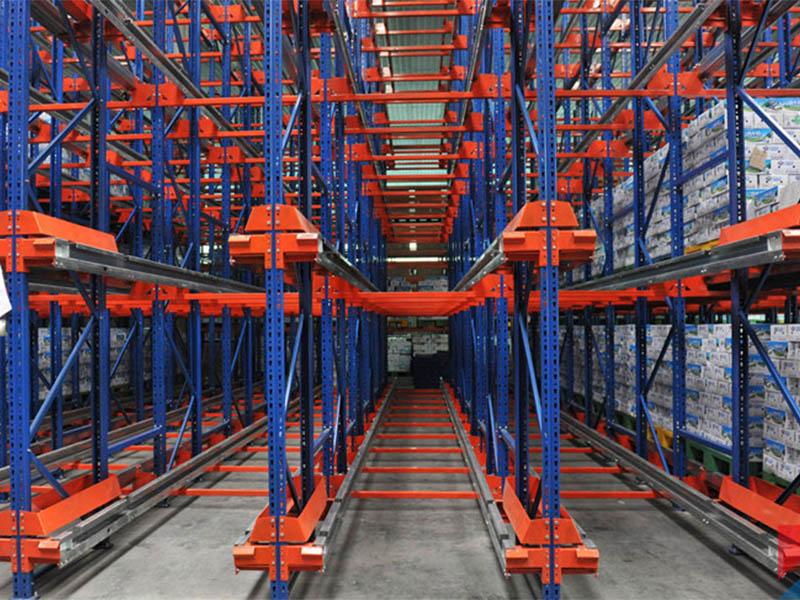
Let's start with a simple definition. Gravity flow racking is a high-density storage system that uses inclined rails or wheels. Cartons or pallets are loaded at the higher, rear end of the rack. They then move forward by the force of gravity toward the lower, front picking face.
The principle is straightforward. It enforces a strict first-in, first-out (FIFO) inventory flow. The oldest stock is always at the front, ready to be picked next. This automatic rotation is the system’s greatest strength for perishable or time-sensitive goods.
Imagine a long, slightly sloped track. You place a new box at the back. It gently slides forward until it meets the box already at the front. This process continues, creating a continuous flow of product. This is the essence of gravity flow racking.
It transforms static storage into dynamic storage. Products are never static unless the lane is empty. This constant movement is what drives the efficiency gains associated with gravity flow racking systems.
Key Components of a Gravity Flow Racking System
A typical gravity flow racking setup is made of several key parts. Understanding these helps in planning and implementation.
The support structure is the steel framework. It holds the entire system and is customized to your building’s height and layout. This framework is robust, designed to hold significant weight across multiple levels.
The heart of the system is the flow rails or wheels. These are the inclined tracks installed within the frame. For lighter cartons, skatewheel conveyors are common. For heavier pallets, roller conveyors are used. The grade of the incline is carefully calculated for smooth, controlled movement.
Braking systems are critical for safety and control. They prevent items from accelerating too quickly and impacting the front stop with dangerous force. Options include mechanical speed controllers, friction strips, or regenerative brakes. Proper braking is non-negotiable in gravity flow racking.
Lane separators and front stops keep products organized. Separators divide each level into individual lanes for specific SKUs. Front stops hold the lead product securely at the picking face until the operator releases it.
Lastly, loading and unloading stations are designed for ergonomics. The rear loading bay is often elevated. The front picking face is at an optimal height to reduce worker bending and reaching.
The Core Benefits: Why Choose Gravity Flow Racking?
The advantages of implementing gravity flow racking are significant and impact multiple areas of warehouse operations.
The most celebrated benefit is a massive increase in picking speed and accuracy. Pickers work from a single, consistent face. They don’t walk, search, or reach into deep shelving. Travel time is slashed, and the risk of picking the wrong item is minimized.
It delivers excellent space utilization. By using depth effectively, it eliminates the aisles needed for accessing multiple pallet locations in traditional selective racking. This high-density storage can free up substantial floor space.
As mentioned, it guarantees automatic FIFO inventory rotation. This is vital for industries like food and beverage, pharmaceuticals, and cosmetics. It prevents costly spoilage and obsolescence by ensuring older stock is always used first.
The system can also lead to reduced labor costs and fatigue. Picking is simpler and faster, meaning fewer workers can handle higher volumes. The ergonomic design reduces physical strain, potentially lowering injury rates and improving morale.
Finally, gravity flow racking can increase throughput capacity. By streamlining the picking process, your warehouse can process more orders in the same amount of time. This scalability is key for growing businesses.
Potential Drawbacks and Considerations
While powerful, gravity flow racking is not a universal solution for every storage need. It’s important to understand its limitations.
The most notable drawback is the higher initial investment. The cost per storage position is greater than basic pallet racking or shelving. The specialized components and engineering required contribute to this. A solid cost-benefit analysis is essential.
This system demands a high and consistent product turnover. It is designed for fast-moving SKUs. Slow-moving items can become stuck, wasting valuable lane space and negating the FIFO benefit. Product profiling—analyzing your sales velocity—is a crucial first step.
Gravity flow racking has limited flexibility for SKU variety. Each lane is typically dedicated to a single SKU. If you have thousands of slow-moving SKUs, this system is not efficient. It works best for a moderate number of high-velocity products.
There is also a requirement for uniform packaging and weight. Products in a single lane must have consistent dimensions and similar weight to ensure smooth, reliable flow. Mixed sizes or weights can cause jams or uneven movement.
Finally, maintenance is a factor. While generally reliable, the wheel or roller tracks require periodic inspection and cleaning to prevent debris from disrupting the flow. Brakes also need to be checked for consistent performance.
Ideal Applications: Where Gravity Flow Racking Excels
Certain industries and warehouse profiles are perfectly suited to reap the rewards of gravity flow racking.
Distribution Centers for Retail Chains are prime candidates. They often pick large quantities of identical items for store replenishment. Gravity flow racking is ideal for case picking in these high-volume environments.
Cold Storage and Perishable Goods Warehouses benefit immensely. The strict FIFO flow is critical for managing expiration dates. The efficiency gains also minimize the time workers spend in freezing temperatures.
E-commerce Fulfillment Centers handling fast-moving consumer goods use it effectively. The speed and accuracy in single-item or multi-item order picking directly translate to faster shipping and happier customers.
Manufacturing Facilities use it for parts picking in assembly lines or for managing finished goods. It ensures a steady, organized supply of components to production areas.
Beverage and Food Service Distribution is a classic application. The high density and efficient picking of cans, bottles, and cases make gravity flow racking a standard in this industry.
Planning and Implementation: Key Factors for Success
Successful installation of a gravity flow racking system requires careful planning. Rushing this process can lead to poor performance.
Start with a thorough SKU velocity analysis. Identify your fast-moving “A” items. These are the products that belong in your gravity flow lanes. Slower “B” and “C” items should be stored in more cost-effective, static systems.
Accurate product dimension and weight data is crucial. The incline angle, brake type, and lane width are all calculated based on your specific product characteristics. Guessing here can cause constant jams.
Consider the integration with material handling equipment. How will product be replenished at the rear? You may need conveyors or specific forklift pathways. The picking front should integrate seamlessly with packing stations or conveyor lines.
Think about future flexibility. While lanes are fixed, your product mix will change. Can the system be reconfigured? Some designs allow for adjustable lane widths or the conversion of flow lanes to static shelves if needed.
Always work with experienced professionals. The design, engineering, and installation of gravity flow racking are specialized tasks. Proper implementation ensures safety, reliability, and the expected return on investment.
Cost Comparison and Return on Investment (ROI)
The cost question is often the biggest hurdle. Let’s break it down.
Yes, the upfront cost for gravity flow racking is higher than simple racks. You are paying for precision engineering, specialized components, and a system designed for performance, not just storage.
However, the ROI calculation must look at operational savings. Quantify your current picking labor hours, error rates, and space costs. Then, project the improvements gravity flow racking can bring: often a 30-50% reduction in picking time, near-zero mis-picks, and better space use.
The ROI often comes from labor savings. If the system allows you to handle more volume with the same team or avoid hiring new pickers, those savings quickly offset the capital cost. For operations with high labor costs or difficulties hiring staff, this is a major factor.
Consider the cost of inventory shrinkage from poor rotation. For perishable goods, the value of wasted product prevented by FIFO can be substantial.
The payback period for a well-planned gravity flow racking system is typically 1 to 3 years. View it as a strategic investment in your operational infrastructure, not just a storage purchase.
Frequently Asked Questions About Gravity Flow Racking
Q1: How much weight can gravity flow racking handle?
A1: Capacity varies by design. Light-duty carton flow systems might handle up to 50 lbs per carton. Heavy-duty pallet flow systems can handle full pallets weighing several thousand pounds. The exact capacity must be engineered based on your specific load requirements.
Q2: Is gravity flow racking safe? How do you prevent runaway loads?
A2: Safety is paramount. Modern systems use integrated speed controllers and brakes (mechanical, pneumatic, or regenerative) on the rails. These devices automatically control the descent speed of the load, preventing high-impact collisions at the picking face.
Q3: Can gravity flow racking be used for slow-moving items?
A3: It is not recommended. The system is designed for high-velocity SKUs. Slow-moving items will sit stagnant, blocking the lane and wasting the system's potential. Reserve gravity flow racking for your fastest-moving 20-30% of inventory.
Q4: How deep (long) can a gravity flow lane be?
A4: Lanes can be quite deep to maximize density, often holding 5-10 pallets or many cartons deep. However, practical limits exist based on product weight, package stability, and building size. Very long lanes may require special brake zones. An expert can design the optimal lane depth for your products.
Q5: Can I install gravity flow racking myself?
A5: It is strongly discouraged. The installation requires precise leveling, alignment, and integration of braking systems. Improper installation can lead to poor flow, product damage, or safety hazards. Professional installation by qualified technicians is a critical part of the process.