If you manage a warehouse where workers spend too much time walking, searching, and bending, you’ve likely heard about carton flow racks. Maybe you’re wondering if they’re worth the investment. The short answer is often a resounding yes, but only if they fit your specific operation.
This isn't about a minor upgrade. Carton flow racks can fundamentally change how your pickers interact with inventory. They bring the product to the person, not the other way around. Let’s look at the real, tangible reasons these systems are a backbone of efficient fulfillment and distribution centers.
What Are Carton Flow Racks? More Than Just Shelves
At first glance, carton flow racks look like standard shelving. The key difference is what's inside the shelf bays. Instead of static shelves, each level is equipped with a series of inclined rails or tracks. These tracks are fitted with low-friction wheels or rollers.
Cartons or totes are loaded from the rear, usually at a higher elevation. Gravity then takes over. The containers glide smoothly down the incline until they reach a stop at the front pick face. This creates a constant, automated replenishment flow.
The system enforces a strict First-In, First-Out (FIFO) inventory method. The oldest stock is always presented at the front. This is critical for items with expiration dates or serial numbers. Carton flow racks essentially turn vertical storage into a dynamic, linear throughput system.
They are a type of gravity flow storage, specifically designed for hand-loaded cases and smaller containers, not full pallets. Understanding this core mechanic is the first step to seeing their potential.
The Core Mechanism: How Gravity Does the Work
The elegance of carton flow racks lies in their simplicity. Each lane is set at a precise decline, typically between 1.5 and 3 degrees. This slight angle is enough to initiate movement but gentle enough to prevent damage.
The choice of track medium matters. Wheel beds are excellent for uniformly sized, solid-bottom cartons. They offer very low friction for smooth flow. Roller tracks can handle a wider variety of container bottoms, including wire mesh totes or slightly uneven boxes.
Speed controllers are the unsung heroes. These are often plastic brakes or dampeners spaced along the track. They prevent a heavy carton from the back from slamming into the waiting carton at the front. This control is what makes the system safe and reliable.
When a picker removes the front carton, the entire column instantly advances by one position. The next carton is right there, within easy reach. There’s no digging, no moving other products, and no guesswork about what’s next in line.
Key Benefit #1: A Dramatic Boost in Picking Speed and Accuracy
This is the most immediate impact. With carton flow racks, pickers stand in one zone. The product comes to them. Studies and real-world reports consistently show picking rates can increase by 30% to 50%.
Why? Eliminated travel time within the aisle is a huge factor. Reduced search time is another. The product is always in the same, predictable spot. There’s no mental effort to remember locations or read tiny labels deep in a shelf.
Accuracy soars because of this consistency. The "pick face" is clearly defined. Errors from grabbing the wrong SKU from a crowded shelf plummet. For operations measured on lines per hour and error rates, carton flow racks deliver a direct improvement to the bottom line.
The ergonomic benefit also contributes to speed. Workers aren’t fatigued by constant walking, stretching, or bending. They can maintain a steady, productive pace throughout their shift.
Key Benefit #2: Maximizing Your Existing Floor Space
Warehouse space is expensive. Carton flow racks let you use more of your cubic air space effectively. Because you only need an access aisle at the front of the rack, you can pack more SKUs into a smaller footprint compared to traditional shelving.
You can build carton flow racks higher, knowing pickers don't need to access the upper levels for every pick. Replenishment is done from the back, often from a separate, less frequent aisle. This creates a high-density "forward pick" zone.
This density is a game-changer for urban warehouses or any facility where expansion isn't an option. It allows you to hold more active picking inventory without renting more square footage. The return on investment often comes as much from space savings as from labor gains.
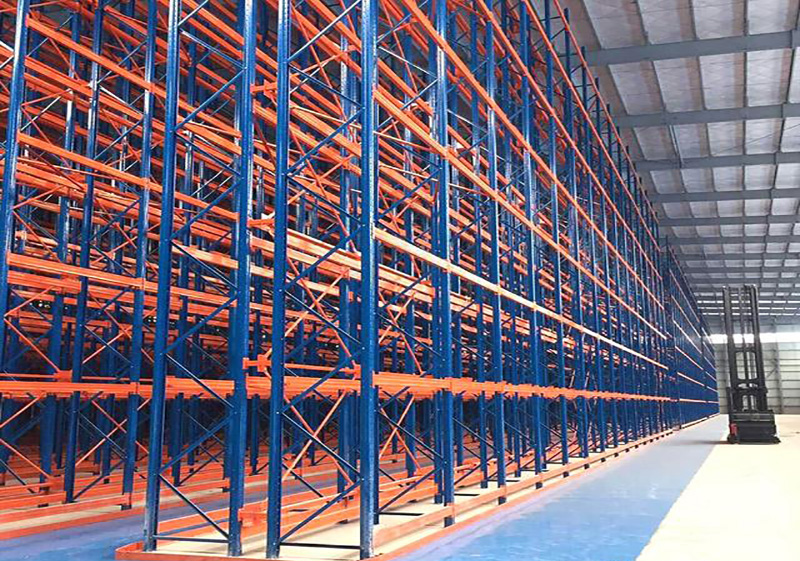
Key Benefit #3: Enforcing Perfect FIFO Inventory Rotation
For many businesses, inventory rotation isn't just a good idea—it's a financial imperative. Spoiled food, expired pharmaceuticals, or obsolete electronics are pure loss. Manual FIFO systems are prone to human error.
Carton flow racks make perfect rotation automatic. As long as stock is loaded correctly at the rear, the system guarantees the oldest unit is always the next one picked. You completely eliminate the risk of newer stock being placed in front of old, hiding it until it's too late.
This built-in control is a major relief for managers in food and beverage, cosmetics, and chemical supply. It reduces waste, simplifies cycle counting, and ensures compliance with lot-tracking regulations. The system itself acts as your quality control manager.
Ideal Use Cases: Where Carton Flow Racks Shine Brightest
So, who needs this? The classic application is in high-volume, high-SKU count order fulfillment. E-commerce centers use them for fast-moving, small-to-medium-sized items. Each lane holds a single SKU, allowing for rapid batch or single-order picking.
Grocery and retail distribution centers use them for case picking of promotional items or best-selling products. The fast flow keeps up with demanding pick rates. Pharmaceutical and medical supply warehouses rely on them for strict lot control and clean, organized storage.
They are also perfect for manufacturing kitting and assembly areas. Components can be stored in flow racks and fed directly to the assembly line, ensuring a steady supply and clear visual management of part levels.
The common thread is a need for rapid access to a large number of individual items or cases from a vast inventory. If your operation involves a lot of "each" picking, carton flow racks should be on your evaluation list.
Critical Considerations Before You Invest
Carton flow racks are not a universal fix. They have specific requirements. First, they work best with uniform, stable cartons or totes. Odd shapes, bulging boxes, or torn bottoms can cause jams and disrupt the flow.
Your product velocity matters. Lanes should be sized so stock turns over regularly. A carton sitting motionless for months can flat-spot wheels and create dead zones. These systems are designed for movement.
The initial cost is higher than static shelving. You're paying for the precision tracks, wheels, and structure. The justification comes from the labor and space savings we've discussed. A thorough ROI analysis is essential.
Finally, they require disciplined replenishment. If the back loading aisle is clogged or staff aren't trained to load lanes promptly, the entire system grinds to a halt. The front-end efficiency is wholly dependent on back-end support.
Choosing the Right Configuration and Components
Not all carton flow racks are the same. The first decision is track type: wheels or rollers. Wheel tracks are typically quieter and offer smoother flow for ideal boxes. Roller tracks are more durable and better for heavier loads or uneven bottoms.
Lane width is crucial. It should be slightly wider than your carton to prevent tipping, but not so wide that boxes can turn sideways. Depth determines how many cartons you can store per SKU. You must balance depth with turnover rate to avoid dead stock at the back.
The pitch, or incline angle, must be tuned to your product weight and the track type. Lighter items need a steeper angle; heavier items need a shallower one. Reputable suppliers will help you calculate this.
Don't forget the structural frame. The racking must be robust enough to handle the dynamic load of moving cartons and the weight of fully loaded lanes. It must be perfectly level for the gravity system to function correctly.
Implementation and Daily Management Tips
Success starts with a great layout. Place your highest-velocity SKUs in the "golden zone"—waist to shoulder height. Slower movers can go higher or lower. Group related items logically to minimize picker travel between zones.
Training is non-negotiable. Pickers must understand the FIFO principle and handle cartons gently. Replenishment staff need clear procedures for loading lanes correctly, checking for damage, and rotating stock if needed from reserve storage.
Implement a visual management system. Lane labels should be clear. Consider indicators that show when a lane is running low and needs replenishment. This keeps the flow continuous.
Establish a simple maintenance routine. Tracks should be kept clean of dust and debris. Wheels and rollers should be inspected periodically for damage or wear. A jammed lane can stop an entire picking operation, so proactive care is key.
In conclusion, carton flow racks are a powerful tool for the right operation. They deliver speed, accuracy, space savings, and inventory control. By understanding their mechanics, benefits, and requirements, you can make an informed decision about whether they are the engine your picking operation needs.
Frequently Asked Questions
Q1: How much can carton flow racks actually increase picking productivity?
A1: While it varies, well-implemented carton flow rack systems commonly report productivity gains of 30% to 50%. The increase comes from eliminating walk-and-search time, reducing handling, and minimizing errors, allowing pickers to complete more orders per hour.
Q2: Are carton flow racks only for very small, lightweight items?
A2: No. While ideal for cartons up to about 50-75 lbs, heavy-duty flow tracks exist that can handle individual units or totes weighing over 150 lbs. The key is matching the track system (roller type, gauge, pitch) to your specific load weight and size.
Q3: What's the biggest operational challenge with these systems?
A3: Consistent and disciplined replenishment. The efficiency of the front pick face is entirely dependent on timely restocking from the rear. If replenishment lags, pickers face empty lanes, nullifying all the system's benefits. It requires coordinated workflow management.
Q4: Can I retrofit my existing static shelving with flow tracks?
A4: Sometimes, but it's often not ideal. Static shelving may not be structurally designed for the dynamic load or the required precise, level incline. It's usually more effective to install a dedicated carton flow rack system designed from the ground up for that purpose.
Q5: How do I handle slow-moving items in a flow rack system?
A5: It's not recommended. Slow movers can cause "dead" lanes where product sits stagnant, leading to dust accumulation and potential flat-spotting of wheels. Reserve slow-moving SKUs for bulk storage or static shelving, and use your carton flow racks exclusively for medium- to high-velocity products.